Finding the best spark plugs for Chrysler 300C HEMI engines can be confusing because the correct plug may change with the model year, engine size, and factory ignition specification. A spark plug that fits one 5.7L HEMI may not be suitable for another Chrysler 300C HEMI application.
Choosing the wrong plugs can lead to rough idling, hard starting, weak acceleration, misfire codes, reduced fuel economy, and unnecessary stress on the ignition coils. Incorrect thread reach, heat range, or gap can also cause more serious engine problems.
Don’t have time to read every review? The NGK 92145 LZFR5CI-11 Laser Iridium Spark Plug Set is my top overall recommendation for compatible Chrysler 300C 5.7L HEMI models. The linked package contains 16 plugs and is listed for selected 2009–2024 Chrysler, Dodge, Jeep, and Ram vehicles equipped with the 5.7L HEMI V8. Always verify your exact vehicle before ordering.
Its long-life iridium construction, stable ignition performance, and OEM-style fitment make it a practical option for stock, daily-driven vehicles. Buying the complete set also means you will not need to order the HEMI’s required plugs individually.
However, you should confirm your Chrysler’s model year, engine displacement, VIN, and required spark plug number before purchasing. The Chrysler 300C has been offered with different HEMI engines, and they do not all use the same plug specification.
To simplify your decision, I researched and compared three popular spark plug options based on fitment, electrode material, durability, package quantity, installation requirements, and overall value.
The reviews below explain which plug is best for compatible later models, which provides a factory-style replacement, and which may suit selected older 5.7L HEMI engines.
Critical Fitment Note: Confirm Your Engine Before Ordering
Before purchasing any spark plugs, confirm your Chrysler 300C’s model year, engine displacement, VIN, and required factory part number. The “HEMI” badge alone is not enough to identify the correct plug.
This article mainly focuses on compatible 5.7L HEMI models. Chrysler also offered the 300 with 6.1L and 6.4L HEMI engines, and those engines should not be assumed to use the same spark plugs. For example, Mopar lists SPLZFR5C11 for the 2013 Chrysler 300 5.7L, while the 2023 Chrysler 300 6.4L uses SP149212AC. This demonstrates why fitment must be checked for the exact vehicle rather than relying only on the 300C name.
Compatible 5.7L HEMI applications generally use eight spark plugs per cylinder head and 16 plugs for the complete engine. When comparing Amazon listings, verify whether the package contains one plug, four plugs, eight plugs, or the complete set of 16.
I recommend checking the following before ordering:
- Amazon’s vehicle-fitment selector
- The owner’s manual or factory parts catalog
- The VIN and exact engine size
- The part number printed on the existing plugs
- Any production-date or engine-modification requirements
Do not install a product merely because its thread appears to fit. An incorrect heat range, reach, seat design, electrode configuration, or gap can cause drivability problems and may damage the engine.
For modified, supercharged, turbocharged, or tuned engines, the original factory recommendation may no longer be appropriate. In that situation, follow the specifications supplied by the tuner or engine builder rather than a general replacement guide.
NGK 92145 LZFR5CI-11 Laser Iridium Spark Plug Set – Best Overall
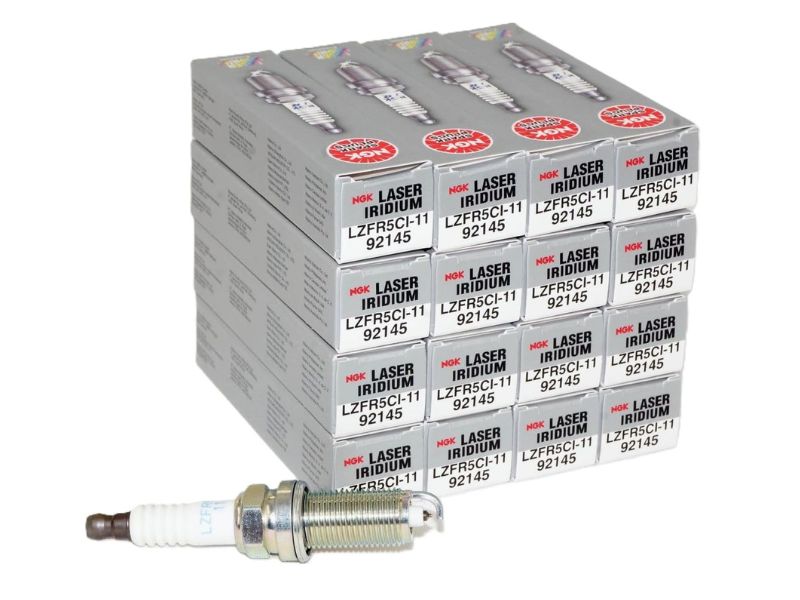
The NGK 92145 LZFR5CI-11 Laser Iridium set is my top recommendation for compatible Chrysler 300C models equipped with the 5.7L HEMI. It is particularly useful for owners who want an OE-style replacement that balances ignition stability, durability, and complete-set convenience.
The linked Amazon package contains 16 spark plugs, so it provides the quantity needed for a complete replacement on compatible dual-plug 5.7L HEMI engines. The seller lists these plugs for selected 2009–2023 Chrysler 300 models with the 5.7L V8 and identifies them as equivalents for Mopar numbers SP143877AB, SP143877AA, and 68143877AB. Mopar also lists SP143877AB for 5.7L HEMI MDS VVT applications, supporting the OE cross-reference. Exact fitment must still be verified using the vehicle’s year, VIN, engine specification, and existing plug number.
NGK’s Laser Iridium range is designed primarily for OE-style performance and extended durability rather than aggressive aftermarket tuning. The 92145 uses an iridium-tipped fine-wire center electrode, copper center core, nickel ground electrode, resistor construction, and a flat gasket seat. The Amazon specification lists a 1.1 mm—or 0.044-inch—pre-gap, 14 mm thread diameter, 26.5 mm reach, and 5/8-inch hex. These specifications should be treated as reference information; every plug should be inspected before installation without placing pressure on the fine iridium tip.
For a stock daily-driven 300C HEMI, this plug’s main advantage is consistency. Installing a matched set of 16 avoids mixing plugs with different materials, heat ranges, or wear levels. Laser Iridium construction is also a better long-term choice than selecting a short-service plug solely because its initial price is lower.
The main concern is seller authenticity. The linked listing is an OverstockDirect bundle containing NGK plugs rather than an Amazon listing operated directly by NGK. Inspect the packaging, markings, ceramic condition, threads, and electrode alignment before installation. Return the set if the part numbers are inconsistent or the plugs appear damaged.
Pros: Complete 16-plug set, Laser Iridium construction, OE-equivalent cross-references, durable fine-wire design, and convenient compatibility for selected 5.7L models.
Cons: Higher upfront cost, not compatible with every Chrysler 300C HEMI, and marketplace authenticity should be checked carefully.
My Verdict: For a compatible stock 5.7L Chrysler 300C, the NGK 92145 offers the strongest balance of durability, OE-style specifications, and complete-set convenience.
Mopar SP143877AB Spark Plug Set – Best OEM Replacement
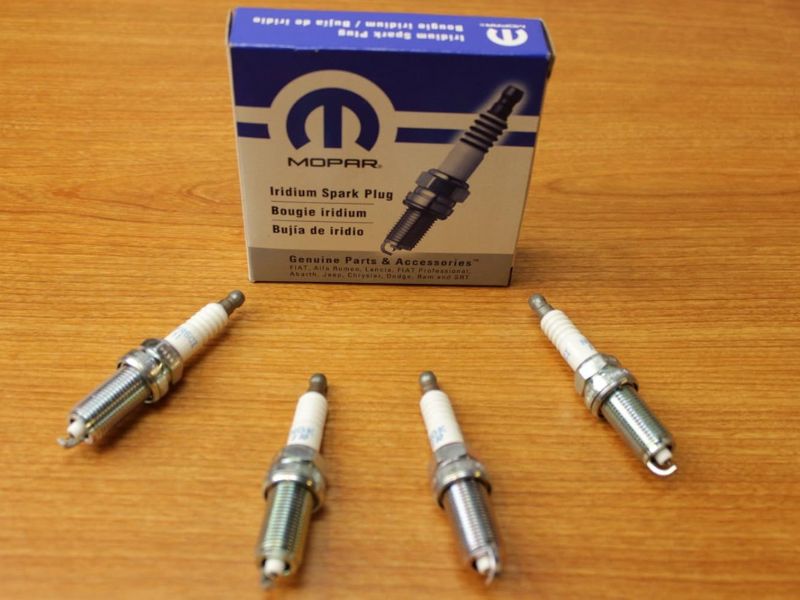
The Mopar SP143877AB set is a strong choice for Chrysler 300C owners who prefer a factory-style replacement rather than selecting an aftermarket cross-reference. These plugs are engineered to Mopar OEM specifications for consistent fit and function in compatible 5.7L HEMI MDS VVT applications. The part number also replaces earlier references 68143877AB and SP143877AA.
The linked package includes 16 plugs, providing the quantity commonly required for a complete compatible 5.7L HEMI replacement. Having all 16 plugs from the same product line helps maintain consistent specifications and wear across both cylinder heads.
The main advantage of choosing Mopar is reduced uncertainty. You do not need to compare several aftermarket heat ranges, thread designs, or cross-reference numbers when the vehicle’s parts catalog specifies SP143877AB. This makes the set particularly appealing for a stock daily-driven Chrysler 300C where maintaining factory-style ignition performance is more important than experimenting with performance-oriented plugs.
These plugs should support dependable starting, stable idle, and consistent combustion when they are correctly matched and installed. However, new spark plugs should not be expected to add noticeable horsepower to a healthy stock engine. Their primary role is restoring proper ignition when the existing plugs are worn, fouled, or outside the recommended service interval.
The biggest limitation is fitment. SP143877AB is not the correct plug for every Chrysler 300C HEMI engine or model year. The 6.1L and 6.4L versions may require different specifications, and earlier 5.7L vehicles can also use another part number. Confirm the VIN, engine, model year, and existing plug number before installation.
The OEM-branded set may also cost more than a compatible NGK alternative. Buyers are primarily paying for factory part-number confidence rather than a major performance advantage.
Pros: OEM-specification design, complete 16-plug set, straightforward stock replacement, consistent fit, and fewer cross-reference decisions.
Cons: Higher cost than some aftermarket options, no significant performance upgrade for a stock engine, and limited to compatible applications.
My Verdict: The Mopar SP143877AB set is the best option for owners who want a factory-style replacement and prioritize fitment confidence over aftermarket pricing or performance-focused features.
নিচের heading-এ affiliate link embed করা আছে। Heading ও review অংশ mouse দিয়ে select করে Google Docs-এ paste করলে product name clickable থাকার কথা। Source citations আলাদা নিচে রাখা হয়েছে, তাই article copy করার সময় সেগুলো বাদ দিতে পারবেন।
NGK 4469 LFR5AIX-11 Iridium IX Spark Plug Set – Best for Older 5.7L HEMI Models
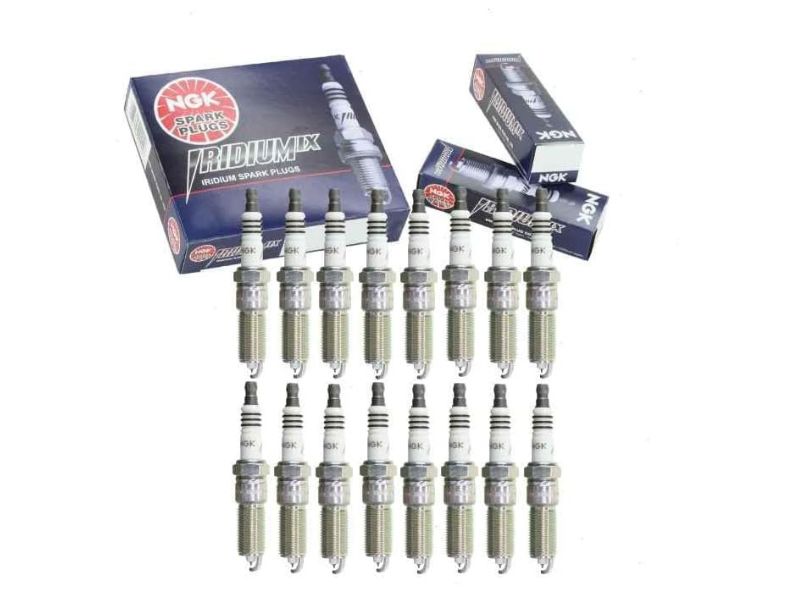
The NGK 4469 LFR5AIX-11 Iridium IX set is a practical aftermarket option for selected older Chrysler 300C models equipped with the 5.7L HEMI. The linked package contains 16 plugs and is primarily listed for compatible 2005–2008 Chrysler 300 5.7L V8 applications.
NGK designed the Iridium IX series with a fine-wire iridium center electrode. The smaller electrode requires less voltage to create a strong spark than a conventional large-tip plug, helping support reliable starting, stable combustion, and smooth throttle response when the ignition system is in good condition.
The projected insulator design and anti-fouling characteristics can also benefit an older daily-driven engine that experiences frequent short trips or stop-and-go traffic. However, these plugs should be viewed as a proper maintenance replacement rather than a guaranteed horsepower or fuel-economy upgrade.
Compared with NGK Laser Iridium plugs, the Iridium IX line places more emphasis on ignitability and responsive performance. Laser Iridium plugs are generally positioned toward longer OEM-style service life because they may use additional precious metal on the ground electrode. This makes the 4469 set appealing for compatible older vehicles, but it may not be the longest-lasting option in every application.
Fitment is the main concern. The NGK 4469 should not be installed simply because the vehicle has a 5.7L HEMI badge. Later 300C models may require NGK 92145 or another factory-specified plug. Before purchasing, compare the vehicle year, VIN, engine details, and currently installed part number.
Although the plugs may arrive pre-gapped, inspect each one before installation. Use a wire-style gauge and avoid applying pressure to the fine iridium center electrode. Any gap adjustment should be made carefully at the ground electrode and according to the vehicle-specific service specification.
Pros: Complete 16-plug package, fine-wire iridium design, strong ignitability, recognized manufacturer, and suitable fitment for selected older 5.7L HEMI models.
Cons: Not compatible with every Chrysler 300C HEMI, may offer a shorter service-life focus than Laser Iridium plugs, and requires careful fitment verification.
My Verdict: The NGK 4469 Iridium IX set is a sensible choice for a compatible 2005–2008 Chrysler 300C 5.7L HEMI. It offers a good balance of ignition performance, brand reliability, and complete-set convenience without making unrealistic performance promises.
How to Choose Spark Plugs for a Chrysler 300C HEMI
Choosing the correct spark plugs is more important than choosing the most expensive option. A premium iridium plug will not perform correctly when its thread reach, heat range, seat design, or gap does not match the engine.
Start with your Chrysler 300C’s model year and exact engine. The 5.7L, 6.1L, and 6.4L HEMI engines should not be treated as interchangeable applications. Even within the 5.7L lineup, Chrysler used different plug specifications across production years.
Your safest references are the owner’s manual, factory parts catalog, VIN-based fitment information, and the part number printed on a removed factory plug. When two sources provide conflicting information, verify the specification with a Chrysler dealer or qualified mechanic before installation.
Confirm the Engine Before Selecting Spark Plugs
The Chrysler 300C name has been used with several V8 engines. Knowing that the vehicle has a HEMI engine is not enough to identify the correct spark plug.
Check the eighth character of the VIN, the emissions label under the hood, or the engine information in the owner’s manual. You can also compare the number printed on one of the existing plugs, provided the engine still has the correct previous set installed.
The products reviewed above mainly target selected 5.7L HEMI applications. They should not automatically be used in a 6.1L SRT8 or 6.4L model.
Engine modifications also matter. A stock daily-driven Chrysler 300C may work best with the factory heat range and gap, while a supercharged, turbocharged, heavily tuned, or nitrous-equipped engine may require a different specification.
In a modified vehicle, follow the recommendation of the engine builder or tuner rather than a general replacement guide.
Why the 5.7L HEMI Uses 16 Spark Plugs
Most Chrysler 300C models equipped with the 5.7L HEMI use two spark plugs per cylinder. Because the engine has eight cylinders, a complete replacement generally requires 16 plugs.
The dual-plug design helps create more complete and consistent combustion across the chamber. It also means the cost and labor of a spark plug replacement are higher than they would be on a conventional eight-plug V8.
Check the package quantity before ordering. Some listings contain a single plug, while others include four, eight, or 16.
Replacing all plugs as a matched set helps maintain consistent material, heat range, gap, and wear across the engine. Replacing only a few worn plugs may temporarily address one misfire, but the remaining plugs may be close to the same condition.
Laser Iridium vs. Iridium IX vs. Mopar OEM Plugs
NGK Laser Iridium, NGK Iridium IX, and Mopar-branded plugs can all be appropriate choices when the part number matches the engine. Their intended priorities are slightly different.
Laser Iridium plugs are generally designed around long service life and OE-style performance. They use a fine iridium center electrode and may incorporate precious metal on the ground-electrode side to reduce wear.
This makes them attractive for a stock daily driver where consistent ignition and longer replacement intervals are more important than a performance-oriented plug design.
Iridium IX plugs use a fine-wire iridium center electrode and emphasize ignitability and throttle response. They can be a strong aftermarket choice for compatible older engines, but they should not be assumed to last longer than every OE-style Laser Iridium plug.
Mopar OEM plugs are selected for owners who want the factory-specified part number. They reduce the need to interpret aftermarket cross-reference charts when the vehicle catalog clearly lists the Mopar number.
OEM branding does not automatically mean greater horsepower or better fuel economy. Its primary benefit is specification confidence for a stock engine.
Check Thread Reach, Seat Design, and Heat Range
A spark plug can physically screw into the cylinder head and still be incorrect for the engine.
Thread diameter determines whether the plug fits the cylinder-head threads. Thread reach determines how far the plug extends into the combustion chamber.
A plug with excessive reach may contact internal components or expose too many threads inside the chamber. A plug with insufficient reach may position the spark incorrectly and leave exposed cylinder-head threads vulnerable to deposits.
The seat design also matters. Some plugs use a flat gasket seat, while others use a tapered seat. These types have different sealing and tightening requirements.
The heat range describes how quickly the plug transfers heat away from its firing tip. A plug that runs too hot may increase the risk of pre-ignition, while one that runs too cold may accumulate deposits and foul.
Do not substitute a different heat range because it is marketed as a performance upgrade. A stock engine usually performs best with the specification selected for its factory calibration.
Spark Plug Gap: Verify Rather Than Assume
Many modern spark plugs arrive pre-gapped, but that does not mean the gap should be ignored. Shipping, handling, or accidental contact can move the ground electrode.
Compare the plug gap with the specification for your exact model year and engine. Do not copy a gap recommendation from a different HEMI application.
Use a wire-style spark plug gauge when checking fine-wire iridium plugs. Avoid forcing a wedge-style tool against the center electrode because the small iridium tip can be damaged.
When adjustment is required, move only the ground electrode and make very small changes. Never press directly against the center electrode or ceramic insulator.
A damaged fine-wire tip can reduce plug performance even when the gap appears correct afterward.
Modified engines may use a smaller gap to support ignition under increased cylinder pressure. That decision should come from the tuner or engine builder, not from a generic online recommendation.
Check the Package Quantity
A low advertised price may apply to one spark plug rather than a complete HEMI set.
Before purchasing, look for the exact quantity in the package description. Calculate the total price for 16 plugs rather than comparing individual listing prices.
A complete set is convenient because all plugs should come from the same product line. However, you should still inspect each part before installation.
Check that all 16 plugs have:
- The same part number
- Matching electrode construction
- Clean, undamaged threads
- Straight ground electrodes
- Uncracked ceramic insulators
- Consistent terminal ends
- Appropriate gaps
Do not install a plug with damaged threads, a loose terminal, a chipped insulator, or a visibly misaligned electrode.
Avoid Counterfeit or Unbranded Spark Plugs
Popular spark plug part numbers are sometimes copied or sold in misleading packaging. A counterfeit plug may use inferior electrode material, inconsistent heat ranges, or poor ceramic insulation.
Be cautious when a complete set costs far less than comparable products from established suppliers.
Inspect the printing, packaging quality, part-number markings, electrode shape, and overall consistency. Genuine plugs from the same set should not show major differences in machining or finish.
Unusually rough threads, crooked electrodes, inconsistent fonts, or poorly fitted terminal nuts are warning signs.
Buying from a reputable automotive retailer or established seller reduces the risk, although every plug should still be inspected before installation.
When Should Chrysler 300C HEMI Spark Plugs Be Replaced?
The correct replacement interval depends on the model year, original plug material, driving conditions, and maintenance schedule.
Older engines equipped with conventional-style plugs may require more frequent replacement than later models using long-life iridium plugs. Follow the interval listed for your exact vehicle rather than relying on a universal HEMI schedule.
Spark plugs may need earlier inspection when the engine develops:
- Rough or unstable idle
- Difficult starting
- Hesitation during acceleration
- Reduced fuel economy
- Misfire codes
- Increased exhaust emissions
- Poor performance under load
These symptoms do not prove that the spark plugs are responsible. Ignition coils, fuel injectors, vacuum leaks, compression problems, sensors, and wiring faults can create similar behavior.
Read the diagnostic trouble codes and inspect the ignition system before replacing parts at random.
Reading the Old Spark Plugs
Used spark plugs can provide useful information about the condition of the engine.
A light tan or gray appearance may indicate normal combustion. Heavy dry black deposits can be associated with a rich mixture, weak ignition, excessive idling, or an unsuitable heat range.
Wet fuel deposits may appear when a cylinder is not firing. Oily deposits can indicate oil entering the combustion chamber through worn rings, valve seals, or another mechanical problem.
A blistered or unusually white firing tip may suggest excessive heat, an incorrect plug, a lean condition, or abnormal combustion.
Compare plugs from all cylinders and keep them organized by position during removal. One plug that looks significantly different from the others may help identify a cylinder-specific problem.
Do not diagnose an engine from plug appearance alone. Use the condition as supporting information alongside scan data, compression testing, and other inspections.
How to Replace Spark Plugs in a Chrysler 300C HEMI
Replacing 16 plugs requires more time than a typical four- or six-cylinder service. Several plugs may also be difficult to reach because of wiring, intake components, and limited clearance.
Work only when the engine is completely cold. Removing plugs from a hot aluminum cylinder head increases the risk of thread damage.
Begin by verifying that you have the correct part number, quantity, spark plug socket, extensions, ratchet, torque wrench, and any swivel adapters needed for access.
Remove the engine cover and any intake tubing or other components that block the ignition coils. Photograph the original layout and label connectors when necessary.
Disconnect one ignition coil at a time or keep all removed coils organized by cylinder. Remove the coil fasteners and lift the coils carefully from the plug wells.
Before loosening a plug, use compressed air or a suitable vacuum to remove dirt from the surrounding area. Debris that falls into the cylinder can cause damage.
Use the correct spark plug socket and extension to loosen the old plug. Keep the socket aligned with the plug to avoid placing side pressure on the ceramic.
Compare each removed plug with the new replacement. Verify thread length, seat style, terminal design, and electrode position.
Check the gap carefully. Do not force a gauge or adjustment tool against the iridium tip.
Start every new plug by hand. A short piece of clean rubber hose can help turn the plug while reducing the chance of cross-threading.
If the plug does not rotate smoothly by hand, remove it and start again. Do not use a ratchet to force a plug into the aluminum head.
Tighten each plug to the vehicle-specific torque specification. Do not guess based on feel, and do not automatically reuse torque figures from another engine year.
Do not apply anti-seize unless the spark plug manufacturer or Chrysler service information specifically instructs you to do so. Many modern plated plugs are intended for dry installation, and lubricant can change the relationship between torque and clamping force.
Inspect the ignition-coil boots for cracks, oil contamination, or carbon tracking. A small amount of dielectric grease may be applied inside the boot opening when appropriate, but it should not be placed on the spark plug electrodes or threads.
Reinstall the coils, connectors, intake components, and engine cover. Start the engine and listen for an uneven idle.
Scan for misfire or ignition codes after the repair. Recheck any disconnected hoses or electrical connectors when the engine does not run normally.
A professional installation may be preferable when you do not have the correct tools, torque information, or experience working around aluminum cylinder-head threads.
Common Spark Plug Replacement Mistakes
One of the most serious mistakes is installing plugs in a warm engine. The aluminum cylinder head expands with heat, increasing the risk of thread damage during removal.
Cross-threading is another major concern. Every plug should be started by hand before a ratchet is used.
Overtightening can stretch the plug shell, damage the threads, or crack the ceramic. Undertightening can prevent proper heat transfer and allow combustion gases to leak past the seat.
Other common errors include:
- Installing the wrong part number
- Mixing plug types or heat ranges
- Reusing damaged ignition-coil boots
- Dropping debris into the plug wells
- Applying excessive anti-seize
- Damaging the iridium tip while checking the gap
- Forgetting to reconnect a coil or sensor
- Ignoring oil inside the plug wells
- Replacing plugs without diagnosing persistent misfires
Take your time and complete one area methodically. The labor involved in reaching all 16 plugs makes correcting an installation mistake especially inconvenient.
Frequently Asked Questions
What are the best spark plugs for a Chrysler 300C HEMI?
The best option depends on the model year and exact engine. For compatible later 5.7L HEMI models, the NGK 92145 Laser Iridium is a strong overall choice. Mopar SP143877AB suits owners seeking a factory-style replacement, while NGK 4469 Iridium IX may fit selected earlier 5.7L applications.
Does a Chrysler 300C 5.7 HEMI need 16 spark plugs?
Most 5.7L HEMI engines use two spark plugs per cylinder, resulting in 16 plugs for the complete eight-cylinder engine. Verify the quantity and specification for your exact model year before ordering.
Will NGK 92145 fit every Chrysler 300C HEMI?
No. It may fit selected 5.7L applications, but it is not a universal spark plug for every model year or HEMI displacement. The 6.1L and 6.4L engines may use different plugs, and some earlier 5.7L models require another part number.
What is the difference between NGK 92145 and NGK 4469?
The NGK 92145 is a Laser Iridium plug designed around OE-style performance and durability. The NGK 4469 belongs to the Iridium IX line and emphasizes fine-wire ignitability. They also target different applications, so they should not be treated as interchangeable.
Are Mopar spark plugs better than NGK?
Not necessarily. The correct Mopar plug offers factory part-number confidence, while NGK may manufacture an equivalent or cross-referenced design. Fitment and specification matter more than the logo on the box.
Can I use iridium plugs in an older 5.7L HEMI?
Only when the iridium plug is specifically listed for the exact engine and model year. Do not upgrade based solely on electrode material. Thread reach, seat, heat range, resistor design, and gap must all match.
What spark plug gap does a Chrysler 300C HEMI use?
The required gap varies by engine and model year. Check the owner’s manual, service information, emissions label, or verified parts catalog. Do not use a gap copied from another HEMI application.
How often should Chrysler 300C HEMI spark plugs be changed?
Follow the maintenance interval for your specific vehicle. Replacement frequency varies with plug material, model year, driving conditions, and engine modifications. Inspect the ignition system earlier when misfires, rough idle, or hard starting develops.
Can worn spark plugs cause a HEMI misfire?
Yes. Excessive electrode wear, fouling, cracked insulation, or an incorrect gap can contribute to a misfire. Ignition coils, injectors, wiring, compression, and intake leaks can create the same symptom, so diagnosis should come before replacing parts.
Should all 16 spark plugs be replaced together?
Replacing the complete matched set is generally preferable when the plugs have reached their service interval. This maintains consistent plug type, heat range, gap, and wear across the engine.
Do I need anti-seize on HEMI spark plugs?
Do not apply it automatically. Many modern spark plugs have plated threads intended for dry installation. Anti-seize changes the friction during tightening and can lead to excessive clamping force. Follow the plug manufacturer and Chrysler service instructions.
Can I replace Chrysler 300C spark plugs myself?
A skilled DIY owner can complete the job with the correct tools, access, torque information, and patience. The engine uses many plugs, and some locations can be difficult to reach. Professional service is safer when you are unfamiliar with spark plug installation in aluminum cylinder heads.
Conclusion
The best spark plugs for Chrysler 300C HEMI engines are the plugs that match the exact model year, displacement, and factory ignition specification.
For compatible later 5.7L models, the NGK 92145 LZFR5CI-11 Laser Iridium Spark Plug Set offers the best overall combination of OE-style performance, durability, and complete 16-plug convenience.
The Mopar SP143877AB set is better suited to owners who prefer a factory-number replacement for a stock engine. The NGK 4469 Iridium IX is a practical alternative for selected older 5.7L Chrysler 300C applications.
Do not order based only on the HEMI badge or product ranking. Confirm the VIN, engine size, model year, existing plug number, package quantity, and required gap before installation.
A correctly matched and properly installed set can restore reliable ignition and smooth operation. An incorrect plug can create drivability problems regardless of its brand, price, or electrode material.