Finding the best spark plugs for 6.0 Vortec engines gets complicated quickly because “6.0 Vortec” covers more than one GM V8 configuration. The early LQ4 and LQ9, later LY6, and heavy-duty L96 all share the familiar 6.0-liter displacement, yet model year, cylinder-head design, factory calibration, and current service-part information can affect which spark plug belongs in the engine.
These engines appear throughout the American GM truck and SUV world, including the Chevrolet Silverado 2500 and 2500 HD, Silverado 3500 HD, Suburban 2500, Express vans, GMC Sierra HD, Yukon XL, Savana, and several performance-oriented applications. Many of these vehicles spend their lives towing, hauling, idling, or accumulating substantial highway mileage, so reliable ignition matters more than marketing claims about instant horsepower.
For many stock earlier 6.0L applications, my first recommendation is the ACDelco GM Original Equipment 41-962 Double Platinum Spark Plug. Its long association with GM V8 service applications, double-platinum firing surfaces, and OE-oriented construction make it an excellent baseline when the current catalog confirms the part for the specific truck.
For compatible later 6.0L applications, the ACDelco GM Original Equipment 41-110 Iridium Spark Plug is equally important. Its iridium center electrode and precious-metal ground firing surface provide a newer long-life approach while retaining the physical characteristics expected by the engines that call for it.
The key is not deciding whether platinum or iridium is universally better. The correct spark plug is the one that matches the engine code, year, heat range, thread reach, tapered seat, electrode configuration, and required gap.
5 Spark Plugs That Suit the 6.0 Vortec Family
| Image | Product Name | Check Price |
|---|---|---|
Best Choice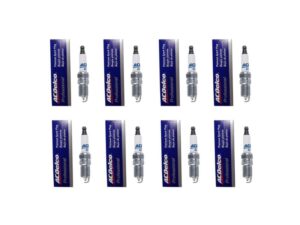 | ACDelco GM Original Equipment 41-962 Double Platinum Spark Plug | Check Price |
Second Best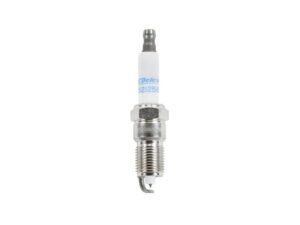 | ACDelco GM Original Equipment 41-110 Iridium Spark Plug | Check Price |
Third Choice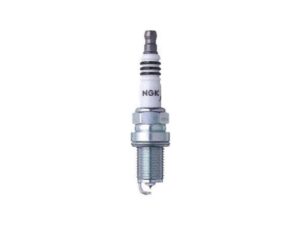 | NGK 1465 IZTR5B11 Laser Iridium Spark Plug | Check Price |
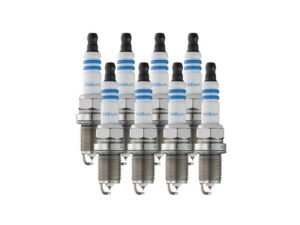 | Bosch 9602 HR8LII33U Double Iridium Spark Plug | Check Price |
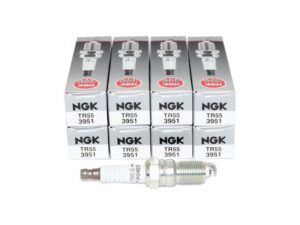 | NGK 3951 TR55 V-Power Spark Plug | Check Price |
The products below cover the major ways a 6.0 Vortec owner might approach ignition service. The first two focus on GM-style replacement paths, while the remaining choices offer long-life aftermarket construction or a more conventional plug for engines that receive frequent inspection.
Because the 6.0L family spans multiple generations, the ranking is not a universal fitment chart. Always confirm the actual engine before ordering eight plugs.
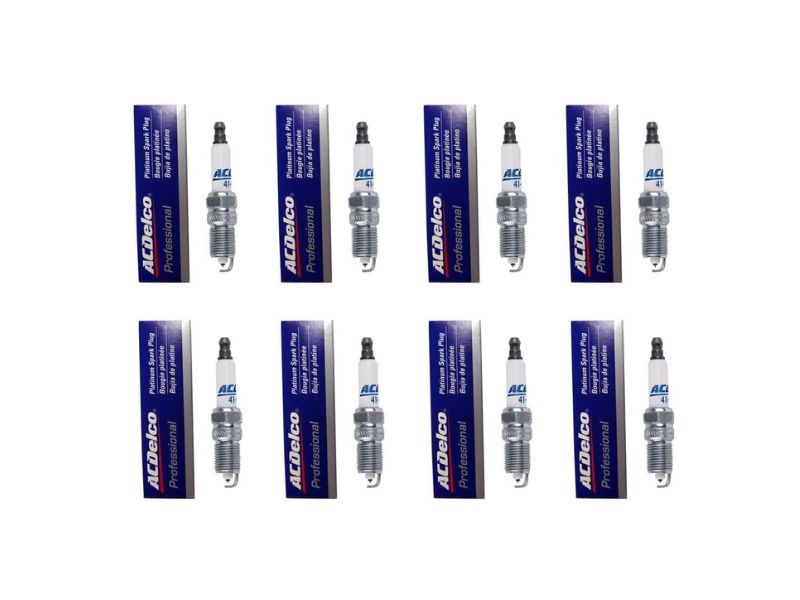
1. ACDelco GM Original Equipment 41-962 Double Platinum Spark Plug
Key Features
- Double-platinum firing surfaces
- GM Original Equipment-oriented construction
- Copper-core electrode design
- Resistor-style ignition-noise suppression
- Strong relevance to earlier Vortec-era 6.0L applications
The ACDelco 41-962 takes the first position because it represents one of the most established spark-plug families associated with GM’s earlier LS-based truck engines.
That includes many of the trucks most people have in mind when they search for a 6.0 Vortec: early Silverado 2500 and 2500 HD models, Suburban 2500, Sierra HD, Yukon XL, and other vehicles using engines such as the LQ4 and LQ9.
Its double-platinum construction is worth understanding. Platinum is placed at the firing surfaces on both sides of the spark gap rather than only at the center electrode. Both surfaces experience electrical discharge and combustion heat, so protecting the center and ground electrodes helps slow gap erosion over time.
This is especially useful in a heavy-duty truck.
A Silverado 2500 HD used for towing may spend long periods under sustained load. Cylinder pressure rises when the engine is working hard, and the ignition system must continue producing a dependable spark throughout that load range.
The plug itself cannot increase towing capacity, but maintaining stable firing characteristics helps the engine operate as intended.
The copper core inside the electrode plays a different role. Copper transfers heat extremely well, helping move combustion heat from the firing end into the shell and cylinder head.
This is why terms such as “platinum spark plug” should not be interpreted as meaning the entire electrode is made from platinum. Premium plugs often combine several metals because each material performs a different job.
The 41-962 also uses resistor construction.
A resistor spark plug helps suppress radio-frequency and electromagnetic noise generated by the ignition event. This matters on electronically controlled GM trucks equipped with engine computers, sensors, audio equipment, communication networks, and other electronics.
An ignition system needs conductivity, but it also needs controlled electrical behavior.
This is one reason extremely low-resistance racing components are not automatically superior on a stock street truck.
Another strength is familiarity.
When diagnosing a high-mileage LQ4 or LQ9, returning the engine to a known OE-style spark-plug specification removes one unnecessary variable. If the truck continues to misfire after correct plugs are installed, attention can move toward plug wires, coils, injectors, intake leaks, fuel pressure, compression, or wiring.
The 41-962 should not be treated as a universal 6.0L plug, however.
GM service numbers have changed over time, and later 6.0L engines may use a different recommended part. Engine-code and VIN verification matter, particularly on 2007-and-newer trucks.
Modified engines also require more thought.
An LQ4 with a camshaft and headers may still operate perfectly well on a stock heat range. A supercharged LQ9 or nitrous-equipped 6.0L may require a colder plug and a different gap.
The build determines that decision, not the displacement alone.
What I Like
- Proven double-platinum design
- Strong relevance to early 6.0 Vortec applications
- Both firing surfaces receive wear-resistant material
- Makes a useful stock-engine diagnostic baseline
What I Do Not Like
- GM service-number changes can make fitment confusing
- Not the automatic answer for every later 6.0L
- Modified engines may require a different heat range
For a compatible earlier LQ4 or LQ9, the 41-962 is difficult to overcomplicate. It offers durable firing surfaces and an OE-oriented approach that suits stock trucks particularly well.
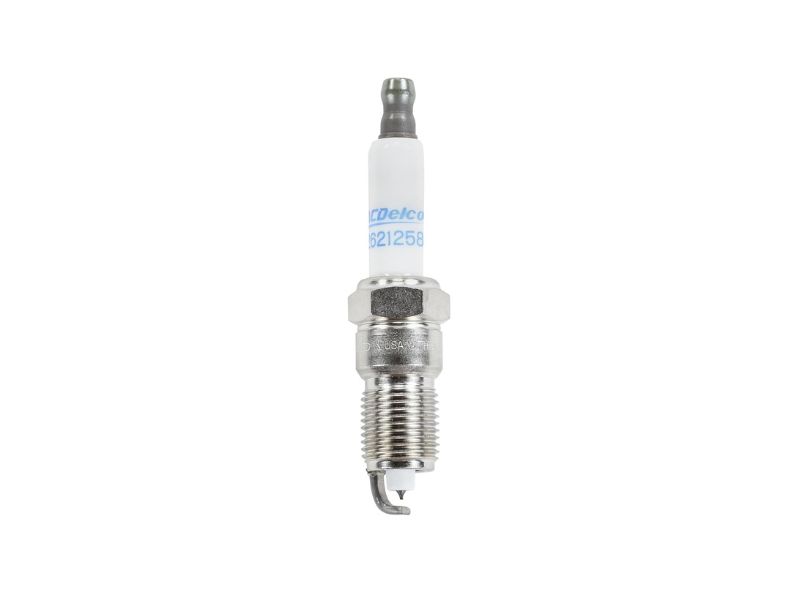
2. ACDelco GM Original Equipment 41-110 Iridium Spark Plug
Key Features
- Fine-wire iridium center electrode
- Precious-metal ground firing surface
- M14 x 1.25 thread family
- Tapered-seat design
- Approximately 0.040-inch factory gap in applications specifying this plug
The ACDelco 41-110 moves the 6.0L discussion into a newer precious-metal design.
It is particularly relevant when servicing compatible later GM V8 applications that cross-reference to this iridium plug family. That can include later heavy-duty and commercial 6.0L engines, where current service information rather than an old internet parts list should determine the final choice.
The iridium center electrode is the main technical change.
Iridium is exceptionally resistant to heat and electrode erosion. That allows the center firing tip to remain relatively small while maintaining good durability.
A fine center tip concentrates the electric field at a small area, helping the ignition event begin cleanly.
That sounds like a performance feature, but its most important value on a stock truck is consistency.
A healthy 6.0 Vortec already has enough ignition energy to fire the correct plug. The real benefit of a fine iridium center electrode is maintaining stable firing characteristics over a long period rather than creating a dramatic power increase.
The ground firing area also receives precious-metal protection, so wear is not concentrated entirely on one side of the gap.
This matters because spark-plug service life is partly about controlling gap growth.
As the electrodes erode, the distance the spark has to cross gradually increases. That raises ignition-voltage demand.
Eventually, marginal coils, wires, or boots can begin showing symptoms under heavy load.
A long-life plug slows one part of that aging process.
The 41-110 also uses the physical format familiar to many GM LS-based applications: a 14 mm-class thread, tapered seat, and long-reach configuration.
Physical dimensions are not secondary details.
Two plugs can both use iridium yet be completely incompatible because one has a different reach or seat style.
Reach determines how far the threaded portion extends into the cylinder head.
If it is too short, the firing tip may sit farther back than intended and unused cylinder-head threads can become exposed to combustion deposits.
If it is too long, the plug can protrude too far into the combustion chamber.
The factory-set gap is another benefit when the engine specifically calls for this plug.
Fine-wire iridium electrodes do not benefit from rough adjustment. If a new plug appears physically damaged or significantly out of specification, replacing it is generally preferable to aggressively bending the firing components.
For an LY6, L96, or another later 6.0L configuration, the exact application should be confirmed before ordering.
The 41-110 belongs here because it represents an important later service path, not because every 6.0L Vortec needs to be converted to iridium.
What I Like
- Fine iridium firing tip provides excellent wear resistance
- Precious-metal protection helps control gap erosion
- OE-oriented construction suits stock later engines
- Pre-set configuration reduces unnecessary adjustment
What I Do Not Like
- Not the correct plug for every early LQ4 or LQ9
- Frequently sold in quantities smaller than the eight plugs required
- Premium material does not compensate for incorrect fitment
For a compatible later 6.0L application, the 41-110 offers the kind of long-life ignition component that makes sense in a work truck, commercial van, or high-mileage heavy-duty pickup.
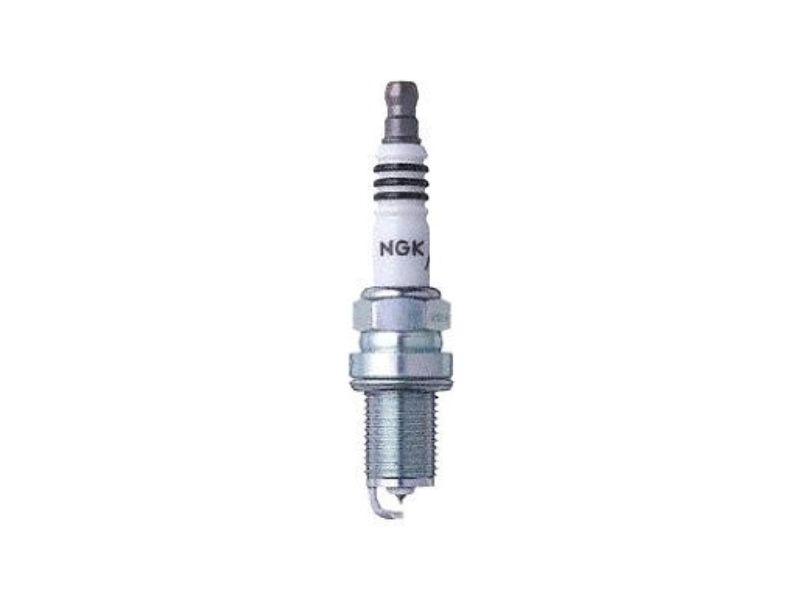
3. NGK 1465 IZTR5B11 Laser Iridium Spark Plug
Key Features
- Laser Iridium construction
- Fine-wire iridium center electrode
- Precious-metal ground-electrode surface
- Long-life design
- Available in convenient eight-piece sets
NGK’s 1465 IZTR5B11 is one of the strongest aftermarket alternatives for compatible GM V8 applications because it uses NGK’s Laser Iridium approach rather than a simple single-iridium firing tip.
Laser Iridium generally combines a fine iridium center electrode with a precious-metal ground surface.
That distinction matters.
A single-iridium plug can protect the center electrode extremely well while leaving the conventional ground strap as the faster-wearing part of the system.
A dual-precious-metal design aims to slow wear on both sides of the spark gap.
For a 6.0 Vortec used in a commercial van or long-distance tow rig, that can be useful.
These vehicles often accumulate mileage quickly, and spark-plug access can become annoying around heat shields, steering components, exhaust manifolds, and tight rear-cylinder locations.
A durable plug does not eliminate maintenance, but it can reduce how often normal electrode wear becomes the reason for removal.
The NGK design also uses a resistor.
That helps limit the electromagnetic interference created by high-voltage ignition.
The 6.0 Vortec uses coil-near-plug ignition, where each cylinder has its own coil and a relatively short plug wire.
This arrangement is very different from the distributor-based 5.7 Vortec.
Because each cylinder has its own coil, the engine computer can control ignition timing precisely and does not need to distribute spark mechanically.
The short plug wires still matter.
A burned boot, damaged wire, or corroded terminal can leak ignition voltage even when an expensive new plug is installed.
During plug replacement, inspecting those eight short leads is one of the easiest ways to avoid completing the job only to discover that the original misfire remains.
NGK’s long-life construction is particularly attractive when the rest of the ignition system is healthy.
It makes less sense when an engine is actively fouling plugs.
A 6.0L that burns oil heavily, has a leaking injector, runs excessively rich, or suffers from low compression can contaminate any plug.
Premium electrode material may resist erosion, but it cannot prevent conductive deposits from covering the firing end.
The 1465 also deserves the same fitment caution as every other plug here.
Cross-reference families are useful, but the year and engine code still matter.
A 2002 LQ4 and a 2017 L96 are both 6.0-liter GM V8s, yet their service histories and current replacement recommendations are not identical.
What I Like
- Precious-metal surfaces on both sides of the gap
- Strong option for long-distance and high-mileage use
- Fine-wire center electrode
- Eight-piece packages simplify a V8 tune-up
What I Do Not Like
- Costs more than conventional or basic platinum plugs
- Cross-reference information still needs vehicle verification
- Long-life electrodes cannot prevent fouling caused by engine problems
The NGK 1465 is a particularly good fit for an owner who wants a premium aftermarket plug while keeping the engine close to a stock heat range and ignition strategy.
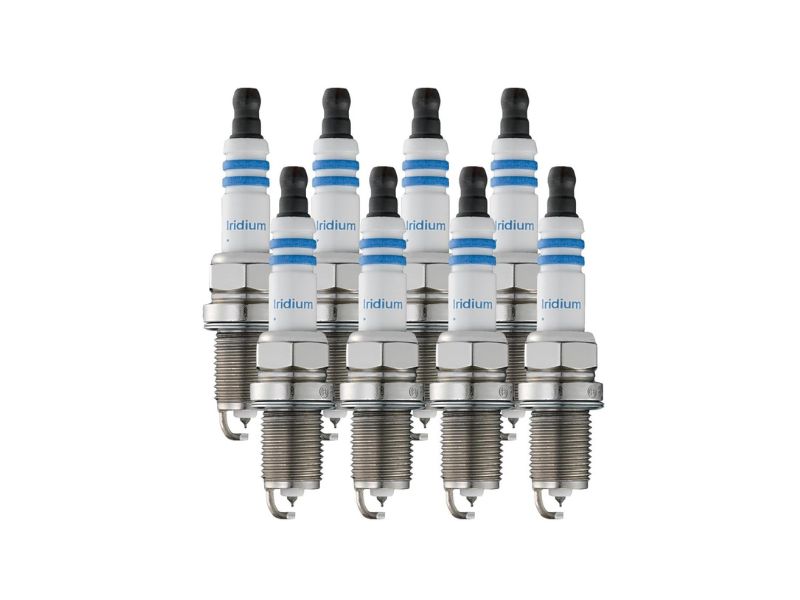
4. Bosch 9602 HR8LII33U Double Iridium Spark Plug
Key Features
- Double-iridium firing surfaces
- Fine-wire center electrode
- Iridium ground-electrode inlay
- Pre-gapped construction
- Nickel-plated threads
Bosch 9602 pushes electrode durability a step further by using iridium on both sides of the firing gap.
The center electrode uses a fine iridium tip, while the ground strap incorporates its own iridium firing surface. Bosch markets this as a long-life OE-style design rather than simply a racing plug.
That makes it especially interesting for later 6.0L work-truck and van applications where fitment is confirmed.
The reason double iridium can last well is straightforward.
Both the center and ground electrodes are exposed to repeated spark erosion.
If both firing points use highly wear-resistant material, the gap tends to maintain its geometry longer than it would with a conventional nickel surface.
Again, this is mostly a maintenance advantage.
An engine does not produce more torque simply because both electrodes contain iridium.
The plug helps ensure the combustion event begins reliably. The engine’s airflow, fuel delivery, compression, camshaft timing, exhaust flow, and calibration determine how much power it can actually produce.
Bosch also uses nickel-plated threads.
That detail matters during installation because plated modern spark plugs are commonly intended for dry installation.
Applying anti-seize without checking the manufacturer’s instructions changes thread friction.
That can create more clamping force than intended even when the torque wrench displays the correct number.
A spark plug that is over-tightened can stress its shell or damage the cylinder-head threads.
Under-tightening creates different problems.
The plug needs proper contact with the cylinder head to transfer heat away from its firing end.
Incorrect torque can therefore affect both mechanical sealing and thermal behavior.
Bosch’s pre-gapped design simplifies the process, but every new plug should still be visually inspected.
If a plug has been dropped and the ground strap is obviously bent, forcing it back into shape may damage the fine firing surfaces.
Replacement is the cleaner answer.
The Bosch 9602 is also useful for vehicles that spend much of their life at sustained load.
A commercial Express or Savana 3500 can accumulate heavy mileage while carrying equipment.
A Silverado 2500 HD may tow trailers for long distances.
Those use cases do not magically require a double-iridium plug, but long electrode life becomes a reasonable priority.
What I Like
- Iridium protects both firing surfaces
- Excellent resistance to electrode erosion
- Nickel-plated threads simplify correct dry installation
- Strong choice where long service life matters
What I Do Not Like
- More expensive construction is unnecessary for some lower-mileage trucks
- Exact application must be verified
- Cannot correct oil fouling or ignition-coil failures
Bosch 9602 makes the most sense when the goal is minimizing ordinary electrode wear in a compatible truck that covers serious mileage.
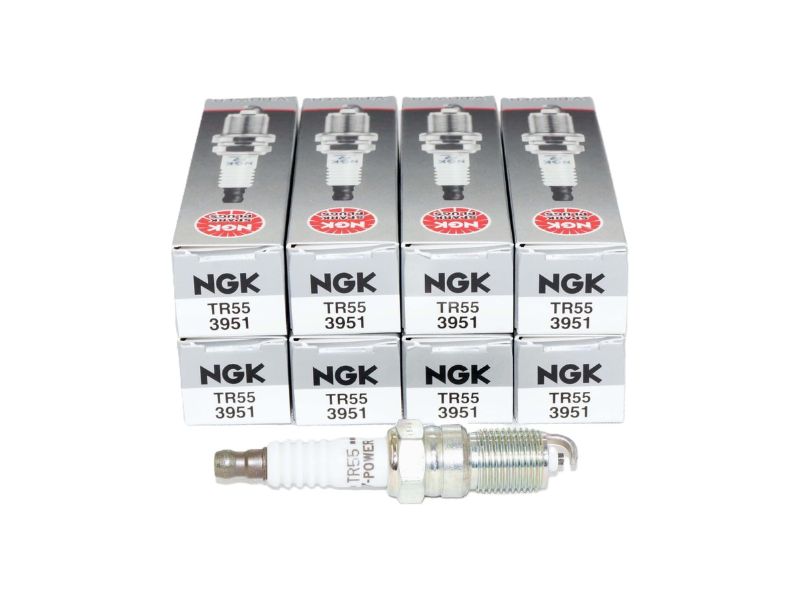
5. NGK 3951 TR55 V-Power Spark Plug
Key Features
- Conventional nickel-alloy firing surfaces
- V-Power center-electrode design
- Copper-core construction
- Resistor spark plug
- Complete eight-piece sets available
The NGK TR55 earns the fifth position because it serves a completely different type of 6.0 Vortec owner.
Instead of maximizing electrode life with platinum or iridium, it uses a more conventional nickel-alloy firing surface with NGK’s V-Power center-electrode design.
The center electrode has a V-shaped cut.
That moves the preferred firing point toward the outside edge of the electrode, reducing some of the metal surrounding the initial spark.
It is a clever way to refine a conventional plug without turning it into a premium long-life design.
Why would anyone deliberately choose a plug that may wear faster?
Because not every 6.0 Vortec needs to leave its spark plugs untouched for the longest possible interval.
Modified engines are a good example.
An LQ4 or LQ9 with a camshaft, intake changes, headers, custom calibration, higher compression, boost, or nitrous may have its plugs removed more frequently for inspection.
During tuning, examining the firing ends can help reveal obvious cylinder-to-cylinder differences.
An engine that is still being dialed in may also foul a set of plugs.
In that environment, paying extra for maximum precious-metal service life may not provide much benefit.
The TR55 also makes sense for an older work truck whose owner simply prefers traditional maintenance intervals.
Conventional plugs can run extremely well when the heat range and gap are correct.
Their main drawback is faster electrode erosion compared with platinum or iridium.
That means the effective gap may increase sooner.
Regular inspection solves much of that concern.
One detail that needs particular attention with the TR55 is the supplied gap.
A plug can arrive configured for one general application family while the actual engine requires a different final setting.
The vehicle or engine specification should determine the installed gap.
Never assume a plug is ready to install simply because it physically fits the cylinder head.
The same applies to heat range.
NGK’s numbering system does not correspond directly with every competing brand. A higher or lower number cannot be interpreted correctly without understanding that manufacturer’s scale.
This becomes especially important when moving to a colder plug for boost or nitrous.
What I Like
- Simple conventional design is easy to inspect
- V-Power center electrode has a practical purpose
- Good option for engines undergoing tuning
- Complete eight-packs are convenient
What I Do Not Like
- Nickel electrodes wear sooner than platinum or iridium
- Final gap needs careful verification
- Less attractive when maximum service interval is the goal
The TR55 is not the most advanced spark plug here, and that is exactly why some owners will prefer it. For a frequently inspected or modified LQ4/LQ9, simplicity can be more useful than maximum electrode life.
6.0 Vortec Spark Plug Comparison
| Product | Electrode Design | Best Fit in This Guide | Service Style | Main Strength | Main Limitation |
| ACDelco 41-962 | Double platinum | Many earlier Vortec-era 6.0L applications | OE-style maintenance | Proven GM-oriented service design | Service-number history requires verification |
| ACDelco 41-110 | Iridium with precious-metal ground surface | Compatible later 6.0L applications | Long-life OE-style service | Fine-wire durability | Not universal across early engines |
| NGK 1465 IZTR5B11 | Laser Iridium | Compatible GM V8 applications | Extended service | Precious metal on both firing surfaces | Higher cost |
| Bosch 9602 | Double iridium | Compatible later/high-mileage applications | Extended service | Excellent resistance to gap erosion | More plug than some stock trucks need |
| NGK TR55 | Conventional V-Power | Compatible stock or modified applications | Frequent inspection | Simple and tune-friendly | Faster electrode wear |
There is no single material that automatically wins this comparison.
Double platinum remains an excellent choice when the engine calls for it. Iridium and double-iridium designs provide impressive wear resistance, while a conventional plug can be the most practical option for an engine that gets inspected regularly.
Fitment is the deciding factor.
Know Which 6.0 Vortec You Actually Have
The term 6.0 Vortec is often used as though GM produced one engine for two decades.
That is not the case.
Several engine codes fall under the broad 6.0L truck-engine umbrella.
LQ4
The LQ4 is one of the best-known early 6.0L truck engines.
It appeared in heavy-duty Chevrolet and GMC pickups, SUVs, vans, and commercial applications.
It uses an iron block and became popular not only as a work-truck engine but also as a foundation for performance builds and engine swaps.
LQ9
The LQ9 is the higher-output sibling commonly associated with performance-oriented GM trucks and SUVs.
It shares much of its architecture with the LQ4 but uses a higher-compression configuration.
Stock spark-plug requirements remain straightforward, but modified LQ9 combinations are common enough that heat-range and gap changes often enter the discussion.
LY6
The LY6 belongs to the later Gen IV family.
It brought newer cylinder-head and engine-management technology to GM’s heavy-duty 6.0L lineup.
A later engine should not automatically receive the same service plug simply because an earlier LQ4 also displaced 6.0 liters.
L96
The L96 continued the 6.0L heavy-duty V8 formula into later Chevrolet and GMC trucks, vans, and commercial vehicles.
It is commonly associated with flex-fuel capability and later GM heavy-duty applications.
These engine codes are one reason VIN-based fitment matters.
Why Model Year Is Not Enough by Itself
Model year helps, but it should not be the only filter.
GM often offered multiple engines in the same truck family.
A Silverado 2500 HD listing may include gasoline and diesel engines.
A Suburban or Yukon XL could have more than one V8 option.
A van might share the same model year while using a different engine calibration.
Use the full combination:
- Year
- Make
- Model
- Engine displacement
- Engine code
- VIN when necessary
- Current spark-plug service number
That is a much safer process than selecting “Chevy 6.0 spark plugs.”
Understanding the 6.0 Vortec Ignition System
The 6.0 Vortec family uses individual ignition coils, but the coils are not mounted directly on top of the spark plugs.
Instead, each coil sits near its cylinder and connects to the spark plug through a short high-voltage wire.
This setup is commonly called coil-near-plug ignition.
It has several advantages over an old distributor:
- No distributor cap
- No rotor
- No long central high-voltage path
- Individual cylinder ignition control
- Precise computer-controlled timing
It also changes the maintenance picture.
A cylinder misfire may come from:
- Spark plug
- Short plug wire
- Ignition coil
- Coil connector
- Injector
- Wiring
- Compression problem
- Fuel-delivery fault
Replacing plugs blindly does not isolate those possibilities.
Platinum vs Iridium in a 6.0 Vortec
Both materials work well when the plug is correctly specified.
The differences matter mostly in electrode design and wear.
Platinum
Platinum provides strong resistance to electrode erosion.
Double-platinum plugs protect both center and ground firing surfaces.
This approach has been used successfully in GM V8s for years.
Iridium
Iridium is harder and has a very high melting point.
That allows manufacturers to create a finer center firing tip without sacrificing durability.
A smaller tip can concentrate the electrical field at the firing point.
Double Iridium
Double-iridium designs extend precious-metal protection to the ground electrode as well.
That can further slow erosion on the ground side.
Which One Is Better?
For a stock engine, the correct application is better.
A properly specified double-platinum plug can be preferable to an iridium plug that has the wrong heat range, reach, or firing position.
Material should never outrank fitment.
What Spark Plug Heat Range Means
Heat range describes how effectively a plug transfers heat away from the firing tip.
It has nothing to do with how powerful the electrical spark becomes.
A hotter plug retains more heat.
A colder plug transfers heat into the cylinder head more quickly.
The goal is to keep the firing end within a temperature window where it can resist deposits without becoming excessively hot.
A Plug That Runs Too Cold
Possible issues include:
- Carbon deposits
- Fouling
- Misfire during low-load driving
- Poor self-cleaning behavior
A Plug That Runs Too Hot
Possible concerns include:
- Excessive firing-tip temperature
- Pre-ignition risk
- Electrode damage under severe conditions
For a stock naturally aspirated 6.0 Vortec, the factory heat range is the appropriate baseline.
When a Colder Plug Makes Sense
The conversation changes when cylinder pressure or combustion heat rises well beyond stock levels.
Examples include:
- Supercharger
- Turbocharger
- Nitrous oxide
- Higher compression
- Aggressive ignition timing
- Sustained racing
- Significant power increase
A boosted LQ4 is one of the most common examples.
These engines are popular in performance builds, and a colder plug paired with a tighter gap may be appropriate once boost raises cylinder pressure.
The exact choice belongs to the tuner and engine combination.
A naturally aspirated stock Silverado 2500 HD should not copy the spark-plug setup from an 800-horsepower turbo LQ4.
Spark Plug Gap on a 6.0 Vortec
Spark plug gap is the distance between the center and ground firing electrodes.
Ignition voltage must become high enough to ionize the space and jump across it.
Why Wider Gap Requires More Voltage
As gap increases, the voltage required to initiate the spark generally increases.
A healthy ignition system can support the gap it was designed around.
Problems begin when electrode wear enlarges the gap beyond that range or when a modified engine raises cylinder pressure substantially.
Why Boosted Engines Often Use a Smaller Gap
Higher cylinder pressure makes the gap electrically more difficult to fire.
Reducing the gap slightly can make the spark easier to establish under boost.
That does not mean tighter is always better.
Closing the gap excessively reduces the exposed spark path.
The correct value balances reliable firing with good combustion initiation.
Do Not Assume One Gap Fits Every 6.0L
Different engine generations and spark-plug part numbers can have different specifications.
Use information for the actual engine.
Why Spark Plugs Matter During Towing
A 6.0 Vortec often lives in a vehicle built to work.
Towing puts the engine under sustained load.
That increases cylinder pressure and combustion temperature compared with light cruising.
Worn plugs can become more noticeable in this environment.
A truck may:
- Idle smoothly
- Drive normally when empty
- Begin hesitating on a hill
- Misfire while towing
- Lose power only under heavy throttle
That does not automatically prove the plugs are bad.
The added load simply exposes weaknesses more easily.
Spark-plug wires, coils, fuel delivery, and compression need to be considered too.
Can New Spark Plugs Improve Towing Performance?
They can restore normal performance if the old plugs are worn enough to cause weak or inconsistent ignition.
That can make a noticeable difference in a truck that was misfiring under load.
New plugs do not increase the engine’s rated towing capacity.
They also do not create torque beyond what the engine and calibration are capable of producing.
The goal is to return the ignition system to proper operation.
Signs the Spark Plugs May Be Worn
Possible symptoms include:
- Difficult starting
- Rough idle
- Hesitation
- Misfire
- Reduced acceleration
- Loss of pulling power under load
- Flashing check-engine light
- Increasing fuel consumption associated with poor combustion
These symptoms overlap with many other engine problems.
Spark plugs should be inspected, not automatically blamed.
Understanding Misfire Codes
A P0300 code indicates a random or multiple-cylinder misfire.
Cylinder-specific codes use a similar pattern.
For example, a code identifying one cylinder narrows the diagnostic process but still does not prove the spark plug is faulty.
The problem could be:
- Plug
- Plug wire
- Coil
- Injector
- Connector
- Compression
- Valve-train fault
- Wiring
One useful diagnostic method is swapping a suspected ignition component with another cylinder and watching whether the misfire follows.
Diagnosis should always be performed safely and according to proper service procedures.
Reading the Old Spark Plugs
Keep all eight old plugs organized by cylinder when removing them.
Their differences can be more informative than their average appearance.
Heavy Black Carbon
Possible causes include:
- Rich mixture
- Weak ignition
- Excessive idling
- Plug running too cold
Fuel-Wet Plug
Possible causes include:
- No spark
- Weak spark
- Injector problem
- Repeated failed combustion
Oily Plug
Oil contamination can point toward an internal engine problem.
Possible sources include ring wear, cylinder wear, valve-guide problems, or other oil-control issues.
Damaged Electrode
A melted, broken, or unusually overheated firing end deserves immediate investigation.
Do not simply install another plug and continue driving without understanding why the damage occurred.
How to Replace Spark Plugs in a 6.0 Vortec
Spark-plug replacement is manageable for many experienced DIY owners.
The main challenges are access, heat shields, stubborn boots, and reaching the rear cylinders.
Start With a Cool Engine
Allow the engine to cool fully.
The cylinder heads are aluminum in many applications, and removing plugs from a very hot engine adds unnecessary risk.
A cool exhaust system is also much safer to work around.
Disconnect One Plug Wire at a Time
The 6.0L has short wires between the coils and plugs.
Working one cylinder at a time prevents routing confusion.
Twist the boot gently before pulling.
Do not yank the cable itself.
Clean Around the Plug
Dirt should not fall toward the combustion chamber when the plug is removed.
Compressed air works well when used carefully.
Wear eye protection.
Use a Proper Spark Plug Socket
A magnetic or rubber-insert spark-plug socket helps support the plug during removal and installation.
Extensions and a swivel may be useful on harder-to-reach cylinders.
Inspect the Old Plug
Keep it associated with its cylinder.
Look at:
- Electrode wear
- Deposit color
- Oil
- Fuel
- Cracks
- Physical damage
Start the New Plug by Hand
Thread the spark plug into the cylinder head using the socket and extension without applying ratchet force at first.
It should screw in smoothly.
If it feels tight immediately, stop.
Cross-threading an aluminum cylinder head can turn a maintenance job into a major repair.
Tighten to the Proper Specification
Spark-plug torque affects:
- Mechanical sealing
- Heat transfer
- Thread loading
- Plug-shell stress
Do not guess.
Use the specification for the actual engine and spark plug.
Should You Use Anti-Seize?
Not automatically.
Many modern plugs have plated threads and are designed for dry installation.
Anti-seize reduces friction.
If the specified torque assumes dry threads, adding lubricant can create more clamping force than intended.
Always follow current spark-plug and engine-manufacturer guidance.
Should You Use Dielectric Grease?
A small amount inside the spark-plug boot can be helpful.
It can:
- Resist moisture
- Reduce boot sticking
- Make future removal easier
- Help protect the outer insulation area
Dielectric grease is an electrical insulator.
Do not coat the metal firing surfaces or plug electrodes with it.
Inspect the Spark Plug Wires
The short plug wires deserve attention every time the plugs are changed.
Look for:
- Heat damage
- Cracks
- Burned boots
- Oil contamination
- Carbon tracking
- Loose terminals
Header-equipped engines deserve extra attention.
Aftermarket exhaust tubes can sit closer to the boots than factory manifolds, dramatically increasing heat exposure.
Should Ignition Coils Be Replaced Too?
Not unless there is a reason.
Eight functioning coils do not need replacement simply because the spark plugs have reached their service interval.
Replace or test a coil when:
- A misfire follows the coil during diagnosis
- The housing is physically damaged
- The connector is burned
- Electrical testing indicates a fault
Replacing every ignition part at once can hide the original cause and add unnecessary expense.
Spark Plug Maintenance on High-Mileage 6.0 Vortec Engines
A high-mileage 6.0L can still run extremely well, but age changes the maintenance priorities.
Spark plug condition may reveal other issues.
Oil Consumption
An older engine that consumes oil can contaminate plug electrodes.
Premium iridium cannot solve worn rings or valve-guide problems.
Aging Plug Wires
Heat cycling can harden boots and increase the chance of voltage leakage.
Coil Problems
Individual coils can weaken or fail.
Injector Wear
A leaking or restricted injector can make one cylinder’s plug look different from the others.
Compression Differences
A cylinder with poor compression can misfire even with brand-new ignition components.
The plugs should therefore be viewed as part of the diagnostic picture, not in isolation.
Common Mistakes When Buying 6.0 Vortec Spark Plugs
Buying by Displacement Alone
Not every GM 6.0L uses the same spark plug.
Identify the engine code.
Treating LQ4 and L96 as Identical Applications
They belong to different engine generations and service histories.
Choosing the Most Expensive Plug
Premium materials cannot correct incorrect fitment.
Assuming Iridium Is Always Better Than Platinum
The correct OE specification matters more.
Changing the Heat Range Without a Reason
A colder plug does not automatically make a stock engine safer or more powerful.
Running an Excessively Wide Gap
More gap increases ignition-voltage demand.
Copying a Turbo Build’s Spark-Plug Setup
A boosted LQ4 may need different plugs and gap than a stock work truck.
Installing Plugs Into a Hot Cylinder Head
Work on a cool engine.
Forcing the Threads
Always start spark plugs by hand.
Automatically Applying Anti-Seize
Check the plug manufacturer’s instructions first.
Ignoring the Plug Wires
A damaged short wire can leave a misfire unchanged after new plugs are installed.
Replacing All Eight Coils Without Diagnosis
Coils should be tested rather than treated as scheduled maintenance items.
Expecting New Plugs to Add Horsepower
Fresh plugs restore lost ignition performance; they do not create new airflow or displacement.
Frequently Asked Questions
1. What are the best spark plugs for 6.0 Vortec engines?
ACDelco 41-962 is a strong OE-style starting point for many earlier 6.0L applications, while ACDelco 41-110 is important for compatible later engines.
The correct part ultimately depends on engine code and model year. LQ4, LQ9, LY6, and L96 engines should not automatically be treated as one application. NGK Laser Iridium, Bosch Double Iridium, and NGK V-Power plugs provide useful alternatives when the cross-reference matches.
2. Do all 6.0 Vortec engines use the same spark plugs?
No. GM used several 6.0L Vortec-family engines, and their spark-plug service recommendations can differ.
The LQ4 and LQ9 represent earlier Gen III-style applications, while the LY6 and L96 belong to later Gen IV configurations. Model year, VIN, engine code, and current replacement-part information should all be checked before ordering.
3. How many spark plugs does a 6.0 Vortec need?
A 6.0 Vortec V8 uses eight spark plugs.
A normal tune-up should use eight matching plugs with the same part number, heat range, electrode design, and service age. Package quantities vary, so verify whether the product is sold individually, in four-packs, or as a complete eight-plug set.
4. Is the 6.0 Vortec an LS engine?
The truck-based 6.0L engines belong to GM’s LS-derived small-block family, although truck engines are commonly identified by codes such as LQ4, LQ9, LY6, and L96.
The word “LS” is often used broadly in enthusiast conversations. For parts selection, the actual engine code is more useful because it identifies the specific configuration and generation.
5. Are ACDelco spark plugs good for a 6.0 Vortec?
Yes. ACDelco is a particularly logical choice when the exact part number matches the GM service specification for the engine.
The advantage is not simply the brand name. Correct OE-style dimensions, heat range, resistor design, and firing characteristics reduce uncertainty on a stock truck. Older and newer 6.0L engines may call for different ACDelco plug families.
6. Are iridium spark plugs good for a 6.0 Vortec?
Yes, when the engine application specifies or correctly cross-references to an iridium plug.
Iridium provides excellent wear resistance and supports a fine center electrode. That can help maintain stable firing characteristics over a long service interval. It does not make an incorrectly specified plug suitable for the engine.
7. Are platinum spark plugs good for a 6.0 Vortec?
Yes. Double-platinum plugs remain an excellent choice for many earlier Vortec-era 6.0L applications.
Platinum slows electrode erosion and has a long service history in GM V8 ignition systems. There is no need to abandon a properly specified platinum plug solely because iridium is newer.
8. What spark plug gap should a 6.0 Vortec use?
The correct gap depends on the exact engine, year, spark-plug part number, and whether the engine is stock or modified.
Do not apply one internet gap value to every LQ4, LQ9, LY6, or L96. Stock engines should follow their service specification. Boosted, nitrous, or otherwise modified combinations may use a different gap based on tuner guidance.
9. Should I run a smaller spark plug gap with boost?
Often, yes, because higher cylinder pressure makes a wide spark gap harder to fire reliably.
The amount of reduction depends on boost pressure, ignition output, plug design, fuel, compression, and calibration. There is no universal boosted-LQ4 gap that is correct for every build.
10. Do supercharged or turbo 6.0 Vortec engines need colder plugs?
Many high-output boosted engines use a colder spark plug, but the correct heat range depends on the complete setup.
Boost raises cylinder pressure and can increase combustion heat, making a colder plug appropriate in some combinations. The tuner or engine builder should establish the heat range instead of copying a recommendation from an unrelated build.
11. Can bad spark plugs cause a P0300 code?
Yes. Worn, fouled, damaged, or incorrectly gapped plugs can contribute to a P0300 random/multiple-cylinder misfire.
A P0300 can also result from coils, plug wires, injectors, fuel delivery, intake leaks, wiring, or mechanical engine problems. The code indicates a misfire condition rather than identifying the failed component.
12. Why does my 6.0 Vortec misfire under load?
Higher cylinder pressure under load increases ignition-voltage demand, which can expose weak plugs, wires, or coils.
Fuel-pressure problems, injectors, and compression faults can cause similar symptoms. A truck that runs smoothly unloaded but misfires while towing deserves a complete ignition and fuel-system diagnosis.
13. Can worn spark plugs reduce towing performance?
Yes, if they are worn enough to cause inconsistent ignition or misfires under load.
Fresh plugs can restore the engine’s normal pulling performance when ignition quality has deteriorated. They cannot increase the vehicle’s rated towing capacity or create additional torque beyond the healthy engine’s normal output.
14. Should I replace the spark plug wires with the plugs?
Replace the short plug wires when inspection or testing shows heat damage, cracking, carbon tracking, corrosion, or excessive resistance.
They do not automatically need replacement every time. However, the wires sit close to the exhaust and can deteriorate from repeated heat cycling, especially on trucks with headers.
15. Should I replace all eight ignition coils during a tune-up?
No. Ignition coils are not normal scheduled-replacement items when they are functioning correctly.
A failed or weak coil should be diagnosed and replaced as needed. Replacing eight good coils can add substantial expense without improving engine operation.
16. Can new spark plugs improve fuel economy?
They can restore fuel economy when worn or misfiring plugs were causing inefficient combustion, but they do not guarantee extra MPG.
A properly running engine already ignites the mixture effectively. Vehicle weight, towing load, gearing, driving style, tire pressure, fuel quality, and mechanical condition have major effects on real-world fuel consumption.
17. Can spark plugs add horsepower to a 6.0 Vortec?
Fresh plugs can restore power lost to worn or fouled plugs, but they do not normally add horsepower beyond a healthy engine’s baseline.
Meaningful power gains come from airflow, compression, camshaft, exhaust, fuel, boost, and calibration changes. The spark plug’s job is to ignite the mixture reliably.
18. Can I change 6.0 Vortec spark plugs myself?
Yes. Many experienced DIY owners can replace them with a spark-plug socket, extensions, hand tools, and a torque wrench.
Work on a cool engine, clean around the plugs, start every replacement by hand, and inspect the short plug wires while access is available. Rear cylinders can be tight, so patience matters more than force.
Conclusion
Choosing the best spark plugs for 6.0 Vortec engines starts with identifying the engine rather than deciding which electrode material sounds most advanced.
For many earlier LQ4 and LQ9 applications, ACDelco 41-962 provides a dependable double-platinum service path. Its OE-oriented construction and durable firing surfaces fit the character of a stock work truck particularly well.
ACDelco 41-110 becomes more relevant in compatible later 6.0L applications, where its fine iridium center electrode offers excellent resistance to wear. NGK 1465 Laser Iridium and Bosch 9602 Double Iridium provide long-life aftermarket alternatives, while NGK TR55 is better suited to an engine that receives regular inspection or is still being tuned.
The engine code matters throughout this decision. An LQ4, LQ9, LY6, and L96 may all be called 6.0 Vortec engines in everyday conversation, but their model years and service-part recommendations are not automatically identical.
Before installing anything, verify the VIN and engine, confirm the correct heat range and gap, and check the condition of all eight short spark-plug wires. Work with a cool engine, start the plugs by hand, and tighten them according to the proper specification.
For a stock 6.0L GM truck, staying close to the correct OE-style ignition specification remains the most reliable path to smooth idle, dependable cold starts, clean acceleration, and consistent performance when the engine is working hard.