Finding the best spark plugs for 5.3 Vortec engines is not as simple as choosing the most expensive iridium plug available. GM used the 5.3L Vortec name across several engines and generations of Chevrolet and GMC trucks and SUVs, which means year, engine code, and original plug specification matter.
The familiar 5.3L Vortec family appears in vehicles such as the Chevrolet Silverado 1500, GMC Sierra 1500, Chevrolet Tahoe, Chevrolet Suburban, GMC Yukon, Yukon XL, and Chevrolet Avalanche. Engines including the LM7, L59, L33, LH6, LMG, and LC9 are commonly associated with this era.
For a compatible stock or near-stock engine, my primary recommendation is the ACDelco GM Original Equipment 41-110 Iridium Spark Plug. It combines an iridium center electrode, platinum ground-electrode tip, OE-oriented dimensions, and a factory-set gap that works well when the engine specifically calls for this plug.
The NGK 1465 IZTR5B11 Laser Iridium Spark Plug is another excellent choice for compatible applications. Its Laser Iridium construction is particularly attractive for owners who want durable firing surfaces and a complete eight-plug set.
One distinction is especially important: a later 5.3L EcoTec3 engine should not automatically be treated as the same application as an earlier 5.3L Vortec. Both engines share the same displacement, but their engine generations, combustion systems, and service parts differ.
5 Best Spark Plugs for 5.3 Vortec Engines
| Image | Product Name | Check Price |
|---|---|---|
Best Choice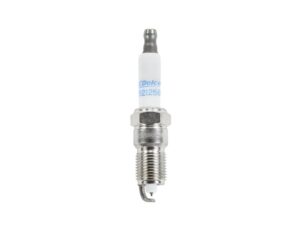 | ACDelco GM Original Equipment 41-110 Iridium Spark Plug | Check Price |
Second Best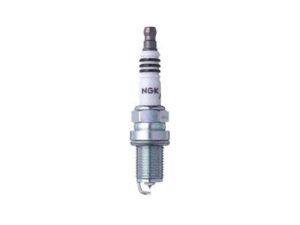 | NGK 1465 IZTR5B11 Laser Iridium Spark Plug | Check Price |
Third Choice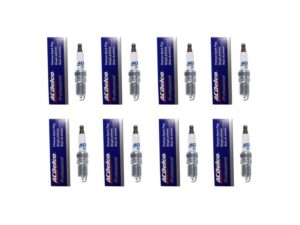 | ACDelco GM Original Equipment 41-962 Double Platinum Spark Plug | Check Price |
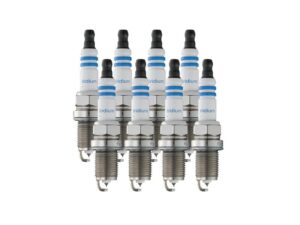 | Bosch 9602 Double Iridium Spark Plug | Check Price |
 | NGK 7397 TR5IX Iridium IX Spark Plug | Check Price |
These five spark plugs cover several useful approaches to maintaining a 5.3L Vortec. Some stay close to an OE-style specification, while others place more emphasis on long electrode life or a fine-wire firing design.
Fitment still comes first. A product ranked fifth but specified for the exact engine is a better purchase than the number-one product if that first plug does not match the vehicle.
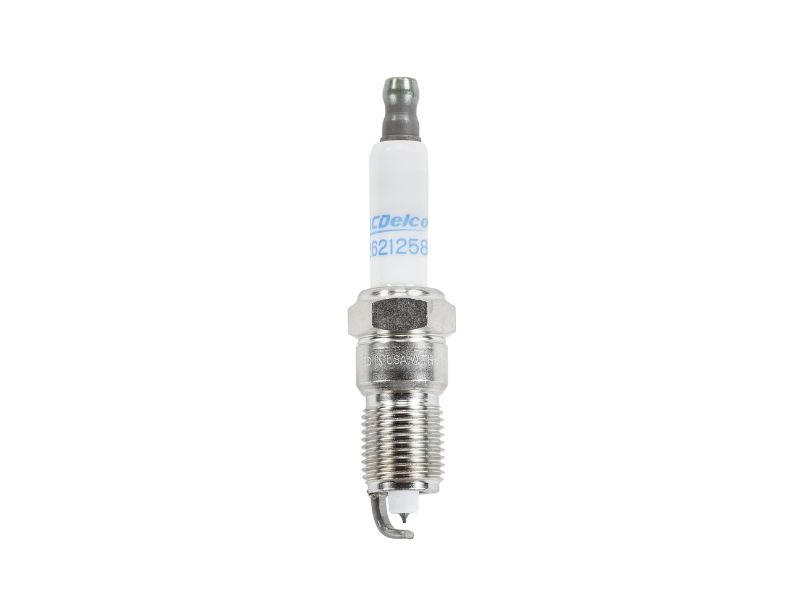
1. ACDelco GM Original Equipment 41-110 Iridium Spark Plug
Key Features
- Iridium center-electrode tip
- Platinum ground-electrode tip
- M14 x 1.25 thread
- Tapered-seat construction
- Approximately 0.040-inch factory gap
The ACDelco 41-110 is the most balanced starting point for a compatible stock 5.3 Vortec because it follows the type of specification most owners want from an everyday GM truck or SUV: correct dimensions, durable electrode materials, and no unnecessary performance gimmicks.
Its firing end uses iridium on the center electrode and platinum at the ground-electrode contact area. Those precious metals resist erosion better than a basic conventional firing surface, helping the plug maintain its geometry as mileage accumulates.
That matters because spark plug wear gradually increases the effective gap. As the gap opens, the ignition coil has to create more voltage to start the spark. An ignition system that has no trouble at idle can eventually begin to struggle under acceleration, towing load, or other conditions where cylinder pressure rises.
The physical specifications are just as important as the electrode material. The 41-110 belongs to the familiar M14 x 1.25 tapered-seat family used in many GM V8 applications. Correct thread diameter, pitch, reach, seat type, and firing-end position determine whether the plug belongs in the cylinder head in the first place.
The roughly 0.040-inch factory gap also makes the 41-110 convenient for applications that specify this setting. Fine-wire precious-metal plugs should still be inspected before installation, but there is little reason to bend a perfectly good electrode simply because an old tune-up habit says every new spark plug must be aggressively re-gapped.
In a healthy Silverado or Tahoe, the purpose of this plug is consistent ignition. It is not supposed to create an unrealistic horsepower increase.
That distinction is important. When worn plugs are replaced, a driver may notice smoother acceleration, easier starting, or a more stable idle because lost performance has been restored. If the old plugs were already functioning correctly, changing electrode material alone should not suddenly transform the engine.
The 41-110 is particularly appealing for a truck that still operates close to its original configuration. A stock intake, stock compression ratio, naturally aspirated operation, and factory-style ignition system generally do not require an unusual heat range or experimental plug gap.
Owners of modified engines need to be more careful. Forced induction, nitrous oxide, significant compression changes, and custom calibration can change cylinder pressure and combustion temperature enough to justify different plug choices.
Package quantity is another practical detail. The 5.3 Vortec is a V8 and requires eight spark plugs for a complete replacement. Depending on how the product is packaged, several boxes may be needed.
What I Like
- OE-oriented design suits stock engines well
- Iridium and platinum protect both firing surfaces
- Physical specifications are easy to verify
- Factory-set gap simplifies installation
What I Do Not Like
- It may be sold individually rather than as an eight-pack
- It does not fit every GM 5.3L engine
- Fine electrodes can be damaged by careless adjustment
For a compatible 5.3 Vortec that calls for this plug family, the 41-110 offers exactly what a routine tune-up should: predictable fit, durable electrodes, and dependable ignition without exaggerated claims.
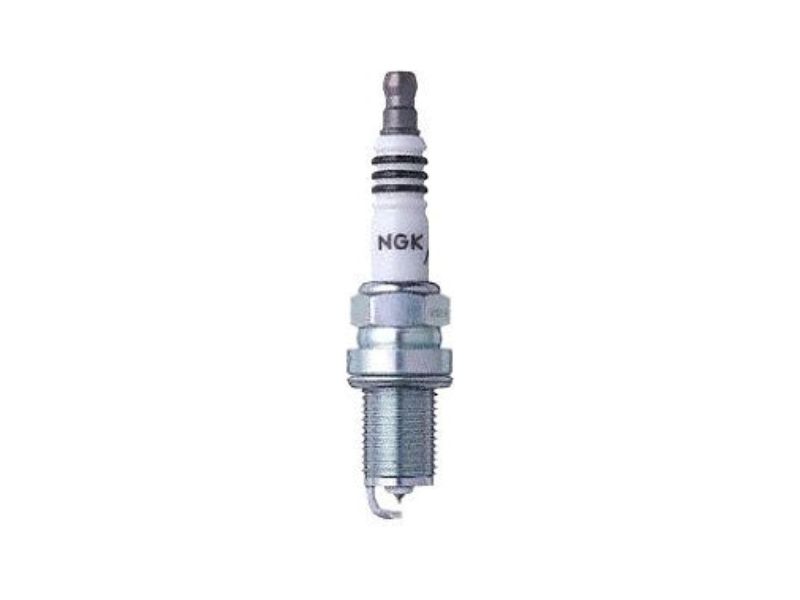
2. NGK 1465 IZTR5B11 Laser Iridium Spark Plug
Key Features
- Laser Iridium construction
- Fine-wire center electrode
- Precious-metal ground-electrode surface
- Tapered-seat configuration
- Complete eight-plug sets commonly available
The NGK 1465 IZTR5B11 takes the second position because it combines long-life construction with a practical package for an eight-cylinder engine.
NGK’s Laser Iridium range differs from a simple single-iridium plug. The center electrode uses a fine iridium firing tip while the ground side also incorporates a precious-metal surface. Protecting both sides of the spark gap helps reduce electrode wear during long service.
That makes this design particularly attractive for a 5.3 Vortec that accumulates substantial mileage.
A Silverado used for a daily commute may see thousands of highway miles each year. A Suburban or Yukon may spend its life carrying passengers across long interstate trips. A Sierra may divide its time between work use and towing. In all of those cases, stable electrode geometry over a long period is more useful than aggressive marketing about horsepower.
The plug also fits naturally into a modern maintenance strategy. Instead of changing plugs frequently and constantly adjusting gaps, a correctly specified long-life plug can remain in service while the ignition system operates normally.
An eight-pack is another small but meaningful advantage.
The Vortec V8 requires eight matching spark plugs. Buying a complete set eliminates the need to calculate quantities across single boxes or four-packs and reduces the risk of accidentally mixing different plug models.
Still, every new plug deserves inspection.
Shipping damage can bend a ground strap or crack an insulator. If a fine-wire plug appears damaged, replacing it is preferable to forcing the electrode back into position.
The NGK option also works well for owners who prefer a well-established aftermarket brand rather than automatically staying with ACDelco.
Brand preference should not replace fitment verification, though.
A spark plug can share the same thread diameter and reach as another plug while differing in heat range, resistor design, electrode projection, or supplied gap. All those specifications need to align with the engine.
For a stock truck, there is also no reason to treat Laser Iridium as a racing upgrade. Its clearest advantage is longevity.
A healthy 5.3L Vortec already has enough ignition energy to fire an appropriate factory-style plug. A premium electrode mainly helps preserve that firing condition for a longer period.
What I Like
- Precious-metal surfaces on both sides of the gap
- Strong electrode durability
- Convenient complete V8 set
- Good fit for high-mileage highway use
What I Do Not Like
- Costs more than basic platinum designs
- Exact fitment still needs verification
- Premium material does not guarantee additional horsepower
The NGK 1465 is a strong option for a compatible 5.3 Vortec where long-term electrode stability matters. Its biggest strengths are durability, convenient packaging, and a proven fine-wire design.
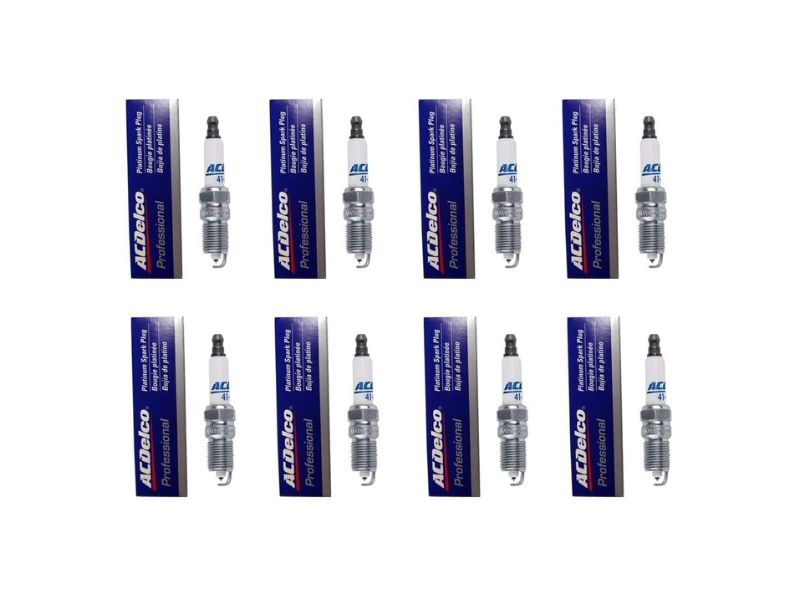
3. ACDelco GM Original Equipment 41-962 Double Platinum Spark Plug
Key Features
- Double-platinum firing surfaces
- Copper center-electrode core
- Resistor construction
- OE-oriented design
- Available as a complete eight-plug set
The ACDelco 41-962 represents an earlier but still highly practical approach to long-life Vortec ignition: double platinum.
Double-platinum construction places wear-resistant platinum at both firing surfaces. That is particularly useful because electrical discharge affects both sides of the plug gap over thousands of miles.
Platinum is sometimes dismissed simply because iridium is newer and allows an even finer center electrode. That is a poor reason to reject a properly specified platinum plug.
A stock naturally aspirated Vortec does not require the newest electrode material simply to run correctly.
If the engine’s service information points toward a double-platinum plug, there is little reason to change solely because another material sounds more premium.
The copper center core remains important as well.
Copper transfers heat efficiently, helping move combustion heat from the firing end toward the shell and cylinder head. This is a good example of why calling spark plugs “copper,” “platinum,” or “iridium” can oversimplify their construction. A plug may use copper internally while placing a much more durable metal at the exposed firing surface.
The 41-962 also fits well into the maintenance philosophy of an older Vortec-era truck.
Many of these engines now have substantial mileage. When returning one to a known baseline, fitting eight matching plugs and inspecting the short plug wires can eliminate several ignition variables at once.
If a rough idle or misfire remains afterward, diagnosis can move toward other causes such as coils, injectors, intake leaks, fuel pressure, compression, or wiring.
The main challenge is service-history confusion.
GM replacement part numbers can change over time. An original plug may be superseded by a newer service plug, and different catalogs may show older and newer numbers depending on how they manage those supersessions.
That does not mean one catalog is necessarily wrong.
The sensible approach is to verify the exact vehicle and compare the original plug number with the current service recommendation.
What I Like
- Double-platinum design resists firing-surface wear
- Strong connection to Vortec-era service applications
- Copper core supports heat transfer
- Eight-pack makes a complete tune-up simple
What I Do Not Like
- Superseded part numbers can create confusion
- Not as fine-wire focused as newer iridium options
- Exact year and engine still need confirmation
The 41-962 remains an excellent choice when it matches the engine’s current service specification. Older technology does not automatically mean inferior technology, especially in a stock Vortec designed around this type of plug.
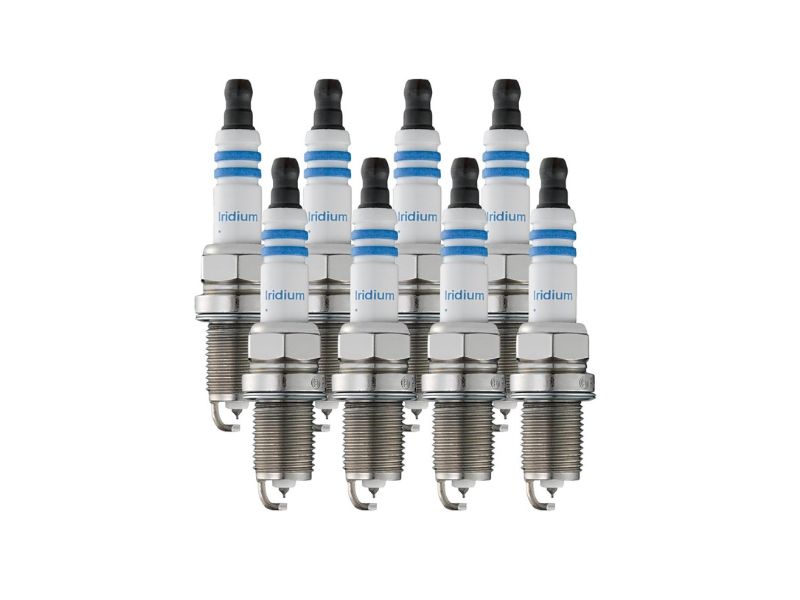
4. Bosch 9602 Double Iridium Spark Plug
Key Features
- Double-iridium firing design
- Fine-wire center electrode
- Precious-metal ground-electrode surface
- Nickel-plated threads
- Long-life construction
Bosch 9602 emphasizes electrode durability by using iridium at both sides of the firing gap.
A fine iridium center electrode produces a concentrated firing point, while the ground electrode receives its own iridium wear surface. This double-iridium arrangement is intended to slow erosion on both electrodes.
That becomes useful when the goal is a long service interval.
Spark plugs do not suddenly stop working at a fixed mileage. Their performance usually changes gradually as deposits accumulate and the electrodes wear.
Electrode erosion increases the gap, and a larger gap raises ignition-voltage demand.
A premium double-iridium design attempts to slow that process.
Bosch also uses nickel-plated threads on this plug. Plated spark plug threads are generally designed for dry installation rather than being automatically coated with anti-seize.
That installation detail matters more than it may seem.
Anti-seize changes friction between the plug shell and cylinder-head threads. A torque wrench may show the recommended value while the lubricated threads actually create greater clamping force than intended.
A properly installed dry plated plug avoids that problem.
In real-world Vortec use, Bosch 9602 makes the most sense on a compatible vehicle where long-term maintenance intervals matter.
Someone putting heavy highway mileage on a Sierra or Avalanche may appreciate a plug built specifically to resist electrode wear.
The same logic applies to a truck where spark-plug access is inconvenient enough that the owner would rather perform the job correctly and leave it alone for a long period.
Double iridium is not a substitute for proper diagnosis.
If the engine is oil-fouling plugs or running excessively rich, premium precious metals will not solve the underlying problem.
Likewise, a weak coil or damaged short plug wire can still misfire with a brand-new double-iridium plug.
What I Like
- Durable precious-metal firing surfaces
- Fine-wire electrode design
- Nickel-plated threads simplify installation
- Strong option for long-mileage service
What I Do Not Like
- More expensive than basic platinum alternatives
- Provides little extra value if plugs are being fouled prematurely
- Compatibility must be verified carefully
Bosch 9602 suits the owner who wants a durable premium plug and plans to keep the truck for a long time. Its value comes from electrode longevity rather than promises of instant performance gains.
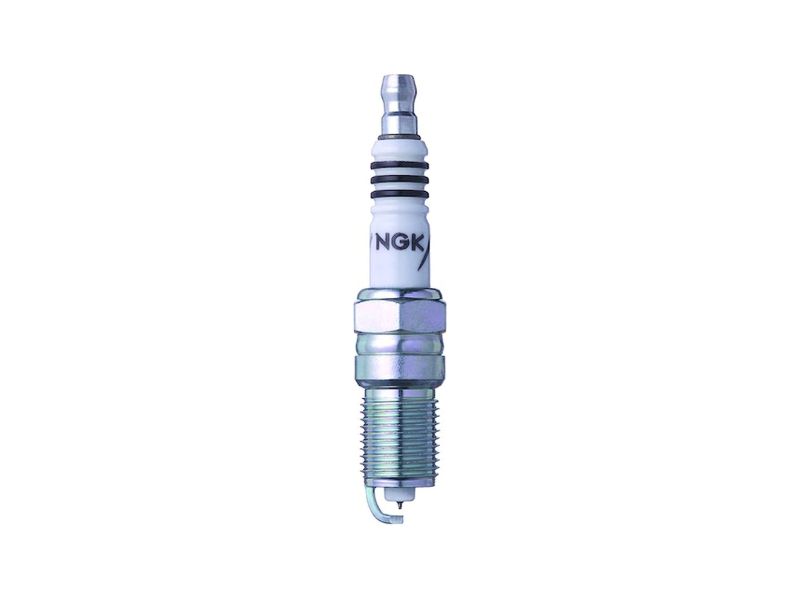
5. NGK 7397 TR5IX Iridium IX Spark Plug
Key Features
- 0.6 mm fine-wire iridium center electrode
- Nickel-alloy ground electrode
- M14 x 1.25 thread
- Approximately 0.709-inch reach
- Tapered-seat configuration
The NGK TR5IX rounds out the list with a slightly different philosophy from the Laser Iridium and double-iridium plugs above.
Its center electrode uses a fine iridium tip, while the ground strap retains a conventional nickel-alloy firing surface.
That means the center electrode has strong wear resistance, but the ground side may wear more quickly than it would in a dual-precious-metal plug.
For some owners, that tradeoff is completely acceptable.
A truck that receives regular inspection or is maintained more frequently may not need the longest possible plug life. The TR5IX provides a fine-wire firing point without pushing the design toward maximum service interval.
Its approximately 0.709-inch reach, M14 x 1.25 thread, and tapered seat place it within a common physical family for many GM V8 applications.
Again, matching basic dimensions does not guarantee compatibility.
Heat range and firing characteristics matter too.
The fine center electrode can help concentrate the electric field around the firing point. In a correctly matched engine, that supports dependable ignition.
What it does not do is create extra engine displacement, airflow, compression, or fuel energy.
For that reason, descriptions such as “performance plug” need context.
If worn plugs are replaced with TR5IX plugs, restored acceleration may feel like a performance increase. In reality, the engine is simply returning to normal combustion.
The TR5IX becomes especially appealing for an older Vortec that is still in good mechanical condition but receives more hands-on maintenance.
The plugs are easy to inspect during other ignition work, and replacing them sooner than a dual-metal design may not be a concern.
What I Like
- Very fine iridium center electrode
- Familiar dimensions for many GM V8 applications
- Good choice for regularly maintained trucks
- Complete eight-plug packages are convenient
What I Do Not Like
- Nickel ground electrode may wear sooner
- Not the strongest option for maximum service life
- “Performance” positioning can create unrealistic expectations
The TR5IX is a practical option for drivers who prefer NGK’s fine-wire Iridium IX construction and do not mind checking the ignition system periodically.
5.3 Vortec Spark Plug Comparison
| Product | Electrode Design | Thread / Reach | Typical Gap | Best Suited For | Main Limitation |
| ACDelco 41-110 | Iridium center, platinum ground | M14 x 1.25 / about 17.5 mm | About 0.040 in. | Compatible stock Vortec applications | Often sold individually |
| NGK 1465 IZTR5B11 | Laser Iridium | 14 mm / about 0.708 in. | Application specific | Long-life V8 service | Higher cost |
| ACDelco 41-962 | Double platinum | Application specific | Application specific | Older OE-style Vortec service | Part-number supersessions |
| Bosch 9602 | Double iridium | Application specific | Pre-gapped | High-mileage applications | Premium price |
| NGK 7397 TR5IX | Iridium center, nickel ground | M14 x 1.25 / about 0.709 in. | About 0.039 in. | Regularly maintained engines | Ground electrode wears sooner |
The important difference between these spark plugs is not simply whether the box says platinum or iridium.
The ACDelco 41-110 offers a particularly balanced OE-style configuration. NGK Laser Iridium and Bosch double iridium place more emphasis on long-term firing-surface durability. ACDelco 41-962 remains a useful double-platinum option, while the NGK TR5IX focuses on a fine-wire iridium center electrode with a more traditional ground strap.
Fitment always takes priority over ranking.
Important NLP Terms for 5.3 Vortec Spark Plug Content
Several technical terms are closely connected with this topic and help explain the buying decision accurately:
- 5.3L Vortec V8
- LM7
- L59
- L33
- LH6
- LMG
- LC9
- GM small-block V8
- Chevrolet Silverado 1500
- GMC Sierra 1500
- Chevrolet Tahoe
- Chevrolet Suburban
- GMC Yukon
- Chevrolet Avalanche
- Iridium spark plug
- Double platinum
- Double iridium
- Laser Iridium
- Spark plug gap
- Heat range
- M14 x 1.25 thread
- Tapered seat
- Spark plug reach
- Resistor spark plug
- Coil-near-plug ignition
- Ignition coil
- Spark plug wire
- Misfire
- P0300
- Rough idle
- Cold start
- Towing load
- Cylinder pressure
- Combustion chamber
- Torque specification
- Dielectric grease
- Anti-seize
- VIN
- RPO code
These terms belong naturally in a technically useful 5.3 Vortec guide rather than being inserted purely for keyword density.
How to Choose Spark Plugs for a 5.3 Vortec
A 5.3 Vortec spark plug should be selected according to the actual engine and vehicle rather than the displacement badge alone.
Confirm the Engine Generation
First determine whether the engine genuinely belongs to the Vortec-era 5.3L family.
Common engine codes include:
- LM7
- L59
- L33
- LH6
- LMG
- LC9
These engines appeared across several Chevrolet and GMC vehicles and model years.
Later 5.3L EcoTec3 engines belong to a different GM small-block generation. They use newer engine-management and combustion technology, including direct injection in many applications.
The fact that both families displace roughly 5.3 liters does not make their service parts interchangeable.
Check the Model Year
Model year is the quickest way to narrow the application.
A 2003 Silverado 5.3 and a much newer Silverado with a 5.3L engine may belong to completely different engine families.
Even within the Vortec period, service plugs can change as engine codes and calibrations evolve.
Use the VIN and RPO Code
A VIN helps identify the original engine configuration.
GM’s RPO codes, or Regular Production Option codes, can provide even more detailed information about the vehicle’s factory equipment.
This is particularly useful when distinguishing:
- Flex-fuel vs gasoline-only engines
- Aluminum-block vs iron-block versions
- Different engine codes sharing the same displacement
- Similar model years with different drivetrain configurations
Check the Existing Spark Plug
The plug already installed in the engine can provide useful information.
Record the complete part number before throwing the old plugs away.
Do not assume the existing plug must be correct, especially on a used truck with unknown maintenance history, but it provides another reference point that can be compared with current application information.
Understand Spark Plug Thread Size
The thread diameter and pitch determine whether the plug can physically screw into the cylinder head.
Several 5.3 Vortec plug families use an M14 x 1.25 thread.
That measurement alone is not enough for compatibility.
Two plugs can have identical threads but different reaches, heat ranges, seats, or electrode positions.
Understand Spark Plug Reach
Reach refers to the length of the threaded portion entering the cylinder head.
This measurement directly affects where the firing tip sits inside the combustion chamber.
A plug with too little reach may position the electrodes too far back in the head.
A plug with excessive reach may protrude deeper than intended.
Either situation can interfere with normal combustion and potentially create mechanical or thermal problems.
Understand the Tapered Seat
Many Vortec-era plugs use a tapered seat.
The tapered metal surface seals directly against the cylinder head.
This differs from a gasket-seat spark plug, which uses a crush washer.
Never assume those seat styles are interchangeable.
Platinum vs Iridium Spark Plugs
Both materials are useful because they resist electrode erosion.
Platinum has a long history in extended-life spark plugs.
Iridium is even harder and can support a smaller firing tip while maintaining good durability.
For a stock 5.3 Vortec, there is no reason to reject a properly specified platinum plug simply because iridium sounds more advanced.
The correct plug matters more than the material hierarchy.
Double Platinum
A double-platinum spark plug uses platinum at both the center and ground firing surfaces.
This helps both electrodes resist wear.
That construction is particularly useful in ignition systems where spark polarity and firing behavior make wear on both sides important.
Double Iridium
A double-iridium plug applies iridium to both firing surfaces.
The primary benefit is long-term resistance to erosion.
That can be useful in high-mileage vehicles where extended service life is desirable.
Laser Iridium
Laser Iridium plugs typically combine a fine iridium center electrode with another precious-metal surface on the ground electrode.
This construction is aimed at long service life rather than simply creating a finer spark.
Heat Range
The heat range of a spark plug describes how quickly heat travels away from the firing tip.
A colder plug transfers heat away faster.
A hotter plug retains more heat around the firing end.
The terminology has nothing to do with electrical spark intensity.
A stock naturally aspirated 5.3 Vortec normally operates best with the specified heat range.
Using a colder plug without a reason can promote deposits during normal driving.
Using a hotter plug than the engine requires can raise firing-tip temperatures unnecessarily.
Modified Engines Need Different Thinking
Plug selection becomes more complicated when the engine has:
- Forced induction
- Nitrous oxide
- Significantly higher compression
- Aggressive ignition timing
- Custom tuning
- Major cylinder-head changes
- Sustained high-rpm use
Higher cylinder pressure and combustion temperature can justify a colder heat range or narrower gap.
At that point, recommendations from the engine builder or tuner matter more than generic stock specifications.
How Spark Plugs Affect 5.3 Vortec Performance
A gasoline engine relies on the spark plug to begin combustion at precisely the right time.
Voltage from the ignition coil travels through the short plug wire to the spark plug.
Once the voltage becomes high enough to overcome the resistance across the electrode gap, electricity jumps between the electrodes.
That spark creates the initial flame kernel.
Coil-Near-Plug Ignition
The 5.3 Vortec uses a coil-near-plug ignition system.
Each cylinder has its own ignition coil mounted relatively close to the spark plug, with a short high-voltage wire connecting the two.
This arrangement differs from an older distributor-based Chevy V8, where one coil and distributor send ignition voltage around the engine.
Individual coils improve ignition control, but the plug wire still matters.
A cracked or burned short wire can leak voltage and create a misfire even when the spark plug itself is new.
Why Worn Spark Plugs Cause Misfires
Spark plug electrodes gradually wear.
As the firing surfaces erode, the gap can increase.
The larger gap requires more voltage to fire.
Eventually, a coil that previously handled the gap easily may struggle, particularly under load.
Why Problems Often Appear During Acceleration
Cylinder pressure increases when the throttle opens.
Higher pressure makes the spark gap electrically harder to cross.
That is why an engine can idle smoothly and then begin stumbling when accelerating onto a highway or pulling a trailer uphill.
Possible causes include:
- Worn spark plugs
- Excessive plug gap
- Weak ignition coils
- Damaged plug wires
- Fuel injector problems
- Low fuel pressure
- Compression problems
- Intake leaks
A misfire under load deserves diagnosis rather than immediate assumptions.
5.3 Vortec Spark Plug Gap
Spark plug gap is one of the most frequently misunderstood specifications.
A value around 0.040 inch appears with several common Vortec-era plug applications, but it should never be applied blindly to every 5.3L engine.
The correct gap depends on:
- Model year
- Engine code
- Spark plug part number
- Ignition system
- Engine modifications
- Calibration
Why Gap Matters
The gap determines how far the spark must travel.
A wider gap generally requires more voltage.
If the gap becomes too large, the engine may develop a misfire under load.
A gap that is too small is not ideal either because the spark has less exposure to the air-fuel mixture.
Should New Iridium Plugs Be Re-Gapped?
Check the plug against the application specification, but handle fine-wire electrodes carefully.
If the plug is already correctly pre-gapped and physically undamaged, unnecessary bending creates more risk than benefit.
Never force a thick tool against a delicate iridium center tip.
A visibly damaged new plug is better replaced.
5.3 Vortec Spark Plug Installation
Replacing spark plugs on a 5.3 Vortec is manageable for an experienced DIY owner.
The job becomes much easier with patience, the correct extensions, and a quality spark-plug socket.
Let the Engine Cool
Always begin with a cool engine.
The cylinder heads are aluminum, and removing or installing spark plugs while the engine is very hot adds unnecessary risk.
Clean Around the Plugs
Dirt and debris can accumulate near the spark plug openings.
Clean the area before removing the old plug.
The goal is to prevent contamination from falling toward the combustion chamber.
Work One Cylinder at a Time
Remove one plug wire, change that spark plug, then reconnect the same wire.
This keeps the process organized and minimizes the possibility of incorrect connections.
Remove the Boot Carefully
Grip the plug boot rather than pulling directly on the wire.
A twisting motion often helps break the boot loose.
Older wires can become brittle after years of exposure to engine and exhaust heat.
Inspect the Old Spark Plug
Do not immediately throw the old plugs away.
Keep them organized by cylinder.
Look for differences such as:
- Heavy carbon deposits
- Oil contamination
- Fuel-wet electrodes
- Cracked insulators
- Excessive gap
- Melted or damaged electrodes
- One unusually clean plug
One plug that looks dramatically different from the other seven may reveal a cylinder-specific problem.
Start the New Plug by Hand
Place the plug into the spark-plug socket and thread it using the extension without the ratchet at first.
The plug should turn easily.
If it becomes tight almost immediately, stop.
Backing out and realigning the plug takes seconds. Repairing damaged aluminum cylinder-head threads can take much longer.
Use the Correct Torque
Spark plug torque matters for both sealing and heat transfer.
Under-tightening can interfere with heat transfer and sealing.
Over-tightening can damage the plug or cylinder-head threads.
Use the correct specification for the actual engine and plug rather than guessing.
Should Anti-Seize Be Used?
Do not automatically apply anti-seize to every modern spark plug.
Many current plugs have plated shells designed for dry installation.
Lubricating the threads changes friction and can result in excessive clamping force even when a torque wrench displays the expected value.
Follow the plug manufacturer’s installation guidance.
What About Dielectric Grease?
A small amount of dielectric grease can be useful inside the rubber plug boot.
Its purpose is to help seal out moisture and make future boot removal easier.
It should not be spread over the firing end, spark plug threads, or electrical contact surfaces as though it were conductive grease.
5.3 Vortec Spark Plug Maintenance
Spark plug life depends on more than electrode material.
Engine condition plays a major role.
A premium plug can still fail early if the engine:
- Burns oil
- Runs excessively rich
- Has a leaking injector
- Has weak ignition
- Experiences coolant contamination
- Uses the wrong heat range
Follow the Vehicle Maintenance Schedule
Do not apply one replacement mileage to every Vortec engine.
Different years and service plug types can have different recommended intervals.
Use maintenance information for the exact vehicle.
Inspect Earlier When Symptoms Appear
Spark plugs deserve attention when the engine develops:
- Hard starting
- Rough idle
- Hesitation
- Loss of power under load
- Misfire codes
- Flashing check-engine light
- Unusual fuel consumption
Those symptoms do not prove the plugs are bad, but they justify inspection.
Check the Short Plug Wires
The short plug wires operate near exhaust heat.
Inspect them for:
- Burn marks
- Cracks
- Brittle boots
- Carbon tracking
- Corrosion
- Loose terminals
One damaged wire can create the same misfire after eight brand-new plugs are installed.
Ignition Coils Do Not Need Automatic Replacement
There is no reason to replace eight functioning coils simply because the spark plugs are due.
Test or replace coils when diagnosis indicates a problem.
Blindly installing eight new coils can add substantial cost without solving the actual fault.
Common 5.3 Vortec Spark Plug Mistakes
Buying Plugs for “Any Chevy 5.3”
Not every 5.3L GM engine is the same.
Vortec and EcoTec3 applications need to be separated.
Ignoring the Engine Code
Two vehicles with the same displacement can have different engine codes and service requirements.
Choosing by Electrode Material Alone
Iridium does not make an incorrectly sized plug compatible.
Fitment comes first.
Assuming the Supplied Gap Is Always Correct
A spark plug may be manufactured for multiple applications.
Verify the actual vehicle specification.
Roughly Re-Gapping Fine-Wire Plugs
Iridium firing tips are small and delicate.
Avoid forcing gapping tools against them.
Using Anti-Seize Automatically
Thread lubricant changes torque behavior.
Modern plated plugs often do not require anti-seize.
Replacing Plugs Without Inspecting Wires
A damaged plug wire can leave the engine misfiring with an entirely new set of spark plugs.
Assuming Every P0300 Code Means Bad Plugs
A P0300 random/multiple-cylinder misfire can come from many causes.
Possible problems include ignition coils, wires, injectors, fuel delivery, vacuum leaks, wiring, and mechanical faults.
Mixing Spark Plug Models
Use eight matching plugs during routine maintenance.
Mixing heat ranges or electrode designs introduces unnecessary variables.
Expecting Guaranteed Fuel-Economy Gains
Fresh plugs can restore efficiency lost through worn or misfiring plugs.
They cannot guarantee a specific increase in miles per gallon on an engine that was already running correctly.
Frequently Asked Questions
1. What are the best spark plugs for 5.3 Vortec engines?
For a compatible stock engine, ACDelco 41-110 is a strong OE-style choice, while NGK 1465 is an excellent long-life alternative.
The exact answer depends on model year, engine code, and current service specification. Older Vortec applications may still cross-reference to a double-platinum design such as ACDelco 41-962, while other owners may prefer Bosch double-iridium or NGK Iridium IX plugs. Correct fitment always matters more than the ranking.
2. Do all 5.3 Vortec engines use the same spark plugs?
No. Different 5.3 Vortec engine codes and model years can use different service plug specifications.
The Vortec family includes engines such as LM7, L59, L33, LH6, LMG, and LC9. Later EcoTec3 5.3L engines belong to another generation entirely. Use the model year, VIN, engine code, and current application information before buying plugs.
3. How many spark plugs does a 5.3 Vortec need?
A 5.3 Vortec V8 uses eight spark plugs.
One plug serves each cylinder. During scheduled maintenance, using a complete matching set keeps heat range, electrode material, gap characteristics, and service age consistent across the engine. Check package quantity because some plug listings contain one, four, or eight pieces.
4. What is the correct spark plug gap for a 5.3 Vortec?
Many compatible applications use a gap close to 0.040 inch, but there is no single universal gap for every 5.3 Vortec.
The correct setting depends on year, engine code, plug number, and ignition configuration. Stock engines should follow their specified service data. Modified engines using boost, nitrous, or custom ignition calibration may require different gap settings.
5. Are iridium spark plugs better for a 5.3 Vortec?
Iridium is an excellent material for compatible applications, but it is not automatically better than every correctly specified platinum plug.
Iridium allows a fine, wear-resistant center electrode. Platinum also has excellent durability and has been widely used in Vortec service applications. The correct thread, reach, heat range, seat type, and gap matter more than selecting the newest electrode material.
6. Are platinum spark plugs good for a 5.3 Vortec?
Yes. Double-platinum plugs can be an excellent match when they are specified for the particular Vortec engine.
Platinum resists electrode erosion well, helping the plug maintain its firing geometry during extended service. There is no technical reason to reject a correct platinum plug simply because iridium is available. Engine compatibility should drive the decision.
7. What is the difference between ACDelco 41-110 and 41-962?
The 41-110 uses an iridium center electrode with platinum at the ground firing surface, while the 41-962 uses a double-platinum design.
They also belong to different service histories. GM replacement numbers can be superseded over time, so the material difference alone should not determine which plug goes into the engine. Check the exact model and current service recommendation.
8. How often should 5.3 Vortec spark plugs be changed?
Follow the service schedule for the exact vehicle rather than using one mileage interval for every 5.3L Vortec.
Plug construction and vehicle year can affect the recommended interval. Engine condition matters too. Oil consumption, rich operation, ignition faults, or heavy deposits can shorten plug life and make earlier inspection necessary.
9. Can bad spark plugs cause a P0300 code?
Yes. Worn or fouled spark plugs can contribute to a P0300 random/multiple-cylinder misfire code.
They are not the only possible cause. Ignition coils, plug wires, injectors, intake leaks, low fuel pressure, wiring faults, and compression issues can create similar symptoms. Diagnosis should confirm the problem before unrelated parts are replaced.
10. Can spark plugs cause rough idle in a 5.3 Vortec?
Yes. A worn, damaged, or fouled plug can cause inconsistent combustion and contribute to rough idle.
A rough idle can also come from vacuum leaks, dirty or faulty injectors, weak coils, damaged wires, throttle-related issues, or mechanical engine problems. The removed spark plugs can provide useful clues when compared cylinder by cylinder.
11. Why does my 5.3 Vortec misfire under load?
A weak ignition component can misfire under load because higher cylinder pressure makes the spark gap harder to fire.
Worn plugs and excessive gap are common possibilities, but weak coils, heat-damaged plug wires, fuel-delivery problems, and compression faults should also be considered. An engine that runs smoothly at idle but stumbles while towing or accelerating needs proper diagnosis.
12. Should I replace spark plug wires when changing the plugs?
Only replace them when inspection, age, or testing indicates deterioration.
The short wires should be inspected carefully because they operate close to hot exhaust components. Cracked boots, burned insulation, excessive resistance, corrosion, or carbon tracking are valid reasons for replacement. Healthy wires do not automatically need to be discarded at every plug service.
13. Do I need to replace all eight ignition coils?
No. Functioning ignition coils do not need routine replacement simply because the spark plugs are being changed.
Replacing all eight coils can add considerable cost without improving a healthy ignition system. Test suspicious coils or investigate cylinder-specific misfires instead. A damaged connector, wire, injector, or spark plug can mimic coil failure.
14. Can new spark plugs improve gas mileage?
They can restore fuel economy if worn or misfiring plugs were reducing combustion efficiency, but they do not guarantee extra MPG.
When an engine already runs correctly, changing to a more expensive plug cannot create additional fuel energy. Tire pressure, driving habits, vehicle load, mechanical condition, and fuel-system performance have major effects on real-world consumption.
15. Do new spark plugs add horsepower to a 5.3 Vortec?
They can restore horsepower lost because of worn or fouled plugs, but a healthy stock engine normally will not gain meaningful power from plug material alone.
Spark plugs ignite the mixture; they do not increase displacement, airflow, compression, or fuel supply. Genuine power increases come from changes to the engine and calibration rather than replacing a correctly functioning platinum plug with an iridium one.
16. Can I change 5.3 Vortec spark plugs myself?
Yes. Many experienced DIY owners can replace the eight plugs with normal hand tools, the correct spark-plug socket, extensions, and a torque wrench.
Work on a cool engine, clean the plug area, remove one wire at a time, and start each replacement plug by hand. Rear cylinders can require patience. If access prevents the plug from being threaded and tightened correctly, professional service is safer than forcing it.
Conclusion
Choosing the best spark plugs for 5.3 Vortec engines comes down to matching the plug to the exact truck or SUV rather than chasing the newest electrode material.
ACDelco 41-110 provides a particularly strong balance for compatible stock applications thanks to its iridium center electrode, platinum ground contact, OE-oriented dimensions, and straightforward service design.
NGK 1465 is a compelling long-life alternative, especially for drivers who prefer a complete eight-plug set. ACDelco 41-962 remains relevant in applications that use its double-platinum design, while Bosch 9602 emphasizes long-term double-iridium durability. NGK TR5IX is better suited to owners who like a fine-wire iridium center electrode and do not mind somewhat more regular ignition inspection.
Before buying any set, confirm the model year, VIN, engine code, and current plug specification. Pay attention to thread diameter, reach, tapered-seat design, heat range, and spark plug gap rather than assuming every Chevy or GMC 5.3L V8 uses the same component.
Installation matters just as much as selection. Work on a cool engine, keep debris away from the cylinder heads, thread each plug carefully by hand, use the correct torque, and inspect all eight short plug wires while access is available.
For a stock Vortec that cross-references correctly, starting with a proven OE-style plug remains the most practical route to dependable cold starts, smooth idle, clean acceleration, and reliable operation under everyday driving or towing loads.