Finding the best spark plug wires for 5.3 Vortec is less straightforward than searching for any eight-wire LS set and clicking buy. GM used several 5.3-liter truck-engine configurations across the Silverado, Sierra, Tahoe, Suburban, Yukon, Avalanche, and related platforms, and the correct wire can depend on model year, engine RPO, ignition-coil design, boot angle, and required wire length.
That fitment distinction matters. ACDelco 9748HH and 9748UU, for example, are both highly regarded eight-wire sets, but they should not automatically be treated as interchangeable simply because both appear in 5.3-liter GM applications. Performance sets such as MSD 32829 provide broader vehicle-specific truck coverage, while ceramic-boot ACCEL wires address an entirely different problem: extreme exhaust heat.
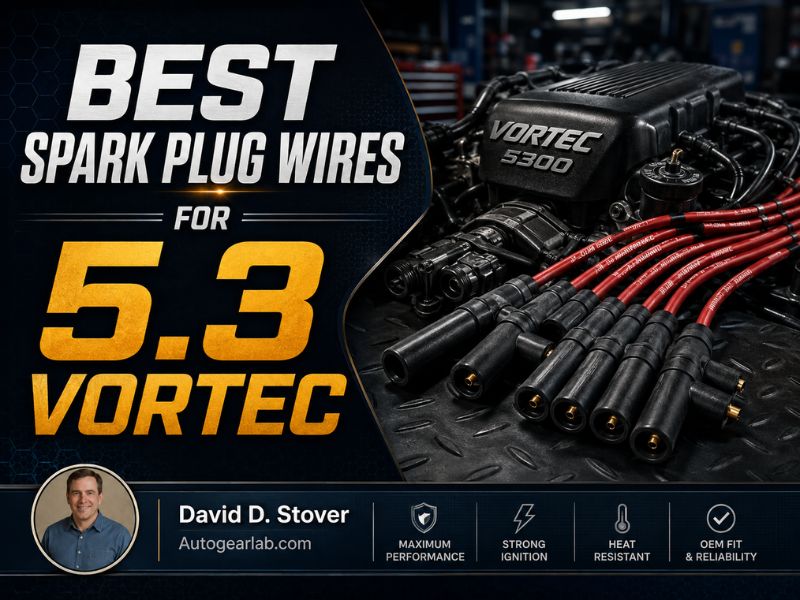
After comparing current Amazon customer feedback, fitment relevance, conductor construction, heat protection, boot design, and manufacturer specifications, my first recommendation is the ACDelco 9748HH Professional Spark Plug Wire Set. It has the strongest buyer-confidence profile of the products reviewed here and uses OE-style design priorities such as high-dielectric insulation, corrosion-resistant terminals, positive coil retention, and properly formed boots.
The ACDelco 9748UU Professional Spark Plug Wire Set follows for compatible 5.3 applications that call for that exact wire configuration. The MSD 32829 Super Conductor Set is my performance-oriented choice for compatible 1999–2013 GM trucks and SUVs, while the Taylor Cable 79614 409 Spiro-Pro provides an LS-truck-specific 135-degree-boot alternative. Finally, the ACCEL 9059C Extreme 9000 Ceramic Set is the specialist option when exhaust heat—not ordinary replacement—is the main problem.
5 Best Spark Plug Wires for 5.3 Vortec Engines
| Image | Product Name | Check Price |
|---|---|---|
Best Choice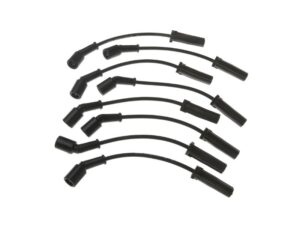 | ACDelco 9748HH Professional Spark Plug Wire Set | Check Price |
Second Best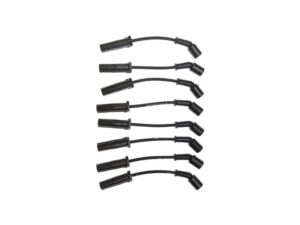 | ACDelco 9748UU Professional Spark Plug Wire Set | Check Price |
Third Choice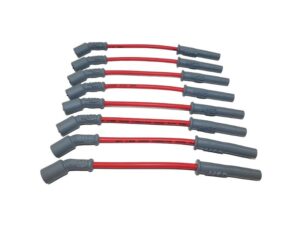 | MSD 32829 Super Conductor Spark Plug Wire Set | Check Price |
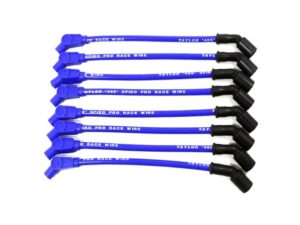 | Taylor Cable 79614 409 Spiro-Pro LS Truck Wire Set | Check Price |
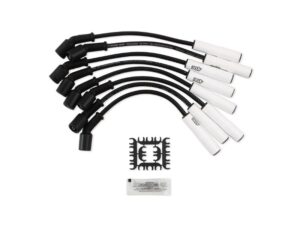 | ACCEL 9059C Extreme 9000 Ceramic Spark Plug Wire Set | Check Price |
I ranked these five sets using a combination of:
- Amazon customer rating strength
- Review-volume confidence
- Verified 5.3/LS-truck relevance
- Wire and terminal construction
- Heat resistance
- EMI/RFI suppression
- Boot geometry
- Ease of installation
- Suitability for stock manifolds or headers
One warning deserves repeating before the reviews: verify the exact part against your year, VIN, engine RPO, and coil configuration before ordering. A wire that fits one 5.3 Vortec perfectly can be the wrong length or have the wrong coil-end geometry for another.
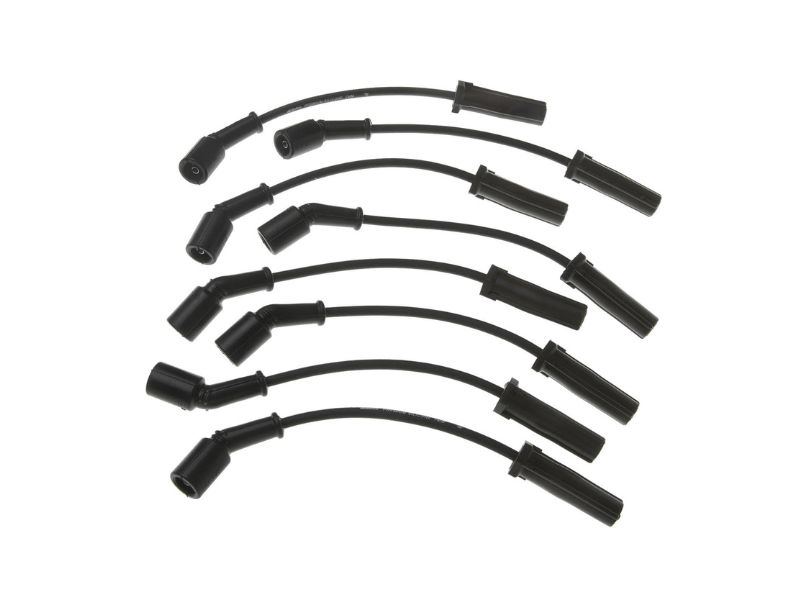
1. ACDelco 9748HH Professional Spark Plug Wire Set
Key Features
- Eight-wire vehicle-specific set
- OE-style replacement construction
- High-dielectric insulation
- Corrosion-resistant terminals
- Positive spark-plug retention
- Coil retainers designed to reduce fretting and micro-arcing
- Strong Amazon customer-confidence history
ACDelco 9748HH takes first place because it is the most convincing choice when the goal is restoring a compatible stock 5.3 Vortec ignition system rather than trying to turn spark-plug wires into a horsepower modification.
ACDelco emphasizes the fundamentals that actually matter: conductor geometry, appropriate length and diameter, secure spark-plug terminals, water-resistant boot sealing, high-dielectric insulation, and coil-end retention. Those features are designed to help deliver ignition voltage consistently while resisting electrical leakage and corrosion.
That approach suits daily-driven Silverado, Sierra, Tahoe, Suburban, Yukon, Avalanche, and related GM applications that retain stock-style exhaust manifolds and ignition coils. It also means there is little installation drama when 9748HH is the correct cataloged set for the vehicle.
Fitment remains the important caveat. Some early GM truck applications using this set depend on specific coil configurations, so a 5.3-liter badge alone is not enough information to guarantee compatibility. That is why I would check the existing coil part number or vehicle-specific catalog before removing the original wires.
What I Like
- Excellent OE-style fit and construction
- Very strong customer-confidence record
- Proper terminal and boot retention
- Good choice for stock or lightly modified trucks
- No unnecessary oversized-wire marketing
What I Do Not Like
- Not universal across every 5.3 Vortec
- Standard silicone boots are not the ideal solution for extremely tight header clearance
Verdict: If your truck’s fitment calls for 9748HH, this is the set I would install first for a normal street-driven 5.3 Vortec. It focuses on the things that make an ignition wire dependable over time—correct terminal engagement, insulation quality, proper length, coil retention, and electrical noise suppression—rather than promising a dramatic power increase that new wires generally cannot deliver on an otherwise healthy stock ignition system. It is especially sensible when you are replacing aged, cracked, heat-hardened, or high-resistance original wires and want the engine bay to retain an OE-like layout. If you have long-tube headers or a plug boot sitting extremely close to a primary tube, however, I would move toward the ACCEL ceramic set or another header-specific configuration instead of assuming an OE-style boot can tolerate unlimited radiant heat.
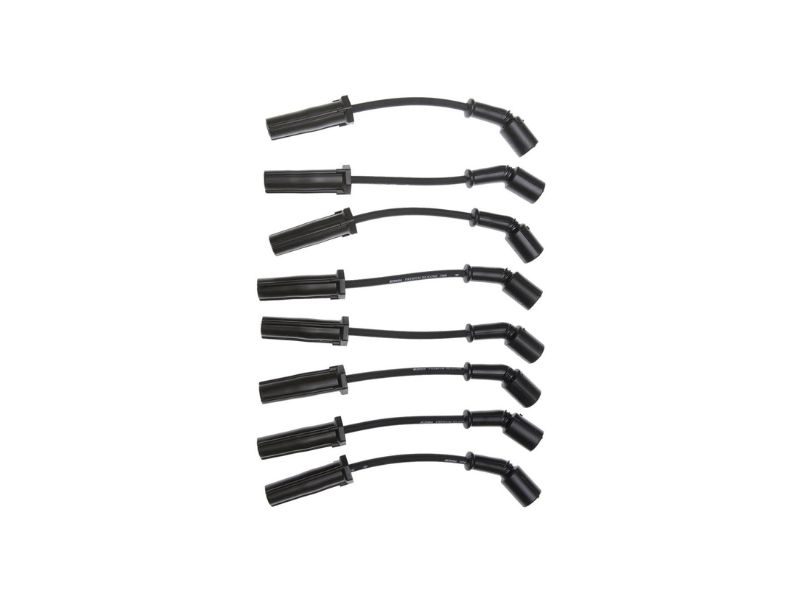
2. ACDelco 9748UU Professional Spark Plug Wire Set
Key Features
- Eight-wire set
- Silicone outer material
- High-dielectric insulation
- Corrosion-resistant terminals
- Water-resistant boot design
- Coil retainers for secure engagement
- OE-replacement design philosophy
ACDelco 9748UU earns second place because it carries another exceptionally strong Amazon customer-feedback profile while retaining the same straightforward ACDelco engineering approach as the 9748HH.
Its product construction centers on proper conductor dimensions, terminal retention, silicone insulation, corrosion resistance, and coil retainers intended to limit fretting and micro-arcing. In practical terms, those are the characteristics I want in an everyday replacement wire: a boot that clicks securely onto the plug, a coil end that stays in place, and insulation capable of containing ignition voltage in a hot engine compartment.
The reason I list 9748UU separately rather than calling it an alternative color or version of 9748HH is compatibility. Do not choose between these two ACDelco sets according to ranking alone. Choose the exact part specified for the truck.
This is particularly important across the transition between different Gen III and Gen IV 5.3 truck configurations. GM used different coils and wire arrangements, so measuring the old wire and visually comparing boot geometry is worthwhile when there is any uncertainty.
What I Like
- Strong OE-replacement construction
- Excellent customer-confidence history
- Secure terminal design
- Quality silicone insulation
- Appropriate for buyers who value factory-style fit
What I Do Not Like
- Easy to confuse with other ACDelco 9748-series sets
- Requires careful vehicle-specific fitment verification
Verdict: The 9748UU is an excellent example of why the “best” wire set is ultimately the one designed for your exact ignition hardware. If your vehicle catalog specifies 9748UU, I would choose it confidently over a generic universal LS wire because correct length and boot fit matter more than simply having a thicker jacket. It should be particularly appealing to owners maintaining a mostly stock truck who want dependable ignition performance, clean factory routing, and minimal risk of radio-frequency or electrical interference. Just resist the temptation to buy it because it ranks second here if your truck actually calls for 9748HH, RR, GG, or another configuration. Matching the correct part number to the year, VIN, engine RPO, and coil design is a more technically sound decision than assuming every 5.3-liter GM V8 uses the same short wire.
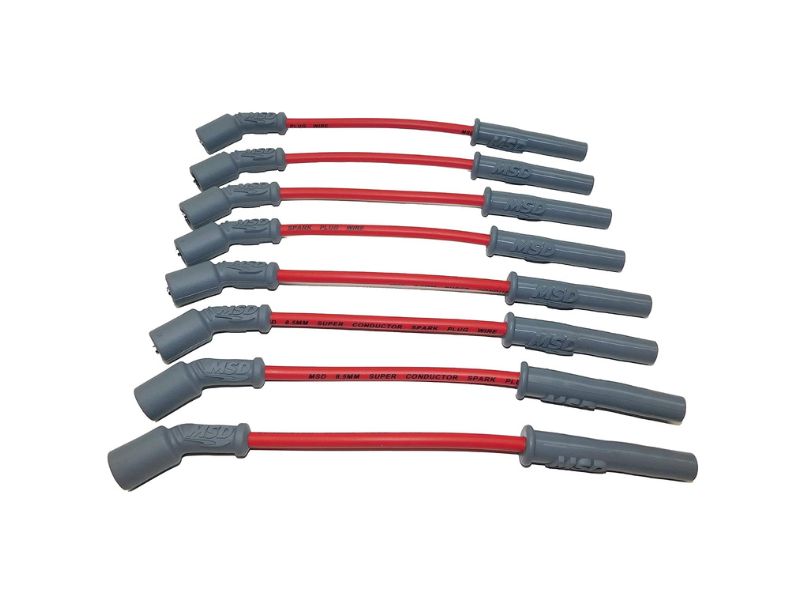
3. MSD 32829 Super Conductor Spark Plug Wire Set
Key Features
- Vehicle-specific GM truck/SUV set
- Intended for 1999–2013 4.8/5.3/6.0/8.1 applications
- Eight approximately 11-inch wires
- 8.5 mm construction
- Helically wound copper-alloy conductor
- Approximately 40–50 ohms per 11-inch wire
- Ferro-magnetic EMI-suppression core
- Dual-crimp terminals
MSD 32829 is my first performance-oriented recommendation.
Unlike some oversized aftermarket wires that emphasize diameter without providing useful engineering information, MSD publishes detailed conductor specifications. The 8.5 mm Super Conductor design uses a tightly helically wound copper-alloy conductor around a ferro-magnetic impregnated core. MSD states that an approximately 11-inch wire in this set has only about 40–50 ohms of resistance while the winding and magnetic core provide EMI suppression.
The 32829 is specifically listed by MSD for 1999–2013 GM trucks and SUVs using several truck V8 families, including 5.3-liter applications. That verified application range gives it an advantage over generic LS wire sets where the owner must determine final length and boot routing independently.
MSD also uses dual-crimp terminals. One crimp secures the wire sleeve while a separate crimp captures the conductor, helping provide a strong mechanical and electrical connection. The outer jacket is formulated for heat, abrasion, and tear resistance.
What I Like
- Extremely low published resistance
- Strong EMI suppression despite low resistance
- Vehicle-specific truck lengths
- Durable 8.5 mm jacket
- Excellent terminal construction
What I Do Not Like
- More performance-oriented than a stock truck actually requires
- Standard boots are not as heat-isolating as ceramic boots beside very tight headers
Verdict: MSD 32829 is the set I would favor for a compatible modified 5.3 Vortec when I want a proven low-resistance conductor without sacrificing EMI/RFI suppression. That balance matters because modern trucks contain sensors, engine-control electronics, audio systems, and other circuitry that can be affected by poorly suppressed ignition noise. The 32829 also avoids one of the biggest disadvantages of a universal performance-wire kit: cutting, stripping, crimping, and guessing at final lengths. For a street truck with a cam, intake, exhaust, upgraded coils, or other conventional modifications, it is a high-quality upgrade or replacement. Just keep expectations realistic—low-resistance wires help preserve ignition energy, but they do not manufacture horsepower on their own when the original ignition system is already functioning correctly.
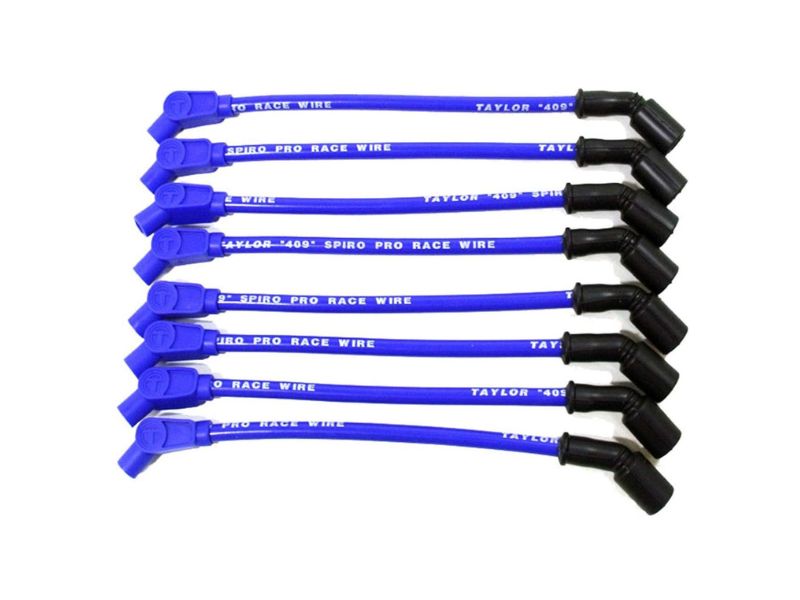
4. Taylor Cable 79614 409 Spiro-Pro LS Truck Wire Set
Key Features
- LS-truck-specific wire set
- 409 Spiro-Pro series
- 135-degree boot configuration
- Preassembled vehicle-specific design
- Performance-oriented spiral-core architecture
- Useful routing option around modified exhaust layouts
Taylor 79614 takes fourth place because its LS Truck 135-degree configuration gives it a practical advantage for engine bays where a conventional straight boot or standard angle does not route as cleanly.
The exact boot angle can matter as much as conductor diameter. On a stock exhaust manifold, the factory wire angle often provides adequate clearance. Once headers are installed, however, a primary tube may occupy the space where the original boot naturally wants to sit.
Taylor’s 79614 is specifically marketed as a 409 Spiro-Pro LS-truck set with 135-degree plug-end geometry, making it more relevant to a 5.3 truck than generic long universal V8 wires. The current Amazon product also maintains a substantial customer-feedback base for a specialist performance set.
Even so, header geometry varies significantly. One manufacturer’s 1-3/4-inch long-tube system may place the primary differently from another brand’s shorty header, so a 135-degree boot is not automatically perfect for every modified truck.
What I Like
- LS-truck-specific configuration
- 135-degree boots can improve exhaust clearance
- Established performance-wire platform
- Preassembled set avoids custom crimping
What I Do Not Like
- Boot angle should be checked against the actual headers
- Less compelling for a completely stock engine than OE-style ACDelco wires
Verdict: Taylor 79614 makes the most sense for the owner who already knows that ordinary stock-style boot routing is inconvenient around the exhaust. I would consider it particularly useful when a conventional wire bends too sharply as it leaves the spark plug or sits unnecessarily close to a header tube. The important point is to inspect the engine bay rather than assuming “performance wire” automatically means “header wire.” Measure available clearance, look at the direction each boot needs to exit, and remember that cylinder-to-cylinder header clearance can differ. If the 135-degree geometry matches your installation, Taylor offers a cleaner solution than forcing a straight boot against a hot primary. If the header practically surrounds the spark-plug area, however, the ceramic ACCEL design below provides a much more aggressive heat-management strategy.
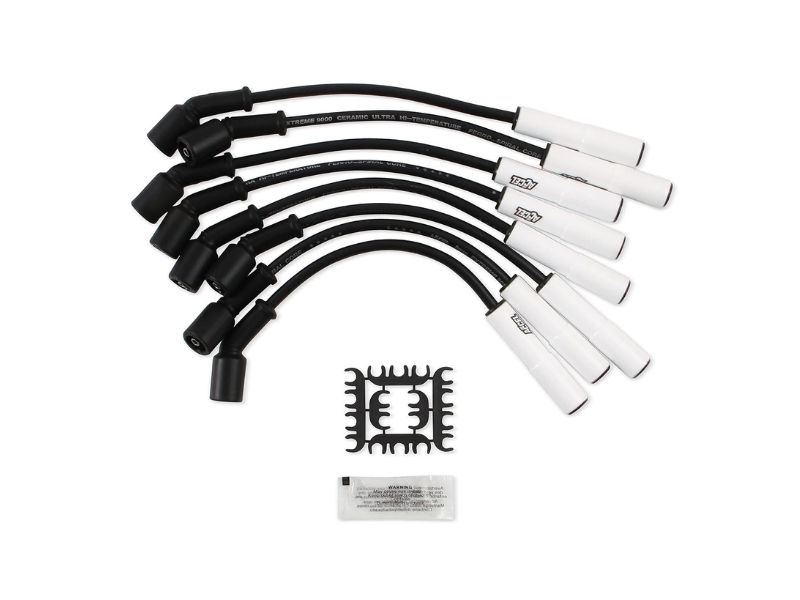
5. ACCEL 9059C Extreme 9000 Ceramic Spark Plug Wire Set
Key Features
- Designed for GM 4.8/5.3/6.0/6.2 LS applications
- 12-inch total wire length
- 8 mm Ferro-Spiral core
- 500 ohms per foot
- Ceramic spark-plug boots
- Ceramic boots rated up to 2,000°F
- Double-silicone wire rated to 600°F peak
- Stainless-steel spark-plug terminals
- Strong RFI/EMI suppression
ACCEL 9059C is fifth only because its current Amazon feedback base is much smaller than the products above. Technically, it is the most specialized wire set in the comparison.
The defining feature is the ceramic spark-plug boot. ACCEL rates the ceramic section for temperatures up to 2,000°F and specifically positions the Extreme 9000 line for situations where conventional boots are damaged by close exhaust heat. The 8 mm double-silicone wire itself carries a 600°F peak rating.
Inside the jacket is a 500-ohm-per-foot Ferro-Spiral core intended to combine reliable spark delivery with substantial RFI/EMI suppression. ACCEL also uses stainless-steel spark-plug terminals and preassembled factory-length wires.
This is not a set I would pay extra for on a stock-manifold truck simply because ceramic sounds more advanced. Its value appears when the exhaust layout creates a real heat problem.
What I Like
- Outstanding ceramic-boot heat resistance
- Excellent choice for tight exhaust clearance
- Durable double-silicone wire
- Strong EMI/RFI suppression
- Purpose-built solution for burned plug boots
What I Do Not Like
- Overkill for many stock trucks
- Straight ceramic boots still need physical clearance from the specific header design
Verdict: If your 5.3 Vortec repeatedly burns, hardens, or discolors conventional spark-plug boots because of headers, ACCEL 9059C is the most technically appropriate product in this list. I would choose it based on a demonstrated heat-clearance problem rather than because ceramic boots look impressive. The hard ceramic section can tolerate far more radiant heat than ordinary silicone, but it is also less forgiving geometrically, so the straight boot needs a clear physical path to the plug. On some long-tube headers, a different boot angle can still be necessary even when ceramic construction is desirable. In other words, heat resistance and fitment must be considered together. For a stock exhaust system, ACDelco or MSD is usually easier to justify; for a header-equipped truck that has already damaged standard boots, the ACCEL becomes one of the strongest solutions available.
5.3 Vortec Spark Plug Wire Comparison
| Product | General Design | Wire Size | Main Strength | Best Use |
| ACDelco 9748HH | OE-style | Vehicle-specific | Factory-style fit and reliability | Compatible stock trucks |
| ACDelco 9748UU | OE-style | Vehicle-specific | OE-like fit for its specified applications | Compatible later/different coil configurations |
| MSD 32829 | Performance spiral/helical conductor | 8.5 mm | Very low resistance with EMI suppression | Stock or modified 1999–2013-compatible trucks |
| Taylor 79614 | Performance Spiro-Pro | Performance-size wire | 135° plug-boot routing | Modified exhaust layouts |
| ACCEL 9059C | Ceramic performance wire | 8 mm | Extreme boot heat resistance | Headers and severe heat |
The comparison table is intentionally general on ACDelco fitment because the correct 9748-series wire should be chosen from the exact vehicle application, not merely from engine displacement.
What Does “5.3 Vortec” Actually Mean?
The 5.3 Vortec name commonly refers to GM’s LS-based truck V8 family rather than one single engine used unchanged for more than a decade.
Common 5.3-liter engine codes across older GM trucks and SUVs include engines such as the LM7, L59, L33, LH6, LMG, and LC9.
The important point for spark-plug wires is that these engines use a coil-near-plug ignition layout. Each cylinder has an individual ignition coil mounted relatively close to the spark plug, connected by a short plug wire.
That is why the correct 5.3 Vortec wires look nothing like the long distributor wires found on an older small-block Chevrolet.
Gen III vs Gen IV 5.3 Vortec Fitment
One of the biggest buying mistakes is assuming every Gen III and Gen IV truck wire is identical.
Changes across vehicle years can involve:
- Coil design
- Coil mounting
- Wire length
- Coil-end connector shape
- Plug-end angle
- Exhaust routing
MSD’s 32829 is useful because the manufacturer explicitly lists it for a broad range of 1999–2013 GM truck and SUV 4.8/5.3/6.0/8.1 applications.
The ACDelco sets require more application-specific attention.
Before ordering, check:
- Model year
- Vehicle model
- Engine displacement
- Engine RPO code
- Coil part/configuration
- Current wire length and boot angle
What Vehicles Commonly Use the 5.3 Vortec?
The 5.3-liter truck-engine family appeared extensively across GM pickups and SUVs, including various years and configurations of:
- Chevrolet Silverado 1500
- GMC Sierra 1500
- Chevrolet Tahoe
- Chevrolet Suburban
- GMC Yukon
- GMC Yukon XL
- Chevrolet Avalanche
Fitment still varies within those nameplates.
A 2002 Silverado 5.3 and a 2012 Silverado 5.3 should not be assumed to use the same ignition wires simply because both badges say 5.3.
How the 5.3 Vortec Ignition System Works
Unlike a traditional distributor system, a coil-near-plug 5.3 uses an individual ignition coil for each cylinder.
The basic path is:
Ignition coil → short plug wire → spark plug
That short distance has advantages.
The wire does not need to route across the entire engine, and there is no distributor cap or rotor distributing high voltage among eight cylinders.
The plug wire still matters because it must:
- Carry ignition voltage
- Resist electrical leakage
- Survive exhaust heat
- Stay locked onto coil and plug
- Suppress EMI/RFI
A damaged short wire can cause the same fundamental misfire problems as a damaged long wire.
OE-Style vs Performance Spark Plug Wires
Neither category is universally better.
OE-Style Wires
Products such as ACDelco prioritize:
- Correct factory dimensions
- Secure terminals
- Proper seals
- OE-like routing
- Electrical interference suppression
These are ideal for a stock truck.
Performance Wires
MSD, Taylor, and ACCEL add features such as:
- Lower-resistance conductors
- Thicker jackets
- Specialized boot angles
- Increased heat resistance
- Ceramic plug boots
These become useful when the engine or exhaust configuration creates a problem that the stock design was not intended to solve.
Does a Thicker Spark Plug Wire Make More Power?
Not automatically.
An 8.5 mm or 10.5 mm wire does not create extra ignition energy simply because its outside diameter is larger.
Wire diameter can provide space for:
- Thicker insulation
- Protective jacket material
- Different conductor construction
But electrical performance is determined by the complete design.
MSD’s 8.5 mm Super Conductor is a good example. Its advantage is not just thickness; it combines a copper-alloy helically wound conductor with low resistance and a ferro-magnetic core that suppresses EMI.
Look at construction, not just millimeters.
Spark Plug Wire Resistance Explained
Ignition wires intentionally have electrical characteristics that balance spark-energy transfer with radio-frequency interference suppression.
Extremely high resistance can increase energy loss.
But simply chasing the lowest possible resistance without considering EMI suppression is not good engineering on an electronically controlled truck.
MSD achieves unusually low resistance through its tightly wound copper-alloy conductor while using a ferro-magnetic center core as an EMI choke.
ACCEL takes a different approach with its 500-ohm-per-foot Ferro-Spiral conductor, emphasizing both spark delivery and suppression.
Different resistance values therefore do not automatically indicate quality differences.
What Is EMI and RFI Suppression?
EMI means electromagnetic interference.
RFI means radio-frequency interference.
Ignition systems create strong electrical pulses.
Poorly suppressed ignition wires can potentially introduce noise into nearby electronics.
That matters in a modern truck containing:
- PCM/ECM
- Sensors
- Radio
- Amplifiers
- Communication networks
- Aftermarket electronics
Performance ignition wires should therefore provide low enough resistance for effective ignition while still controlling electrical noise.
Copper-Core vs Spiral-Core Wires
A solid unsuppressed copper conductor would carry current very effectively but can create significant electrical interference.
Modern street performance wires therefore commonly use spiral or helical conductor arrangements.
MSD winds a copper-alloy conductor tightly around a ferro-magnetic core.
ACCEL uses a Ferro-Spiral core.
Taylor’s Spiro-Pro family similarly emphasizes spiral-core performance architecture.
For a street-driven 5.3 Vortec with factory electronics, I would choose a quality suppressed design rather than an unsuppressed race-only conductor.
Heat Is the Biggest Physical Enemy
The passenger-side and driver-side exhaust manifolds or headers sit close to the spark plugs.
A plug wire may fail when:
- Boot touches the exhaust
- Wire rests on a manifold
- Header primary runs extremely close
- Boot is repeatedly heat-cycled
- Insulation becomes brittle
Damage can eventually lead to voltage leakage or arcing.
That is why routing matters just as much as brand.
Stock Manifolds vs Headers
Stock Exhaust Manifolds
A factory-style ACDelco or vehicle-specific MSD set is usually straightforward.
GM designed the original plug-wire routing around those manifolds.
Headers
Headers can radically change clearance.
The primary tubes may pass:
- Closer to the plug
- Above the boot
- Below the boot
- Along the natural wire-exit path
This is where specialized boot angles or ceramic construction become valuable.
ACCEL specifically positions the 9059C ceramic set for high-heat, tight-clearance situations including headers.
Ceramic Boots vs Heat Sleeves
These solve the heat problem differently.
Ceramic Boot
The plug-end boot itself is made from a high-temperature ceramic material.
ACCEL rates the 9059C ceramic boot up to 2,000°F.
Heat Sleeve
A protective sleeve fits over an ordinary boot or wire.
Sleeves add an additional insulation barrier but do not change the underlying wire’s boot geometry.
If a boot physically touches a header, I would first fix the routing or choose an appropriate boot angle rather than treating a sleeve as permission for continuous contact.
Straight vs Angled Spark Plug Boots
Boot angle determines the direction in which the wire exits the spark plug.
Common configurations include:
- Straight
- 45-degree
- 90-degree
- 135-degree
- Multi-angle
There is no universally superior angle.
The correct angle is the one that creates the cleanest path away from the exhaust.
Taylor 79614’s 135-degree design is useful precisely because some LS-truck header installations benefit from a different wire-exit direction.
How to Check Fitment Before Buying
Do not rely exclusively on “5.3L fits Chevy GMC” in a product title.
Use a more disciplined process.
1. Check the Model Year
This immediately narrows the engine generation.
2. Identify the Engine RPO
The RPO label or VIN information can help identify the exact engine.
3. Inspect the Coil
Look at coil shape and connection.
4. Measure an Existing Wire
Measure boot-to-boot length if there is uncertainty.
5. Compare Boot Angles
Look at both plug and coil ends.
6. Check Exhaust Clearance
Especially with aftermarket headers.
7. Confirm Vehicle-Specific Catalog Fitment
Only then order the wire set.
How to Tell if 5.3 Vortec Plug Wires Are Bad
Possible symptoms include:
- Engine misfire
- Rough idle
- Hesitation
- Flashing or steady check-engine light
- Visible cracking
- Burned boots
- Arcing
- Corroded terminals
However, these symptoms can also be caused by:
- Bad spark plugs
- Failing ignition coil
- Fuel injector problem
- Vacuum leak
- Compression issue
- Wiring or sensor fault
Do not automatically replace plug wires whenever a misfire code appears.
Misfire Codes and Spark Plug Wires
A code such as P0300 indicates random/multiple-cylinder misfire, while cylinder-specific misfire codes can help narrow the diagnosis.
A plug wire is only one possible cause.
A useful diagnostic strategy is to inspect:
- Plug condition
- Wire condition
- Coil connection
- Coil output
- Injector operation
before buying parts.
Parts replacement is much more effective when it follows diagnosis.
Should You Replace Spark Plugs and Wires Together?
It can make sense when both are old because the plug wires are already being removed.
However, it is not mandatory if the plugs are recent and verified healthy.
When replacing the plugs:
- Use the correct part
- Verify recommended gap
- Thread plugs carefully
- Torque according to the engine/service information
- Avoid contaminating terminals
Do not pull a plug wire by yanking on the cable itself.
How to Remove 5.3 Spark Plug Wires
Work with the engine cool.
Then:
- Grip the boot, not the wire.
- Twist gently to break the seal.
- Pull the boot from the plug.
- Release the coil end.
- Replace one wire at a time.
Replacing one at a time makes routing easier even though each cylinder has its own nearby coil.
Use Dielectric Grease Correctly
A small amount of appropriate dielectric grease can help with moisture sealing and future boot removal when used according to the ignition-component manufacturer’s instructions.
Do not pack a terminal full of grease under the assumption that more is better.
The actual metal terminal still needs secure mechanical contact.
Keep the Wires Off the Exhaust
After installation, inspect every cylinder.
Look for:
- Boot touching manifold
- Cable resting on a header
- Wire stretched tight
- Wire rubbing a sharp bracket
- Excess wire lying against hot metal
A premium plug wire can still fail prematurely if routed badly.
Do Performance Plug Wires Add Horsepower?
Replacing defective wires can restore lost performance.
Replacing healthy factory wires with performance wires should not be expected to produce a guaranteed horsepower increase by itself.
The purpose of a good wire is to deliver the available ignition energy reliably under the conditions the engine encounters.
Performance wires become more valuable when those conditions include:
- High heat
- Increased cylinder pressure
- Modified ignition
- Header clearance
- Aggressive engine modifications
That is a much more realistic reason to upgrade.
Which Wire Set Should You Use With Headers?
Start with physical clearance.
If conventional boots remain comfortably away from the header, MSD 32829 or Taylor 79614 may work well depending on fit.
If the plug area experiences extreme radiant heat or repeatedly burns silicone boots, ACCEL 9059C is the strongest heat-focused option here because the ceramic boots are rated to substantially higher temperatures than conventional silicone designs.
Do not buy a ceramic set until you have checked whether the straight ceramic boot actually clears the specific header tubes.
Common Mistakes When Buying 5.3 Vortec Plug Wires
Assuming Every 5.3 Uses the Same Set
Different years and coils require different configurations.
Buying by Wire Diameter Alone
A thicker jacket does not automatically mean better electrical performance.
Ignoring Boot Angle
Headers can make boot geometry critical.
Buying Ceramic Wires for a Stock Truck Without Need
They are excellent for heat but unnecessary for many factory exhaust systems.
Expecting Horsepower From Wires Alone
Healthy replacement wires mainly maintain proper ignition delivery.
Pulling the Wire Instead of the Boot
This can damage the internal terminal connection.
Letting the Wire Touch the Exhaust
Even high-quality insulation has temperature limits.
Skipping Coil Inspection
A damaged coil tower can cause problems even with new wires.
Failing to Confirm Both Ends Click Into Place
A partially seated connection can cause intermittent misfire.
Replacing Parts Without Diagnosing the Misfire
Wires are only one potential cause.
Frequently Asked Questions
1. What are the best spark plug wires for 5.3 Vortec engines?
ACDelco 9748HH is my first choice when it is the correct cataloged fit for the specific truck.
It provides OE-style construction, secure terminals, high-dielectric insulation, and an exceptionally strong customer-confidence history. For modified engines, MSD 32829 is the stronger performance-oriented alternative.
2. Will ACDelco 9748HH fit every 5.3 Vortec?
No. Do not assume one ACDelco 9748-series set fits every 5.3.
Check the model year, engine application, coil configuration, and vehicle-specific catalog before ordering.
3. What is the difference between ACDelco 9748HH and 9748UU?
They are separate vehicle-specific wire configurations and should not be treated as interchangeable upgrades.
Both use ACDelco’s OE-style terminal, insulation, and retention design, but the correct set depends on the actual vehicle and ignition configuration.
4. Is MSD 32829 good for a 5.3 Vortec?
Yes, for compatible GM truck and SUV applications.
MSD specifically lists 32829 for 1999–2013 GM trucks and SUVs using 4.8, 5.3, 6.0, and certain other truck engines.
5. What resistance does MSD 32829 have?
MSD states that an approximately 11-inch Super Conductor wire has roughly 40–50 ohms of resistance.
It combines that low resistance with a ferro-magnetic core designed to suppress EMI.
6. Are thicker spark plug wires better?
Not automatically.
Diameter can provide more insulation and protection, but conductor design, resistance, EMI suppression, terminals, and heat resistance are more meaningful than thickness alone.
7. Are 10.5 mm wires necessary on a stock 5.3?
Usually not.
A properly engineered OE-style or 8–8.5 mm performance set can handle a normal stock ignition system very well.
8. Which 5.3 spark plug wires are best with headers?
ACCEL 9059C is the strongest heat-focused option in this list, while Taylor 79614 may provide better routing where a 135-degree boot helps.
The final choice depends on the actual header-primary clearance.
9. How hot can ACCEL ceramic boots get?
ACCEL rates the ceramic spark-plug boots in the 9059C set for temperatures up to 2,000°F.
The double-silicone wire itself is rated to a lower 600°F peak, so the complete wire still needs sensible routing.
10. Do ceramic plug wires need heat sleeves?
Not necessarily.
The ceramic boot already provides substantial heat resistance, although nearby wire sections still need clearance from exhaust components.
11. Can spark plug wires cause a misfire on a 5.3 Vortec?
Yes. Damaged insulation, burned boots, poor terminals, or electrical leakage can contribute to ignition misfire.
But plugs, coils, injectors, compression, and other faults can produce similar symptoms, so diagnosis should come before parts replacement.
12. Should I replace all eight wires at once?
Usually, yes, when the set is old or deterioration is age-related.
Replacing all eight gives consistent insulation, terminals, and resistance rather than leaving seven similarly aged wires in service.
13. Should I replace ignition coils when I replace the wires?
Not automatically.
If the coils test and operate correctly, there is no need to replace eight functioning coils simply because the wires are being serviced.
14. Do spark plug wires add horsepower?
Healthy upgraded wires do not guarantee additional horsepower over a healthy factory set.
Their job is to deliver ignition energy reliably. Replacing damaged wires can restore performance that was being lost through misfire or leakage.
15. Can I use universal LS spark plug wires?
Yes in some builds, but a vehicle-specific set is easier when the coils remain in their factory locations.
Universal sets make more sense when coils have been relocated or custom header routing requires nonstandard lengths.
16. How do I know which 5.3 Vortec engine I have?
Check the VIN, vehicle information, and engine RPO code rather than relying only on the 5.3-liter displacement.
That information helps distinguish the exact engine family and improves ignition-part fitment accuracy.
17. How should 5.3 plug wires be routed?
Use the shortest clean path that follows the intended factory or manufacturer routing while keeping the cable and boot away from hot exhaust surfaces and sharp edges.
Do not stretch wires tightly or allow them to rest on headers.
18. Which spark plug wires should I buy for a stock Silverado 5.3?
I would start with the correct vehicle-specific ACDelco set after verifying year and coil fitment.
For compatible applications, 9748HH or 9748UU provide an OE-style solution; the correct part number matters more than which one ranks higher in this article.
Conclusion
The best spark plug wires for 5.3 Vortec engines are the wires that correctly match the truck’s ignition coils, plug-boot geometry, exhaust clearance, and operating conditions.
For a compatible stock truck, the ACDelco 9748HH is my first recommendation because it combines excellent customer confidence with OE-style terminal retention, insulation, sealing, and conductor design. The ACDelco 9748UU is another excellent factory-style option, but only when that exact configuration matches the vehicle.
For a modified truck, MSD 32829 provides the most compelling performance-oriented balance. Its vehicle-specific 1999–2013 GM truck fitment, low-resistance helically wound copper-alloy conductor, durable 8.5 mm construction, and strong EMI suppression make it easy to recommend when the application matches.
Taylor 79614 becomes attractive when a 135-degree boot creates cleaner header clearance, while ACCEL 9059C is the specialist choice when extreme exhaust heat is actually burning conventional boots.
Before ordering any set, confirm the model year, VIN, engine RPO, coil design, wire length, and plug-boot angle. That five-minute compatibility check matters more than wire color, outside diameter, or advertising claims—and it is the best way to avoid turning a simple ignition service into a fitment problem.