Finding the best spark plugs for 4.3 Vortec engines requires more attention to fitment than simply choosing six plugs with good reviews. Chevrolet and GMC used the 4.3-liter V6 for many years, and the classic Vortec family found in vehicles such as the Silverado, Sierra, S10, Sonoma, Blazer, Jimmy, Astro, Safari, Express, and Savana is not the same engine as the newer 4.3-liter EcoTec3/LV3 introduced in the next generation of GM trucks.
This guide is primarily aimed at the familiar 1996–2014-era 4.3L Vortec V6 family, with individual fitment varying by vehicle and year. The newer LV3 uses a different engine architecture and should not automatically use the plugs discussed here simply because it also displaces 4.3 liters. GM documentation distinguishes the older LU3 4.3L V6 from the newer truck engine families, making year and engine identification an essential first step.
Based on current Amazon customer feedback, plug construction, 4.3-liter application relevance, electrode material, heat range, and service characteristics, my first recommendation is the NGK 3951 TR55 V-Power Spark Plugs. The six-pack has by far the deepest current Amazon feedback history among the exact packs reviewed, while the TR55 design uses a nickel V-cut center electrode, copper core, tapered seat, and 5/8-inch hex.
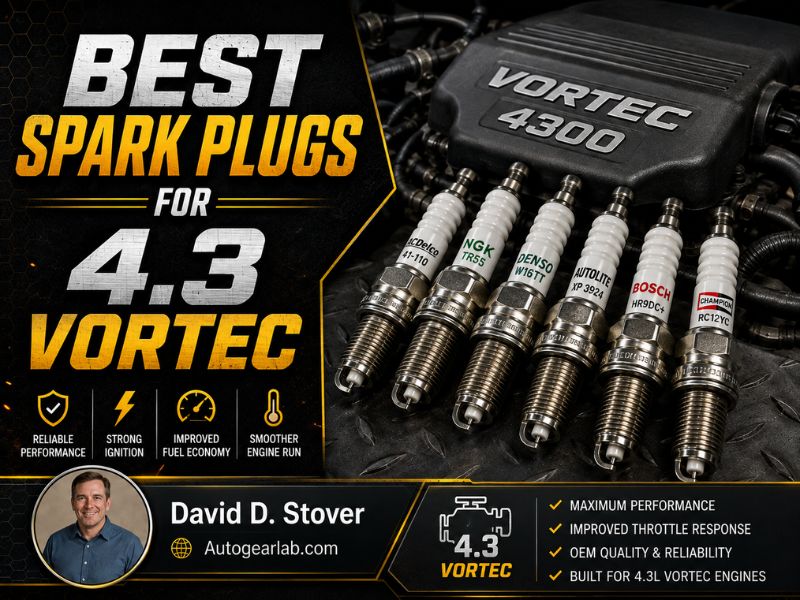
The NGK 7164 TR55IX Iridium IX follows when you want the same general TR55-style dimensions with an iridium fine-wire center electrode and longer expected electrode life. Amazon currently shows strong customer confidence for the six-pack, while NGK specifies a 0.6 mm iridium center electrode and a 0.059-inch factory gap for the TR55IX.
The NGK 3403 TR55GP G-Power Platinum offers a middle ground between conventional nickel and iridium, while ACDelco 41-993 is the OE-oriented choice for vehicles specifically cataloged for that plug. Finally, DENSO IT16 Iridium Power gives you another fine-wire iridium alternative when its application specifications match your exact engine.
5 Best Spark Plugs for 4.3 Vortec Engines
| Image | Product Name | Check Price |
|---|---|---|
Best Choice | NGK 3951 TR55 V-Power Spark Plugs – 6 Pack | Check Price |
Second Best | NGK 7164 TR55IX Iridium IX Spark Plugs – 6 Pack | Check Price |
Third Choice | NGK 3403 TR55GP G-Power Platinum – 6 Pack | Check Price |
 | ACDelco 41-993 GM Original Equipment Iridium – 6 Pack | Check Price |
 | DENSO 5325 IT16 Iridium Power Spark Plugs – 6 Pack | Check Price |
My ranking considers:
- Current Amazon rating and review confidence
- 4.3 Vortec application relevance
- Electrode design
- Heat range
- Ignitability
- Service life
- Resistance to fouling and erosion
- Ease of finding a six-plug set
- Suitability for stock versus modified engines
Because 4.3 Vortec applications span many model years, always verify the exact part number against your VIN, model year, engine RPO, emissions configuration, and owner’s/service information before installing any spark plug.
1. NGK 3951 TR55 V-Power Spark Plugs – 6 Pack
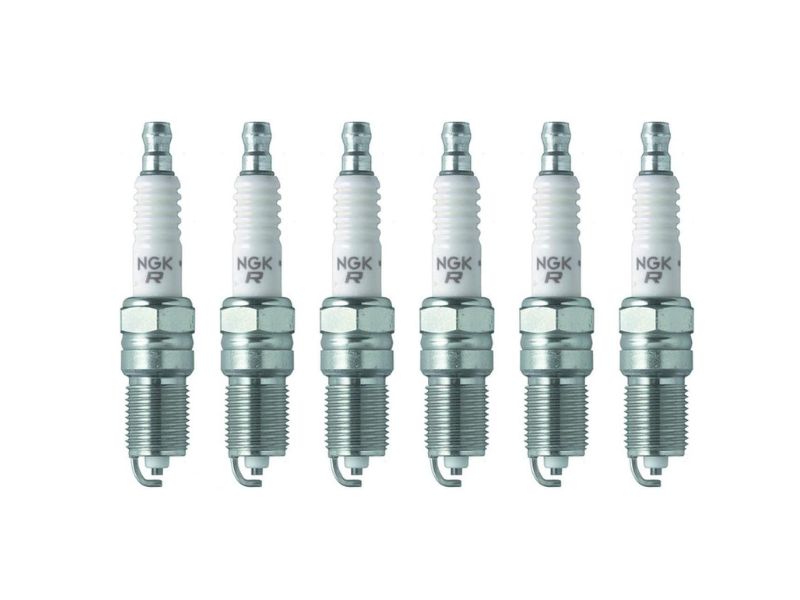
Key Features
- Six-plug package
- Nickel center electrode
- V-cut electrode design
- Copper core
- NGK heat range 5
- Tapered seat
- 5/8-inch hex
- Resistor-type construction
- Strong current Amazon feedback history
The NGK TR55 takes first place because it combines enormous real-world customer confidence with a straightforward conventional spark-plug design that makes sense for many older GM Vortec applications.
NGK’s V-Power design uses a V-shaped cut in the center electrode. The idea is to move the spark toward the edge of the electrode rather than forcing the spark kernel to develop in the center of a broad flat surface. NGK also uses a copper core for heat transfer and a resistor design to help control electrical interference.
This is still fundamentally a conventional nickel plug, and that is not necessarily a disadvantage.
For an older naturally aspirated 4.3 Vortec that remains close to factory configuration, a correctly specified conventional plug can provide excellent drivability without paying for an exotic electrode material. The tradeoff is service life: nickel electrodes generally wear faster than fine-wire platinum or iridium designs.
Another advantage is availability. The exact Amazon six-pack means you receive the quantity required for the V6 without buying an eight-pack and leaving spare plugs unused.
What I Like
- Huge customer-feedback base
- Six plugs in one package
- Straightforward proven construction
- Copper core provides good thermal control
- Practical for routine maintenance
What I Do Not Like
- Nickel electrode generally wears faster than iridium
- Owners seeking very long replacement intervals may prefer a precious-metal plug
Verdict: The TR55 is the plug I would start with when maintaining a compatible, mostly stock 4.3 Vortec and the vehicle’s catalog calls for this specification. Its greatest advantage is not that it promises extra horsepower—it does not—but that it combines simple engineering, correct resistor construction, strong ignition characteristics, easy availability, and an unusually deep record of buyer use. That makes it particularly attractive for an older Silverado, Sierra, S10, Sonoma, Astro, Safari, Blazer, or Jimmy that is being brought back to a solid baseline tune-up. If your priority is maximum service interval rather than economical routine maintenance, I would move to the TR55IX below; otherwise, the conventional TR55 remains a very sensible plug when its dimensions and gap match the engine.
2. NGK 7164 TR55IX Iridium IX Spark Plugs – 6 Pack

Key Features
- Six-plug package
- 0.6 mm iridium center electrode
- Nickel ground electrode
- NGK heat range 5
- 0.059-inch published gap
- 14 mm thread diameter
- 18 mm reach
- 5/8-inch hex
- 5 kΩ resistor
The TR55IX is the option I prefer when you want a fine-wire iridium electrode while retaining the general TR55 heat range and physical format.
NGK specifies a 0.6 mm iridium center electrode for the TR55IX. A fine electrode requires less voltage concentration at the firing tip than a broad conventional electrode, helping the spark establish reliably while the extremely high melting point of iridium slows electrode wear.
NGK lists the plug with a 14 mm × 1.25 thread, tapered seat, approximately 18 mm reach, 5/8-inch hex, and heat range 5. It also uses a 5 kΩ resistor to control ignition-system radio-frequency interference.
The current Amazon six-pack also carries strong customer feedback, although its review volume is smaller than the standard TR55.
Do not interpret the iridium electrode as an automatic performance modification. In a healthy stock 4.3, the main advantages are consistent firing characteristics and slower electrode erosion rather than a guaranteed horsepower increase.
What I Like
- Fine-wire iridium electrode
- Good resistance to electrode wear
- Strong customer-feedback history
- Six-plug package
- Useful upgrade for owners who dislike frequent plug changes
What I Do Not Like
- Costs more than conventional nickel
- Still requires exact gap and fitment verification
Verdict: The TR55IX is the strongest all-around choice for a compatible driver who wants to install the plugs and leave them in service longer than a basic nickel set. I especially like it for trucks and vans that see substantial annual mileage, because the fine-wire iridium electrode reduces the rate at which the firing tip erodes and the gap grows. It also keeps NGK’s resistor and heat-range characteristics in a familiar package rather than using an unknown generic “iridium upgrade.” If your existing service information calls for a different gap or plug design, follow that information rather than assuming TR55IX fits simply because the engine says Vortec on the intake. When it is catalog-correct, however, this is the plug I would choose when longevity and consistent ignition matter more than lowest initial cost.
3. NGK 3403 TR55GP G-Power Platinum – 6 Pack
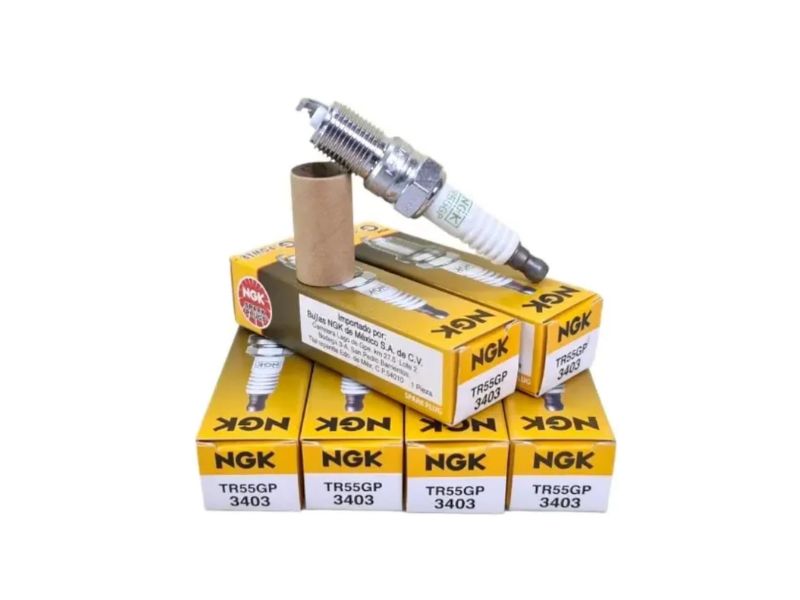
Key Features
- Six-plug package
- Fine-wire platinum center electrode
- Copper-core construction
- G-Power design
- Resistor-type plug
- Platinum wear surface
- Large Amazon feedback base
- Available in verified 4.3L-specific applications
NGK G-Power sits between the inexpensive TR55 and higher-priced TR55IX.
Instead of a conventional nickel firing tip, the TR55GP uses a fine-wire platinum center electrode. NGK says the fine platinum tip reduces the voltage required for ignition while improving durability compared with conventional plugs. The design also uses a copper core and corrosion-resistant metal plating.
This plug deserves particular attention because Amazon carries application-specific TR55GP six-packs for 4.3L vehicles such as the GMC Sonoma, confirming that the TR55GP family appears in genuine 4.3-liter application listings rather than being merely a generic performance plug.
The generic six-pack also has a large current Amazon review base, although its average feedback is slightly below the first two plugs in this ranking.
Platinum offers a practical compromise. It typically resists electrode erosion longer than basic nickel while remaining a simpler design than many iridium products.
What I Like
- Fine-wire platinum center
- Long-standing NGK platform
- Excellent customer-feedback depth
- Reasonable compromise between conventional and iridium designs
- Available as a six-pack
What I Do Not Like
- Not as wear-resistant as the best iridium designs
- Must be matched to the specific 4.3 application
Verdict: TR55GP is the set I would choose when you want a precious-metal plug but do not necessarily need to pay for iridium. It is particularly attractive for an older 4.3 Vortec that still sees regular commuting, towing, or work-truck use and where longer electrode life is desirable without moving far away from a familiar NGK configuration. The fine platinum center electrode can maintain its firing edge longer than the basic TR55, while the resistor and copper-core construction preserve the traits expected from a street plug. I would still verify the required gap before installation and compare the exact application number to your original plugs. When the TR55GP is cataloged for your engine, it is one of the most balanced choices in this list.
4. ACDelco 41-993 GM Original Equipment Iridium – 6 Pack
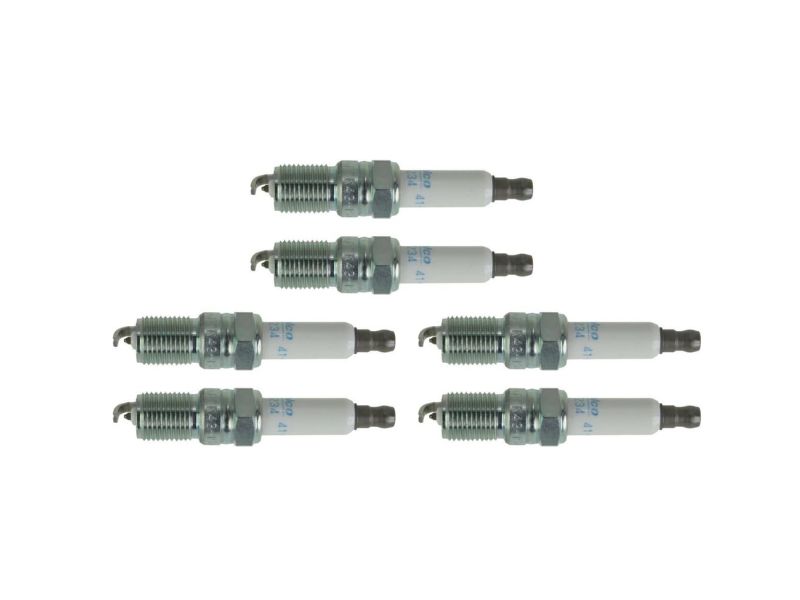
Key Features
- Six-plug kit
- Specifically listed for GM 4.3L V6 applications
- Iridium electrode
- GM/ACDelco OE heritage
- Resistor/suppressor construction
- Designed around GM ignition requirements
ACDelco 41-993 ranks fourth because its exact six-piece Amazon listing has a smaller feedback base than the NGK sets, not because it is an inferior choice technically.
In fact, for a vehicle whose GM application calls for 41-993, this may be the most straightforward choice in the entire guide.
The exact Amazon six-piece kit is listed for Chevrolet and GMC applications including the 4.3L V6, and it currently carries strong buyer satisfaction despite its lower total review count.
ACDelco’s iridium design uses a small efficient firing electrode and suppression features intended to help control radio-frequency noise around vehicle electronics. The current individual 41-993 listing also identifies the plug as GM Original Equipment and notes the iridium firing-tip and suppressor-seal construction.
One complication is supersession. ACDelco and GM have changed service part numbers over the years, and Amazon itself now shows newer ACDelco iridium alternatives alongside older 41-993 listings. That is another reason to verify current catalog fitment rather than purchasing solely from an old forum recommendation.
What I Like
- OE-oriented GM option
- Exact six-plug 4.3L V6 listing
- Iridium electrode
- Excellent choice for restoration or factory-style service
- Strong current customer satisfaction
What I Do Not Like
- Lower review volume than the NGK options
- GM service-part supersessions can make online fitment confusing
Verdict: If your owner’s information, existing plug, or current GM/ACDelco catalog points directly to 41-993, I would have no hesitation choosing it over an aftermarket alternative. OE spark plugs are particularly appealing on a stock 4.3 Vortec because the engine-management system, distributor ignition, heat range, resistor characteristics, and original calibration were developed around a specific plug specification rather than around the idea that “more expensive” automatically means better. The important caveat is part-number evolution: some GM applications now show newer service numbers, so confirm the current recommendation for your VIN before ordering. When 41-993 remains the correct specification, this is one of the safest factory-style choices available.
5. DENSO 5325 IT16 Iridium Power Spark Plugs – 6 Pack
Key Features
- Six-plug package
- Fine-wire iridium center electrode
- U-groove ground-electrode philosophy
- Resistor construction
- Iridium Power design
- 14 mm automotive plug family
- Performance-oriented aftermarket option
DENSO IT16 rounds out the list as another reputable iridium alternative.
DENSO’s Iridium Power line uses a very fine iridium firing electrode intended to concentrate the electrical field and promote reliable ignition. The company’s Iridium Power specifications list the IT16 family among its automotive fine-wire iridium plugs.
DENSO also emphasizes its U-groove ground-electrode technology across its spark-plug families, using the groove to expose more of the spark kernel to the air-fuel mixture.
This is the product where I would be most conservative about compatibility. DENSO makes plugs with similar-looking part numbers but different reaches, projections, gaps, and applications. Do not substitute IT16 simply because an online cross-reference says it resembles another plug. Verify the exact DENSO application for your vehicle before installation.
What I Like
- Reputable ignition manufacturer
- Fine-wire iridium construction
- Six plugs in the Amazon package
- Good alternative when specifically cataloged for the engine
- Durable electrode material
What I Do Not Like
- Fitment requires especially careful confirmation
- Not my first choice when an exact OE plug is readily available
Verdict: DENSO IT16 is best viewed as a fitment-verified alternative rather than a universal upgrade for every 4.3 Vortec. I would use it when a current parts catalog confirms the IT16 specification for the exact vehicle and when you specifically want DENSO’s fine-wire iridium technology. I would not use it to experiment with heat range or reach on a stock engine simply because it appears in a cross-reference list. Spark-plug thread engagement, projection, heat range, and gap all affect combustion-chamber behavior, so the correct plug specification matters more than brand loyalty. When properly matched, DENSO provides excellent engineering; when it is not catalog-correct, one of the NGK or ACDelco options above is the safer route.
Spark Plug Comparison for the 4.3 Vortec
| Spark Plug | Electrode | General Character | Best Use |
| NGK TR55 3951 | Nickel | Simple, proven, economical | Routine stock-engine maintenance |
| NGK TR55IX 7164 | Iridium | Fine-wire, longer-lasting | High-mileage daily driver |
| NGK TR55GP 3403 | Platinum | Balance of cost and durability | Longer-life stock replacement |
| ACDelco 41-993 | Iridium | OE-oriented | Factory-style compatible GM service |
| DENSO IT16 | Iridium | Fine-wire aftermarket design | Verified DENSO-compatible application |
The table is deliberately based on plug construction rather than claims of horsepower gain. On a stock naturally aspirated engine, correct fitment and a healthy ignition system matter much more than choosing the most exotic electrode material.
Which 4.3 Vortec Engines Does This Guide Cover?
The classic Chevrolet 4.3 V6 developed from GM’s 90-degree V6 architecture and was used in numerous trucks, SUVs, and vans.
Common Vortec-era vehicles include:
- Chevrolet S10
- GMC Sonoma
- Chevrolet Blazer
- GMC Jimmy
- Chevrolet Astro
- GMC Safari
- Chevrolet Silverado 1500
- GMC Sierra 1500
- Chevrolet Express
- GMC Savana
The later LU3 remained in service into the early 2010s, including full-size pickup applications. GM’s own vehicle documentation identifies LU3 as the 4.3L V6 used in the preceding full-size truck generation.
2014+ 4.3 EcoTec3 Is Different
Do not confuse the classic Vortec V6 with the newer LV3 EcoTec3 4.3L.
The newer engine uses a different combustion system and modern engine architecture.
A plug that works in a 2003 Silverado 4.3 should not automatically be installed in a 2017 Silverado simply because both trucks have 4.3L engines.
When shopping, always enter:
year + model + engine
not simply:
4.3 Vortec
That single habit prevents many fitment mistakes.
Why Spark Plug Fitment Matters So Much
A spark plug has several dimensions that must be correct:
- Thread diameter
- Thread pitch
- Reach
- Seat type
- Electrode projection
- Heat range
- Gap
Two plugs can physically screw into the same cylinder head while still being inappropriate for the engine.
The wrong reach can position the firing end incorrectly in the combustion chamber.
An incorrect heat range can cause the plug to operate too hot or too cold.
An excessive gap can place unnecessary demand on the ignition system.
This is why cross-reference information should always be confirmed against the vehicle application.
Nickel vs Platinum vs Iridium
Nickel
Traditional plugs such as the NGK TR55 use a nickel-alloy firing electrode.
Advantages:
- Affordable
- Proven
- Easy to inspect
- Appropriate for many older engines
The main drawback is electrode wear.
As the center and ground electrodes erode, the gap gradually increases.
Platinum
Platinum has a substantially higher resistance to erosion than conventional nickel.
NGK’s TR55GP uses a fine-wire platinum center electrode, reducing the amount of metal that surrounds the initial spark while improving wear resistance compared with a basic nickel design.
Iridium
Iridium is extremely hard and has a very high melting point.
That lets manufacturers use very fine center electrodes while retaining durability.
Both the NGK TR55IX and ACDelco 41-993 use iridium-centered designs.
Do Iridium Spark Plugs Make More Horsepower?
Do not expect a guaranteed horsepower increase simply from switching a healthy engine from conventional plugs to iridium.
A spark plug’s job is to ignite the compressed air-fuel mixture reliably.
If the old plugs are worn, fouled, incorrectly gapped, or misfiring, replacing them can restore lost power and smoothness.
That is different from creating power beyond what a healthy ignition system already delivered.
Choose iridium for characteristics such as:
- Fine firing electrode
- Consistent spark
- Slower erosion
- Potentially longer service interval
not because a package promises an unrealistic power transformation.
Understanding Spark Plug Gap
Gap is the distance between the center electrode and ground electrode.
The ignition voltage needs to jump that space.
A wider gap can expose a larger spark kernel, but it also requires more voltage.
NGK publishes the TR55IX at approximately 0.059 inch, while other plugs and applications may use different settings.
This is important because 4.3 Vortec specifications vary across years.
Do not copy one internet gap number and apply it to every 4.3 V6.
Check the emissions label, owner’s/service information, or current plug catalog for the exact vehicle.
Should You Gap Iridium Spark Plugs?
You should verify the gap.
Whether you should actually bend the ground electrode depends on the manufacturer’s instructions and how far adjustment is required.
Fine iridium center electrodes are much smaller than traditional nickel tips and can be damaged if a tool is pressed directly against the center electrode.
Measure with an appropriate gauge and adjust only through the ground electrode when necessary.
Never pry against the iridium tip.
What Is Spark Plug Heat Range?
Heat range describes how quickly the plug transfers heat from its firing end into the cylinder head.
It does not describe how strong or hot the spark itself is.
A plug that runs too cold may foul.
A plug that runs too hot can increase the risk of abnormal combustion and electrode damage.
NGK TR55 and TR55IX use NGK heat range 5.
Do not move to a colder or hotter plug on a stock engine simply because somebody’s modified truck uses one.
When Does a Modified 4.3 Need a Different Plug?
A stock replacement heat range is appropriate for most naturally aspirated engines.
Different requirements may appear with:
- Forced induction
- Nitrous oxide
- Significantly higher compression
- Major cylinder-head changes
- Aggressive tuning
Those modifications can raise cylinder pressure and combustion temperature enough to justify changes in plug heat range or gap.
That decision should follow the engine builder or tuner’s recommendation.
Do not choose a colder plug solely because the engine has an intake or cat-back exhaust.
The 4.3 Vortec Distributor Ignition System
Unlike later coil-on-plug engines, many classic 4.3 Vortec engines use a distributor-based ignition system.
That means ignition performance depends on several interconnected components:
- Ignition coil
- Distributor cap
- Rotor
- Plug wires
- Spark plugs
If new spark plugs do not fix a misfire, inspect the rest of the ignition system rather than assuming the new plugs are defective.
Distributor caps on these engines can develop:
- Corrosion
- Carbon tracking
- Cracked terminals
- Moisture contamination
A complete diagnosis is more reliable than replacing one ignition component at random.
Signs Your 4.3 Vortec May Need Spark Plugs
Possible symptoms include:
- Rough idle
- Hard starting
- Hesitation
- Misfire under load
- Reduced fuel economy
- Worn electrode gaps
- Fouled plugs
- Check-engine light
These symptoms do not prove that spark plugs are the cause.
The 4.3 Vortec can also develop problems related to:
- Distributor cap and rotor
- Plug wires
- Ignition coil
- Fuel injection
- Vacuum leaks
- Fuel pressure
- Compression
Diagnose before throwing parts at the truck.
Reading Old Spark Plugs
Removing all six plugs gives you a useful look inside the engine.
Normal Plug
A generally clean electrode with modest deposits suggests normal combustion.
Black Dry Deposits
Can indicate:
- Rich mixture
- Excessive idling
- Weak ignition
- Plug running too cold
Wet Fuel-Fouled Plug
May point toward a cylinder that is not firing consistently.
Oily Plug
Can suggest oil entering the combustion chamber.
Unusually White or Damaged Electrode
May indicate excessive combustion temperature, incorrect heat range, abnormal ignition, or mixture problems.
Compare all six plugs rather than analyzing one in isolation.
Should You Replace All Six Spark Plugs?
Yes, under normal maintenance conditions.
If one plug is worn from normal mileage, the other five have experienced approximately the same operating time.
Replacing the complete set provides:
- Consistent gaps
- Matching electrode materials
- Equal service age
The six-pack versions selected in this article make that easier.
Should You Replace Plug Wires at the Same Time?
Not automatically, but inspect them carefully.
Look for:
- Cracked insulation
- Burn marks
- Hardened boots
- Corroded terminals
- Signs of arcing
If the wires are old and the plugs have accumulated substantial mileage, replacing both during the same service can be efficient.
If the wires are relatively new and test correctly, there is no rule requiring them to be discarded.
Check the Distributor Cap and Rotor
The classic Vortec distributor deserves attention whenever you are chasing ignition problems.
Before blaming the plugs, inspect:
- Cap terminals
- Rotor tip
- Internal corrosion
- Carbon tracking
- Moisture
If multiple cylinders misfire, especially under damp conditions, a distributor issue can sometimes be more relevant than six simultaneous spark-plug failures.
How to Change Spark Plugs on a 4.3 Vortec
1. Let the Engine Cool
A cool cylinder head reduces burn risk and makes plug removal safer.
2. Work One Cylinder at a Time
This prevents plug-wire routing mistakes.
3. Remove the Plug Wire by the Boot
Do not pull the cable itself.
Twist the boot gently to break its seal, then pull it from the plug.
4. Clean Around the Plug
Prevent dirt from falling into the cylinder when the spark plug comes out.
5. Remove the Plug
Use the correct spark-plug socket, extensions, and ratchet.
6. Compare Old and New Plugs
Check:
- Thread diameter
- Reach
- Seat
- Hex
- Electrode projection
7. Verify Gap
Use the specification for your exact vehicle.
8. Start the New Plug by Hand
Threading by hand dramatically reduces the chance of cross-threading.
9. Torque Correctly
Follow GM or spark-plug manufacturer specifications for the exact plug and cylinder-head design.
10. Reinstall the Boot
Make sure it fully engages the spark-plug terminal.
Do You Need Anti-Seize?
Modern spark plugs often use plated shells specifically intended to resist corrosion and thread seizure.
NGK, for example, uses trivalent metal plating on many plugs for corrosion and anti-seizing characteristics.
Adding lubricant changes thread friction, which can alter the relationship between torque-wrench reading and actual clamping force.
Follow the spark-plug manufacturer’s recommendation rather than automatically coating every new plug with anti-seize.
Using Dielectric Grease
Dielectric grease is different from anti-seize.
A small amount can be used inside a plug-wire boot when recommended to:
- Help seal against moisture
- Make future boot removal easier
It should not be packed between the metal terminal surfaces as though it were electrically conductive paste.
The terminal still needs solid mechanical contact.
Why Correct Torque Matters
Under-tightening can cause poor heat transfer or sealing.
Over-tightening can:
- Damage threads
- Distort the plug
- Create removal problems later
Starting the plug by hand is particularly important.
If the plug becomes difficult to turn after only one or two rotations, stop rather than forcing it with a ratchet.
Spark Plug Socket Size
Many plugs in the TR55 family use a 5/8-inch hex. NGK specifies 5/8 inch for the TR55IX.
However, confirm the actual plug before starting the job.
A spark-plug socket with a rubber insert or magnetic retainer can help remove and reinstall the plug in the relatively confined 4.3 engine bay.
Passenger-Side Access Can Be Awkward
Depending on the truck or van, some 4.3 Vortec plugs are substantially easier to reach than others.
Useful tools can include:
- Short extensions
- Medium extensions
- Universal/swivel joint
- Flex-head ratchet
Do not force the socket onto the ceramic insulator at an extreme angle.
A cracked spark-plug insulator can create a misfire immediately after the service.
Do Not Mix Spark Plug Types
Install six matching plugs unless a manufacturer specifically calls for something different.
Avoid combinations such as:
- Three nickel plugs
- Two platinum plugs
- One iridium plug
Different plugs can have different firing characteristics, heat ranges, projection, and wear rates.
A six-cylinder engine deserves a matched six-plug set.
Common Mistakes When Buying 4.3 Vortec Spark Plugs
Confusing the Old Vortec With the LV3
The newer 4.3 EcoTec3 is a different engine family.
Buying by Engine Size Alone
Always include year and vehicle.
Assuming Iridium Automatically Adds Power
Iridium’s major benefit is durability and fine-electrode design.
Ignoring Heat Range
Do not experiment with heat range on a stock engine.
Copying a Gap From Another Model Year
Verify your exact specification.
Trusting a Cross-Reference Without Checking Fitment
A mechanically similar plug may not be correct for every application.
Using an Eight-Pack Without Checking the Part
Getting two spare plugs is fine only if all eight are actually the correct plug.
Installing Without Inspecting the Old Plugs
Old plugs can reveal useful diagnostic information.
Pulling Plug Wires by the Cable
Grip the boot.
Cross-Threading the New Plug
Start it by hand.
Overtightening
Use appropriate torque guidance.
Frequently Asked Questions
1. What are the best spark plugs for 4.3 Vortec engines?
NGK TR55 is my first recommendation for a compatible stock 4.3 Vortec because of its proven V-Power construction and exceptionally strong customer-feedback history.
For drivers wanting a longer-lived fine-wire electrode, NGK TR55IX is my preferred iridium alternative.
2. How many spark plugs does a 4.3 Vortec need?
The 4.3L V6 uses six spark plugs.
That is why six-pack listings are particularly convenient for this engine.
3. Is NGK TR55 good for a 4.3 Vortec?
Yes for applications that specify the TR55 dimensions and heat range.
The TR55 uses NGK’s V-Power nickel electrode, copper core, resistor construction, and heat range 5.
4. Is NGK TR55IX better than TR55?
TR55IX has a fine iridium center electrode and is the better choice when longer electrode life is important.
The conventional TR55 remains perfectly reasonable when lower cost and straightforward maintenance are priorities.
5. Are NGK G-Power plugs good for the 4.3 Vortec?
Yes when TR55GP is listed for the exact vehicle.
Amazon carries TR55GP applications specifically identified for 4.3L GMC vehicles, while NGK uses a fine platinum center electrode in the G-Power design.
6. Is ACDelco 41-993 good for a 4.3 Vortec?
Yes when 41-993 is the specified GM application.
The exact six-piece Amazon kit is listed for Chevrolet and GMC 4.3L V6 applications and uses ACDelco iridium plugs.
7. Is DENSO IT16 good for a 4.3 Vortec?
It can be an excellent iridium alternative when a current fitment catalog confirms IT16 for the exact vehicle.
Do not rely solely on a general cross-reference because plug dimensions and application details can vary.
8. Should I use platinum or iridium plugs?
Either can work when it matches the engine specification.
Iridium generally provides excellent electrode durability, while platinum offers a good balance between service life and cost.
9. Do iridium spark plugs increase horsepower?
Not by themselves on an otherwise healthy stock engine.
Replacing worn or misfiring plugs can restore lost performance, but changing electrode material does not guarantee extra horsepower.
10. What gap should a 4.3 Vortec spark plug have?
Use the specification for your exact model year and plug.
For example, NGK publishes TR55IX at 0.059 inch, but that does not mean every 4.3 Vortec application should automatically be set to the same number.
11. Should pre-gapped plugs still be checked?
Yes. Verify the gap before installation.
Shipping and handling can occasionally alter the ground-electrode position, and your application may require a different setting from the plug’s general factory gap.
12. How often should 4.3 Vortec spark plugs be changed?
The correct interval depends on model year, plug material, and GM’s maintenance schedule.
Nickel generally requires more frequent service than precious-metal plugs, while iridium is chosen partly for slower electrode wear.
13. Can bad spark plugs cause a P0300 code?
Yes, worn or fouled plugs can contribute to random/multiple misfires, but they are only one possible cause.
Distributor components, wires, fuel delivery, vacuum leaks, and mechanical problems can also produce misfires.
14. Should I replace the distributor cap with the plugs?
Inspect it closely, but replace it based on condition and service history rather than automatically.
Corrosion, carbon tracking, or damaged terminals can cause ignition problems even when the spark plugs are new.
15. Should I replace spark plug wires with the plugs?
Replace them if they are old, damaged, burned, cracked, or electrically weak.
Healthy relatively new wires do not need replacement simply because the plugs are being changed.
16. Can I use spark plugs for a 2018 4.3 in a 2003 4.3?
Do not assume so.
The newer LV3/EcoTec3 4.3 and classic Vortec 4.3 belong to different engine generations and should be treated as separate applications.
17. What plug is best for a modified 4.3 Vortec?
That depends on the modification.
A mild naturally aspirated engine may use the normal heat range, while boosted, nitrous, or high-compression combinations can require a different heat range and gap specified by the tuner or engine builder.
18. Which plug should I buy for a stock 4.3 Vortec?
Start with the exact OE or cataloged replacement for your VIN and model year.
Among the products here, NGK TR55 is my general first pick, TR55IX is my long-life choice, and ACDelco 41-993 is particularly attractive when your GM application specifically calls for it.
Conclusion
The best spark plugs for 4.3 Vortec engines are not necessarily the plugs with the most expensive electrode material. Correct thread dimensions, reach, seat design, heat range, resistor construction, gap, and vehicle fitment matter far more than whether the box says nickel, platinum, or iridium.
My first recommendation is the NGK TR55 3951 six-pack. It has the deepest current Amazon customer-feedback history of the products reviewed and uses a straightforward V-Power nickel electrode with copper-core construction that makes good sense for routine service on compatible stock Vortec applications.
The NGK TR55IX is my preferred upgrade when longer electrode life matters. Its 0.6 mm iridium center electrode, heat range 5, resistor construction, and familiar TR55-family dimensions provide a strong combination for compatible trucks.
NGK TR55GP offers a useful platinum middle ground, while ACDelco 41-993 is particularly compelling when your GM application specifically calls for that OE-style plug. DENSO IT16 rounds out the list for owners whose exact application catalog confirms that part.
Before ordering, identify the truck by year, model, VIN, and engine family. This is especially important around the transition from the classic 4.3 Vortec to the newer 4.3 EcoTec3/LV3.
Once fitment is confirmed, install six matching plugs, verify the required gap, inspect the wires and distributor components, and start every plug by hand before applying final torque. Those basic steps will do more for a reliable 4.3 Vortec tune-up than chasing unsupported horsepower claims from the most exotic plug on the shelf.