Choosing the best spark plugs for 4.8 Vortec engines is mostly about matching the plug to the exact GM engine and ignition system rather than buying whatever has the most expensive electrode material.
GM’s 4.8-liter V8 appeared in multiple generations of Silverado, Sierra, Express, and Savana applications. The familiar truck engines include versions from the LR4, LY2, and L20-era small-block V8 family, and their ignition systems use individual coils with short plug wires rather than the distributor arrangement found on older Chevrolet engines. Because applications and service-part recommendations changed over time, the vehicle’s year, VIN, engine RPO, current plug specification, and factory service information should always be checked before installation.
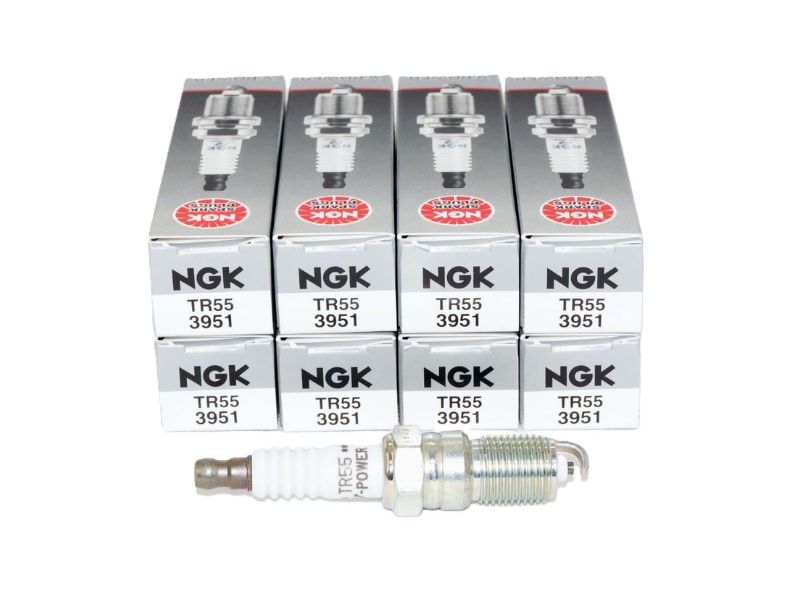
For most compatible stock and mildly modified 4.8 Vortec trucks, my first recommendation is the NGK 3951 TR55 V-Power Spark Plugs, 8 Pack. The current eight-pack has the deepest customer-feedback history among these three selections, making it an especially well-established conventional option. The TR55 uses a 14 mm thread, 17.5 mm thread reach, resistor construction, and the familiar NGK V-Power architecture.
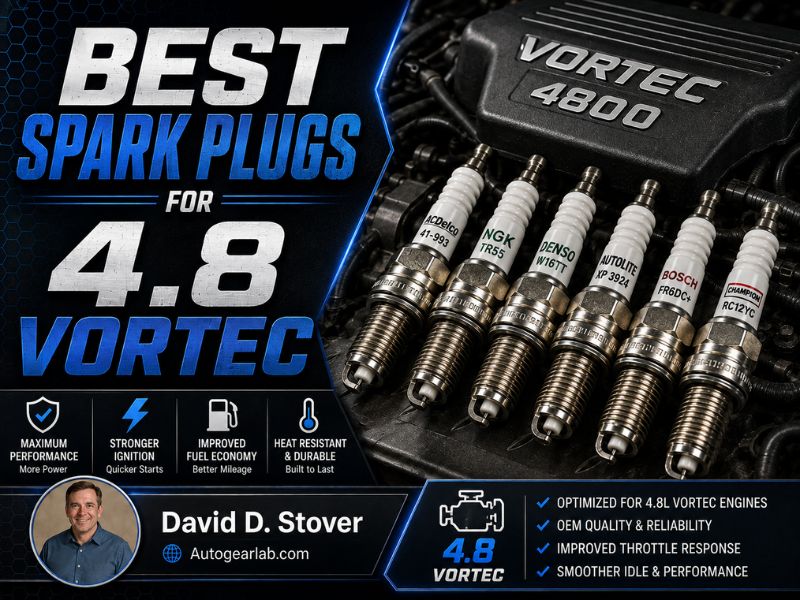
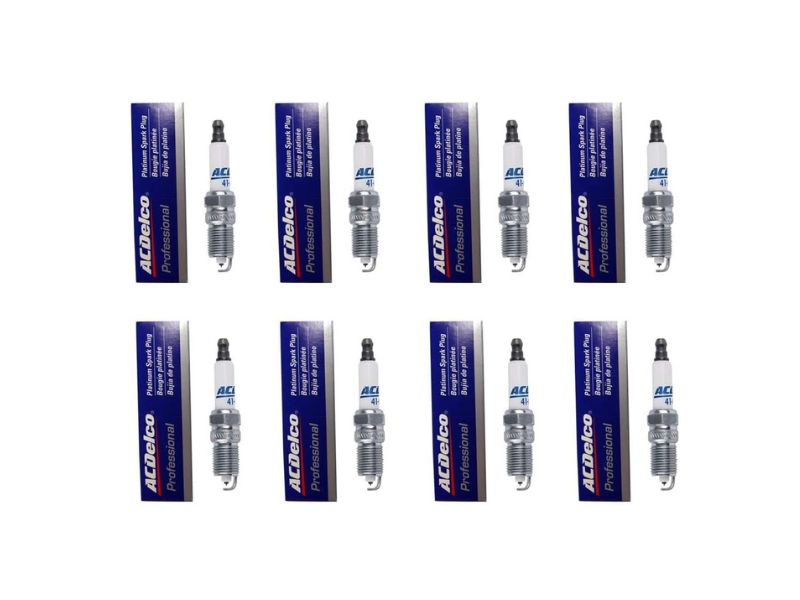
The ACDelco 41-962 Double Platinum Spark Plugs, 8 Pack take second place. They offer a particularly strong OE-oriented option for compatible GM applications. Chevrolet’s current parts information identifies 41-962 as an ACDelco GM Original Equipment double-platinum plug with a 17.5 mm reach, tapered seat, copper center-electrode core, resistor construction, and 0.040-inch published gap. Chevrolet also lists the part across relevant Silverado model years, although exact engine-level fitment still needs to be checked.
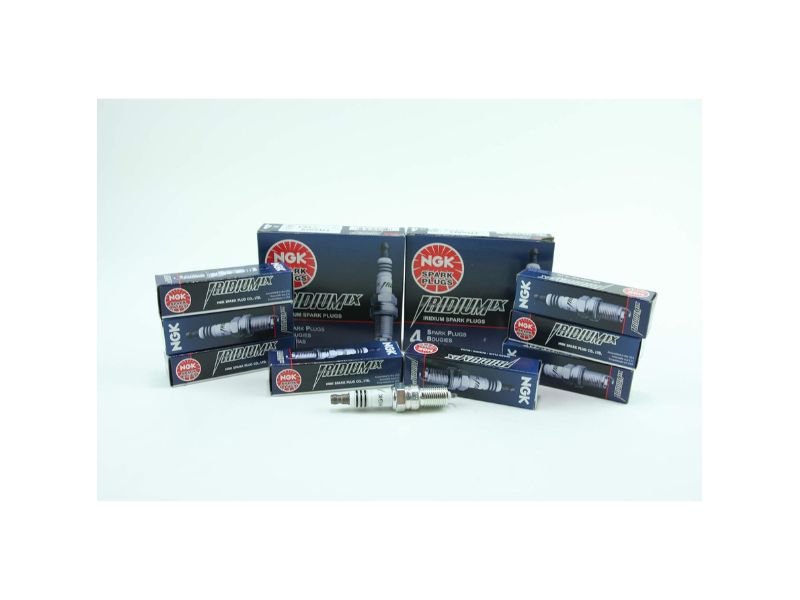
The NGK 7164 TR55IX Iridium IX Spark Plugs, 8 Pack are my third choice and the option I would consider when a fine-wire iridium electrode and slower electrode erosion are priorities. Niterra identifies TR55IX as NGK stock number 7164 and specifies a 0.6 mm iridium center electrode.
3 Best Spark Plugs for 4.8 Vortec Engines
| Image | Product Name | Check Price |
|---|---|---|
Best Choice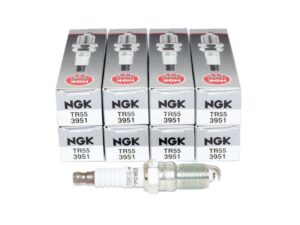 | NGK 3951 TR55 V-Power Spark Plugs – 8 Pack | Check Price |
Second Best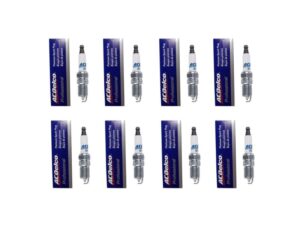 | ACDelco 41-962 Double Platinum Spark Plugs – 8 Pack | Check Price |
Third Choice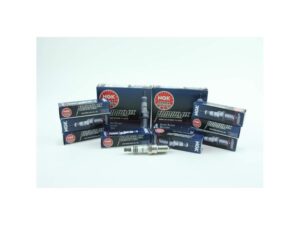 | NGK 7164 TR55IX Iridium IX Spark Plugs – 8 Pack | Check Price |
I ranked these three products using:
- Current customer rating and review confidence
- Relevance to the 4.8 Vortec/LS-truck platform
- Electrode construction
- Ignition-system compatibility
- Heat-transfer design
- Resistance to electrode erosion
- OE versus aftermarket positioning
- Availability as a complete eight-plug set
- Suitability for stock and mildly modified trucks
One rule matters more than the ranking: if your vehicle’s current service information specifies a different plug, follow the correct vehicle-specific specification rather than installing a plug solely because it ranks higher here.
1. NGK 3951 TR55 V-Power Spark Plugs – 8 Pack
Key Features
- Eight plugs in one package
- TR55 / stock number 3951
- 14 mm thread diameter
- 17.5 mm thread length
- 16 mm hex
- Resistor construction
- V-Power conventional electrode design
- Huge customer-feedback history
The NGK TR55 takes first place because it combines a simple, proven plug architecture with an unusually large base of customer experience. Its current eight-pack has substantially more customer feedback than the other two products here while maintaining a strong overall rating.
NGK’s TR55 is a conventional performance-oriented street plug rather than a long-life precious-metal plug. The manufacturer’s published TR55 dimensions include a 14 mm thread diameter, 17.5 mm thread length, and 16 mm wrench size, while the resistor construction helps control ignition-related electrical interference.
That simplicity can be an advantage on an older stock 4.8 Vortec. If the truck is used as a work vehicle, tow vehicle, daily driver, or project that gets inspected regularly, there is nothing inherently wrong with choosing a conventional plug and changing it at an appropriate interval.
The important point is not to treat TR55 as a universal LS plug. Different years and service specifications can call for different factory gaps or service replacement plugs, so always confirm the actual application.
What I Like
- Exceptional customer-confidence history
- Straightforward proven design
- Complete eight-plug package
- Common LS-family aftermarket choice
- Easy to inspect during future maintenance
- Good choice when routine service matters more than maximum plug life
What I Do Not Like
- Conventional electrodes generally wear faster than iridium
- Not automatically the correct plug for every 4.8 Vortec year
Verdict: The NGK TR55 is the plug I would start with for a compatible 4.8 Vortec when I want a proven, uncomplicated tune-up rather than an expensive long-life plug. It makes particular sense on an older Silverado or Sierra that is maintained regularly and where the owner would rather inspect the plugs periodically than leave them untouched for an extremely long interval. Its massive customer-feedback history also gives it an advantage over obscure plugs with attractive marketing but little long-term evidence of real-world use. What I would not do is install TR55 solely because another LS-based engine runs well with it. Check the exact application, compare the dimensions and required gap with the vehicle’s current specification, and make sure all eight plugs match. When those details line up, TR55 remains one of the most sensible spark-plug choices for an older 4.8 truck.
2. ACDelco 41-962 Double Platinum Spark Plugs – 8 Pack
Key Features
- Eight-plug package
- GM Original Equipment design
- Double-platinum construction
- 17.5 mm reach
- Tapered seat
- 16 mm hex
- Copper center-electrode core
- Resistor construction
- 0.040-inch published plug gap
ACDelco 41-962 earns second place because it is the strongest factory-style option in this group.
Chevrolet currently identifies ACDelco 41-962 as a GM Original Equipment double-platinum spark plug. The official specification lists a 17.5 mm reach, tapered seat, 16 mm hex, copper center-electrode core, platinum center tip, resistor design, and 0.040-inch gap.
The double-platinum design matters because platinum is used at the firing surfaces where electrode erosion occurs. Compared with a conventional nickel-based plug, a properly specified platinum plug can maintain its firing characteristics for a longer period.
Another reason I like the 41-962 is that it does not require the buyer to believe aftermarket performance claims. It is designed within GM’s own service-parts system, and Chevrolet currently lists the part across multiple relevant Silverado model years.
There is one important complication: GM spark-plug part numbers have changed and been superseded over the years. An older owner’s manual may show a different original part number than the plug currently recommended through a modern service-parts catalog.
What I Like
- OE-oriented GM design
- Double-platinum firing surfaces
- Published specifications are easy to verify
- Eight-plug package
- Strong choice for a stock engine
- Excellent fit for owners who prefer factory-style service parts
What I Do Not Like
- Service-part supersessions can create confusion
- Published replacement gap may differ from older plug recommendations found in forums or manuals
Verdict: For a stock 4.8 Vortec whose current GM application lookup calls for 41-962, this may actually be the product I would personally choose over everything else in the article despite its second-place ranking. The ranking reflects customer-feedback volume as well as technical suitability, while the ACDelco’s real strength is OE-style compatibility. That distinction matters. A stock truck does not need an exotic electrode configuration to make power; it needs a plug with the correct reach, seat, heat behavior, resistor characteristics, and gap for the calibration and ignition system. If you are restoring a high-mileage work truck, trying to eliminate unknown aftermarket tune-up parts, or simply want to return the ignition system to a predictable baseline, the 41-962 is an excellent choice when verified for the VIN. I would trust the current GM fitment information over an old forum post or a gap number copied from another model year.
3. NGK 7164 TR55IX Iridium IX Spark Plugs – 8 Pack
Key Features
- Eight-plug package
- TR55IX / stock number 7164
- Fine-wire iridium center electrode
- 0.6 mm center electrode diameter
- Resistor design
- Same general TR55 physical family
- Strong customer satisfaction
- Designed to resist spark erosion
NGK TR55IX takes third place because it has an excellent current customer rating but a smaller feedback base than the standard TR55 and ACDelco pack.
Its technical advantage is the center electrode.
Niterra states that the TR55IX uses a 0.6 mm iridium center electrode. Iridium’s strong resistance to spark erosion allows the firing tip to be made much narrower than a conventional electrode while maintaining durability.
A narrow center electrode can reduce the amount of metal immediately surrounding the initial spark kernel. It can also retain its geometry longer than a conventional electrode because iridium is highly resistant to erosion.
That makes TR55IX attractive for owners who do not want to service plugs frequently.
However, iridium should not be confused with a guaranteed horsepower modification. On a healthy engine with properly functioning plugs, changing electrode material alone does not suddenly add significant power.
What I Like
- Fine 0.6 mm iridium center electrode
- Excellent resistance to electrode erosion
- Strong current customer satisfaction
- Complete eight-plug pack
- Good option for higher-mileage daily drivers
What I Do Not Like
- More expensive than conventional TR55 plugs
- Application and gap still need verification
- Benefits are mainly durability and ignition consistency, not guaranteed extra horsepower
Verdict: The NGK TR55IX is the plug I would choose when a compatible 4.8 Vortec is expected to accumulate a lot of highway mileage and I want to reduce how frequently the plugs need attention. The fine-wire iridium design is a legitimate engineering difference rather than just premium branding, and its slower electrode erosion can help maintain firing geometry as mileage accumulates. It also makes sense on trucks where plug access is inconvenient enough that doing the job less often has real value. Still, I would never choose TR55IX by assuming that iridium is automatically superior to the correct OE plug. A properly specified double-platinum ACDelco is better than an incorrectly matched iridium plug. Confirm the year, engine, required dimensions, and service specification first; then choose the iridium option when longevity is genuinely one of your priorities.
4.8 Vortec Spark Plug Comparison
| Spark Plug | Electrode Type | General Character | Strongest Use Case |
| NGK TR55 3951 | Conventional/V-Power | Simple and proven | Regularly maintained stock trucks |
| ACDelco 41-962 | Double platinum | OE-oriented | Factory-style replacement |
| NGK TR55IX 7164 | Fine-wire iridium | Long-life aftermarket | High-mileage daily drivers |
All three can be good products in the correct application. The vehicle-specific fitment matters more than the ranking.
What Is the 4.8 Vortec?
The 4.8 Vortec belongs to GM’s modern small-block truck-engine family and shares much of its basic architecture with larger LS-based truck engines.
Unlike an older distributor-equipped Chevrolet V8, the 4.8 uses coil-near-plug ignition.
The ignition path is essentially:
Ignition coil → short spark-plug wire → spark plug
Each cylinder has its own coil.
That design eliminates the traditional distributor cap and rotor but still leaves the spark-plug wire and plug exposed to considerable exhaust heat.
Does a 4.8 Vortec Use Eight Spark Plugs?
Yes. It is a V8, so it uses eight spark plugs.
That is why I selected complete eight-pack listings instead of single plugs.
Buying an eight-pack also reduces the chance of accidentally mixing:
- Different heat ranges
- Different electrode materials
- Different gaps
- Different manufacturing batches
All eight cylinders should receive matching correctly specified plugs.
LR4, LY2, and L20 Fitment
The 4.8-liter family evolved during its production run.
Different generations may use different:
- Calibrations
- Cylinder-head revisions
- Spark-plug service recommendations
- Original plug part numbers
This is why simply searching for “LS 4.8 spark plug” is not sufficiently precise.
Before ordering, determine:
- Vehicle year
- Vehicle model
- Engine RPO
- Existing plug part number
- Current service-parts recommendation
For an older vehicle, the current replacement plug may not have the same part number printed in the original owner’s literature because service parts can be superseded.
Why GM Spark-Plug Part Numbers Change
Manufacturers update service components.
A spark plug may be superseded because of:
- Material changes
- Supplier changes
- Improved durability
- Consolidation of service parts
- Updated calibration/service strategy
The ACDelco 41-962 illustrates why using current vehicle-specific parts information is important. Chevrolet’s current parts listing identifies 41-962 as a GM Original Equipment double-platinum plug and provides its specifications directly.
Do not assume an older discontinued part number must be hunted down forever.
Use current validated fitment.
Platinum vs Iridium vs Conventional Plugs
Electrode material mainly affects electrode size, erosion resistance, and expected service characteristics.
Conventional Plug
The standard NGK TR55 is the simplest design here.
Advantages include:
- Lower cost
- Proven construction
- Easy routine replacement
- Good choice for regularly serviced trucks
The disadvantage is comparatively faster electrode wear.
Double Platinum
The ACDelco uses platinum at critical firing surfaces.
Advantages include:
- Better wear resistance
- Stable long-term firing surfaces
- Strong OE-style compatibility
For a factory-style truck, double platinum is an excellent practical design.
Iridium
The TR55IX uses a very narrow iridium center electrode.
Niterra specifies the center electrode diameter at 0.6 mm and notes that iridium provides high resistance to spark erosion.
Its biggest strengths are:
- Fine firing tip
- Excellent erosion resistance
- Longer useful electrode life
Do Iridium Spark Plugs Make More Power?
Not automatically.
A spark plug does not create energy for the engine.
Its job is to ignite the compressed air-fuel mixture at the correct time.
If the original plugs are badly worn, replacing them may restore:
- Smoothness
- Acceleration
- Starting quality
- Fuel economy
- Misfire resistance
But that improvement comes from correcting an ignition problem.
If the existing plugs are already working perfectly, switching to iridium should not be expected to produce a large, guaranteed horsepower gain.
Understanding Spark-Plug Gap on a 4.8 Vortec
Gap deserves special attention because older and newer service information can appear contradictory.
Chevrolet currently publishes the ACDelco 41-962 at a 0.040-inch gap.
The TR55 family can be supplied with other general gap specifications depending on exact version and application. NGK’s official product data confirms the underlying plug dimensions, but the vehicle’s required gap should come from the vehicle-specific application, not simply from a generic plug description.
That means you should not see one forum post saying “0.060” and automatically set every 4.8 Vortec plug to that value.
Use:
- Current service information
- Underhood/emissions information when applicable
- Current vehicle-specific manufacturer catalog
Why Spark-Plug Gap Matters
The ignition coil has to create enough voltage to jump the gap.
Increasing the gap increases the voltage requirement.
If the gap becomes excessive because of electrode wear, the ignition system may become more prone to misfire under:
- Heavy acceleration
- Towing
- High cylinder pressure
- Wet conditions
- Worn plug-wire insulation
A smaller gap reduces the voltage requirement, but arbitrarily shrinking the gap can change combustion behavior.
Use the correct specification.
Should You Regap New Spark Plugs?
Always verify them, but adjust only according to the plug manufacturer’s guidance.
Shipping damage can alter the ground electrode.
With fine-wire precious-metal plugs, avoid placing a gapping tool against the center electrode.
If a delicate iridium tip is damaged, replace the plug instead of trying to straighten the firing electrode.
ACDelco specifically instructs installers to confirm the correct gap before installation and follow the applicable manufacturer specifications.
What Is Spark-Plug Heat Range?
Heat range describes the plug’s ability to transfer heat from the firing end into the cylinder head.
It does not mean spark temperature.
A plug that runs too cold may accumulate deposits.
A plug that runs too hot can contribute to abnormal combustion or electrode damage.
A stock 4.8 Vortec generally does not need a different heat range simply because the owner installs:
- Cold-air intake
- Cat-back exhaust
- Headers
- Mild tune
More substantial changes may alter requirements.
Modified 4.8 Vortec Engines
The 4.8 is popular for modifications because of its small-block architecture.
A heavily modified engine may require a plug that differs from stock.
Examples include:
- Turbocharger
- Supercharger
- Nitrous
- High compression
- Major camshaft/cylinder-head combination
- Aggressive tuning
Forced induction and nitrous can dramatically increase cylinder pressure.
A tuner may therefore recommend:
- Colder heat range
- Different plug gap
- Different electrode design
In that situation, the correct plug is whatever matches the engine combination and calibration—not necessarily one of the three stock-oriented plugs reviewed here.
What About TR6 Spark Plugs?
TR6 is commonly discussed in modified LS applications because it is a different heat range from TR55.
That does not make it a universal upgrade.
Installing a colder plug in an engine that does not need one can make the plug less capable of reaching its self-cleaning operating temperature during normal driving.
Use a colder plug when the engine combination and tuner justify it.
Do not choose it because “performance engines use colder plugs.”
Spark-Plug Wires Matter Too
A 4.8 Vortec uses short plug wires between each coil and spark plug.
These wires live near the exhaust manifolds and can experience repeated heat cycles.
Inspect them while changing plugs.
Look for:
- Cracking
- Burned boots
- Hardened insulation
- Loose terminals
- Corrosion
- Arcing marks
A perfectly good new plug cannot compensate for a wire that leaks ignition voltage to the exhaust manifold.
Should You Replace Spark-Plug Wires With the Plugs?
Not automatically.
Chevrolet’s current ACDelco service guidance says wires should be inspected when plugs are replaced rather than automatically discarded regardless of condition.
Replace them when:
- Mileage is high
- Boots are damaged
- Insulation is brittle
- Exhaust heat has burned them
- Resistance or electrical leakage is a problem
If the wires were recently replaced with a quality set and remain healthy, there is no reason to replace them again simply because the spark plugs are due.
Should You Replace Ignition Coils Too?
No.
A 4.8 has eight individual ignition coils, and replacing all of them during every plug service is unnecessary.
Coils should be replaced based on:
- Diagnosis
- Damage
- Known failure
- Testing
A cylinder-specific misfire can sometimes be diagnosed by moving a suspected coil to another cylinder and observing whether the misfire follows, although proper professional diagnostic procedures are preferable.
Do not replace eight expensive coils because one spark plug is worn.
Signs of Worn Spark Plugs
Possible symptoms include:
- Rough idle
- Difficult starting
- Hesitation
- Loss of power under load
- Misfire
- Check-engine light
- Reduced fuel economy
Chevrolet specifically identifies hard starting, hesitation, misfire, and reduced acceleration under load among conditions that can accompany worn ignition components.
These symptoms are not proof that the plugs are responsible.
Diagnosis still matters.
Common Misfire Codes
A 4.8 Vortec may set:
- P0300 for random/multiple misfire
- P0301 through P0308 for cylinder-specific misfire
A misfire may come from:
- Spark plug
- Plug wire
- Coil
- Injector
- Vacuum leak
- Fuel-delivery problem
- Compression problem
Replacing plugs without diagnosis can waste money.
Reading the Old Spark Plugs
Keep the plugs organized by cylinder when you remove them.
Chevrolet’s service guidance specifically recommends keeping removed plugs identified by cylinder because unusual plug condition can help connect a problem to one cylinder.
Normal-Looking Plug
Generally even deposits and normal electrode wear suggest the cylinder is operating reasonably.
Black Dry Deposits
Can be associated with:
- Rich operation
- Excessive idling
- Weak ignition
- Plug running too cold
Wet Fuel
Can indicate that the cylinder is receiving fuel but not firing reliably.
Oil Deposits
May indicate oil entering the combustion chamber.
Damaged Electrode
Requires further investigation rather than simply replacing the plug and forgetting about it.
How to Change 4.8 Vortec Spark Plugs
1. Start With a Cool Engine
The aluminum cylinder heads should be allowed to cool before plug removal.
Chevrolet’s maintenance instructions specifically caution against removing plugs from hot aluminum cylinder heads.
2. Remove the Plug Boot Carefully
Grip the boot rather than pulling the wire.
Twist gently to break the seal.
3. Clean Around the Plug
Prevent dirt from dropping into the cylinder-head opening.
4. Loosen the Old Plug
A proper 5/8-inch/16 mm spark-plug socket works with the plugs discussed here. Both Chevrolet and Niterra publish a 16 mm hex specification for the relevant parts.
5. Compare Old and New
Check:
- Thread
- Reach
- Seat
- Hex
- Electrode position
6. Verify the Gap
Use the specification for the exact vehicle.
7. Start the Plug by Hand
Do not use the ratchet to force the first threads.
8. Torque Correctly
Use the service specification for the exact engine and plug.
9. Reinstall the Plug Wire
Make sure both plug and coil connections are fully seated.
Passenger-Side Plug Access
Some 4.8 truck engine bays make certain passenger-side plugs more awkward than others because of:
- Heater hoses
- Exhaust components
- Body clearance
Useful tools can include:
- Short extension
- Medium extension
- Swivel
- Flex-head ratchet
Do not use excessive sideways force on the ceramic insulator.
Cracking a brand-new plug during installation can create an immediate misfire.
Should You Use Anti-Seize?
Follow the spark-plug manufacturer’s guidance.
Modern plug shells often have surface treatments designed to resist corrosion.
Adding anti-seize changes thread friction, which means the same torque-wrench reading can produce a different actual clamping force.
Do not automatically coat every plug simply because that was common practice decades ago.
Dielectric Grease on the Boots
A small amount of suitable dielectric grease inside the spark-plug boot can help with sealing and future boot removal when used appropriately.
Chevrolet’s current maintenance guidance specifically mentions applying dielectric grease in the boot area to help reduce exterior tracking.
Do not fill the entire terminal cavity.
The electrical terminal still needs secure physical contact.
How Often Should 4.8 Vortec Spark Plugs Be Replaced?
Use the maintenance schedule for the exact model year and plug type.
There is no responsible universal interval for every 4.8 Vortec because:
- Original plug materials changed
- Replacement plug materials differ
- Operating conditions vary
- Older engines may need more frequent inspection
A conventional TR55 and a precious-metal plug should not automatically be assumed to have identical maintenance intervals.
Towing and Work-Truck Use
A truck that regularly tows or works under heavy load puts the ignition system under demanding conditions.
High cylinder pressure can make a marginal plug, wire, or coil problem more obvious.
If a truck develops a misfire only during:
- Uphill acceleration
- Trailer towing
- Wide throttle opening
inspect the ignition system carefully rather than assuming the transmission is responsible.
Fresh properly specified plugs can restore performance if worn plugs are the cause, but they should be part of a diagnosis.
Which Plug Is Best for a Stock 4.8?
For a stock engine, I would choose based on this order:
1. Confirm current OE specification
2. Verify physical dimensions and gap
3. Choose electrode material based on maintenance goals
If current GM fitment calls for ACDelco 41-962, that is an excellent factory-style choice.
If NGK TR55 is a verified application and routine economical maintenance is preferred, it is very difficult to argue with its track record.
If compatible TR55IX is verified and longer electrode life matters, choose the iridium.
Common Mistakes When Buying 4.8 Vortec Spark Plugs
Buying Based Only on Engine Displacement
Always check year and engine application.
Assuming Every LS Engine Uses TR55
The LS family includes many engines and calibrations.
Believing Iridium Automatically Adds Horsepower
It mainly provides a fine durable firing electrode.
Copying a Gap From an Internet Forum
Use current application-specific information.
Changing Heat Range Without a Reason
Stock engines generally need the specified heat range.
Ignoring Spark-Plug Wires
A burned wire can create the same misfire after new plugs are installed.
Changing All Eight Coils Automatically
Diagnose coils before replacing them.
Installing Plugs in a Hot Aluminum Head
Let the engine cool first.
Cross-Threading
Start each plug by hand.
Mixing Different Plug Types
Install a matching set of eight.
Frequently Asked Questions
1. What are the best spark plugs for 4.8 Vortec engines?
NGK TR55 is my first overall pick for compatible engines because it combines straightforward construction with an exceptionally large customer-feedback history.
For a stock truck where current GM fitment specifies it, ACDelco 41-962 is the stronger OE-style choice.
2. How many spark plugs does a 4.8 Vortec need?
The 4.8 Vortec V8 uses eight spark plugs.
Buy a matched eight-plug set rather than mixing electrode materials or part numbers.
3. Are NGK TR55 plugs good for a 4.8 Vortec?
Yes when TR55 is verified for the exact application.
NGK identifies TR55 as stock number 3951 with a 14 mm thread and 17.5 mm thread length.
4. Is ACDelco 41-962 good for a 4.8 Vortec?
Yes when the current GM application lookup specifies 41-962.
It is a GM Original Equipment double-platinum plug with a tapered seat, 17.5 mm reach, resistor construction, and 0.040-inch published gap.
5. Is NGK TR55IX good for a 4.8 Vortec?
Yes when the application is verified and you want a fine-wire iridium plug.
NGK identifies TR55IX as stock number 7164 with a 0.6 mm iridium center electrode.
6. Which is better, TR55 or TR55IX?
TR55 is the simpler conventional option; TR55IX uses a more erosion-resistant fine-wire iridium center electrode.
The better choice depends on fitment, service interval, and budget rather than one being universally superior.
7. Is platinum or iridium better for a stock 4.8?
Either can be excellent when it is the correct specification.
A properly matched OE double-platinum plug is preferable to an iridium plug with incorrect dimensions, gap, or heat range.
8. What spark-plug gap does a 4.8 Vortec use?
Check the specification for the exact model year and replacement plug.
The current ACDelco 41-962 specification is 0.040 inch, but older applications and other plug families may be associated with different published gaps.
9. Should I gap new spark plugs?
Verify the gap before installation, but handle fine-wire electrodes carefully.
Do not pry a gapping tool directly against an iridium center electrode.
10. Do iridium plugs increase horsepower?
Not by themselves on an engine whose existing plugs already fire correctly.
Replacing worn or misfiring plugs can restore lost performance, but electrode material alone does not guarantee additional horsepower.
11. Should I use colder plugs in a 4.8 Vortec?
Not on a normal stock engine unless the engine combination or tuner specifically requires them.
Colder heat ranges are more relevant to substantial modifications such as boost or nitrous.
12. Are TR6 plugs better for a modified 4.8?
They can be appropriate for some high-cylinder-pressure combinations, but they are not a universal performance upgrade.
Follow the recommendation of the tuner responsible for the engine calibration.
13. Should I replace plug wires at the same time?
Inspect them and replace them if damaged or deteriorated.
GM’s service guidance recommends inspecting wires during spark-plug replacement rather than automatically replacing healthy wires.
14. Should I replace all eight ignition coils?
No. Replace coils based on diagnosis rather than as routine spark-plug maintenance.
Eight functioning coils do not need to be discarded simply because the plugs are being serviced.
15. Can spark plugs cause a P0300 code?
Yes, but P0300 can also result from wires, coils, injectors, fuel problems, vacuum leaks, or mechanical faults.
Inspect and diagnose rather than assuming plugs are always responsible.
16. Should I use anti-seize on 4.8 Vortec spark plugs?
Follow the plug manufacturer’s instructions rather than automatically applying it.
Lubricating the threads can alter the relationship between specified torque and actual clamping force.
17. Should I use dielectric grease on spark-plug boots?
A small amount can be useful when applied correctly.
ACDelco’s current maintenance guidance recommends dielectric grease in the boot area to help reduce exterior tracking.
18. Which spark plug should I buy for a stock Silverado 4.8?
Start with the current vehicle-specific OE recommendation.
If 41-962 is specified, I would strongly favor it for a stock factory-style setup. If NGK TR55 is confirmed for the application, it is an excellent conventional alternative, while TR55IX is better suited to buyers prioritizing a fine-wire iridium electrode.
Conclusion
Choosing the best spark plugs for 4.8 Vortec engines comes down to correct fitment, electrode design, and how you maintain the truck—not which plug makes the boldest performance claim.
The NGK TR55 earns my first overall position because its straightforward V-Power design is backed by an exceptionally deep customer-feedback history. For a compatible older 4.8 that receives regular maintenance, it remains a practical and proven choice.
The ACDelco 41-962 is the option I would lean toward for a stock truck when current GM fitment specifically calls for it. Its double-platinum construction, 17.5 mm reach, tapered seat, resistor design, and GM OE positioning make it the safest factory-style recommendation in the group.
The NGK TR55IX completes the list for owners prioritizing electrode durability. Its 0.6 mm iridium center electrode provides a legitimate long-life advantage without relying on unsupported horsepower promises.
Before buying any set, verify the year, VIN, engine RPO, current service plug, and required gap. Install all eight matching plugs with the engine cool, start each plug by hand, inspect the short plug wires while they are accessible, and use the correct torque specification.
Getting those details right matters far more to a reliable 4.8 Vortec than simply choosing platinum over iridium.