A good tire inflator chuck can make the difference between quick, frustration-free tire inflation and constantly fighting air leaks around the valve stem. The best chuck should connect securely, maintain a tight seal, match your inflator or compressor fitting, and let you add air without losing several PSI while disconnecting it.
My primary recommendation is the AstroAI Heavy Duty Closed Flow Lock-On Air Chuck. Its brass construction, locking clip, closed-flow operation, 1/4-inch female NPT connection, and 250 PSI rating make it an excellent general-purpose replacement chuck for car, SUV, motorcycle, and light-truck tire inflation.
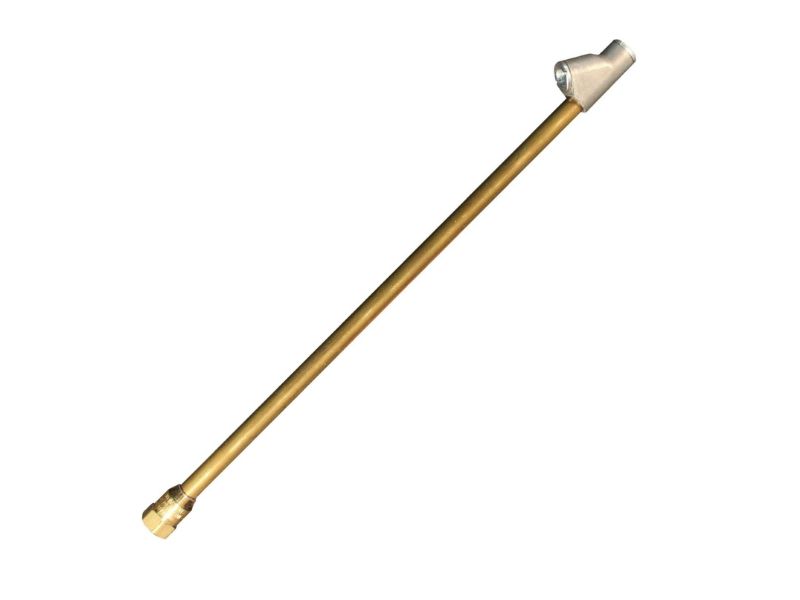
For trucks, RVs, trailers, and dual rear wheels, I prefer the Milton S-693-12 Extended Reach Dual Head Air Chuck. Its long body and dual-head configuration can reach valve stems that are difficult or impossible to access with a short straight chuck.
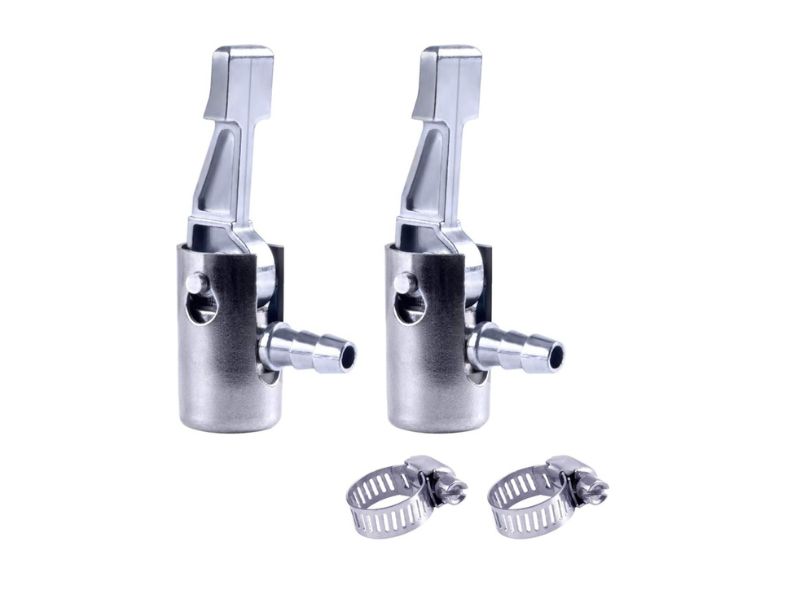
If you need an inexpensive all-metal replacement for the end of an existing inflator hose, the LUMITECO 1/4-Inch Lock-On All-Metal Air Chuck is another useful choice. Its small lock-on design is particularly convenient for replacing damaged plastic chucks on portable compressors.
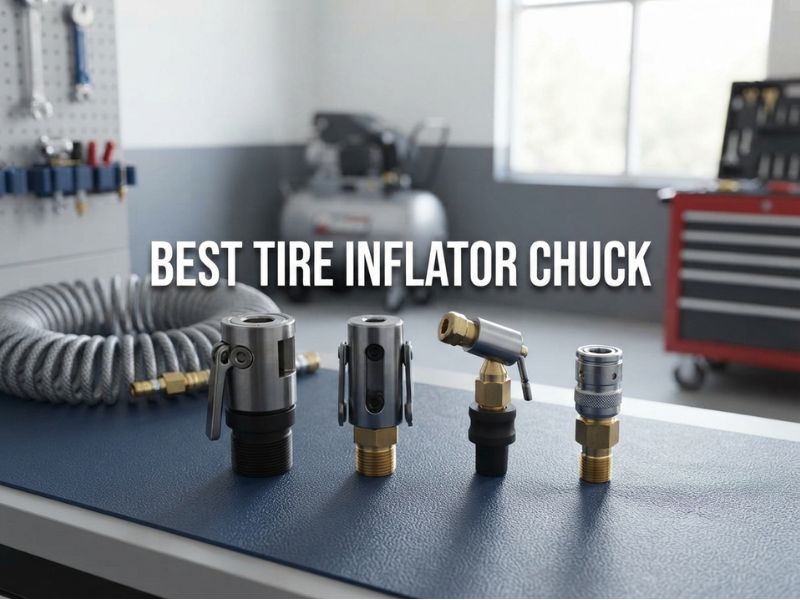
Best Tire Inflator Chuck
| Image | Product Name | Check Price |
|---|---|---|
Best Choice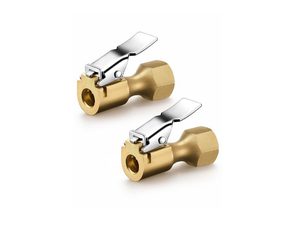 | AstroAI Heavy Duty Closed Flow Lock-On Air Chuck – Best Overall | Check Price |
Second Best | Milton S-693-12 Extended Reach Dual Head Air Chuck | Check Price |
| Third Choice | LUMITECO 1/4-Inch Lock-On All-Metal Air Chuck | Check Price |
1. AstroAI Heavy Duty Closed Flow Lock-On Air Chuck – Best Overall
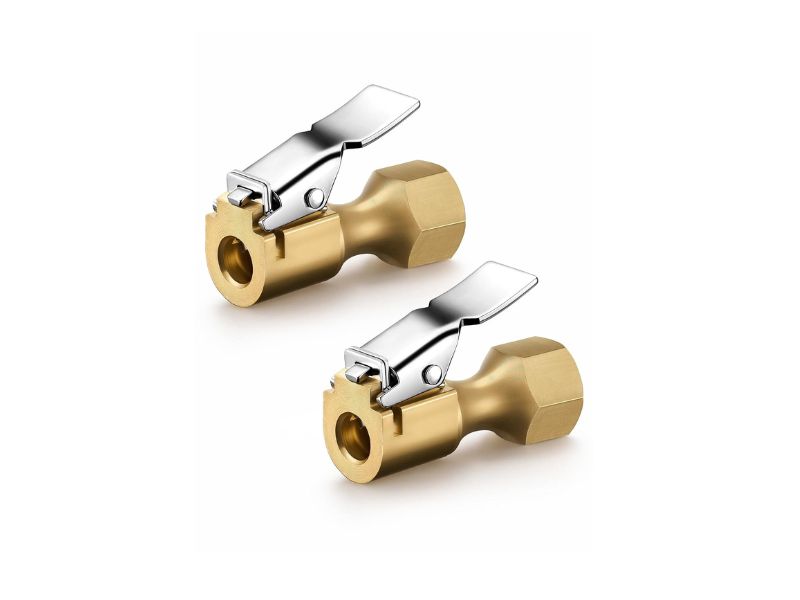
Key Features
- Heavy-duty brass construction
- Closed-flow air chuck design
- Lock-on valve-stem clip
- 1/4-inch female NPT connection
- Rated up to 250 PSI
- Compatible with standard Schrader valves
- Straight-tip design
- Hands-free connection
- Suitable for tire inflators and pressure gauges
- Two-chuck package on the popular configuration
The AstroAI Heavy Duty Closed Flow Air Chuck is my first choice because it provides the design most home users need when upgrading a conventional tire inflator or compressor hose.
The biggest advantage is its lock-on clip. Instead of holding the chuck tightly against the valve stem throughout inflation, you push it onto the Schrader valve and engage the lever. The chuck then stays attached while you operate the inflator or read your pressure gauge.
That seemingly small convenience becomes much more valuable when filling several tires.
Holding an ordinary push-on chuck against a tire for three or four minutes can become tiring, particularly when using a relatively low-output portable compressor. A secure locking chuck lets both hands remain free for the compressor, pressure gauge, or hose.
The AstroAI uses a closed-flow design.
This distinction is important.
A closed-flow chuck contains an internal valve that prevents air from flowing freely when the chuck is disconnected. It works particularly well with common inflator gauges and compressor setups where the chuck is expected to control airflow at the hose end.
An open-flow chuck behaves differently. Air can flow continuously through it, so it needs to be paired with an inflator, trigger valve, or other upstream flow-control mechanism.
For ordinary DIY tire inflation, closed flow is usually easier to understand.
The brass construction also gives the AstroAI a more substantial feel than the lightweight molded-plastic chucks commonly supplied with inexpensive portable inflators.
Its 250 PSI rating is well above normal passenger-car tire pressure and sufficient for the majority of automotive and light-duty inflation applications.
The connection on this model is 1/4-inch female NPT, a common pneumatic fitting size.
Before ordering, inspect your existing inflator.
Some portable inflators use permanently crimped hoses, proprietary threaded fittings, or barbed hose-end connections rather than 1/4-inch NPT. Those setups may need an adapter or a different chuck.
The straight head works particularly well on normal exposed Schrader valves.
Its primary limitation appears when dealing with dual rear wheels or deeply recessed valve stems. In those situations, a long dual-head chuck such as the Milton S-693-12 is easier to use.
What I Like
The locking clip provides a secure hands-free connection.
Its closed-flow operation makes it well suited to typical tire-inflator and gauge setups.
Brass construction provides better durability than cheap plastic replacement chucks.
The 250 PSI working range gives it substantial pressure capability.
The 1/4-inch female NPT fitting works with many standard pneumatic accessories.
What I Do Not Like
The straight compact head cannot reach every recessed or inward-facing truck valve.
It will not directly replace every portable inflator’s proprietary hose connector.
Like most lever-lock chucks, worn valve stems or an incorrectly seated chuck can still produce leakage.
Verdict
The AstroAI is the best tire inflator chuck for most cars and home-garage compressor setups because it combines a secure lock-on mechanism, durable brass construction, high pressure capacity, and convenient closed-flow operation.
2. Milton S-693-12 Extended Reach Dual Head Air Chuck – Best for Trucks and Dual Wheels
Key Features
- Extended-reach design
- Dual-head configuration
- 1/4-inch female NPT fitting
- Maximum pressure around 150 PSI
- Designed for difficult valve-stem access
- Both heads engage valve-core threads
- Metal construction
- Approximately 12-inch-class reach
- Suitable for trucks, trailers, RVs, and dual wheels
- Professional-style pneumatic design
The Milton S-693-12 solves a problem that a small lock-on chuck cannot: accessing tire valves that sit several inches behind the wheel face.
This occurs frequently on dually trucks, commercial trucks, RVs, trailers, buses, and other dual-wheel vehicles.
One valve may point outward and remain easy to access, while the inner wheel’s valve can face inward or sit deep between two wheels.
Trying to reach that valve with a two-inch chuck attached to a flexible hose can be extremely frustrating.
The Milton uses an extended rigid body with two chuck heads positioned for different valve orientations.
One end works with accessible outward-facing valves, while the angled or reverse-facing head helps reach inner dual-wheel valve stems.
For pickup and RV owners, that can make it much more valuable than a conventional lock-on chuck.
The fitting uses 1/4-inch FNPT, making it straightforward to integrate into many standard shop-air systems.
You can add the appropriate male quick-connect plug if your compressor hose uses a standard pneumatic coupler.
Its approximately 150 PSI maximum operating pressure is sufficient for passenger tires and many truck, trailer, and RV tire applications.
Heavy-duty tires can require substantially higher inflation pressures than passenger-car tires, so checking both tire specifications and tool pressure limits is always important.
Milton has also been producing pneumatic tire-service hardware for decades, and this type of traditional dual-head chuck remains common in workshops because the design is simple and serviceable.
The S-693-12 is not the product I would select for compact storage.
It is intentionally long.
That extra length is an advantage when reaching an inner dually valve, but unnecessary when all four valve stems on your sedan are easily accessible.
It also works differently from a common lever-lock chuck. Correct positioning against the valve core remains important for obtaining a good seal.
What I Like
The extended shaft makes difficult truck valve stems much easier to access.
Its dual-head design handles both inward- and outward-facing valves.
The metal body is appropriate for garage and professional use.
Standard 1/4-inch female NPT makes integration into compressor setups relatively straightforward.
It is particularly useful for RV and dually owners.
What I Do Not Like
Its long design is unnecessary for normal passenger-car tires.
It occupies considerably more toolbox space than a compact chuck.
Getting the head perfectly centered on a valve stem can require more attention than using a lever-lock design.
Verdict
The Milton S-693-12 is my preferred tire inflator chuck for trucks, RVs, trailers, and dual rear wheels where valve-stem reach is more important than compact dimensions.
3. LUMITECO 1/4-Inch Lock-On All-Metal Air Chuck – Best Replacement Chuck
Key Features
- All-metal construction
- Lock-on valve-stem lever
- Compact body
- Approximately 200 PSI maximum pressure
- Designed for Schrader tire valves
- Open-flow configuration
- Hose-end/barbed connection style
- Useful for portable inflator repairs
- Hands-free inflation
- Two-piece package
The LUMITECO all-metal chuck is particularly useful when you already own a functioning tire inflator but its original valve connector has worn out or broken.
This situation is common with inexpensive portable compressors.
The motor and pump may continue working perfectly for years, while the small plastic chuck at the end of the hose cracks, loses its seal, or stops gripping valve stems correctly.
Replacing the entire compressor because of a damaged hose-end fitting makes little sense when the hose can be repaired.
The LUMITECO provides an all-metal lock-on replacement.
Its barbed connection is designed to slide into compatible inflator hose after the damaged original fitting is removed. A suitable hose clamp can then secure the replacement.
This configuration is fundamentally different from the 1/4-inch FNPT connection used on the AstroAI and Milton models.
That distinction is important before purchasing.
If your compressor already has threaded 1/4-inch pneumatic fittings, AstroAI may be easier to install.
If you are repairing a small rubber hose on a portable 12V inflator, the LUMITECO barbed design can be more convenient.
The chuck uses a lever that locks onto a standard Schrader valve stem.
Once seated properly, you can leave the chuck attached instead of pressing it against the valve throughout inflation.
The metal body is also a substantial improvement over many factory plastic connectors.
Its maximum pressure rating is approximately 200 PSI, comfortably beyond typical passenger-car, motorcycle, bicycle Schrader, SUV, and light-truck tire pressures.
This model uses an open-flow design.
That means air can pass through the chuck when it is not connected to a tire. It should therefore be used with an inflator or system that controls airflow elsewhere.
That makes it especially appropriate as a direct replacement on many small electric tire compressors that automatically supply air whenever the compressor is operating.
It is less appropriate if your particular inflator gauge requires a closed-flow chuck to operate correctly.
What I Like
The compact all-metal design is excellent for replacing weak plastic inflator connectors.
Its locking lever makes hands-free inflation much easier.
The barbed connection is convenient for hose repair.
The two-pack provides a spare or allows two inflators to be upgraded.
A 200 PSI pressure rating is more than adequate for typical automotive use.
What I Do Not Like
Installation may require cutting the existing hose.
The hose diameter must match the barbed fitting correctly.
Open-flow behavior is not appropriate for every inflator-gauge setup.
It does not provide the deep reach of a truck-style dual-head chuck.
Verdict
The LUMITECO is the best choice here when you need a compact metal replacement chuck for an existing portable tire-inflator hose rather than a threaded compressor accessory.
Tire Inflator Chuck Comparison
| Product | Chuck Type | Flow Type | Connection | Max Pressure | Lock-On | Best Use |
| AstroAI Heavy Duty Air Chuck | Straight lever-lock | Closed | 1/4-inch FNPT | 250 PSI | Yes | Cars and general garage use |
| Milton S-693-12 | Extended dual head | System dependent | 1/4-inch FNPT | 150 PSI | Dual-head engagement | Trucks, RVs and dual wheels |
| LUMITECO All-Metal Air Chuck | Compact lever-lock | Open | Hose barb | 200 PSI | Yes | Portable inflator hose repair |
For most home users, AstroAI is the easiest general-purpose choice because its closed-flow lock-on design works well with conventional tire-inflation equipment.
Choose Milton S-693-12 when valve accessibility is the biggest problem.
Choose LUMITECO when replacing the factory chuck on a small compressor hose.
What Is a Tire Inflator Chuck?
A tire inflator chuck is the fitting that connects an air hose or tire inflator to the tire’s valve stem.
On most passenger vehicles in the United States, the tire uses a Schrader valve.
The chuck pushes over or locks onto that valve and creates an airtight pathway between the compressor and tire.
A poor chuck can cause several problems:
Air leaking while filling, difficulty maintaining connection, loss of tire pressure during removal, slow inflation, damaged valve stems, and frustration when using recessed valves.
A high-quality chuck solves these problems by creating a reliable seal.
Lock-On vs Push-On Tire Chuck
A push-on chuck needs to be held against the valve stem manually.
Its primary advantages are simplicity and quick attachment.
For occasional tire-pressure adjustments, this can work perfectly well.
However, maintaining constant hand pressure becomes irritating during long inflation sessions.
A lock-on chuck uses a lever or locking mechanism to remain attached to the valve stem.
This provides hands-free operation.
Lock-on designs are especially useful with portable compressors because those compressors may take several minutes to increase pressure substantially.
Closed Flow vs Open Flow Air Chuck
Understanding this distinction can prevent purchasing the wrong replacement chuck.
Closed-Flow Chuck
A closed-flow chuck stops air from escaping when it is disconnected.
Internal airflow opens when the chuck engages the valve.
This design is commonly used with tire-inflator gauges.
The AstroAI in this guide is a closed-flow chuck.
Open-Flow Chuck
An open-flow chuck allows air to move through continuously.
Airflow must therefore be controlled elsewhere in the pneumatic system.
This type is common with certain portable compressor hoses and inflator setups.
The LUMITECO recommendation is an example of an open-flow replacement configuration.
Neither design is universally better.
Compatibility with your existing equipment determines which one you need.
What Does 1/4-Inch NPT Mean?
NPT means National Pipe Thread.
It is a tapered pipe-thread standard commonly used throughout pneumatic equipment in the United States.
Many tire inflators, air-compressor accessories, gauges, and quick-connect fittings use 1/4-inch NPT threads.
FNPT means female NPT.
MNPT means male NPT.
If an air chuck has 1/4-inch FNPT threads, you normally connect it to a 1/4-inch MNPT fitting.
Thread sealant approved for pneumatic applications may be needed to prevent leakage at the threaded joint.
Do not confuse 1/4-inch NPT with the outside diameter of the fitting. Pipe-thread sizes are nominal standards rather than simple outside-diameter measurements.
Hose Barb vs NPT Air Chuck
A hose-barb chuck connects directly to flexible tubing.
Small ridges on the barb grip the inside of the hose.
A clamp normally secures the connection.
This is ideal when repairing a portable inflator that has a permanently attached rubber hose.
NPT fittings are better for modular pneumatic systems.
With NPT, you can easily combine:
Quick-connect couplers, air hoses, regulators, tire gauges, inflator triggers, extensions, and different air chucks.
For a workshop compressor, I usually prefer threaded fittings.
For repairing an inexpensive portable inflator, a hose barb may be easier.
Which Tire Chuck Is Best for a Car?
For ordinary passenger vehicles, a short lock-on closed-flow chuck is my preferred design.
Most passenger-car valve stems are easily accessible.
There is little benefit in using a 12-inch dual-head truck chuck unless wheel design makes access difficult.
A locking lever also means you do not have to keep one hand pressed against the tire while operating your inflator.
That is why AstroAI is my first recommendation for typical cars.
Which Chuck Is Best for a Truck?
Truck requirements depend on wheel configuration.
A normal pickup with four single wheels can use the same lock-on chuck as a passenger car.
A dually truck is different.
Dual rear wheels can place the inner tire valve deep between the wheels.
A long dual-head chuck is much more convenient.
Milton S-693-12 is specifically useful in this situation.
Which Chuck Is Best for an RV?
Large RVs often use truck-style wheels and relatively high tire pressures.
Valve stems can also sit deep inside wheel openings.
An extended dual-head chuck is therefore usually more useful than a short clip-on connector.
Make sure the chuck, hose, gauge, and compressor are all rated for the pressure required by your RV tires.
Never inflate based on the maximum pressure printed on the chuck alone.
Use the tire and vehicle manufacturer’s recommended inflation information.
Which Air Chuck Is Best for a Portable Tire Inflator?
Look at the original hose connection first.
Some portable inflators use a screw-on Schrader connector.
Others use a lock-on lever chuck.
Some have removable threaded fittings.
Others permanently crimp the chuck to the hose.
If your inflator uses standard threaded pneumatic hardware, a 1/4-inch FNPT chuck is convenient.
If the existing plastic chuck is permanently attached to a small rubber hose, a barbed replacement such as LUMITECO may be easier to install.
Is a Locking Air Chuck Better?
For most tire-inflation jobs, yes.
The biggest advantage is hands-free operation.
Once attached, you can:
Watch the pressure gauge, operate the compressor, use the inflator trigger, check another tire, or simply avoid holding constant pressure against the valve stem.
The quality of the locking mechanism matters.
A poorly made chuck can still leak if the internal seal does not sit correctly against the valve.
Why Does My Tire Chuck Leak?
Several problems can cause leakage.
The chuck may not be pushed fully onto the valve stem.
Its rubber sealing washer may be worn.
The locking mechanism may not provide enough pressure.
The valve stem itself may be damaged.
The threaded fitting behind the chuck may be leaking.
The hose may be cracked.
The valve core may be loose or damaged.
Before replacing the entire inflator, determine exactly where you hear air escaping.
Why Does Air Leak When Removing the Chuck?
A small brief hiss during disconnection is normal because air trapped inside the chuck and hose is released.
A large pressure loss from the tire is not.
Threaded screw-on inflator connectors sometimes lose noticeable pressure because the Schrader valve remains depressed while the connector is being unscrewed.
A good quick-release lock-on chuck can reduce this problem by disengaging rapidly.
This is particularly valuable on small tires where losing even a small volume of air can noticeably change PSI.
Can an Air Chuck Damage a Valve Stem?
Correctly used chucks should not normally damage a healthy valve stem.
Problems can occur if you force the chuck on at an angle, repeatedly pull sideways against the valve, use an excessively tight locking mechanism, or operate with badly corroded components.
Rubber snap-in valve stems can become brittle with age.
If a valve stem shows cracking around its base, have it replaced rather than repeatedly flexing it during inflation.
Can I Use a Tire Chuck on TPMS Valves?
Most direct tire-pressure-monitoring systems use an externally accessible Schrader valve connection, so ordinary tire chucks can normally add air.
However, TPMS valve stems may contain delicate sensor hardware inside the wheel.
Avoid excessive side loading or forcing a poorly fitting chuck against the stem.
The tire-pressure-monitoring sensor itself does not normally require a special inflator chuck.
What PSI Rating Should an Air Chuck Have?
The chuck’s maximum pressure must exceed the pressure you intend to use.
Passenger-car tires commonly operate far below 100 PSI.
Many light trucks use higher pressures.
Certain commercial truck, trailer, and specialized tires require significantly higher pressure than normal passenger tires.
A 150 PSI chuck covers many automotive applications.
A 200 or 250 PSI chuck provides additional margin.
The entire pneumatic system must be rated appropriately—not just the chuck.
Check the compressor, hose, gauge, couplings, and tire specifications as well.
Does a Better Air Chuck Make Inflation Faster?
Not necessarily.
Inflation speed depends primarily on compressor airflow, hose diameter, restrictions, tire volume, starting pressure, and target pressure.
However, a poorly designed chuck can create an unnecessary restriction or leak.
Replacing a badly leaking factory connector can therefore improve practical inflation speed because more of the compressor’s output reaches the tire.
A high-quality chuck also prevents wasting time repositioning the connector every few seconds.
Brass vs Steel Tire Chuck
Both materials can provide good service.
Brass offers excellent corrosion resistance and is commonly used in pneumatic fittings.
It is also easy to machine accurately.
Steel provides excellent strength and is common in long professional tire-service tools.
The internal seal and locking mechanism are often more important than the exterior material alone.
A heavy brass body with a poor internal washer can still leak.
How to Install a Threaded Air Chuck
Verify that your chuck and existing fitting use compatible thread sizes.
Disconnect the compressor and release stored pressure from the hose before performing any work.
Remove the old chuck.
Inspect and clean the threads.
Apply an appropriate amount of pneumatic thread sealant where required.
Thread the new chuck into the fitting by hand first to avoid cross-threading.
Tighten securely without applying excessive force.
Reconnect the compressor and check the threaded joint for leakage.
How to Replace a Barbed Tire Inflator Chuck
First confirm the hose diameter and replacement-barb size.
Remove the damaged chuck.
Depending on the original construction, you may need to carefully cut the old crimp or trim a small portion from the hose.
Avoid damaging more hose than necessary.
Push the replacement barb fully into the hose.
Position an appropriate clamp over the connection.
Tighten the clamp enough to create an airtight connection without crushing or cutting the hose.
Test the system at low pressure before normal use.
If you are uncertain whether a damaged high-pressure hose can be repaired safely, replace the hose assembly rather than improvising.
Frequently Asked Questions
What is the best tire inflator chuck?
The AstroAI Heavy Duty Closed Flow Lock-On Air Chuck is my top choice for most users.
Its brass body, 250 PSI rating, locking clip, and 1/4-inch female NPT fitting make it practical for typical home-garage tire inflators and pressure gauges. Truck and dually owners may prefer an extended dual-head Milton chuck, while portable-inflator repairs can be easier with a barbed LUMITECO replacement.
What type of air chuck is best for car tires?
A short lock-on closed-flow chuck is an excellent choice for most passenger cars.
The locking clip holds the chuck securely to a standard Schrader valve so you do not need to maintain hand pressure throughout inflation. Closed-flow operation is particularly convenient when the chuck is connected to a compatible inflator gauge.
Is an open-flow or closed-flow tire chuck better?
Neither is universally better; the correct choice depends on your inflator design.
Closed-flow chucks stop airflow when disconnected and work well with many inflator gauges. Open-flow chucks allow air to flow continuously and require airflow to be controlled elsewhere. Using the wrong type can make an otherwise good chuck seem defective.
What is the best tire chuck for a dually?
An extended dual-head air chuck is normally the best design for dual rear wheels.
The long rigid stem reaches inner-wheel valves, while two different chuck orientations accommodate inward- and outward-facing stems. Milton S-693-12 is my preferred choice in this guide for that application.
Will a tire chuck fit every compressor?
No. You must match the chuck’s connection type to your compressor or inflator.
Common connections include 1/4-inch FNPT, male NPT, quick-connect plugs, hose barbs, and proprietary fittings. Check the existing hardware before buying a replacement.
What is a lock-on air chuck?
A lock-on chuck uses a lever or mechanical mechanism to stay attached to the valve stem.
This lets you inflate the tire hands-free instead of continuously pressing the chuck against the valve. Lock-on designs are especially convenient when portable compressors require several minutes per tire.
Why won’t my air chuck stay on the valve?
The chuck may not be fully seated, or its locking mechanism or internal seal may be worn.
Valve-stem shape and condition can also affect grip. Push the chuck squarely onto the valve before engaging the lock. Replace the chuck if the locking components no longer hold securely.
Why is my new tire chuck leaking?
Check both the valve connection and the threaded or hose connection behind the chuck.
Air may be escaping from the valve-stem seal rather than the chuck body. Threaded NPT connections may require proper pneumatic thread sealant. A barbed fitting needs the correct hose diameter and secure clamp.
Do I need thread tape on an air chuck?
Many NPT pneumatic connections need an appropriate thread sealant to prevent leakage.
PTFE tape can be used where appropriate, but it should be applied correctly and kept away from the inside of the airflow passage. Follow the fitting or equipment manufacturer’s recommendations.
Can I use a 250 PSI chuck on a 35 PSI car tire?
Yes. The pressure rating represents the chuck’s maximum allowable working range, not the pressure it forces into the tire.
Your inflator and tire pressure determine the actual inflation pressure. A 250 PSI-rated chuck is perfectly suitable for a normal passenger tire requiring roughly 30–40 PSI.
Can an air chuck be used for bicycle tires?
It works directly with Schrader bicycle valves but not standard Presta valves without an adapter.
Many mountain bikes, kids’ bikes, and utility bicycles use Schrader valves identical in basic interface to automotive valves. Road and performance bicycles often use Presta valves, which require a compatible chuck or adapter.
Final Verdict
The best tire inflator chuck depends more on your inflator connection and valve accessibility than on choosing the largest or most complicated fitting.
For most passenger vehicles, I recommend the AstroAI Heavy Duty Closed Flow Lock-On Air Chuck. Its brass body, lock-on lever, 250 PSI rating, straight head, and common 1/4-inch FNPT fitting provide an excellent combination of durability and convenience.
For trucks, RVs, trailers, and dual rear wheels, the Milton S-693-12 Extended Reach Dual Head Air Chuck is the more specialized choice. Its long rigid body reaches valves that short clip-on chucks cannot access easily.
For repairing the end of a portable inflator hose, the LUMITECO 1/4-Inch Lock-On All-Metal Air Chuck provides a compact metal replacement with a convenient barbed installation design.
Before ordering any chuck, check three things: open flow versus closed flow, connection type, and required pressure rating. Getting those details right is far more important than simply choosing the most expensive accessory.