A dead car battery rarely happens at a convenient time. It may leave you stranded in a parking lot after work, sitting in a cold driveway before an early commute, or unable to start a vehicle that has been parked for several weeks. Traditional jumper cables can solve the problem, but only when another vehicle is available and positioned close enough to help. A portable battery booster jump starter pack gives you a much more independent solution by storing enough electrical energy to crank a weak 12V battery without needing a second car.
When choosing the best battery booster jump starter pack, I look beyond the biggest peak-amp number printed on the housing. Starting reliability also depends on the internal lithium battery, cable and clamp quality, low-voltage boost mode, engine-size rating, safety circuitry, operating temperature, recharge speed, and how easily the pack can be stored in a real vehicle. A compact 1000A unit from a proven design may be a better choice for a sedan than an oversized booster advertising several times that output.
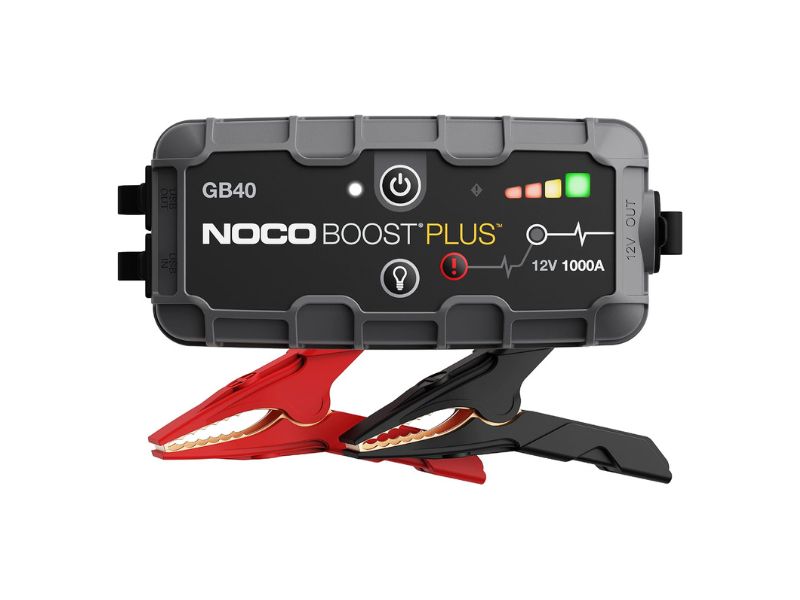
My primary recommendation is the NOCO Boost GB40 1000A UltraSafe Jump Starter. It has an exceptionally established track record, straightforward controls, spark-proof protection, reverse-polarity protection, a compact design, and enough rated starting capability for gasoline engines up to 6.0 liters and diesel engines up to 3.0 liters. For the average driver who wants one emergency pack to keep in a car, SUV, motorcycle, or light truck, it remains the most balanced option.
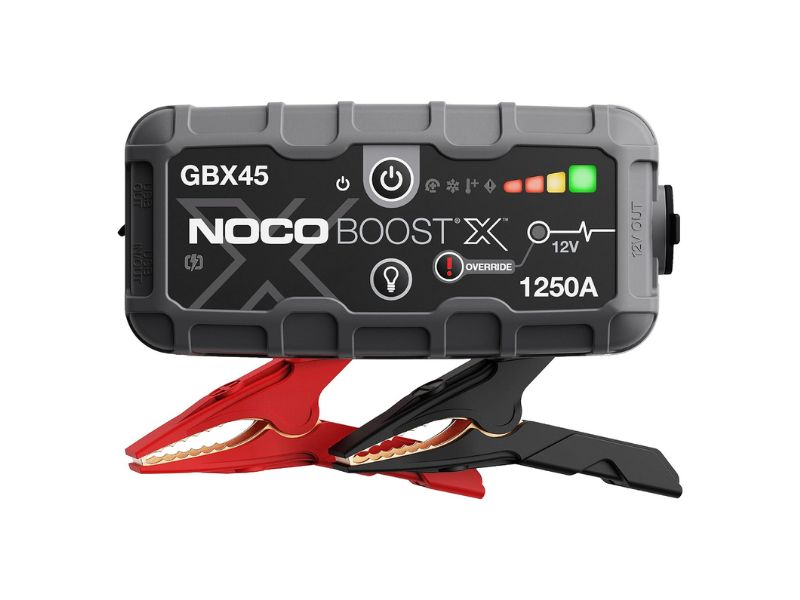
For buyers who want faster USB-C charging and slightly greater engine capacity, I would consider the NOCO Boost X GBX45 1250A Jump Starter. Its 60W USB-C Power Delivery system, 1250A rating, and support for engines up to 6.5L gas and 4.0L diesel make it particularly appealing to drivers who frequently use the booster as a portable power bank as well as emergency starting equipment.
If keeping the purchase cost lower is more important, the AstroAI S8 1500A Car Battery Jump Starter offers excellent value. Its small size, smart clamps, 1500A advertised peak output, boost function, emergency lighting, and support for common passenger-car engines give it a strong combination of affordability and practical roadside capability.
Best Battery Booster Jump Starter Pack
| Image | Product Name | Check Price |
|---|---|---|
Best Choice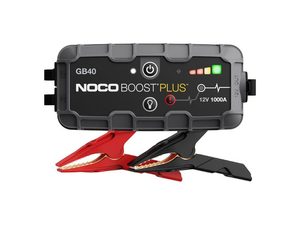 | NOCO Boost GB40 1000A UltraSafe Jump Starter – Best Overall | Check Price |
Second Best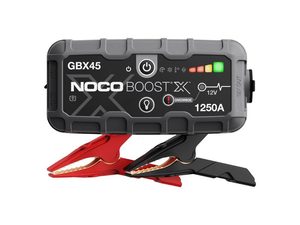 | NOCO Boost X GBX45 1250A Jump Starter | Check Price |
Third Choice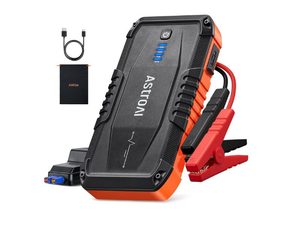 | AstroAI S8 1500A Car Battery Jump Starter | Check Price |
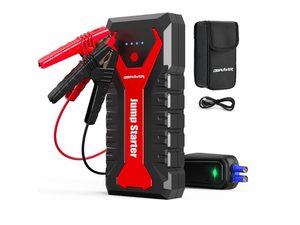 | DBPOWER 3000A Portable Car Jump Starter | Check Price |
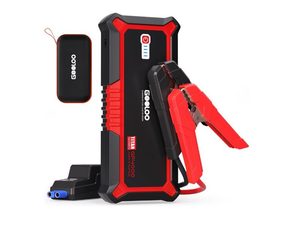 | GOOLOO GP4000 4000A Jump Starter | Check Price |
1. NOCO Boost GB40 1000A UltraSafe Jump Starter – Best Overall
Key Features
- 1000A peak starting power
- 12V lead-acid battery support
- Up to 6.0L gasoline engines
- Up to 3.0L diesel engines
- Spark-proof connection technology
- Reverse-polarity protection
- Manual override for deeply discharged batteries
- Built-in LED flashlight
- USB power-bank capability
- Compact lithium construction
The NOCO Boost GB40 is my first recommendation because it gets the fundamentals right without becoming unnecessarily large or complicated.
Its 1000A peak output may appear modest next to newer boosters advertising 3000A, 4000A, or more, but peak amperage should not be compared blindly across manufacturers. What matters more is whether the unit is appropriately engineered and realistically rated for the vehicle you intend to start.
NOCO rates the GB40 for gasoline engines up to 6.0 liters and diesel engines up to 3.0 liters. That covers a huge percentage of passenger cars, crossovers, SUVs, motorcycles, vans, and light-duty vehicles.
One reason the GB40 is especially suitable for ordinary drivers is its UltraSafe connection system.
Portable booster packs contain enough electrical energy that attaching the clamps incorrectly is something worth taking seriously. Reverse-polarity protection helps identify an incorrect connection, while spark-proof technology reduces the chance of accidental sparking during normal hookup.
Another valuable feature is manual override.
Smart jump starters normally need to detect battery voltage before they activate the clamps. If the vehicle battery is extremely discharged, voltage can fall so low that the booster cannot recognize a valid battery.
Manual override allows an experienced user to energize the clamps when appropriate.
This mode should be used carefully because some automatic protection is bypassed. Correct polarity must be confirmed before activation.
The GB40 can also function as a small USB power bank. In an emergency, that gives you another way to recharge a phone or other compatible device.
The integrated LED flashlight is equally practical. Dead batteries often occur at night, and illuminating battery terminals while connecting clamps is far more useful than trying to hold a phone flashlight in one hand.
The main limitation is engine size. Drivers of larger diesel pickups should move to a more powerful booster rather than assuming a 1000A compact pack will cover every possible vehicle.
What I Like
- Extremely established design
- Excellent size-to-performance balance
- Straightforward operation
- Spark-proof protection
- Reverse-polarity protection
- Manual override capability
- Easy to store in a vehicle
- Integrated USB charging
- Useful emergency flashlight
- Suitable for most normal passenger vehicles
What I Do Not Like
- Limited to smaller diesel engines
- Recharge speed is slower than newer Boost X models
- Higher-output alternatives are better for full-size diesel trucks
Verdict
The NOCO Boost GB40 is the battery booster pack I would buy for the average passenger vehicle. It combines sensible output, strong connection safety, compact storage, and proven everyday practicality without relying on oversized marketing specifications.
2. NOCO Boost X GBX45 1250A Jump Starter – Best Fast-Charging Pick
Key Features
- 1250A peak output
- 12V starting system
- Up to 6.5L gasoline engines
- Up to 4.0L diesel engines
- UltraSafe 2.0 connection protection
- Spark-proof design
- Reverse-polarity protection
- 60W USB-C Power Delivery
- Approximately 48-minute full recharge with compatible charging equipment
- Manual override
- Integrated LED flashlight
- IP65-rated housing with ports closed
The NOCO Boost X GBX45 takes many of the qualities that make the GB40 attractive and adds a much more modern charging system.
Its rated 1250A output supports gasoline engines up to 6.5 liters and diesel engines up to 4.0 liters, giving it slightly more vehicle coverage than the GB40.
The standout feature, however, is 60W USB-C Power Delivery.
One common problem with emergency jump packs is that owners use them, put them back in the trunk, and forget to recharge them. Slow charging makes that even easier to do.
With compatible USB-C PD equipment, the GBX45 can recharge dramatically faster than older micro-USB-style boosters. NOCO also specifies the ability to obtain enough stored energy for a jump after only a short fast-charging session under suitable conditions.
USB-C works in both directions, so the booster can provide meaningful power to compatible phones, tablets, and other electronics.
That makes the GBX45 more useful as a general emergency power bank than basic jump packs offering only low-output USB-A.
Safety technology is also upgraded.
UltraSafe 2.0 provides reverse-polarity and spark protection while improving thermal management compared with earlier designs.
The unit uses a 60-second operating window after activation. This helps conserve stored energy and gives the booster a defined jump-start cycle.
Like the GB40, it includes manual override for batteries with voltage too low to be detected normally.
The GBX45 is slightly larger and more expensive than the GB40, so I would not automatically recommend paying more if all you need is an emergency starter for a compact gasoline car.
Its advantages become more meaningful if you value USB-C charging, own a somewhat larger engine, or regularly use portable power devices.
What I Like
- Fast USB-C recharging
- Useful 60W USB-C output
- Upgraded safety electronics
- Larger engine rating than GB40
- Manual override
- Good environmental protection
- Compact enough for regular vehicle storage
- Works well as an emergency electronics power bank
What I Do Not Like
- Costs more than basic jump packs
- Still not intended for very large diesel engines
- Requires compatible USB-C equipment to achieve maximum recharge speed
Verdict
Choose the NOCO GBX45 if you want a premium compact jump starter with modern USB-C charging and stronger all-around power-bank functionality.
3. AstroAI S8 1500A Car Battery Jump Starter – Best Value

Key Features
- 1500A advertised peak output
- 12V operation
- Up to 6.0L gasoline engines
- Up to 3.0L diesel engines
- 10,000mAh internal battery
- Smart jumper clamps
- Manual boost function
- Three-mode LED flashlight
- USB device charging
- Compact lithium battery pack
The AstroAI S8 is the option I would look at first when value and compact storage are major priorities.
Its advertised 1500A peak output is paired with a manufacturer engine rating of up to 6.0L gasoline and 3.0L diesel, placing it in roughly the same real-world passenger-vehicle category as the GB40.
The internal battery is rated at 10,000mAh, and the entire unit remains compact enough to fit easily inside an emergency kit, cargo compartment, or glove-box-sized storage area in many vehicles.
A boost function is particularly useful.
When a vehicle battery is severely discharged, smart clamps may not initially detect enough voltage to activate. Boost mode provides a way to handle certain low-voltage conditions after correct polarity has been confirmed.
Multiple safety protections are integrated into the clamp system to reduce the risks associated with common connection mistakes.
The S8 also provides a three-mode flashlight. Typical emergency-light modes include normal illumination, strobe, and SOS-style signaling.
USB output allows the internal battery to recharge small electronics.
The biggest appeal, however, remains affordability. You get the essential functions most drivers actually need without paying primarily for premium branding or advanced high-output USB-C electronics.
There is an important limitation with any inexpensive jump pack: do not assume its peak-amp number can be directly compared with premium units from a different manufacturer.
Use the stated engine-size recommendation as a more practical buying reference.
What I Like
- Excellent value
- Compact and lightweight
- 1500A advertised output
- Appropriate for common cars and SUVs
- Boost mode for very weak batteries
- Smart-clamp protection
- Integrated flashlight
- USB power-bank function
- Easy to keep inside a vehicle
What I Do Not Like
- Lower engine-size capability than heavy-duty boosters
- USB charging system is less advanced than GBX45
- Small clamps can be less convenient around difficult battery-terminal locations
Verdict
The AstroAI S8 is my preferred budget-friendly battery booster jump starter pack for ordinary passenger vehicles.
4. DBPOWER 3000A Portable Car Jump Starter – Best High-Output Value
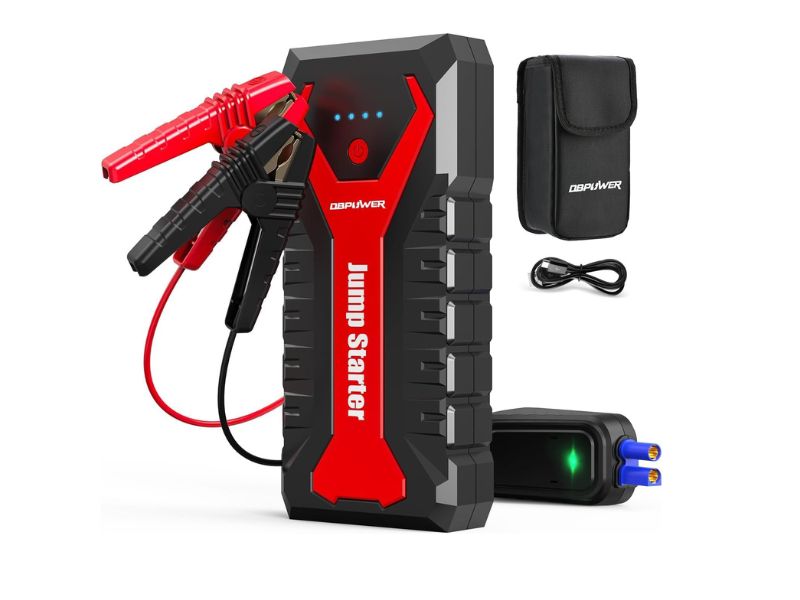
Key Features
- 3000A advertised peak output
- 12V battery systems
- Up to 10.0L gasoline engines
- Up to 8.0L diesel engines
- Approximately 80Wh-class lithium battery
- Smart jumper clamps
- Quick-charge USB capability
- LED emergency lighting
- Compact storage design
- Carrying bag included
The DBPOWER 3000A moves into a substantially larger claimed engine range.
Its current specification targets gasoline engines up to 10.0 liters and diesel engines up to 8.0 liters, making it more appropriate for owners of full-size trucks and larger engines than the compact models ranked above it.
The pack uses an approximately 80Wh-class lithium battery and combines jump-starting capability with portable USB charging.
Smart clamps provide protection against common connection problems, an important consideration given the much higher energy levels involved during vehicle starting.
The DBPOWER is also relatively compact considering its claimed output.
That makes it attractive to pickup owners who want additional starting reserve but do not want to carry a large traditional lead-acid booster box.
The internal LED light adds the same practical roadside value found on the other models.
One thing I would emphasize is that 3000A should not be interpreted as three times the real-world capability of a 1000A NOCO.
There is no single universally enforced consumer peak-current measurement standard that makes every brand’s headline figure directly equivalent.
The better approach is to consider engine rating, internal energy capacity, clamp construction, temperature, battery condition, and product history together.
What I Like
- High advertised starting output
- Supports larger engine applications
- Useful for pickups and SUVs
- Long-established product platform
- Smart clamp system
- Portable lithium design
- USB power bank
- Emergency lighting
- Storage bag included
What I Do Not Like
- Peak-amp specification should not be compared literally across brands
- Larger than minimalist passenger-car boosters
- Owners of very large diesels should still choose with reserve capacity
Verdict
The DBPOWER 3000A is a strong high-output value pick for buyers who want more engine capacity than small 1000–1500A-class boosters provide.
5. GOOLOO GP4000 4000A Jump Starter – Best for Large Engines

Key Features
- 4000A advertised peak output
- 12V starting capability
- Up to 10.0L diesel engine support
- All-gas-engine manufacturer rating
- 24,000mAh internal battery capacity
- Manual BOOST function
- Smart jumper cable
- USB fast charging
- USB-C input
- 12V accessory adapter
- LED emergency light
- EVA carrying case
The GOOLOO GP4000 is the largest-engine option in this group.
Its manufacturer rating covers all gasoline engines and diesel engines up to 10.0 liters, making it particularly attractive for pickup trucks, commercial vans, large SUVs, tractors, recreational vehicles, and equipment using compatible 12V systems.
The internal battery is rated at 24,000mAh, providing a useful energy reserve not only for starting but also for running its power-bank functions.
The BOOST button deserves particular attention.
If a vehicle battery voltage is extremely low, the intelligent clamp system may initially prevent starting because it cannot confidently detect a normal battery.
The boost function allows manual activation in appropriate situations.
As with every manual override system, correct terminal polarity must be confirmed first.
The GP4000 provides USB charging for phones and other portable electronics, plus a Type-C charging connection for the pack itself.
A 12V accessory adapter further expands its usefulness around compatible automotive accessories.
Its larger battery inevitably makes the GP4000 somewhat bulkier than the GB40 or AstroAI S8. That is the tradeoff for greater claimed engine capacity and stored energy.
For a compact sedan, you probably do not need this much booster.
For a pickup, RV, large SUV, tractor, or household with multiple vehicle sizes, the additional capability is much easier to justify.
What I Like
- Strong large-engine capability
- 4000A advertised peak output
- 24,000mAh battery capacity
- Up to 10L diesel rating
- BOOST mode
- USB device charging
- 12V accessory capability
- Carrying case included
- Suitable for a wide range of 12V vehicles
What I Do Not Like
- Bulkier than compact jump packs
- More output than many sedan owners need
- Large peak-amp numbers should still be interpreted cautiously
Verdict
The GOOLOO GP4000 is my choice for drivers who want a higher-capacity battery booster pack for full-size trucks, large SUVs, diesel applications, and mixed vehicle use.
Best Battery Booster Jump Starter Pack Comparison
| Product | Peak Rating | Gas Engine Rating | Diesel Rating | USB Power | Manual Boost | Main Strength | Best For |
| NOCO Boost GB40 | 1000A | Up to 6.0L | Up to 3.0L | Yes | Yes | Proven overall balance | Most cars and SUVs |
| NOCO Boost X GBX45 | 1250A | Up to 6.5L | Up to 4.0L | 60W USB-C | Yes | Fast recharge and premium safety | Daily drivers and tech users |
| AstroAI S8 | 1500A | Up to 6.0L | Up to 3.0L | Yes | Yes | Affordable compact design | Budget-conscious drivers |
| DBPOWER 3000A | 3000A | Up to 10.0L | Up to 8.0L | Yes | Yes | Higher-output value | Pickups and SUVs |
| GOOLOO GP4000 | 4000A | All gas | Up to 10.0L | Yes | Yes | Large battery and engine support | Large trucks and mixed fleets |
Quick Comparison
The NOCO GB40 is the most balanced choice for normal cars and SUVs because it combines a proven design with straightforward safety features and compact storage.
Choose the GBX45 if fast USB-C charging and modern power-bank capability are important.
The AstroAI S8 offers the strongest value proposition for an everyday passenger car.
The DBPOWER 3000A provides more starting reserve for larger engines, while the GOOLOO GP4000 is the better fit when large pickups, diesels, RVs, or other high-displacement 12V vehicles are part of the picture.
What Is a Battery Booster Jump Starter Pack?
A battery booster jump starter pack is a portable rechargeable battery designed to deliver a short burst of high electrical current to a vehicle starter motor.
Modern units typically use lithium-ion or lithium-polymer cells.
Unlike traditional jumper cables, the booster does not need another vehicle.
You connect its clamps to the appropriate vehicle battery terminals, activate the pack, and attempt to start the engine.
Once the engine is running, the booster is removed.
Most modern packs also include additional functions such as:
- USB charging
- Emergency flashlights
- Low-voltage boost modes
- Reverse-polarity protection
- Short-circuit protection
- Overcurrent protection
- Overtemperature protection
- Carrying cases
Some larger models also provide 12V accessory outputs or tire inflators.
Jump Starter vs Battery Charger
A common mistake is assuming a jump starter and a battery charger are the same thing.
They are not.
Battery Jump Starter
A jump starter provides high current for a very short time.
Its job is to get the starter motor turning so the engine can run.
It does not normally restore the vehicle battery to full charge.
Battery Charger
A charger sends controlled current into the battery over a longer period.
Its goal is to restore the battery’s actual state of charge.
Why the Difference Matters
Imagine a vehicle battery is heavily discharged.
You connect a booster and successfully start the engine.
The battery is still substantially discharged immediately afterward.
The alternator may gradually return energy to it while driving, but a deeply discharged battery is often better recovered with an appropriate external battery charger.
Repeatedly jump-starting the same vehicle without diagnosing or charging the battery properly can hide an underlying problem.
How I Chose These Battery Booster Packs
Established Buyer Feedback
Emergency equipment needs a track record.
A booster that looks impressive on paper but has almost no long-term customer history is harder to evaluate than a model that has been used across thousands of different vehicles.
Engine Compatibility
I prioritized clearly stated gasoline and diesel engine ratings.
Buyers need to know whether a booster is intended for a small four-cylinder sedan or a large diesel truck.
Safety Features
I looked for smart clamp systems providing protections such as:
- Reverse polarity
- Short circuit
- Overcurrent
- Overtemperature
- Improper connection warnings
Low-Voltage Starting
A battery can become so discharged that a smart booster cannot detect it normally.
Manual boost or override capability can be valuable in these situations.
Portability
A booster is only useful in an emergency if it is actually inside the vehicle.
Compact lithium models are far easier to store than traditional lead-acid jump boxes.
Power-Bank Capability
USB charging is not essential to starting the engine, but it can become extremely useful when a roadside emergency also leaves you with a nearly dead phone.
Flashlight
An integrated light makes nighttime battery connection safer and easier.
How Many Amps Does a Jump Starter Need?
There is no single correct number.
Required cranking current depends on:
- Engine size
- Gasoline or diesel design
- Outside temperature
- Engine oil viscosity
- Battery condition
- Battery state of charge
- Starter condition
- Cable resistance
- Connection quality
A small gasoline engine can require relatively modest current.
A large diesel engine in freezing weather can require dramatically more.
This is why engine-size ratings are often more useful than comparing peak amps alone.
Why Peak Amp Ratings Can Be Misleading
You may notice one booster advertising 1000A while another inexpensive unit claims 4000A.
That does not automatically mean the second product provides four times as much real-world starting capability.
“Peak amps” can represent a very short-duration maximum output, and measurement methods may vary.
Other important specifications include:
Internal battery energy: How much usable energy can the booster store?
Sustained current: Can the unit maintain enough current during the actual cranking period?
Cable resistance: Do the cables transfer power efficiently?
Clamp design: Do the jaws make strong electrical contact?
Battery temperature: Lithium battery output can fall in severe cold.
Vehicle battery condition: A shorted or physically damaged battery presents a much different load than a merely discharged battery.
Peak amperage is useful, but it should be one data point rather than the entire buying decision.
What Size Jump Starter Do I Need?
Compact Cars
For many four-cylinder gasoline cars, a quality 1000–1500A-class booster provides ample reserve.
The GB40 and AstroAI S8 are ideal examples.
Sedans and Crossovers
A booster rated for around 6.0L gasoline engines covers most vehicles in this group comfortably.
SUVs
Most gasoline SUVs still fall comfortably within the GB40, GBX45, or S8 engine ratings.
Larger V8 SUVs may justify moving to DBPOWER or GOOLOO.
Pickup Trucks
Gasoline pickups can require more starting current, particularly in winter.
A higher-capacity unit provides useful reserve.
Diesel Pickups
Diesel engines are more demanding because of their high compression.
Pay close attention to the diesel displacement rating, not just gasoline capability.
Motorcycles and ATVs
A large jump starter can still be compatible with smaller 12V systems when used according to manufacturer instructions.
Verify system voltage before connecting.
Gas vs Diesel Jump Starters
Diesel engines typically require more cranking power than gasoline engines of similar displacement.
This is caused largely by higher compression ratios.
As a result, a booster rated for:
6.0L gasoline / 3.0L diesel
does not mean the manufacturer arbitrarily reduced diesel capability.
The diesel starter simply faces a more demanding mechanical load.
If you own a diesel truck, I recommend buying extra reserve rather than selecting a booster whose stated maximum exactly matches your engine.
12V vs 24V Jump Starters
All five main recommendations in this guide are primarily designed for 12V automotive systems.
Do not use a 12V booster as though it were a 24V jump starter.
Likewise, do not assume a commercial truck uses 24V simply because it has multiple batteries.
Battery banks can be wired in different configurations.
Always confirm:
- Vehicle system voltage
- Battery arrangement
- Manufacturer starting procedure
before connecting any jump equipment.
Understanding Smart Jumper Clamps
Modern lithium jump packs usually contain electronic protection circuitry between the internal battery and clamps.
This system may monitor:
- Terminal polarity
- Battery voltage
- Short circuits
- Temperature
- Current flow
- Connection quality
If something appears unsafe, the booster may refuse to energize.
That is why smart jump packs sometimes appear to “not work” on a completely dead battery.
The protection system may simply not detect enough voltage to recognize a valid battery.
What Is Boost or Manual Override Mode?
Manual boost bypasses normal low-voltage detection.
This allows the jump starter to energize its clamps even when the vehicle battery is extremely discharged.
It can be very useful.
It also deserves respect.
When automatic polarity detection is bypassed, incorrectly attached clamps can become dangerous.
Before activating manual override:
- Confirm the vehicle uses the correct voltage.
- Identify positive and negative terminals visually.
- Attach the positive clamp correctly.
- Attach the negative clamp according to instructions.
- Verify both connections again.
- Activate boost only when necessary.
Do not use override simply because it sounds more powerful.
Can a Jump Starter Start a Completely Dead Battery?
Sometimes.
The answer depends on what “dead” actually means.
Deeply Discharged but Healthy
A battery may be at extremely low voltage because lights were left on.
A sufficiently powerful booster may still start the engine.
Sulfated Battery
A neglected battery may have reduced capacity but can sometimes still accept enough assistance for starting.
Shorted Cell
A battery with an internal short may present a severe electrical load.
A jump pack may not start the vehicle.
Physical Damage
Do not attempt to jump a battery that is:
- Cracked
- Leaking
- Swollen
- Frozen
- Severely overheated
- Giving off a strong unusual odor
A jump starter is not a repair device.
How to Use a Battery Booster Jump Starter Pack
Always prioritize the instructions supplied with your booster and vehicle.
A typical process looks like this.
Turn the Vehicle Off
Switch the ignition off.
Turn off headlights, climate control, heated seats, audio equipment, and unnecessary accessories.
Identify Battery Terminals
The positive terminal is normally marked +.
The negative terminal is marked −.
Some vehicles provide dedicated remote jump terminals.
Connect the Booster
Connect the clamps according to the manufacturer’s sequence.
Many modern packs use:
- Red to positive
- Black to negative or approved ground point
Follow the vehicle manual when it specifies a remote ground.
Wait for the Ready Signal
Smart jump starters usually provide an indicator confirming that polarity and connection are correct.
Do not crank until the unit indicates readiness.
Attempt to Start
Crank the engine for only the period allowed by the booster instructions.
Do not hold the starter continuously for an extended period.
Allow Cool-Down Time
If the engine does not start, wait the recommended interval before another attempt.
Both the starter motor and booster generate heat during high-current operation.
Disconnect Promptly
Once the engine starts, disconnect the booster in the sequence recommended by its manufacturer.
Why Jump Starter Clamps Matter
Clamps look simple, but they are critical to performance.
The booster may have an excellent internal battery, yet poor clamps can prevent that energy from reaching the vehicle starter efficiently.
Good clamps should provide:
- Strong spring tension
- Large conductive contact areas
- Durable insulation
- Sufficient jaw opening
- Flexible cable
- Secure connection to the booster
Dirty or corroded battery posts can still create resistance.
If safe to do so, make sure the connection points are reasonably clean.
Cable Length: Longer Is Not Always Better
Long cables are convenient around awkward battery locations.
But additional cable length also creates electrical resistance.
Manufacturers therefore balance:
- Copper conductor size
- Cable length
- Flexibility
- Clamp placement
- Booster portability
Compact lithium boosters usually use short cables because the pack is intended to sit very close to the battery.
That keeps electrical losses relatively low.
Jump Starters in Cold Weather
Cold weather is particularly difficult for vehicle batteries.
As temperature drops:
- Battery chemistry slows
- Available cranking current falls
- Motor oil thickens
- Starter load increases
The result is that the vehicle demands more starting energy while the battery provides less.
Lithium booster packs are also affected by extreme cold.
If you operate in a severe winter climate, choose more starting reserve than the minimum manufacturer engine rating.
Keep the booster charged and follow its operating-temperature limits.
Never attempt to jump-start a frozen lead-acid battery.
How Often Should You Recharge a Jump Starter?
Do not buy a booster and forget about it for several years.
Lithium batteries slowly self-discharge even when unused.
Electronics inside the unit may consume a small amount of standby energy as well.
I recommend checking the charge level periodically and always before:
- Long road trips
- Winter
- Hurricane or storm season
- Remote travel
- Camping trips
- Extended vehicle storage
- Major holiday driving
Recharge the pack after using it for a significant jump.
Follow the manufacturer’s specific storage and charging recommendations.
Where Should You Store a Jump Starter?
The obvious answer is inside the vehicle because that is where you will need it.
Temperature complicates the issue.
Vehicle interiors can become extremely hot during summer.
Lithium batteries have defined storage-temperature limits.
Whenever possible:
- Keep the pack away from direct sunlight
- Do not leave it on the dashboard
- Store it inside its protective case
- Avoid moisture
- Inspect it periodically
- Follow manufacturer temperature guidance
Never use a lithium booster that appears swollen, cracked, leaking, or severely damaged.
Jump Starter vs Jumper Cables
Jump Starter Advantages
A portable booster:
- Does not require another vehicle
- Takes little storage space
- Can start a vehicle when you are alone
- Usually includes connection protection
- Often doubles as a power bank
- Can provide emergency lighting
Jumper Cable Advantages
Traditional cables:
- Never need recharging
- Can deliver large current when properly sized
- Can last for many years
- Are inexpensive
Which Should You Carry?
Ideally, both.
A jump starter gives you independence.
Heavy-gauge jumper cables provide a backup if the booster itself is discharged.
Battery Booster Pack vs Traditional Lead-Acid Jump Box
Traditional jump boxes use a sealed lead-acid battery.
They can deliver excellent sustained current but are large and heavy.
Modern lithium packs provide:
- Lower weight
- Smaller dimensions
- Easier vehicle storage
- USB charging
- Lower self-discharge
- High power density
Professional repair shops may still prefer large lead-acid or commercial lithium boosters for repeated starting.
For an individual driver, compact lithium packs are usually far more convenient.
Should You Buy a Jump Starter With an Air Compressor?
Combination booster/inflator units are increasingly popular.
They cover two common roadside problems:
- A dead battery.
- A low tire.
The advantage is obvious: one device replaces two.
The tradeoffs include:
- Increased size
- More weight
- More electronics
- Additional heat generation
- More components that can potentially fail
If trunk space is limited and you do not already own an inflator, a combination unit can make sense.
If you already own a quality tire inflator, I prefer a dedicated jump starter because it remains smaller and simpler.
Is a Power Bank Useful?
Yes, particularly during an actual roadside emergency.
Imagine your vehicle battery is dead and your phone is at 8%.
Having USB output allows the jump starter to provide communication power while you diagnose the car or wait for assistance.
USB-C Power Delivery, such as the GBX45’s 60W system, expands usefulness significantly.
It can charge more demanding compatible electronics than a traditional 5V USB port.
Can a Jump Starter Damage Your Car?
A correctly designed and properly used jump starter should not damage a compatible vehicle.
Problems become more likely when users:
- Reverse polarity
- Connect the wrong voltage
- Use damaged equipment
- Activate manual override incorrectly
- Allow clamps to touch
- Ignore vehicle jump-start procedures
- Connect to inappropriate points
- Use a booster on a physically damaged battery
Modern smart clamps reduce several of these risks, but no electronic system replaces proper procedure.
What Does Reverse-Polarity Protection Do?
Reverse polarity means positive and negative connections have been swapped.
Smart booster clamps can detect this and prevent normal output.
The unit may:
- Beep
- Flash a warning light
- Display an error
- Refuse to energize
This is one of the most valuable features for inexperienced users.
Why Does My Jump Starter Keep Beeping?
Possible causes include:
- Clamps connected backward
- Poor electrical contact
- Battery voltage too low
- Booster battery too weak
- Booster overheating
- Incorrect operating mode
- Internal safety protection activated
Check the manual rather than repeatedly pressing the boost button.
Why Won’t My Jump Starter Start the Car?
Several problems can cause failure.
The Booster Is Not Fully Charged
A battery indicator showing one bar may not provide enough current for a difficult start.
Poor Clamp Contact
Corrosion or a loose clamp can create high resistance.
Wrong Booster Size
A unit intended for a small gasoline engine may not start a large diesel.
Battery Is Physically Failed
A shorted battery may absorb tremendous current.
Starter Motor Is Bad
A booster cannot repair a failed starter.
Engine Has Another Problem
If the engine cranks normally but does not fire, the problem probably is not battery power.
Possible causes include fuel, ignition, immobilizer, or engine-management faults.
How Many Jump Starts Can You Get Per Charge?
Manufacturers sometimes advertise a maximum number of jump starts per charge.
Treat this as an ideal-condition estimate.
Actual results depend on:
- Engine size
- Battery voltage
- Ambient temperature
- Cranking duration
- Booster state of charge
- Battery health
Starting a mildly discharged four-cylinder engine may consume very little pack energy.
Starting a large diesel with deeply discharged batteries is dramatically more demanding.
Recharge after significant use rather than trying to maximize the number of starts between charges.
Can You Use a Jump Starter on a Motorcycle?
Many 12V automotive boosters can work with compatible motorcycle batteries.
Verify:
- Motorcycle system voltage
- Battery chemistry
- Manufacturer instructions
- Clamp access
Do not assume every motorcycle uses the same battery system.
Can You Use a Jump Starter on a Lawn Mower?
Many riding lawn mowers use 12V batteries and can be compatible with suitable boosters.
Again, confirm voltage first.
Small equipment sometimes uses different electrical configurations, and very small batteries can have limited terminal space for large clamps.
Can You Use One on a Boat?
Certain 12V marine starting batteries can be jump-started using compatible portable boosters.
Moisture increases electrical risk.
Follow marine equipment instructions and keep the booster within its environmental limits.
A booster’s water-resistance rating does not mean it should be submerged or operated carelessly around water.
Common Jump Starter Buying Mistakes
Buying Only by Peak Amps
This is the biggest mistake.
A huge amp figure looks impressive but does not describe the complete electrical system.
Buying the Smallest Possible Unit
Extra reserve is valuable in winter and with aging batteries.
Do not choose a starter whose maximum engine rating barely matches your vehicle if a slightly larger option is practical.
Ignoring Diesel Ratings
Gas and diesel engine ratings differ substantially.
Forgetting to Recharge It
Emergency equipment needs maintenance too.
Buying an Unknown Pack With Almost No History
Reliability matters because you may only discover a problem when you are already stranded.
Ignoring Clamp Size
Some modern vehicles have deeply recessed battery posts or remote jump terminals.
Make sure the clamps can reach and grip effectively.
Assuming a Jump Pack Charges the Car Battery
Most portable boosters do not provide a proper full battery-charge cycle.
Use an automotive battery charger when the battery needs actual recovery.
Frequently Asked Questions
What is the best battery booster jump starter pack?
The NOCO Boost GB40 is my preferred overall battery booster jump starter pack for most drivers.
It provides 1000A peak output, an engine rating suitable for up to 6.0L gasoline and 3.0L diesel engines, spark-proof protection, reverse-polarity protection, manual override, USB power, and a compact design. Higher-output packs are better for large diesel trucks, but the GB40 offers an excellent balance for ordinary cars, SUVs, motorcycles, and light trucks.
What is a battery booster pack used for?
A battery booster pack provides temporary electrical power to crank a vehicle with a weak or discharged starting battery.
Unlike jumper cables, it does not require another vehicle. Most modern boosters contain rechargeable lithium cells and intelligent clamps. They are intended primarily for starting assistance rather than fully recharging the vehicle battery.
How powerful should a portable jump starter be?
Choose based on the manufacturer’s engine-size rating rather than peak amps alone.
A quality 1000–1500A-class starter is usually enough for many passenger cars. Large gasoline V8 engines and diesel pickups require additional reserve. Cold weather and deeply discharged batteries also increase starting demands.
Is 1000 amps enough to jump-start a car?
Yes, a quality 1000A jump starter is sufficient for many passenger vehicles.
The NOCO GB40, for example, is rated for gasoline engines up to 6.0 liters and diesel engines up to 3.0 liters. Larger diesels or severe winter conditions may justify a higher-capacity pack.
Is 1500A enough for an SUV?
A 1500A-class booster can handle many gasoline SUVs when the manufacturer lists the engine size as compatible.
The AstroAI S8 supports gasoline engines up to 6.0 liters. Engine displacement, temperature, battery condition, and actual booster performance all matter.
Is 3000A too much for a small car?
A correctly designed 12V booster does not force its maximum rated current continuously into the vehicle.
The starter system draws the current it needs. The important requirement is correct voltage and proper connection. A large jump starter can therefore be used on smaller compatible 12V vehicles according to its instructions.
Can a portable jump starter charge a dead battery?
Most portable jump starters are designed to start the engine, not fully recharge the battery.
After starting, the battery may still have a very low state of charge. A proper battery charger is the better tool for restoring capacity.
How long should I leave the jump starter connected?
Follow the manufacturer’s instructions and disconnect it promptly after the engine starts.
Portable lithium packs are not intended to remain attached like battery maintainers. Some models use timers that automatically limit active jump-start periods.
Should a jump starter be fully charged before use?
Keeping it near full charge provides the greatest starting reserve.
Some units can start vehicles while partially charged, but difficult conditions such as winter weather or large engines demand more stored energy. Check charge level before long trips.
How often should I charge my battery booster pack?
Check it every few months and recharge according to the manufacturer’s storage recommendations.
Also check it before long journeys, winter, or remote travel. Recharge after significant use.
Can I keep a lithium jump starter in my car?
Yes, but you need to respect its specified storage-temperature range.
Vehicle cabins can become extremely hot. Store the pack away from direct sunlight and inspect it periodically for swelling or damage.
Can a jump starter explode?
Lithium batteries can become hazardous if damaged, overheated, improperly charged, or severely abused.
Use the supplied or approved charging method, follow temperature limits, and stop using any booster showing swelling, cracking, overheating, leakage, or other physical damage.
What is the boost button on a jump starter?
Boost or manual override activates output when the vehicle battery voltage is too low for automatic detection.
Use it only when needed. Because normal protective detection may be partially bypassed, confirm polarity carefully before activating the function.
Why does my jump starter say reverse polarity?
The clamps may be connected backward or the connection may be incorrect.
Do not bypass the warning. Disconnect the unit, identify the positive and negative terminals correctly, and reconnect according to the instructions.
Can a jump starter work when the battery reads zero volts?
Certain models with manual boost can assist extremely low-voltage batteries, but a true zero-voltage reading may indicate serious battery failure.
Test the battery and inspect it for damage. Do not attempt to jump a frozen, leaking, swollen, or internally shorted battery.
Which jump starter is best for a diesel truck?
The GOOLOO GP4000 is the strongest large-diesel option among these five based on its stated engine rating.
It is designed for 12V diesel engines up to 10.0 liters. For commercial trucks or true 24V systems, use purpose-built heavy-duty equipment rather than a normal passenger-vehicle booster.
Is the NOCO GB40 better than AstroAI S8?
The GB40 is my preferred proven all-around choice, while the S8 offers better value for a tighter budget.
Both target similar passenger-vehicle engine sizes. The GB40 emphasizes its established UltraSafe system and long product history, whereas the AstroAI delivers a higher advertised peak rating at a lower typical cost.
Is the GBX45 worth buying over the GB40?
Yes, if fast USB-C charging, 60W power delivery, and slightly greater engine support matter to you.
For basic emergency jump-starting on an average sedan, the GB40 is sufficient. The GBX45 makes more sense for users who value faster recharging and modern USB-C power-bank functionality.
What is the best jump starter for a large SUV?
The DBPOWER 3000A and GOOLOO GP4000 provide more engine-size reserve for larger SUVs than compact entry-level packs.
Check your exact engine displacement and fuel type before deciding.
Does a jump starter replace jumper cables?
It can replace jumper cables in many emergencies, but carrying both provides the greatest redundancy.
A booster gives you independence from another vehicle. Jumper cables never need recharging.
Final Buying Advice
Do not overcomplicate the decision.
If you drive a normal sedan, crossover, or gasoline SUV, focus on compact storage, connection safety, realistic engine support, and reliability rather than buying the biggest amp number available.
For those vehicles, the NOCO GB40, GBX45, and AstroAI S8 are the most logical choices.
If you own a large gasoline truck, diesel pickup, large SUV, RV, or several different types of vehicles, increasing capacity makes more sense.
That is where the DBPOWER 3000A and GOOLOO GP4000 become more attractive.
Whichever booster you purchase, recharge it periodically, store it safely, learn how manual boost works before an emergency occurs, and verify vehicle voltage before attaching the clamps.
Conclusion
A good battery booster jump starter pack gives you something traditional jumper cables cannot: the ability to recover from a weak battery without waiting for another driver.
My primary recommendation is the NOCO Boost GB40. Its 1000A output, realistic passenger-vehicle engine support, compact dimensions, smart safety system, manual override, USB charging, and remarkably established track record make it the most balanced choice for most drivers.
The NOCO Boost X GBX45 is the upgrade I would choose for faster USB-C recharging, stronger power-bank functionality, and slightly larger engine compatibility.
For buyers focused on value, the AstroAI S8 provides an impressive combination of compact size, 1500A advertised power, smart clamps, and low-voltage boost capability.
The DBPOWER 3000A makes more sense for larger gasoline and diesel vehicles, while the GOOLOO GP4000 provides the greatest stated engine capacity among these five.
For the typical car, crossover, or light SUV, I would start with the NOCO Boost GB40. It delivers the combination that matters most in an actual roadside emergency: adequate starting power, simple operation, strong connection protection, and a compact pack that is easy enough to keep in the vehicle all year.