Finding the best coil pack for 3.5 ecoboost requires more attention to fitment than many buyers expect. Ford has used the twin-turbocharged 3.5L EcoBoost V6 across several generations of the F-150, Expedition, Explorer, Flex, Transit, and Lincoln models, and the ignition-coil design is not identical across all of them. A coil that works on an earlier 2011–2016 F-150, for example, should not automatically be assumed to fit a later second-generation 3.5 EcoBoost.
My primary recommendation is the Motorcraft DG549 Ignition Coil for compatible earlier 3.5 EcoBoost engines. I prefer it when factory-style fit, correct electrical characteristics, and long-term dependability matter more than buying the least expensive full set. It is especially sensible when diagnostic testing has identified one failed coil rather than an entire ignition system that needs replacement.
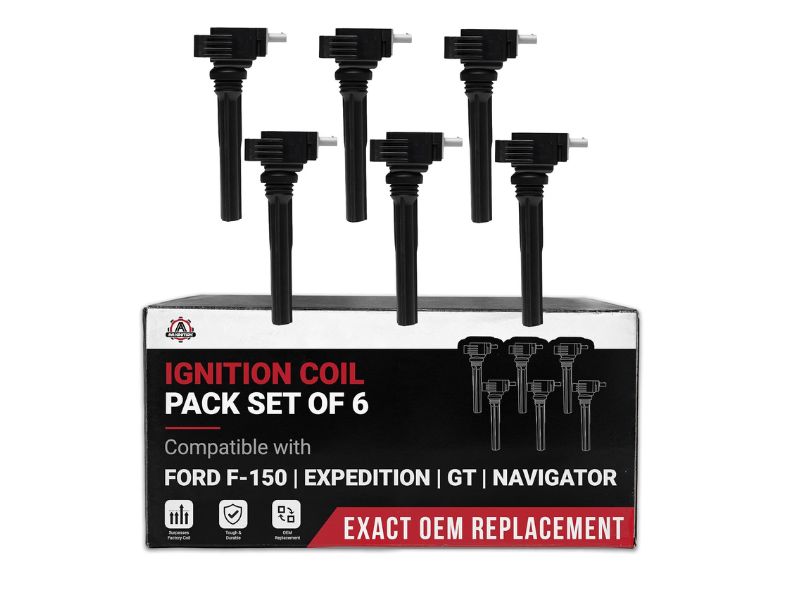
For later applications using the UF826/DG560-style ignition system, I would consider the AA Ignition UF826 Set of 6 Ignition Coils. It provides a complete six-coil solution for compatible later 3.5L GTDI engines and is more appropriate than trying to install earlier UF646/DG549 coils on a second-generation application.
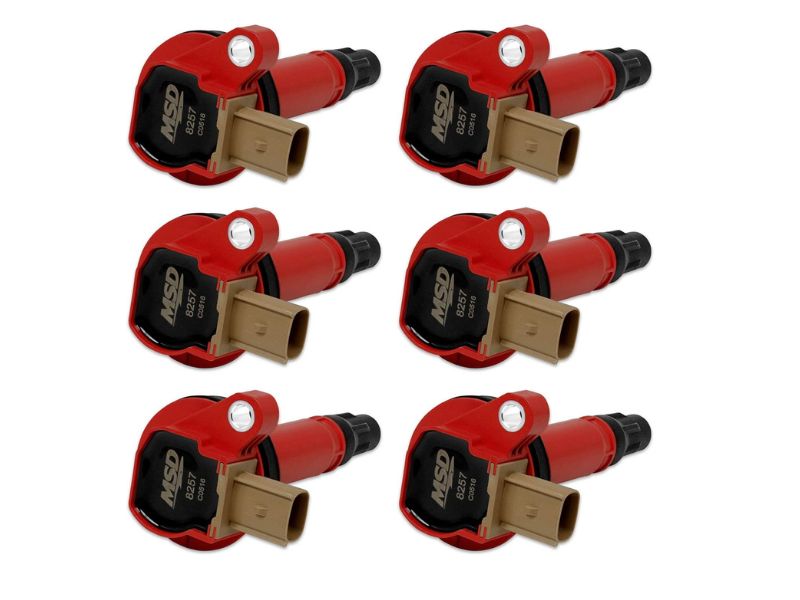
I would also consider the MSD 82576 3.5L EcoBoost Coil Pack Set for compatible earlier EcoBoost engines when a complete six-coil performance-oriented replacement is preferred. It is designed as a direct bolt-in set for the appropriate three-pin system and is particularly relevant to modified or higher-load applications.
The most important buying rule is simple: identify your original coil family before ordering. Match the model year, engine, connector, original part number, and application rather than buying a coil only because the description contains “3.5 EcoBoost.”
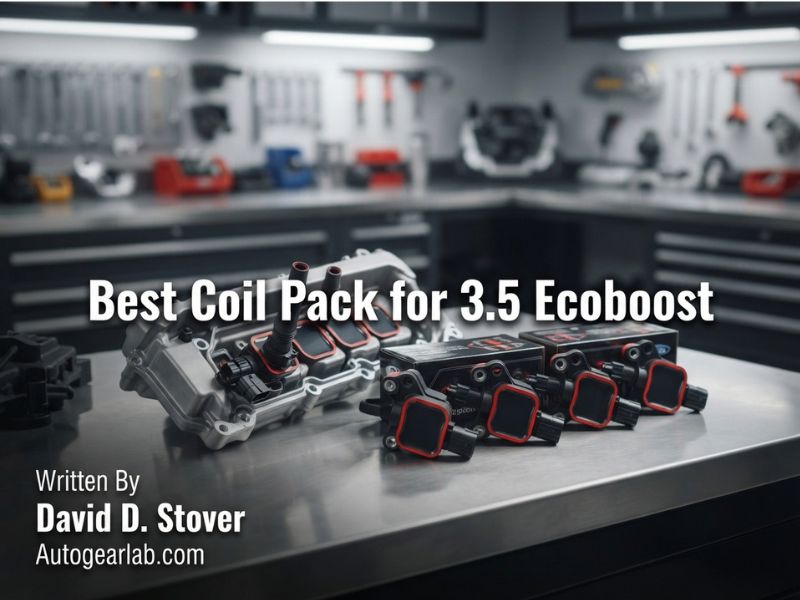
Best Coil Pack for 3.5 Ecoboost
| Image | Product Name | Check Price |
|---|---|---|
Best Choice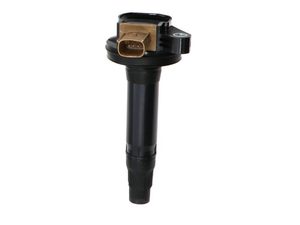 | Motorcraft DG549 Ignition Coil | Check Price |
Second Best | AA Ignition UF826 Set of 6 Ignition Coils | Check Price |
Third Choice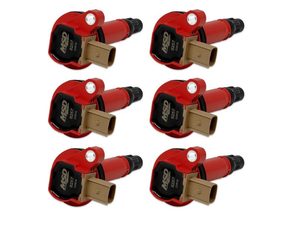 | MSD 82576 EcoBoost Ignition Coil Set | Check Price |
 | NPAUTO UF646 6-Piece Ignition Coil Pack | Check Price |
 | ENA 6 Ignition Coils and Iridium Spark Plug Kit | Check Price |
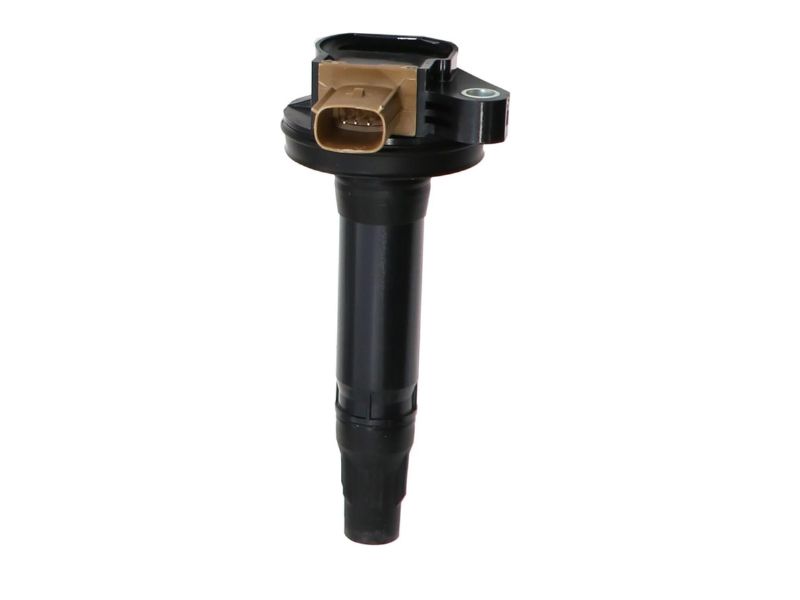
1. Motorcraft DG549 Ignition Coil
Key Features
- DG549 ignition-coil design
- Commonly associated with BL3Z-12029-C applications
- Coil-on-plug construction
- Vehicle-specific bolt-on installation
- Individual coil replacement
- Factory-style electrical and physical configuration
- Suitable for compatible earlier 3.5 EcoBoost engines
Detailed Review
The Motorcraft DG549 is the product I would start with for an earlier 3.5 EcoBoost when reliability and correct factory-style operation are the priorities.
The 3.5 EcoBoost operates under conditions that can be demanding on an ignition system. Turbocharging increases cylinder pressure, particularly when the engine is working hard under acceleration, towing, or climbing a grade. Higher cylinder pressure makes it more difficult for the spark to bridge the spark-plug gap, so a healthy coil and correctly maintained spark plug are important.
The DG549 follows the coil-on-plug, or COP, arrangement used by compatible EcoBoost applications. Each cylinder has its own ignition coil positioned directly over the spark plug. The engine therefore uses six individual coils rather than one traditional shared coil pack.
One major advantage of choosing a factory-style coil is predictability. A properly matched replacement should fit the existing connector, boot, mounting location, and engine-control strategy without requiring ignition tuning or physical modifications.
I especially like the DG549 for repairing one diagnosed misfire. Suppose a scan tool shows a cylinder-specific misfire and swapping that cylinder’s coil with another cylinder causes the misfire to follow the coil. In that situation, there is a strong reason to replace the defective coil, but there may be little benefit in throwing away five coils that continue working properly.
This individual replacement approach can also help control repair costs while retaining the existing matched ignition system.
However, buyers need to understand that DG549 is not a universal 3.5 EcoBoost coil. Later engines, particularly second-generation 3.5 EcoBoost applications, can use a different coil design such as the DG560/UF826 family.
That difference is more than a minor catalog update. Connector configuration, coil body, boot design, physical mounting, and electrical requirements need to match the engine.
I therefore recommend removing or closely inspecting an existing coil before ordering. Look for the molded or printed original part number. If the existing coil cross-references to DG549, UF646, or the appropriate BL3Z number, this product becomes a logical option.
Another issue worth checking is the spark plug. EcoBoost engines can develop misfires when plug gaps become excessive with wear. A weak or deteriorated plug can demand more voltage from the ignition coil, especially when boost pressure rises.
If the plugs are approaching their recommended maintenance interval, inspecting or replacing them at the same time can make more sense than treating the coil as an isolated component.
Installation is generally straightforward. After gaining access to the coil, disconnect the electrical connector, remove the retaining bolt, pull the coil carefully from the spark-plug well, and inspect the boot for contamination.
Oil or water inside the spark-plug well deserves attention before installing a new coil. Moisture can create an unintended electrical path, while oil contamination can point to another sealing problem that should be corrected.
I would not choose this coil because of promises of additional horsepower. On a stock or mildly modified engine with a healthy ignition system, a replacement coil’s main job is to deliver the spark energy the engine already requires consistently.
That makes the DG549 particularly appropriate for daily-driven trucks and SUVs where dependable starting, clean idle quality, and resistance to misfire matter more than aggressive performance marketing.
What I Like
- Factory-oriented replacement design
- Good choice for one diagnosed failed coil
- Correct approach for compatible DG549 applications
- No need to replace all six coils unnecessarily
- Straightforward bolt-on installation
- Well suited to stock and lightly modified engines
What I Do Not Like
- Sold as an individual coil
- Does not fit every generation of 3.5 EcoBoost
- A complete six-coil replacement becomes expensive if all units are needed
Verdict
The Motorcraft DG549 is my primary recommendation for a compatible earlier 3.5 EcoBoost because it focuses on proper factory-style replacement rather than unnecessary performance claims.
I would choose it when fitment has been verified and only one or a few coils require replacement. Owners of later DG560/UF826 applications should use the correct later-generation coil instead.
2. AA Ignition UF826 Set of 6 Ignition Coils
Key Features
- Complete six-coil set
- UF826-style replacement
- Cross-reference compatibility with later DG560/HL3Z applications
- Intended for compatible later 3.5L EcoBoost/GTDI engines
- Coil-on-plug configuration
- Direct replacement design
- Useful for full ignition-coil replacement
Detailed Review
The AA Ignition UF826 set fills an important gap in this comparison because it serves a different generation of 3.5 EcoBoost engine than the DG549-based products.
That distinction is critical.
The second-generation 3.5 EcoBoost used in applications such as later F-150s moved to a different ignition-coil family. If your engine specifies a UF826, DG560, HL3Z-12029-A, or HL3Z-12029-D-type coil, an earlier DG549/UF646 coil should not be purchased simply because both engines displace 3.5 liters.
This kit includes six coils, which is enough for the complete V6.
I would consider a complete set when an older high-mileage vehicle has multiple weak coils, when previous repairs have left a mixture of unknown aftermarket units, or when diagnostics indicate more than one coil is becoming unreliable.
Replacing all six also creates a consistent starting point for future troubleshooting because each cylinder receives the same coil type and similar service age.
However, a six-pack should not automatically be interpreted as evidence that six coils must always be replaced together.
The 3.5 EcoBoost uses independent coil-on-plug ignition. If one unit fails, the other five do not mechanically become defective at the same time. Individual replacement remains reasonable when diagnosis points clearly to one cylinder.
What makes this product particularly useful is its emphasis on the later coil family. Many 3.5 EcoBoost buying guides focus heavily on the 2011–2016 F-150 because that version has been on the road for so long. Owners of 2017-and-later trucks can consequently encounter product listings that look almost correct while referring to the wrong generation.
I would verify the existing coil number before installation even with a later-engine kit. Ford used the 3.5 EcoBoost in multiple models, and model-year transitions do not occur identically across every vehicle.
For example, a particular ignition component may change on the F-150 before the same engine family or coil reference changes on another Ford or Lincoln application.
Physically compare:
- Electrical connector
- Connector pin arrangement
- Coil housing
- Mounting ear
- Boot length
- Original molded number
- Engine and vehicle year
If these details line up with the UF826/DG560 family, this set becomes considerably more relevant.
From a maintenance standpoint, full-coil replacement is also a good opportunity to inspect all six spark plugs. Turbocharged engines place significant demands on plug condition because cylinder pressures increase under boost.
A plug with excessive gap may operate acceptably at idle but misfire during heavy acceleration. That behavior is sometimes described as spark blowout, although the underlying issue can involve plug gap, plug condition, coil energy, engine calibration, or a combination of factors.
Do not assume installing new coils alone will solve every under-boost misfire.
I also recommend inspecting the coil boots for evidence of carbon tracking. This appears as a dark line or electrical burn path along the boot or plug insulator. Once a conductive path develops, spark energy may travel down that path instead of jumping the plug gap.
The AA Ignition set is therefore best viewed as a practical complete replacement for a verified later-generation application rather than a universal upgrade.
What I Like
- Correct product family for many later 3.5 EcoBoost applications
- Complete six-coil set
- Convenient for engines with several questionable coils
- Direct-replacement approach
- Useful alternative to purchasing six individual coils
What I Do Not Like
- Full-set replacement may be unnecessary after one isolated failure
- Fitment varies among 3.5 EcoBoost vehicle platforms
- Aftermarket construction may not appeal to buyers who prefer factory-branded ignition components
Verdict
I would choose the AA Ignition UF826 set for a later 3.5 EcoBoost that specifically uses the UF826/DG560-type ignition coil and genuinely needs a complete six-coil replacement.
It is the most useful alternative in this guide for second-generation applications, but verifying the original coil number remains essential.
3. MSD 82576 EcoBoost Ignition Coil Set
Key Features
- Complete set of six coils
- Designed for compatible 2010–2016 3.5L EcoBoost applications
- Three-pin connector configuration
- Direct bolt-in replacement
- Compatible with factory engine controls
- Performance-oriented construction
- Designed for turbocharged EcoBoost operation
Detailed Review
The MSD 82576 is the option I would consider when a compatible earlier 3.5 EcoBoost needs a complete set and the buyer wants a performance-oriented ignition brand rather than individual stock-style replacement coils.
MSD designed this set around the earlier three-pin 3.5 EcoBoost ignition configuration. That makes fitment much more specific than simply describing the coils as compatible with a Ford V6.
The kit contains six coils, allowing the entire engine to be serviced at once.
One potential advantage appears when the engine has been modified. Higher boost pressure increases cylinder pressure, which increases the voltage required to establish a spark across the plug electrodes. Tuned EcoBoost applications can consequently place greater demands on the ignition system than a completely stock daily driver.
That does not mean every tuned truck requires performance coils.
A healthy factory ignition system combined with the correct spark plugs and gap can support substantial engine output. Coil replacement should still be based on actual ignition requirements rather than the assumption that colored or performance-labeled coils automatically produce more horsepower.
Where the MSD set becomes more appealing is a vehicle that already needs multiple coils and operates under demanding conditions. In that scenario, buying a complete matched six-coil set may be a practical way to refresh the ignition system.
The direct-fit layout is another advantage. An ignition upgrade becomes far less attractive if it requires wiring modifications, adapters, or calibration changes merely to operate normally.
The 82576 is intended to work with the compatible factory control system, keeping the installation concept similar to a normal replacement.
Spark-plug condition remains crucial.
If a tuned 3.5 EcoBoost breaks up under boost, I would check the plug gap before blaming the coils. Plug-gap recommendations can change with engine modifications and calibration, so owners of modified trucks should follow the tuner or engine builder’s recommendations rather than blindly applying a generic specification.
I would also inspect for moisture inside the plug wells. Water intrusion, damaged boots, oil contamination, and worn plug insulators can all cause misfires that resemble weak-coil behavior.
One limitation is generational compatibility. This particular MSD set is for the earlier ignition configuration. A 2017–2020 F-150 3.5 EcoBoost uses a different MSD coil kit, so buyers need to avoid choosing by brand name alone.
The other tradeoff is cost versus necessity. If your stock truck has only one failed factory coil, replacing all six with performance coils may provide little practical advantage compared with installing the correct individual replacement.
For a performance-oriented vehicle requiring a complete ignition refresh, however, the 82576 is a much more logical purchase.
What I Like
- Complete six-coil matched set
- Designed specifically around earlier 3.5 EcoBoost engines
- Three-pin direct-fit construction
- Suitable for demanding or modified applications
- No custom wiring conversion required for appropriate fitment
What I Do Not Like
- More than many stock vehicles need after one coil failure
- Not compatible with the later 2017–2020 F-150 coil system
- Performance coils cannot compensate for incorrect plug gap or mechanical problems
Verdict
The MSD 82576 makes the most sense for an earlier 3.5 EcoBoost owner who wants a complete six-coil replacement, particularly when the vehicle sees increased boost or other performance modifications.
For an otherwise stock engine with one confirmed bad coil, I would still favor an individual correctly matched replacement such as the Motorcraft DG549.
4. NPAUTO UF646 6-Piece Ignition Coil Pack

Key Features
- Six ignition coils
- UF646/DG549-style configuration
- Intended for compatible earlier 3.5 EcoBoost applications
- Direct-replacement construction
- Full V6 set
- Cross-references with common BL3Z-series coil numbers
- Designed for stock-style installation
Detailed Review
The NPAUTO UF646 set is a practical option for buyers who want all six earlier-style 3.5 EcoBoost coils in one package without moving into a performance-focused kit.
Its key identifier is UF646. That reference is commonly associated with the same earlier ignition-coil family as DG549, making it useful for numerous first-generation 3.5 EcoBoost applications.
Again, fitment needs to be treated carefully. Different Ford models retained certain engine components for different lengths of time, so a model year that works for an Explorer, Flex, Transit, or Expedition should not automatically be assumed to use the same coil as an F-150 of that year.
For F-150 owners in particular, the major generation change around 2017 makes checking the original coil especially important.
The NPAUTO kit is most attractive when all six coils are being replaced as part of a larger maintenance job.
For example, imagine a high-mileage 3.5 EcoBoost with worn spark plugs, multiple past coil replacements, and intermittent misfires on different cylinders. Starting over with six matched coils and properly specified plugs may simplify future troubleshooting.
In contrast, a truck with one isolated P0302 code and five healthy coils usually does not need six new coils merely because they are packaged together.
The coil-on-plug layout makes individual diagnosis relatively straightforward. If accessible, move the suspected coil to another cylinder, clear or monitor the codes, and see whether the misfire follows.
A misfire that follows the coil strongly supports replacing that coil.
A misfire that remains on the original cylinder directs attention toward the plug, injector, wiring, compression, intake valve deposits, valvetrain, or other causes.
This is especially important on direct-injected EcoBoost engines because an ignition fault is not the only reason a cylinder can misfire.
Another advantage of buying a complete set is having matching replacement components available. If the engine already contains several different aftermarket coils installed over many years, a matched set removes that variation.
The disadvantage is that budget-oriented multi-packs typically involve a different quality strategy than a factory-branded individual coil. Buyers who prioritize original-equipment consistency above purchase cost may still prefer Motorcraft.
I would also resist advertising claims suggesting that replacing functional stock coils will automatically increase fuel economy or horsepower. Fresh coils can restore performance if old units are weak or failing. They do not create extra engine efficiency simply because they are new.
What I Like
- Six coils included
- Useful for compatible UF646/DG549 applications
- Convenient complete ignition refresh
- Stock-style installation approach
- Good fit for owners replacing several aging coils
What I Do Not Like
- Not suitable for later DG560/UF826 systems
- Six coils may be unnecessary for one confirmed failure
- Exact model-year compatibility must be checked carefully
Verdict
The NPAUTO UF646 six-pack is a sensible choice for a compatible earlier 3.5 EcoBoost when the goal is replacing an entire aging set rather than one individual coil.
I would choose the Motorcraft option for a single-coil repair, while the NPAUTO set becomes more attractive when all six earlier-style coils genuinely need attention.
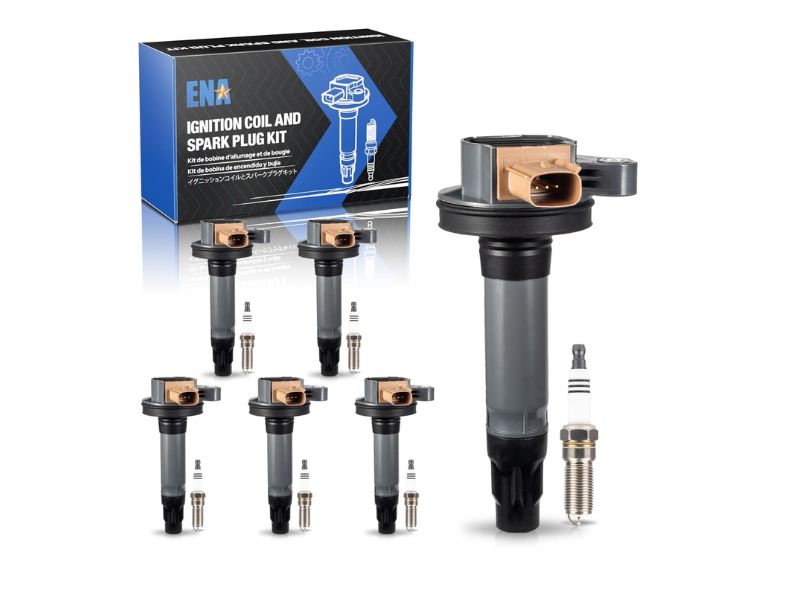
5. ENA 6 Ignition Coils and Iridium Spark Plug Kit
Key Features
- Six ignition coils
- Six iridium-style spark plugs
- Intended for compatible UF646/DG549-type applications
- Complete ignition tune-up package
- Coil-on-plug replacement design
- Appropriate for selected earlier 3.5 EcoBoost engines
- Convenient when plugs and coils are both due for service
Detailed Review
The ENA kit approaches the job differently from the other products because it combines six ignition coils with six spark plugs.
I would consider it when both parts of the ignition system require attention at the same time.
This can make practical sense on a higher-mileage 3.5 EcoBoost. Ignition coils generate the high voltage, but the spark plugs must actually deliver that energy inside the combustion chamber. A new coil paired with a severely worn or incorrectly gapped plug can still leave the engine with hesitation or misfire problems.
Spark-plug condition is particularly important in turbocharged engines.
As cylinder pressure increases, the voltage required to jump the plug gap also rises. A plug that performs adequately while the engine is idling may struggle when the turbochargers produce boost and the cylinder pressure rises.
That is why an EcoBoost that misfires primarily under hard acceleration should not be diagnosed from idle behavior alone.
Replacing the coils and plugs together provides a fresh ignition baseline. It can be attractive for maintenance work where the plugs are already due and the engine has several suspect coils.
The obvious limitation is that a combination kit gives you less reason to buy it if your spark plugs were recently replaced with the correct parts.
There is also an important fitment concern. This particular kit belongs to the earlier UF646/DG549 family. Do not use the presence of “3.5 EcoBoost” in a compatibility description as the only purchasing criterion.
A later F-150 that uses UF826/DG560 coils requires a different ignition-coil design.
The spark plugs need the same level of verification. Plug design, heat range, electrode configuration, and gap all matter. Modified engines may use a different plug or gap strategy than an entirely stock truck.
For a stock application, follow the correct vehicle specification. For tuned engines, follow the recommendations associated with the calibration and hardware combination.
During installation, thread spark plugs by hand initially to reduce the risk of cross-threading the aluminum cylinder head. Use the correct socket and torque specification rather than tightening by feel.
Avoid putting excessive lubricant on the plug threads unless the spark-plug manufacturer or service information specifically calls for it. Thread coatings can change torque behavior.
Once the plugs are installed, inspect each coil boot and connector before assembly. A loose electrical connector can produce an intermittent misfire that resembles a defective replacement coil.
The ENA package therefore offers the greatest convenience when both plugs and coils require replacement, but it is not the best choice for every repair.
What I Like
- Includes coils and plugs for a complete ignition service
- Six-cylinder set
- Convenient for higher-mileage maintenance
- Useful when worn plugs may be contributing to ignition problems
- Eliminates the need to source two separate kits
What I Do Not Like
- Unnecessary if the existing plugs are relatively new
- Fitment is restricted to the appropriate earlier coil family
- Modified engines may need a different plug specification or gap
Verdict
I would choose the ENA coil-and-plug kit when a compatible earlier 3.5 EcoBoost needs a broader ignition tune-up rather than just one replacement coil.
For a simple single-cylinder coil failure, the Motorcraft DG549 remains the more focused solution.
3.5 EcoBoost Coil Pack Comparison
| Product | Quantity | Coil Family | Best Application | Connector/System | Includes Plugs | Main Strength | Main Limitation |
| Motorcraft DG549 | 1 | DG549 / UF646 family | Compatible earlier 3.5 EcoBoost | Earlier COP system | No | Factory-oriented individual replacement | One coil only |
| AA Ignition UF826 | 6 | UF826 / DG560 family | Compatible later 3.5 EcoBoost | Later COP system | No | Complete later-generation set | Not for earlier DG549 systems |
| MSD 82576 | 6 | Earlier EcoBoost family | Compatible 2010–2016 applications | Three-pin COP | No | Performance-oriented matched set | Wrong design for later F-150 applications |
| NPAUTO UF646 | 6 | UF646 / DG549 family | Earlier applications needing all six coils | Earlier COP system | No | Convenient full replacement set | Exact vehicle fitment must be confirmed |
| ENA Coil and Plug Kit | 6 coils | UF646 / DG549 family | Earlier engines needing coils and plugs | Earlier COP system | Yes | Complete ignition service package | Unnecessary when plugs are still fresh |
The key comparison is not simply individual coil versus six-pack. Generation compatibility is the first decision.
For compatible earlier engines, DG549/UF646 products are the relevant group. Later engines using DG560/UF826 require the corresponding later design. Once you identify the correct family, decide whether one confirmed bad coil, a complete set, or a combined coil-and-plug service makes the most sense.
How I Evaluate Coil Packs for the 3.5 EcoBoost
For this engine, I place correct fitment first because even a high-quality coil is useless when the connector, boot, mounting geometry, or electrical characteristics do not match the vehicle.
I also consider whether the buyer needs an individual coil or a complete six-pack. Individual replacement usually makes the most financial sense for a clearly diagnosed isolated failure, while a full set can be appropriate when several aging coils have become questionable.
Another consideration is whether the vehicle is stock or modified. A daily-driven stock F-150 has different ignition demands from a tuned truck operating at increased boost pressure.
Finally, I look at the availability of clear cross-reference information. Part identifiers such as DG549, UF646, DG560, and UF826 are much more useful than broad advertising that says a product fits “all 3.5 EcoBoost engines.”
Buying Guide: How to Choose the Best Coil Pack for 3.5 Ecoboost Engines
Determine Which Generation of 3.5 EcoBoost You Have
This should be your first step.
Ford introduced the 3.5L EcoBoost across multiple vehicles and continued developing the engine over time. The ignition hardware changed with later generations.
For many earlier applications, DG549/UF646 is an important reference family.
For many later 3.5 EcoBoost applications, particularly second-generation F-150 engines, DG560/UF826 references become important.
Do not attempt to make one fit the other unless a manufacturer specifically documents a compatible replacement.
Check the Original Coil Number
The most useful identifier may already be under your hood.
Remove or inspect one original ignition coil and look for:
- Manufacturer number
- Engineering number
- Connector style
- Number of connector pins
- Mounting tab location
- Boot length
- Coil-body dimensions
Cross-reference that information to the replacement.
This is considerably safer than relying on engine size alone.
Understand Coil-on-Plug Ignition
The 3.5 EcoBoost uses coil-on-plug ignition, meaning there is an individual coil for each cylinder.
The 3.5L V6 therefore has six ignition coils.
The engine-control module commands the coils individually, allowing precise spark timing under changing engine speed, load, boost pressure, and temperature.
This architecture also simplifies diagnosis because a suspected coil can sometimes be moved between cylinders to determine whether a misfire follows it.
Single Coil vs. Six-Pack
You do not have to replace every coil whenever one fails.
Choose an individual coil when:
- One cylinder has a confirmed bad coil
- The remaining coils operate normally
- You want to retain good existing components
- You prefer a factory-style replacement
Consider a six-pack when:
- Multiple coils have failed
- Several coils show physical deterioration
- The engine contains a mixture of unknown replacement coils
- You are performing a broader high-mileage ignition refresh
- You want a matched set
Avoid replacing all six merely because a diagnostic trouble code shows one cylinder misfiring.
Stock vs. Performance Coils
Performance-oriented coils are often marketed on their potential spark energy or voltage capability.
More available ignition energy can be useful when operating conditions increase the voltage required to fire the plug, particularly with:
- Increased boost
- High cylinder pressure
- Performance tuning
- Certain ethanol-based fuel combinations
- Modified plug gaps
- Higher engine loads
But a larger advertised voltage does not automatically produce additional horsepower.
An ignition system only needs enough energy to ignite the mixture reliably. Once reliable combustion is established, additional unused coil capability does not necessarily increase engine output.
Spark-Plug Condition
Spark plugs and ignition coils work together.
As a spark plug wears, the electrode gap can increase. A larger gap usually requires more voltage for the spark to jump.
On a turbocharged engine, that becomes more significant because cylinder pressure increases under boost.
Symptoms associated with worn plugs may include:
- Misfire under acceleration
- Hesitation under boost
- Rough idle
- Reduced throttle response
- Intermittent check-engine light
Inspect the plugs whenever coil problems appear, especially when their service history is unknown.
Spark-Plug Gap
The correct plug gap matters.
A wider gap can expose more mixture to the spark kernel, but it also requires more voltage. Under high boost, excessive gap can contribute to misfire.
A smaller gap can improve ignition stability under demanding cylinder pressures but should not be reduced arbitrarily.
For an unmodified engine, follow the appropriate vehicle service specification.
For a tuned engine, follow the tuner or engine builder’s recommended plug and gap because boost pressure, fuel, calibration, and power level can affect the ideal setup.
Heat Resistance
Ignition coils live in a hot environment.
Repeated heating and cooling can deteriorate:
- Internal insulation
- Coil windings
- Plastic housings
- Rubber boots
- Connector seals
Turbocharged engines also generate substantial under-hood heat.
A replacement coil should therefore use appropriate insulation and housing materials rather than focusing entirely on peak voltage.
Boot Quality
The rubber coil boot insulates the high-voltage path between the coil and the spark plug.
A damaged boot can cause spark energy to leak to the cylinder head instead of reaching the plug.
Check for:
- Splits
- Hardened rubber
- Burn marks
- Oil contamination
- Water contamination
- Carbon tracking
A damaged boot should not be ignored merely because the electrical portion of the coil appears functional.
First-Generation vs. Second-Generation 3.5 EcoBoost Coils
One of the biggest purchasing mistakes is treating every 3.5 EcoBoost as the same engine.
Earlier 3.5 EcoBoost
Many earlier engines use a coil associated with references such as:
- DG549
- UF646
- BL3Z-12029-C
These are represented by several products in this guide.
Later 3.5 EcoBoost
Later applications can use references such as:
- DG560
- UF826
- HL3Z-12029-A
- HL3Z-12029-D
These coils should be treated as a separate fitment family.
Model-specific verification remains necessary because engine updates did not occur simultaneously across every Ford and Lincoln vehicle.
Symptoms of a Bad 3.5 EcoBoost Coil Pack
A failing ignition coil can produce:
- Rough idle
- Hesitation
- Loss of power
- Misfire under boost
- Difficult starting
- Check-engine light
- Reduced fuel efficiency
- Uneven acceleration
- Engine shaking
- Flashing check-engine light during severe misfire
A misfire code commonly appears as P0300 for random/multiple misfire or P0301 through P0306 for individual cylinders.
However, the code identifies the misfiring cylinder or condition. It does not automatically identify the coil as the failed part.
How to Test a Suspected Coil Pack
One practical diagnostic method is a coil swap.
Assume cylinder three has a persistent P0303 misfire.
After confirming the basic installation condition:
- Remove the coil from cylinder three.
- Swap it with a functioning cylinder.
- Reassemble the coils correctly.
- Clear the codes when appropriate.
- Run the engine and monitor misfire data.
If the misfire moves to the cylinder receiving the suspected coil, the coil becomes a strong suspect.
If P0303 remains on cylinder three, the cause may be elsewhere.
Possible alternatives include:
- Worn spark plug
- Damaged connector
- Wiring problem
- Injector fault
- Intake-valve deposits
- Compression loss
- Valvetrain issue
- Vacuum or air-management problem
Accurate diagnosis prevents replacing expensive components unnecessarily.
Installation Tips for 3.5 EcoBoost Ignition Coils
Allow the engine to cool before beginning.
Disconnect connectors by releasing their locking mechanisms rather than pulling aggressively on the wiring.
After removing the coil retaining fastener, carefully pull the coil upward. Excessive side loading can damage an old boot.
Before installing the new coil, inspect the spark-plug well.
Look for:
- Oil
- Water
- Dirt
- Corrosion
- Carbon tracks
- Damaged plug porcelain
Correct any contamination problem before installing the replacement.
Push the new coil fully onto the spark plug and confirm the electrical connector locks securely.
Use the correct service torque for the coil fastener. Overtightening a small fastener provides no ignition benefit and can damage the mounting point.
Maintaining the 3.5 EcoBoost Ignition System
Ignition coils themselves generally do not require routine adjustment.
Most preventive maintenance involves protecting the conditions around them.
Maintain the Spark Plugs
Replace plugs according to the appropriate service interval and vehicle usage.
A heavily worked or modified engine may require more frequent inspection than a lightly driven stock vehicle.
Keep Plug Wells Dry
Water intrusion can cause corrosion and spark leakage.
If moisture repeatedly appears, identify how it is entering rather than continually replacing coils.
Repair Oil Leaks
Oil inside a plug well can deteriorate rubber components and interfere with reliable electrical insulation.
Correct the source of the leak.
Inspect Connectors
Heat can make connector plastic brittle.
A damaged locking tab can allow an intermittent electrical connection, particularly when vibration is present.
Diagnose Misfires Quickly
Continuing to drive with a severe misfire can allow unburned fuel into the exhaust.
This can create excessive heat in the catalytic converter and lead to additional damage.
A flashing check-engine light is particularly important and should not be ignored.
Common Mistakes When Buying 3.5 EcoBoost Coil Packs
Buying Only by Engine Displacement
“3.5L” is not enough information.
You need the correct EcoBoost generation and coil family.
Assuming 2017 Means the Same Thing for Every Model
Engine and component transitions vary by vehicle platform.
A part listed for a 2017 Explorer does not automatically fit a 2017 F-150.
Replacing All Six Without Diagnosis
Six new coils cannot repair a faulty injector, damaged spark plug, wiring problem, compression issue, or mechanical valvetrain fault.
Ignoring Spark Plugs
A worn plug can contribute directly to high-load ignition problems.
Choosing the Highest Advertised Voltage
The correct fit and reliable spark delivery matter more than the largest number printed in advertising.
Installing Earlier Coils on a Later Engine
DG549/UF646 and DG560/UF826 should be treated as separate coil families unless verified otherwise for the exact vehicle.
Frequently Asked Questions
What is the best coil pack for 3.5 ecoboost engines?
The Motorcraft DG549 is my first choice for compatible earlier 3.5 EcoBoost applications.
It provides a factory-oriented replacement approach and makes particular sense when one failed coil has been properly diagnosed. Later second-generation engines may require a DG560/UF826-style coil instead, so the correct product depends heavily on the vehicle year and original ignition-coil number.
How many coil packs does a 3.5 EcoBoost have?
A 3.5 EcoBoost V6 uses six individual ignition coils.
Each cylinder has its own coil-on-plug unit controlled by the engine-management system. This allows each cylinder to receive independently timed ignition. A failure in one coil can therefore cause a cylinder-specific misfire without requiring all six coils to be replaced.
Are all 3.5 EcoBoost coil packs interchangeable?
No, different generations of the 3.5 EcoBoost use different ignition-coil designs.
Earlier applications commonly use DG549/UF646-type coils, while many later engines use DG560/UF826-type components. Connector style, electrical characteristics, boot design, and physical dimensions can differ. Verify the original part number before ordering.
Does a 2017 F-150 use the same coils as a 2016 3.5 EcoBoost?
No, the 2017 F-150 3.5 EcoBoost uses a later-generation ignition-coil design.
The 2016 F-150 belongs to the earlier 3.5 EcoBoost configuration commonly associated with DG549-type coils. The second-generation engine introduced for the later truck uses a different coil family, so purchasing solely by engine displacement can result in the wrong part.
Should I replace all six coils at the same time?
Not unless multiple coils are failing or a complete replacement is otherwise justified.
A single confirmed failed coil can normally be replaced individually. A six-pack becomes more reasonable on a high-mileage engine with several deteriorating coils, repeated failures, or an unknown mixture of replacement components.
Can bad spark plugs damage ignition coils?
Worn or excessively gapped plugs can increase the electrical demand placed on the coils.
The coil must generate enough voltage to jump the plug gap. As that gap increases or cylinder conditions become more difficult, required voltage rises. Maintaining the correct plugs and gap reduces unnecessary stress on the ignition system.
Why does my 3.5 EcoBoost misfire only under boost?
Higher cylinder pressure under boost can expose weaknesses that are not obvious at idle.
Potential causes include worn spark plugs, excessive plug gap, a weak coil, damaged boot insulation, fuel-delivery issues, or calibration problems. Start with proper diagnosis instead of assuming that performance coils alone will solve the problem.
Will upgraded coil packs increase horsepower?
Healthy replacement coils generally restore lost performance rather than create major power gains on a stock engine.
If the original coils already provide sufficient spark energy, additional available voltage does not automatically increase combustion output. Performance coils become more relevant when engine modifications significantly increase ignition demand.
What does DG549 mean?
DG549 identifies a specific Motorcraft ignition-coil application used on compatible earlier Ford engines.
It is commonly cross-referenced with UF646 and certain BL3Z-series numbers in 3.5 EcoBoost applications. It should still be verified against the original coil because not every 3.5 EcoBoost uses this design.
What does UF826 mean?
UF826 is a common aftermarket reference for a later 3.5 EcoBoost ignition-coil family.
It is associated with later Ford and Lincoln 3.5L GTDI applications and can cross-reference to DG560 and HL3Z-series components. Vehicle-specific verification is necessary before ordering.
Can one bad coil cause a rough idle?
Yes, a weak or failed coil can cause one cylinder to misfire and make the engine idle roughly.
However, a rough idle also has many other potential causes, including spark plugs, injectors, air leaks, intake deposits, wiring problems, and mechanical faults. A diagnostic code and coil-swap test can help isolate the problem.
Can I drive with a misfiring EcoBoost engine?
Extended driving with a severe misfire should be avoided.
Unburned fuel can enter the exhaust and raise catalytic-converter temperatures, while severe misfiring also reduces engine power and drivability. A flashing check-engine light deserves prompt diagnosis rather than continued normal driving.
Do coil packs need programming after installation?
Direct-replacement ignition coils normally do not require individual programming.
When the correct coil is installed on the appropriate engine, the existing engine-control system operates it using its programmed ignition strategy. A performance-tuned vehicle may have different spark requirements, but simply replacing a compatible coil normally requires no programming.
Can I mix different brands of ignition coils?
Yes, functioning compatible coils can operate together, but a matched set can simplify future diagnosis.
There is generally no requirement to discard five healthy coils because one replacement uses another reputable brand. However, an engine containing numerous old and unknown aftermarket coils may benefit from a consistent set when several units require replacement.
How can I tell whether my coil or spark plug is bad?
Move the suspected coil to another cylinder and see whether the misfire follows it.
If the misfire moves with the coil, the coil is strongly implicated. If it remains on the original cylinder, inspect the plug and continue diagnosing the injector, wiring, compression, and other possible causes.
Conclusion
Choosing the best coil pack for 3.5 ecoboost engines is primarily a matter of matching the correct ignition-coil generation to the vehicle and then deciding how much of the system actually needs replacement.
The Motorcraft DG549 remains my primary recommendation for compatible earlier 3.5 EcoBoost applications. I would choose it when factory-style fit and dependable individual-coil replacement are the priorities.
The AA Ignition UF826 six-pack serves a different buyer. It is more appropriate for compatible later-generation engines using the DG560/UF826-type coil system and offers a convenient way to replace all six units when a complete refresh is justified.
For earlier engines that need a complete performance-oriented set, the MSD 82576 provides another strong option. The NPAUTO UF646 makes more sense for buyers seeking a straightforward six-coil replacement set, while the ENA coil-and-plug package is particularly practical when both the plugs and coils are due for service.
Before buying any of these options, compare the original part number, connector, coil body, vehicle model, engine generation, and model year. Do not assume every 3.5 EcoBoost uses the same ignition coil.
For most owners, I would diagnose the misfire first, verify the exact coil family, inspect the spark plugs, and replace only the components that actually need attention.