Choosing the best leveling kit for 5th gen Ram 1500 depends less on the advertised lift number and more on drivetrain, suspension configuration, installation method, and how much front-end height you actually want. For most 4WD owners seeking a cleaner stance and room for a larger wheel-and-tire setup, a well-made front spacer kit is a practical starting point.
Among these five options, the Dynofit 2in Leveling Lift Kit for Dodge is the primary recommendation because it combines broad 4WD compatibility, forged 6061-T6 aluminum construction, a true advertised 2-inch front lift, and a substantial review history. The KSP 2in Front Lift Kits for Ram is the clear alternative, especially for buyers who value its 12.9-grade hardware and clearly stated alignment guidance.
The products below were compared by fitment coverage, claimed front lift, construction, hardware, installation requirements, warranty or support, and the practical compromises associated with a 2-inch or 2.5-inch front spacer. Because model-year and suspension differences matter, treat the compatibility information as a starting point and confirm your specific truck before ordering.
Best Leveling Kit for 5th Gen Ram 1500: Quick Comparison
.lca-amazon-comparison tbody tr:hover{background:#f5f5f5;box-shadow:inset 0 0 0 1px #dddddd;}
| Product | Name | Price |
|---|---|---|
 |
Dynofit 2in Leveling Lift Kit for Dodge | Check Price |
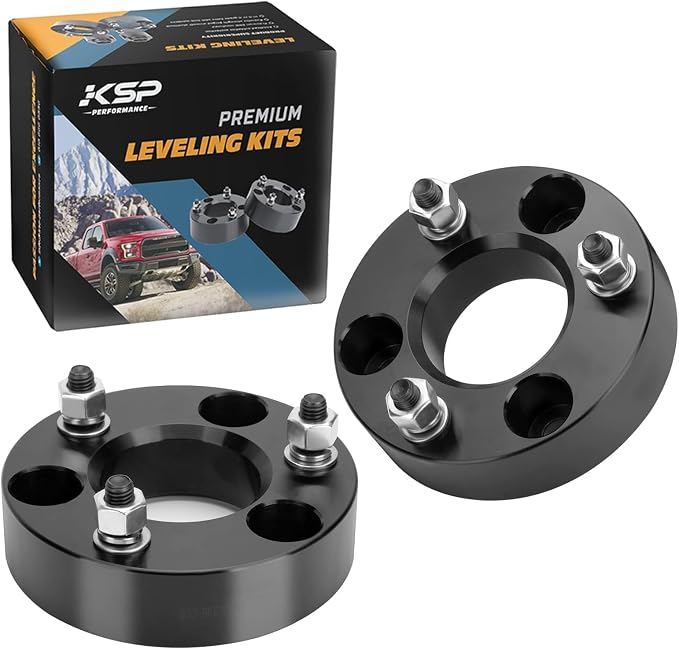 |
KSP 2in Front Lift Kits for Ram | Check Price |
 |
Motofablifts DR-2-2″ Front Leveling Lift Kit Compatible | Check Price |
 |
Nilight 2.5″ Front Leveling Kit for Dodge | Check Price |
 |
Richeer 2.5 Inch Front Leveling Lift Kit | Check Price |
1. Dynofit 2in Leveling Lift Kit for Dodge
The Dynofit earns the top position by offering a balanced combination of fitment range, construction quality, installation simplicity, and ownership support. It is designed for Dodge Ram 1500 4WD trucks from 2006 through 2026, which includes the relevant 5th-generation model years, provided the truck does not have an excluded suspension or body configuration. The kit is specifically not compatible with Mega Cab or Ram Rebel models, and it also does not fit trucks equipped with Active-Level Four-Corner Air Suspension.
Its forged 6061-T6 aluminum billet spacers are CNC-machined for accurate fitment, then finished with black anodizing intended to resist corrosion. High-strength 10.9-grade bolts are included. Dynofit states that the kit delivers a true 2-inch front lift, while also explaining that spacer thickness and final vehicle lift do not always correspond at a direct 1:1 ratio because of suspension geometry. That clarification is useful when comparing it with thinner or thicker-looking spacers.
The practical result is a more level stance, additional front ground clearance, and room to consider larger tires or wheels. Installation is described as straightforward and not requiring special tools. However, “easy” does not eliminate the need for safe support, correct torque procedures, and an alignment afterward. Any change to front suspension height can affect alignment angles and steering behavior.
This kit suits a 4WD 5th gen owner who wants a moderate front lift without moving to a more involved suspension system. Its main limitations are the excluded Mega Cab, Rebel, and four-corner air-suspension applications. Dynofit provides a two-year after-sales service period, which adds useful support if parts are missing or a quality or shipping issue appears. Verify the exact drivetrain and suspension before purchase.
2. KSP 2in Front Lift Kits for Ram
The KSP 2in Front Lift Kits for Ram is a strong alternative to the Dynofit because it targets many of the same trucks while adding clear information about post-installation alignment. It fits 2009–2026 Ram 1500 4WD models, along with several Dakota and Raider applications, but it does not fit Mega Cab models. For a 5th gen Ram 1500 owner, the listed 2019-and-newer coverage is relevant as long as the truck is 4WD and otherwise matches the application requirements.
KSP uses forged aircraft-grade aluminum billet, CNC processing, and 12.9-grade solid bolts. The black powder-coated finish is intended to improve corrosion resistance. The kit is advertised to raise the front by 2 inches, although KSP correctly notes that spacer thickness and finished lift are not the same measurement because of suspension geometry. This makes the product a conventional front leveling solution rather than a full suspension replacement.
Its stated installation time is approximately one to two hours, with no special tools required. That estimate can vary with rust, access, previous suspension work, and the tools available to the installer. KSP specifically recommends an alignment after installation, and that recommendation should be treated as part of the project rather than an optional cosmetic step. A front-end height change can alter toe and other alignment settings, even when the lift is modest.
The product is a good fit for an owner who wants a 2-inch stance correction and values robust hardware and a clearly stated support policy. KSP lists a 30-day refund period and 12-month free replacement-parts service. Its limitations are important: it is for 4WD applications and does not fit Mega Cab models. If your truck is a 2WD model, Rebel, or a special suspension configuration, another application-specific kit should be considered instead of assuming the broad model-year range guarantees fitment.
3. Motofablifts DR-2-2″ Front Leveling Lift Kit Compatible
The Motofablifts DR-2-2″ Front Leveling Lift Kit holds third place because its advertised installation approach is particularly appealing to owners who want to avoid strut or coil disassembly. It is compatible with Dodge Ram 1500 4WD models from 2006 through 2025 and does not fit 2WD trucks. That range covers 5th gen 4WD applications, but buyers should still confirm their exact model and suspension before ordering.
Motofab states that the kit raises the front of the truck by a true 2 inches. The spacers are CNC-machined from billet aluminum and powder-coated black to blend with the factory suspension. Billet construction and a matching finish give the product a purpose-built appearance, while the moderate lift keeps the design focused on leveling the front rather than creating a much taller truck.
The major practical distinction is installation. The manufacturer says the kit can be installed in roughly 1.5 to 2 hours and does not require strut or coil disassembly like some other kits. That can reduce the amount of suspension work involved, although the vehicle still needs to be safely supported and the installer must follow the included instructions. The stated time is not a promise for every truck; seized fasteners, corrosion, and unfamiliarity can extend the job.
This option makes sense for a 4WD owner who prioritizes a true 2-inch front change and a simpler spacer installation method. It is less suitable for 2WD owners because the supplied compatibility specifically excludes 2WD. It also gives less model-year coverage than some alternatives, ending at 2025 in the supplied information. Motofab’s lifetime warranty is a meaningful ownership advantage, particularly for buyers planning to keep the truck for years. An alignment should still be considered after installation, and the kit should not be treated as a substitute for checking tire clearance or suspension condition.
4. Nilight 2.5″ Front Leveling Kit for Dodge
The Nilight 2.5″ Front Leveling Kit for Dodge is aimed at owners who want more front-end height than a conventional 2-inch kit provides. It is listed for Dodge Ram 1500 4WD models from 2006 through 2023, so it covers many 5th gen trucks but does not extend as far into later model years as some competing options. The supplied fitment information specifies 4WD, making drivetrain verification essential before purchase.
One useful detail is Nilight’s explanation of the relationship between spacer thickness and final lift. The spacer itself is 1.57 inches thick, while the installed result is designed to provide approximately 2.5 inches of front lift. Because suspension geometry multiplies or changes the effect of spacer thickness, the two figures should not be confused. Nilight also notes that the final height can vary slightly according to the vehicle model and suspension condition.
The spacer is made from 6061 aluminum alloy and CNC-machined, with a black anodized surface intended to resist rust, corrosion, and wear. Installation is described as bolt-on, without cutting or drilling, and usually taking about one to two hours with basic tools. That is attractive for a driveway project, but professional installation and a wheel alignment are recommended for best results. A taller front spacer can also make tire and wheel clearance more important than it is with a 2-inch kit.
This product suits a 4WD owner who wants a stronger visual correction of the factory rake or additional front clearance for a larger-tire or off-road-oriented appearance. The trade-off is that a 2.5-inch front lift may be less conservative than a 2-inch setup, and the final result can vary with the condition of the existing suspension. It is also not the most broadly current option for later model years. Confirm clearance, inspect the front suspension before installation, and plan for alignment rather than judging the project only by the spacer’s advertised height.
5. Richeer 2.5 Inch Front Leveling Lift Kit
The Richeer 2.5 Inch Front Leveling Lift Kit finishes fifth while remaining a useful choice for the right 4WD application. It is listed for Ram 1500 models from 2006 through 2026, along with certain Dakota and Raider models. It does not fit Mega Cab trucks, and the supplied compatibility specifies 4WD for the Ram 1500. Those exclusions are especially important for 5th gen shoppers because a broad model-year range does not mean every cab, drivetrain, or suspension configuration is covered.
Richeer advertises a 2.5-inch front lift and explains that the relationship between kit thickness and final lift is not 1:1. Its CNC processing is intended to provide accurate hole positioning, while the spacers use forged 6061-T6 aluminum alloy. The kit also includes pre-installed heat-treated 12.9-grade studs. These details appeal to buyers who want a purpose-built spacer with high-strength hardware rather than a generic-looking component.
Installation is described as taking about one to two hours, with no cutting, drilling, or strut/coil disassembly required. That can make it more approachable than a more involved suspension modification. Still, installation should be completed with proper vehicle support and careful fastener handling. A 2.5-inch change also deserves a post-installation alignment and a careful inspection for tire, wheel, and suspension clearance.
Richeer is a reasonable match for someone who wants the taller stance and extra front clearance associated with a 2.5-inch leveling kit while retaining a bolt-on installation. Its disadvantages are the Mega Cab exclusion, 4WD-only Ram fitment, and the greater need to verify how the added height interacts with the truck’s existing suspension and tires. If your priority is a more conservative front correction, one of the 2-inch kits may be easier to live with. If 2.5 inches is the goal, confirm the exact truck configuration and understand that actual lift can vary.
How to Choose the Best Leveling Kit for 5th Gen Ram 1500
A leveling kit changes the height of the front suspension so the truck’s factory nose-down stance is reduced. On many pickups, the rear sits higher from the factory to accommodate payload and towing loads. A front spacer can make the truck appear more balanced when unloaded, add some front ground clearance, and create a different visual relationship between the body, wheels, and tires.
That does not make every spacer interchangeable. The right purchase begins with fitment, then moves through lift height, construction, installation, alignment, clearance, and long-term expectations. The following points help separate a suitable kit from one that merely has an attractive lift number.
Start with the exact truck configuration
“5th gen Ram 1500” usually refers to the current-generation Ram 1500 platform introduced for the 2019 model year, but model-year coverage alone is not enough. The listings supplied for these products distinguish between 4WD and 2WD, and several specifically exclude Mega Cab models. Ram Rebel applications may also differ from standard Ram 1500 configurations.
Check the door-jamb information, VIN-based parts catalog, or the manufacturer’s fitment notes before ordering. Confirm:
- Model year and body style
- 2WD or 4WD drivetrain
- Cab configuration, especially whether it is a Mega Cab
- Whether the truck is a Rebel or another special trim
- Whether it uses Active-Level Four-Corner Air Suspension
- Existing aftermarket suspension parts that could affect fitment
The Dynofit listing specifically excludes Active-Level Four-Corner Air Suspension, Mega Cab models, and Ram Rebel models. The Richeer and KSP listings also exclude Mega Cab models, while the Motofablifts information specifically excludes 2WD. These are not minor footnotes. Installing a part on an unconfirmed application can lead to fitment problems, incorrect ride height, or a project that cannot be completed as planned.
Decide whether 2 inches or 2.5 inches is appropriate
The products here fall into two basic groups. Dynofit, KSP, and Motofablifts advertise a 2-inch front lift. Nilight and Richeer advertise a 2.5-inch front lift. A 2-inch change is generally the more moderate choice when the goal is primarily to reduce factory rake without pursuing a particularly tall front stance. A 2.5-inch kit may provide a more noticeable visual correction and more front clearance, but it also makes clearance and geometry checks more important.
Do not compare spacer thickness directly with advertised lift. Nilight, for example, identifies a 1.57-inch-thick spacer designed to produce approximately 2.5 inches of installed front lift. The suspension’s leverage and geometry affect the final result. The other listings also explain that thickness and lift are not a direct 1:1 ratio.
Actual height may vary with suspension condition, vehicle configuration, and existing wear. If the truck already has sagging or damaged front components, a spacer may change the appearance without addressing the underlying problem. Inspect the suspension first. A leveling spacer is intended to alter ride height, not repair worn components.
Understand what a front spacer does—and does not do
These kits are front leveling solutions. They raise the front suspension relative to the rear; they do not automatically create the same result as a complete suspension lift. They also do not add payload capacity, change the truck’s factory weight ratings, or guarantee that any particular tire and wheel combination will clear.
The supplied product information emphasizes a more aggressive stance, additional ground clearance, and the possibility of using larger tires or wheels. Those are reasonable goals, but clearance depends on more than lift height. Tire section width, wheel width, offset, backspacing, tire design, suspension compression, steering angle, and inner-fender shape can all matter.
Before buying a kit for a specific tire upgrade, verify the complete wheel-and-tire combination. A taller front spacer can create room in one area while moving suspension angles or changing the relationship between the tire and other components elsewhere. If a tire already rubs, do not assume another half-inch of advertised lift will solve every contact point.
Compare construction and hardware without overreading labels
All five products use aluminum spacer construction in the supplied descriptions, but the terminology and hardware differ. Dynofit identifies forged 6061-T6 aluminum billet and 10.9-grade bolts. KSP lists forged aircraft-grade aluminum billet and 12.9-grade solid bolts. Motofablifts describes CNC-machined billet aluminum with a black powder-coated finish. Nilight specifies 6061 aluminum alloy and a black anodized surface. Richeer lists forged 6061-T6 aluminum alloy with pre-installed heat-treated 12.9-grade studs.
These details are useful indicators of the intended design, but they do not replace correct installation. Even strong hardware can be damaged by cross-threading, incorrect torque, poor seating, or reusing components when the instructions call for replacement. Read the kit instructions before disassembly and identify whether the supplied hardware replaces or supplements factory fasteners.
Surface finish is also worth noting for trucks used in wet or salted environments. Anodized and powder-coated finishes are intended to improve resistance to corrosion or wear, but no finish eliminates the need for inspection. Mud, salt, and trapped moisture should be cleaned away when practical, particularly around fasteners and spacer interfaces.
Plan installation around safety, access, and alignment
Several listings estimate installation at approximately one to two hours, and Motofablifts states about 1.5 to 2 hours without strut or coil disassembly. Those estimates describe the kit procedure under favorable conditions; they are not a guarantee for every vehicle. Rust, seized bolts, limited tools, and a first-time installation can add considerable time.
Use a level work area and support the truck with equipment rated for its weight. Never rely on a jack alone while working underneath the vehicle. Follow the supplied instructions for lifting, fastener removal, spacer orientation, and final tightening. Avoid improvising hardware or modifying the spacer unless the manufacturer explicitly directs it.
An alignment is one of the most important follow-up steps. KSP explicitly recommends alignment after installation, and Nilight recommends professional installation and wheel alignment. The other products may be simple bolt-on kits, but a suspension-height change can still affect alignment. Have the steering and suspension checked after the truck is back on the ground. If the steering wheel is no longer centered, the vehicle pulls, or the tires begin wearing unevenly, stop treating the change as cosmetic and have it inspected.
After the first few drives, visually inspect accessible hardware and confirm that nothing is contacting the tire or suspension through the steering range. Use the manufacturer’s torque and recheck instructions if provided. Do not guess at a retorque value from another kit, since hardware sizes and installation procedures can differ.
Consider ride, geometry, and ownership trade-offs
A spacer leveling kit raises the body by changing the installed position of the front suspension. It does not automatically improve ride quality, suspension travel, or off-road capability. The truck may look more aggressive, but the underlying factory spring and damper arrangement remains part of the system. A taller front change can also reduce available geometry margin compared with the stock setup.
That does not make a 2-inch or 2.5-inch kit unsuitable. It means expectations should remain realistic. These products are most appropriate when the primary goals are stance correction, modest additional clearance, and a relatively straightforward installation. Owners seeking substantially more travel, specialized off-road performance, or a complete change in suspension behavior should investigate a more comprehensive suspension system rather than expecting a spacer to provide all of those outcomes.
Existing wear matters as well. Worn ball joints, control-arm components, shocks, springs, or other front-end parts should not be hidden beneath a new spacer. A new height setting can make existing problems more noticeable. Inspecting the truck before installation can prevent spending money on a leveling kit when the first priority should be restoring the suspension to good condition.
Use warranty and support as part of the decision
Support terms can matter when a kit arrives with missing hardware, damaged packaging, or a fitment question. Dynofit lists two-year worry-free after-sales service. KSP lists a 30-day refund period and 12-month free replacement-parts service. Motofablifts lists a lifetime warranty. Nilight and Richeer have the supplied construction and fitment information but no warranty term is provided here.
A warranty does not remove the need to confirm fitment or follow installation instructions. Keep the order information, packaging, and installation documentation until the truck has been aligned and driven without issues. If a part appears incorrect, contact the seller before forcing it into place or modifying it. Documenting the truck’s model, drivetrain, body style, and suspension configuration can make support faster and more useful.
Match the kit to your ownership priorities
Choose a 2-inch kit when you want a restrained visual correction, a straightforward front lift, and less emphasis on maximum advertised height. Dynofit and KSP cover similar territory, while Motofablifts adds a stated no-strut/coil-disassembly installation method and a lifetime warranty. Choose a 2.5-inch option when the taller front stance and additional clearance are central to the project, and when you are prepared to pay closer attention to alignment and tire clearance.
For a standard 4WD 5th gen Ram 1500 without an excluded suspension, Dynofit offers the broadest overall balance in this group. KSP is a sensible alternative with comparable advertised lift and strong hardware details. Motofablifts deserves consideration when installation method and warranty are especially important. Nilight and Richeer are aimed at the buyer who specifically wants approximately 2.5 inches of front lift.
FAQ
What is the best leveling kit for a 5th gen Ram 1500?
Based on the supplied fitment, construction, support, and review information, the Dynofit 2in Leveling Lift Kit for Dodge is the strongest overall recommendation for a compatible 4WD truck. It offers a claimed true 2-inch front lift, forged 6061-T6 aluminum construction, high-strength hardware, broad listed model-year coverage, and two-year after-sales support. It is not compatible with Mega Cab, Rebel, or Active-Level Four-Corner Air Suspension applications.
Is a 2-inch or 2.5-inch leveling kit better for a 5th gen Ram 1500?
Neither height is universally better. A 2-inch kit is the more moderate choice for correcting the factory rake while keeping the project focused on a modest front change. A 2.5-inch kit creates a taller front stance and may provide more room for a particular tire or wheel setup, but it requires especially careful fitment and clearance checking. The final lift also depends on suspension geometry and condition.
Will these leveling kits fit a 2WD 5th gen Ram 1500?
The supplied listings primarily identify 4WD Ram 1500 compatibility. Motofablifts specifically states that its kit does not fit 2WD, and KSP, Nilight, and Richeer also identify 4WD applications for the Ram 1500. Do not assume that a kit listed for a broad range of Ram 1500 model years fits a 2WD truck. Confirm the exact application with the manufacturer before ordering.
Do I need an alignment after installing a Ram 1500 leveling kit?
An alignment is strongly recommended after installation. KSP explicitly says an alignment is always recommended, and Nilight recommends professional installation and wheel alignment. Raising the front suspension can change steering and alignment settings. An alignment also provides an opportunity to identify unusual geometry, worn components, or a steering wheel that is no longer centered.
Can a leveling kit let me install larger tires on a 5th gen Ram 1500?
A leveling kit may create additional front clearance and can support a larger-tire or wheel appearance, but it does not guarantee fitment. Clearance depends on tire dimensions, wheel offset, backspacing, suspension compression, steering angle, and the truck’s existing parts. Check the complete wheel-and-tire combination rather than relying only on the advertised lift height.
Do these kits work with Ram Rebel models or four-corner air suspension?
Do not assume compatibility. Dynofit specifically excludes Ram Rebel models and trucks equipped with Active-Level Four-Corner Air Suspension. Other listings also contain configuration exclusions. A Rebel or air-suspension truck should be checked against the exact manufacturer application before any order is placed.
Does spacer thickness equal the advertised lift?
No. The product descriptions explain that suspension geometry means spacer thickness and final lift are not always a 1:1 measurement. Nilight gives a clear example by describing a 1.57-inch-thick spacer designed to provide approximately 2.5 inches of front lift. Actual height can vary with the truck model and suspension condition.
Can I install one of these kits without professional help?
The listings describe these products as bolt-on kits that can often be installed in about one to two hours, and several state that no cutting or drilling is required. Motofablifts also says its kit does not require strut or coil disassembly. However, safe support, correct tools, proper fastener procedures, and a post-installation alignment are still necessary. If you are not comfortable working on suspension components, professional installation is the safer choice.
Conclusion: Final Verdict
The Dynofit 2in Leveling Lift Kit for Dodge is the best overall pick here for a compatible 4WD 5th gen Ram 1500, combining a moderate front lift, durable aluminum construction, broad listed coverage, and useful support. The KSP 2in Front Lift Kits for Ram is the clearest alternative. Choose Motofablifts for its installation approach and lifetime warranty, or select Nilight or Richeer when an approximately 2.5-inch front lift is the priority. Whatever you choose, verify fitment, install safely, and schedule an alignment.