The short answer to where is the fuel door release switch located is that it is usually found near the driver’s seat, often on the lower dashboard, beside the steering wheel, on the driver-side floor, or on the door panel.
However, not every vehicle has a physical fuel door release switch. Many newer cars use a push-to-open fuel door, while others unlock the fuel door automatically when the vehicle doors are unlocked.
The exact location depends on the vehicle’s make, model, and year. Some cars use a small lever near the hood release, while others use an electronic button marked with a fuel pump icon.
This guide explains the most common fuel door release switch locations, how to recognize the control, how different systems work, and what to check if you cannot open the fuel door.
Where Is the Fuel Door Release Switch Located?
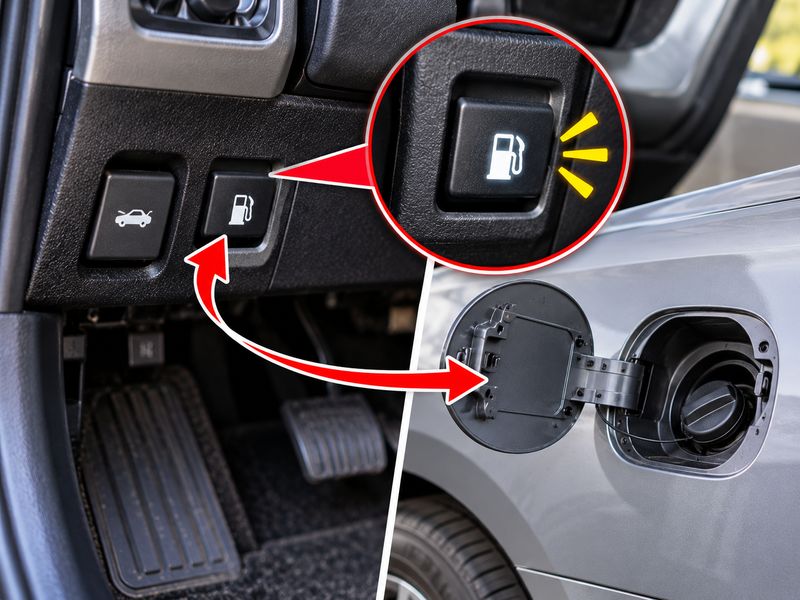
The fuel door release switch is commonly located within easy reach of the driver. Manufacturers place it in several different areas depending on the vehicle design.
The most common locations include:
- On the lower dashboard near the driver’s left knee
- On the driver-side door panel
- On the floor beside the driver’s seat
- Near the hood release lever
- On the center console
- Beside other dashboard switches
- Near the trunk release button
Look for a button or lever showing a gas pump symbol, fuel nozzle icon, or small fuel door graphic.
If you cannot find a release switch, your vehicle may use a fuel door that opens by pressing directly on the outside of the door.
What Is a Fuel Door Release Switch?
A fuel door release switch is a control that allows the driver to unlock or open the exterior door covering the vehicle’s fuel filler area.
Depending on the design, the switch may operate:
- A mechanical cable
- An electrical actuator
- A locking pin
- A small latch mechanism
Older vehicles often use a mechanical lever and cable, while newer vehicles commonly use an electronic fuel door actuator.
When you operate the switch, the latch holding the fuel door closed is released so the door can be opened.
Common Fuel Door Release Switch Locations
Although vehicle designs vary, a few locations are much more common than others.

Lower Dashboard Near the Steering Wheel
One of the most common locations is on the lower dashboard, usually to the left of the steering wheel.
The button may be grouped with controls for:
- Trunk release
- Hood release
- Dashboard brightness
- Traction control
- Parking sensors
The fuel release button usually has a small fuel pump icon.
Because these buttons may be low on the dashboard, they can sometimes be difficult to see unless you lean forward or open the driver’s door.
Driver-Side Floor Area
Some vehicles use a small mechanical lever located on the floor next to the driver’s seat.
It may sit near the door sill or slightly forward of the seat.
This type of release often resembles the trunk release lever. The fuel lever usually has a fuel pump symbol molded into it.
Pulling the lever releases the latch through a cable.
Near the Hood Release
Another common location is close to the hood release lever.
The hood release is usually positioned under the dashboard near the driver’s left foot. The fuel door release may be mounted beside it or slightly above it.
Check the symbols carefully because the two controls can look similar.
Driver-Side Door Panel
Some vehicles place the fuel door button on the driver’s door panel.
It may be located near:
- Power window switches
- Mirror controls
- Door lock buttons
- Trunk release controls
This placement makes the button easy to reach before getting out of the vehicle.
Center Console
A smaller number of vehicles place the fuel release switch on the center console.
It may be positioned near the:
- Gear selector
- Parking brake
- Drive mode controls
- Storage compartment
The button should normally have a fuel pump icon that distinguishes it from nearby controls.
Does Every Car Have a Fuel Door Release Switch?
No. Many modern vehicles do not have a separate fuel door release switch.
Instead, the fuel door may use one of several automatic or manual systems.
Push-to-Open Fuel Doors
Many newer vehicles have a fuel door that opens when you gently press the outer edge.
Usually, the vehicle must first be unlocked.
Pressing the fuel door activates a small spring-loaded latch that causes the door to pop outward.
Fuel Doors Connected to Central Locking
Some vehicles automatically lock and unlock the fuel door with the central locking system.
When you unlock the vehicle with the key fob or door handle, the fuel door actuator releases its locking pin.
You can then press the fuel door to open it.
When the vehicle is locked again, the actuator extends the pin and secures the fuel door.
Manually Opened Fuel Doors
Some older or simpler vehicles use a fuel door that does not lock at all.
You simply pull the fuel door open using a small finger slot.
In these vehicles, there may be no release lever, actuator, or button.
How to Identify the Fuel Door Release Switch
The easiest way to identify the switch is to look for the fuel pump symbol.
The symbol usually looks like a small gas pump with a hose attached.
Depending on the vehicle, the control may be:
- A push button
- A pull lever
- A rocker switch
- A small handle
Avoid confusing the fuel release with the trunk release. The trunk button usually displays a vehicle with an open trunk, while the fuel release displays a fuel pump symbol.
Where Is the Fuel Door Release Lever Located?
A mechanical fuel door release lever is most often located on the driver-side floor or beneath the dashboard.
Common positions include:
- Beside the driver’s seat
- Near the door sill
- Under the left side of the dashboard
- Beside the hood release lever
Mechanical levers are especially common on older cars and some compact vehicles.
Pulling the lever moves a cable connected to the fuel door latch.
How Does the Fuel Door Release System Work?
The system depends on whether the vehicle uses a mechanical or electronic design.
Mechanical Fuel Door Release
A mechanical system uses a cable that runs from the release lever to the fuel door latch.
When the driver pulls the lever, the cable pulls the latch away from the fuel door.
A spring then pushes the door slightly outward.
This system is simple but can develop problems if the cable stretches, breaks, or becomes disconnected.
Electronic Fuel Door Release
An electronic system uses an electric actuator.
When the driver presses the fuel door release button, an electrical signal activates the actuator.
The actuator retracts a locking pin or moves the latch, allowing the fuel door to open.
Modern vehicles often connect this system to the central locking system.
Why Can’t I Find the Fuel Door Release Switch?
If you cannot locate the switch, there is a good chance your vehicle does not have one.
Try these checks before assuming something is missing.
First, unlock all the vehicle doors.
Then gently press the outer edge of the fuel door. Many modern cars use a push-to-open mechanism that only works when the vehicle is unlocked.
You can also inspect the lower dashboard, driver-side floor, door panel, and center console for a fuel pump symbol.
If you still cannot determine how the fuel door opens, the owner’s manual will show the exact procedure for your specific vehicle.
How Do I Know Which Side the Fuel Door Is On?
Most cars have a small arrow next to the fuel pump symbol on the instrument cluster.
The arrow points toward the side of the vehicle where the fuel filler door is located.
For example:
- Arrow pointing left = fuel door is on the driver side
- Arrow pointing right = fuel door is on the passenger side
This feature is especially helpful when driving an unfamiliar vehicle or rental car.
What If the Fuel Door Release Switch Does Not Work?
A fuel door that refuses to open may have a problem with the switch, cable, actuator, latch, or locking mechanism.
Check Whether the Vehicle Is Unlocked
On vehicles with electronically locking fuel doors, the fuel door may remain locked when the vehicle doors are locked.
Unlock the entire vehicle and try again.
Press the Fuel Door While Operating the Release
Sometimes tension on the latch prevents it from releasing completely.
Have someone operate the release button while you gently press and release the fuel door.
Do not pry aggressively because this can damage the painted door or surrounding body panel.
Check for Ice or Dirt
Cold weather can freeze moisture around the fuel door.
Dirt, road salt, or corrosion can also cause the latch to stick.
Gently warming the area and cleaning around the edges may help if the door is frozen or contaminated.
Listen for the Actuator
If the vehicle uses an electronic system, press the fuel release button and listen near the fuel door.
A clicking sound may indicate that the actuator is receiving power but the latch is stuck.
No sound may point to a problem with:
- The switch
- Wiring
- Fuse
- Actuator
- Vehicle locking system
Check the Mechanical Cable
If the lever feels unusually loose or moves without resistance, the release cable may be stretched, disconnected, or broken.
A damaged cable usually requires access to the interior trim or fuel door latch area.
Is There an Emergency Fuel Door Release?
Some vehicles have an emergency fuel door release inside the trunk or cargo area.
It may be located behind a removable interior panel near the fuel filler side of the vehicle.
The emergency release may look like:
- A small cable
- A plastic handle
- A pull tab
- A manual actuator lever
Pulling it manually releases the fuel door latch if the normal electronic system fails.
Not every vehicle has this feature, so check the owner’s manual before removing trim panels.
Fuel Door Release Switch vs Fuel Door Actuator
The fuel door release switch and fuel door actuator are different parts.
The release switch is the control the driver operates.
The fuel door actuator is the component that physically unlocks the fuel door.
In a typical electronic system:
- The driver presses the release switch.
- The switch sends an electrical signal.
- The actuator receives the signal.
- The actuator retracts a locking pin.
- The fuel door becomes unlocked.
A faulty switch may prevent the signal from being sent, while a failed actuator may receive power but fail to move.
Can the Fuel Door Release Be Near the Trunk Release?
Yes. Many vehicles place the fuel door release near the trunk release because both controls operate exterior access panels.
They may be located together:
- On the floor beside the driver
- On the lower dashboard
- On the driver-side door panel
Always check the symbols before pulling or pressing a control.
Why Do Some Cars Have No Fuel Door Release Button?
Manufacturers increasingly use automatic locking systems because they reduce the number of interior controls.
A push-to-open fuel door can be convenient because the driver only needs to unlock the vehicle.
The central locking system then controls the fuel door actuator automatically.
This design can also provide security without requiring a separate release switch.
What Is the Fuel Door Release Switch Symbol?
The fuel door release switch usually displays a gas pump icon.
The symbol may include:
- A fuel pump
- A fuel nozzle
- A small arrow
- An outline of an open fuel door
The design varies slightly between manufacturers, but the fuel pump symbol is the most common.
Should You Force a Stuck Fuel Door Open?
Generally, no.
Prying the fuel door with a screwdriver or other metal tool can damage:
- Paint
- Plastic trim
- Hinges
- The latch
- The fuel door itself
If the door is stuck, try unlocking the vehicle, operating the release again, checking for ice, or using the emergency release if the vehicle has one.
If the actuator or cable has failed and the fuel door cannot be opened safely, a mechanic may need to access the latch from behind the interior trim.
FAQs About Where Is the Fuel Door Release Switch Located
Where is the fuel door release button usually located?
It is usually located near the driver’s seat, commonly on the lower dashboard, floor area, door panel, or center console.
Look for a fuel pump symbol.
Is the fuel door release near the hood release?
It can be. Some vehicles place the fuel door release beside or near the hood release lever under the driver-side dashboard.
Why does my car not have a fuel door release switch?
Your vehicle may use a push-to-open fuel door connected to the central locking system.
Try unlocking the vehicle and gently pressing the fuel door.
Where is the fuel door release on newer cars?
Many newer vehicles do not use a separate interior release. Instead, unlocking the vehicle electronically unlocks the fuel door.
Pressing the exterior fuel door then causes it to pop open.
How do I open the fuel door if the switch is broken?
Some vehicles have an emergency release cable inside the trunk or cargo area near the fuel filler side.
If there is no emergency release, the latch or actuator may need to be accessed manually by a technician.
What does the fuel door release button look like?
It usually has a small gas pump or fuel nozzle symbol.
The button may be located beside the trunk release or other driver controls.
Can a blown fuse stop the fuel door from opening?
Yes. On vehicles with an electronic fuel door actuator, a fuse or electrical problem can prevent the actuator from operating.
However, the same circuit may sometimes power other locking components, depending on the vehicle.
Does the fuel door unlock with the car doors?
On many modern vehicles, yes. The fuel door locking pin is connected to the vehicle’s central locking system and releases when the doors are unlocked.
Conclusion
If you are trying to determine where is the fuel door release switch located, start by checking the lower dashboard, driver-side floor, door panel, center console, and the area near the hood or trunk release.
Look for a fuel pump icon that identifies the control. If there is no switch or lever, unlock the vehicle and gently press the fuel door, because many newer vehicles use a push-to-open system controlled by the central locking system.
Knowing whether your vehicle uses a mechanical lever, electronic button, or automatic fuel door lock makes it much easier to open the fuel door and diagnose problems when the release system stops working.