A broken fuel door latch can cause two very different problems: the fuel door may refuse to open when you need to refuel, or it may no longer stay closed while you drive.
In many cases, the problem is limited to the latch, locking pin, release cable, spring, or fuel door actuator rather than the fuel system itself.
The right broken fuel door latch fix depends on how your vehicle opens and locks the fuel door. Some cars use a simple push-to-open latch.
Others have a lever inside the cabin, a mechanical cable, or an electric actuator that locks and unlocks with the vehicle’s power door locks.
Minor problems can sometimes be fixed by cleaning, adjusting, or lubricating the latch. A cracked plastic latch, snapped cable, damaged hinge spring, or failed actuator usually needs replacement.
This guide explains how to identify the failed part, safely open a stuck fuel door, repair common latch problems, and decide when replacement is the better option.
Broken Fuel Door Latch Fix: What Should You Check First?
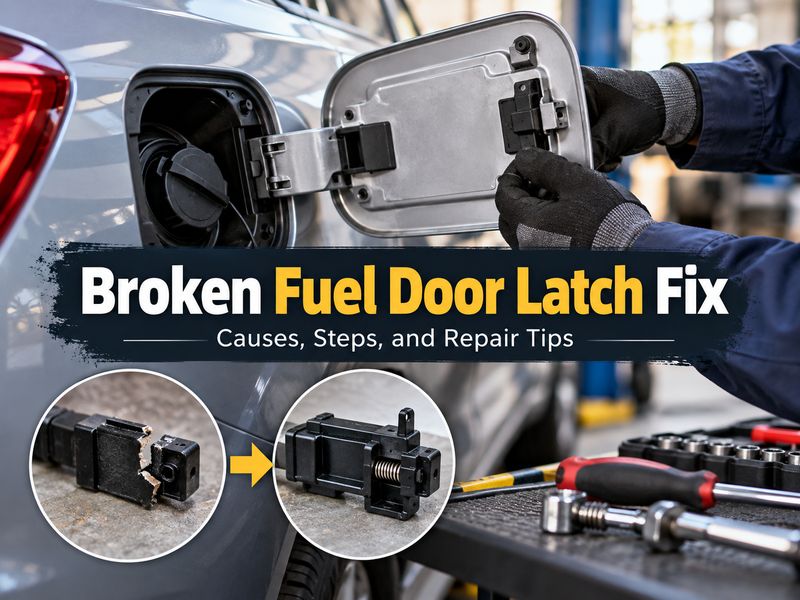
For a broken fuel door latch fix, first determine whether the fuel door is having trouble opening, releasing, locking, or staying closed. Those symptoms usually point to different parts.
If the door will not open, check whether the vehicle is fully unlocked before assuming the latch is broken. Many modern vehicles automatically lock the fuel door when the doors are locked.
If the fuel door opens but will not stay closed, inspect the latch tab, receiving catch, hinge, and spring. A worn or broken plastic latch is one of the more common causes.
A good first inspection includes:
- Unlocking the vehicle and trying the fuel door again
- Pressing the fuel door gently while operating the release
- Looking for dirt, ice, or debris around the latch
- Checking whether the latch pin moves
- Listening for the actuator when locking or unlocking the car
- Inspecting the hinge and spring
- Checking a cabin release lever for normal resistance
Avoid forcing the fuel door open with a screwdriver or metal pry bar. That can damage the painted body panel, fuel door, or surrounding trim.
How a Fuel Door Latch Works
The fuel door latch keeps the exterior fuel filler door in the closed position. Depending on the vehicle, it may be completely mechanical or controlled by the vehicle’s electrical locking system.
There are several common designs.
Push-to-Open Latch
A push-to-open fuel door normally uses a small spring-loaded latch.
You press the fuel door inward, and the latch releases. Pressing it closed again allows the latch to catch.
If this mechanism wears out, the fuel door may:
- Pop back open
- Refuse to release
- Feel loose
- Require several pushes before opening
Locking Pin or Fuel Door Actuator
Many newer vehicles use an electric fuel door actuator.
When you lock the vehicle, the actuator extends a small plastic or metal pin into the fuel door mechanism. Unlocking the vehicle retracts the pin.
If the actuator fails, the fuel door can remain permanently locked or may no longer lock at all.
Cable-Operated Fuel Door
Some vehicles have a release lever near the driver’s seat.
Pulling the lever moves a release cable, which retracts the latch near the fuel filler door.
A stretched, disconnected, seized, or broken cable can prevent the latch from releasing.
Spring-Loaded Fuel Door
The latch may release normally while a separate spring pushes the fuel door outward.
If that spring breaks, the door may technically unlock but remain almost flush with the body, making it appear stuck.
Common Signs of a Broken Fuel Door Latch
A damaged fuel door mechanism does not always fail completely at once. Small changes in how the door feels can provide useful clues.
Fuel Door Will Not Open
If the fuel door remains shut after unlocking the vehicle or operating the release lever, possible causes include:
- Failed locking actuator
- Broken release cable
- Jammed latch
- Frozen mechanism
- Bent locking pin
- Damaged push-release latch
- Misaligned fuel door
The problem may also be as simple as tension between the latch and fuel door. Lightly pressing inward while operating the release can sometimes take pressure off the latch.
Fuel Door Will Not Stay Closed
If the fuel door keeps opening, the latch may no longer be engaging its catch.
Common causes include:
- Broken plastic latch
- Worn latch tab
- Bent fuel door
- Misaligned hinge
- Failed spring-loaded catch
- Damaged receiving clip
A fuel door that repeatedly opens while driving usually needs more than lubrication. Inspect the physical latch carefully.
Fuel Door Actuator Does Not Move
Unlock the vehicle and listen near the fuel door.
On vehicles with electric locking systems, you may hear a small click or movement from the actuator.
No sound can indicate an electrical or actuator problem, although diagnosis depends on the particular vehicle. A clicking actuator with a locking pin that does not move often points toward an internally damaged actuator or jammed linkage.
Interior Release Lever Feels Loose
A fuel door lever that suddenly has little or no resistance may indicate a broken or disconnected release cable.
If the cable is only stretched, the lever may still have some resistance but fail to retract the latch far enough.
What Causes a Fuel Door Latch to Break?
Fuel door mechanisms are relatively small parts that are exposed to weather, road dirt, moisture, and repeated use.
Plastic Parts Become Brittle
Many latch assemblies contain plastic clips, tabs, pins, or housings.
Years of heat, cold, UV exposure, and repeated movement can make the plastic brittle. Eventually, the latch can crack or snap.
Dirt and Corrosion
Dust, road salt, moisture, and grime can collect around the latch.
The mechanism may gradually become harder to move until it sticks.
Vehicles operated in areas that use road salt during winter can be more susceptible to corrosion around exposed metal hardware.
Frozen Moisture
Water can enter the gap around the fuel door and freeze.
A frozen door does not necessarily mean the latch is broken. Forcing a frozen latch, however, can break plastic components.
Never use an open flame to thaw a fuel door, and avoid applying extreme heat around the fuel filler area.
Fuel Door Misalignment
A bent hinge or improperly aligned door can place sideways pressure on the latch.
The latch may still work, but the locking pin or catch can no longer move freely.
Failed Electric Actuator
An electric actuator contains a small motor or solenoid mechanism.
Like other electrical actuators, it can eventually wear out, jam, or fail internally.
Broken Release Cable
Mechanical cables can:
- Stretch
- Rust
- Disconnect from their brackets
- Break near the handle
- Break near the latch
A cable issue is more likely on vehicles with a dedicated interior fuel door release lever.
How to Fix a Fuel Door Latch That Will Not Open
Start with the simplest possibilities before removing trim panels or replacing parts.
1. Make Sure the Vehicle Is Unlocked
Some vehicles keep the fuel door locked whenever the central locking system is active.
Unlock the vehicle completely. On certain vehicles, pressing the unlock button twice may unlock additional doors and systems.
Then try the fuel door again.
2. Push Inward While Releasing the Latch
Place your hand flat against the fuel door and apply gentle inward pressure.
At the same time:
- Press the fuel door if it uses push-to-open operation
- Pull the interior release lever
- Unlock the vehicle if it uses an electric actuator
Removing outward pressure from the latch can sometimes allow a sticking locking pin to retract.
Do not hit or aggressively push the panel.
3. Inspect for Ice or Debris
Look around the edge of the fuel door.
If ice is present, warm the area gradually. A warm vehicle cabin or mild ambient heat is safer than concentrated high-temperature heat.
Do not pour boiling water over the area because rapid temperature changes can damage finishes, and the water can refreeze.
4. Use the Emergency Fuel Door Release if Equipped
Some vehicles with electric fuel doors include a manual emergency release behind the trunk or cargo-area trim near the fuel filler.
The exact design varies significantly by make and model.
It may look like:
- A pull cable
- A small lever
- A plastic tab
- A loop or handle
Check the owner’s manual before removing interior trim or pulling unfamiliar cables.
5. Inspect the Locking Pin
Once the fuel door is open, operate the vehicle locks while watching the fuel door locking mechanism.
The locking pin should extend and retract smoothly on vehicles equipped with this design.
A pin that remains extended, moves only partially, or binds may need cleaning, adjustment, or actuator replacement.
How to Fix a Fuel Door That Will Not Stay Closed
A fuel door that opens normally but refuses to remain closed usually has a mechanical problem.
Clean the Latch and Catch
Dirt can prevent the latch from fully engaging.
Clean around the latch with a soft cloth or brush. Remove accumulated grime before applying any lubricant.
Lubricate the Moving Parts
A small amount of silicone lubricant or dry PTFE lubricant may help a sticking plastic or metal latch.
Apply it only to the mechanical contact areas.
Avoid soaking the fuel filler opening or surrounding painted surfaces with lubricant.
Lubrication can help a sticky latch, but it will not repair cracked or missing components.
Check Latch Alignment
Close the fuel door slowly while watching how the latch meets the catch.
The parts should line up naturally without needing to push the door sideways.
If the fuel door has been bumped or the hinge is loose, the latch may no longer line up.
Minor alignment problems may be corrected by tightening or adjusting accessible hardware, depending on the vehicle.
Replace a Broken Latch
If the latch hook, push mechanism, retaining clip, or plastic housing is visibly cracked, replacement is usually the proper repair.
Many fuel door latch assemblies are inexpensive, relatively small components, although access varies greatly between vehicles.
How to Replace a Fuel Door Latch
The exact procedure depends on the make and model, but the general process is similar.
1. Identify the Failed Component
Do not replace the entire fuel door assembly if only a small latch insert is damaged.
Determine whether the failed part is the:
- Latch
- Locking pin
- Actuator
- Cable
- Hinge
- Spring
- Fuel door itself
Using the correct part can make the repair much easier.
2. Open the Fuel Door
If possible, get the door open before beginning the repair.
A failed electric actuator may require the vehicle’s emergency release.
3. Remove the Latch Fastener or Clip
Some latches simply snap into the body opening. Others use screws, clips, or retaining tabs.
Work carefully around plastic parts because aged clips can break easily.
4. Install the Replacement
Fit the new latch in the same orientation as the original.
Make sure clips are fully seated and screws are snug without overtightening plastic components.
5. Test Before Fully Reassembling
Operate the fuel door several times before reinstalling any trim.
Confirm that it:
- Opens consistently
- Closes securely
- Aligns with the body
- Locks if a locking mechanism is installed
This can save you from removing the trim again.
How to Replace a Fuel Door Actuator
An actuator replacement is slightly more involved because the component is usually located behind the body panel near the fuel filler housing.
Access may require removing part of the trunk or cargo-area trim.
A typical repair involves:
- Accessing the rear of the fuel filler area.
- Disconnecting the actuator’s electrical connector.
- Removing its retaining screw, clip, or bracket.
- Disconnecting the locking pin or linkage.
- Installing the new actuator.
- Reconnecting the wiring.
- Testing the central locking system.
Electrical procedures differ by vehicle. Follow the manufacturer’s service information regarding battery disconnection and trim removal.
If airbag wiring, high-voltage hybrid components, or unfamiliar electrical connectors are nearby, professional repair is the safer choice.
How to Fix a Broken Fuel Door Release Cable
If your vehicle uses a cabin release lever, inspect how the lever feels.
A broken cable normally requires replacement rather than repair.
The cable runs between the interior release handle and the latch at the fuel door. Replacing it may require removing:
- Interior sill trim
- Carpet sections
- Cargo-area trim
- Fuel door latch hardware
Sometimes the cable itself is fine and has simply come loose from a retaining bracket.
If the lever moves but does not pull the latch far enough, inspect both cable ends before ordering a replacement.
Can You Temporarily Secure a Broken Fuel Door?
If the fuel door will not stay closed, it should be repaired as soon as practical.
For a short-term measure, low-tack automotive-safe tape may keep the exterior door from flapping until repairs can be made. Avoid adhesives that can damage paint or leave heavy residue.
Do not put tape over a hot surface or use a temporary method that interferes with the fuel cap.
The fuel door is not the same as the fuel cap. On vehicles with a traditional screw-on cap, the cap provides the actual fuel filler seal. A broken exterior fuel door does not automatically mean the fuel tank is open.
Vehicles with capless fuel systems use an internal sealing mechanism instead of a removable gas cap.
Should You Use WD-40 on a Fuel Door Latch?
A small amount of general-purpose penetrant can sometimes free a rusty metal mechanism, but it is not always the best long-term lubricant for a fuel door latch.
For plastic-heavy mechanisms, a silicone-based or dry PTFE lubricant is often a cleaner choice.
Before applying anything, verify that the product is safe for nearby plastic, rubber, and painted surfaces.
Avoid excessive lubricant because it can attract dirt.
Broken Fuel Door Latch vs. Broken Fuel Door Actuator
These parts are related but perform different jobs.
| Problem | Likely Component |
| Fuel door will not physically catch | Latch |
| Fuel door catches but will not lock | Actuator or locking pin |
| Door remains locked after vehicle is unlocked | Actuator, pin, or linkage |
| Interior lever has no tension | Release cable |
| Door releases but does not pop outward | Spring or hinge mechanism |
| Door must be pushed sideways to close | Alignment or hinge |
| Latch is visibly cracked | Latch assembly |
Correctly identifying the failed part prevents unnecessary replacement.
How Much Does a Broken Fuel Door Latch Repair Cost?
Repair cost varies widely because fuel door designs differ between vehicles.
A simple plastic latch or spring can be inexpensive and quick to replace. A powered locking actuator usually costs more because the part is more complex and interior trim may need to be removed.
Labor can also increase when the mechanism is difficult to reach.
Before paying for a complete fuel door assembly, ask whether the latch, actuator, cable, or hinge is available separately.
Can You Drive With a Broken Fuel Door Latch?
You can often drive temporarily if the exterior fuel door is broken but the actual fuel filler remains correctly sealed.
However, repair the problem reasonably soon.
A fuel door that hangs open can:
- Flap while driving
- Become bent
- Break its hinge
- Allow dirt and water into the filler area
- Damage surrounding paint
If the fuel cap itself is missing, damaged, or unable to seal, that is a different issue and should be addressed promptly.
A loose or missing gas cap may also cause an evaporative-emissions warning or check-engine light on vehicles that use a removable cap.
Common Mistakes When Repairing a Fuel Door Latch
One common mistake is immediately prying on the fuel door when it will not open. The latch may be inexpensive, but damaged paint and bodywork are not.
Another mistake is replacing the latch without checking alignment. A new latch may fail again if the door or hinge is bent.
Avoid these common problems:
- Forcing the fuel door with metal tools
- Pulling unfamiliar emergency cables
- Replacing the actuator without checking the locking pin
- Lubricating a physically broken latch
- Ignoring a bent hinge
- Using excessive adhesive to hold the door closed
- Applying an open flame or heat gun near the fuel filler
Diagnosis usually takes less effort than replacing the wrong component.
When Should a Mechanic Repair the Fuel Door?
Professional help is useful when the repair requires significant interior disassembly or electrical diagnosis.
Consider having a technician inspect the vehicle if:
- The emergency release does not work
- The actuator receives no electrical power
- Wiring appears damaged
- The fuel door or quarter panel is bent
- The release cable is difficult to access
- The latch remains stuck after basic troubleshooting
- You cannot open the door to refuel
- Trim removal involves unfamiliar safety components
A mechanic can determine whether the fault is mechanical or electrical before replacing parts.
FAQs About Broken Fuel Door Latch Fix
What is the easiest broken fuel door latch fix?
If the latch is only sticking, cleaning the mechanism and applying a small amount of suitable silicone or dry lubricant may restore normal operation. A cracked or broken latch normally needs replacement.
Why won’t my fuel door open even though the car is unlocked?
The fuel door actuator, locking pin, latch, or release mechanism may be stuck. Some vehicles also require the vehicle to be fully unlocked before the fuel door releases.
How do I manually open a stuck fuel door?
Some vehicles have an emergency fuel door release behind the trunk or cargo-area trim near the filler location. Consult the owner’s manual because the location and operation differ between vehicles.
Why does my fuel door keep popping open?
The latch may be worn, broken, dirty, or misaligned. A damaged fuel door hinge can also prevent the latch from lining up properly with its catch.
Can I replace a fuel door latch myself?
On many vehicles, yes. Simple latch inserts may be held by clips or screws and can be replaced with basic hand tools. Actuator or cable repairs may require removal of interior trim and are usually more involved.
Is the fuel door latch connected to the gas cap?
Usually not. The exterior fuel door latch holds the body-colored door closed, while the gas cap or capless filler mechanism seals the fuel system.
Why does my fuel door actuator click but not open?
The actuator motor may still operate while the locking pin or internal linkage is jammed or damaged. Misalignment can also prevent the pin from retracting freely.
Will lubricant fix a broken fuel door latch?
Lubricant can help a latch that is dirty, dry, or sticking. It cannot repair a cracked latch, snapped cable, broken spring, or failed electric actuator.
Conclusion
The correct broken fuel door latch fix starts with identifying what is actually failing. A door that will not open often points to a stuck latch, locking actuator, or release cable, while a door that will not stay closed is more likely to have a damaged latch, spring, hinge, or alignment problem.
Start with simple checks such as unlocking the vehicle, cleaning the latch, checking alignment, and inspecting the locking pin. If a part is visibly cracked or the actuator or cable has failed, replacement is usually more reliable than trying to repair the damaged component.
Most fuel door problems are relatively small compared with other vehicle repairs, but avoiding force and diagnosing the correct part first can prevent unnecessary damage and make the repair much easier.