A failed fuel door actuator can turn a simple gas-station stop into a frustrating problem. The fuel door may refuse to open, stay unlocked, make a clicking sound, or stop responding when you lock and unlock the vehicle.
For most drivers, fuel door actuator replacement cost depends heavily on the vehicle. A current nationwide estimate places the average repair at about $239 to $291, including roughly 135–140 for parts and 103–152 for labor.
However, some vehicles cost well under $200 to repair, while certain models can exceed $500. Taxes, diagnostic charges, location, and additional damaged parts can increase the final bill.
The good news is that a fuel door actuator is usually a relatively small component. The expensive part of the repair is often accessing it, diagnosing the electrical system, or using an original-equipment replacement part.
Below, you will learn what the actuator does, realistic parts and labor costs, why prices vary, symptoms of failure, DIY considerations, and how to tell whether the actuator is actually the problem.
Fuel Door Actuator Replacement Cost Explained
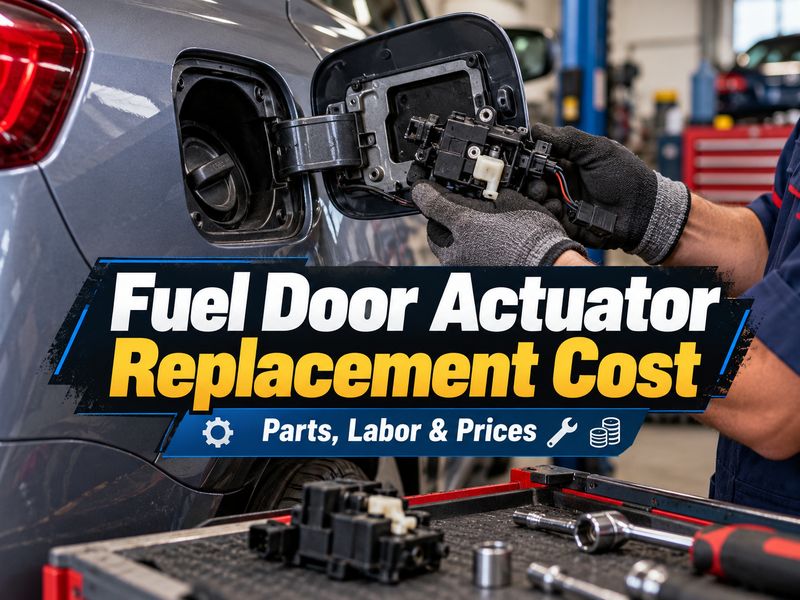
The fuel door actuator replacement cost is commonly around $150 to $300 for many vehicles, although there is no single price that applies to every car.
A broad current estimate puts the average at 239–291 before taxes and fees. Vehicle-specific prices show how much variation is possible. For example, estimates for some Volkswagen and Honda models fall near 100–200, while certain Toyota models can approach or exceed $500.
Here is a useful general breakdown:
| Expense | Approximate Cost |
| Fuel door actuator part | 40–150+ |
| Labor | 50–200+ |
| Typical total repair | 150–300 |
| Some low-cost vehicles | Under $150 |
| More complicated vehicles | 300–500+ |
These numbers should be treated as general budgeting ranges rather than fixed prices.
A 2020 Volkswagen Jetta, for example, has an estimated replacement price of only about 76–93, while the estimate for a Honda Pilot is approximately 196–263.
The difference comes from the price of the actuator itself and how much interior trim or bodywork must be removed to reach it.
What Is a Fuel Door Actuator?
A fuel door actuator is the mechanism that locks or releases the small exterior door covering the vehicle’s fuel filler opening.
On many newer vehicles, the actuator is electric and works with the car’s central locking system.
When you unlock the vehicle, an electrical signal may tell the actuator to retract a small locking pin. That allows you to press or pull the fuel door open.
When the vehicle is locked, the actuator extends the pin again so the fuel door cannot be opened easily.
Depending on the vehicle, the system may include:
- An electric actuator or solenoid
- A locking pin
- Electrical wiring and connectors
- A fuel door latch
- A manual emergency release
- A body control module or central locking system
Some older vehicles use a mechanical cable instead of an electric actuator. In those systems, pulling a lever inside the cabin mechanically releases the fuel door.
How Much Does the Fuel Door Actuator Part Cost?
The actuator itself may cost approximately $40 to $150 or more, depending on the vehicle and whether you choose an aftermarket or original-equipment part.
Current repair estimates illustrate the difference clearly. The actuator for certain Honda Accord applications may be around $41, while some nationwide estimates place the parts portion of the repair around 135–140.
Aftermarket Actuators
An aftermarket fuel door actuator is produced by a company other than the vehicle manufacturer.
Aftermarket parts can be less expensive and may work perfectly well when purchased from a reputable manufacturer.
Quality can vary, however. A very inexpensive actuator may have a weaker motor, locking mechanism, connector, or internal gear system.
OEM Actuators
OEM, or original equipment manufacturer, parts are designed to match the component originally installed in the vehicle.
OEM actuators are generally more expensive, but they can offer advantages such as:
- Exact connector fit
- Correct mounting points
- Proper locking-pin length
- Compatibility with factory electronics
- Predictable fit and operation
The price difference between OEM and aftermarket parts can significantly affect the total repair cost.
How Much Does Labor Cost?
Labor commonly represents a large percentage of the repair bill.
The nationwide estimate referenced above lists approximately 103–152 in labor, but individual vehicles can vary considerably.
For example, estimated labor for a Volkswagen Jetta may be around 58–85, while a Honda Pilot may require roughly 144–212 in labor.
Why such a large difference?
The actuator is usually mounted behind the fuel filler area. On some vehicles, accessing it is simple. On others, the technician may need to remove:
- Trunk trim
- Cargo-area panels
- Wheel-well liners
- Interior side panels
- Electrical connectors
- Fuel-door housing components
A difficult-to-reach actuator means more labor time and a higher bill.
What Affects Fuel Door Actuator Replacement Cost?
Several factors can change the price significantly.
Vehicle Make and Model
The biggest factor is the vehicle itself.
A commonly available actuator installed behind an easily removable trunk panel may be inexpensive to replace.
A luxury vehicle or a model with a complicated fuel-door assembly may require more expensive parts and more labor.
Part Availability
If the actuator is widely available from several aftermarket manufacturers, prices tend to be more competitive.
An actuator available only through a dealership may cost considerably more.
Repair Shop Labor Rates
Labor rates vary by region and shop.
Independent repair shops often charge differently from dealerships, and repair prices in major metropolitan areas can be higher than those in lower-cost areas.
Accessibility
Two actuators that cost the same amount can produce very different total repair bills.
If one takes only limited trim removal to reach while the other requires extensive disassembly, labor becomes the deciding factor.
Electrical Diagnosis
A fuel door that does not open does not automatically mean the actuator has failed.
The problem could involve:
- A damaged wire
- Blown fuse
- Bad electrical connector
- Faulty switch
- Central locking problem
- Body control module issue
- Mechanical obstruction
If diagnosis is needed before replacement, there may be an additional diagnostic charge.
Additional Broken Components
A broken fuel door latch, hinge, spring, cable, or locking pin can add to the repair.
For comparison, the average fuel door lock replacement is currently estimated at approximately 251–299, showing that replacing the locking assembly can cost slightly more than replacing only the actuator.
Signs Your Fuel Door Actuator May Be Bad
A failing actuator usually creates problems with locking or releasing the fuel door.
One of the most obvious symptoms is a fuel door that remains locked even though the vehicle has been unlocked.
Other possible symptoms include:
- Fuel door will not open
- Fuel door will not lock
- Actuator clicks repeatedly
- No actuator sound when locking or unlocking
- Fuel door opens intermittently
- Locking pin moves slowly
- Fuel door works after several lock/unlock attempts
- Manual emergency release becomes necessary
A clicking sound can mean the actuator motor is receiving power but cannot move the locking mechanism correctly.
Complete silence could indicate a failed actuator, but it may also indicate an electrical problem.
How Is a Bad Fuel Door Actuator Diagnosed?
A technician normally begins by checking whether the actuator responds when the vehicle is locked and unlocked.
For an electric system, the technician may check whether voltage reaches the actuator.
If the actuator receives the proper electrical signal but does not operate, the actuator itself becomes the likely cause.
If no electrical signal reaches the actuator, the technician may investigate the wiring, fuse, locking system, switch, or control module instead.
The locking pin should also be inspected for physical binding. Dirt, corrosion, ice, misalignment, or a damaged fuel-door assembly can prevent movement even when the actuator motor is working.
Correct diagnosis matters because replacing a working actuator will not solve an electrical or mechanical problem.
Fuel Door Actuator vs Fuel Door Lock: Are They the Same?
Not always.
The terms are sometimes used interchangeably, but the components can be separate.
The actuator is normally the device that creates movement. An electric motor or solenoid moves a locking pin when commanded by the vehicle.
The fuel door lock or latch is the mechanism that physically secures the door.
Depending on the vehicle, these components may be combined into one assembly.
That is why you may see slightly different repair names on estimates, including:
- Fuel door actuator replacement
- Fuel filler door actuator replacement
- Fuel door release actuator replacement
- Fuel flap actuator replacement
- Fuel door lock replacement
Checking the exact part used on your year, make, model, and trim is important before comparing prices.
Can You Replace a Fuel Door Actuator Yourself?
Yes, on some vehicles. However, the difficulty ranges from fairly simple to surprisingly involved.
A person with intermediate DIY experience may be able to replace an actuator if it can be reached by removing a trunk or cargo-area panel. RepairPal also notes that some electric systems tied into the central locking system may require additional diagnostic or computer procedures.
A basic replacement may involve:
- Opening or manually releasing the fuel door.
- Removing the appropriate interior trim.
- Disconnecting the actuator’s electrical connector.
- Removing its mounting hardware.
- Detaching or retracting the locking mechanism.
- Installing the replacement actuator.
- Reassembling the trim.
- Testing the fuel door several times.
The exact procedure varies substantially between vehicles.
When DIY Makes Sense
DIY replacement may be reasonable when:
- You have basic automotive repair experience
- The actuator is easily accessible
- You have instructions for your exact vehicle
- No advanced programming is required
- You can confirm the actuator is actually defective
When a Repair Shop Makes More Sense
Professional diagnosis is usually a better choice if:
- Several power locks are malfunctioning
- The actuator receives no electrical power
- The fuel door cannot be manually opened
- Major interior trim must be removed
- You suspect wiring damage
- A control module may be involved
- You are unsure which component has failed
Guessing can easily turn a relatively inexpensive repair into several unnecessary parts replacements.
Can You Drive With a Bad Fuel Door Actuator?
In many cases, yes. A failed actuator usually does not affect the engine or the vehicle’s ability to drive.
The practical problem is access to the fuel filler.
If the actuator fails in the locked position, you may not be able to refuel normally.
If it fails in the unlocked position, the fuel door may no longer lock with the vehicle.
Many vehicles have a manual fuel door release inside the trunk or cargo area. Its exact location varies by model and may be behind a trim panel or small access cover.
Check the owner’s manual before forcing the fuel door open. Pulling aggressively on a locked fuel door can damage the painted door, hinge, latch, or surrounding bodywork.
Is Fuel Door Actuator Replacement Worth It?
For most vehicles, replacing a confirmed faulty actuator makes sense because it restores normal access to the fuel filler and allows the locking system to work as designed.
The repair becomes particularly worthwhile if the actuator repeatedly leaves the fuel door stuck closed.
Delaying the repair may mean relying on an emergency release every time you need gas.
The more important question is not whether to replace a defective actuator, but whether the actuator has been correctly diagnosed.
Before approving an expensive repair, make sure the shop has ruled out a sticking locking pin, damaged wiring, a bad connector, or another inexpensive cause.
How Can You Reduce the Replacement Cost?
Getting the correct diagnosis is the best way to avoid spending unnecessary money.
If the repair estimate seems unusually high, ask for a breakdown of:
- Parts
- Labor
- Diagnostic fee
- Taxes and shop fees
- Additional recommended components
You can also ask whether the quote uses an OEM or aftermarket actuator.
For an older vehicle, a high-quality aftermarket actuator may reduce the cost. For newer vehicles with integrated electronics, using the correct OEM-specification component may be worth the extra expense.
Comparing two or three local repair estimates can also help because labor prices vary significantly.
FAQs About Fuel Door Actuator Replacement Cost
How much does it cost to replace a fuel door actuator?
A nationwide current estimate places the average at about 239–291, including parts and labor. Individual vehicles can fall below $150 or exceed $500 depending on parts prices and accessibility.
How much is a fuel door actuator by itself?
The actuator may cost roughly $40 to $150 or more depending on the vehicle, brand, and whether the part is OEM or aftermarket.
Some vehicle-specific estimates show actuators near 40–60, while the parts portion of the nationwide average is roughly 135–140.
Why is fuel door actuator replacement expensive?
Labor can make the repair expensive. The actuator may sit behind trunk trim, cargo panels, a wheel-well liner, or other body components that must be removed before the technician can reach it.
Electrical diagnosis can also add to the bill.
Can a bad fuel door actuator drain the battery?
A normally failed actuator generally will not cause a significant battery drain simply because it no longer operates. However, an electrical fault that keeps the actuator powered or cycling could potentially contribute to parasitic electrical consumption.
If you hear repeated clicking after the vehicle is turned off or experience unexplained battery drain, the electrical system should be inspected.
Can I manually open the fuel door if the actuator fails?
Many vehicles with locking fuel doors have an emergency manual release, often located behind trim in the trunk or cargo area.
The exact procedure varies by vehicle, so check the owner’s manual rather than forcing the fuel door open.
How do I know whether the actuator or switch is bad?
Electrical testing is the most reliable method.
If the correct voltage reaches the actuator when the release system is activated but the actuator does not move, the actuator is likely faulty.
If no signal reaches it, the problem may be elsewhere in the electrical system.
Does a fuel door actuator need programming?
Most simple actuators do not require conventional programming, but the answer depends on the vehicle.
Some systems interact with the central locking electronics, and certain vehicles may require a diagnostic scan, reset, or related procedure after work is performed.
Is replacing a fuel door actuator urgent?
It normally is not an immediate driving-safety emergency, but it should not be ignored for long.
An actuator stuck in the locked position can prevent you from refueling. Replacing it before it fails completely can prevent an inconvenient situation at the gas station.
Conclusion
The fuel door actuator replacement cost is commonly a few hundred dollars, with a current nationwide estimate of approximately 239–291 before taxes and additional fees.
The final price depends heavily on your vehicle, the cost of the actuator, accessibility, local labor rates, and whether another part of the fuel-door locking system is damaged. Some vehicles can be repaired for well under $200, while more complicated models may cost 300–500 or more.
Before replacing anything, confirm that the actuator is actually defective. A stuck locking pin, wiring problem, fuse, connector, or other locking-system fault can produce similar symptoms. Proper diagnosis is the easiest way to avoid unnecessary repair costs.