
Custom car floor mats usually cost between $80 and $500 for a complete set, with basic carpet mats near the low end and tailored leather, rubber, or luxury mats near the high end. Material, vehicle fit, coverage, personalization, and shipping can move the final price quite a bit.
Are you trying to replace thin factory mats without paying for features you won’t use? Are muddy shoes, spilled coffee, or a mat that slides under the brake pedal making you wonder if a custom set is worth the money?
I once ordered a supposedly “custom” set for a work vehicle and skipped the retention-hook details. The driver’s mat bunched near the pedals like a folded bath towel, so I had to replace it sooner than planned. That’s a common mistake, not a dumb one.
I wrote this guide for anyone comparing custom-fit floor mats, made-to-order mats, and ordinary universal mats. The goal is simple: help you judge a quote before your wallet gets surprised.
Get the fit right, and you gain cleaner carpet, better coverage, easier cleanup, and less sliding under your feet. Choose poorly, and you can pay extra for thin material, weak clips, or a shape that almost matches your floor.
This article takes about 9 minutes to read, and it will help you:
- Set a realistic budget for front, rear, and full-set mats.
- Compare carpet, rubber, vinyl, and leather-style materials.
- Spot charges for personalization, shipping, clips, and extra coverage.
- Decide when a premium mat is worth the added cost.
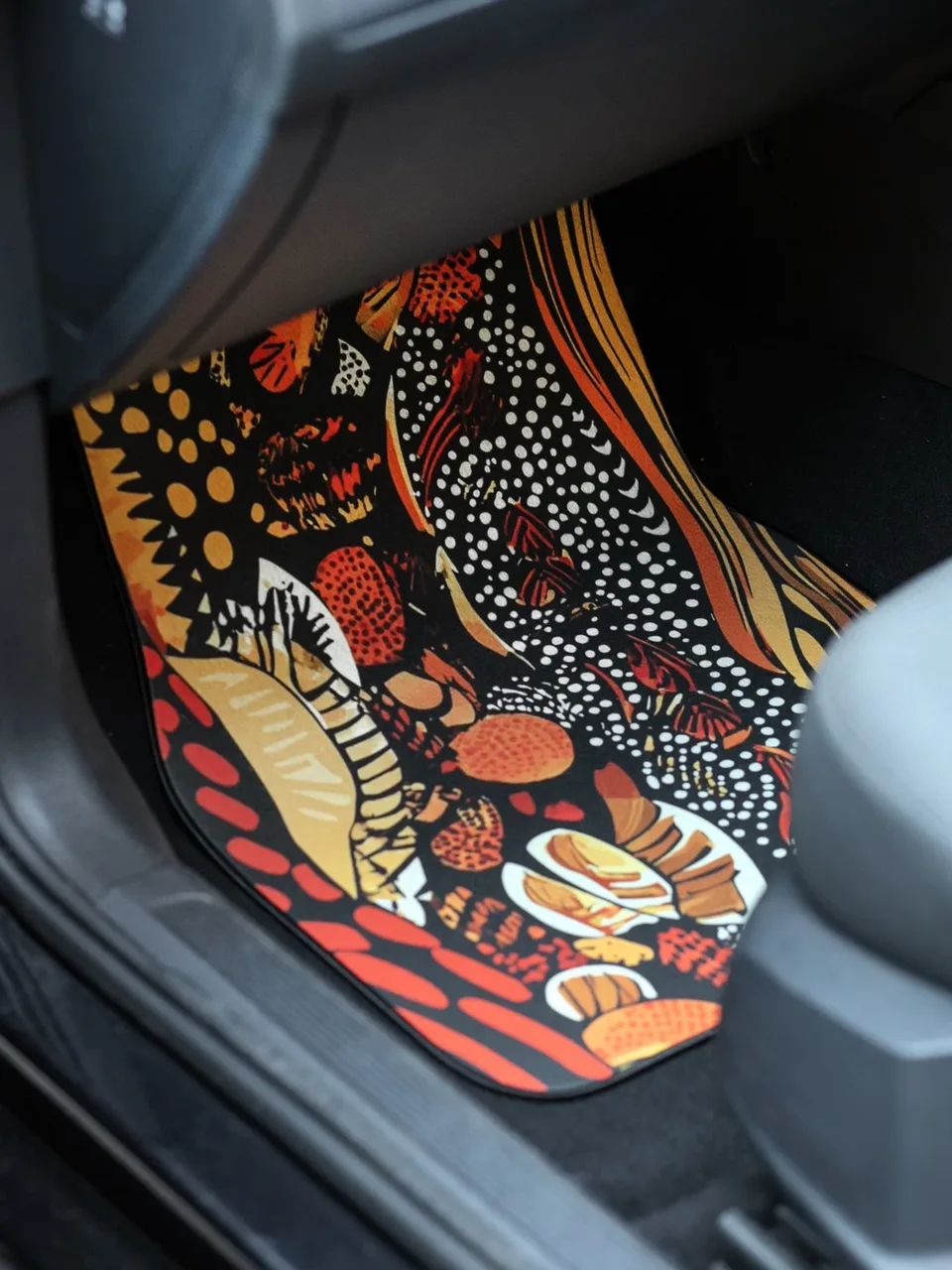
How Much Do Custom Car Floor Mats Cost? A Clear Price Guide
Custom car floor mats cost about $80 to $500 per complete set, while front-only sets commonly run from $40 to $180. A made-to-measure luxury set can cost more if it uses thick materials, contrast stitching, raised edges, embroidered logos, or a cargo liner.
The phrase custom car floor mats covers several different products. Some sellers use vehicle-specific templates cut for a particular make, model, and year, while others let you choose colors, heel pads, logos, trim, and coverage around the center hump.
| Mat type | Typical complete-set price | What you usually get |
|---|---|---|
| Universal carpet mats | $20–$70 | Basic shapes, limited coverage |
| Vehicle-specific carpet mats | $60–$180 | Better fit, factory-style anchors |
| Custom rubber or all-weather mats | $100–$250 | Raised edges, water and dirt control |
| Premium molded liners | $150–$300 | Deep channels, rigid fit, full footwell coverage |
| Luxury leather-style or stitched mats | $180–$500+ | Padded layers, trim choices, added styling |
| Cargo mat or trunk liner | $50–$180 | Floor protection for the rear cargo area |
A complete set usually means two front mats and a rear pair, though some vehicles use a one-piece rear mat. Three-row SUVs, vans, and vehicles with a large cargo area need more material, so the price climbs.
A $120 set for a compact sedan may cover only the passenger cabin. A $280 package for an SUV may include three rows, a center hump piece, and a cargo liner. Always check the piece count before comparing two prices side by side.
The most useful price comparison is often not the cheapest sticker price. A slightly higher set with factory retention clips and taller edges can protect the carpet better than a bargain set that shifts around and leaves wet salt at the door sill.
What Changes the Price of Custom Floor Mats?
The biggest price drivers are material, vehicle coverage, fit accuracy, personalization, and production method. A simple carpet set with a vehicle template costs far less than a thick molded liner with several layers and custom trim.
A seller may call a mat “custom” because you selected a color, but that doesn’t always mean the shape was cut for your exact vehicle. Ask if the product uses a vehicle-specific pattern, and confirm the model year, body style, seating row, and driver-side pedal layout.
Material thickness and construction
Carpet mats often use nylon, polypropylene, or a blended fiber with a rubber, vinyl, or thermoplastic backing. A denser face feels richer and hides wear better, while a thin loop carpet keeps the cost down but may flatten where your heel lands.
Rubber and thermoplastic mats usually cost more than basic carpet because they’re molded or cut with channels that catch water, sand, and road grit. These mats are easier to rinse, though some lower-priced versions can curl after sitting in a cold garage.
Leather-style mats often use layered synthetic material rather than genuine leather. The extra price usually comes from padding, stitching, edge binding, and design choices, not from the top surface alone.
Fit, coverage, and vehicle shape
A sedan with a flat second-row floor is easier and cheaper to cover than an SUV with raised rails, a center hump, or sliding seats. A minivan can need separate pieces around seat tracks, door channels, and third-row footwells.
Factory retention clips are small hooks, snaps, or rings that keep the driver’s mat attached to the carpet. A proper clip matters because a loose mat can slide toward the pedals, especially when you move your feet quickly in traffic.
Does a full-coverage mat always cost more than a standard vehicle-specific mat? Usually, yes, because the design reaches farther up the footwell, along the door edge, and over the center hump, but the extra coverage can save carpet cleaning costs later.
Personalization and add-ons
Common paid options include:
- Custom color combinations and piping.
- Embroidery, badges, or monograms.
- Heel pads in high-wear areas.
- Extra rear coverage.
- Matching cargo liners.
- Waterproof backing.
- Different clip or anchor systems.
- Special trim for an electric vehicle or sports car.
A logo may look sharp, but I’d spend that money on better backing and retention hardware first. A clean, well-fitted mat does more for daily comfort than decoration that gets buried under muddy boots.
Custom Floor Mat Materials: Which One Fits Your Budget?
Carpet works well for a clean, quiet cabin, rubber handles wet weather, and molded liners offer the strongest spill and dirt control. Luxury stitched mats add style, but the extra cost makes the most sense when appearance matters as much as protection.
Carpet mats
Carpet mats are a good choice for commuters, family sedans, and drivers who want a softer cabin. They’re quieter underfoot and available in several pile heights, colors, and binding styles.
The weak spot is moisture. A soaked carpet mat can hold water against the vehicle’s carpet, and salt or sand can become trapped deep in the fibers. Vacuuming helps, but a carpet set needs more care than a rubber set.
Rubber and thermoplastic mats
Thermoplastic rubber, often called TPE, is a flexible plastic-rubber material shaped to fit the footwell. TPE mats resist water, snow, mud, and common spills, making them a strong pick for winter driving or outdoor work.
Raised walls matter more than flashy tread patterns. A mat with low edges may look rugged but still let melted snow run onto the carpet when you turn into a parking spot.
Molded floor liners
Molded liners use a firm shape that follows the floor contours. The liner can cover the front footwell, door-side carpet, and center hump with fewer exposed gaps than a flat mat.
Molded liners usually cost more because the shape requires a vehicle-specific mold or detailed digital pattern. They’re worth considering if you carry children, pets, sports gear, or muddy tools.
Leather-style and luxury mats
Leather-style mats are mainly about cabin appearance, padding, and design. They can be comfortable and attractive, but they may show scuffs, grit, or water marks more clearly than black rubber.
My preference for a daily driver is usually a quality carpet set with a rubber backing, then a removable all-weather set for stormy months. That split costs more upfront, yet it keeps the cabin looking nicer without asking one mat to handle every mess.
I once cleaned a luxury stitched mat after a rainy weekend and found grit packed into the seams. The mat still looked good after careful cleaning, but the chore took much longer than rinsing a molded liner would have. Pretty mats need gentle care, not a stiff brush and a bad mood.
How to Compare Custom Car Floor Mat Quotes
Compare quotes by looking at the full package, not just the number printed beside the product photo. A fair comparison includes the number of pieces, coverage, retention hardware, personalization, shipping, taxes, and return rules.
Use this order when checking a product page or written quote:
- Confirm the exact vehicle year, make, model, body style, and row count.
- Count every included mat and liner.
- Check whether the driver’s mat has factory-style clips.
- Read the material and backing description.
- Look for edge height, heel-pad details, and center-hump coverage.
- Add shipping, tax, embroidery, and custom trim.
- Check the return policy for made-to-order products.
- Compare the finished price with a vehicle-specific alternative.
A low quote can become expensive after you add the cargo liner, custom embroidery, or rush production. A higher quote may already include all rows, clips, and a rear cargo piece.
Shoppers comparing car floor mat prices often find that material and fit explain most of the gap. A $45 universal set and a $160 vehicle-specific set aren’t really competing products if one leaves several inches of carpet exposed.
You’ll also want to compare the care routine. If a mat needs special cleaners, air drying, and careful brushing, that may not suit a vehicle used for beach trips, construction work, or young children.
Pro Tip: Measure your existing mats only as a rough check. Use the vehicle’s year, body style, and factory anchor locations as the main fit information.
Are Premium Custom Mats Worth the Extra Cost?
Premium custom mats are worth the extra cost when they provide better coverage, stronger retention, thicker construction, or easier cleaning. Premium styling alone rarely justifies doubling the price.
The value depends on how you use the vehicle. A commuter who parks in a covered garage may get years from a mid-priced carpet set, while someone driving through snow and mud may save frustration with a $200 molded liner set.
The phrase custom-fit coverage should mean more than a close outline. Look for protected areas around the accelerator heel, door-side footwell, rear center hump, seat rails, and raised carpet edges.
Are expensive car floor mats worth it for a vehicle that already has decent factory mats? Sometimes, but only if the replacement solves a real problem, such as water control, poor rear coverage, sliding, or hard cleaning. A premium set that adds only a fancier color may not earn its price.
A well-made set from the right size range can also protect resale condition. That doesn’t mean every expensive mat adds equal value, so I’d compare what premium mats provide before spending for stitching, logos, or extra layers.
When a lower-priced set makes sense
A lower-priced set can be a smart buy when:
- You need a temporary replacement.
- The vehicle is older or used for messy work.
- You want front mats only.
- Factory-style anchors are included.
- The seller offers a clear fit guarantee.
I wouldn’t put universal mats in the driver’s footwell unless they have a secure fit and proper retention. Saving $30 is a lousy trade if the mat folds near the pedals or lets water soak the carpet.
When premium construction pays off
A premium set earns its keep when you need:
- Deep channels for snow and rain.
- Full three-row or cargo-area coverage.
- A precise fit around seat tracks.
- A durable heel pad.
- Strong clips and anti-slip backing.
- A finish that matches a carefully maintained interior.
Some sellers offer a satisfaction guarantee, but custom-made products may have special return conditions. Read the policy before ordering, especially if you choose a nonstandard color or add embroidered details.
Installation, Cleaning, and Safety Checks
Install custom mats only after the footwell is clear, dry, and free of an older mat underneath. The driver’s mat must sit flat, lock onto its factory anchors, and stay completely away from the accelerator, brake, and clutch pedals.
Before driving, follow these checks:
- Remove the old mat and clear loose dirt from the carpet.
- Place the new mat into the correct footwell.
- Attach every factory clip, hook, or twist lock.
- Slide the seat through its normal range.
- Press each pedal fully several times.
- Check that no edge folds behind a pedal.
- Confirm that the mat doesn’t move when you push it with your shoe.
Never stack two driver-side mats. An extra layer can change pedal clearance and make the top mat buckle.
A wet rubber mat should be removed and dried when practical, especially if water can sit beneath the edges. Carpet underneath needs airflow, or trapped moisture can create a musty smell and stain the padding.
Important Tip: If a replacement mat won’t lock into the factory clips or leaves pedal clearance uncertain, don’t drive with it installed. Contact the seller or ask a qualified technician to check the fit.
Cleaning depends on the material:
- Vacuum carpet mats before scrubbing.
- Rinse rubber or TPE mats with clean water.
- Use mild soap rather than harsh solvents.
- Dry every mat fully before putting it back.
- Avoid pressure-washing delicate stitched surfaces.
- Brush carpet fibers in the direction of the pile.
A mat that fits well but gets cleaned poorly can age faster than a cheaper mat treated gently. Salt, sand, and grit act like tiny files under your heel, so regular removal matters more than fancy packaging.
Key Takeaways:
- Most complete custom car mat sets cost $80 to $500.
- Material, coverage, fit, clips, and personalization drive the final price.
- Molded rubber or TPE suits wet, snowy, and muddy use.
- Premium mats earn their price through protection and fit, not decoration alone.
FAQs About How Much Do Custom Car Floor Mats Cost
How much should I budget for custom car floor mats?
Budget $80 to $180 for a solid vehicle-specific carpet set, $100 to $300 for rubber or molded liners, and $180 to $500 or more for luxury stitched sets. Three-row vehicles, cargo liners, embroidery, and special trim can raise the final total.
Are custom car floor mats cheaper than dealership mats?
Often, custom car floor mats cost less than dealership replacements, but the comparison depends on material and coverage. Dealer mats may include exact factory anchors and branding, while aftermarket mats can offer taller edges, more colors, or broader coverage at a similar price.
Do custom car floor mats include the cargo area?
No, custom car floor mats don’t always include the cargo area. Many sellers price cabin mats and cargo liners separately, especially for SUVs, vans, and hatchbacks. Check the piece count and confirm whether third-row mats or a trunk liner are included.
How long do custom car floor mats last?
Custom car floor mats can last several years with regular cleaning, though life depends on traffic, weather, material, and driver heel wear. Dense carpet and molded rubber usually outlast thin universal mats when the fit is secure and the backing stays dry.
Can custom floor mats be returned?
Custom floor mats may have limited returns because a made-to-order color, logo, or vehicle pattern can’t always be resold. Check the seller’s fit guarantee, correction policy, and return window before entering vehicle details or approving personalization.
Choose the Set That Matches Your Driving
Custom car floor mats are worth buying when the fit solves a real daily problem. A well-shaped $120 carpet set can be a better choice than a $300 luxury set if your main goal is clean coverage and secure clips.
Start by writing down your vehicle details, the rows you need covered, and the mess the mats must handle. Then compare complete prices, not attractive starting prices, and give the driver’s mat a careful pedal-clearance check before your first trip.
My practical pick for most drivers is a vehicle-specific set with strong backing, factory retention clips, and enough edge coverage for your climate. Spend extra on protection and fit first, then add the stylish touches if the budget still feels comfortable.