
Most car floor mats cost between $25 and $300 for a complete set, with basic carpet mats near the low end and custom-fit luxury mats near the high end. Material, vehicle fit, coverage, brand, and shipping usually move the price more than color does.
Are you trying to replace one stained mat without wasting money on a full set? Or did a cheap universal mat slide forward and make the accelerator feel oddly close to your shoe?
I once bought a bargain set that looked fine in the package, then found the rear mat curled like a potato chip after one hot afternoon. The fit was poor, the edges rubbed the seat rails, and I had to replace the set, which is a common mistake, not a dumb one.
I wrote this guide for anyone comparing car floor mat prices at a parts store, dealership, or online shop. You’ll get a practical way to judge the price before you click buy.
Choose well, and you’ll get a cleaner carpet, better water control, and mats that stay put under your feet. Choose poorly, and you may deal with trapped moisture, bad odor, slipping mats, or a second purchase a few weeks later.
This article takes about 9 minutes to read, and it will help you:
- Match a realistic price to the material and fit you need.
- Compare carpet, rubber, vinyl, and premium all-weather mats.
- Spot the features that make a cheap mat a bad deal.
- Measure coverage, retention, and rear-seat fit before ordering.
- Decide when custom mats are worth the extra money.
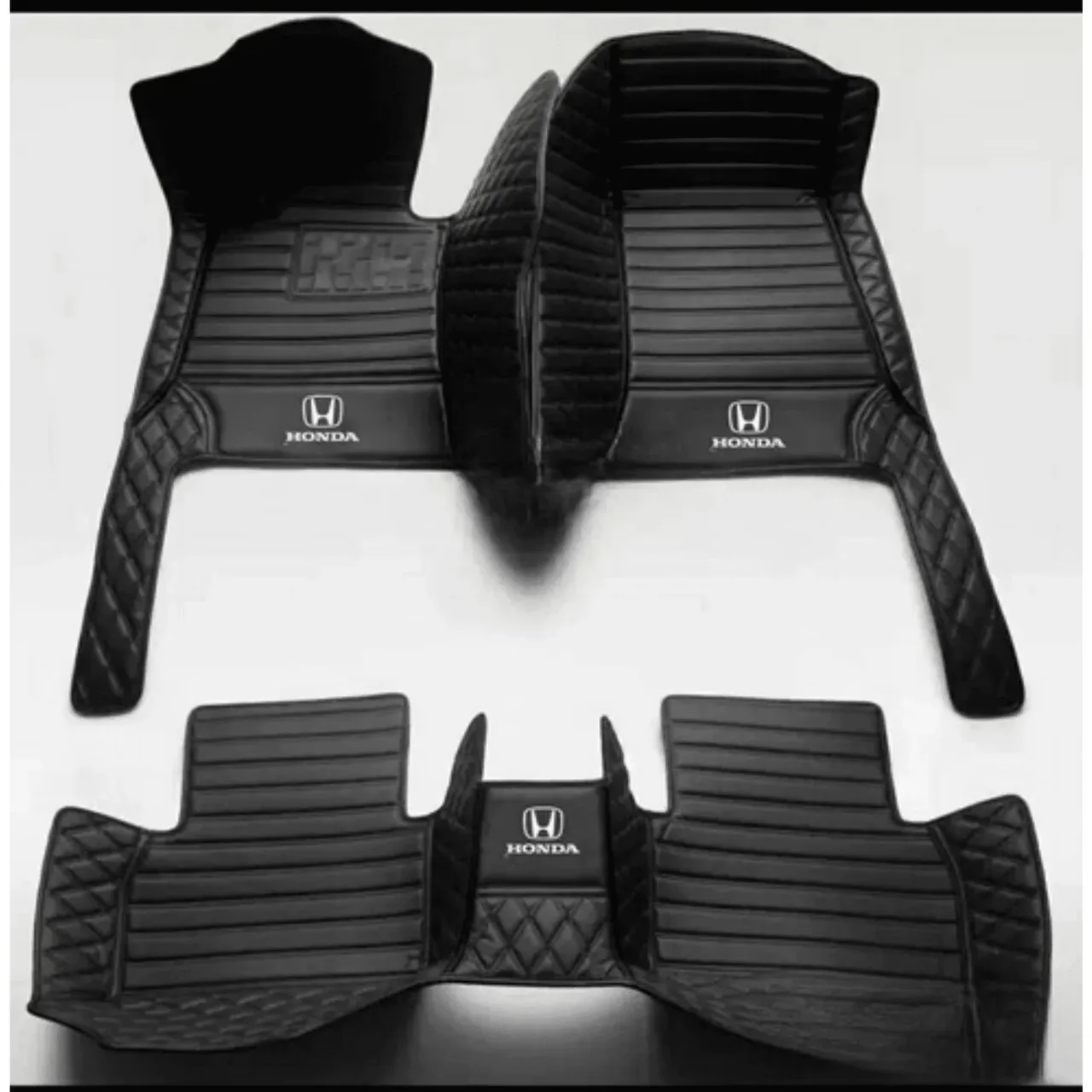
How Much Are Car Floor Mats?
A complete set of car floor mats usually costs $25 to $300, while a single replacement mat often costs $10 to $90. Universal carpet mats sit near the low end, molded all-weather mats land in the middle, and custom-cut premium mats can reach the top of the range.
The table below gives a useful starting point, not a promise of one fixed price. A compact sedan with simple carpet mats can cost far less than a three-row SUV with deep channels and a large cargo area.
| Mat Type | Typical Set Price | Best Use | Main Trade-Off |
|---|---|---|---|
| Universal carpet | $25–$60 | Basic dry-weather coverage | Loose fit and less edge coverage |
| Universal rubber | $30–$80 | Low-cost mud and water control | May need trimming |
| Vehicle-specific carpet | $60–$150 | Cleaner factory-style fit | Holds more dirt and moisture |
| Molded all-weather | $100–$220 | Rain, snow, mud, and daily use | Heavier and less plush |
| Custom-fit luxury carpet | $150–$300+ | Premium cabin appearance | Higher price and cleaning demands |
| Single replacement mat | $10–$90 | Replacing one lost or damaged mat | Color matching can be difficult |
Price alone doesn’t tell you whether a mat is good. A $35 universal set may work in an older commuter car, while a $140 molded set may be the smarter buy for a vehicle that carries wet boots, muddy sports gear, or a dog.
Start with the driver’s mat because that mat gets the hardest use. The retention system, meaning the clips, hooks, or built-in anchors that hold the mat in place, matters more there than a fancy logo or bright stitching.
A simple buying process keeps the decision from getting muddy:
- Confirm the exact vehicle year, make, model, body style, and row count.
- Decide whether carpet, rubber, vinyl, or a blended material suits your daily mess.
- Check whether the product is universal, semi-custom, vehicle-specific, or fully custom.
- Confirm coverage around the pedals, seat rails, door sill, and center hump.
- Check the retention points before looking at colors or decorative details.
- Add shipping, tax, trimming needs, and any cargo mat to the true price.
A $55 set that needs trimming, lacks clips, and leaves a six-inch strip of carpet exposed may cost more in frustration than a $110 vehicle-specific set. That’s the part many listings tuck behind glossy photos.
If you’re comparing shopping categories, a guide on choosing car floor mats can help you weigh fit, material, coverage, and safety before you compare brand names. The right order is fit first, material second, appearance third.
- Expect $25 to $80 for basic universal mats.
- Expect $100 to $220 for molded all-weather sets.
- Custom-fit luxury mats can cost $150 to $300 or more.
- A secure driver’s mat is worth more than decorative extras.
What Changes the Price of Car Floor Mats?
Material, fit, coverage, construction, and vehicle size create most of the price difference between car floor mats. A thick molded mat uses more material and more vehicle-specific tooling than a thin universal carpet mat, so the price climbs for a reason.
Carpet mats are usually the least expensive option for a factory-style cabin. They can feel soft underfoot, match the interior well, and work nicely in dry climates, though salt, sand, and spilled drinks can settle deep into the fibers.
Rubber mats cost more when they use thick, flexible rubber with raised edges and molded channels. A thin rubber sheet may be cheap, but thin material can curl, crack in cold weather, or slide around more easily.
Thermoplastic elastomer, often called TPE, is a flexible plastic-rubber material used in many molded all-weather mats. TPE mats tend to resist water, clean up quickly, and hold their shape without the strong rubber smell found in some low-cost products.
Vinyl mats can be inexpensive and easy to wipe clean. Vinyl may feel stiffer and can become less flexible in cold temperatures, so check the product’s construction before buying a set for harsh winters.
Fit also changes the price. A universal mat is cut to fit many vehicles, while a vehicle-specific mat follows the floor shape of one model or a small group of related models.
Custom fit usually means:
- Raised edges around the carpet.
- Cutouts for factory anchor points.
- Coverage around seat tracks and the center hump.
- Separate shapes for the driver, passenger, and rear seating positions.
- Less exposed carpet beside the door sill.
A larger SUV, pickup, or three-row crossover often costs more because the mats cover more floor area. Rear mats can also cost more when they use one wide piece that crosses the center hump instead of two small rectangles.
Do you really need the most expensive material? Usually not, unless your car faces heavy rain, snow, beach sand, farm mud, or frequent spills. A mid-priced molded set often gives the best balance for a daily driver because you pay for useful coverage instead of extra decoration.
Design details add cost without always adding protection. Bound carpet edges, contrast stitching, embroidered logos, thick heel pads, and custom color combinations can make a cabin look sharp, but they don’t replace deep channels or a secure anchor.
I once spent an afternoon cleaning fine gravel from a set with shallow grooves because the mats looked great but trapped debris against the carpet. That little lesson changed my buying habit: I now judge the channels and underside before admiring the trim.
Universal, Custom, And Luxury Fit
Universal mats make sense when you need a quick, low-cost replacement and can trim the edges safely. They’re also handy for an older vehicle where a perfect molded set is hard to find.
Semi-custom mats offer a closer shape without the price of a fully tailored set. They can be a sweet spot for a commuter car, especially when the product includes factory-style retention holes.
Premium custom mats cost more because they’re built around detailed floor measurements and cabin contours. A buyer comparing high-end interiors may prefer a guide to luxury car floor mats before spending extra on leather-look surfaces, plush carpet, or custom stitching.
A budget buyer doesn’t need to chase premium trim. The best budget car mats can still protect well when the set has proper coverage, durable material, and a driver-side anchor.
Coverage And Retention Matter More Than Looks
A good front mat should reach close to the firewall without touching the pedals. The rear mat should cover the footwell, sit flat around the center hump, and avoid blocking the front seat’s travel.
Heel-pad reinforcement is a thicker patch under the driver’s heel that slows wear in the place where shoes rub most. This feature is worth paying for if you drive daily, especially with work boots or shoes with rough soles.
A mat should never interfere with the accelerator, brake, clutch, or seat adjustment. Remove the old mat before installing a new one, check that every anchor is engaged, and move each seat through its normal range.
Important Tip: Never stack a new driver’s mat on top of an old one. The extra thickness can change pedal clearance and make the mat shift.
Which Car Floor Mats Are Worth the Money?
The best value depends on your mess, climate, and ownership plans, but a well-fitted mid-priced all-weather set is the strongest choice for many drivers. Carpet mats still make sense for clean, dry use, while molded mats earn their higher price in wet or dirty conditions.
A vehicle used for short city trips in a dry area may do perfectly well with vehicle-specific carpet mats costing $60 to $120. The fibers give the interior a softer feel, and routine vacuuming handles most dust.
A family SUV that carries muddy shoes, leaking water bottles, and winter slush needs a different answer. Deep channels and raised borders can keep dirty water from spreading across the carpet, which may protect against stains and musty odors.
| Your Driving Situation | Sensible Material | Price Target | What To Prioritize |
|---|---|---|---|
| Dry climate, clean commute | Vehicle-specific carpet | $60–$120 | Fit, heel pad, easy vacuuming |
| Rain and occasional mud | Molded rubber or TPE | $90–$180 | Raised edges and channels |
| Snow, salt, and wet boots | Heavy-duty molded TPE | $120–$220 | Full coverage and easy removal |
| Worksite or outdoor use | Thick rubber or TPE | $100–$200 | Tough edges and secure retention |
| Showroom-style interior | Custom carpet or premium trim | $150–$300+ | Finish, color, and exact fit |
| One damaged mat | Matching replacement | $10–$90 | Correct color and anchor layout |
Climate changes the value calculation. In a snowy state, a $160 molded set may protect the underlying carpet far better than a $45 carpet set that absorbs salty slush, while a premium carpet set may be perfectly sensible in a dry region.
Cleaning also affects the true cost. Rubber and TPE mats usually need shaking, rinsing, and mild soap, while carpet mats need vacuuming and careful drying so moisture doesn’t stay against the floor.
Don’t pressure-wash every mat just because a listing calls it washable. Strong water pressure can push grit into the backing, damage carpet fibers, or leave moisture under the mat if drying is rushed.
A proper cleaning routine is simple:
- Remove the mat from the vehicle before cleaning.
- Shake out loose grit away from the cabin.
- Vacuum carpet mats or rinse rubber and TPE mats with moderate water pressure.
- Use mild soap and a soft brush for stuck-on grime.
- Rinse residue away and dry both sides completely.
- Check the anchors and underside before reinstalling.
A mat that stays damp against the carpet can create a stale smell and encourage mildew. Drying is boring, but so is spending a Saturday chasing a wet-basement odor through the cabin.
When Cheap Mats Become Expensive
The lowest sticker price can hide several costs. Trimming takes time, missing anchors may require extra hardware, and poor coverage can leave the original carpet exposed to water and salt.
Watch for these warning signs:
- The listing gives no vehicle fit details.
- The driver’s mat has no retention method.
- The backing feels slick or the edges curl upward.
- The product photo hides the underside.
- The set includes vague phrases such as “fits most cars.”
- The return policy excludes opened or trimmed mats.
- Customer photos show gaps near the pedals or seat rails.
A cheap mat isn’t automatically bad. A universal set can be a reasonable temporary choice when the material lies flat, the edges stay clear of the pedals, and the driver’s side has a reliable anchor.
Pro Tip: Measure the old mat’s length and width, then compare those numbers with the product diagram. Measurements won’t replace vehicle-specific fit, but they can expose a set that’s obviously too short.
Safety Checks Before You Drive
Floor mats are safety equipment because they sit next to the pedals. A loose or oversized mat can slide forward, fold under the accelerator, or block the brake pedal.
Before driving, check these points:
- The driver’s mat is the only mat in that footwell.
- Every factory hook, clip, or anchor is connected.
- No edge touches the accelerator or brake pedal.
- The mat lies flat without a curled corner.
- The seat can move without catching the rear edge.
- The mat doesn’t cover wiring, vents, or access panels.
If the mat still shifts after proper installation, stop using it until the fit is corrected. A dealership parts department or qualified automotive technician can help identify the correct retention hardware for a vehicle with unusual floor anchors.
How to Budget for Car Floor Mats
A realistic budget starts at $50 for basic protection and reaches $200 or more for full-coverage molded or premium custom mats. Set the budget by use rather than by the cheapest listing on the page.
Here’s a practical spending plan:
- $25–$60: temporary or basic universal coverage.
- $60–$120: better vehicle-specific carpet or entry-level all-weather mats.
- $120–$220: molded sets with strong coverage for rain, snow, and mud.
- $220–$300 or more: premium custom fit, luxury trim, or large multi-row coverage.
A full set may not be the only purchase. Cargo liners, third-row mats, replacement anchors, shipping, and local sales tax can raise the final total.
Do you need all rows right away? If the third row stays folded most of the time, front and second-row mats may solve the daily problem first, though a matching full set often gives a cleaner look.
For one damaged mat, matching the original set can be tricky. Carpet color fades, rubber textures change, and manufacturers may revise a product, so replacing the full set sometimes creates a better visual match than buying one new piece.
Dealership mats often cost more than aftermarket mats because of branding, packaging, and factory-specific distribution. That extra price can be worthwhile when exact fit and matching appearance matter, but a reputable aftermarket vehicle-specific set may offer equal practical protection for less.
The smartest comparison is the cost per useful year, not the checkout price alone. A $140 set that stays flat and protects the carpet for several seasons may be a better bargain than a $40 set that curls, stains, and gets tossed after one winter.
- Spend about $60 to $120 for solid everyday coverage.
- Move toward $100 to $220 for wet, snowy, or muddy conditions.
- Pay for fit and retention before stitching, logos, or fancy color.
- Add cargo and third-row coverage to the real budget when needed.
FAQs About How Much Are Car Floor Mats
How much do car floor mats cost at a dealership?
Dealership car floor mats commonly cost more than aftermarket sets, often from about $80 to $300 or more depending on the vehicle and material. Factory branding, exact fit, packaging, and distribution raise the price. A dealership can be a good choice for guaranteed anchor compatibility, especially with a newer or unusual vehicle.
Are expensive car floor mats worth it?
Expensive car floor mats are worth the money when they provide full coverage, secure retention, strong material, and easy cleaning. Premium stitching alone doesn’t justify a high price. A $150 molded TPE set may offer more daily value than a $250 carpet set with shallow edges.
Are rubber or carpet car floor mats better?
Rubber or TPE car floor mats are better for water, snow, mud, and frequent cleaning, while carpet mats are better for a soft factory-style interior in dry conditions. Neither material wins for every driver. Your climate, footwear, pets, and cleaning habits should guide the choice.
Can I buy only one car floor mat?
Yes, you can buy only one car floor mat when a matching replacement is available. Match the vehicle position, color, texture, anchor layout, and generation of the original set. A single replacement may look slightly different if the other mats have faded or the manufacturer changed the design.
How long do car floor mats last?
Car floor mats can last several years when the material fits properly and receives regular cleaning. Driver-side mats wear fastest because shoes grind grit into the heel area. Heavy work use, sunlight, winter salt, and poor retention shorten service life.
Do custom-fit car floor mats cost more?
Yes, custom-fit car floor mats usually cost more because the shapes, anchor points, edges, and floor contours are made for a specific vehicle. The higher price can pay off through better coverage and less movement. Confirm the exact year, body style, seating rows, and trim before ordering.
Spend for Fit Before Fancy Details
Car floor mats don’t need to be the most expensive part of your vehicle to do a good job. A properly anchored, well-covered set in the right material protects the carpet, cuts cleaning time, and keeps your feet clear of trouble.
My practical choice for most daily drivers is a vehicle-specific molded set in the $100 to $180 range, unless a dry climate and clean use make carpet the better match. Start by checking the driver’s fit and retention points, then choose the material that matches the mess your car actually faces.