
Yes, expensive car floor mats can be worth it when they fit your vehicle precisely, contain mess well, and match how you use your car. The extra cost usually buys better coverage, stronger materials, cleaner edges, improved retention, and a nicer cabin, not magic carpet technology.
Are your factory mats curling at the corners, sliding under the pedals, or letting salty slush soak into the carpet? Do you need something that can handle muddy boots every weekend, or do you mostly want a quieter, richer-looking interior?
I once bought a universal rubber mat in a hurry before a long winter trip. It looked fine in the store, then folded near the accelerator and trapped a gritty ridge of sand underneath. The cheap fix cost me more time than the mat saved, and no, that’s not a dumb mistake.
This guide is for anyone weighing basic, custom-fit, all-weather, carpet, or luxury car floor mats. The goal is simple: help you spend more only where the extra money solves a real problem.
Choose well, and you’ll get cleaner carpet, less scrubbing, better pedal clearance, and a cabin that feels cared for. Choose poorly, and you can end up with sliding mats, trapped moisture, annoying odors, or a premium price for decoration alone.
This takes about 9 minutes to read, and you’ll come away with:
- A clear way to judge whether premium mats fit your driving habits.
- The real differences between rubber, thermoplastic, carpet, and leather-style mats.
- A practical cost comparison based on coverage, fit, and expected use.
- Warning signs that a pricey mat is all show and little substance.
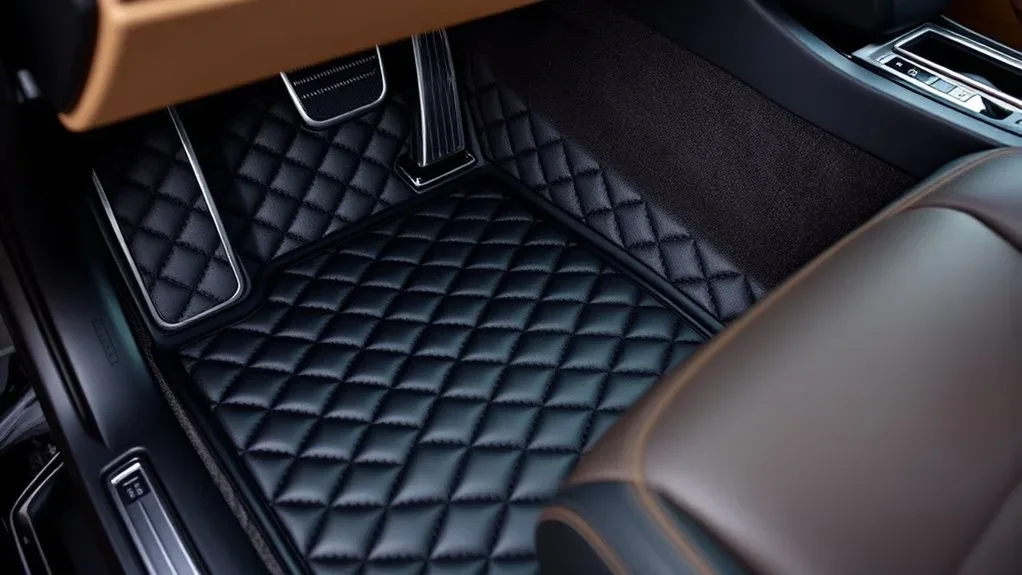
Are Expensive Car Floor Mats Worth It?
Expensive car floor mats are worth the money when precise fit, deep containment, durable material, and easy cleaning matter more than the lowest purchase price. A good set should protect the footwell, stay locked in place, avoid pedal interference, and last through the conditions your car faces.
A basic mat often covers the center of the footwell and little else. A premium custom-fit set follows the floor shape, rises along the sides, and uses factory retention points or matching fasteners, so dirt and liquid have fewer paths toward the carpet.
| Mat type | Typical price range | Best use | Main strength | Main drawback |
|---|---|---|---|---|
| Universal rubber | $20–$60 | Occasional protection | Low upfront cost | Trimming and sliding can be problems |
| Factory carpet replacement | $50–$150 | Normal daily driving | Familiar fit and appearance | Limited liquid containment |
| Custom-fit carpet | $100–$250 | Clean, quiet interiors | Precise coverage and comfort | Holds moisture until cleaned |
| Custom all-weather | $120–$300 | Snow, mud, sand, and spills | Strong containment and easy washing | Can look more utilitarian |
| Luxury leather-style or premium textile | $200–$600 or more | Appearance-focused cabins | Rich finish and soft feel | High cost, with care needs |
Price ranges vary by vehicle, material, brand, and whether a set covers two rows. A $180 all-weather mat with tall side walls may give you more useful protection than a $300 mat with a prettier surface but shallow edges.
Fit matters more than a fancy badge. If you’re learning how to choose car floor mats, start with the exact year, make, model, trim, and seating row, then check retention hardware and coverage before judging color or texture.
A precise fit should leave no large gap around the footrest, seat rails, center hump, or door-side edge. The driver’s mat must sit flat, lock into the floor anchors, and stay clear of the accelerator, brake, and clutch pedals through their full movement.
Would a premium mat stop every spill from reaching the carpet? No, a deep tray can hold a useful amount of melted snow or a tipped drink, but liquid can still run over the edge during a hard turn or if the mat is already full.
The strongest value comes from matching the mat to the mess. A commuter in a dry climate may get plenty from a well-fitted carpet set, while a household with muddy dogs and winter road salt will usually benefit from high-sided all-weather trays.
- Pay for fit and containment first, appearance second.
- A premium mat should solve cleaning, slipping, or wear problems you actually have.
- Driver-side retention and pedal clearance matter more than thickness or logo.
What You Actually Get for the Extra Money
The extra cost usually buys better vehicle-specific design, stronger retention, deeper coverage, more durable construction, and a finish that feels better underfoot. Those gains matter most when the car sees heavy use, harsh weather, frequent passengers, or a long ownership period.
Fit and coverage
Cheap mats are often cut from a small set of generic shapes. Custom-fit mats use the floor plan of a specific vehicle, so the front corners, rear hump, seat tracks, and dead-pedal area receive more useful coverage.
That extra coverage keeps grit from grinding into carpet fibers beside the mat. A driver who carries ski gear, gardening supplies, or a child with muddy shoes will notice the difference after one messy weekend.
The rear floor deserves attention, too. Some low-cost sets leave the raised center tunnel exposed, while a better rear liner reaches across the hump and connects the left and right footwell areas.
Retention and safety
Mat retention means the system that keeps a floor mat anchored to the vehicle. Factory hooks, locking disks, clips, or shaped tabs matter because a moving driver’s mat can interfere with pedal movement.
Before installing any new set, remove the old driver’s mat and test the new one by hand. Slide the seat forward and backward, press every pedal repeatedly, and check that the mat cannot ride upward behind the pedals.
Important Tip: Never stack a new mat over an old one unless the vehicle maker specifically allows that setup. Stacking changes the mat height and can reduce clearance around the pedals.
I once inspected a car with a thick driver’s mat pushed under the brake pedal. The owner thought the mat had “settled,” but the real issue was a mismatched anchor position, and a two-minute fit check would have caught it.
Materials and construction
Thermoplastic elastomer, often called TPE, is a flexible plastic blend used in many premium all-weather liners. TPE mats usually stay flexible in cold weather, resist water, and wash clean with a hose.
Rubber mats can offer strong grip and a familiar feel, though rubber quality varies. Some low-cost rubber has a sharp odor when new, becomes stiff in cold temperatures, or develops a curled edge after sitting folded in a box.
Carpet mats use woven fibers attached to a backing. Denser carpet feels softer and can reduce road noise, while a strong backing helps resist moisture passing into the vehicle carpet.
Leather-style and quilted mats focus more on cabin appearance than maximum mud control. A luxury interior can look fantastic with stitched edging and layered textures, but deep snow still calls for a tray-style liner underneath or a different mat altogether.
Cleaning and daily comfort
A premium mat may save time every week, not just protect the floor during a storm. Smooth channels let you rinse away grit, and a raised lip gives you room to carry the mat outside without dumping dirty water back onto the carpet.
Comfort counts on long drives. Carpet and textile surfaces feel warmer and less slippery under dress shoes, while molded trays make a better partner for wet boots and sandy work shoes.
In my view, a mat that takes 60 seconds to remove and rinse is more valuable than one that looks impressive but needs a brush, special cleaner, and careful drying every time. Convenience gets used; fancy stitching mostly gets admired.
Which Drivers Benefit Most from Premium Mats?
Premium car floor mats make the most sense for drivers who face snow, mud, sand, pets, children, heavy foot traffic, or a long ownership period. Drivers with clean shoes, mild weather, and short trips may not gain enough to justify a high price.
A useful way to judge the purchase is to count the mess, not the miles. A vehicle driven 5,000 miles a year through wet winters may need more protection than a vehicle driven 15,000 dry-weather highway miles.
Premium mats are a strong buy when:
- Snow, road salt, rain, mud, or sand enters the cabin often.
- You transport pets, sports gear, tools, plants, or messy cargo.
- The vehicle has light carpet that stains easily.
- You plan to keep the vehicle for many years.
- You care about resale presentation and want less carpet wear.
- The factory mats already slide, curl, or leave large exposed areas.
Basic mats may be enough when:
- The car stays in a dry climate.
- Most passengers wear clean shoes.
- The factory set fits flat and has working anchors.
- You rarely carry wet or dirty items.
- You plan to sell the vehicle soon and don’t need a custom upgrade.
Do luxury mats protect better than work-focused liners? Usually not by default. A stitched textile mat can make a cabin feel special, while a molded tray does a better job holding melted snow, spilled coffee, and the sandy sludge that collects near a beach parking lot.
People shopping for best luxury car floor mats should judge stitching, edge binding, backing, and fit separately from the interior style. A beautiful mat still needs stable anchors and enough coverage for the driver’s footwell.
The resale argument deserves a cool head. Clean, odor-free carpet can help a vehicle feel cared for, but a pricey mat set rarely returns its full purchase price by itself. Protection is the payoff during ownership; resale value is a possible side benefit.
A simple value test
Use this question: will the mat prevent enough cleaning, replacement, or frustration to earn back the difference in price?
A $40 universal set and a $200 custom set have a $160 gap. If the custom set lasts six years, the gap works out to a little over $2 per month before considering saved cleaning time. That can be a fair trade for a vehicle exposed to wet weather.
If the car stays spotless and the old mats already fit well, the same $160 may buy very little practical improvement. In that situation, replace worn factory mats with a mid-priced fitted set and spend the rest on tires, maintenance, or a good vacuum.
How to Buy Without Paying for Fluff
The smartest purchase starts with fit, retention, coverage, and cleaning needs, then checks material and appearance. A high price should come with measurable improvements, not just thicker marketing language.
Follow this order:
- Confirm the vehicle year, model, trim, drive layout, and number of rows.
- Check whether the set uses factory anchor points or supplied retention hardware.
- Measure or inspect coverage around the footrest, seat rails, door sill, and rear hump.
- Match the material to snow, mud, pets, sand, children, or normal commuting.
- Check cleaning instructions and drying time.
- Review return terms in case the fit is wrong.
- Inspect the driver’s mat before using the vehicle.
“Custom fit” doesn’t always mean “perfect fit.” A set can be shaped for a vehicle family yet still differ by trim, subwoofer location, seat configuration, or hybrid battery layout.
A good product description should identify the actual material, mat thickness or construction, retention method, row coverage, and cleaning method. Vague claims about “maximum protection” don’t tell you much.
Pro Tip: Unbox mats indoors and let them lie flat before judging the shape. Some arrive rolled or folded, and warmth can help temporary bends relax, but a hard curl near the pedals is a reason to return the set.
Carpet, rubber, TPE, or luxury textile?
Pick carpet when quietness, softness, and a factory-style look lead the decision. Pick rubber or TPE when water, salt, and fast cleanup matter more than a plush feel.
Pick a layered or quilted luxury style only when the maker provides solid backing and proper driver-side anchors. A soft mat that shifts under the foot feels cheap no matter what it cost.
A vehicle with removable carpet liners can use a seasonal plan. Carpet mats can handle dry months, while all-weather liners take over during snow or heavy rain, though storing either set flat and dry keeps the swap from becoming a musty chore.
The same logic helps when comparing the best custom fit car floor mats. Look for true floor mapping, full-row coverage, secure anchors, raised edges, and a return policy, not just a thick material description.
Features worth paying for
Spend more for:
- Vehicle-specific shape with full footwell coverage.
- Reliable factory-style retention.
- Raised borders or channels for liquid control.
- Flexible construction that won’t crack easily in cold weather.
- A backing that grips without damaging the carpet.
- Easy removal and cleaning.
- A warranty or return option that covers fit problems.
Skip the extra charge for:
- Decorative badges with no construction benefit.
- Extreme thickness that reduces pedal clearance.
- Shiny surfaces that show every scuff.
- A universal shape advertised as custom.
- Materials that require special care for ordinary dirt.
One expensive feature can be worth less than a basic one used correctly. A raised edge that holds slush earns its keep; a metallic logo does not.
Common Problems, Fixes, and Safety Checks
Most floor-mat problems come from poor fit, trapped moisture, weak anchoring, or incorrect cleaning. Fixing the cause early keeps a small annoyance from becoming stained carpet or a pedal-clearance concern.
| Problem | Likely cause | Practical fix |
|---|---|---|
| Driver’s mat moves forward | Missing or mismatched anchors | Use the correct retention points or replace the mat |
| Carpet smells musty | Water trapped underneath | Remove, dry both surfaces, and clean the carpet |
| Edge curls upward | Folded storage or poor shape | Flatten if temporary, then return if the curl remains |
| Mud spills over the side | Low wall height or full tray | Empty sooner or choose taller-sided coverage |
| Carpet mat looks crushed | Heavy wear or poor backing | Brush fibers and replace when backing breaks down |
| Mat rubs the pedal | Wrong shape or stacked mats | Stop driving until clearance is corrected |
| White salt marks appear | Winter slush left to dry | Rinse promptly and dry the mat fully |
Safety comes before appearance. Stop using a driver’s mat if the mat touches a pedal, blocks the pedal path, folds behind the pedals, or cannot lock into the vehicle’s retention points.
Never drill, glue, or cut around the driver’s footwell unless the manufacturer provides a safe installation method. An improvised anchor can loosen, catch footwear, or leave sharp edges.
If moisture reaches the carpet, remove the mat and dry the carpet as soon as practical. A damp mat left in place can hold odor against the floor, especially in a closed car during cool weather.
Do expensive mats need special maintenance? Most don’t, but each material has limits. Rinse TPE and rubber, use mild soap when needed, vacuum carpet, and avoid harsh solvents that can weaken backing or fade the surface.
FAQs About Are Expensive Car Floor Mats Worth It
Are expensive car floor mats worth it for a daily driver?
Yes, expensive car floor mats can be worth it for a daily driver exposed to rain, snow, mud, pets, or frequent passengers. Vehicle-specific fit reduces exposed carpet and movement, while raised edges make cleanup faster. A dry-weather commuter with clean footwear may get similar practical results from a mid-priced fitted set.
Do expensive car floor mats last longer?
Often, expensive car floor mats last longer when the higher price reflects stronger backing, better edge construction, durable TPE, or dense carpet. Price alone doesn’t prove longevity. Sun exposure, cleaning habits, footwear, and how often dirt gets ground into the surface can shorten the life of any mat.
Are rubber or carpet car mats better?
Rubber or TPE car mats are better for water, snow, mud, and quick washing, while carpet mats are better for softness, quietness, and a factory-style cabin. Many drivers use all-weather liners during wet seasons and carpet mats during dry months, provided each set fits and anchors correctly.
Do custom-fit floor mats protect the carpet better?
Yes, custom-fit floor mats usually protect carpet better because the shape reaches farther around footwells, seat rails, center humps, and side edges. Protection still depends on wall height and retention. A precise carpet mat may not contain melted snow as well as a high-sided all-weather tray.
Can floor mats increase a car’s resale value?
Floor mats can support a cleaner resale presentation, but expensive floor mats rarely return their full purchase price as a separate value increase. Their main financial benefit comes from reducing stains, wear, and cleaning during ownership. Keep the original mats stored clean if the vehicle may be sold later.
The Sensible Way to Spend on Floor Mats
Premium car floor mats are worth buying when the extra money brings precise fit, dependable anchoring, useful coverage, and easier cleanup. They’re less appealing when the price mainly pays for decoration, a famous name, or thickness that creates pedal-clearance problems.
My practical choice for most drivers is a vehicle-specific all-weather set for wet seasons, with a well-fitted carpet set if comfort and appearance matter during dry months. Start by checking the driver’s fit and retention points, then choose the material that matches the mess your car actually faces. That small bit of homework keeps your carpet cleaner, your feet happier, and your wallet from taking a needless hit.