
Yes, you can use a truck tent with a tonneau cover if the tent’s mounting system and the cover can fit together. Most standard truck-bed tents need clear access to the bed rails, so you’ll often have to open, fold back, or remove the cover.
Are you trying to avoid buying a new cover, or worried that the tent straps will snag its rails? The answer depends on your tent’s attachment points and the kind of cover on your truck.
I once assumed a soft cover could stay in place under a bed tent because it looked low-profile. The cover’s rails and straps got in the way, and I had to undo the setup and start over; it’s a common mistake, not a dumb one.
I wrote this for anyone who wants a dry place to sleep without guessing at fit or risking damage to a cover. You’ll get a practical way to check compatibility before you spend money or unpack the tent.
If you get the setup right, you can keep your gear protected, pitch camp faster, and avoid rubbing or bending cover hardware. If you skip the fit check, you could end up with a tent that won’t attach, a cover that won’t close, or a damp bed after rain.
This takes about 10 minutes to read. By the end, you’ll know how to:
- Tell whether your cover needs to be opened, folded, or removed.
- Check bed-rail clearance and tent attachment points.
- Choose a safe option if you want to keep the cover installed.
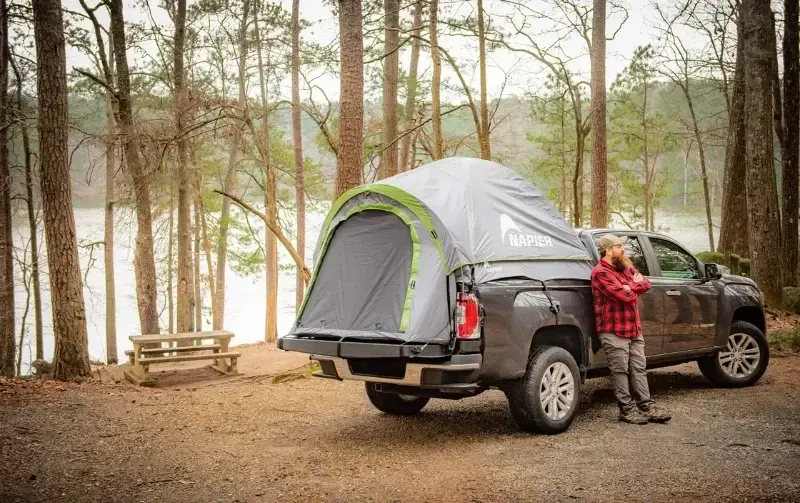
Can You Use A Truck Tent with A Tonneau Cover?
Yes, a truck tent can work with a tonneau cover when the cover leaves the tent’s mounting points clear or the tent is specifically made to fit over that cover. A standard bed tent often needs access to the bed rails, so a cover that occupies those rails may need to move.
A truck-bed tent is a fabric shelter that mounts inside or around a pickup bed, usually with poles and straps attached to the truck. It’s different from a tent designed to sit on top of a cover, and the distinction matters: a regular bed tent isn’t automatically safe or stable on a closed tonneau.
Start by checking the tent’s instructions for its mounting method. Then check the cover’s instructions to learn whether the rails, clamps, panels, or hinges can be moved while the tent is in place.
| Tonneau cover type | Typical fit with a bed tent | What to check |
|---|---|---|
| Soft roll-up | Often workable when rolled open or removed | Side rails, crossbars, and strap clearance |
| Hard roll-up | May work when retracted, depending on rail hardware | Can the cover retract fully with the tent fitted? |
| Folding hard cover | Often needs to be folded or removed | Do folded panels block poles or straps? |
| Hinged or one-piece hard cover | Usually needs to be raised or removed | Can the cover stay open without pressing on the tent? |
| Retractable cover | May work if it retracts fully and leaves mounting points clear | Does the canister take up useful bed space? |
These are general patterns, not a promise that every model will fit. Covers with T-slot rails, which have built-in channels for accessories, may give you more attachment choices, but the tent still needs compatible hardware and enough clearance.
If you haven’t bought a cover yet, compare its rail layout and mounting style with the tent you plan to use. My guide to choosing a tonneau cover can help you weigh cover types and truck fit before you commit.
Pro Tip: Check compatibility for your exact truck year, bed length, tent model, and cover model. Two setups that look nearly identical can have different rail spacing or clamp locations.
A regular cover isn’t a sleeping platform. If your plan is to pitch a tent on top of the closed tonneau, use only a tent and cover system whose instructions clearly permit that setup, and follow the stated load limits. A cover that holds rain or light cargo may not be designed to hold people.
How to Check Fit Before You Set Up
The reliable way to check fit is to match the tent’s attachment points to the cover hardware before your trip. Measure the truck bed, read both product manuals, and test the setup at home so you’re not sorting out straps in the dark.
- Identify the cover style. Note whether the cover rolls, folds, retracts, or lifts on hinges. Look for side rails, clamps, crossbars, and any hardware that sticks above the bed rail.
- Read the tent’s fit notes. Check whether the tent uses bed-rail clamps, straps under the truck, or another attachment system. Confirm the tent is meant for your bed size.
- Measure the clear space. Measure the inside bed length and the open area between rails. Compare those measurements with the tent’s stated fit range, not just the truck’s advertised bed length.
- Check what must move. Work out whether you can roll or fold the cover back with the tent installed. If the cover must come off, confirm you have a safe place to store it at camp.
- Do a dry run. Set up the tent at home, check that poles and straps sit without rubbing, then try opening and closing the cover as intended. Stop if a strap pulls hard against a hinge or sharp edge.
A bed rail is the upper edge running along each side of the truck bed, and many tents use it as part of their support. If a tonneau rail sits on top of that edge, it may block a clamp or change where a tent strap needs to go.
You may be wondering whether a soft cover is an easy exception. Not always: the fabric may roll away, but the side rails, clamps, or tension bars can still interfere with the tent.
I once focused on the tent’s listed bed length and overlooked the hardware sitting along the rails. That small check would’ve saved a frustrating setup, so I now treat rail clearance as a separate measurement rather than assuming the bed size tells the whole story.
If your cover has to come off, keep its parts together and protect the painted surfaces while removing it. A second person can help with a large hard cover, since awkward panels are easy to bump into the truck or drop.
Important Tip: Don’t force a tent pole around a cover hinge or clamp. If the tent fabric is pulled tight over hard hardware, movement from wind or getting in and out can wear a hole in the fabric.
Choose A Setup That Keeps the Cover and Tent Safe
The best arrangement is the one that lets the tent attach as designed while the cover stays out of the way. For many owners, that means opening or removing the cover; if you want the tent to remain above a closed cover, use a purpose-built, manufacturer-approved system.
A few common options work well, depending on your gear and how often you camp:
- Roll or fold the cover back. This can be the quickest approach if the tent’s straps and poles clear the cover rails and the cover can be secured out of the way.
- Remove the cover for the trip. This gives a standard bed tent more room to attach, but you’ll need a dry place to store the cover and its hardware.
- Use a tent made for a cover-mounted setup. Follow the instructions for the complete system, including the cover, mounting rack, and tent. Don’t treat a regular tonneau as a substitute for a load-rated platform.
A cover that stays open while you camp can catch wind or shift if it isn’t secured as its manufacturer directs. A cover that’s partly folded may also press against tent fabric or block a pole, so check the full setup rather than judging by the first few minutes.
Can you keep driving with the cover partly open to make the tent easier to install later? No, don’t assume that’s safe; follow the cover maker’s rules for travel. If you need a refresher, read the rules for driving with a cover open before taking the truck on the road.
For a cover-mounted tent, check the static load rating, which is the weight a system can hold while parked, and follow the product’s stated limit. Don’t confuse that with a load rating for cargo during travel, and don’t assume a tonneau cover can support a person just because it feels firm.
Truck bed size, cover design, and tent hardware vary. If the instructions don’t clearly confirm the fit, contact the makers before buying or setting up; a photo of your bed rails and cover hardware can help them answer the right question.
Truck-bed camping still needs ordinary camp safety. Keep cooking equipment outside the tent, don’t run the truck engine or a generator while people are sleeping in or near the tent, and keep the tent’s vents open as directed. Carbon monoxide has no smell, so an open tailgate isn’t a safe substitute for following these precautions.
- A standard truck-bed tent usually needs clear bed rails or access to its specified attachment points.
- Rolling a cover back doesn’t remove the rails or clamps that might block a tent.
- Never sleep on a tonneau unless the full system is rated and approved for that use.
FAQs About Can You Use A Truck Tent with A Tonneau Cover
Yes, a truck tent can be compatible with a tonneau cover, but the answer depends on the exact tent, cover, truck bed, and mounting hardware. These quick answers cover the checks that tend to matter most before you head out.
Do I have to remove my tonneau cover to use a truck tent?
No, you may not need to remove the tonneau cover if it rolls or folds back far enough and its rails don’t block the tent’s attachment points. Some setups need the cover removed, while others work with it open. Check both manuals and test the arrangement before traveling.
Can I put a regular truck tent on top of a tonneau cover?
No, not unless the tent and tonneau system are specifically designed and rated for that arrangement. A standard bed tent attaches around the bed, while a cover may not support a person’s weight. Use a purpose-built platform and follow the stated load limits.
Will a soft tonneau cover work with a truck tent?
Sometimes, but the soft fabric isn’t the only thing to check. Side rails, clamps, tension bars, and crossbars can still block straps or poles after the cover is rolled up. Confirm the tent’s mounting points are clear and that the cover can be secured as its maker directs.
Can I close the tonneau cover while the truck tent is installed?
Usually not with a standard bed tent, because tent fabric, poles, or straps may sit in the cover’s path. Don’t close the cover against the tent or force its hinges. If closing the cover matters to you, choose a system whose instructions allow both pieces to stay installed together.
How do I protect my cover from truck tent straps?
Keep straps away from sharp edges, hinges, clamps, and painted surfaces, and don’t overtighten them against cover hardware. Follow the tent’s strap path and check for rubbing after setup. If the strap can’t sit as instructed without pressing on the cover, change the setup rather than forcing it.
Make the Fit Check Before You Leave
A truck tent and tonneau cover can share a truck, but compatibility comes down to the actual rails, clamps, and mounting method, not the cover’s name or appearance. I’d choose a setup that lets the tent attach without being bent around cover hardware, even if that means removing the cover for the weekend.
The clearest next step is to get both instruction manuals and compare their mounting diagrams before buying or packing. Then do one full setup at home, including opening or removing the cover, checking the tent straps, and getting in and out of the bed. A little driveway work beats discovering a bad fit at a windy campsite with a flashlight in your teeth.