
Buy the wrong rubber floor mat cleaner and you can spend extra time scrubbing while dried mud, road salt, and greasy foot marks still show. A slippery finish can also make the driver’s mat feel less secure under your feet, while harsh cleaning can leave rubber looking faded or dry.
The useful details are simple: cleaning power matters for tracked-in dirt, the finish matters for safe footing, and the bottle size matters if you clean one car or several. A brush and a complete rinse matter just as much as the spray, since leftover cleaner can collect dust and leave the mat slick.
Here’s what the guide covers:
- Which formula fits deep grime, routine cleaning, or protective care.
- How to scrub rubber mats without leaving a slippery film.
- What bottle size makes sense for one vehicle or frequent detailing.
- How to dry, store, and maintain mats after cleaning.
Quick Picks
-
Best For Heavy Dirt and Grime

Adam’s Rubber Mat & Liner Cleaner 16oz
Foaming citrus-based cleaners loosen oxidation and road grime for drivers restoring heavily soiled rubber mats.
-
Best For Dry Non-Slip Finish
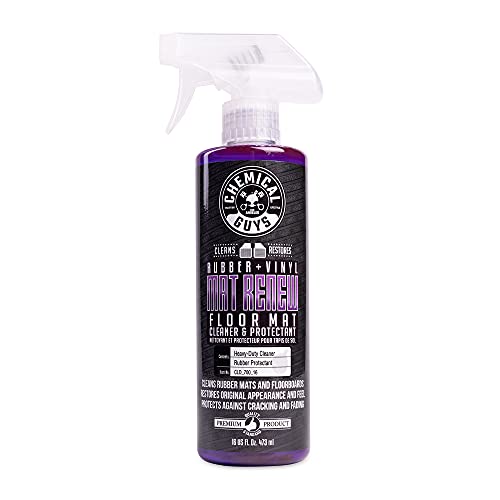
Chemical Guys, Mat Renew Rubber & Vinyl
Rubber-safe cleaning and protectant leaves a dry, non-slip finish for routine care of mats, liners, and running boards.
Top 5 Car Rubber Floor Mat Cleaners at a Glance
Adam’s Rubber Mat & Liner Cleaner is the first place to look for heavy dirt and a foaming scrub-and-rinse routine. Chemical Guys Mat Renew suits regular cleaning with a dry non-slip finish, while the gallon version favors frequent detailing and the last two choices focus mainly on protective care after washing.
| Product image | Product name | Check product |
|---|---|---|
| 1 |
Adam’s Rubber Mat & Liner Cleaner 16oz | Check Price |
| 2 |
Chemical Guys, Mat Renew Rubber & Vinyl | Check Price |
3 |
Adam’s Polishes Rubber Mat & Liner Cleaner | Check Price |
4 |
Adam’s Polishes Rubber Mat & Liner Protectant | Check Price |
5 |
Adam’s Rubber Floor Mat and Liner Protectant | Check Price |
5 Best Car Rubber Floor Mat Cleaners: Detailed Reviews
When I chose the best car rubber floor mat cleaner, I looked at how each formula handles road grime, what remains on the rubber after rinsing, and how much work the buyer must do with a brush and towel. I also paid attention to bottle size, because a small bottle is easier for occasional care while a gallon makes more sense for repeated vehicle cleaning.
The group separates into cleaners, a large refill-style size, and protectants that are meant to follow washing. Reading the products side by side helps you avoid paying for protective features when the real problem is caked mud, or choosing a small bottle when several vehicles need regular attention.
1. Adam’s Rubber Mat & Liner Cleaner 16oz
Foaming citrus-based cleaners loosen oxidation and road grime for drivers restoring heavily soiled rubber mats.
- ColorDark Grey Blue
- Size16 Fl Oz (Pack of 1)
- Number Of Items1
- Finish✅ CITRUS-BASED CAR CLEANING FORMULA – Specialized formulation rubber liner & floor mat cleaner restores your f
Adam’s Rubber Cleaner is a foaming cleaner for drivers who need to remove heavy dirt from rubber, plastic, vinyl mats, and cargo liners.
Foaming cleaning action
The foam-activated formula creates foam when you agitate the spray with a brush. Foam helps spread the cleaner across the mat’s grooves, where dry mud and dark road grime tend to settle.
In real use, that means you can spray, scrub, and rinse instead of rubbing one small area with a wet towel. The brush still does the physical work, but the foam gives the cleaner more contact with the dirty surface.
That setup fits a floor mat with deep channels or a dull, heavily used surface. The listed formula is also citrus-based and uses surfactants, which are cleaning agents that help lift grime from rubber.
Non-slip protection
Adam’s Rubber Cleaner also includes a non-slip protectant, a finish intended to help the cleaned mat remain usable without feeling overly slick. That matters because a shiny mat is not much help if your shoes slide during braking or clutch work.
The cleaner is described as a solvent-based degreaser, so the formula is aimed at stubborn soil rather than a quick dust wipe. Rinse the mat thoroughly and let the surface dry before returning the mat to the vehicle.
The main watch-out is the need for a brush and a proper rinse. Spraying alone will not pull every mark from textured rubber, and leaving foam in the grooves can defeat the goal of a clean, dry surface.
Pros:
- Foaming formula, spreads across textured rubber.
- Citrus-based cleaners, target dirt and oxidation.
- Non-slip protectant, helps avoid an overly slick finish.
- Brush-compatible process, gives you more scrubbing control.
- 16-ounce bottle, suits occasional vehicle care.
Cons:
- Brush and rinsing are still required for deep grooves.
- A 16-ounce size may feel small for several vehicles.
- Solvent-based degreaser may be more than light dust needs.
Buy it if: you have dark, heavily soiled rubber mats, because the foaming cleaner and brush-based process target stuck-on grime.
Skip it if: you only need a quick wipe for lightly dusty mats, because a gentler routine cleaner would suit you better. For another fit, consider Chemical or Adam.
I’d pick Adam’s Rubber Cleaner for a driver who wants one clear clean-and-rinse routine rather than a separate finishing step. The foam and non-slip protectant make sense for mats that see mud, salt, and daily shoe traffic. Double-check that you have a suitable brush and a place to rinse the mats before buying.
Adam’s Rubber Cleaner fits people who want deep cleaning with a dark, refreshed appearance.
2. Chemical Guys, Mat Renew Rubber & Vinyl
Rubber-safe cleaning and protectant leaves a dry, non-slip finish for routine care of mats, liners, and running boards.
- Size16 Fl Oz (Pack of 1)
- Release Date2016-07-27T00:00:01Z
- Number Of Items1
- FinishMAT RENEW CLEANER & PROTECTANT (CLD_700_16) – This car mat cleaner cleans and restores rubber and vinyl floor
Chemical Guys Mat Renew is a rubber and vinyl mat cleaner with protectant for drivers who want routine cleaning and a dry-feeling finish from one 16-ounce bottle.
Rubber and vinyl coverage
The formula is described as safe for rubber and vinyl, two common materials used for automotive mats, liners, and running boards. That means you can use the cleaner across more than a single floor surface, as long as the surface matches the care directions on the label.
The cleaner is intended to remove dirt, mud, grime, and road salt without fading, cracking, or discoloring the surface. Those are the marks that make an otherwise sound mat look tired after winter driving or muddy errands.
For a beginner, the practical method is direct: spray the mat, scrub with a detailer brush, and wipe clean. A wipe-down may work for light soil, while a rinse is sensible when the grooves hold visible mud or salt.
Dry non-slip finish
A dry-to-the-touch finish means the surface should not feel wet or oily after the cleaning step has been completed. The non-slip part matters under the driver’s feet, where excessive shine can be an unwanted trade-off.
Chemical Guys Mat Renew also claims protection against fading, staining, and cracking from daily use and environmental exposure. That gives the formula a maintenance role, not only a dirt-removal role.
The limitation is bottle size. A 16-ounce container is convenient for occasional care, but frequent cleaning of multiple vehicles can use it quickly, especially when mats are large or heavily soiled.
Pros:
- Rubber and vinyl formula, covers common mat materials.
- Dry-to-touch finish, reduces oily surface feel.
- Non-slip finish, supports secure footing.
- Road-salt cleaning, suits winter driving residue.
- Protectant layer, helps resist fading and staining.
Cons:
- 16-ounce size may not suit frequent multi-car cleaning.
- Heavy mud still needs brushing and careful rinsing.
- Results depend on removing loose dirt before spraying.
Buy it if: you want cleaning and protection together, because the rubber-safe formula leaves a dry non-slip finish after scrubbing.
Skip it if: you clean a fleet or several large vehicles often, because a larger container would suit your routine better. Adam’s Rubber Mat & Liner Cleaner and Adam’s Polishes Rubber Mat & Liner are worth a closer look instead.
What I like about Chemical Guys Mat Renew is the straightforward balance between washing and finishing. The rubber-and-vinyl coverage is useful for a driver who wants one bottle for mats, liners, and running boards, while the dry finish addresses the worry about slippery footing. Check the size before purchase if you clean often.
Chemical Guys Mat Renew is a sensible fit for regular interior maintenance in one vehicle.
3. Adam’s Polishes Rubber Mat & Liner Cleaner
The catalog lists ✅ CITRUS-BASED CAR CLEANING FORMULA – Specialized formulation rubber liner & floor mat cleaner restores your f. Compare fit and care needs before choosing.
- ColorDeep Blue
- Size128 fl. oz (Gallon)
- Number Of Items1
- Finish✅ CITRUS-BASED CAR CLEANING FORMULA – Specialized formulation rubber liner & floor mat cleaner restores your f
Adam’s Rubber Cleaner Gallon is a large-size version of a foaming rubber and liner cleaner for frequent detailing or several vehicles.
Large cleaning supply
The 128 fl. oz gallon size gives you much more liquid than a standard 16-ounce bottle. Capacity simply means how much formula the container holds, and the larger amount can reduce how often a busy detailer needs to reorder.
The same listed cleaning approach uses a citrus-based formula, surfactants, and cleaners to remove oxidation, dirt, and grime. The spray-and-agitate method still requires a suitable bottle or dispenser if the gallon container is not designed for direct application.
That is the main practical difference from a small ready-to-use bottle. The gallon makes sense when mats, cargo liners, truck-bed liners, or several vehicles need repeated care, but the extra volume takes more storage space.
Foam and non-slip finish
Adam’s Rubber Cleaner Gallon uses a foam-activated formula, meaning agitation with a brush creates foam that helps cover the dirty rubber. The foam can make it easier to see where you have scrubbed before rinsing.
The cleaner also includes a non-slip protectant, which is useful after washing a driver’s mat. Rinse thoroughly and allow the mat to dry so the protective finish is not mixed with leftover dirt or standing water.
A gallon is not automatically the right choice for one household car. The watch-out is handling and storage, plus the need to transfer the formula into an appropriate application bottle if the cleaning routine requires spraying.
Pros:
- 128 fl. oz capacity, supports frequent detailing.
- Citrus-based cleaning, targets oxidation and grime.
- Foam activation, helps cover textured mats.
- Non-slip protectant, avoids a slick final feel.
- Suitable for rubber liners, expands cleaning use.
Cons:
- Large container needs more storage room.
- Application may require a separate spray bottle.
- Too much formula for occasional single-car care.
Buy it if: you clean several vehicles or detail often, because the gallon capacity supports repeated mat and liner washing.
Skip it if: you maintain one car only a few times yearly, because a smaller ready-to-use bottle would suit you better. If those trade-offs rule it out, Adam or Chemical may suit you better.
To me, Adam’s Rubber Cleaner Gallon earns its place through volume rather than a different cleaning idea. The foam, citrus-based formula, and non-slip finish are useful, but the gallon container is the real reason to choose it. Confirm that you have suitable storage and an application method before buying.
Adam’s Rubber Cleaner Gallon is best for frequent care where a small bottle would disappear too soon.
4. Adam’s Polishes Rubber Mat & Liner Protectant
The catalog lists ✅ PAIRS WITH ADAM’S RUBBER MAT & LINER CLEANER – Maximize the efficacy of Adam’s Rubber Mat & Liner Protectant. Compare fit and care needs before choosing.
- Number Of Items2
- WeightNot listed; check details
- DimensionsNot listed; check details
- MaterialNot listed; check details
Adam’s Mat Protectant is a two-item cleaner-and-protectant combination for drivers who want a maintenance routine that includes a dedicated finish.
Water-based protective formula
A water-based formula uses water as the main carrier for the protectant rather than relying only on a solvent base. The listed formula contains active acrylic polymers, which are film-forming ingredients designed to create a protective layer as the product dries.
That layer is described as invisible and colorless, so the mat can keep a natural appearance instead of turning glossy. A satin finish means a soft, low-shine look rather than a wet-looking shine.
The finish is intended to help shield rubber mats from wear, staining, and environmental exposure. In practical terms, Adam’s Mat Protectant is for the stage after cleaning, when the rubber is already free of loose dirt and ready for a light protective coating.
Non-greasy, non-sticky finish
The protectant is designed to dry quickly without visible residue and without a greasy or sticky feel. That matters because residue can attract dust, while stickiness can make the mat unpleasant underfoot.
The listed acrylic polymers are described as actively cross-linking, meaning they form a more connected film as they dry. You do not need to memorize the chemistry; the useful takeaway is to apply the protectant to a clean, dry surface and allow the finish to dry before reinstalling the mat.
The main limitation is that this is not a substitute for removing heavy mud first. A protectant cannot make caked dirt disappear, and the two-item format may be more routine than a buyer who wants one quick spray.
Pros:
- Water-based formula, suits a low-residue finish.
- Active acrylic polymers, create a protective surface layer.
- Satin appearance, avoids an overly glossy look.
- Non-sticky finish, feels cleaner underfoot.
- Two-item format, supports cleaning and protection.
Cons:
- Protectant works best after thorough cleaning.
- Two-item routine takes more steps than one spray.
- Number of items is listed as two, with no volume supplied here.
Buy it if: you want a separate protective step after washing, because the water-based polymer finish is designed to dry satin and non-sticky.
Skip it if: you want only a heavy-duty cleaner for muddy mats, because a dedicated cleaning formula would suit you better.
I’d choose Adam’s Mat Protectant for someone who already enjoys a careful detailing routine and wants a restrained finish instead of a wet shine. The water-based formula and active polymers give the protectant a clear job after cleaning, while the non-sticky feel addresses a common interior-care complaint. Check the package contents and application directions before buying since the listed number of items is two.
Adam’s Mat Protectant suits patient buyers who want cleaning followed by surface care.
5. Adam’s Rubber Floor Mat and Liner Protectant
The catalog lists ✅ PAIRS WITH ADAM’S RUBBER MAT & LINER CLEANER – Maximize the efficacy of Adam’s Rubber Mat & Liner Protectant. Compare fit and care needs before choosing.
- Number Of Items1
- WeightNot listed; check details
- DimensionsNot listed; check details
- MaterialNot listed; check details
Adam’s Protectant Spray is a 16-ounce rubber mat and liner protectant for drivers who want a separate spray-on finish after cleaning.
Satin protective finish
The spray uses active acrylic polymers to create a durable, non-slippery satin finish. Satin means the rubber should look refreshed without the deep wet gloss that can make a floor mat appear greasy.
The finish is intended to darken and revive rubber while helping protect against wear, staining, and environmental exposure. That makes the spray more useful for maintenance than for removing thick mud or embedded salt.
Apply the spray only after the mat has been cleaned and dried. A protective layer placed over grit can hold that grit against the surface, which is the opposite of the clean appearance most drivers want.
Quick-drying water base
The water-based formula carries the active polymers and is described as drying quickly without visible residue. Quick drying can make the finishing step easier, but the mat still needs enough time to dry before returning to the footwell.
The listed finish is non-greasy and non-sticky. That is useful on a driver’s mat because the surface should feel controlled under shoes, not like a dashboard dressing transferred to the floor.
The watch-out is the narrow job. Adam’s Protectant Spray is not the choice for heavy cleaning, and the 16-ounce size may be less convenient for frequent care across several vehicles.
Pros:
- 16 fl. oz spray, practical for occasional maintenance.
- Water-based formula, supports quick drying.
- Acrylic polymers, form a protective surface layer.
- Satin finish, refreshes rubber without wet shine.
- Non-sticky feel, keeps the mat comfortable underfoot.
Cons:
- Protectant does not replace deep cleaning.
- One-item package lacks a separate cleaner.
- Smaller size may not suit several vehicles.
Buy it if: your mats are already clean and you want a satin protective finish, because the spray uses water-based acrylic polymers that dry without visible residue.
Skip it if: your mats are covered in mud or road salt, because a dedicated cleaner would suit the first step better.
What makes Adam’s Protectant Spray useful is its focused role. The 16-ounce bottle is easier to fit into a normal car-care shelf than a gallon, and the non-greasy satin finish is more sensible for a floor than a glossy dressing. Check that your mats are clean and dry before application.
Adam’s Protectant Spray is for occasional surface care, not the main cleaning job.
How to Choose the Best Car Rubber Floor Mat Cleaner
The best car rubber floor mat cleaner for you depends on soil level, finish preference, cleaning frequency, and whether you need a cleaner or a protectant. Start with the mat’s condition, then choose the bottle size and finish that match how often you work on the vehicle.
Match cleaning strength to the dirt
A cleaner is a liquid formula that loosens grime so brushing and rinsing can remove it. Light dust needs less work than dried mud, road salt, greasy footprints, or oxidation that makes black rubber look gray.
For light dirt, a routine spray and wipe may be enough. For deep grooves and stuck-on soil, choose a formula described as foaming or degreasing and plan to use a stiff but non-damaging brush.
Decide if you need protection
A cleaner removes soil. A protectant adds a finish after cleaning, often to help the rubber resist staining, fading, or a dry appearance.
Choose a cleaner-only routine if the mats are dirty and you do not care about extra finish. Choose a cleaner with protection, or a separate protectant, if you want a darker satin look and are willing to add drying time.
Look for a safe-feeling finish
A non-slip or dry-to-the-touch finish matters most on the driver’s mat. A glossy surface may look dramatic in a product photo, but a floor mat needs controlled footing more than shine.
Look for wording such as dry, non-slip, satin, non-greasy, or non-sticky. Those terms describe the intended surface feel, but you should still rinse or wipe away excess and let the mat dry before driving.
Choose the right bottle size
A 16-ounce bottle is a practical starting size for one household vehicle and occasional cleaning. A 128 fl. oz gallon makes more sense for frequent detailing, several vehicles, or repeated cleaning of large liners.
Do not buy a gallon simply because the price per ounce may seem attractive. A large container needs storage and may need a separate sprayer, so the smaller bottle can be easier for a beginner.
Check the mat material
Rubber is flexible and water-resistant, while vinyl is a plastic-like material often used in automotive interiors. Some cleaners cover both materials, while others focus on rubber mats and liners.
Read the label before applying any formula to a mixed-material mat. If the mat has fabric, carpet sections, painted markings, or a special coating, keep the cleaner on the intended rubber or vinyl area.
Plan the rinse and drying space
The best setup is an outdoor area, utility sink, or other place where dirty water can be controlled. A garage floor with no drain can turn a simple rinse into a muddy cleanup job.
You also need a brush, clean water, and a towel or rack for drying. If you cannot rinse well, choose a light-cleaning routine and use less spray rather than flooding the mat.
How to Use Car Rubber Floor Mat Cleaner for the Best Results
The cleanest result comes from removing loose dirt first, working in small areas, brushing the grooves, and rinsing away the formula completely. Give the mat time to dry before putting it back in the vehicle.
- Remove the mats from the vehicle. Do not scrub a dirty mat over the carpet because loosened mud and cleaner can fall into the footwell.
- Shake or brush off loose sand and gravel. This keeps grit from becoming an abrasive paste during scrubbing.
- Rinse heavy mud with water. A quick rinse reduces the amount of cleaner needed and makes the brush work more effectively.
- Apply the cleaner to a manageable section. Avoid soaking the entire mat if you cannot rinse the full surface soon.
- Agitate the grooves with a detailing brush. Use short strokes and moderate pressure, especially around raised ridges and heel areas.
- Rinse until the runoff and surface feel clean. Leftover foam or cleaner can collect dust and make the mat feel slippery.
- Inspect the edges and channels. Turn the mat at an angle so water and cleaner can leave the deeper pockets.
- Dry both sides before reinstalling. A damp mat can add moisture and odor to the vehicle’s carpet.
For a clearer step-by-step routine, clean rubber car floor mats by treating the grooves and edges as separate areas rather than rushing across the entire surface. That small change helps you notice where mud remains and where a towel is spreading dirt instead of removing it.
Use a soft brush for light soil and a firmer detailing brush for textured rubber. Avoid metal bristles, rough scouring pads, and aggressive scraping because those tools can mark the surface or remove printed details.
If the mat still looks gray after cleaning, check whether the color change is oxidation or embedded wear rather than loose dirt. More scrubbing is not always the answer, and repeated aggressive brushing can shorten the life of the rubber.
How to Make Your Car Rubber Floor Mats Last Longer
Regular rinsing, complete drying, and gentle brushing do more for mat life than using a large amount of protectant. Keep grit from staying in the grooves, and do not reinstall mats while wet.
Shake out the mats weekly if the vehicle sees sand, gravel, or winter salt. A quick removal prevents grit from grinding into the rubber under repeated foot traffic.
Wash the mats when visible dirt builds up rather than waiting for thick layers to harden. Dried mud takes more brushing, more water, and more time than fresh soil.
Use a protectant sparingly and only on a clean surface. A thin, even layer is easier to dry and less likely to leave a film that attracts dust.
Inspect the driver’s mat after cleaning. Look for curled edges, damaged fasteners, or movement around the pedal area, since a clean mat still needs to stay properly positioned.
Store spare or seasonal mats flat in a dry area. Avoid leaving rubber mats folded for long periods, especially in direct sun or extreme heat, because the shape can become harder to restore.
Keep strong household cleaners away from the mat unless the label specifically permits that use. A general bathroom or kitchen formula may leave a finish that is unsuitable for footwear contact or automotive rubber.
Common Mistakes to Avoid When Buying and Using Car Rubber Floor Mats
Most poor results come from choosing the wrong job for the formula, skipping the rinse, or reinstalling the mat too soon. Small changes in the routine prevent slippery residue, wasted cleaner, and unnecessary wear.
- Using protectant on muddy rubber: The finish can trap grit against the surface. Clean and dry the mat first.
- Skipping loose-dirt removal: Sand turns into abrasive sludge when mixed with spray. Shake, brush, or rinse before applying cleaner.
- Spraying too much: Extra liquid does not equal extra cleaning. Work in sections and use only enough to wet the surface.
- Ignoring the grooves: Flat areas may look clean while channels still hold salt and mud. Brush across the texture from several directions.
- Rinsing too quickly: Leftover formula can leave a film. Continue rinsing until the surface feels clean and the runoff is clear.
- Putting mats back while wet: Trapped moisture can make the carpet damp. Dry the top, underside, edges, and channels first.
- Choosing a gallon for occasional care: A large container takes space and may need a sprayer. Match capacity to the number of vehicles and cleaning sessions.
For all-weather liners with taller walls and deeper channels, clean all-weather car floor mats by lifting them out and rinsing the sides, not only the flat center. The raised edges often hide salt and mud that a quick wipe misses.
Another common mistake is judging cleanliness by shine. A darker or glossier mat is not automatically cleaner, and a dry, controlled surface is more useful under the driver’s feet than a wet-looking finish.
Common Questions About Car Rubber Floor Mat Cleaner
Can rubber floor mat cleaner remove road salt?
Yes, a suitable rubber mat cleaner can loosen road salt when you spray, brush, and rinse the surface thoroughly. Salt often collects in grooves and along raised edges, so a quick wipe may leave residue behind. Remove the mat, rinse loose crystals first, scrub the texture, and dry the mat fully.
How often should I clean rubber car mats?
Clean rubber car mats whenever visible mud, salt, or dark grime builds up, with a quick shake or brush more often. Drivers in snowy, rainy, or sandy areas may need deeper cleaning every few weeks. Light-use vehicles may need a full wash only every month or two.
Is a non-slip finish important on a car mat?
Yes, a non-slip finish is useful because the driver’s feet need a controlled surface during braking and other pedal work. The finish should feel dry rather than oily. Even with a non-slip formula, remove excess spray and wait until the mat is dry before reinstalling it.
Should I use cleaner or protectant first?
Use cleaner first and protectant second. Dirt, road salt, and grit should be removed before a protective layer is applied, or the finish may hold soil against the rubber. Rinse the cleaner away, dry the mat, then apply a light protectant coat if the surface and label allow it.
Is a 16-ounce bottle enough for one car?
A 16-ounce bottle can be enough for occasional care of one car, especially when the mats are only lightly dirty. Heavy mud, large liners, or repeated washes use more formula. A gallon is better suited to frequent detailing or several vehicles, but it needs more storage space.
Can I clean rubber mats while they are still inside the car?
You can wipe a lightly dusty mat inside the vehicle, but deep cleaning is better outside. Removing the mat lets you rinse both sides, scrub the grooves, and avoid soaking the carpet. It also makes it easier to inspect the driver’s mat for movement or damaged fasteners.
Make Your Next Mat Cleaning Count
Choose a cleaner based on the dirt you need to remove, then set aside a brush, rinse water, and enough drying time before starting. If the mats are already clean and you only want a finish, use a protectant lightly and confirm the surface feels dry and secure before driving.