Finding the best car subwoofer for deep bass is less about choosing the biggest wattage number and more about matching the subwoofer, enclosure, amplifier, and available space. A powerful-looking specification can still be a poor fit if the electrical system, vehicle interior, or installation area cannot support it.
My first choice is American Bass XFL 10″ 4 Ohm 3000 Max Watts Car Subwoofer. Its 10-inch dual-voice-coil design and 3-inch voice coil suit buyers who want serious output and are prepared to choose a compatible amplifier and enclosure separately.
My second choice is Skar Audio Dual 12″ Complete 2. The loaded dual-12-inch vented enclosure, 1,200-watt monoblock amplifier, and included 4-gauge OFC wiring kit remove much of the guesswork from assembling a bass system.
My third choice is TPyesss Party Loud Bluetooth Speaker 80W Peak Powerful Bass Long. TPyesss Party Loud Bluetooth Speaker 80W Peak Powerful Bass Long takes third place as a portable alternative rather than a conventional vehicle subwoofer. Its wooden acoustic cavity, stated 60 Hz bass capability, 7,800mAh battery, Bluetooth 5.3 connection, and microphone input make it more suitable for a garage, patio, or tailgate than a permanently installed car-audio system.
This guide compares the five options, explains the important power and enclosure terms, and identifies the compromises behind each ranking. You will also find practical advice about vehicle compatibility, installation, tuning, safety, maintenance, common mistakes, and choosing a system that delivers strong bass without creating avoidable electrical or fitment problems.
Best Car Subwoofer for Deep Bass
I selected these products for their relevance to bass-focused listening, the amount of useful product information supplied, customer-feedback evidence when available, and variety across standalone, complete-package, powered, and portable formats. The ranking is based on stated specifications, practical buyer fit, reported feedback volume and rating where provided, and transparency about each product’s limitations—not hands-on testing.
| # | Image | Product | Price on Amazon |
|---|---|---|---|
| 1 |  |
American Bass XFL 10″ 4 Ohm 3000 Max Watts Car Subwoofer | Check Price |
| 2 |  |
Skar Audio Dual 12″ Complete 2 | Check Price |
| 3 | 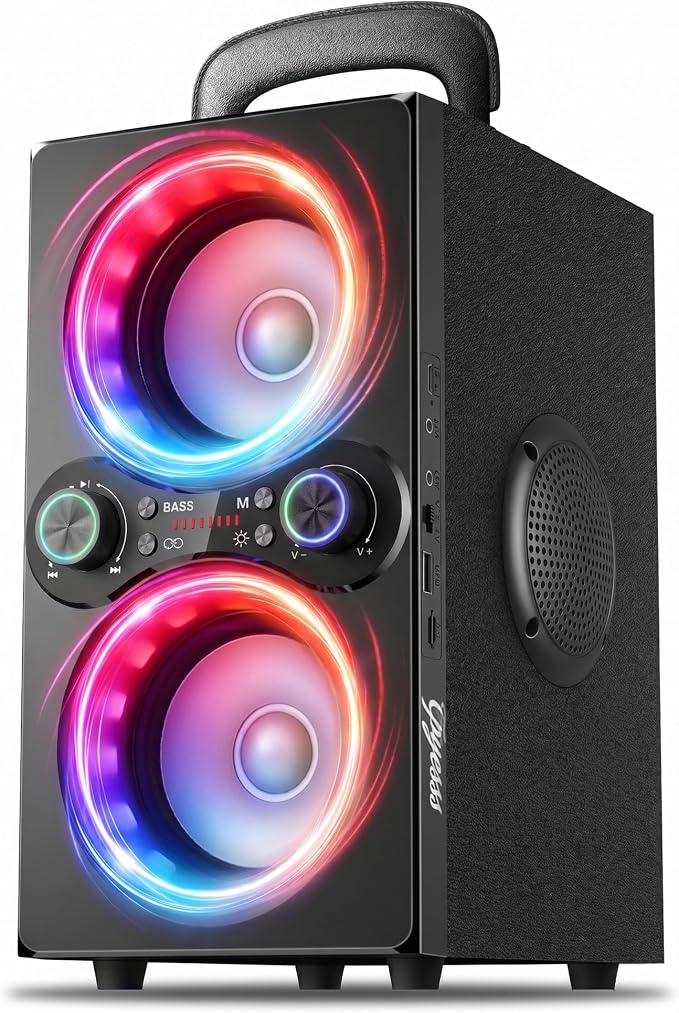 |
TPyesss Party Loud Bluetooth Speaker 80W Peak Powerful Bass Long | Check Price |
| 4 |  |
COOLVEDI 1600W Slim Under Seat Powered Car Subwoofer Car Sub | Check Price |
| 5 |  |
MTX Terminator Dual 12″ Subwoofers | Check Price |
American Bass XFL 10″ 4 Ohm 3000 Max Watts Car Subwoofer
The American Bass XFL 10 is the strongest candidate here for a buyer building a serious custom system around one high-output subwoofer. Its 10-inch driver uses a dual-voice-coil layout, a 3-inch voice coil, and a 200-ounce magnet. Those details point toward a subwoofer intended to handle substantial power and produce forceful bass when paired with the right enclosure and amplifier.
The most important number is the stated 1,500-watt RMS rating, not the 3,000-watt maximum figure. RMS is the more useful guide for selecting an amplifier because it represents the power level the subwoofer is intended to handle continuously. This is not a simple replacement speaker for a factory system; it needs a properly matched amplifier, adequate wiring, and an enclosure designed for its operating requirements.
There is also a specification inconsistency worth checking before purchase. The product title identifies a 4-ohm model, while the supplied feature information calls it a dual-voice-coil 2-ohm SPL subwoofer. Those descriptions may refer to different wiring or listing variants, so confirm the exact impedance printed on the product and determine the final load before choosing an amplifier.
Pros
- High stated 1,500-watt RMS power handling
- Large 200-ounce magnet and 3-inch voice coil
- Dual-voice-coil design offers wiring flexibility
- Strongest fit for a custom high-output bass build
Cons
- Requires a separate enclosure, amplifier, and wiring
- Impedance information should be verified before installation
- Its power needs may exceed what a basic factory electrical system can support
My Opinion
This is my top pick for an experienced buyer who wants deep, forceful bass and does not mind building the rest of the system around the driver. Verify the impedance first, then match the amplifier and enclosure carefully; otherwise, the impressive power rating becomes more burden than benefit.
Skar Audio Dual 12″ Complete 2
Skar Audio’s dual-12-inch package is the most convenient high-output choice in the lineup. Instead of starting with a bare subwoofer, the buyer receives a loaded vented enclosure containing two SDR-series 12-inch subwoofers, a Skar Audio RP-1200.1D Class D monoblock amplifier, and a 4-gauge premium OFC wiring kit. That combination is valuable for anyone who wants a coordinated system without sourcing every major component separately.
The package lists 2,400 watts peak power and 1,200 watts RMS, with the amplifier also described as a 1,200-watt monoblock. Two 12-inch drivers can move plenty of air, while the vented enclosure is intended to increase output in the bass range. The trade-off is physical size: a dual-subwoofer enclosure occupies meaningful cargo space and may be difficult to fit in a compact trunk, hatchback, or pickup cab.
Although much of the installation equipment is included, the vehicle still needs a suitable head-unit connection, grounding point, fuse placement, and enough charging-system capacity. Check the enclosure dimensions, amplifier load requirements, and available cargo room before ordering. The included wiring kit also reduces shopping time, but it does not remove the need for careful routing and secure connections.
Pros
- Complete package with two 12-inch subwoofers
- Includes a 1,200-watt Class D monoblock amplifier
- Includes a 4-gauge OFC amplifier wiring kit
- Vented enclosure favors strong bass output
Cons
- Large enclosure can consume substantial cargo space
- Still requires correct vehicle wiring and installation
- Less flexible than selecting the enclosure and driver separately
My Opinion
This is the best alternative for a buyer who values convenience and wants a major bass upgrade without assembling a system piece by piece. It ranks below the American Bass driver because the package gives up some customization and demands more room, but it is arguably the more approachable route to a complete setup.
TPyesss Party Loud Bluetooth Speaker 80W Peak Powerful Bass Long
The TPyesss Party Loud speaker is not a traditional car subwoofer, so its place in this comparison needs to be understood clearly. It is a portable Bluetooth speaker intended for outdoor areas, garages, homes, and gatherings. For someone who wants bass at a tailgate or while working in a garage without modifying a vehicle, that portability may be more useful than a permanent trunk installation.
Its stated 80-watt peak output, wooden acoustic cavity, and 40 percent bass boost are aimed at room-filling sound rather than the low-frequency pressure produced by a dedicated car-audio enclosure. The listed 60 Hz bass specification suggests useful punch for casual music listening, but it should not be interpreted as equivalent to a properly powered 10- or 12-inch vehicle subwoofer.
A 7,800mAh battery supports extended casual listening, while Bluetooth 5.3 is specified for a connection range of up to 30 meters. Seven RGB light modes, TWS pairing, and a dedicated microphone input add party value. The trade-off is that these convenience features do not provide the same integration, deep extension, or permanent installation potential as the car-specific choices.
Pros
- Portable option for garages, patios, and tailgates
- Rechargeable 7,800mAh battery
- Bluetooth 5.3 and TWS pairing support
- Microphone input and adjustable vocal volume
- One-year satisfaction guarantee is stated in the supplied information
Cons
- Not a permanently installed car subwoofer
- Its 80-watt peak rating is far below the car-audio packages
- Listed 60 Hz bass capability will not equal very-low-frequency vehicle bass
My Opinion
This is a sensible third-place choice only for buyers whose real goal is portable bass rather than a trunk upgrade. It is easier to use and move than every car-specific option here, but anyone seeking chest-rattling bass from the driver’s seat should choose a dedicated vehicle system instead.
COOLVEDI 1600W Slim Under Seat Powered Car Subwoofer Car Sub
The COOLVEDI slim powered subwoofer targets the common problem of limited installation space. Its 10-inch active design combines the subwoofer and amplifier in one enclosure, allowing it to fit under a seat more easily than a large separate amplifier-and-box arrangement. That makes it relevant for sedans, compact trucks, and other vehicles where cargo space is more valuable than maximum output.
The enclosure uses a cast-aluminum casing intended to improve heat dissipation in a confined location. Built-in protection for overheating, short circuits, and overloads is another useful safeguard, especially for a first-time installer. The supplied cables, high- and low-level inputs, remote control cable, instructions, and screw accessories also make the package more approachable than a bare driver.
Separate controls cover the low-pass filter from 50 to 150 Hz, bass enhancement from 0 to 24 dB, gain, and volume. That flexibility can help blend the bass with factory speakers, although excessive bass boost or gain can create distortion and unnecessary heat. RGB lighting controlled through an app is a styling extra, not a performance feature, and the supplied information states a six-month after-sales warranty.
Pros
- Space-saving under-seat format
- Built-in amplifier simplifies the system
- Includes installation cables and mounting accessories
- Adjustable low-pass filter, bass boost, gain, and volume
- Lists thermal, short-circuit, and overload protection
Cons
- Customer-feedback rating supplied is lower than the other car-specific options
- Peak wattage should not be treated as continuous output
- Under-seat clearance and ventilation must be checked carefully
My Opinion
The COOLVEDI is a practical fit when space matters more than maximum sound pressure. Its powered, compact format is appealing, but the lower supplied rating and limited six-month warranty make it a choice for modest factory-system improvement rather than an all-out bass build.
MTX Terminator Dual 12″ Subwoofers
The MTX Terminator package offers a more conservative dual-12-inch approach than the Skar Audio system. It uses a loaded enclosure with a stated 1,200-watt maximum and 400-watt RMS rating, making the RMS figure much more modest than the headline maximum. That lower continuous rating may be easier to match with a moderate amplifier and electrical system.
Construction details are useful for buyers who care about durability. The subwoofers use polypropylene cones and rubber surrounds, while the enclosure is made from 5/8-inch MDF and covered in black carpet. The supplied 2-inch aluminum single 2-ohm voice-coil and 48-ounce magnet details describe a conventional, practical bass package rather than an extreme SPL-oriented build.
Fitment deserves close attention. The enclosure is listed at 29.69 inches wide and 14 inches high, with a depth of 13.5 inches at the bottom and 11.13 inches at the top. Its stated frequency response is 37–150 Hz. Measure the trunk opening and cargo area, then confirm the amplifier’s output and impedance requirements before installation.
Pros
- Dual 12-inch loaded enclosure provides broad cone area
- 400-watt RMS rating is easier to match than extreme-power systems
- Rubber surrounds and polypropylene cones support everyday durability
- Solid 5/8-inch MDF enclosure construction
- Detailed enclosure dimensions aid fitment planning
Cons
- Lower RMS output than the Skar Audio package
- Large enclosure still uses considerable trunk space
- Amplifier and wiring requirements should be confirmed separately
My Opinion
The MTX Terminator is the sensible value-oriented choice for someone who wants dual 12-inch bass without chasing the largest power figures. It ranks fifth because the supplied output is more modest and the package appears less complete than Skar’s, but its construction details and large customer-feedback base make it worth considering.
How I Selected These Options for Deep Bass
The selection begins with a basic distinction: a true car subwoofer must be judged differently from a portable speaker. The American Bass, Skar Audio, COOLVEDI, and MTX products are intended for vehicle use in different ways, while the TPyesss speaker is included as a clearly labeled portable alternative for buyers who use the word “subwoofer” loosely when shopping for bass at a garage or tailgate.
Power handling, enclosure format, installation complexity, and space requirements shaped the ranking. A bare high-power driver can outperform a compact powered unit, but it also places much more responsibility on the buyer. A complete package can be easier to install, while a loaded enclosure may offer less freedom to customize. Those differences matter as much as the headline wattage.
Customer feedback was also considered where supplied. The American Bass and Skar Audio listings both show a 4.6 rating, while the portable TPyesss option shows 4.3, MTX shows 4.4, and COOLVEDI shows 3.1. The number of responses varies substantially, so ratings are useful context rather than proof of sound quality in every vehicle.
Selection takeaway: RMS power, impedance, enclosure design, and fitment are more useful buying clues than maximum wattage alone.
Brand variety was retained because shoppers do not all need the same kind of system. Some want a custom SPL-style driver, some want a ready-to-install package, some need an under-seat solution, and others only need portable sound. Presenting those categories together makes the trade-offs easier to recognize.
Important limitation: None of these rankings represents hands-on listening or installation testing. Verify the final impedance, dimensions, wiring requirements, and vehicle compatibility before purchase.
How to Choose the Best Car Subwoofer for Deep Bass
Start by deciding whether you need a bare driver, a loaded enclosure, a powered compact unit, or a portable speaker. Then match the subwoofer to the amplifier, available space, vehicle electrical system, and type of bass you prefer. A system that is slightly less powerful but correctly installed will usually be more satisfying than an oversized system that clips, overheats, or cannot fit securely.
- Use RMS power—not maximum power—as the main amplifier-matching reference.
- Confirm the final impedance and voice-coil wiring before selecting an amplifier.
- Measure the enclosure location, opening, height, width, and depth.
- Choose a sealed, vented, powered, or portable design according to the intended use.
- Plan for proper power, grounding, fusing, ventilation, and secure mounting.
RMS Power Versus Maximum Power
Maximum or peak wattage is a short-term marketing-style figure and is not the best basis for system design. RMS power is more useful because it describes the continuous power level associated with normal operation. The American Bass lists 1,500 watts RMS, the Skar Audio package lists 1,200 watts RMS, and the MTX system lists 400 watts RMS. These figures place the products in very different electrical and amplifier categories.
Do not assume that a 1,600-watt label on a compact powered subwoofer means it will produce the same output as a large, separately amplified system. The COOLVEDI listing identifies 1,600 watts as peak power, while its built-in amplifier and slim format prioritize convenience. Compare RMS information whenever it is available, and treat unclear figures cautiously.
Impedance and Voice-Coil Wiring
Impedance affects how much current an amplifier must deliver. A dual-voice-coil driver can often be wired in different ways, but the available final loads depend on the individual coil impedance and the wiring configuration. Because the American Bass information contains both a 4-ohm title and a 2-ohm dual-voice-coil description, this is a product where verification is especially important.
Never choose an amplifier only because its wattage number looks similar. Confirm that the amplifier is stable at the final speaker load, use the correct wiring diagram, and avoid creating a load below the amplifier’s safe rating. When uncertain, ask a qualified installer to confirm the configuration before applying power.
Choosing Between Sealed and Vented Enclosures
A sealed enclosure is generally compact and can produce controlled, tight bass when properly matched. A vented enclosure uses a port to increase output around a tuned frequency and can sound louder in its intended range, but it usually requires more space and correct design. The Skar Audio package specifically uses a loaded vented enclosure, while the MTX listing describes a sealed enclosure.
Neither design is automatically better for every listener. Sealed boxes can make sense when space and controlled response matter. Vented systems may appeal to listeners who prioritize stronger output around particular bass notes. Do not block a port, alter the enclosure casually, or place a driver in a box that does not suit its requirements.
Check Vehicle Space Before Ordering
Measure the actual installation area rather than relying on a general description such as “fits in a trunk.” Check width, height, depth, trunk opening, seat movement, and the position of hinges or spare-tire compartments. The MTX enclosure lists different bottom and top depths, which shows why measuring only one dimension can lead to a surprise during installation.
Remember the space needed for amplifier ventilation, power-wire routing, fuse access, and secure mounting. A dual-12-inch enclosure may fit inside a large trunk but still prevent the rear seats from folding or block valuable cargo room. An under-seat model needs enough vertical clearance to avoid contact with seat rails, carpet, wiring, or moving mechanisms.
Amplifier, Head Unit, and Factory-System Compatibility
A bare subwoofer such as the American Bass XFL 10 requires a separate amplifier and enclosure. A complete package such as the Skar Audio system already includes a monoblock amplifier, while the COOLVEDI combines its amplifier inside the subwoofer housing. These differences affect both cost planning and installation difficulty.
Check whether the vehicle has a factory radio, aftermarket head unit, high-level speaker outputs, or a dedicated subwoofer connection. A powered subwoofer may accept high-level input, but the exact connection method must be confirmed in its instructions. Factory systems may also use equalization that changes bass response at different volume levels, so a simple signal connection does not guarantee perfect integration.
Electrical Planning and Safe Power Wiring
High-output bass systems draw significant current. Use an appropriately sized power cable, place the main fuse close to the battery, and connect the ground to clean, solid chassis metal. Route the power cable away from areas where it can be pinched, melted, scraped, or exposed to moving pedals and seat hardware.
The included 4-gauge OFC kit in the Skar Audio package is a helpful starting point, but the final installation still needs correct fuse selection and secure connections. Keep signal cables separated from power wiring where practical to reduce the chance of noise. If headlights dim heavily, the amplifier shuts down, or wiring becomes hot, stop using the system and investigate rather than continuing at high volume.
Installation and First-Time Tuning
Secure the enclosure so it cannot slide during braking or cornering. A loose box can damage wiring, strike occupants, or interfere with vehicle controls. Protect cables with suitable grommets wherever they pass through metal, and make sure ventilation openings are not covered by carpet, luggage, or seat cushions.
Begin tuning with the gain low, bass boost off, and the low-pass filter set conservatively. Increase the gain gradually until the subwoofer blends with the main speakers without audible strain. The low-pass filter should remove most midrange content so the subwoofer supports the music instead of sounding disconnected from the front stage.
Use familiar tracks with clean bass rather than immediately testing with the loudest recording available. If the bass becomes muddy, harsh, or distorted, reduce gain or bass boost. Turning up a bass-enhancement control is not a substitute for correct enclosure design, adequate power, or proper speaker placement.
How to Get Deeper, Cleaner Bass
Deep bass depends on more than the driver size. A suitable enclosure, correct polarity, adequate amplifier power, and a good seal around the box all matter. If the subwoofer is out of phase with the main speakers, bass can seem weak at the listening position even when the system is powerful.
Try the polarity setting recommended by the equipment instructions and compare the result at the driver’s seat. Avoid extreme equalizer boosts, since boosting a frequency range too aggressively can use amplifier headroom quickly. A modest, clean signal usually sounds better than a heavily boosted signal that clips.
Placement Matters
In many vehicles, a rear-facing or trunk-facing enclosure can produce a different result from one aimed toward the seats. The best orientation depends on the vehicle cabin, enclosure design, and available space. Make changes only when the box remains securely mounted and does not block safety equipment or visibility.
For an under-seat powered unit, placement is less flexible. Keep the enclosure away from moisture, heat sources, seat tracks, and objects that could press against the controls. The cast-aluminum housing may help with heat dissipation, but it does not make unrestricted airflow unnecessary.
Maintenance, Cleaning, and Long-Term Ownership
Keep the enclosure dry and inspect the power, ground, speaker, and remote wires periodically. Look for loose terminals, corrosion, crushed cable insulation, or screws that have backed out because of vibration. A soft, dry cloth is appropriate for removing dust from the enclosure; avoid spraying cleaners directly onto cones, controls, connectors, or amplifier openings.
Listen for new rattles, scraping sounds, intermittent output, or a change in bass level. These can indicate a loose panel, damaged surround, failing connection, or amplifier protection event. Do not continue operating a driver that smells overheated or produces obvious mechanical noise.
For portable equipment such as the TPyesss speaker, store the unit in a dry place and recharge it according to the supplied instructions. Avoid leaving a battery-powered speaker in extreme heat for long periods. Turn off RGB lighting when battery life matters, since lighting adds convenience but does not improve bass performance.
Common Mistakes to Avoid When Buying or Installing
Most disappointing bass systems are not caused by the subwoofer alone. They result from mismatched power, poor fitment, incorrect wiring, unrealistic expectations, or tuning controls set too aggressively. A careful installation protects both sound quality and equipment.
- Do not choose an amplifier solely from a peak-wattage number.
- Do not assume every dual-voice-coil subwoofer can use every impedance setting.
- Do not install a large enclosure before measuring the trunk opening and cargo area.
- Do not place a powered subwoofer where heat cannot escape.
- Do not skip the main fuse near the battery.
- Do not turn gain or bass boost fully up to compensate for a weak signal.
- Do not use a portable Bluetooth speaker as a substitute for an installed car subwoofer when deep vehicle bass is the actual goal.
When product specifications conflict, pause before installation. Confirm the exact model, impedance, wiring diagram, and amplifier compatibility rather than relying on a product title alone.
When a Compact Powered Subwoofer Makes More Sense
A compact powered unit is often the right answer for someone who listens at moderate levels, wants a noticeable factory-system improvement, and cannot sacrifice trunk space. It is also simpler for beginners because the enclosure and amplifier are already matched within one product format.
The compromise is limited output compared with a large dual-subwoofer system. Under-seat models cannot move as much air as two 12-inch drivers in a full-size enclosure, and their small cabinets may not deliver the same lowest-frequency authority. They are best judged by fit, convenience, and integration rather than headline wattage.
When a Complete Bass Package Is the Better Buy
A package such as the Skar Audio system makes sense when the buyer wants a major upgrade and prefers to avoid selecting every component independently. The included enclosure, amplifier, and wiring kit create a clearer starting point and can reduce compatibility guesswork.
Complete packages still need inspection before installation. Confirm that the enclosure fits, that the amplifier’s load matches the subwoofers, and that the vehicle’s charging system and wiring plan are appropriate. A package is convenient, but it is not automatically plug-and-play in every vehicle.
FAQS About Best Car Subwoofer for Deep Bass
What size subwoofer is best for deep bass in a car?
There is no single best size for every vehicle. A 10-inch subwoofer can provide strong bass while using less space, while dual 12-inch systems generally offer more cone area and output when properly powered. Enclosure design, amplifier matching, and cabin fit can matter as much as diameter.
Is RMS or peak wattage more important when choosing a car subwoofer?
RMS wattage is the more useful number for choosing an amplifier and planning continuous operation. Peak wattage describes a maximum-style figure and should not be used alone to predict real-world output.
Do I need an amplifier for a car subwoofer?
A bare subwoofer such as the American Bass XFL 10 requires a separate amplifier. A powered model such as the COOLVEDI includes an amplifier, and the Skar Audio package includes a monoblock amplifier. Always confirm the amplifier’s output and impedance compatibility.
Is a dual 12-inch system always deeper than a single 10-inch subwoofer?
Not always. Dual 12-inch drivers can move more air, but the final result depends on enclosure tuning, amplifier power, installation, and the vehicle cabin. A correctly matched single 10-inch system may sound cleaner and more satisfying than a poorly installed larger system.
Can an under-seat subwoofer produce deep bass?
Yes, an under-seat powered subwoofer can add meaningful low-frequency energy while saving space. It generally will not match the output of a large dual-subwoofer enclosure, so it suits buyers who prioritize compact installation and moderate enhancement.
What should I verify before installing a dual-voice-coil subwoofer?
Verify the impedance of each voice coil, the possible final wiring loads, the amplifier’s safe operating range, and the correct wiring diagram. This is particularly important when the product title and feature information describe different impedance details.
Can a Bluetooth speaker replace a car subwoofer?
A portable Bluetooth speaker can provide convenient bass for a garage, patio, or tailgate, but it does not replace a permanently installed car-audio subwoofer for deep cabin-filling bass. Its battery, portability, and party features serve a different purpose.
Final Thoughts
The American Bass XFL 10 is my top choice for a serious custom system, while the Skar Audio Dual 12 Complete package is the better all-in-one alternative. The TPyesss Party Loud speaker earns third place for portable use, not permanent car installation. Choose based on RMS power, impedance, enclosure fit, electrical capacity, and installation goals, and the best car subwoofer for deep bass will be the one that fits the entire system—not merely the one with the largest number on its label.