
A hard tri-fold tonneau cover can be a frustrating buy if the bed length or truck configuration is wrong. You may end up wrestling with a return, or with a cover that blocks cargo access and still leaves tools exposed to rain and road dust.
Before you choose, match the cover to your exact truck year, bed length, and bed style; a few inches or a special bed can be the difference between a clean fit and a box headed back. Then weigh how you use the bed: panel material affects the build, while opening style affects how much room you have when loading tall cargo. Check the installation method and the maker’s stated care instructions, too, so setup and upkeep don’t become a surprise.
Here’s what this guide will help you sort out:
- Which fitment details to confirm before buying.
- How panel construction and opening style affect daily use.
- What to expect from installation, water management, and care.
- Which compromises to consider before settling on a cover.
Quick Picks
-
Best For Silverado and Sierra

Calffree Hard Tri-Fold Truck Bed Tonneau Cover
FRP and aluminum panels with a claimed 400-pound capacity add a hard barrier for Silverado and Sierra owners with 5.8-foot beds.
-
Best For Low-Profile Appearance
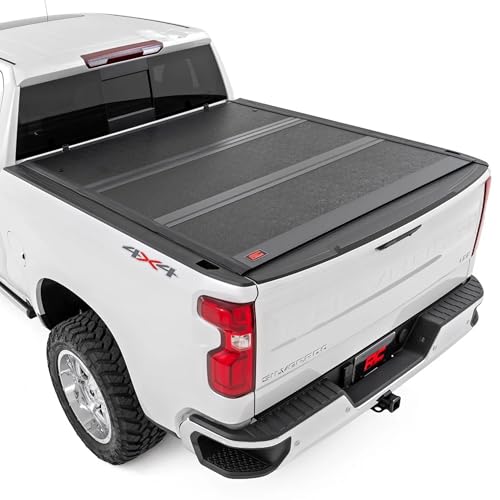
Rough Country Hard Low Profile Tri-Fold Tonneau
Matte black aluminum panels sit flush, while the tri-fold design gives Silverado and Sierra owners access in sections.
Top 5 Hard Tri Fold Tonneau Covers at a Glance
The main difference is fit: the first two options are for Silverado and Sierra beds, while the remaining choices cover Ford F-150, Toyota Tacoma, and another Silverado/Sierra setup. Start with the cover made for your exact truck and bed, then compare panel material, latching, and access features.
| Product image | Product name | Check product |
|---|---|---|
| 1 |
Calffree Hard Tri-Fold Truck Bed Tonneau Cover | Check Price |
| 2 |
Rough Country Hard Low Profile Tri-Fold Tonneau | Check Price |
3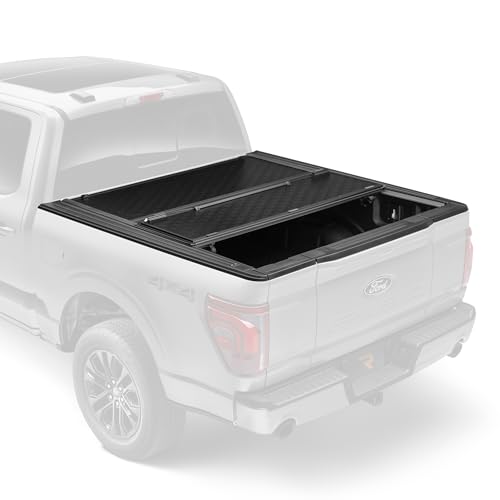 |
Gator EFX Hard Tri-Fold Tonneau Cover for | Check Price |
4 |
AUTOSAVER88 FRP Hard Tri-Fold Tonneau Cover for | Check Price |
5 |
Tono King Fold Truck Bed Covers Fits | Check Price |
5 Best Hard Tri Fold Tonneau Covers: Detailed Reviews
When I weighed the best hard tri fold tonneau cover options, I paid closest attention to fit, panel construction, how the cover opens, and how installation is described. Those details matter because the wrong bed match can waste your time, while awkward access or unclear care instructions can make a useful cover a nuisance.
The choices here range from aluminum panels with a low-profile look to FRP designs with an internal honeycomb structure. I’d start by checking your exact truck and bed details, then use the differences in latching, cargo organization, and installation to narrow the field.
1. Calffree Hard Tri-Fold Truck Bed Tonneau Cover
FRP and aluminum panels with a claimed 400-pound capacity add a hard barrier for Silverado and Sierra owners with 5.8-foot beds.
- Size5.8 FT Bed
- Weight Capacityup to 400 lbs
- Color2007-2027 1500
- Number Of Items1
The Calffree Hard Cover is a folding bed cover for Silverado and Sierra 1500 owners with a listed 5.8-foot bed. Its construction combines FRP, a fiberglass-reinforced plastic, with aluminum panels and an internal honeycomb structure, a grid-like support that helps stiffen a panel without making the whole design a solid block.
Calffree says the cover can hold up to 400 pounds and describes it as resistant to water, tearing, heat, and dust. Those claims make the cover worth considering if you want a rigid barrier over cargo, but treat the stated load limit as a limit, not an invitation to carry a person or stack gear on top. The maker also describes installation as no-drill and tool-free, with the panels folding back when you need bed access.
A tri-fold cover still takes space when folded, so check how much clearance you need behind the cab and whether the folded panels will work with your cargo routine. Confirm your exact truck year, 1500 model, and bed length before ordering.
Pros:
- FRP and aluminum panels, a rigid cover construction.
- Honeycomb support, adding structure within the panels.
- Stated capacity up to 400 pounds, with a clear load limit.
- No-drill installation, avoiding bed modifications.
- Folding panels, making cargo access quicker than removing a full cover.
Cons:
- Fit is limited to the specified Silverado and Sierra 1500 bed.
- A folded cover can take up space at the front of the bed.
- Confirm what the stated load capacity permits before placing weight on top.
Buy it if: you have a compatible Silverado or Sierra 1500 with a 5.8-foot bed, because the no-drill tri-fold design gives you a rigid cover you can fold back for access.
Skip it if: you have a different bed length or a truck outside the stated fit, because a hard cover has to match the bed closely, and a cover made for your exact setup would suit you better. For another fit, consider Rough or Gator.
I’d consider the Calffree Hard Cover when no-drill installation and a stated load capacity matter more than a special access feature. The combination of FRP, aluminum, and a folding design gives a beginner a straightforward set of benefits to compare. Before ordering, I’d double-check the year and bed measurement, and read the maker’s directions for the 400-pound limit.
It makes the most sense for an owner whose Silverado or Sierra fit is an exact match.
2. Rough Country Hard Low Profile Tri-Fold Tonneau
Matte black aluminum panels sit flush, while the tri-fold design gives Silverado and Sierra owners access in sections.
- ColorMatte Black
- Size5’10” Short Bed
- Number Of Items1
- WeightNot listed; check details
The Rough Country Low-Profile Cover is aimed at Silverado and Sierra 1500 owners who want hard panels with a flush, matte black appearance. Low-profile means the cover sits close to the top of the bed instead of rising in a bulky shape, so the truck keeps a flatter outline.
The aluminum panels fold in three sections, and the cover is described as usable fully closed or two-thirds open with safety straps. That gives you more than one access position, which can help when you’re loading something long but don’t want every panel folded back. An automatic latch engages when closed, and an interior cable release is meant to let you open the cover from the bed side; the tailgate lock is described as adding security.
The included drain tubes route water away from the bed, but installation still needs basic tools. Fit details need careful checking: the features specify 2019–2026 trucks with a 5-foot-10-inch bed and exclude EV and CarbonPro beds, even though the product title gives a different end year.
Pros:
- Matte black aluminum panels, for a flush-looking cover.
- Three-section folding, allowing partial bed access.
- Safety straps, helping secure the cover when two-thirds open.
- Automatic latching, engaging when the cover is closed.
- Interior cable release, for quick access from the bed.
- Drain tubes, routing water away from the bed area.
Cons:
- Basic tools are needed for installation.
- EV and CarbonPro beds are excluded.
- Confirm model year and bed length because the year range differs between the title and features.
Buy it if: you want a low-profile aluminum cover for a compatible Silverado or Sierra, because its partial-opening positions let you choose how much of the bed to expose.
Skip it if: your truck has an EV or CarbonPro bed or falls outside the confirmed fit, because the rail and bed match matter, and a cover specified for your exact configuration would suit you better. Calffree and Gator are worth a closer look instead.
What I like about the Rough Country Low-Profile Cover is the choice between fully closed and two-thirds open. That can be handy when a load needs more room than a closed bed offers, while the interior release gives access without reaching around the tailgate. The fit-year discrepancy is the point I’d resolve before buying, along with whether your bed is a listed exclusion.
Pick this cover if the fit checks out and a flush aluminum look is high on your list.
3. Gator EFX Hard Tri-Fold Tonneau Cover for
The catalog lists Vehicle-Specific Fit: Designed for 2021-2026 Ford F-150 (incl. Raptor/Lightning) 5’7″ beds, the Gator EFX Hard. Compare fit and care needs before choosing.
- Size5′ 7″ Bed
- Color5′ 7″ Bed
- Number Of Items1
- WeightNot listed; check details
The Gator EFX Hard Tri-Fold is designed for Ford F-150 models with a 5-foot-7-inch bed, including Raptor and Lightning according to its fit description. It uses a flush, low-profile fit and is described as installing without drilling, with installation listed as taking less than 30 minutes.
The cover opens with a single cable pull, so you don’t have to handle each panel separately to begin opening it. Gator also includes GEARHOLD adjustable cargo keepers, movable holders intended to help stop tools, groceries, or other gear from sliding around in the bed. That’s a useful extra when you regularly carry loose items, though it doesn’t replace securing heavy or tall loads properly.
The maker describes the surface as water-sealed and suited to rain, snow, dirt, and dust. As with any truck-bed cover, don’t assume the bed will stay completely dry in every storm or wash; follow the installation directions and check seals and drainage after setup. Confirm the F-150 year and bed length, especially if your truck has an unusual configuration.
Pros:
- Vehicle-specific 5-foot-7-inch fit, for listed F-150 models.
- No-drill installation, avoiding holes in the bed.
- Single cable pull, starting the opening process quickly.
- Adjustable cargo keepers, helping organize loose items.
- Flush, low-profile fit, keeping the cover close to the bed.
Cons:
- Fit is specific to the listed F-150 bed length.
- A tri-fold cover takes up bed space when folded back.
- Water protection depends on correct installation and care of the seals.
Buy it if: you have a compatible F-150 and regularly carry small loose gear, because the cable opening and adjustable keepers address access and cargo movement.
Skip it if: you need an uncovered bed for frequent tall loads, because folded panels occupy room at the front, and a different cover style would suit you better. If those trade-offs rule it out, Calffree or Rough may suit you better.
I’d give the Gator EFX Hard Tri-Fold a closer look if you want a cover that also helps keep small cargo from wandering around the bed. The single cable pull sounds easier to manage than opening panel by panel, and no-drill mounting may appeal if you want to avoid modifying the truck. I’d still confirm the exact F-150 fit and treat water protection as dependent on careful installation.
This is a sensible match for an owner who values organization as much as coverage.
4. AUTOSAVER88 FRP Hard Tri-Fold Tonneau Cover for
The catalog lists Great Fitment: The AUTOSAVER88 FRP hard tri-fold tonneau cover is designed to fit for Toyota Tacoma 2024 2025 . Compare fit and care needs before choosing.
- Colorblack
- Size5′
- Weight Capacity450LB
- Release Date2024-06-01T00:00:01Z
The AUTOSAVER88 FRP Hard Cover is made for a 5-foot bed on 2024–2026 Toyota Tacoma models, with the Trail Edition excluded in the supplied fit details. Its FRP panels use fiberglass-reinforced plastic, and an internal PP honeycomb structure supports them; the listing states a maximum weight of 450 pounds.
The cover fastens with six clamps and does not require drilling, which can make installation less intimidating for a first-time buyer. Still, six clamps are only useful if they are placed and tightened as directed, so don’t skip the instructions or assume the cover is secure because it looks level. The maker describes protection from rain, snow, dust, and theft, and says the cover locks when the tailgate is closed.
That load figure should be treated as a stated maximum, not a general recommendation for how to carry cargo on top. The Tacoma fit is narrow by design, so verify your model year, bed length, trim, and rail arrangement before committing. The listing describes a smooth black finish, but the exact fit is more important than the appearance.
Pros:
- FRP panels with PP honeycomb support, for a structured cover.
- Stated maximum capacity of 450 pounds.
- Six-clamp mounting, with no drilling required.
- 5-foot Tacoma fit, when the truck matches the specified configuration.
- Tailgate-closed locking, adding a layer of cargo privacy.
Cons:
- Trail Edition is excluded in the fit details.
- Clamp placement and tightening need care during installation.
- The stated load limit does not explain every safe loading condition.
Buy it if: you have a compatible 2024–2026 Tacoma with a 5-foot bed, because the FRP construction and clamp installation cover the bed without drilling.
Skip it if: your Tacoma is a Trail Edition or has a different bed setup, because trim and rail details can affect fit, and a cover made for your configuration would suit you better.
To me, the useful part of the AUTOSAVER88 FRP Hard Cover is its simple mounting approach paired with a stated capacity. Six clamps are easier to understand than a complicated installation, though careful placement still matters. I’d confirm the Trail Edition exclusion and ask what the 450-pound maximum means for use before putting any load on the panels.
Choose it if your Tacoma matches the listed bed and trim details exactly.
5. Tono King Fold Truck Bed Covers Fits
The catalog lists Compatibility: Compatible with 2007-2026 Chevy Silverado/GMC Sierra 1500 5′ 8″ Bed (69.6″). Do Not Fit CarbonP. Compare fit and care needs before choosing.
- Size5′ 8″ Bed (69.6″)
- Weight Capacityup to 400 lbs
- ColorBlack
- Number Of Items1
The Tono King Hard Fold Cover is a rigid folding cover for the listed 5-foot-8-inch Silverado and Sierra 1500 bed. Its FRP and aluminum panels have an internal honeycomb structure, and the stated capacity is up to 400 pounds.
Tono King describes the cover as resistant to water, tearing, and temperature extremes, with protection from rain, snow, and sharp objects. Those are seller claims, so look at the care and use directions rather than treating the cover as indestructible or fully waterproof in every condition. The no-drill design folds back for bed access, but the fit details say it does not fit a CarbonPro bed.
The maker also says the cover’s shape can reduce wind drag and help fuel efficiency. That is a possible benefit, not a guaranteed saving; driving conditions and the truck itself affect fuel use. If your truck has cargo racks, the fit details say to remove them before installation, so account for that extra step.
Pros:
- FRP and aluminum panels, forming a rigid folding surface.
- Internal honeycomb support, adding structure to the panels.
- Stated capacity up to 400 pounds.
- No-drill installation, avoiding bed modifications.
- Fold-back access, making it easier to reach cargo.
Cons:**
- Does not fit CarbonPro beds.
- Cargo racks need to be removed before installation, according to the fit details.
- Fuel-efficiency benefits are not guaranteed.
Buy it if: you have a compatible Silverado or Sierra 1500 with a 5-foot-8-inch bed, because the no-drill hard fold gives you coverage and access in one setup.
Skip it if: you need to keep cargo racks installed or have a CarbonPro bed, because the stated installation and fit rules conflict with those needs, and a cover designed for your setup would suit you better.
I’d look at the Tono King Hard Fold Cover if your truck matches the specified fit and you want FRP and aluminum construction without drilling. Its stated 400-pound capacity gives you a number to investigate, but it doesn’t replace reading the loading directions. I’d also check whether removing any rack is practical for your usual hauling.
This cover is best for a Silverado or Sierra owner whose bed setup is simple and compatible.
How to Choose the Best Hard Tri Fold Tonneau Cover
The best hard tri fold tonneau cover for your truck is the one that matches its bed and lets you load the way you actually work. Start with the fit, then compare construction, access, mounting, and the maker’s stated limits.
Confirm the exact truck and bed
A tonneau cover fits the bed, not merely the truck’s brand name. Check the model year, cab and trim where specified, bed length, and any special bed option such as CarbonPro or a rail system.
Do not rely on a rounded bed length alone. Measure the bed using the method the cover maker specifies, and compare that measurement with the exact fit notes; a small difference can mean the rails and clamps do not line up. Fitment details for the hard tonneau cover choices can help clarify how rigid covers differ, but use the cover maker’s fit guidance for your own truck.
If the listing gives two different year ranges, treat that as a question to settle before purchase rather than guessing which range is right. The same goes for a package that says a model is excluded. A correct fit is more useful than an attractive finish or an extra feature.
Compare panel materials
Aluminum and FRP are common panel materials in these choices. FRP means fiberglass-reinforced plastic; it is a plastic panel strengthened with fiberglass. Several covers pair FRP with aluminum, while the Rough Country option describes aluminum panels.
Material alone does not tell you how the cover will handle every impact, temperature, or load. Look for the listed panel construction, support structure, care directions, and any stated capacity. If a weight limit is given, follow the manufacturer’s instructions for how that load can be used; don’t assume a maximum means it is safe to stand, sit, or carry cargo on the cover.
Decide how much bed access you need
A tri-fold cover opens in sections, which is useful when you want access without removing the whole cover. The trade-off is that folded panels occupy some space at the front of the bed, and the exact access position depends on the design and securing method.
Think about the tallest item you carry and how often you need the full bed. Straps or intermediate opening positions may help with partial access, but check that the cover can be secured as directed before driving. If you are comparing hard folding tonneau covers, look closely at how their folds, latches, and hold-open features work rather than assuming every folding cover opens the same way.
Check latches, seals, and water management
A latch keeps the cover closed, while seals and drainage features help manage water around the bed. Some covers list an automatic latch, a cable release, or drain tubes; others describe weather resistance without explaining each part in detail.
Check whether the cover works with your tailgate lock, how the release is reached, and where any drain tubes must run. Water resistance is not the same as a promise that the bed will stay bone dry in every downpour. Look for instructions about cleaning seals, setting the cover level, and keeping drains clear.
Match installation to your comfort level
No-drill does not always mean no tools. The Calffree and Tono King descriptions call out tool-free installation, while Rough Country specifies basic tools and AUTOSAVER88 uses six clamps. Gator EFX lists a no-drill installation and an estimated time, but you should still plan to follow the supplied steps.
Before ordering, check whether you need another person to lift or position the cover, whether your truck has accessories to remove, and whether the kit includes all required hardware. Installation guides for tri-fold tonneau cover options can help you understand the usual trade-offs, but the instructions for your exact cover should guide the job.
Think about daily upkeep
A cover exposed to road grime, rain, snow, and sun needs basic cleaning and inspection. Read the care directions for the panel surface, seals, hinges, clamps, and any drainage parts.
A simple design is often easier to keep track of: you can see whether clamps remain seated and whether the cover closes evenly. If the cover has a cable release or adjustable cargo holders, check those parts periodically rather than waiting until they stick or shift. Choose features you’ll use, not just features that sound useful on a sales page.
How to Use a Hard Tri-Fold Tonneau Cover for the Best Results
Use the cover according to its fit and operating instructions, and take a moment to check it before every drive. A quick routine helps catch a loose clamp, open panel, or cargo problem before you’re on the road.
- Confirm the bed is clear. Remove debris from the rails and check that cargo won’t press against the panels when closed. Even a small tool under a seal can keep the cover from sitting flat.
- Load cargo below the cover. Keep items from sticking up into the folded panels or pressing hard against the underside. If you have bulky gear, open the cover fully or use the bed uncovered when that is the safer option.
- Close each panel carefully. Lower the panels in the order shown in the instructions, keeping hands clear of hinges and latches. Don’t slam a panel to make a stubborn latch catch; find out what is stopping it.
- Check the latches and tailgate. Make sure the cover is fully closed and latched, then close the tailgate as directed. On a design with an inside cable release, learn how the release works before you need it in a hurry.
- Secure a partially open cover correctly. Use the supplied straps or hold-open feature only in the positions described by the maker. Never assume a panel will stay put because it feels snug by hand.
- Keep heavy cargo restrained. The cover is not a cargo tie-down system. Secure loads to the truck’s proper tie-down points, and don’t treat a stated panel capacity as permission to place an unsecured load on top.
- Check after the first drive. Look at the clamps, rails, seals, and drainage paths after installation and again after a short trip. If anything has shifted, stop and correct it before continuing to use the cover.
When rain is expected, make sure the cover is evenly seated and the drain tubes or channels are open if your design has them. Water can enter through gaps created by poor alignment, a dirty seal, or a drain routed the wrong way. If cargo must stay dry, use sensible weather protection inside the bed as well.
How to Make Your Hard Tri-Fold Tonneau Cover Last Longer
Regular light care is better than waiting until a latch sticks or a seal pulls loose. Follow the maker’s surface-care instructions, since cleaners that work on one finish may damage another.
After dusty or muddy trips, rinse grit from the panels and rails before wiping them; rubbing grit around can scratch a finish. Use a soft cloth and the cleaner recommended for the cover, and avoid aggressive tools around seals, hinges, and edges. Let the surface dry before parking for a long stretch if the care directions call for it.
Inspect the clamps and mounting rails on a regular schedule, especially after installation and after the first few drives. Look for movement, uneven gaps, or hardware that no longer sits as instructed. Tighten or adjust parts only as the manual allows; over-tightening can cause a different problem from a loose clamp.
Check rubber seals for dirt, cracks, or areas that have lifted away from the bed. Clear drain tubes and channels so water has a route out, and make sure a tube has not been pinched by cargo or shifted during loading. A little attention here can reduce standing water and the grime that collects around the bed edges.
When you fold the cover open, support and secure the panels as directed. Don’t let a panel hang loose against the cab or ride unsecured, and don’t force a latch that feels jammed. If a hinge, cable, or latch stops working smoothly, pause use and consult the manufacturer’s instructions rather than improvising a repair.
During long storage, keep the cover closed and clean if that is allowed by the care guidance, or store a removed cover in a dry place where panels won’t be bent or crushed. Avoid stacking heavy objects on it. If snow or ice builds up, clear it carefully instead of using a sharp scraper that could gouge the finish or cut a seal.
A practical routine is to rinse and inspect after especially dirty trips, check the mounting hardware after installation and periodically afterward, and clean the seals and drains as needed. Your owner’s instructions take priority if they specify a different schedule. Keep those instructions somewhere you can find them; guessing at cleaning products is a poor way to save a few minutes.
Common Mistakes to Avoid When Buying and Using a Hard Tri-Fold Tonneau Cover
Beginners often focus on the cover’s appearance and overlook fit, installation, and cargo habits. These simple checks prevent the most avoidable headaches.
- Buying by truck name alone: The same truck name can have different bed lengths and special configurations. Confirm model year, bed length, trim, and bed style against the exact fit information.
- Relying on the title when details disagree: A headline and the fit notes may show different year ranges. Ask the seller or manufacturer to resolve the conflict before ordering rather than assuming the later year is covered.
- Ignoring an exclusion: EV, CarbonPro, Trail Edition, and other special configurations may be excluded. Check those notes even when the model name and bed length look right.
- Assuming no-drill means no setup: Clamps, rails, seals, and drains still need correct placement. Read the installation instructions before starting and have the stated tools ready.
- Treating water resistance as a dry-bed guarantee: Seals can have gaps, and water management depends on alignment and drainage. Keep drains open and protect sensitive cargo when the weather is severe.
- Overloading or standing on panels: A listed capacity does not explain every safe use or loading condition. Follow the manufacturer’s exact limits and never use the cover as a step or work platform unless its instructions explicitly allow it.
- Driving with an unsecured folded section: A panel that seems stable while parked may move at speed. Use only the supplied straps or designated hold-open positions, then check them before driving.
- Forcing a stubborn latch: A misaligned panel, dirty seal, or misplaced cargo can stop the latch from engaging. Find and fix the obstruction instead of pushing harder and risking damage.
How to Set Up a Hard Tri-Fold Tonneau Cover
Set up the cover on a clean, level truck bed and follow the instructions for your exact version. The steps below are a general planning guide; clamp positions and rail details vary, so the supplied directions take priority.
- Check the package and fit notes. Confirm the parts are present and match your truck’s year, bed length, and configuration. Stop if the instructions or fit details conflict with your vehicle.
- Clear the bed rails. Remove dirt, loose objects, and accessories that the installation guide says must come off. The likely snag is a rack or rail attachment that looks harmless but blocks the clamps.
- Read the full instructions first. Identify the front and rear of the cover, the clamp locations, and any drain routing. This avoids discovering halfway through that a rail or seal needs to be positioned first.
- Place the cover in position. With help if needed, center it on the bed and check that its front edge and side rails line up. Don’t tighten anything while the cover is crooked.
- Fit and adjust the clamps or rails. Attach each part in the order specified and keep the cover aligned as you work. A common beginner mistake is tightening one side fully before checking the other side.
- Route drain tubes if included. Place them where the maker directs and check that they are not pinched or blocked. A tube trapped beneath cargo or a rail cannot move water as intended.
- Test the panels and latches. Open and close the cover slowly, confirm the release works, and check that every section sits evenly. If a latch misses, adjust the fit according to the directions rather than forcing it.
- Inspect after a short drive. Recheck the hardware, seals, and alignment, then make any adjustment the instructions allow. Don’t treat the first installation as finished until the cover remains secure after use.
Common Questions About Hard Tri-Fold Tonneau Covers
How much does a hard tri-fold tonneau cover cost?
Prices vary by brand, panel construction, truck fit, and included hardware, so there isn’t one reliable price for every cover. Check the current price for your exact bed configuration and account for any installation help or accessories you may need. A lower price is not a bargain if the cover does not fit your truck.
How do I measure my truck bed for a tonneau cover?
Use the bed-length method specified by the cover maker, then compare the measurement with your truck’s year and configuration. A bed described with a rounded number may differ from the exact measurement used for fitment. If you’re unsure, confirm the bed style through your truck’s documentation or a dealer before ordering.
Are hard tri-fold tonneau covers waterproof?
No cover should be assumed completely waterproof in every condition unless its maker clearly states that and explains the limits. Seals, alignment, drains, and installation all affect how much water reaches the bed. For weather-sensitive cargo, add suitable protection inside the bed rather than relying on the cover alone.
Can I drive with a tri-fold cover partly open?
Only if the cover’s instructions allow the position and explain how to secure it. Some designs list straps or a specific partial-opening position, while others may not. Never drive with a loose panel, and check that the cover cannot shift before setting off.
How long does installation take?
Installation time depends on the cover design, your truck’s bed setup, and how familiar you are with basic tools. One product here lists an estimate of less than 30 minutes, while another calls for basic tools and several use clamps. Read the instructions first and allow extra time to check alignment and latching.
Can I put cargo on top of a hard tonneau cover?
Only follow the cover maker’s stated capacity and loading directions, and don’t assume a weight rating means any load can be carried in any position. Keep cargo secured and avoid standing or sitting on the panels unless the instructions specifically permit it. If the use is unclear, ask the manufacturer before putting weight on the cover.
Make the Fit Check Before You Buy
Before placing an order, write down your truck’s model year, bed length, and any special bed or trim details, then compare each one with the cover’s fit notes. If any detail conflicts or is missing, get it clarified before you commit; that small check is easier than dealing with a cover that doesn’t fit.