A stronger ignition system can improve how consistently an engine fires under demanding conditions, but choosing the best high performance ignition coil requires more than comparing advertised voltage numbers. Coil design, primary resistance, ignition-system compatibility, mounting orientation, spark duration, and the rest of the ignition system all affect whether an upgrade will actually work correctly.
A performance coil cannot create horsepower simply because its maximum voltage rating is higher. Its real value is maintaining a stable spark when cylinder pressure, engine speed, spark-plug gap, or ignition demand increases. That makes proper matching especially important on modified street engines, classic vehicles, electronic ignition conversions, and engines using performance ignition controls.
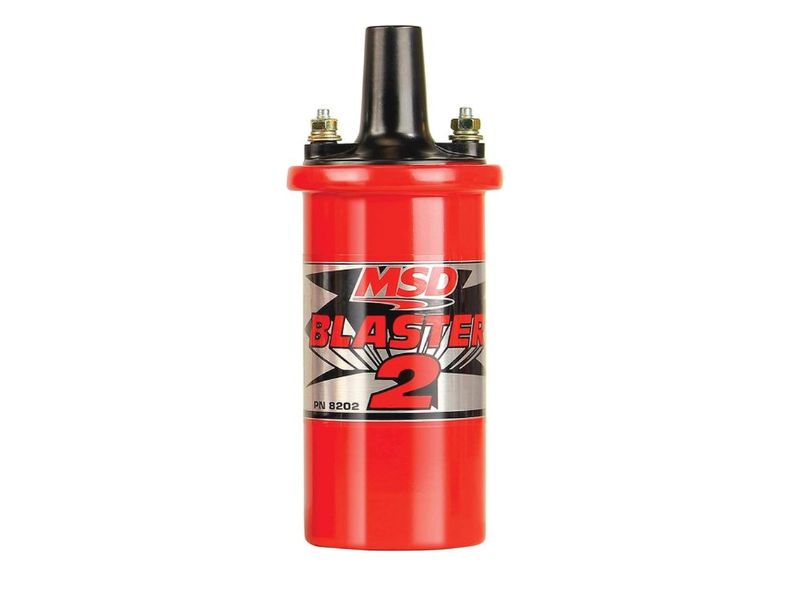
My primary recommendation is the MSD 8202 Blaster 2 Hi-Performance Coil. I prefer it for performance-oriented street builds because its 45,000-volt maximum output, low primary resistance, 100:1 windings, and broad compatibility with performance ignition controls create a useful balance between spark capability and established ignition-system support.
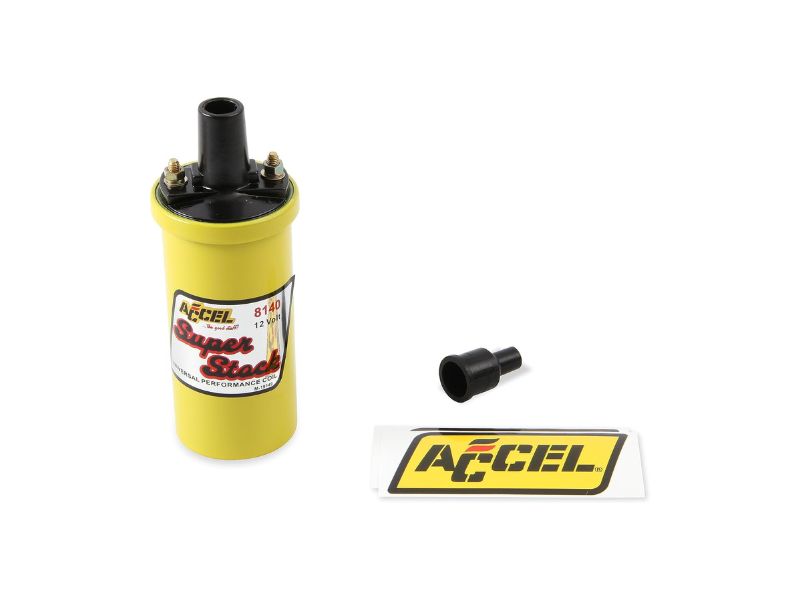
I would consider the ACCEL 8140 Super Stock Universal Performance Coil when replacing a conventional canister-style coil on an older street vehicle. Its 42,000-volt rating and 1.4-ohm primary resistance make it particularly relevant to points and breakerless electronic ignition applications when the complete resistance requirements are followed.
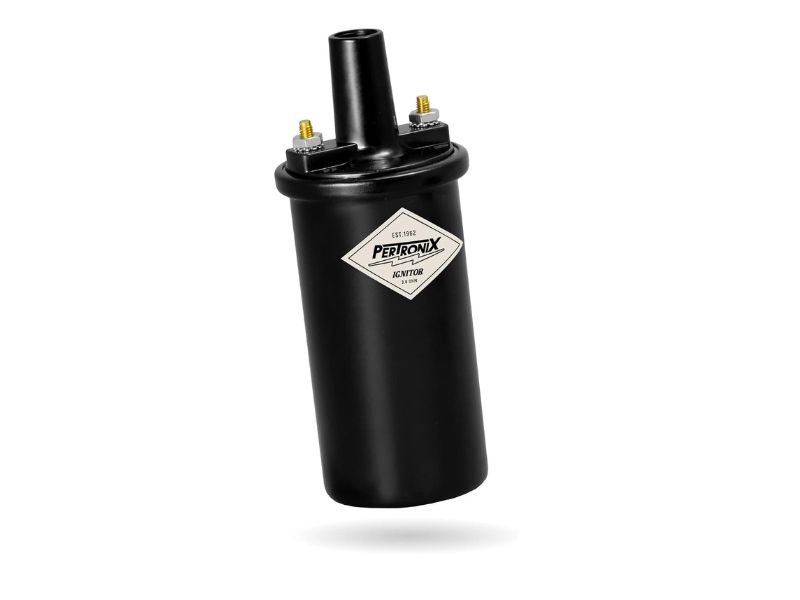
The PerTronix 40611 Flame-Thrower 40,000 Volt 3.0 Ohm Coil is my alternative for buyers who need a 3.0-ohm epoxy-filled coil for a compatible inductive electronic ignition. Its vibration-resistant construction and flexible mounting characteristics can be useful in vehicles where an oil-filled coil is less convenient.
The important step is to verify the required coil resistance and ignition type before ordering any of them.
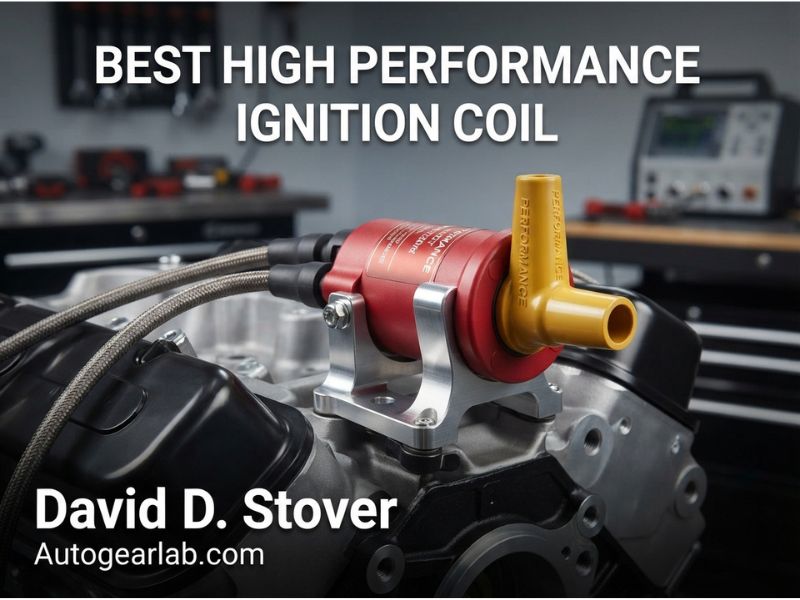
3 Best High Performance Ignition Coil
| Image | Product Name | Check Price |
|---|---|---|
Best Choice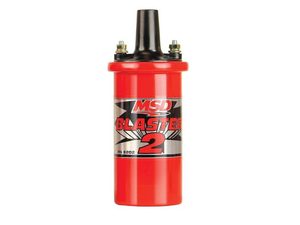 | MSD 8202 Blaster 2 Hi-Performance Coil | Check Price |
Second Best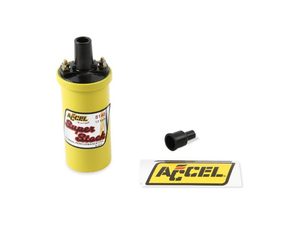 | ACCEL 8140 Super Stock Universal Performance Coil | Check Price |
Third Choice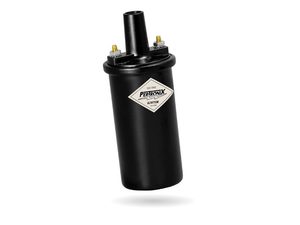 | PerTronix 40611 Flame-Thrower 40,000 Volt 3.0 Ohm Coil | Check Price |
1. MSD 8202 Blaster 2 Hi-Performance Coil
Key Features
- Maximum output rated at 45,000 volts
- 0.7-ohm primary resistance
- 100:1 winding ratio
- Oil-filled metal canister construction
- Compatible with several performance and electronic ignition systems
- Can work with points when the required ballast resistance is used
- Designed for conventional remote canister-coil mounting
The MSD 8202 Blaster 2 is the option I would choose first for a traditional performance street ignition because it provides a useful combination of high spark capability, low resistance, and compatibility with commonly used aftermarket ignition controls.
Its conventional oil-filled canister design may look simple, but the internal winding configuration is optimized for performance ignition duty. The coil uses a high turns ratio to step low primary voltage into the high secondary voltage required to fire the spark plug.
The specified maximum output is 45,000 volts. That number should not be interpreted as the voltage delivered to every spark plug on every firing event. An ignition coil develops only as much voltage as necessary to bridge the spark-plug gap under the conditions inside the cylinder, up to the system’s available capability.
Where additional voltage reserve becomes valuable is under higher ignition demand. Increased compression, richer mixtures, wider plug gaps, forced induction, or high engine speed can make the spark more difficult to initiate. A properly matched performance coil gives the ignition system additional headroom before misfire becomes a problem.
The MSD’s 0.7-ohm primary resistance is equally important. Lower primary resistance allows greater current flow, which can increase magnetic-field strength, but it also means the coil should not simply be connected to every distributor or ignition module without checking requirements.
With a conventional points ignition, appropriate ballast resistance is required. Running excessive primary current through mechanical points can accelerate contact wear and overheat ignition components.
The oil-filled design assists with heat transfer, making this style well suited to conventional street installations. However, mounting position matters. Oil-filled canister coils generally perform best when mounted upright because the insulating and cooling oil needs to remain around the internal windings.
I especially like the 8202 when the rest of the ignition system has already been upgraded. Pairing a performance coil with a suitable distributor, ignition control, quality spark-plug wires, correct plugs, sound charging system, and proper grounds makes much more sense than treating the coil as an isolated horsepower modification.
Installation is relatively straightforward on vehicles already using a remote cylindrical coil, although buyers should verify bracket size, terminal configuration, ballast requirements, and ignition-control compatibility first.
What I Like
- Provides substantial ignition-voltage headroom for performance street applications
- Low primary resistance works well with compatible high-energy ignition systems
- Traditional canister shape simplifies installation in many older vehicles
- Oil-filled construction provides effective thermal management
- Works particularly well as part of a coordinated performance ignition system
What I Do Not Like
- The low resistance is inappropriate for some ignition systems without additional resistance
- Oil-filled construction makes mounting orientation more important
- A mounting bracket is not necessarily included with every installation configuration
Verdict
The MSD 8202 Blaster 2 offers the strongest overall balance among these three choices. I would select it for a performance street engine using a compatible electronic or aftermarket ignition system, especially when stronger high-RPM spark capability is the goal. Just verify primary-resistance requirements before connecting it to a stock module or points distributor.
2. ACCEL 8140 Super Stock Universal Performance Coil
Key Features
- Maximum output rated at 42,000 volts
- 1.4-ohm primary resistance
- Approximately 9.2 kΩ secondary resistance
- Oil-filled steel canister
- Designed for points and breakerless electronic ignition systems
- Rated for use up to approximately 6,500 RPM
- Conventional universal canister-style configuration
The ACCEL 8140 is another traditional high-output coil, but its electrical characteristics put it in a somewhat different position from the MSD.
Its 1.4-ohm primary resistance makes it particularly interesting for older ignition systems where resistance must be carefully coordinated between the coil and any factory or aftermarket ballast resistor.
ACCEL rates the coil at up to 42,000 volts, with a design intended as a performance replacement for conventional canister-type coils. For street-driven classics, muscle cars, older pickups, and similar applications, that configuration may make installation easier than converting to an entirely different coil design.
The coil is designed for use with both points-style and breakerless electronic ignition systems, but this does not mean every system should receive full battery voltage directly. With mechanical points in particular, total primary-circuit resistance needs to remain within the required range.
That distinction is important because many ignition problems blamed on aftermarket coils actually come from improper resistance. Too little resistance increases current, which may overheat the coil, damage points, or stress the switching device. Too much resistance can reduce primary current enough to limit spark energy.
Another useful specification is its approximately 6,500-RPM operating range. That suits a broad range of street engines, including many mildly modified V8s, inline engines, and classic performance applications.
The internal design is oil filled, which provides good heat transfer in a conventional engine compartment. Like other oil-filled canister coils, however, I would favor a proper upright installation unless application-specific instructions say otherwise.
The 8140’s output is sufficient for many naturally aspirated street engines. More voltage is not automatically better once the spark consistently fires the mixture. What matters is having enough reserve for the combination of plug gap, compression, fuel mixture, engine speed, and ignition timing.
For that reason, I see the ACCEL as an especially sensible choice for a classic vehicle that still uses a relatively traditional ignition layout. It offers additional output without requiring the owner to move immediately to a modern coil-on-plug arrangement or race-oriented ignition system.
Its highly recognizable canister design also fits naturally into many older engine bays.
What I Like
- Well suited to conventional canister-coil ignition layouts
- 42,000-volt rating provides useful spark reserve
- 1.4-ohm primary resistance works with many properly configured older systems
- Compatible with points and breakerless electronic ignition designs
- Appropriate operating range for many street-performance engines
What I Do Not Like
- A ballast resistor may still be required depending on the ignition system
- Oil-filled construction favors careful mounting orientation
- Not intended as a universal replacement for modern coil-on-plug systems
Verdict
I would choose the ACCEL 8140 for an older street vehicle where maintaining a traditional canister-coil arrangement matters. It provides a sensible performance step above many basic replacement coils, but its 1.4-ohm resistance must be matched to the distributor and ballast arrangement rather than assumed compatible.
3. PerTronix 40611 Flame-Thrower 40,000 Volt 3.0 Ohm Coil
Key Features
- Maximum output rated at 40,000 volts
- 3.0-ohm primary resistance
- Approximately 8.5 kΩ secondary resistance
- Epoxy-filled internal construction
- Designed for compatible inductive ignition systems
- 12-volt remote canister-style design
- Can be mounted in different orientations
- Suitable for compatible electronic ignition conversions
The PerTronix 40611 is the most specialized choice of the three because its 3.0-ohm primary resistance and epoxy construction make it particularly attractive for certain inductive ignition systems and electronic distributor conversions.
Its maximum voltage rating is 40,000 volts, slightly below the other two products on paper. I would not treat that as a meaningful disadvantage for the intended application. A properly functioning 40,000-volt system can provide more than enough voltage reserve for many naturally aspirated street engines.
Primary resistance is the more important distinction.
At 3.0 ohms, the 40611 can suit systems designed around a higher-resistance coil. That can eliminate the need for an external ballast resistor in certain compatible 12-volt inductive ignition installations, although the distributor or ignition-module instructions should always determine the final wiring arrangement.
The biggest mechanical advantage is the epoxy-filled construction. Instead of relying on liquid oil around the windings, the internals are supported by solid potting material. This makes the coil better suited to environments with vibration or installations where an upright mounting position is inconvenient.
That characteristic can matter in off-road vehicles, specialty builds, older trucks, marine-type environments where specifically approved, or simply engine bays with limited mounting options.
The 40611 also pairs naturally with compatible electronic ignition-conversion systems. Owners replacing mechanical points with an electronic trigger often focus only on removing the points, but correct coil resistance remains critical. An ignition module designed around a 3-ohm coil can overheat if connected to a much lower-resistance coil.
I also appreciate that this model does not rely on an extreme advertised voltage figure to justify its performance positioning. The important combination is adequate secondary voltage, correct primary resistance, durable internal construction, and compatibility with the switching device controlling it.
Buyers should still confirm that their particular ignition system is inductive, since coil requirements for capacitive-discharge systems can be very different.
What I Like
- 3.0-ohm resistance suits many compatible electronic conversion systems
- Epoxy construction handles vibration better than a typical oil-filled design
- Flexible mounting orientation can simplify custom installations
- 40,000-volt capability is sufficient for many performance street engines
- Traditional appearance works well in classic engine bays
What I Do Not Like
- Not suitable for every electronic or capacitive-discharge ignition system
- Lower advertised maximum voltage than the MSD and ACCEL options
- Buyers must choose the correct resistance rather than purchasing by voltage alone
Verdict
The PerTronix 40611 is my preferred alternative when a compatible ignition specifically calls for a 3.0-ohm coil or when vibration resistance and flexible mounting are important. It is not the most universal choice, but in the correct inductive ignition system its electrical characteristics can be more appropriate than a lower-resistance high-output coil.
High Performance Ignition Coil Comparison
| Product | Coil Style | Max Voltage | Primary Resistance | Internal Construction | Ignition Compatibility | Main Strength | Main Limitation |
| MSD 8202 Blaster 2 | Remote canister | 45,000 V | 0.7 Ω | Oil filled | Compatible performance, electronic, and properly resisted points systems | Strong performance-system compatibility | Low resistance requires careful matching |
| ACCEL 8140 Super Stock | Remote canister | 42,000 V | 1.4 Ω | Oil filled | Points and breakerless electronic systems | Practical upgrade for traditional ignition layouts | Ballast requirements vary |
| PerTronix 40611 Flame-Thrower | Remote canister | 40,000 V | 3.0 Ω | Epoxy filled | Compatible inductive ignition systems | Resistance and vibration advantages | Less suitable for low-resistance ignition requirements |
The largest practical difference is not the 5,000-volt spread between the highest and lowest ratings. It is primary resistance and ignition-system compatibility.
The MSD 8202 is the most performance-oriented low-resistance option and makes the most sense with an ignition capable of controlling that current. The ACCEL 8140 occupies the middle ground for many traditional points or electronic arrangements. The PerTronix 40611’s 3-ohm winding makes it better suited to systems specifically designed around that higher resistance.
How to Choose the Best High Performance Ignition Coil
Match the Coil to Your Ignition System First
Before comparing output ratings, determine what type of ignition your vehicle uses.
Older vehicles may use breaker points, while later or upgraded systems may use an electronic distributor, inductive ignition module, capacitive-discharge box, distributorless coil pack, or coil-on-plug arrangement.
A traditional canister coil is not a substitute for a modern coil-on-plug unit simply because both components are called ignition coils.
Check the distributor, ignition control, or vehicle documentation to determine the required coil type and primary resistance.
Understand Primary Resistance
Primary resistance, measured in ohms, controls current through the coil’s low-voltage primary winding.
Lower resistance allows more current to flow. That can help build a stronger magnetic field, but only when the ignition switch or control module can handle the additional current.
For example, the three products reviewed here range from approximately 0.7 ohm to 3.0 ohms.
That difference is substantial.
Installing a 0.7-ohm coil in a system intended for a 3-ohm load may overheat the switching device. Installing a 3-ohm coil where the ignition control expects a very low-resistance performance coil may reduce available energy.
Match resistance before considering voltage.
Do Not Judge a Coil Only by Maximum Voltage
Maximum voltage is one of the most frequently misunderstood ignition specifications.
A 45,000-volt coil does not continuously send 45,000 volts to the plug. The secondary circuit builds voltage until enough is available to ionize the spark-plug gap.
The required voltage changes with:
- Spark-plug gap
- Cylinder pressure
- Compression ratio
- Air/fuel mixture
- Boost pressure
- Plug condition
- Engine load
- Temperature
A high-output coil primarily provides additional voltage reserve for conditions that are more difficult to ignite.
Consider Spark Duration and Energy, Not Just Voltage
Ignition performance also depends on how much energy reaches the spark and how long the discharge remains effective.
A large voltage number alone cannot describe the entire spark event.
A properly engineered coil and ignition control must charge the primary winding, collapse the magnetic field at the right time, and transfer sufficient energy through the secondary circuit.
This is one reason matching components from compatible ignition families can be preferable to assembling parts based entirely on individual specifications.
Oil-Filled vs. Epoxy-Filled Coils
Traditional performance canister coils commonly use either oil-filled or epoxy-filled construction.
Oil transfers heat away from the windings efficiently and works well in normal street applications. The main drawback is orientation. Many oil-filled coils should remain upright to keep their windings properly surrounded.
Epoxy-filled coils use solid potting compound to support the windings. They are typically better suited to vibration and can often tolerate more flexible mounting positions.
For a conventional street car, oil-filled construction is perfectly practical. For severe vibration or unusual mounting, epoxy may be preferable.
Check Ballast-Resistor Requirements
A ballast resistor limits current in the ignition primary circuit.
Many traditional points systems use either an external resistor or a resistance wire. Removing that resistance simply because a new coil is advertised as high performance can shorten point life or overheat the coil.
Conversely, leaving unnecessary resistance in a system designed to operate without it may reduce spark energy.
Always follow the requirements of both the coil and ignition control.
Think About the Rest of the Ignition System
A performance ignition coil cannot compensate for every other ignition problem.
Before expecting an improvement, inspect:
- Battery condition
- Charging voltage
- Engine and chassis grounds
- Distributor cap
- Rotor
- Spark-plug wires
- Spark plugs
- Plug gap
- Ignition timing
- Wiring connectors
A weak connection or damaged plug wire can waste the additional capability of a performance coil.
What Does a High Performance Ignition Coil Actually Improve?
A high-output coil is most useful when the existing ignition is approaching its limits.
Under light-load cruising conditions, a healthy standard coil may already have more than enough energy to fire the plugs. Replacing it with a higher-output unit may produce little noticeable difference.
Benefits become more meaningful when ignition demand increases.
A modified engine may have a higher compression ratio, wider spark-plug gap, richer mixture, increased RPM, or forced induction. Each can make the spark more difficult to initiate.
In those conditions, additional available voltage and spark energy can reduce the likelihood of spark blowout, high-load misfire, or inconsistent combustion.
This is why I view a performance coil as part of an ignition system rather than an isolated power modification.
Installation and Setup Tips
Disconnect battery power before working on the ignition system. Ignition coils generate extremely high secondary voltage, so damaged insulation or careless handling can create a shock hazard.
Before removing the existing coil, label the primary positive and negative wires if their locations are not obvious.
Confirm whether the vehicle uses:
- Full battery voltage
- A ballast resistor
- A resistance wire
- An electronic ignition control
Mount oil-filled coils in the orientation recommended by the manufacturer. Keep the coil away from unnecessary exhaust heat where possible.
Inspect the coil wire at the same time. A high-energy coil paired with an old, cracked, high-resistance coil wire may not deliver reliable spark to the distributor.
After installation, verify timing and check for misfire rather than assuming a different coil requires a larger plug gap.
Ignition Coil Maintenance
Ignition coils normally require little routine maintenance, but the surrounding system should be inspected periodically.
Keep the coil tower and terminals clean and dry. Dirt combined with moisture can encourage carbon tracking, where high voltage finds an unintended path across an insulating surface.
Check primary connectors for corrosion, loose terminals, heat damage, and broken wire strands.
On oil-filled coils, investigate any visible leakage. A leaking coil should not simply be topped up or ignored.
Also inspect spark-plug wires and distributor components because excessive secondary resistance can place unnecessary stress on the coil.
Common Mistakes When Buying a Performance Ignition Coil
Choosing by Voltage Alone
The biggest advertised voltage does not automatically mean the best coil. Correct resistance and ignition compatibility are more important.
Ignoring Primary Resistance
A mismatch can damage points or an ignition module. Verify the required ohm range before installation.
Removing the Ballast Resistor Automatically
Some systems require resistance to control primary current. Do not bypass it without confirming the ignition’s electrical requirements.
Using the Wrong Mounting Position
An oil-filled coil may require upright mounting, while an epoxy-filled model generally provides more orientation flexibility.
Expecting an Automatic Horsepower Increase
A high-performance coil helps when ignition demand exceeds the capability of the existing system. It cannot correct poor fuel delivery, incorrect timing, low compression, or unrelated mechanical problems.
Increasing Spark-Plug Gap Too Aggressively
Additional ignition capability may support a wider gap in some engines, but excessively widening the gap increases the voltage required to fire the plug and can cause misfire.
Frequently Asked Questions
What is the best high performance ignition coil?
The best high performance ignition coil is the one correctly matched to your ignition system.
For a compatible performance street ignition, I prefer the MSD 8202 because it combines a 45,000-volt maximum rating with low primary resistance and broad performance-system compatibility. However, the ACCEL 8140 or PerTronix 40611 may be electrically more appropriate when your ignition requires their specific resistance range.
Will a high performance ignition coil increase horsepower?
A performance coil usually helps horsepower only when the existing ignition cannot fire consistently.
If the original coil already provides enough energy under maximum load, installing a stronger coil may not create measurable additional power. Performance coils become more useful when higher compression, boost, wider plug gaps, elevated RPM, or other changes increase ignition demand.
Is a higher-voltage ignition coil always better?
No, a higher maximum voltage rating does not automatically create a stronger or better ignition system.
The coil only develops the voltage required to fire the spark plug, up to its available capability. Primary resistance, ignition-control compatibility, spark energy, plug condition, and wiring quality are equally important.
What happens if ignition coil resistance is too low?
Resistance that is too low can increase primary current enough to overheat ignition components.
Mechanical points may wear rapidly, and an electronic ignition module can potentially be overstressed if it was not designed to switch the increased current. Always compare the coil’s primary resistance with the required specification for the distributor or ignition control.
What happens if ignition coil resistance is too high?
Excessive primary resistance can reduce coil current and limit available ignition energy.
The result may be difficult starting, weak spark, or misfire under high-load conditions. Resistance should therefore be matched rather than simply increased in an attempt to protect the ignition system.
Do I need a ballast resistor with a performance ignition coil?
A ballast resistor is required only when the coil and ignition system specify additional primary resistance.
Many points systems need a resistor or resistance wire to limit current. Some electronic systems do not. Because coil resistance varies significantly, use the requirements for the particular coil and distributor or ignition module rather than applying one universal rule.
Is an epoxy-filled ignition coil better than an oil-filled coil?
Epoxy is better for vibration and flexible mounting, while oil provides effective heat transfer.
An oil-filled coil works very well in a conventional street installation when mounted correctly. Epoxy supports the internal windings more rigidly, which can make it advantageous in off-road, high-vibration, or unconventional mounting environments.
Can I use a performance coil with points ignition?
Yes, many performance canister coils work with points when total primary resistance is correct.
Mechanical points cannot safely switch unlimited current. A low-resistance performance coil may require a ballast resistor in addition to the resistance already present in the vehicle. Confirm the coil manufacturer’s required total primary resistance before wiring it.
Should I increase spark-plug gap after installing a stronger coil?
Do not increase plug gap unless your engine and ignition combination specifically supports it.
A wider gap can expose more mixture to the initial spark kernel, but it also requires greater firing voltage. Excessive gap may increase the chance of high-load misfire or allow voltage to escape through another part of the secondary ignition system.
Can a high performance ignition coil fix an engine misfire?
A new coil fixes a misfire only when the existing coil or ignition energy is actually the problem.
Misfires can also result from spark plugs, plug wires, distributor components, fuel injectors, vacuum leaks, compression loss, incorrect timing, wiring faults, or engine-management problems. Diagnose the cause before replacing parts.
Conclusion
Choosing the best high performance ignition coil comes down to compatibility before maximum advertised voltage. A performance coil should match your distributor or ignition controller, provide the correct primary resistance, work with the required ballast arrangement, and suit the vehicle’s mounting environment.
The MSD 8202 Blaster 2 remains my primary recommendation for a compatible performance street ignition. Its 45,000-volt capability, low-resistance primary winding, and compatibility with established performance ignition systems give it the strongest overall balance for buyers looking to upgrade a traditional remote coil.
The ACCEL 8140 Super Stock makes more sense when you want a conventional canister-style performance replacement with a 1.4-ohm primary winding, particularly on older points or breakerless electronic ignition systems.
The PerTronix 40611 Flame-Thrower is the more appropriate choice when your compatible inductive ignition calls for a 3.0-ohm coil or when epoxy-filled construction and flexible mounting provide a practical advantage.
Do not choose among them by voltage rating alone. Verify coil resistance, ignition type, ballast-resistor requirements, terminal configuration, and mounting orientation first.
For a compatible performance-oriented street build, I would start with the MSD 8202 Blaster 2 and then make sure the rest of the ignition system is healthy enough to take advantage of it.