Finding the best home air compressor for inflating car tires becomes much easier when you focus on tank capacity, maximum PSI, recovery speed, hose compatibility, and ease of use. For most homeowners, a 6-gallon pancake compressor offers an excellent balance between stored air, portability, and versatility.
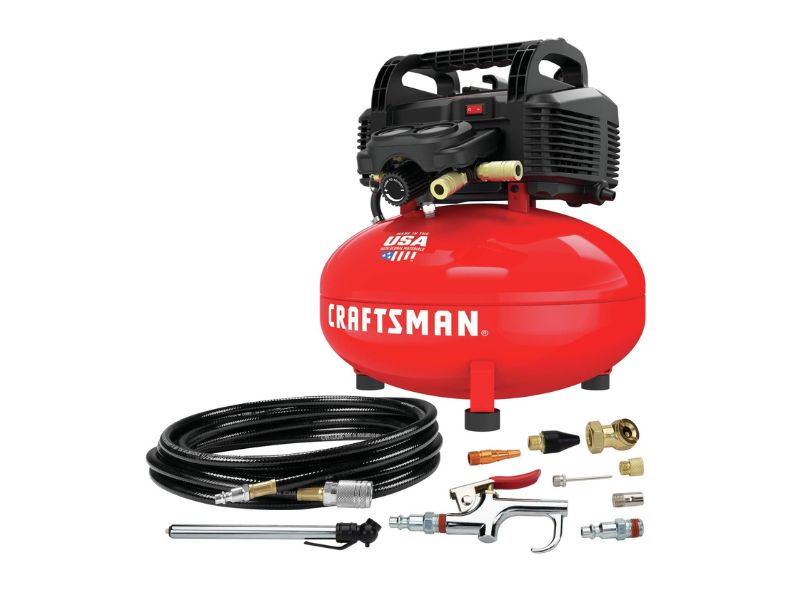
My first recommendation is the CRAFTSMAN CMEC6150K 6-Gallon Pancake Air Compressor. Its 150 PSI capacity, oil-free pump, and included tire chuck, gauge, hose, and inflation accessories make it especially convenient for a home garage.
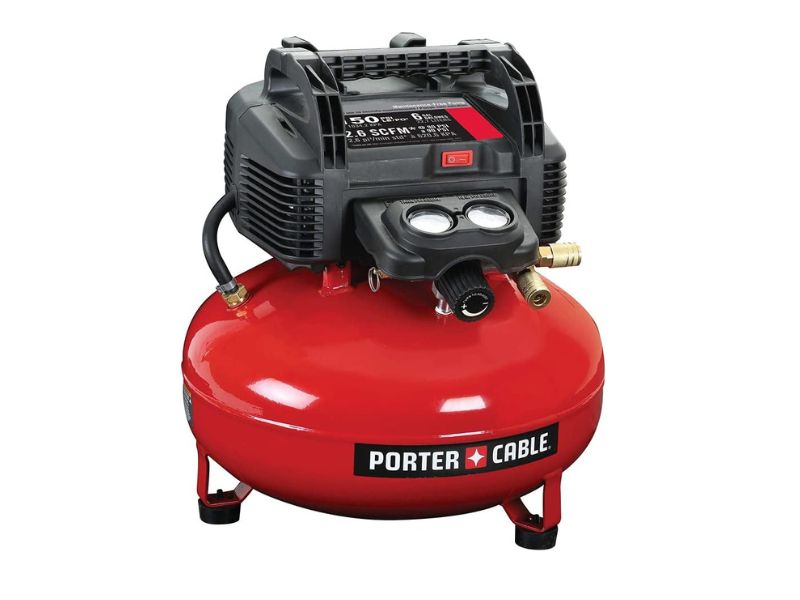
The PORTER-CABLE C2002 6-Gallon Pancake Air Compressor is another dependable option. It combines a compact pancake tank with 150 PSI maximum pressure and 2.6 SCFM at 90 PSI, making it suitable for routine tire inflation and many other household air tasks.
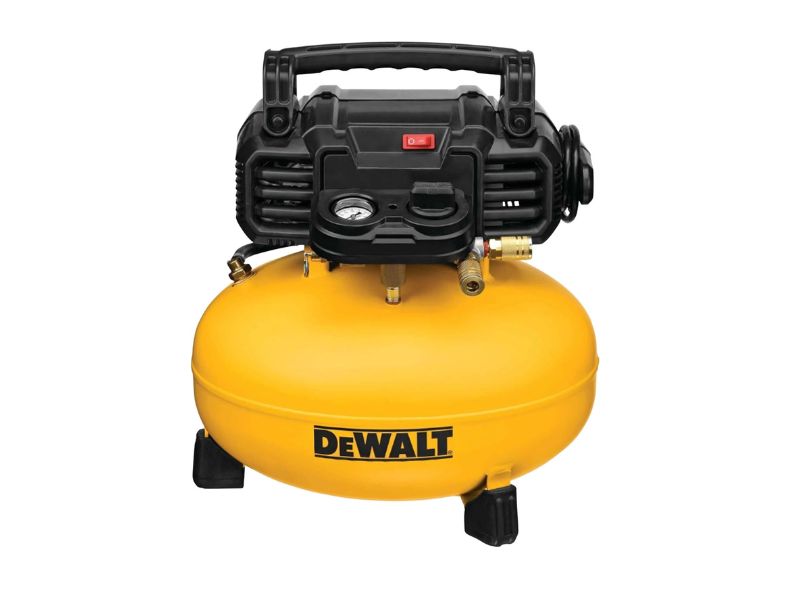
For buyers who prefer a little more stored pressure, I also like the DEWALT DWFP55126 6-Gallon Pancake Air Compressor. Its 165 PSI maximum tank pressure and efficient recovery make it a particularly versatile choice for a garage where the compressor will serve more than one purpose.
Best Home Air Compressors for Inflating Car Tires
1. CRAFTSMAN CMEC6150K 6-Gallon Pancake Air Compressor – Best Overall
Key Features
- 6-gallon pancake tank
- 150 PSI maximum tank pressure
- Approximately 2.6 SCFM at 90 PSI
- Oil-free pump
- Corded 120V operation
- Includes a 25-foot air hose
- Includes tire chuck and tire gauge
- Multiple inflation adapters included
- Dual air couplers
- Compact garage-friendly design
The CRAFTSMAN CMEC6150K is my top choice because it gives a typical homeowner nearly everything needed to begin inflating tires without assembling an entire compressed-air setup separately.
Its 6-gallon tank stores considerably more compressed air than a small handheld inflator. Once the tank is charged, topping off normal passenger-car tires can be quick and convenient.
Maximum tank pressure reaches 150 PSI, which is substantially higher than the recommended operating pressure of normal passenger-car tires. More important than the maximum number, however, is the compressor’s ability to store enough air and recover efficiently while you move from one tire to another.
The compressor delivers around 2.6 SCFM at 90 PSI. Tire inflation itself is not particularly demanding in terms of continuous airflow, so that output is more than sufficient for routine automotive inflation. It also gives the compressor enough versatility for blow guns, brad nailers, finish nailers, and other intermittent pneumatic jobs.
One of its biggest advantages for this particular application is the accessory package. You get a 25-foot PVC hose, tire chuck, tire gauge, blow gun, and inflation adapters. A homeowner buying a compressor primarily for tires therefore avoids the inconvenience of immediately shopping for several basic accessories.
The oil-free pump also makes sense in a residential garage. There is no compressor oil to monitor or replace during routine ownership, although the tank should still be drained periodically to remove accumulated moisture.
Its pancake configuration keeps the center of gravity low and provides a relatively stable footprint. You can store it against a garage wall or underneath suitable shelving much more easily than a large horizontal shop compressor.
The biggest compromise is noise. Pancake compressors are convenient and economical, but their small high-speed motors are not whisper quiet. If your garage shares a wall with living space or you frequently inflate tires early in the morning, noise may matter more than maximum pressure.
For most drivers, however, the combination of capacity, accessories, maintenance-free pump design, portability, and versatility makes the CMEC6150K an excellent home tire-inflation system.
What I Like
- Comes with the essential tire-inflation accessories
- 6-gallon tank is plenty for normal vehicle tires
- 150 PSI provides substantial pressure reserve
- Oil-free design simplifies maintenance
- Portable enough to move around a garage
- Useful for far more than tire inflation
- 25-foot hose improves reach around a vehicle
What I Do Not Like
- Noticeably louder than dedicated low-noise compressors
- Bulkier than a small cordless tire inflator
- Analog gauge setup is less convenient than an automatic digital inflator
Verdict
The CRAFTSMAN CMEC6150K is the strongest all-around choice for a homeowner who wants a real garage compressor rather than a tiny emergency inflator.
Its included hose and inflation hardware are particularly valuable. For someone starting without existing pneumatic accessories, it is the easiest of these three compressors to turn into a practical car-tire inflation station.
2. PORTER-CABLE C2002 6-Gallon Pancake Air Compressor – Best Simple Garage Compressor
Key Features
- 6-gallon pancake tank
- 150 PSI maximum pressure
- 2.6 SCFM at 90 PSI
- 120V low-amp motor
- Oil-free pump
- Dual regulated air couplers
- Water drain valve
- Rubber feet
- Integrated carrying handle and cord wrap
- Compact portable construction
The PORTER-CABLE C2002 has become a familiar style of compressor in home garages because it keeps the basic formula straightforward: a 6-gallon tank, 150 PSI pressure capacity, oil-free pump, and portable pancake configuration.
For inflating tires, it offers more air capacity than most owners actually need. That is useful if you regularly maintain several vehicles, want to adjust pressures on a truck or SUV, or simply dislike waiting on a tiny compressor.
Its 2.6 SCFM at 90 PSI recovery specification means the compressor can refill its tank relatively quickly after pressure falls. When topping off a few PSI in passenger tires, the compressor may have enough stored air to complete much of the job before the motor needs significant recovery time.
PORTER-CABLE also uses a low-amp 120V motor, making the compressor appropriate for normal residential electrical service. As with any substantial compressor, it is best plugged into an appropriate circuit and used according to the manufacturer’s electrical requirements.
The dual air couplers make the C2002 more versatile if you later start using pneumatic nailers or other light-duty tools. That feature is not especially important for filling one tire, but it expands the usefulness of the compressor as your garage setup grows.
The oil-free pump keeps routine maintenance simple. You should still drain moisture from the tank, inspect the hose and fittings, and keep the intake area clean, but there is no regular pump-oil maintenance.
One difference compared with my first pick is accessories. Depending on the exact C2002 package you purchase, you may need to add your own air hose, tire chuck, and pressure gauge. That can actually be an advantage for experienced users because you can choose higher-quality fittings and a longer or more flexible hose.
For someone starting from scratch, though, the extra accessory shopping makes it slightly less convenient than the CRAFTSMAN kit.
What I Like
- Proven 6-gallon pancake design
- 150 PSI tank capacity
- Strong recovery for household inflation work
- Oil-free pump requires little routine maintenance
- Compact and relatively easy to carry
- Dual couplers increase versatility
- Stable pancake tank design
What I Do Not Like
- Tire-inflation accessories may need to be purchased separately
- Pancake-compressor noise can be intrusive indoors
- Less convenient than an automatic digital inflator for a quick one-tire adjustment
Verdict
The PORTER-CABLE C2002 is an excellent choice for homeowners who want a straightforward garage compressor and either already own pneumatic accessories or prefer selecting their own tire chuck, hose, and gauge.
Its combination of 150 PSI and a 6-gallon tank provides substantially more capability than a basic emergency tire pump.
3. DEWALT DWFP55126 6-Gallon Pancake Air Compressor – Best High-Pressure Pick
Key Features
- 6-gallon tank
- 165 PSI maximum tank pressure
- 2.6 SCFM at 90 PSI
- Oil-free pump
- High-efficiency electric motor
- Two universal couplers
- Protective console cover
- Integrated carrying handle
- Compact pancake configuration
- Approximately 33-pound class
The DEWALT DWFP55126 stands out primarily because of its 165 PSI maximum tank pressure. A passenger tire does not need anything close to 165 PSI, but the higher storage pressure lets the 6-gallon tank hold more usable compressed air before the compressor needs to cycle.
That can be beneficial when maintaining multiple vehicles or using the compressor for other intermittent pneumatic jobs.
Air delivery is rated at approximately 2.6 SCFM at 90 PSI, placing it in the same practical performance range as the other compressors here. For tire inflation, that is more than adequate.
The DWFP55126 also uses an oil-free pump, making it appropriate for an owner who wants a compressor that can remain in the garage and be used occasionally without an elaborate maintenance routine.
Its control area is protected by a console-style cover, while the pancake tank gives the machine a relatively compact footprint. Around a home garage, that matters because the compressor can usually be moved or stored without dedicating the kind of floor space required by a 20-, 30-, or 60-gallon unit.
Like the PORTER-CABLE, this model makes the most sense for someone who is comfortable building a tire-inflation setup around the compressor. A good-quality hose, locking tire chuck, and accurate pressure gauge can transform it into an excellent home inflation system.
The higher maximum pressure also makes the DEWALT attractive if tire inflation is only one of several planned uses. It can provide compressed air for cleaning, inflation, and compatible intermittent pneumatic tools.
However, there is little reason to buy purely on the 165 PSI number if you only need to maintain ordinary car tires. For that purpose, accessory convenience and hose reach often matter more.
What I Like
- Highest maximum tank pressure among these picks
- 6-gallon tank provides useful stored-air capacity
- Efficient recovery
- Oil-free pump
- Compact footprint for garage storage
- Versatile enough for other light pneumatic jobs
- Good choice for an existing compressed-air setup
What I Do Not Like
- May require separate tire-inflation accessories
- More compressor than necessary for occasional emergency inflation
- Still produces typical compressor operating noise
Verdict
The DEWALT DWFP55126 is an especially good option for buyers who want a compressor for tire inflation plus broader garage work.
Its 165 PSI tank pressure gives it an advantage in stored-air capacity, although the CRAFTSMAN remains my first recommendation for someone focused primarily on getting a complete home tire-inflation setup.
Comparison of the Best Home Air Compressors for Car Tires
| Product | Tank Size | Max PSI | SCFM @ 90 PSI | Pump | Power | Tire Accessories | Best For |
| CRAFTSMAN CMEC6150K | 6 gal | 150 PSI | ~2.6 | Oil-free | 120V corded | Included | Complete home tire setup |
| PORTER-CABLE C2002 | 6 gal | 150 PSI | 2.6 | Oil-free | 120V corded | Varies by package | Simple garage compressor |
| DEWALT DWFP55126 | 6 gal | 165 PSI | 2.6 | Oil-free | 120V corded | Usually separate | Tire inflation plus garage work |
All three compressors provide far more pressure than a normal passenger tire requires. The practical differences are therefore less about whether they can inflate a tire and more about included accessories, stored-air capacity, portability, noise, and secondary uses.
For a new setup, the CRAFTSMAN CMEC6150K has the advantage because the inflation equipment is already included. The PORTER-CABLE is attractive for buyers who want a simple compressor platform, while the DEWALT offers the highest maximum tank pressure.
What Size Air Compressor Is Best for Inflating Car Tires?
You do not need a massive shop compressor simply to inflate passenger-car tires.
A small tank compressor can perform the job, but a 4- to 6-gallon compressor is a particularly comfortable size for home use. It provides enough stored air for quick top-offs while remaining portable enough to move around the garage.
A 6-gallon pancake compressor is also useful for more than tires. It can support tasks such as:
- Inflating bicycle tires
- Inflating sports equipment
- Blowing dust from equipment
- Using compatible nailers
- Inflating utility tires
- Cleaning work areas with compressed air
- Running certain intermittent pneumatic tools
If tire inflation is literally the only task you will ever perform, a dedicated tire inflator may be smaller and easier to store. But a tank-style compressor offers far greater versatility.
How to Choose a Home Air Compressor for Car Tires
Maximum PSI
PSI, or pounds per square inch, measures pressure.
Most passenger tires operate at pressures far below the 150-165 PSI maximum tank pressures offered by the compressors in this guide. You therefore do not need to chase the highest maximum PSI solely for passenger-car inflation.
The correct tire pressure comes from the vehicle manufacturer, typically shown on a placard inside the driver’s door area or in the owner’s manual.
Do not use the maximum pressure printed on the tire sidewall as your routine inflation target unless the vehicle manufacturer specifically calls for it.
Airflow and SCFM
SCFM describes airflow rather than pressure.
Tire inflation generally does not require the high continuous airflow needed by tools such as grinders, sanders, or paint sprayers. That is why compressors producing roughly 2.6 SCFM at 90 PSI can work very well for normal automotive inflation.
Higher airflow becomes more important if you plan to use the compressor for pneumatic tools.
Tank Capacity
A larger tank stores more compressed air.
For a home garage, 6 gallons is an appealing compromise. It provides considerably more reserve than a tankless inflator without creating the size and weight of a large shop compressor.
Stored air also makes repeated top-offs more comfortable because the compressor does not necessarily have to run continuously while air enters the tire.
Tire Chuck
The tire chuck connects the air hose to the tire’s valve stem.
Simple press-on chucks work, but a locking chuck can make routine inflation easier because it stays attached while you check the pressure.
Whatever style you choose, make sure it seals securely around a standard Schrader valve.
Pressure Gauge Accuracy
An air compressor’s regulator gauge is useful for controlling output pressure, but it should not necessarily be treated as the final authority on tire pressure.
For precise tire maintenance, I recommend using a good dedicated tire pressure gauge.
Check pressures when the tires are cold whenever possible and adjust them to the vehicle manufacturer’s specified cold inflation pressure.
Hose Length
Hose length is easy to overlook.
A compressor may stay in one corner of your garage, while the valve stem you need to reach could be on the opposite side of the vehicle. A 25-foot hose is comfortable for many residential setups.
For larger garages or multiple parked vehicles, a longer quality hose may be worthwhile.
Whenever possible, gaining reach through an appropriate air hose is often more convenient than repeatedly carrying the compressor around the vehicle.
Oil-Free vs. Oil-Lubricated Pumps
For occasional home tire maintenance, an oil-free compressor is particularly convenient.
Oil-free pumps reduce routine servicing requirements and eliminate the need to monitor compressor oil. They are widely used in portable pancake compressors.
Oil-lubricated compressors can have advantages in demanding shop environments, but they are generally unnecessary for basic household tire inflation.
Noise Level
One weakness of many compact pancake compressors is noise.
If you have an attached garage, work late at night, or live close to neighbors, consider how frequently the motor will cycle.
A quieter compressor may cost more, but reduced noise can be worthwhile when the machine is used frequently in an enclosed garage.
Portability
A 6-gallon pancake compressor is portable in the sense that one person can normally carry it around a garage or workshop, but it is not portable in the same way as a small battery-powered inflator.
If you need something that permanently stays inside your car for roadside emergencies, buy a dedicated portable inflator.
A 6-gallon unit makes more sense as a home garage air station.
Home Air Compressor vs. Portable Tire Inflator
Both can inflate a car tire, but they solve slightly different problems.
A portable tire inflator is compact, easy to carry in the vehicle, and often includes automatic shutoff. It is excellent for emergencies and quick pressure adjustments.
A home air compressor is larger but considerably more versatile. It stores compressed air, can inflate numerous items, powers compatible pneumatic equipment, and generally offers more convenient airflow for repeated use.
Many drivers can benefit from owning both: a small inflator in the vehicle and a tank compressor in the garage.
Do You Need a 150 PSI Compressor for Car Tires?
No. A car tire does not require a 150 PSI inflation pressure.
The advantage of a 150 PSI compressor is that the tank can store air at a much higher pressure than the tire itself requires. The compressor regulator then reduces output to a suitable working pressure.
That pressure reserve gives the machine flexibility for multiple inflation jobs and other air-powered applications.
Do not confuse the compressor’s maximum tank pressure with the tire’s recommended inflation pressure.
Can a 6-Gallon Air Compressor Inflate Truck Tires?
It depends on the truck and tire.
A 6-gallon compressor can handle many pickup and light-truck inflation tasks, particularly when you are simply topping off pressure.
Larger commercial tires, high-pressure RV tires, and heavy-duty truck applications can require substantially more air volume and sometimes higher pressures. For those applications, compressor duty cycle, airflow, maximum pressure, and tank capacity deserve closer consideration.
For normal passenger cars, crossovers, and many light-duty vehicles, a 6-gallon compressor provides plenty of capacity.
Safety Tips When Inflating Tires at Home
Always determine the correct cold tire pressure before connecting compressed air.
The recommended pressure is normally listed on the vehicle’s tire-information placard. Inflation requirements can differ between front and rear tires on some vehicles.
Use a reliable gauge rather than guessing by appearance.
Add air in controlled increments and recheck the reading regularly. If you accidentally add too much, bleed pressure carefully until you reach the correct specification.
Inspect hoses and fittings before use. Damaged hoses, poorly seated couplings, and worn valve chucks can create leaks or safety hazards.
The compressor tank should also be drained according to its instructions because moisture can accumulate inside during normal compression cycles.
Frequently Asked Questions
What is the best home air compressor for inflating car tires?
The CRAFTSMAN CMEC6150K is my top all-around choice for home tire inflation.
Its 6-gallon tank, 150 PSI maximum pressure, oil-free pump, and included hose, tire chuck, gauge, and inflation accessories make it particularly convenient. You can use it for normal passenger tires while still having enough versatility for air cleaning, inflatables, nailers, and other compatible household pneumatic jobs.
Is a 6-gallon air compressor enough for car tires?
Yes, a 6-gallon compressor is more than sufficient for normal car-tire inflation.
Car tires require relatively modest airflow compared with many pneumatic tools. A 6-gallon tank provides a comfortable supply of stored air for topping off multiple tires and allows the compressor to serve numerous other household purposes. You do not need a huge stationary tank simply for automotive inflation.
How much PSI should an air compressor have for car tires?
A compressor capable of at least typical automotive tire pressures is sufficient, but extra capacity is useful.
The 150-165 PSI maximum ratings found on these compressors refer primarily to the pressure stored inside the compressor tank. Your tire should only be inflated to the pressure recommended by your vehicle manufacturer, which is usually much lower.
Is a pancake compressor good for inflating tires?
Yes, a pancake compressor is an excellent garage option for routine tire inflation.
Its wide, low tank provides stability, while the compact shape makes storage relatively easy. Six-gallon pancake models also store enough compressed air for repeated top-offs and remain versatile enough for other household pneumatic jobs.
Should I use the compressor gauge to check tire pressure?
A dedicated tire-pressure gauge is preferable for confirming the final tire pressure.
The compressor’s gauges primarily show tank and regulated outlet pressure. They are useful for controlling the air supply but are not always the most convenient or precise tools for confirming tire pressure. A quality handheld digital or analog tire gauge makes final adjustments easier.
Can I keep a 6-gallon compressor in my car?
You can transport one, but it is usually better suited to the garage.
A 6-gallon pancake compressor is relatively portable for a workshop machine, yet it is much heavier and bulkier than a dedicated vehicle inflator. Most models also require household AC power. For roadside emergencies, keep a compact 12V or cordless inflator in the vehicle instead.
Does tank size affect how fast a tire inflates?
Tank size affects stored-air reserve, while airflow also influences actual inflation performance.
A larger tank allows the compressor to store more compressed air before the motor has to run again. However, SCFM, operating pressure, hose restrictions, tire size, and the starting tire pressure also influence inflation performance. For normal passenger tires, a 6-gallon unit offers a comfortable reserve.
Should I drain my air compressor after using it?
Yes, periodically draining accumulated moisture is an important part of compressor maintenance.
Compressing atmospheric air can cause water to collect inside the tank. Leaving moisture in a steel tank for long periods is undesirable. Follow the compressor manufacturer’s instructions for safely depressurizing and draining the tank, particularly if the compressor is used frequently or stored in a humid garage.
Final Thoughts
For most homeowners looking for the best home air compressor for inflating car tires, a 6-gallon oil-free pancake compressor is an excellent balance of capacity, portability, and versatility.
My first choice is the CRAFTSMAN CMEC6150K. The compressor itself has plenty of capability for passenger-car tires, and the included hose, tire chuck, gauge, and inflation accessories make it the most complete option for someone building a home setup from scratch.
The PORTER-CABLE C2002 is a strong alternative if you already have air accessories or prefer buying your own hose and tire chuck.
The DEWALT DWFP55126 is particularly attractive when you want a compressor that can inflate tires while also serving as a more general-purpose garage air source.
For straightforward home tire maintenance, though, the CRAFTSMAN CMEC6150K provides the most practical overall package of the three.