
Choosing the best home charger for ioniq 6 means balancing charging speed, outlet compatibility, cable reach, and how much control you want over charging times. A portable J1772 charger can be convenient, but the right fit depends on your home’s electrical setup as much as the charger itself.
My first choice is ETL Certified J1772 EVSE. It can use a compatible 120V household outlet or a NEMA 6-20 outlet, so it may suit drivers who want portable charging flexibility.
My second choice is NEMA5-15/6-20Plug Adjustable Current& Timer 8-16A 110-240V 21ft Charging Cable. Those controls can help match charging to a suitable outlet and schedule charging for a more convenient time.
My third choice is ETL Certified 16-Amp J1772 Portable Level 1 & 2 EV Charger. It may suit drivers who value flexibility, though checking its supplied plug arrangement and outlet requirements is essential before buying.
Below, I compare five portable J1772 options, explain the trade-offs behind their rankings, and cover compatibility, electrical setup, safe use, and everyday ownership considerations for Ioniq 6 drivers.
5 Best Home Charger for Ioniq 6 Comparison
I compared the products for Ioniq 6 relevance, charging options, cable length, controls, and the practical information supplied about protection and certification. Customer ratings and feedback counts were not provided, so the rankings rely on the available product details; brand diversity was considered where identifiable brands were supplied.
| # | Image | Product | Price on Amazon |
|---|---|---|---|
| 1 |  |
ETL Certified J1772 EVSE | Price on Amazon |
| 2 |  |
NEMA5-15/6-20Plug Adjustable Current& Timer 8-16A 110-240V 21ft Charging Cable | Price on Amazon |
| 3 |  |
ETL Certified 16-Amp J1772 Portable Level 1 & 2 EV Charger | Price on Amazon |
| 4 | 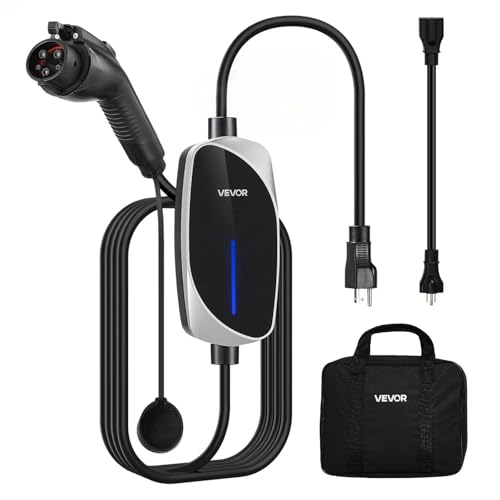 |
120V-240V NEMA 6-20P NEMA 5 15 Adapter and LED Indicator | Price on Amazon |
| 5 |  |
3.5KW 16amp Home EV Car Charging Station 110V-240V NEMA 6-20 | Price on Amazon |
ETL Certified J1772 EVSE
The EVDANCE is a flexible choice if you want one portable charger that can work with more than one suitable outlet. It comes with a NEMA 6-20 plug for 240V charging and a 6-20-to-5-15 adapter for 120V household charging. The stated maximums are 16A at 240V and 12A at 120V, so the household-outlet option is a slower fallback rather than a substitute for a dedicated 240V setup.
Its 25-foot cable can make a difference when the vehicle’s charge port is not close to the outlet. The included carrying bag also suits drivers who may take the charger to another location. An LED display reports charging status and errors, giving you a basic way to check what is happening without relying only on the car’s display.
For Ioniq 6 owners, the key fit question is the connector: this unit uses the North American J1772 standard, which is the relevant AC charging connection for a US-market Ioniq 6. The listing states compatibility with Hyundai vehicles, but advises checking its full compatibility list. Do not assume the charger will work from every 240V outlet: the supplied plug is NEMA 6-20, and the listing excludes several other outlet types unless a separately purchased adapter is used.
Pros
- 25-foot cable and included carrying bag.
- Supports 120V and 240V charging with the included plug arrangement.
- ETL certification is stated in the product title.
Cons
- Its 16A 240V rating is modest compared with higher-amperage home charging equipment.
- Not compatible with every 240V outlet without a suitable, separately purchased solution.
My Opinion
This is the strongest general-purpose pick in this group for an Ioniq 6 driver who wants a portable J1772 unit and can confirm a compatible outlet. Its length and included adapter are useful, but outlet matching should come before purchase.
NEMA5-15/6-20Plug Adjustable Current& Timer 8-16A 110-240V 21ft Charging Cable
The Raylix stands out for its charging controls. It offers four current settings—8A, 10A, 12A, and 16A—and a delay timer adjustable from one to 12 hours. That can be helpful when you want to reduce the current to suit a particular charging situation or delay charging until a chosen time. The timer does not itself guarantee lower electricity rates; that depends on your utility plan and when charging actually takes place.
This is a dual-voltage portable charger with a NEMA 6-20 plug for 240V use and a NEMA 5-15 adapter for 120V use. The listing says it automatically limits current to 12A on a 5-15 outlet, an important distinction for household charging. It gives estimated charging speeds of 9–12 miles per hour at 240V and 3–5 miles per hour at 120V, but actual results depend on the vehicle, electrical supply, and charging conditions.
A 21-foot cable is shorter than the 25-foot cords on several other options here, so check where the Ioniq 6’s charge port will sit relative to the outlet. Its color display reports voltage, current, power, and temperature, providing more at-a-glance information than a basic indicator. The listing also states IP65 water resistance, FCC and CE certifications, and a two-year warranty. Confirm the exact connector and outlet requirements before use, and follow the vehicle and charger instructions.
Pros
- Four current settings and a one-to-12-hour delay timer.
- Color display shows several charging readings.
- Stated two-year warranty.
Cons
- 21-foot cable may not reach as easily as longer alternatives.
- Uses a NEMA 6-20 connection for 240V charging.
My Opinion
Choose the Raylix if charging controls and a delay timer matter more to you than maximum cable reach. It has a useful feature set, but the timer is a scheduling tool—not a promise of savings—and outlet compatibility still needs to be verified.
ETL Certified 16-Amp J1772 Portable Level 1 & 2 EV Charger
This 16A portable charger offers a long 25-foot cable and two ways to connect: a NEMA 6-20 plug for 240V charging and a NEMA 5-15 adapter for 120V use. Its listing gives maximum outputs of 3.68kW at 240V and 1.44kW at 120V, with estimated speeds of up to 12 miles per hour and 3–5 miles per hour, respectively. These are listing estimates, not a promise of how quickly every Ioniq 6 will charge.
Current can be adjusted from 6A to 16A, with an automatic limit of 12A on a 5-15 outlet. That range may be useful when you need to choose a lower setting, but it does not make an unsuitable outlet or circuit safe for charging. A built-in delay timer and display showing charging parameters add scheduling and monitoring functions. The listing also describes several electrical protections and an IP66-rated control box.
The longer cable may help if a parking position is offset from the outlet, while the supplied 6-20 connection remains a specific requirement for its 240V mode. The listing describes the unit as ETL certified, but buyers should check the product label and documentation for the certification details that apply to the exact model they receive. The supplied data does not identify a brand name, so it is especially useful to verify the seller’s support and product documentation before purchasing.
Pros
- 25-foot cable and adjustable 6A–16A current settings.
- Supports 120V and 240V charging with the stated adapters.
- Includes a delay timer and charging-status display.
Cons
- 240V charging requires a compatible NEMA 6-20 outlet.
- Brand identity and warranty details are not supplied here.
My Opinion
This option has a useful mix of cable reach and adjustment features, but it ranks behind the first two because the supplied product information gives less brand and ownership context. Consider it only after confirming its documentation, outlet fit, and support arrangements.
120V-240V NEMA 6-20P NEMA 5 15 Adapter and LED Indicator
VEVOR’s portable charger combines a 25-foot cable with a NEMA 6-20 plug and a NEMA 5-15 adapter. That gives Ioniq 6 owners a 120V household-outlet option and a 240V option when a compatible 6-20 outlet is available. The extra reach can help in a garage or driveway where the parking spot is not directly beside the outlet; the carrying bag is useful if you plan to transport the unit.
The listed information emphasizes protective functions, including surge, leakage, grounding, voltage, current, temperature, and overcharging protections. Its control box is described as IP66-rated, and LED indicators show charging status or alert you to problems. These details can make basic operation easier to monitor, but they do not replace following the installation and use instructions or checking whether the outlet and circuit are suitable.
Compared with the Raylix and the third-ranked option, the supplied details do not list adjustable current levels or a timer. That may not matter if you simply want a portable unit with a straightforward status indicator, but it offers less scheduling and current-setting flexibility based on the information available. The listing says it supports SAE J1772 electric and plug-in hybrid vehicles, which makes the connector relevant to a US-market Ioniq 6. Still, verify your vehicle’s charging requirements and the actual plug configuration before ordering.
Pros
- 25-foot cable and carrying bag.
- Includes 6-20 plug and 5-15 adapter.
- LED status indicators and stated IP66-rated control box.
Cons
- No adjustable current levels or delay timer are specified in the supplied details.
- 240V charging depends on access to a compatible NEMA 6-20 outlet.
My Opinion
The VEVOR is a reasonable straightforward option if cable length and basic status indicators are your main priorities. Buyers who want current adjustment or scheduled charging may prefer a product whose supplied specifications explicitly include those controls.
3.5KW 16amp Home EV Car Charging Station 110V-240V NEMA 6-20
The VDLPOWERVP provides a portable Level 1 and Level 2 option with a 20-foot cable. Its NEMA 6-20 plug is for 240V charging, while the included NEMA 5-15 adapter supports 120V charging. The stated 240V maximum is 16A and 3.5kW; at 120V, it is listed for 12A. These options can be useful for a driver who wants to charge at home and occasionally carry the unit elsewhere, provided the available outlet matches.
A 20-foot cord is a middle ground: shorter than the 25-foot cords on several alternatives, but potentially enough for a parking spot near the outlet. The control box has LED indicators for status and errors. The listing describes it as IP65 waterproof and dustproof, FCC certified, and equipped with lightning and leakage protection. Those are product claims rather than a reason to expose the unit to conditions or handling beyond its instructions.
The listing describes the connector as SAE J1772 and states compatibility with J1772 vehicles, which is the relevant connector type for a US-market Ioniq 6. Its supplied details do not mention adjustable current settings, a delay timer, or a longer warranty, so drivers seeking those specific features should compare alternatives. One product claim says low-current charging can reduce battery wear, but the supplied information does not establish that claim as a special benefit of this charger; set charging based on the vehicle and electrical instructions instead.
Pros
- 20-foot cable and both 120V and 240V connection options.
- LED indicators report status and errors.
- Portable format with a stated IP65 control-box rating.
Cons
- Shorter cable than the 25-foot options in this roundup.
- No current adjustment or timer is specified in the supplied details.
My Opinion
This is a practical basic portable choice if its 20-foot reach works for your parking layout and you have a compatible outlet. It ranks fifth because the available information describes fewer controls and less ownership support than the higher-ranked options.
How I Selected These Best Home Chargers for Ioniq 6
I focused on portable J1772 chargers with stated 120V and/or 240V charging options, since connector type and outlet compatibility are central to choosing an AC home charger for a US-market Ioniq 6. Cable length, current controls, scheduling features, safety information, and available certification or warranty details helped distinguish products with otherwise similar basic functions.
Product data did not include customer ratings, customer-feedback volume, or independent test results. I therefore did not treat popularity or performance claims as independently established; where a charging speed or protection rating is mentioned, it is attributed to the supplied product information.
A charger’s plug must match the outlet, and the outlet and circuit must be suitable for the charging load. A plug adapter alone does not confirm that a circuit is safe or properly rated.
Rankings reflect usefulness for a typical owner who wants a home-capable portable charger, not a claim that one unit is ideal for every garage. A longer cable, current selection, timer, or named warranty can matter differently depending on the installation and charging routine.
How to Choose the Best Home Charger for Ioniq 6
Start with the outlet and your charging routine, then compare cable reach and controls. These units are portable chargers, not interchangeable solutions for every electrical setup.
- Confirm that the charger uses the connector required by your Ioniq 6 and that the product documentation lists your vehicle or compatible J1772 vehicles.
- Identify your outlet type before choosing a charger; NEMA 5-15 and 6-20 plugs are not interchangeable with every other outlet.
- Decide whether slow 120V charging meets your needs or whether a compatible 240V connection is important.
- Measure the route from the outlet to the vehicle’s charge port, allowing enough cable reach without stretching or creating a trip hazard.
- Compare current adjustment, timers, display information, warranty details, and certification documentation rather than relying only on broad safety claims.
Check connector and vehicle fit
For a US-market Ioniq 6 using AC home charging, look for a J1772 connector. Check the listing and included documentation for the exact unit, not just a general statement that it fits “all EVs.” Tesla vehicles may require an adapter, but that does not apply to the J1772 connection used by the Ioniq 6 in this context.
Choose a realistic charging level
Level 1 charging uses a household 120V connection and is generally slower than 240V charging. A 240V charger may add range faster, but the actual charging rate depends on the vehicle, electrical supply, and charger limits. The products listed here are capped at 16A on their stated 240V configurations, so they should not be confused with higher-powered hardwired home charging equipment.
Match cable length to your parking layout
Compare the cable length with the actual path between outlet and charge port. A nominal 25-foot cable can offer more positioning flexibility than a 20- or 21-foot cable, but the cord should not be pulled taut, pinched under a door, or routed where people can trip over it. If you routinely park in different positions, cable reach may be more important than a display or timer.
Decide which controls you will use
Adjustable current can help you select a lower setting where appropriate, and a delay timer can postpone when charging begins. A display can make it easier to see charging information at the control box. These features are useful only when they suit your routine and are used according to the product instructions; they do not fix an unsuitable circuit or guarantee a lower electricity bill.
Understand Your Outlet Before Installation
Before ordering, identify the receptacle by its actual configuration and check the circuit’s suitability. The EVDANCE, Raylix, third-ranked charger, VEVOR, and VDLPOWERVP models described here use a NEMA 6-20 connection for their listed 240V mode, though included adapters and details differ. Some 240V outlets have different configurations, and a plug that looks similar is not enough to confirm compatibility.
If you are unsure what outlet or circuit you have, ask a qualified electrician to assess it before charging. Do not use a mismatched adapter as a shortcut or assume that a receptacle is ready for repeated EV charging simply because another appliance used it. Follow the charger instructions and the requirements for the vehicle and electrical installation.
Keep household-outlet use within the stated limits
For NEMA 5-15 use, follow the charger’s 120V current limit. The listings here specify 12A on that connection for several models. Avoid extension cords or power strips unless the manufacturer explicitly permits the exact arrangement; added connections can introduce hazards and may not be suitable for sustained charging.
First-Time Setup for a Portable Ioniq 6 Charger
Read the charger manual and the vehicle instructions before the first session. Confirm the connector, chosen outlet, current setting if available, cable condition, and display or indicator meanings. Keep the control box and connections positioned as instructed, and route the cable so it does not become a walking obstacle or get crushed by the vehicle.
Connect the charger and vehicle in the order described by the manufacturer. Check that charging begins and that the unit does not show an error. If the outlet, plug, cord, or control box becomes unusually hot, or if charging repeatedly stops, stop using the equipment and seek guidance rather than continuing to reset it.
Choose a safe charging location
A weather-resistant control-box rating does not mean every connector or outlet can be left exposed to water. Use the equipment only in conditions permitted by its instructions, and protect the receptacle and plug connection as directed. Keep the charger away from vehicle tires, standing water, and places where it could be struck or snagged.
Use Charging Timers and Current Settings Wisely
Only some options here explicitly list a timer or selectable current levels. Raylix offers four settings and a one-to-12-hour delay, while the third-ranked unit lists a broader current range and a delay timer. If you use these controls, select settings that are appropriate for the outlet and circuit and confirm the schedule on the unit or vehicle.
A timer is most useful when you already know when you want charging to start. It does not establish that your electricity rate is cheaper at that time; check your utility plan for off-peak periods. Likewise, lowering current can extend the time needed to charge, so consider how much energy the vehicle needs before setting a schedule.
Care, Storage, and Cable Handling
Inspect the plug, cable, and charger before use. Look for cuts, crushed sections, loose parts, damaged pins, or signs of overheating. Keep connection points clean and dry as directed by the manufacturer, and do not try to repair damaged electrical components yourself.
When finished, disconnect the equipment according to its instructions and coil the cable loosely rather than tightly bending it. A carrying bag can help protect a portable charger during transport, but store the equipment so it is not crushed by luggage or exposed to conditions prohibited by the manual. Keep the connector off the ground when possible.
Know when to stop using the charger
Stop charging if the unit repeatedly reports a fault, the plug or receptacle shows heat damage, or the cable appears compromised. Preserve any product documentation and contact the manufacturer or seller for support. Continuing to use damaged charging equipment is not a sensible way to troubleshoot a problem.
Common Mistakes to Avoid
Most avoidable problems come from assuming that a familiar-looking outlet or a broad compatibility claim tells the whole story. Check the exact charger, vehicle, and electrical setup before plugging in.
- Buying before identifying the outlet: several chargers here use a NEMA 6-20 plug for 240V charging, not every 240V receptacle.
- Assuming an adapter makes any outlet suitable: an adapter does not verify circuit capacity, grounding, or suitability for sustained charging.
- Expecting Level 1 to charge like Level 2: 120V charging is slower; plan around the time available and the vehicle’s needs.
- Ignoring cable reach: measure the actual route to the Ioniq 6’s port, including how the car will be parked.
- Overlooking current limits: use the current appropriate to the outlet and follow the charger instructions, including any automatic limit.
- Treating protection ratings as permission for careless placement: protect the plug and receptacle as instructed, and avoid damage, water exposure, and trip hazards.
FAQS About Best Home Charger for Ioniq 6
What connector should I look for in a home charger for a US-market Ioniq 6?
Look for a J1772 connector for AC charging and verify compatibility in the charger’s product documentation. The five options in this comparison are described as J1772 chargers.
Can I use a regular household outlet to charge my Ioniq 6?
A compatible Level 1 charger can use a NEMA 5-15 household outlet, subject to the charger’s stated current limit and the suitability of the circuit. It charges more slowly than a suitable 240V connection.
Will a NEMA 6-20 charger plug into any 240V outlet?
No. NEMA 6-20 is a specific plug and receptacle configuration. Confirm the outlet type and electrical suitability; do not assume that all 240V outlets match or use an adapter without confirming it is appropriate.
How long should the charging cable be?
Choose a length that reaches from your outlet to the Ioniq 6’s charge port in its normal parking position without stretching or creating a hazard. The chargers here have cables from 20 to 25 feet.
Is a portable 16A charger the same as a higher-powered home charging station?
No. These products are listed at up to 16A on their 240V configurations. A higher-powered home setup has different electrical requirements and should be selected and installed based on the vehicle and home’s electrical capacity.
Final Thoughts
The best home charger for ioniq 6 depends on your outlet, parking layout, and need for controls. I’d start with the EVDANCE Level 1 & 2 Portable J1772 EV Charger for its cable reach and dual-voltage setup, consider the Raylix 16A Adjustable Level 1 & 2 J1772 Portable EV Charger for current selection and scheduling, and choose the ETL Certified 16-Amp J1772 Portable Level 1 & 2 EV Charger if its longer cable and controls fit your needs. Confirm the outlet and circuit before buying or charging.