
Finding the best integrated dash cam can be confusing because “integrated” may mean an OEM-style camera, a discreet windshield unit, a mirror display, or an all-around system with several cameras. The right choice depends on vehicle compatibility, coverage, storage, night performance, and whether you need protection while parked.
My first choice is Toyota Toyota Genuine Integrated Dash Cam/Camera Dashcam Multiple Models. It starts recording with the ignition and can also respond to an impact while driving or parked, while the included 16GB industrial-grade card and smartphone or PC playback keep the basic ownership experience straightforward.
My second choice is ROVE R2-4K Dual Dash Cam Front and Rear. Its front footage is upscaled from 2.5K to 4K rather than native 4K, but the Sony STARVIS 2 sensor and wide aperture make it a well-balanced option for everyday drivers.
My third choice is WOLFBOX G840S 12″ 4K Mirror Dash Cam Backup Camera. WOLFBOX G840S 12 4K Mirror Dash Cam Backup Camera takes my third spot for buyers who want a large mirror-style display and a broad view behind the vehicle. The 12-inch screen, 4K front camera, 1080p rear camera, GPS, and 170-degree front lens provide useful visibility, although its mirror format is more noticeable than a compact windshield camera.
This guide compares all 10 choices in rank order, then explains how the products were selected and what to check before buying. You will also learn how to match camera coverage to your vehicle, plan a hardwired parking mode, choose storage, install the cameras safely, avoid common setup mistakes, and maintain the system over time.
10 Best Integrated Dash Cam Comparison
I selected these products for their relevance to integrated or discreet in-vehicle recording, useful coverage options, installation needs, storage details, and customer-feedback evidence where available. The ranking also considers practical differences between OEM-style systems, compact dual cameras, mirror displays, and multi-channel units rather than treating every dash cam as interchangeable.
| # | Image | Product | Price on Amazon |
|---|---|---|---|
| 1 | 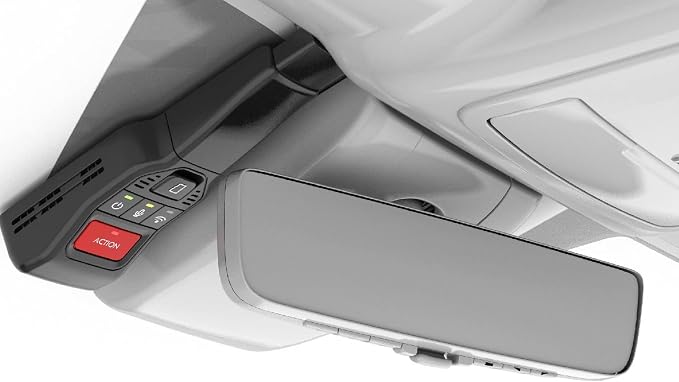 |
Toyota Toyota Genuine Integrated Dash Cam/Camera Dashcam Multiple Models | Price on Amazon |
| 2 |  |
ROVE R2-4K Dual Dash Cam Front and Rear | Price on Amazon |
| 3 |  |
WOLFBOX G840S 12″ 4K Mirror Dash Cam Backup Camera | Price on Amazon |
| 4 |  |
IIWEY N6 360° Dash Cam 4 Channel | Price on Amazon |
| 5 |  |
REDTIGER F17 4K 3CH Dash Cam | Price on Amazon |
| 6 |  |
navycrest 4K Dash Cam Front and Rear | Price on Amazon |
| 7 |  |
ZMOPO View 4 Channel Dash Cam Front and Rear Left Right Inside | Price on Amazon |
| 8 |  |
70mai 4K Dash Cam Front and Rear Inside 3 Channel | Price on Amazon |
| 9 |  |
TERUNSOUl 4K+4K+1080P 3 Channel Dash Cam | Price on Amazon |
| 10 |  |
Aputeta 4K+4K Dual Dash Cam Front and Rear | Price on Amazon |
Toyota Toyota Genuine Integrated Dash Cam/Camera Dashcam Multiple Models
The Toyota Genuine Integrated Dash Cam is the clearest match for a buyer who wants a camera associated with the vehicle rather than a generic windshield accessory. It is intended to capture video, images, sound, and location information during operation, and it can begin recording with the ignition. Impact-triggered recording is also listed for incidents while driving or when the vehicle is parked.
Playback and downloads are available through a smartphone app or PC tool, which gives you two practical ways to save important footage or share it. A 16GB industrial-grade microSD card is included, so the basic package is ready for initial use. That capacity is modest compared with several multi-camera alternatives, making regular file management more important if you drive often.
The major limitation is fitment. The listing states that some models require a separate wire harness and that the camera does not fit every Toyota model. The supplied customer rating is 2.7 from nine ratings, a much smaller feedback pool than most of the other products here. I would confirm the exact year, trim, camera position, harness requirement, and return policy before ordering.
Pros
- Vehicle-focused integrated design for selected Toyota models
- Ignition recording plus impact recording while moving or parked
- Smartphone app and PC playback options
- Includes a 16GB industrial-grade microSD card
Cons
- Does not fit all Toyota models
- Some installations require a separate wire harness
- Included storage is limited compared with 128GB options
- Small customer-feedback sample and lower listed rating
My Opinion
This is the most appropriate choice for a Toyota owner who values a model-specific installation above broad camera coverage. Compatibility must come first; without confirmed fitment and the required harness, its integrated design is not an advantage.
ROVE R2-4K Dual Dash Cam Front and Rear
The ROVE R2-4K Dual focuses on the two views most drivers need: the road ahead and the area behind the vehicle. Its front camera records at 2.5K and intelligently upscales the footage to 4K playback, while the rear camera records in 1080p. That distinction matters because upscaled 4K should not be confused with native 4K, but it can still provide detailed everyday footage.
A Sony STARVIS 2 IMX675 sensor, wide F1.5 front aperture, HDR, and a 1.8 rear aperture are aimed at improving visibility in difficult lighting. Built-in GPS adds speed, route, location, and compass information to the recordings. The 5.8GHz Wi-Fi connection can transfer files through the ROVE app at speeds listed up to 20MB per second, which is more convenient than removing the card every time an important clip is needed.
The package includes a 128GB microSD card, front and rear cameras, a dual USB charger, mounting hardware, cable clips, a trim tool, and a cleaning wipe. Parking protection is flexible, with time-lapse, motion detection, and collision detection modes, but a hardwire kit is required and not included. The 3-inch screen is useful for setup, although buyers seeking the least visible installation may prefer a smaller display.
Pros
- Front and rear recording with GPS data
- Sony STARVIS 2 front sensor and HDR support
- Fast 5.8GHz Wi-Fi and included 128GB card
- Several parking-mode choices
Cons
- Front 4K output is upscaled from 2.5K
- Hardwire kit for parking mode is extra
- Rear camera is limited to 1080p
My Opinion
With a 4.4 rating from 15,033 customer ratings, this is a particularly sensible general-purpose alternative. It suits drivers who want front-and-rear evidence, quick phone transfers, and a generous starting card without moving to a complicated four-camera system.
WOLFBOX G840S 12″ 4K Mirror Dash Cam Backup Camera
The WOLFBOX G840S takes a different approach by combining dash-cam recording with a large mirror-style display. Its 12-inch screen provides about 1.5 times the viewing area of a standard mirror, which can make the rear camera feed easier to see and may help reduce blind spots. The trade-off is that the display occupies much more visual space than a compact camera.
The front camera records in 4K and the rear camera in 1080p. A 170-degree front lens and 140-degree rear lens provide broad coverage, while the split-screen function lets you monitor both views at once. The low-reflectivity display, WDR, HDR, a six-glass lens, and a professional-grade sensor are intended to keep the image usable in bright conditions and at night.
An external GPS antenna supplies speed and route information, and 5.8GHz Wi-Fi connects to the WOLFBOX app for live viewing, playback, and sharing. The included 32GB card is enough to begin, but it offers less headroom than the 128GB cards supplied with several competing products. A time-lapse parking monitor is available, though parking monitoring requires a hardwire kit. WOLFBOX lists a 12-month guarantee and advises using original accessories.
Pros
- Large 12-inch mirror-style display
- 4K front and 1080p rear recording
- Wide front and rear viewing angles
- GPS, Wi-Fi, split-screen view, and parking mode
Cons
- Included 32GB card is relatively small
- Hardwire kit is required for parking monitoring
- Large screen may not suit drivers wanting a discreet setup
My Opinion
This is a strong fit for someone who prioritizes rear visibility and an easy-to-see display. It is less appealing if you want a nearly invisible camera or prefer not to manage a mirror-style installation.
IIWEY N6 360° Dash Cam 4 Channel
The IIWEY N6 is built for coverage rather than minimalism. Four cameras record the front, rear, and both sides simultaneously in 1440p, with 170-degree front and rear angles and 150-degree side views. Adjustable side cameras can help address blind areas that a conventional front-and-rear system cannot see, making this configuration useful for drivers concerned about side impacts, parking incidents, or vehicle surroundings.
Eight infrared lights and Vision Enhance technology are intended to improve visibility at night, including around the cabin and side views. The included 128GB card gives the four-channel system a more practical starting point, while loop recording automatically replaces the oldest unlocked files when storage fills. A G-sensor can lock important clips after sudden braking or a collision.
This camera does not have a built-in battery and must receive power while operating. The included car charger can be used, but the 48-hour parking surveillance modes require the separate IIWEY hardwire kit. Before installation, remove the protective film from the lens; the listing warns that leaving it in place can reduce quality and create red lines in the footage. Correct rear-camera configuration is also important because incorrect setup may produce unwanted guidelines.
Pros
- True four-channel front, rear, and side recording
- 1440p coverage and adjustable side cameras
- Infrared night vision and included 128GB card
- Time-lapse and impact-detection parking modes
Cons
- Requires a power connection and has no built-in battery
- Parking surveillance needs a separate hardwire kit
- More involved installation than a dual-camera system
- Incorrect rear setup can affect the recorded image
My Opinion
The N6 makes the most sense when side coverage is a priority. It is a practical choice for drivers willing to spend more time routing cables and configuring several cameras in exchange for a much broader view around the vehicle.
REDTIGER F17 4K 3CH Dash Cam
The REDTIGER F17 records three areas: the road ahead, the rear of the vehicle, and the cabin. Its front camera uses a Sony STARVIS 2 IMX675 sensor, while the interior and rear cameras record at 1080p. The 150-degree front, 160-degree cabin, and 155-degree rear views create useful coverage for rideshare drivers, families, and anyone who wants evidence inside the vehicle as well as outside it.
One important detail is the choice between recording modes. With the interior camera active, the system supports 2.5K dual-channel recording. If the interior camera is turned off, the front camera can record at 4K while the rear camera continues at 1080p. That gives you a way to prioritize front detail when cabin footage is not needed, but the highest front resolution is not available in every three-channel configuration.
HDR, WDR, and the STARVIS 2 sensor are intended to improve exposure and low-light detail. GPS and 5GHz Wi-Fi support route information and quicker phone transfers through the REDTIGER app. A 64GB card is included. Time-lapse and collision-detection parking modes require an additional hardwire kit, while the supercapacitor is intended to support operation across temperature changes. REDTIGER lists an 18-month guarantee and 24/7 customer support.
Pros
- Front, rear, and cabin coverage
- STARVIS 2 sensor with HDR and WDR
- Selectable recording modes for resolution or interior coverage
- GPS, 5GHz Wi-Fi, and 18-month guarantee
Cons
- 4K front recording requires turning off the interior camera
- Parking functions require an additional hardwire kit
- Included 64GB card is smaller than several alternatives
My Opinion
The F17 is a well-rounded option for rideshare and family use because it covers the cabin without abandoning rear recording. Buyers should decide before installation whether interior visibility or maximum front resolution matters more.
navycrest 4K Dash Cam Front and Rear
The navycrest Q7 is a compact front-and-rear system with 4K front and 1080p rear recording in dual-channel mode. A Sony IMX sensor, six-glass lens, and WDR processing are intended to preserve color and detail in both daylight and low light. Its smaller form can be attractive to drivers who want a less distracting camera near the windshield.
Built-in 5GHz Wi-Fi connects the camera to the companion app for live viewing, settings, and file transfers. The listed transfer speed is up to 8MB per second, so wireless access should be more convenient than repeatedly removing the card, though it may not be as fast as the highest-rated Wi-Fi systems in this group. Loop recording keeps the camera operating by replacing older files, while the gravity sensor protects clips when it detects an unusual event.
The Q7 supports cards up to 256GB, but the supplied listing specifically states that an SD card is not included. The package situation should be checked carefully before purchase because the listing also notes a change in card inclusion. Parking monitoring offers collision and time-lapse choices, but the required hardwire kit is extra. A wiring tool and simplified cable arrangement can help with installation, provided the power source and card meet the stated requirements.
Pros
- 4K front and 1080p rear recording
- Compact design with 5GHz Wi-Fi
- Supports storage up to 256GB
- Loop recording and gravity-triggered file protection
Cons
- SD card is not included according to the supplied listing
- Parking mode needs a separate hardwire kit
- Listed Wi-Fi transfer speed is below some competitors
My Opinion
This is a reasonable fit for buyers who want compact front-and-rear coverage and already plan to purchase their own memory card. Confirm the current package contents before ordering, then budget for the hardwire kit if parked-vehicle protection is important.
ZMOPO View 4 Channel Dash Cam Front and Rear Left Right Inside
The ZMOPO View uses four 1080p cameras to record the front, rear, left, and right sides of the vehicle at the same time. Its adjustable front cameras provide more flexibility in aiming the system, and the four-view layout can document side events that a traditional dual camera may miss. This broad coverage comes at the cost of more cameras, more cable routing, and lower front resolution than the 4K choices in this comparison.
WDR and eight infrared lights are intended to balance difficult lighting and improve visibility in the dark. Loop recording removes the oldest unlocked footage when the card is full, while incident locking protects files associated with an impact. A 128GB card is included, giving the multi-camera system useful initial capacity.
The time-lapse parking feature compresses 60 minutes of recording into one minute to conserve storage. Parking mode requires an optional ACC hardwire kit, so the included vehicle charger alone is not enough for continuous parked monitoring. GPS is not built in as standard according to the supplied features; a separate GPS logger is needed for speed, location, and route data. The 5GHz Wi-Fi app can simplify file sharing, and ZMOPO lists 24 months of product assistance.
Pros
- Four simultaneous 1080p views around the vehicle
- Side cameras help address lateral blind spots
- Eight infrared lights and WDR for low-light scenes
- 128GB card, Wi-Fi, loop recording, and incident lock
Cons
- Front and other cameras are limited to 1080p
- GPS logger is sold separately
- Parking mode requires an optional hardwire kit
- Four-camera installation takes more planning
My Opinion
The ZMOPO is best for buyers who value complete directional coverage over maximum resolution. It is especially attractive when side incidents matter, but the separate GPS accessory and hardwire kit should be included in the ownership budget.
70mai 4K Dash Cam Front and Rear Inside 3 Channel
The 70mai T800E provides a useful three-camera arrangement with 4K front, 1080p interior, and 1080p rear recording. That combination suits rideshare drivers, family vehicles, and anyone who wants the cabin documented without giving up detailed footage ahead. The ultra-wide lenses and F1.55 aperture are intended to preserve visibility across varied lighting conditions.
HDR and 3D noise reduction support clearer footage in challenging scenes, while the interior camera has switchable infrared lighting for darker cabins. Built-in GPS records location, speed, and route information, and Wi-Fi 6 can transfer files through the 70mai app at speeds listed up to 10MB per second. Voice control for tasks such as taking photos can reduce the need to reach toward the camera while driving.
A 64GB card is included, and the camera supports cards up to 512GB, giving buyers room to expand later. Parking monitoring and impact locking are supported with a compatible UP06 or UP03 hardwire kit. The supercapacitor is rated for operation from 14°F to 140°F, according to the supplied data, and 70mai lists 18-month hardware coverage. The adhesive mount should be positioned carefully because moving it later may require replacing the mounting adhesive.
Pros
- 4K front plus interior and rear cameras
- Switchable interior infrared lighting
- GPS, Wi-Fi 6, voice control, and large storage support
- Supercapacitor and 18-month hardware coverage
Cons
- Parking monitoring requires a compatible hardwire kit
- Included card is 64GB despite support for larger cards
- Three-camera cable routing is more involved than a front-only setup
My Opinion
The T800E is a polished choice for drivers who want front, rear, and cabin coverage with modern app features. Its broad storage support makes it easier to keep longer recordings, while the hardwire requirement remains the main setup consideration.
TERUNSOUl 4K+4K+1080P 3 Channel Dash Cam
The TERUNSOUl system stands out for its claimed 4K front, 4K rear, and 1080p cabin recording. Both exterior cameras use high-resolution capture, which is appealing to drivers who want more detail behind the vehicle instead of accepting a 1080p rear camera. The 170-degree front, 150-degree rear, and 150-degree cabin angles provide broad coverage without adding side cameras.
AProX HD night vision, WDR, and four infrared lights in the cabin camera target difficult lighting, including a dark interior. That can be useful for rideshare work or nighttime driving, although the cabin remains 1080p rather than 4K. Wi-Fi 6 supports both 5.8GHz and 2.4GHz connections, with listed transfer speeds up to 20MB per second. The app also supports settings management and over-the-air firmware updates.
GPS adds speed and location information to recordings. A 128GB card is included, and storage can be expanded up to 512GB. The listed parking functions include time-lapse monitoring and collision detection, but buyers should confirm the exact power arrangement before installation if they expect continuous parked operation. TERUNSOUl lists a three-year guarantee and 24/7 customer support. The 4.6 rating is based on 381 customer ratings, a smaller feedback pool than the leading ROVE and WOLFBOX choices.
Pros
- 4K front and 4K rear recording
- 1080p cabin camera with infrared lighting
- Wi-Fi 6, GPS, OTA updates, and 128GB card
- Three-year guarantee listed by the brand
Cons
- Cabin camera remains 1080p
- Three-channel wiring needs careful routing
- Customer-feedback sample is smaller than several competitors
- Power requirements for parked monitoring should be confirmed
My Opinion
This is an appealing resolution-focused option for buyers who want a high-detail rear view as well as cabin coverage. Its smaller feedback pool means I would pay close attention to compatibility, app behavior, and the exact parking-power setup before committing.
Aputeta 4K+4K Dual Dash Cam Front and Rear
The Aputeta dual camera records both the front and rear views in 4K resolution at 3840 by 2160 pixels. That makes it one of the most resolution-focused choices here, especially for drivers who care about detail behind the vehicle as much as ahead. The 170-degree front and 160-degree rear lenses provide broad coverage, though this system does not include an interior or side camera.
A large F1.5 aperture, five-element optical lens, starlight-level sensor, and WDR are intended to maintain contrast and detail when lighting is poor. Built-in dual-band Wi-Fi connects the camera to an app for playback, downloads, GPS information, and settings. The listed transfer speed reaches up to 20MB per second, which can make it easier to move large 4K files without removing the card.
The camera includes a 128GB card and supports useful functions such as loop recording, photo capture, voice guidance, GPS positioning, and emergency file locking. Time-lapse parking monitoring can record over longer periods, while collision detection can save a full one-minute event clip. A hardwiring kit is required for that parked protection. Aputeta lists 18-month coverage and 24/7 customer support, and the materials are described as suitable for a wide temperature range.
Pros
- Native 4K front and 4K rear recording
- Wide viewing angles and starlight night vision
- Fast dual-band Wi-Fi and included 128GB card
- GPS, loop recording, and emergency file locking
Cons
- No cabin or side-camera coverage
- Parking monitoring requires a hardwiring kit
- 4K files can require more storage management
My Opinion
The Aputeta is a strong match for a driver who wants maximum exterior resolution from a straightforward two-camera layout. Choose it over a three- or four-channel system only if front-and-rear detail matters more than interior or side coverage.
How I Selected These Dash Cams for This Comparison
For this comparison, I treated the best integrated dash cam question as a fit-and-use-case decision rather than a simple resolution contest. I compared the supplied product information for installation style, vehicle compatibility, camera count, front and rear resolution, interior or side coverage, low-light tools, GPS, Wi-Fi, storage, parking mode, power requirements, warranty language, and customer-feedback volume.
The first-ranked Toyota unit received special consideration because it is the only product specifically positioned as a genuine integrated camera for selected Toyota models. The remaining products were ordered according to how broadly useful their coverage and feature combinations appear for typical US drivers, while still accounting for important limitations such as optional hardwire kits, missing memory cards, non-native upscaling, separate GPS accessories, and smaller feedback samples.
Compatibility comes before camera resolution. A camera that does not fit the vehicle, lacks the required harness, or cannot be powered in the intended location is not a practical purchase.
Customer ratings were treated as supporting evidence rather than absolute proof. A high rating with hundreds of ratings provides useful confidence, but it does not replace checking the exact vehicle, app, storage, and installation requirements.
“Integrated” can describe several designs: a model-specific OEM-style camera, a discreet windshield unit, a mirror display, or a multi-camera system. Decide which meaning you need before comparing specifications.
How to Choose a Dash Cam for Your Vehicle
Choosing the best integrated dash cam starts with deciding what should be recorded and how hidden the installation needs to be. A Toyota-specific camera, compact dual camera, mirror unit, and four-channel system solve different problems, so the most impressive specification sheet may not be the best match for your vehicle or driving routine.
- Confirm vehicle fitment, mounting space, cable routing, and any required harness before ordering.
- Choose front-only, front-and-rear, three-channel, or four-channel coverage based on the incidents you need documented.
- Check whether the advertised 4K output is native or upscaled and whether all cameras record at their highest resolution simultaneously.
- Plan for a compatible memory card and hardwire kit if you want long recording times or parked-vehicle monitoring.
- Consider app speed, GPS needs, operating temperature, support coverage, and how easy it will be to save important files.
Clarify What “Integrated” Means for Your Vehicle
For some buyers, integrated means a camera made for a specific vehicle model and intended to blend into the cabin. For others, it means a discreet camera permanently installed behind the mirror, a mirror-style screen, or a system with cameras covering every direction. The Toyota product is the most vehicle-specific option here, while the other choices are broader aftermarket systems.
Match Camera Coverage to Real Risks
Front-and-rear cameras are a practical middle ground for documenting traffic incidents and rear impacts. A three-channel unit adds cabin footage for rideshare or family use. Four-channel cameras add side coverage, which can help with parking and lateral incidents but require more installation work. Do not pay for extra cameras if you will not use or maintain them.
Understand Resolution and Recording Modes
Higher resolution can preserve more detail, but it also creates larger files and may not apply to every camera at the same time. The ROVE front view is upscaled to 4K from 2.5K, and the REDTIGER reaches its highest front resolution when the interior camera is turned off. These details are more useful than a single headline number.
Check Power and Parking Requirements
Most parking features need a constant power source, usually through a compatible hardwire kit. A regular car charger may power the camera while driving but will not necessarily support monitoring after the ignition is off. Check whether the kit is included, sold separately, or tied to a specific camera accessory before beginning installation.
Installation and First-Time Setup
A careful first installation improves both image quality and daily reliability. Read the camera and vehicle instructions before attaching anything permanently, and plan the cable route so it does not interfere with airbags, pedals, steering controls, or the driver’s view.
Position the Front Camera Correctly
Mount the front camera high enough to keep the road centered while avoiding excessive windshield tint, sun strips, or wiper-free glass. Clean the mounting area first. If the unit uses adhesive, confirm the angle and screen visibility before pressing it into place because repositioning may weaken the adhesive.
Route Rear and Interior Cables Safely
Run rear-camera wiring along existing trim where practical, but do not force cables into locations that could affect curtain airbags. Leave enough slack near hinges and camera connectors for normal movement. For an interior camera, check that passengers, headrests, and sunshades do not block the intended cabin view.
Complete the Initial Configuration
Insert the correct memory card, remove any protective lens film, set the date and time, and confirm that every connected camera appears in the display or app. Format the card through the camera when the instructions permit it. Make a short recording in daylight and at night, then inspect the image position before hiding the final cable route.
Parking Mode and Hardwire Planning
Parking protection is useful only when the camera receives stable power and saves event files correctly. Time-lapse recording conserves storage by capturing fewer frames, while impact detection waits for a collision or disturbance before locking an event. These modes are not identical, so choose based on whether you want continuous context or smaller event-focused files.
A hardwire kit normally connects the camera to vehicle power and allows operation after the ignition is off. The supplied products vary in their kit requirements, and several explicitly state that the kit is not included. Use the exact compatible accessory where specified, and have a qualified installer handle fuse connections if you are not comfortable identifying a suitable circuit.
After installation, test the parking mode in a safe location. Confirm that the camera shuts down or changes modes when the vehicle is turned off, that the parking indicator behaves as expected, and that an impact event creates a locked file. Avoid leaving the system active if the vehicle battery is weak or the hardwire protection settings are not understood.
Memory Cards and File Management
Memory capacity affects how long footage remains available before loop recording replaces older unlocked files. The supplied systems range from 16GB to 128GB cards, while some support expansion to 256GB or 512GB. More cameras and higher resolutions consume storage faster, so a card that is adequate for a front-only unit may fill quickly in a four-channel system.
- Check the camera’s supported capacity and speed class before buying a replacement card.
- Use a card intended for continuous recording rather than a card chosen only for low price.
- Format the card according to the camera instructions and keep important files on another device.
- Do not assume an emergency lock protects a file forever; copy important footage promptly.
- Label saved clips with the date, location, and event so they are easier to find later.
Wi-Fi transfer is convenient for short clips, but large 4K files may take time and use significant phone storage. A PC tool or card reader can be more efficient for archiving several recordings. Keep the original file when possible, especially when GPS data or other embedded information may matter.
Night Footage and Camera Placement
Night performance depends on more than the resolution number. Sensor design, aperture, HDR or WDR processing, lens quality, infrared lighting, glare, windshield cleanliness, and the angle of nearby headlights all affect what the camera can capture. A camera cannot restore detail that is obscured by reflections or an incorrectly placed lens.
Clean the windshield inside and outside, especially in the area directly in front of the lens. Remove protective film from every camera before recording. Keep the lens level and avoid placing it behind a heavily tinted section of glass. If the image is too bright or dark, adjust exposure settings only after confirming that the camera is not aimed at the sky or dashboard.
Interior infrared lighting can improve cabin visibility in darkness, but it does not replace correct camera placement. Side cameras should be angled to include the areas beside the vehicle without pointing too far toward the ground. After installation, check daytime and nighttime clips from every channel rather than assuming all cameras are aligned.
Maintenance and Long-Term Ownership
Dash cams operate in a demanding environment that can become very hot in summer and cold in winter. Products with supercapacitors are presented as better suited to temperature variation, but every camera still benefits from sensible placement and regular inspection. Do not cover ventilation areas or leave loose cables resting against hot surfaces.
Keep the Lens and Mount Clean
Use a soft, clean lens cloth to remove fingerprints and dust. Avoid harsh household cleaners that could leave residue or damage surfaces. Check the adhesive mount occasionally for lifting, particularly after large temperature changes or windshield cleaning.
Inspect Storage and Recordings
Every few weeks, confirm that the camera is still recording, the date is correct, and the card is not producing errors. Copy important clips and format the card when appropriate. If the camera repeatedly freezes, loses files, or reports card errors, replace the card with a compatible high-endurance model before assuming the camera itself has failed.
Update Apps and Firmware Carefully
Some products provide app-based settings or over-the-air firmware updates. Follow the brand’s instructions, keep the camera powered during an update, and do not remove the card until the process is complete. Save important footage before changing firmware or formatting storage.
Common Mistakes to Avoid with an Integrated Dash Cam
Most ownership problems come from a mismatch between the buyer’s expectations and the camera’s actual requirements. A little preparation can prevent poor footage, missing files, an unusable parking mode, or an installation that interferes with the vehicle.
- Do not assume a Toyota-specific camera fits every Toyota model or trim.
- Do not confuse upscaled 4K with native 4K recording.
- Do not leave the protective lens film installed.
- Do not hide cables across airbag paths or near pedals and steering controls.
- Do not assume a regular USB charger provides parked monitoring after the ignition turns off.
- Do not buy a replacement card without checking capacity and speed compatibility.
- Do not rely on loop protection as a permanent archive; copy important files immediately.
- Do not judge night footage before cleaning the windshield and correctly aligning the lens.
Before finalizing the installation, test every camera, every recording mode, the app connection, the date stamp, and the emergency-file behavior. Finding a problem at home is easier than discovering it after an incident.
Troubleshooting Recording and Connection Problems
The Camera Does Not Turn On
Check the vehicle power socket, USB connection, fuse, cable seating, and camera power button. If parking mode was recently installed, confirm that the hardwire connections match the accessory instructions. A weak vehicle battery or an incorrect low-voltage setting can also interrupt parked operation.
The Image Is Blurry or Has Red Lines
Remove any shipping film, clean the lens, and inspect the windshield for dust or glare. The IIWEY listing specifically warns that protective film can create red lines and reduce image quality. Recheck focus and camera angle if the image remains unclear.
The Memory Card Fills or Fails Quickly
Confirm that loop recording is enabled and that the card is within the camera’s supported capacity. Too many locked files can prevent normal overwriting, so copy necessary clips and clear files that no longer need protection. Persistent errors usually justify replacing the card with a compatible continuous-recording model.
The App Cannot Connect
Turn on the camera’s Wi-Fi function, connect the phone to the camera’s network, and reopen the correct brand app. Disable automatic switching to another Wi-Fi network if the phone keeps leaving the camera connection. Keep the phone close during large downloads, and use a PC tool or card reader when wireless transfer is inconvenient.
FAQS About Best Integrated Dash Cam
What does an integrated dash cam mean?
It can mean a vehicle-specific camera intended to blend with the car, a discreet permanently mounted windshield camera, a mirror-style camera, or a multi-camera system installed into the vehicle. Always check whether the product is universal or limited to specific models.
Is a vehicle-specific integrated camera better than an aftermarket dash cam?
A vehicle-specific camera may provide a cleaner fit and more direct compatibility, but it can have fewer coverage options and stricter fitment limits. Aftermarket systems usually offer more choices for front, rear, cabin, and side recording, but installation may be more visible or involved.
Do integrated dash cams need a hardwire kit for parking mode?
Many do. The hardwire kit supplies power after the ignition is off, while the included car charger generally supports driving use only. Check the exact product instructions because the required accessory and parking modes vary by camera.
What memory card size is suitable for an integrated dash cam?
The correct size depends on the camera’s supported capacity, number of channels, and resolution. A 128GB card offers more recording room than a 16GB or 32GB card, but the card must still meet the camera’s speed and compatibility requirements.
Are 4K dash cams always better at capturing license plates?
Not automatically. Resolution helps, but lens quality, sensor performance, motion, lighting, exposure, windshield cleanliness, and camera position also matter. A native 4K camera may provide more detail than an upscaled 4K output, but real-world clarity still depends on the entire imaging system.
Can I install a four-channel dash cam myself?
It may be possible if you are comfortable routing several cables and positioning multiple cameras. However, four-channel systems require more careful placement and may need a hardwire kit for parking operation. Keep all wiring clear of airbags, pedals, and moving trim.
Final Thoughts
The best integrated dash cam depends on whether you need model-specific fitment, discreet front-and-rear recording, a large mirror display, or broad multi-camera coverage. My top three remain the Toyota Genuine Integrated Dash Cam for compatible Toyota owners, the ROVE R2-4K Dual for balanced everyday coverage, and the WOLFBOX G840S for drivers who value a large mirror-style view and strong rear visibility.