The best spark plugs for 2004 Dodge Ram 1500 5.7 HEMI engines should match the original twin-plug ignition system, factory heat range, thread reach, seat design, and recommended gap. This truck requires more careful product selection than a conventional V8 because its 5.7L HEMI uses two spark plugs per cylinder.
That means a complete tune-up requires 16 spark plugs, not eight. The large quantity makes package size and total replacement cost especially important. Mopar’s catalog identifies a spark plug specifically for the 2004 Ram 1500 5.7L and sells the current service part in four-piece packages, while application catalogs confirm that two plugs are required per cylinder.
For most stock trucks, my top recommendation is the Champion 570 RE14MCC4 Copper Plus Spark Plug Set. The RE14MCC4 is the original-style conventional plug associated with the early 5.7L HEMI. Its copper-core, nickel-electrode construction is affordable, proven, and well suited to the engine’s factory ignition calibration.
The NGK 5306 V-Power provides a strong value-oriented alternative, while the DENSO 5349 Iridium Power offers a fine-wire premium option. Each product has a different service priority, so the most expensive plug is not automatically the best choice for every truck.
Important Fitment Information for the 2004 Ram 1500
This article applies specifically to a 2004 Dodge Ram 1500 equipped with the 5.7L HEMI V8. It does not cover the 3.7L V6, 4.7L V8, or 8.3L SRT-10 engine.
The 2004 model uses the early-generation 5.7L HEMI ignition arrangement. Its plugs should not be confused with those used in 2009-and-later 5.7L engines. Later engines adopted different cylinder-head and spark-plug specifications, so a newer Laser Iridium plug such as NGK 92145 should not be installed in the 2004 truck merely because both engines have 5.7-liter displacement.
The reviewed products correspond to the earlier tapered-seat plug family. RockAuto’s vehicle-specific catalog lists Champion 570, NGK 5306, and DENSO 5349 for the 2004 Ram 1500 5.7L application, with two plugs required per cylinder.
Before ordering, verify:
- The truck is a 2004 Ram 1500 rather than a Ram 2500 or 3500 with a different configuration
- The engine is the 5.7L gasoline HEMI
- The plugs have the correct tapered seat and thread reach
- The package provides 16 plugs in total
- The part number matches a current vehicle-specific catalog
- The engine has not been swapped or heavily modified
Mopar’s current service catalog lists part number 68303913AA for the 2004 Ram 1500 5.7L. Earlier numbers and aftermarket cross-references may look different, which is why checking the plug design matters as much as matching the printed number.
Best Spark Plugs for 2004 Dodge Ram 1500 5.7 HEMI
| Image | Product Name | Check Price |
|---|---|---|
Best Choice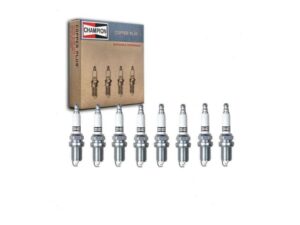 | Champion Copper Plus Spark Plugs – Best Overall | Check Price |
Second Best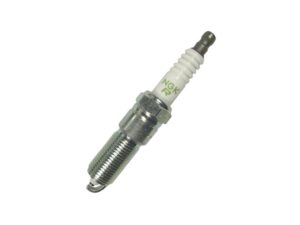 | NGK V-Power Spark Plugs – Best Value Alternative | Check Price |
Third Choice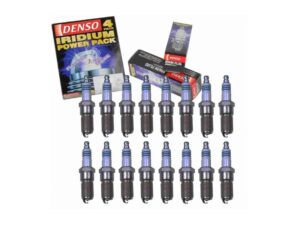 | DENSO Iridium Power Spark Plug Set – Best Premium Option | Check Price |
1. Champion Copper Plus Spark Plugs – Best Overall
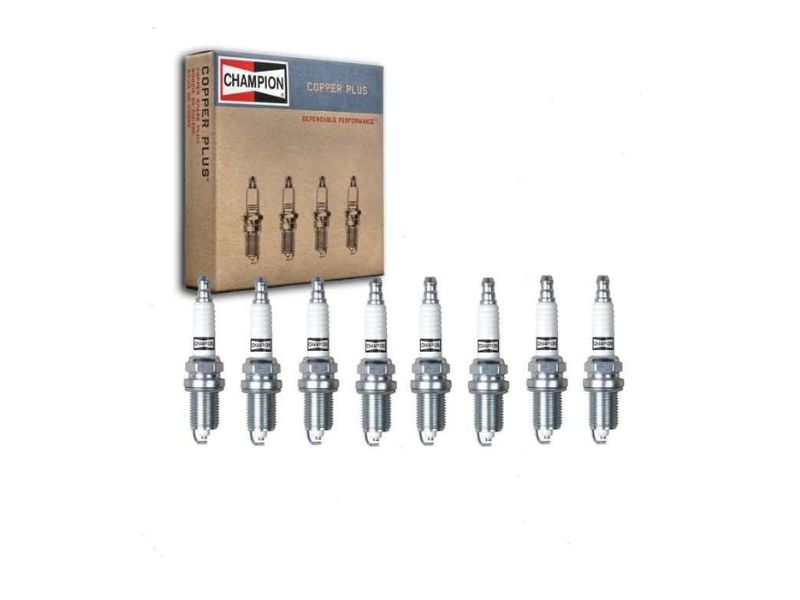
The Champion 570 RE14MCC4 is my first choice for a stock 2004 Dodge Ram 1500 5.7 HEMI. It follows the conventional plug design originally associated with this engine rather than attempting to turn routine maintenance into an unnecessary performance modification.
Champion uses a copper core inside the center electrode to transfer heat away from the firing end. The exposed firing surfaces use a conventional nickel-alloy construction. This combination provides predictable heat control and dependable ignition at a relatively low cost.
The RE14MCC4 has a 14 mm thread, tapered seat, projected firing tip, resistor construction, and approximately one-inch thread reach. These specifications are important because an incorrect reach or seat can position the plug improperly in the combustion chamber or prevent it from sealing correctly.
One advantage of staying with the Champion plug is compatibility with the engine’s original maintenance strategy. The early 5.7L HEMI was designed around conventional plugs rather than the later long-life Laser Iridium type.
That does not mean copper-core plugs produce a stronger spark simply because copper conducts electricity well. The ignition coil determines the available voltage, while the plug must provide the correct firing path and heat characteristics. The Champion’s practical strengths are correct application, low replacement cost, and established operation in the early HEMI.
Conventional nickel electrodes do wear more quickly than iridium or platinum firing surfaces. As the edges wear, the gap gradually increases and the ignition system must produce more voltage to fire the plug. This is why maintenance intervals should not be extended solely because the engine still appears to run normally.
The lower purchase cost helps offset that limitation. Since the engine requires 16 plugs, an affordable OE-style option can make more financial sense than installing a premium set that may not provide a noticeable improvement.
Champion 570 plugs are sold individually, in small packages, and through bundled 16-piece listings. Verify the quantity carefully. A four-pack covers only one-quarter of the complete engine.
The plugs are commonly listed with an OE-recommended gap around 0.044 inch for this vehicle. However, published references can vary slightly, so verify the under-hood label or service information for your exact truck before adjusting all 16 plugs.
A new set may improve starting, idle quality, or acceleration when the existing plugs are worn, fouled, cracked, or excessively gapped. It will not create significant extra horsepower in an engine that already has healthy, correctly specified plugs.
Pros: Original-style application, affordable complete-service cost, copper-core heat control, proven conventional construction, and easy availability.
Cons: Nickel electrodes generally wear faster than iridium, package quantities vary, and the plugs require regular inspection rather than an extended long-life service strategy.
My Verdict: Champion 570 RE14MCC4 is the best overall choice for a stock 2004 Ram 1500 5.7L HEMI. It matches the engine’s original design priorities and avoids paying extra for features the truck may not need.
2. NGK V-Power Spark Plugs – Best Value Alternative
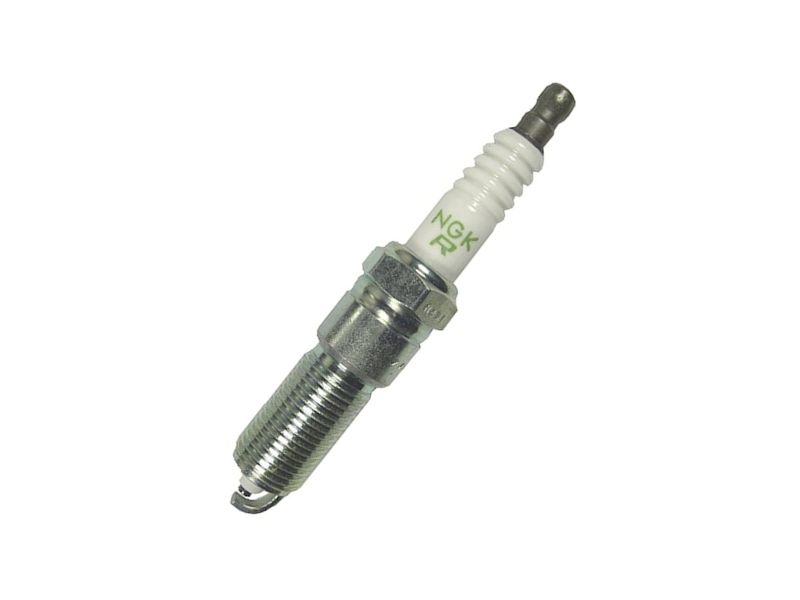
The NGK 5306 LZTR4A-11 V-Power is a practical alternative for owners who prefer NGK ignition components but still want a conventional, stock-friendly plug.
NGK 5306 is listed as a compatible plug for 2003–2008 Chrysler, Dodge, Jeep, and Ram applications equipped with the early 5.7L HEMI. Vehicle-specific catalogs also list it for the 2004 Ram 1500 5.7L twin-spark engine.
The V-Power name refers to a V-shaped groove formed in the center electrode. Instead of allowing the spark to form directly at the center of a broad flat surface, the groove encourages it to occur closer to the electrode edge.
Positioning the discharge near an edge can reduce the amount of metal surrounding the initial flame kernel. This supports dependable ignitability without requiring an extremely fine iridium firing tip.
The plug still uses nickel-alloy firing surfaces and a copper core, so its overall maintenance profile is closer to the Champion Copper Plus than to the premium DENSO Iridium Power. That makes it appropriate for an owner who wants an affordable replacement and plans to follow a conventional service schedule.
NGK identifies this plug as LZTR4A-11, with stock number 5306. The designation matters because visually similar NGK plugs may have a different heat range, reach, or seat configuration.
The linked product contains eight plugs. Since the engine requires 16, you will need two packages for a complete tune-up. Do not compare the price of one NGK eight-pack with the price of a complete 16-piece Champion or DENSO bundle.
The NGK option may appeal to owners who already use NGK plugs in other vehicles or who prefer the V-Power electrode design. It is also useful when the Champion RE14MCC4 is difficult to find locally.
There is no strong reason to expect one correctly specified conventional plug to produce significantly more horsepower than another. The more meaningful differences are package price, electrode design, availability, and confidence that the product is genuine.
Inspect every plug when the packages arrive. All 16 should have matching part numbers, straight ground straps, clean threads, intact ceramic insulators, and consistent terminal construction.
The 5306 is commonly associated with a gap near 0.043–0.044 inch for this application. Use that only as a reference and verify the truck’s service information before installation.
Pros: Established early 5.7L HEMI application, V-groove electrode design, reasonable replacement cost, recognized brand, and stock-friendly construction.
Cons: Two eight-packs are required, nickel electrodes wear faster than premium precious-metal designs, and the V-Power design does not guarantee additional horsepower.
My Verdict: The NGK 5306 is the best value alternative to the original-style Champion plug. It is a sensible choice when you want NGK construction without moving away from a conventional heat range and maintenance profile.
3. DENSO Iridium Power Spark Plug Set – Best Premium Option
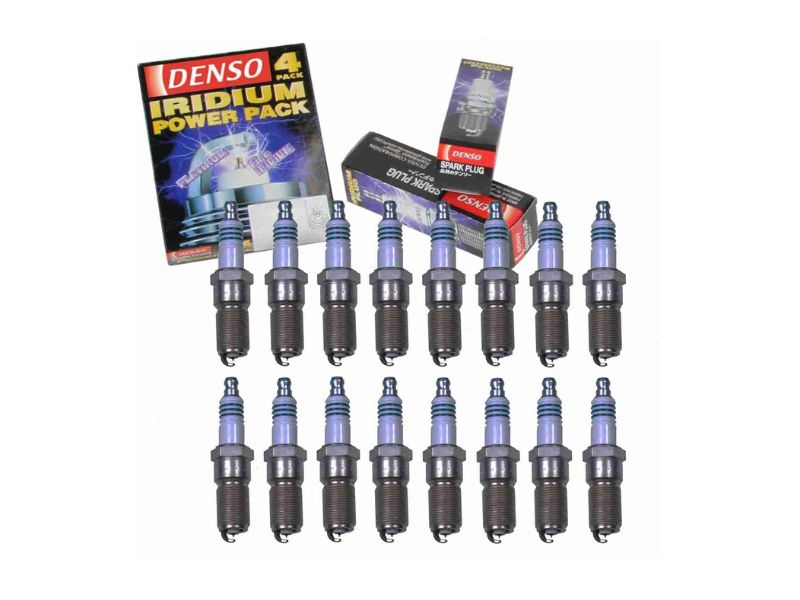
The DENSO 5349 ITL16 Iridium Power is the premium option in this comparison. The linked package contains 16 plugs and is listed for compatible 2003–2008 Dodge Ram 1500 models with the 5.7L V8, including the 2004 truck.
DENSO uses a 0.4 mm iridium center electrode in the ITL16. The narrow firing tip concentrates the electrical field, reducing the voltage needed to initiate a spark compared with a broad conventional electrode.
The plug also uses DENSO’s U-groove ground-electrode design. The groove creates additional space around the spark area, supporting flame growth once combustion begins.
This construction makes the DENSO attractive to owners who want a fine-wire plug with greater resistance to center-electrode erosion. Iridium can maintain a small firing tip under temperatures that would wear a conventional nickel electrode more quickly.
However, the Iridium Power line should not automatically be interpreted as a lifetime plug. It is designed around fine-wire ignitability and performance characteristics. DENSO offers other plug families specifically positioned for maximum extended service life.
The complete 16-piece package is convenient. You can replace the entire engine without ordering several smaller boxes, and all plugs should arrive from the same product line.
DENSO 5349 appears in vehicle-specific catalogs for the 2004 Ram 1500 5.7L alongside the Champion and NGK conventional options. That makes it a cataloged alternative rather than a random iridium plug selected only by thread size.
The fine-wire electrode requires careful handling. Do not use a coin-style or wedge gap tool that places pressure against the iridium center tip. Check the gap with a wire gauge and make any necessary adjustment by moving only the ground electrode.
The higher price is the main disadvantage. With 16 plugs, the difference between a conventional set and a premium iridium set can be substantial. Owners should not expect fuel savings or horsepower gains large enough to guarantee recovery of the additional cost.
The DENSO set makes the most sense for a healthy engine. A truck that burns oil, runs excessively rich, or repeatedly fouls plugs should be diagnosed before expensive plugs are installed. Premium electrode material cannot correct an injector fault, worn valve seal, weak ignition coil, or low-compression cylinder.
Pros: Complete 16-piece package, 0.4 mm iridium center electrode, strong ignitability, U-groove ground electrode, and verified application availability.
Cons: Higher complete-set price, requires careful gap inspection, and may offer little noticeable improvement over correct conventional plugs in a healthy stock engine.
My Verdict: DENSO 5349 ITL16 is the best premium option for owners who want a fine-wire iridium design. It is a credible upgrade, but the Champion remains the more economical factory-style choice.
Which Product Should You Choose?
Choose Champion 570 RE14MCC4 when maintaining the early HEMI’s original-style plug design is your main priority. It is the simplest recommendation for a stock truck used for commuting, towing, hauling, or general work.
Choose NGK 5306 LZTR4A-11 when you want an affordable conventional alternative from NGK. Its V-Power electrode provides a different firing-surface design while remaining appropriate for normal stock use.
Choose DENSO 5349 ITL16 when you specifically prefer a fine-wire iridium electrode and are comfortable paying more for all 16 plugs.
Engine condition should also affect the decision. Installing an expensive iridium set in an engine with unresolved oil consumption or fuel-mixture problems is rarely cost-effective. Fix the cause of repeated fouling before selecting a premium plug.
Why Does the 2004 5.7 HEMI Need 16 Spark Plugs?
The early 5.7L HEMI uses two spark plugs in each combustion chamber. With eight cylinders, the complete engine requires 16 plugs.
The twin-plug layout helps initiate combustion from two locations within the chamber. This supports consistent flame travel in the HEMI’s relatively large combustion space.
The ignition system does not use 16 conventional plug wires. Eight plugs sit beneath individual ignition coils, while the remaining plugs are connected through secondary ignition leads routed between cylinders.
This arrangement is why a spark-plug replacement involves 16 plugs but a replacement wire set generally contains only eight leads.
Replacing all 16 plugs together is preferable during scheduled maintenance. Mixing old and new plugs can leave the engine with inconsistent electrode wear, gap, and firing-voltage requirements.
What Spark-Plug Gap Does a 2004 Ram 1500 5.7 HEMI Use?
Parts catalogs commonly show an OE-recommended gap around 0.044 inch for the Champion 570 and related replacements. Some service references may round or specify the value slightly differently, so the under-hood emissions label and factory service information for the truck should take priority.
Check every new plug even when the packaging describes it as pre-gapped. The ground electrode can move during shipping or handling.
Use a wire-style gauge. The appropriate wire should pass through the gap with slight resistance without forcing the electrodes apart.
For a conventional Champion or NGK plug, make small adjustments by moving the ground strap. With the fine-wire DENSO plug, take extra care not to touch or lever against the iridium center electrode.
A gap that is too wide increases the voltage needed to produce a spark. This may cause misfires under acceleration or towing load, particularly when the coils, wires, or boots are already deteriorated.
A gap that is too narrow may create a smaller flame kernel and reduce the combustion exposure provided by the spark.
Signs the Existing Plugs May Be Worn
A 2004 Ram 1500 may need spark-plug inspection when it develops:
- Rough or unstable idle
- Longer cranking before starting
- Hesitation during acceleration
- Reduced power while towing
- Random or cylinder-specific misfire codes
- Declining fuel economy
- Uneven exhaust sound
- Poor operation during cold starts
These symptoms do not prove that the plugs are responsible. The early 5.7L also has ignition coils, secondary wires, coil boots, injectors, and electrical connections that can fail.
Read the diagnostic codes before purchasing parts. A cylinder-specific misfire code identifies where the control module detected the problem, but it does not identify the failed component.
Keep the old plugs organized by cylinder and by position. Because each cylinder has two plugs, label both before comparing them.
One oily or heavily carbon-fouled plug may indicate a localized issue. Similar deposits across all 16 plugs may point toward a broader fuel-mixture, operating-temperature, or maintenance problem.
How to Replace the Spark Plugs
Work only when the engine is completely cool. The 5.7L HEMI uses aluminum cylinder heads, and removing plugs from hot aluminum threads increases the risk of damage.
Gather all 16 plugs before beginning. You will also need a 5/8-inch spark-plug socket, suitable extensions, a ratchet, a torque wrench, a wire gap gauge, and compressed air or a suitable vacuum.
Take photographs of the ignition-wire routing before removing components. The cross-cylinder secondary wires must return to their correct positions.
Remove the ignition coils and wires methodically. Working on one cylinder at a time reduces the possibility of mixing the connections.
Clean loose dirt from around each plug before removal. Once the plug leaves the cylinder head, debris around the opening can fall toward the combustion chamber.
Compare each new plug with the one removed from that location. Verify the thread reach, tapered seat, terminal design, and firing-tip projection.
Start the new plugs entirely by hand. A short section of clean rubber hose can help rotate the plug while limiting the amount of force available if the threads are misaligned.
Stop immediately when a plug binds. Never use the ratchet to force a spark plug into the aluminum cylinder head.
Tighten each plug according to the vehicle-specific service procedure. Correct tightening allows the plug to seal properly and transfer heat through its seat into the cylinder head.
Do not apply anti-seize automatically. Lubricant changes thread friction and can increase the actual clamping force produced by a specified torque setting.
Inspect the coils, boots, and secondary wires while they are accessible. Cracks, corrosion, oil contamination, burned insulation, or carbon tracking can allow ignition voltage to escape before reaching the plug.
After reassembly, start the engine and listen for an uneven idle. Recheck every coil connector and wire connection if a new misfire appears.
Frequently Asked Questions
What are the best spark plugs for a 2004 Dodge Ram 1500 5.7 HEMI?
Champion 570 RE14MCC4 Copper Plus is my top overall choice because it follows the engine’s original-style plug design. NGK 5306 V-Power is the best value alternative, while DENSO 5349 ITL16 is the premium fine-wire option.
How many spark plugs does the 2004 5.7 HEMI use?
It uses 16 spark plugs. The engine has eight cylinders with two plugs per cylinder. Confirm that the combined package quantity equals 16 before ordering.
Is Champion RE14MCC4 the factory-style plug?
Yes. Champion RE14MCC4, stock number 570, is the conventional plug commonly associated with early 5.7L HEMI applications, including the 2004 Ram 1500.
Can I use NGK 92145 in a 2004 Ram 1500?
No. NGK 92145 belongs to a later 5.7L HEMI plug family with different application requirements. The 2004 engine uses the earlier tapered-seat design represented by plugs such as Champion 570 and NGK 5306.
Are iridium plugs safe for the 2004 5.7 HEMI?
A catalog-listed iridium plug such as DENSO 5349 ITL16 can be used when exact fitment is confirmed. Do not choose an iridium plug merely because it has the same thread diameter.
Will iridium plugs add horsepower?
They do not normally add meaningful horsepower to a healthy stock engine. They may restore performance when replacing worn plugs and can maintain a fine firing edge longer than basic nickel electrodes.
What is the correct gap?
Approximately 0.044 inch is commonly listed for the original-style application. Verify the under-hood label or factory service information because published specifications may differ slightly.
Should all 16 plugs be replaced together?
Yes. Replacing the complete matched set keeps the electrode type, heat range, gap, and wear level consistent across all eight cylinders.
Do I need to replace the ignition wires at the same time?
Not automatically. Inspect the eight secondary wires for cracking, burns, corrosion, excessive resistance, or loose terminals. Replace them when deterioration is found or testing indicates a fault.
Can worn plugs cause a misfire while towing?
Yes. Higher engine load and cylinder pressure can make excessive plug gap or weak ignition components more noticeable. Coils, wires, injectors, fuel delivery, and compression problems can cause the same symptom.
Should anti-seize be used on the plug threads?
Do not use it automatically. Follow the spark-plug manufacturer’s installation guidance and the vehicle service procedure. Applying lubricant can alter the torque required to achieve the correct clamping force.
Can I perform the replacement myself?
An experienced DIY owner can complete the service with the correct tools, organized wire routing, and accurate torque information. The 16-plug layout makes the job time-consuming, and professional service is appropriate when plugs are seized or access is unfamiliar.
Conclusion
The best spark plugs for 2004 Dodge Ram 1500 5.7 HEMI engines should match the early twin-plug cylinder-head design and provide the full 16-plug quantity.
For most stock trucks, the Champion 570 RE14MCC4 Copper Plus Spark Plugs are the most sensible choice. They offer proven factory-style construction, appropriate heat characteristics, and an affordable complete-service cost.
The NGK 5306 V-Power is a strong conventional alternative with a V-groove electrode. The DENSO 5349 ITL16 is better suited to owners who specifically prefer a premium fine-wire iridium option.
Confirm the engine, plug number, tapered-seat design, package quantity, and gap before installation. Correct fitment and careful installation provide more value than choosing a plug solely because it uses a more expensive electrode material.