Finding the best spark plugs for 392 HEMI engines requires more than searching for a plug labeled “6.4L compatible.” A factory-calibrated Scat Pack, a high-mileage SRT, and a supercharged 392 build do not necessarily need the same electrode design, heat range, or gap.
The wrong choice may contribute to hard starting, rough idle, hesitation under load, or repeated misfire codes. A plug can have the correct thread diameter yet still be unsuitable because its reach, seat design, heat range, or firing-end position differs from the engine’s specification.
For a stock, naturally aspirated 392 HEMI, my top recommendation is the NGK 97408 LZTR6AP11EG Laser Platinum Spark Plug Set. Its dual-platinum construction is designed to resist electrode wear and maintain consistent ignition over a longer service interval. The linked package contains eight plugs, so two packages are normally required for a complete 16-plug service.
This guide also includes the Mopar SP149212AC for owners who prefer the factory part number, plus the colder NGK 6510 Iridium IX for selected modified engines where a tuner specifically recommends it.
I evaluated these products according to application, electrode design, package quantity, service-life focus, installation requirements, and suitability for stock or modified engines. Exact fitment must still be verified using the VIN, model year, current plug number, and vehicle-specific service information.
3 Best Spark Plugs for 392 HEMI
| Image | Product Name | Check Price |
|---|---|---|
Best Choice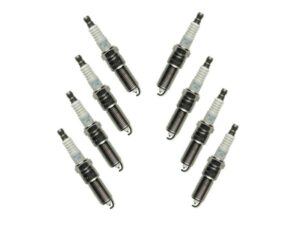 | NGK Laser Platinum Spark Plugs – Best Overall for a Stock 392 | Check Price |
Second Best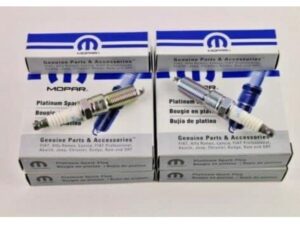 | Mopar OEM Spark Plug Set – Best Factory Replacement | Check Price |
Third Choice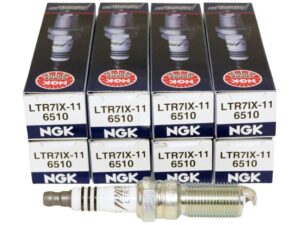 | NGK Iridium IX Spark Plugs – Best for Selected Tuned or Boosted Builds | Check Price |
1. NGK Laser Platinum Spark Plugs – Best Overall for a Stock 392
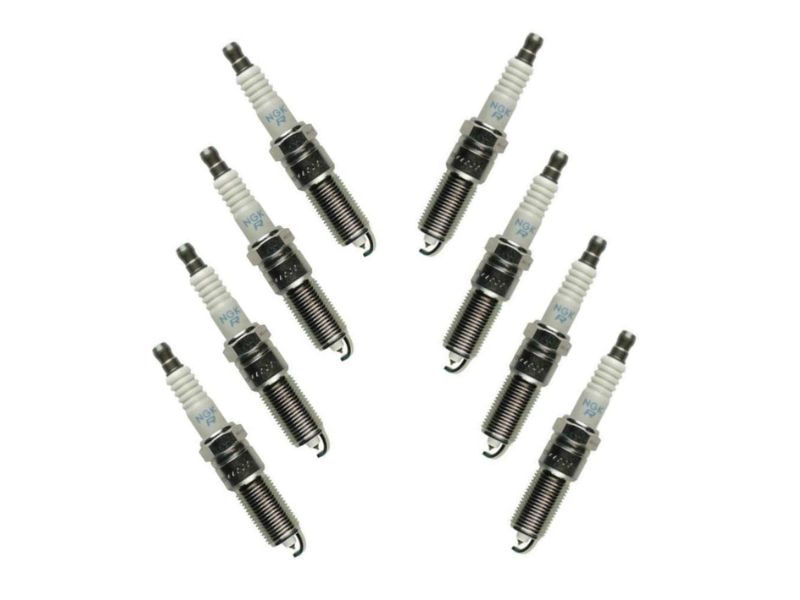
The NGK 97408 is the most balanced option for a factory-calibrated, naturally aspirated 392 HEMI. It is aimed at drivers who want dependable starting, stable combustion, and longer electrode life rather than a plug selected for a specialized racing or forced-induction setup.
NGK uses a Laser Platinum design with platinum surfaces at the firing ends. These wear-resistant materials help slow the gradual erosion that increases spark-plug gap over time. Maintaining a more stable gap can reduce the amount of additional voltage the ignition system must supply as the plugs age.
That characteristic is particularly useful in a 392 HEMI because a complete replacement involves 16 plugs. Access and labor make frequent plug changes less attractive than they are on a conventional four-cylinder engine.
The 97408 is identified by the plug number LZTR6AP11EG. NGK describes this model as a dual-platinum plug designed for high ignitability and extended service life. It uses a 14 mm thread and tapered-seat configuration, but the exact dimensions and required gap should still be checked against the vehicle’s service information before installation.
The linked product contains eight plugs. A full 392 HEMI service generally requires two packages, so compare the total price of 16 plugs rather than the price displayed for one set.
For normal street use, this plug makes more sense than automatically choosing a colder performance plug. The stock heat range is intended to reach a temperature that helps limit deposits while transferring sufficient heat away from the firing end.
New plugs should not be expected to create substantial additional horsepower in a healthy engine. Their value is maintaining or restoring ignition performance when the current plugs are worn, fouled, damaged, or beyond their maintenance interval.
The 97408 is appropriate for factory-calibrated vehicles and many lightly modified cars with changes such as a cat-back exhaust or intake. Those modifications alone do not necessarily change combustion pressure enough to require a colder heat range.
A camshaft, higher compression, nitrous, a supercharger, or turbocharging creates a different situation. The engine’s tuner must determine whether the stock plug remains appropriate.
Inspect all 16 plugs before installation. Check for chipped ceramic, damaged threads, bent ground straps, and inconsistent gaps. Fine electrodes should be measured carefully with a wire-style gauge.
Pros: Dual-platinum construction, long-service focus, appropriate for many stock 392 applications, stable electrode wear, and recognized ignition manufacturer.
Cons: The linked package contains only eight plugs, two sets are required, and it is not intended as a universal solution for boosted engines.
My Verdict: The NGK 97408 is the best all-around choice for a stock 392 HEMI when its application matches your VIN. It prioritizes longevity and predictable ignition rather than unnecessary experimentation.
2. Mopar OEM Spark Plug Set – Best Factory Replacement
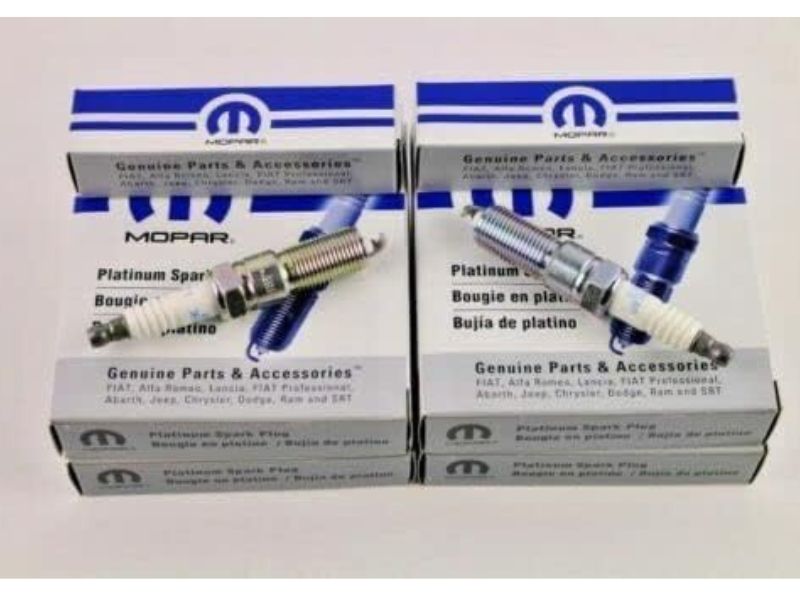
The Mopar SP149212AC is the strongest option for an owner who wants to remain with the factory part number. Instead of interpreting aftermarket cross-reference charts, you can compare the number directly with the VIN-based Mopar parts catalog.
Mopar specifies SP149212AC for numerous 6.4L SRT HEMI applications and identifies it as the replacement for the earlier 5149212AC number. Official listings associate it with vehicles that include the 392 HEMI Shaker and other 6.4L SRT configurations.
The primary benefit is not additional power. It is knowing that the plug’s reach, tapered seat, resistance, heat characteristics, and firing-end position were selected for the intended factory ignition system.
This makes the Mopar plug a logical choice for an original Scat Pack, SRT 392, 300 SRT, Durango SRT, or another supported 6.4L vehicle that remains on its factory-style calibration.
The OEM route is also useful when the vehicle has changed owners and its maintenance history is incomplete. Returning to the VIN-listed part number creates a known baseline before diagnosing drivability or ignition problems.
Mopar commonly sells SP149212AC in quantities smaller than a complete engine set. The official catalog may show a pack of four, while some retail listings bundle all plugs required for a 6.4L engine. Confirm the current package quantity before purchasing because the 392 HEMI generally requires 16 plugs.
Do not assume that Mopar packaging makes the plug mechanically superior to a correct OE-equivalent NGK product. The ranking difference is about purchasing preference. The NGK option may offer better value, while the Mopar set makes factory part-number matching more straightforward.
This plug is best suited to stock engines and vehicles with ordinary bolt-on modifications. A modified engine with significantly increased cylinder pressure may no longer be best served by its original heat range or factory gap.
Before installation, compare every new plug with one of the removed plugs. Check the thread reach, seat shape, terminal design, and firing-end projection. All plugs in the set should carry the same part number and have consistent construction.
Package authenticity is also important with ignition components. Inconsistent fonts, rough machining, damaged electrode alignment, or mismatched markings should be treated as warning signs.
Pros: Factory part number, broad official 6.4L SRT application support, reduced cross-reference uncertainty, and ideal for returning a stock engine to a known specification.
Cons: Package quantity may vary, OEM pricing can be higher, and it offers no automatic performance advantage over a correct equivalent.
My Verdict: Choose the Mopar SP149212AC when factory-number confidence matters more than saving the lowest amount per plug. It is the most direct replacement path for a compatible stock 392 HEMI.
3. NGK Iridium IX Spark Plugs – Best for Selected Tuned or Boosted Builds
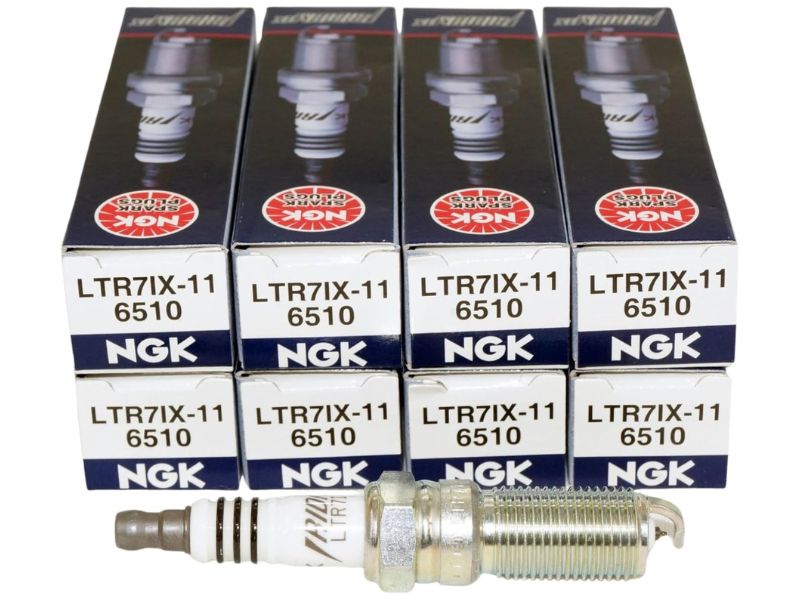
The NGK 6510 is included for a completely different buyer from the first two products. It is not my recommendation for an otherwise stock 392 HEMI.
This Iridium IX plug is commonly considered in modified applications when the engine builder or tuner calls for the LTR7IX-11 specification. The linked package contains eight plugs, so two sets are required when a 16-plug 392 build uses this model.
NGK positions the Iridium IX line as a fine-wire performance series. Its 0.6 mm-style iridium center electrode concentrates the spark while requiring less voltage to initiate ignition than a larger conventional firing tip.
The 6510 uses a colder heat range than many stock applications. A colder plug transfers heat away from the firing end more quickly, which can be useful when increased cylinder pressure and temperature result from forced induction, nitrous, higher compression, or significant power increases.
That does not make it an upgrade for a factory engine. A spark plug that runs too cold during normal street operation may fail to reach an effective self-cleaning temperature, encouraging carbon deposits and fouling.
NGK’s general modified-engine guidance states that substantial power increases may justify moving one step colder and reducing the plug gap. The company also notes that increased compression or forced induction typically requires a smaller gap to preserve ignitability under higher pressure. These are general principles, not a substitute for instructions from the person tuning the specific 392 engine.
The Iridium IX series also has a different maintenance priority from Laser Platinum. NGK generally positions Iridium IX as a performance-oriented single-precious-metal design with a shorter expected service interval than its Laser Series plugs.
For that reason, a boosted 392 using NGK 6510 plugs should be inspected more frequently. Plug condition can provide valuable information about mixture, heat, oil contamination, detonation, and consistency between cylinders.
Do not use the factory stock gap automatically. The tuner should provide a target based on boost pressure, ignition system condition, fuel, power level, and intended use.
A generic gap recommendation from another vehicle—even another supercharged 392—may not be appropriate. Make adjustments only at the ground strap and avoid placing force against the fine iridium center electrode.
Pros: Fine-wire Iridium IX construction, available colder heat range, suitable for selected high-output builds, and useful as a tuning and inspection plug.
Cons: Not recommended for a stock 392 without technical justification, requires two eight-packs, has a shorter service-life focus, and needs a tuner-specified gap.
My Verdict: The NGK 6510 belongs on this list only as a specialized option. Use it when a qualified tuner or engine builder explicitly specifies LTR7IX-11 for the build—not because colder plugs sound more performance-oriented.
Which 392 HEMI Engines Does This Guide Cover?
This article primarily covers naturally aspirated 6.4L SRT/392 HEMI applications that specify Mopar SP149212AC or a supported equivalent. These include many Chrysler 300, Dodge Challenger, Dodge Charger, Dodge Durango, Jeep Grand Cherokee, and Jeep Wrangler 392 applications.
Mopar identifies SP149212AC for several 6.4L SRT HEMI configurations, including the 392 HEMI Shaker. A factory catalog for a Challenger T/A 392 also states that the engine requires 16 spark plugs.
Do not assume that every engine called a 6.4 HEMI uses the same plug. A Ram heavy-duty 6.4L application, a 6.2L supercharged Hellcat, and an older 6.1L SRT8 may have different ignition requirements.
The three recommendations below serve different purposes:
- NGK 97408 for most stock 392 engines
- Mopar SP149212AC for factory part-number confidence
- NGK 6510 for selected tuned or forced-induction builds
The third option is not a normal replacement for a stock engine. It should only be used when the tuner, supercharger manufacturer, or engine builder specifies that plug and provides a target gap.
How to Choose Between the Three Spark Plugs
The correct product depends primarily on how the engine is configured.
Stock Naturally Aspirated 392
A stock engine should normally remain with its factory heat range and application-specific plug.
The NGK 97408 is the best value-oriented choice for most owners because it provides a long-life dual-platinum design. Mopar SP149212AC is better when you want the exact factory part number.
You should not move to NGK 6510 plugs simply because the vehicle is driven aggressively. Hard street driving does not automatically create the same combustion requirements as boost, nitrous, or a substantial increase in compression.
Lightly Modified 392
A cold-air intake, axle-back exhaust, cat-back exhaust, or mild calibration does not always require different spark plugs.
These modifications may change airflow or sound without producing enough additional cylinder pressure to justify a colder heat range.
Continue using the correct stock-style plug unless the tuner recommends otherwise.
Cammed or High-Compression 392
A camshaft alone does not dictate a specific spark plug, but a complete engine combination can change idle quality, cylinder pressure, fueling, and operating temperature.
The engine builder should evaluate the compression ratio, camshaft specifications, fuel type, ignition timing, and intended use before selecting the heat range.
Supercharged, Turbocharged, or Nitrous 392
This is the category where a colder plug such as NGK 6510 may be considered.
Higher cylinder pressure makes it more difficult for the spark to cross the electrode gap. The engine may require a smaller gap, colder heat range, or both.
The correct choice should come from the tuner or power-adder manufacturer. Their recommendation is more important than a generic product ranking.
Why Package Quantity Matters on a 392 HEMI
The 392 HEMI uses two spark plugs per cylinder. Eight cylinders multiplied by two plugs results in 16 plugs for a complete engine service. Official Mopar application data confirms 16 plugs for supported 6.4L vehicles.
This creates a common pricing mistake. An eight-pack can appear much cheaper than an OEM set, but the eight-pack covers only half of the engine.
Before comparing prices, calculate:
- Number of plugs in each package
- Number of packages required
- Shipping cost
- Expected service life
- Whether the plug suits the actual engine configuration
The lowest package price may not represent the lowest complete-service cost.
Reading the Old Spark Plugs Before Discarding Them
The removed plugs can reveal information that a product box cannot.
Keep the old plugs organized by cylinder and position. Since each cylinder uses two plugs, label both plugs rather than placing all 16 together.
A normal firing end may appear light brown or gray. NGK notes that this appearance can indicate that the plug is operating correctly.
Dry black deposits may indicate rich operation, repeated short trips, weak ignition, excessive idling, or a plug that is running too cold.
Wet fuel on one plug may point to a cylinder that is not firing consistently. Possible causes include the plug itself, a coil, wiring, an injector problem, or low compression.
Oily deposits can suggest that oil is entering the combustion chamber. New spark plugs may temporarily improve operation, but they will not repair worn rings, valve-seal problems, or another source of oil consumption.
A white, blistered, or damaged firing end can indicate excessive temperature or abnormal combustion. Stop and diagnose the cause rather than installing new plugs and continuing to drive aggressively.
Compare all 16 plugs. A pattern across the engine suggests a general operating issue, while one unusual cylinder may point to a localized problem.
Spark-Plug Gap for a Stock or Modified 392
A plug may arrive pre-gapped, but that does not eliminate the need for inspection. Packaging and handling can move the ground strap.
For a stock engine, follow the gap stated in the service information for the exact model year and part number. Do not copy a gap from a modified build or another HEMI displacement.
Use a wire-style gauge on fine-wire plugs. Slide the correct wire through the gap without forcing it against the center electrode.
Modified engines require extra caution. NGK states that higher compression and forced induction commonly require a smaller gap because the spark must form under greater pressure.
There is no universal “best boosted 392 gap.” The final number depends on:
- Boost level
- Fuel
- Compression ratio
- Ignition-coil condition
- Plug heat range
- Power target
- Calibration
- Intended street or track use
Use the tuner’s specification and inspect the plugs after initial operation.
Installation Planning for 16 Spark Plugs
Begin only after the engine has cooled completely. Working on a hot aluminum cylinder head increases the risk of thread damage.
Before removing anything, confirm that all 16 new plugs have the correct part number. Gather the appropriate spark-plug socket, extensions, swivel joints, torque wrench, compressed air or vacuum, and any tools needed to move intake components.
Work methodically:
- Remove the engine cover and necessary intake parts.
- Disconnect and organize the ignition coils.
- Clear dirt from each plug well.
- Remove plugs without placing sideways force on the ceramic.
- Label old plugs by cylinder.
- Compare the old and new plug dimensions.
- Verify each new gap.
- Start every plug by hand.
- Tighten according to the vehicle-specific procedure.
- Reinstall the coils and electrical connectors.
- Start the engine and scan for misfire codes.
Do not force a plug that does not turn smoothly by hand. Cross-threading an aluminum cylinder head can turn routine maintenance into an expensive repair.
NGK advises against applying anti-seize to its plated spark-plug threads because lubrication changes the relationship between torque and clamping force.
Inspect the coil boots while they are removed. Cracks, carbon tracking, damaged springs, and oil contamination can cause misfires that remain after the plugs are replaced.
Frequently Asked Questions
What are the best spark plugs for a stock 392 HEMI?
The NGK 97408 Laser Platinum is my preferred option for a compatible stock engine. Mopar SP149212AC is the better choice when you want to follow the factory part number exactly. Verify either product against the VIN before ordering.
Is a 392 HEMI the same as a 6.4 HEMI?
The 392 designation commonly refers to the performance-oriented 6.4L HEMI used in several SRT and Scat Pack applications. However, not every vehicle with a 6.4L HEMI should automatically be assigned the same plug. Check the exact engine and factory catalog.
How many spark plugs does a 392 HEMI use?
A typical SRT/392 6.4L HEMI uses two spark plugs per cylinder, requiring 16 plugs for the complete V8 engine. Package quantities vary, so some products require two or four boxes.
Is Mopar SP149212AC the factory spark plug?
Mopar lists SP149212AC for numerous 6.4L SRT HEMI applications. It replaces the earlier 5149212AC number and is the factory-number choice when confirmed for the VIN.
Are NGK 97408 plugs suitable for a tuned 392?
They may remain suitable for mild modifications, but the calibration and engine configuration determine the requirement. Forced induction, nitrous, or increased compression may call for a colder heat range and smaller gap.
Should I install NGK 6510 plugs in a stock Scat Pack?
Not without a technical reason. The colder heat range may not reach an appropriate operating temperature in a stock engine, increasing the possibility of deposits or fouling. Use the stock-specification plug unless a qualified tuner advises otherwise.
Do colder spark plugs increase horsepower?
No. A colder plug does not create power by itself. It transfers heat away from the firing end more quickly and may be required to control plug temperature in a high-output engine. In the wrong application, it can perform worse than the stock plug.
Can worn plugs cause a 392 HEMI misfire?
Yes. Excessive gap, fouling, cracked insulation, or electrode damage can contribute to misfires. Coils, injectors, wiring, intake leaks, compression problems, and tuning issues can produce similar symptoms.
Should all 16 plugs be replaced together?
For scheduled maintenance, replacing the complete matched set is generally preferable. This keeps the heat range, electrode design, gap, and wear level consistent across the engine.
Do new spark plugs add horsepower?
New plugs can restore performance that was lost because the previous plugs were worn or fouled. They do not normally add measurable power to a healthy engine that already has properly functioning plugs.
How often should tuned 392 plugs be inspected?
A modified engine should generally have its plugs inspected more frequently than a stock daily driver. The exact schedule depends on the plug, power level, fuel, tune, and use. Follow the tuner’s inspection recommendation.
Can I replace 392 HEMI spark plugs myself?
An experienced DIY owner can perform the service with the correct tools and torque information. The 16-plug layout and restricted access make the job time-consuming. Professional installation is appropriate when you are not comfortable working with aluminum cylinder-head threads.
Conclusion
The best spark plugs for 392 HEMI engines depend on whether the vehicle remains stock or has been modified to produce substantially more cylinder pressure.
For most factory-calibrated applications, the NGK 97408 LZTR6AP11EG Laser Platinum Spark Plugs offer the best combination of durability, ignition consistency, and overall value.
Choose the Mopar SP149212AC when you prefer the factory part number and VIN-based OEM fitment. Consider the NGK 6510 only when a tuner or engine builder specifies that colder Iridium IX plug for a particular modified combination.
Confirm the exact engine, VIN, package quantity, heat range, and gap before purchasing. Spark plugs should be selected for the combustion environment—not for the most aggressive product description.