Finding the best spark plugs for 4.7 Dodge Ram trucks requires careful attention to the model year. Dodge used two significantly different versions of the 4.7L V8 in the Ram 1500, and they do not share the same spark-plug arrangement.
Most compatible 2002–2007 Dodge Ram 1500 4.7L engines use eight spark plugs—one for each cylinder. The revised 4.7L engine used in later trucks has dual-plug cylinder heads, meaning it requires 16 plugs and uses different specifications for the upper and lower positions.
For a compatible 2002–2007 truck, my top recommendation is the NGK 6987 ZFR6F-11G V-Power 8-Piece Spark Plug Set. NGK lists ZFR6F-11G, stock number 6987, as the original-equipment application for the earlier 4.7L engine, making it the safest starting point for a stock truck. NGK’s catalog also lists a 0.044-inch reference gap for the application.
I also reviewed an Autolite Iridium XP set for owners interested in a fine-wire precious-metal alternative and a Champion Copper Plus set for buyers who prefer a basic, affordable replacement.
None of these plugs should be ordered before checking the VIN, model year, emissions label, existing plug number, and manufacturer’s current application guide.
Critical Fitment Warning: Early and Later 4.7L Engines Are Different
The three products reviewed below are primarily for compatible 2002–2007 Dodge Ram 1500 4.7L V8 trucks.
They should not automatically be installed in a 2008–2013 4.7L Ram.
The later 4.7L engine uses dual spark-plug technology. A 2009 factory owner’s manual identifies separate plugs for the upper and lower positions: Bosch FR8TE2 for the upper bank and FR8T1332 for the lower bank, with different gap specifications. That configuration requires 16 plugs rather than the eight used by the earlier engine.
This difference creates several common purchasing mistakes:
- Buying eight plugs for a later engine that requires 16
- Installing the same plug in both upper and lower positions
- Selecting a product based only on the 4.7L displacement
- Copying a gap specification from another model year
- Assuming Ram 1500, Dakota, Durango, and Grand Cherokee applications are always identical
The products below are complete eight-piece sets for the earlier single-plug-per-cylinder engine. Owners of later 4.7L trucks need to identify the correct upper and lower plugs separately unless they purchase a verified 16-piece application-specific kit.
The safest references are the under-hood Vehicle Emission Control Information label, owner’s manual, VIN-based parts catalog, and numbers printed on the plugs currently installed. Make sure the old plugs are correct before treating them as your only reference.
1. NGK 6987 ZFR6F-11G V-Power Spark Plug Set – Best Overall
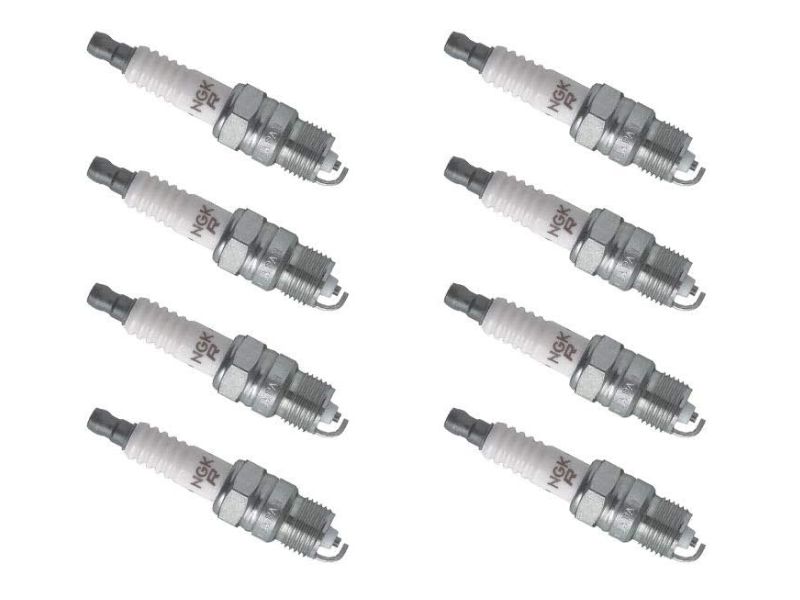
The NGK 6987 ZFR6F-11G is my preferred choice for a stock 2002–2007 Dodge Ram 1500 with the 4.7L V8. Instead of attempting to modernize the ignition system with an unnecessary racing plug, it follows the original application identified in NGK’s catalog.
NGK lists ZFR6F-11G as the original-equipment plug for the compatible 4.7L engine. The part is also identified by NGK stock number 6987, and its catalog shows a 0.044-inch reference gap. The linked package contains eight plugs, matching the quantity required by the earlier single-plug-per-cylinder engine.
The V-Power design uses a V-shaped groove in the center electrode. According to NGK, this arrangement helps position the spark near the edge of the electrode, reducing quenching and supporting dependable ignitability. The plug also incorporates a copper core to transfer heat away from the firing end.
This construction is well suited to a stock work truck. A 4.7L Ram may spend its time commuting, idling at job sites, carrying tools, or towing a modest trailer. Those conditions call for the correct heat range and stable operation—not necessarily the most expensive electrode material.
A conventional nickel firing surface will normally wear faster than fine-wire iridium or platinum. That means the plugs may require more frequent inspection and replacement than a premium precious-metal alternative. However, the replacement cost is relatively low, and the straightforward OE-style design makes them attractive for an engine that was calibrated around this type of plug.
The NGK set is also a sensible choice when you recently purchased a used truck with an uncertain maintenance history. Returning the ignition system to its cataloged plug establishes a known baseline. If the engine still misfires afterward, you can continue diagnosing the coils, injectors, wiring, intake system, and mechanical condition without wondering whether an unusual plug design is contributing to the problem.
Do not expect a noticeable horsepower increase when replacing correctly functioning plugs. New NGK plugs may restore smoothness or throttle response when the old set has excessive electrode wear, deposits, damaged insulation, or an incorrect gap. They cannot add substantial power to an otherwise healthy engine.
Inspect the full set before installation. The ceramic insulators should be free of cracks, the ground electrodes should be straight, and all eight plugs should carry the same part number. Check the gap even when the product is described as pre-gapped.
NGK states that the application’s correct gap should always be verified because an incorrect setting can contribute to misfires, fouling, power loss, poor fuel economy, and accelerated wear.
Pros: Original-equipment application listed by NGK, complete eight-piece quantity, affordable replacement cost, appropriate stock heat range, and familiar V-Power construction.
Cons: Nickel electrodes generally require more frequent service than premium iridium designs, and the set is not intended for the later 16-plug 4.7L engine.
My Verdict: The NGK 6987 set is the best overall option for a compatible stock 2002–2007 Dodge Ram 1500 4.7L. It offers the strongest combination of application confidence, straightforward installation, and reasonable cost.
2. Autolite XP5224 Iridium XP 8-Piece Spark Plug Set – Best Premium Upgrade
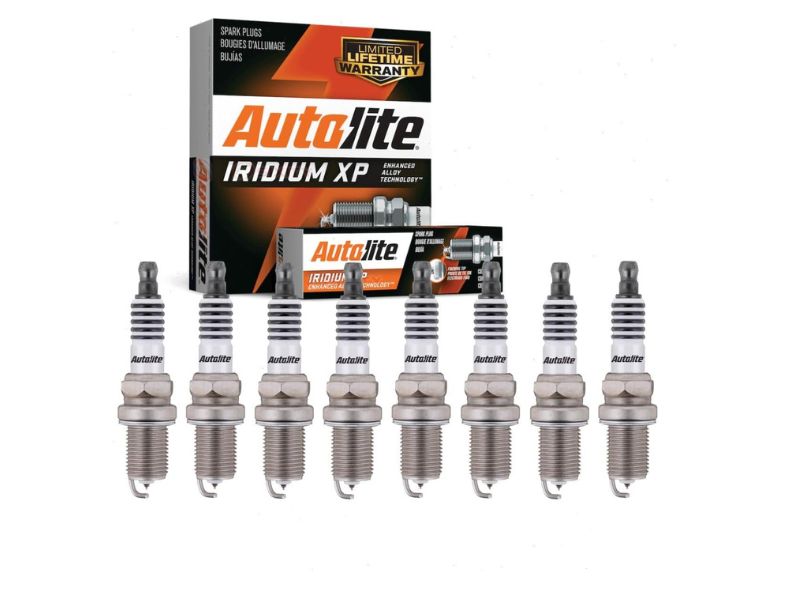
The Autolite XP5224 Iridium XP set is the premium alternative for owners who want a fine-wire precious-metal plug rather than the conventional nickel design used by the NGK V-Power option.
The linked package contains eight XP5224 plugs and is listed for compatible 4.7L Dodge Ram 1500 applications through 2007. Because the listing also groups several other V8 engines and model years together, VIN-level fitment verification remains important.
Autolite Iridium XP plugs use an iridium-enhanced fine-wire center electrode paired with a platinum-protected ground electrode. Autolite states that this combination is intended to improve wear resistance and maintain a focused ignition point. The plug also uses a tapered ground wire and a corrosion-resistant nickel-plated shell.
The primary advantage is durability. Electrode wear gradually increases the gap between the firing surfaces. As that gap grows, the ignition system may need to produce more voltage to create a spark. Fine-wire precious-metal electrodes are designed to resist erosion better than large conventional firing surfaces.
That makes the Autolite set appealing when spark-plug access, maintenance frequency, or long-term ownership matters. An owner who intends to keep the truck for several years may prefer paying more for a plug that emphasizes electrode longevity.
However, premium construction does not eliminate the need for correct application matching. The plug still needs the appropriate thread diameter, reach, seat, projection, resistance, and heat range.
The XP5224 should not be selected only because iridium sounds more advanced. The NGK 6987 remains the clearer OE-style option for the earlier 4.7L engine. Autolite positions Iridium XP as an upgrade for older vehicles, but the vehicle lookup should confirm that XP5224 is approved for the exact truck before installation.
The fine-wire electrode also requires careful handling. Do not allow the socket or gap tool to press against the center tip. When the gap needs correction, adjust only the ground electrode in small increments.
The Autolite set may be especially useful for a stock truck driven regularly on the highway, where the engine reaches full operating temperature and experiences relatively stable combustion conditions. It can also work for ordinary commuting and light-duty use when the exact application is confirmed.
It should not be treated as a solution for a heavily modified engine. Increased compression, forced induction, nitrous, or aggressive ignition timing may require a different heat range and target gap selected by the tuner.
The plug manufacturer advertises improvements in ignitability and efficiency, but actual results depend heavily on the condition of the old plugs. Replacing a severely worn set may produce an obvious improvement. Replacing healthy, correctly gapped plugs may create little noticeable difference.
Pros: Fine-wire iridium center electrode, platinum ground-electrode protection, stronger wear resistance than basic nickel plugs, eight-piece package, and suitable upgrade availability for compatible earlier trucks.
Cons: Higher cost, less direct OE-style confidence than NGK 6987, and careful application verification is required.
My Verdict: The Autolite XP5224 is the best premium option when you want a longer-wearing fine-wire design and the manufacturer’s lookup confirms your truck. For a completely stock restoration or uncertain application, the NGK V-Power set remains the safer first choice.
3. Champion Copper Plus 8-Piece Spark Plug Set – Best Budget Choice
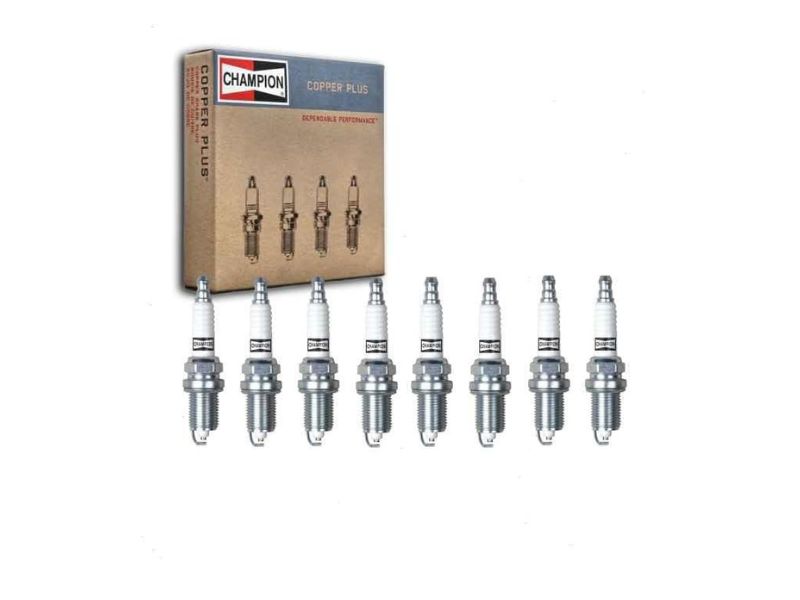
The Champion Copper Plus set is intended for owners who need an affordable complete replacement without paying extra for iridium or platinum electrodes.
The linked product contains eight plugs and is specifically listed for compatible 2002–2007 Dodge Ram 1500 trucks with the 4.7L V8. Its product information highlights a copper-core center intended to transfer heat efficiently from the firing end.
A copper core should not be confused with a soft copper firing tip. In conventional automotive plugs, the core is surrounded by a more durable electrode material. Its role is to help conduct heat while allowing the plug manufacturer to control the required operating temperature.
Champion Copper Plus plugs are a basic maintenance option. They do not promise the electrode longevity of Iridium XP, but their lower purchase price makes them practical for an older truck, secondary vehicle, or work truck that receives regular maintenance.
The complete eight-piece package is another advantage. You do not need to combine two four-packs or buy individual plugs. All cylinders receive the same plug type, electrode construction, and nominal heat range.
This product is best suited to owners who are comfortable following a shorter inspection schedule. Conventional plugs may show gap growth earlier than precious-metal models, particularly when the ignition coils are weak or the engine burns oil.
The set can also be useful during diagnosis. Installing a reasonably priced matched set allows you to evaluate the ignition system without committing to expensive plugs before confirming that the engine is mechanically healthy.
For example, an older 4.7L with oil-fouled plugs may have a valve-seal, ring, ventilation, or mechanical issue. Expensive iridium plugs will not repair that problem. A basic set may run correctly for a period, but the deposits will return until the underlying cause is addressed.
As with the other products, avoid claims of guaranteed fuel-economy or horsepower gains. New Champion plugs may improve operation when the old plugs are worn or contaminated. They will not increase the truck’s rated towing capacity or correct a weak fuel pump, failing coil, intake leak, or low-compression cylinder.
Confirm the gap before installation. The product may be packaged for several closely related applications, and handling can alter the ground-electrode position.
Champion emphasizes that thread size, reach, and heat range are application-specific features. A plug that physically enters the cylinder head is not necessarily the correct replacement.
The main limitation is service life. Owners who prefer longer intervals may find the Autolite Iridium XP more attractive. Owners who want the plug most closely associated with the early 4.7L application should select NGK 6987.
Pros: Low complete-set cost, eight-plug quantity, copper-core construction, clearly listed 2002–2007 application, and practical for routine maintenance.
Cons: Shorter wear-life expectations than precious-metal alternatives, limited to the earlier engine design, and less direct OE confidence than the NGK option.
My Verdict: The Champion Copper Plus set is the best budget choice for a confirmed 2002–2007 application. It is a functional maintenance plug rather than a performance upgrade.
Which Spark Plug Should You Buy?
For most stock trucks, the decision can be reduced to three priorities.
Choose the NGK 6987 V-Power set when you want the plug most clearly connected with the earlier 4.7L engine’s original application. It is my default recommendation for a stock truck.
Choose the Autolite XP5224 Iridium XP set when the application finder confirms your truck and you prefer fine-wire precious-metal construction with greater wear resistance.
Choose the Champion Copper Plus set when keeping the tune-up cost low is more important than extending the replacement interval.
The condition of the engine should also influence the decision. Premium plugs make more sense in a healthy engine that does not consume oil or repeatedly foul plugs. A high-mileage engine with unresolved oil contamination may not benefit financially from expensive electrodes.
No option should be chosen based on electrode material alone. The correct physical dimensions and heat range are more important than whether the box says copper, platinum, or iridium.
How to Confirm Which 4.7L Engine You Have
The easiest first step is checking the model year, but it should not be your only check.
Look at the under-hood emissions label and confirm the engine displacement. The eighth character of the VIN can also help identify the engine configuration when used with a reliable VIN decoder or factory catalog.
Next, count the ignition coils and visible plug positions. The earlier engine normally has one plug per cylinder, while the later dual-plug design has two firing positions for each cylinder.
Do not assume that an engine swap never occurred. Older work trucks sometimes receive replacement engines from another model year or platform.
The part numbers on the removed plugs can provide another clue. A compatible earlier engine may use NGK ZFR6F-11G or an approved cross-reference. A later dual-plug engine uses different upper and lower plug families.
When the vehicle’s build history is unclear, use the VIN-based dealer catalog and inspect the engine before ordering.
Spark-Plug Materials Explained
Nickel and Copper-Core Plugs
The NGK V-Power and Champion Copper Plus products use conventional electrode designs with copper incorporated into the internal construction.
Their main advantages are low cost, appropriate stock compatibility, and predictable operation. The primary disadvantage is faster firing-surface wear compared with precious-metal plugs.
They are suitable when the engine was designed around a conventional plug and the owner follows the appropriate maintenance schedule.
Iridium and Platinum
Iridium and platinum tolerate electrode heat and erosion well, allowing manufacturers to use a much smaller firing tip.
Autolite’s Iridium XP design combines an iridium-enhanced fine-wire center with platinum protection on the ground electrode. This arrangement focuses on maintaining a precise firing surface for a longer period.
The material does not create extra engine power by itself. Its primary benefits are electrode durability and the ability to support a smaller firing tip.
Why Heat Range Still Matters
Heat range describes how quickly the plug transfers heat from its firing end into the cylinder head. It does not describe the temperature or strength of the electrical spark.
A plug that runs too hot can increase the risk of pre-ignition and rapid electrode wear. A plug that runs too cold may accumulate carbon deposits and foul during normal street operation.
Stay with the manufacturer-listed heat range on a stock 4.7L engine. A colder plug should be selected only when the engine’s modifications and operating conditions justify it.
What Is the Correct Gap for a 4.7 Dodge Ram?
NGK’s application catalog lists a 0.044-inch gap for ZFR6F-11G on compatible earlier 4.7L applications. Treat that as a reference for the reviewed NGK plug, not a universal specification for every 4.7L Ram.
Later dual-plug engines use different gaps for the upper and lower plugs. A 2009 manual, for example, lists 0.039 inch for the FR8TE2 upper plugs and 0.051 inch for the FR8T1332 lower plugs.
This is why copying a number from an online discussion can create problems. The correct gap depends on the engine generation, plug number, and plug position.
Check every new plug with a suitable wire-style gauge. The gauge should pass through the gap with light resistance rather than forcing the electrodes apart.
When adjustment is necessary, bend only the ground electrode. Do not push against a fine-wire iridium or platinum center tip.
Modified engines may require another gap, but that decision should come from the tuner. Increased cylinder pressure can make it more difficult for the spark to cross a wide gap.
Signs the Existing Spark Plugs May Need Attention
Worn plugs can produce symptoms that are easy to confuse with fuel-system or mechanical faults. Possible signs include:
- Rough idle after startup
- Hesitation during acceleration
- Misfire trouble codes
- Longer cranking time
- Reduced power while climbing or towing
- Declining fuel economy
- Uneven exhaust sound
- Poor operation in damp weather
These symptoms do not prove that the plugs are defective. The 4.7L uses individual ignition coils, and a weak coil or damaged boot can produce the same cylinder-specific misfire.
Fuel injectors, intake leaks, wiring faults, compression loss, valve problems, and incorrect cam timing can also affect combustion.
Read the diagnostic codes before replacing parts. A P0304 code, for example, identifies a misfire detected on cylinder four but does not specify whether the plug, coil, injector, wiring, or mechanical condition caused it.
Keep the old plugs organized by cylinder during removal. One plug that looks significantly different from the other seven can direct further diagnosis toward that cylinder.
How to Replace Spark Plugs in a 2002–2007 Dodge Ram 4.7L
Allow the engine to cool completely before starting. The cylinder heads are aluminum, and removing plugs from a hot engine increases the risk of thread damage.
Gather eight verified plugs, a spark-plug socket, appropriate extensions, a ratchet, compressed air or a vacuum, a wire-style gap gauge, and a calibrated torque wrench.
Remove any intake components that block the ignition coils. Photograph electrical connectors and hose routing before disconnecting anything.
Work on one cylinder at a time. Disconnect the coil connector, remove its retaining fastener, and lift the coil and boot carefully from the plug well.
Inspect the boot for cracking, oil contamination, carbon tracking, or corrosion around the internal terminal. Replacing plugs will not correct voltage leakage through a damaged boot.
Clean dirt from the plug well before loosening the plug. Once the plug is removed, debris can fall directly toward the combustion chamber.
Keep the socket aligned with the spark plug. Side loading can crack the ceramic or cause the socket to bind inside the well.
Compare each removed plug with its replacement. Confirm the reach, seat design, thread size, terminal shape, and electrode projection.
Check the new gap. Avoid pressing the measuring or adjustment tool against a fine-wire center electrode.
Start the new plug by hand. It should turn several rotations smoothly before a ratchet is used. Stop immediately when the plug binds or feels rough.
Tighten the plug according to the service information for the exact engine and plug design. Proper torque affects both sealing and the plug’s ability to transfer heat into the cylinder head.
Do not automatically apply anti-seize to NGK plugs. NGK states that its plated threads are intended for dry installation and warns that lubrication can alter the applied clamping force.
Reinstall the coil, reconnect its electrical connector, and repeat the procedure for the remaining cylinders.
After completing the job, confirm that no hoses, sensors, or coil connectors remain disconnected. Start the engine and listen for an uneven idle. Scan for stored and pending misfire codes when possible.
Frequently Asked Questions
What are the best spark plugs for a 4.7 Dodge Ram?
For a compatible 2002–2007 truck, NGK 6987 ZFR6F-11G V-Power is my best overall choice because NGK identifies it as the original-equipment application. Autolite XP5224 is the premium fine-wire option, while Champion Copper Plus is the budget alternative.
How many spark plugs does a 4.7 Dodge Ram use?
Most compatible 2002–2007 4.7L engines use eight plugs. The revised 2008–2013 4.7L uses dual-plug cylinder heads and requires 16 plugs. Always confirm the engine generation before ordering.
Will these eight-piece sets fit a 2009 Ram 1500 4.7L?
No. A 2009 4.7L uses separate upper and lower spark-plug specifications and requires 16 plugs. The eight-piece sets reviewed here are intended for compatible earlier applications.
Is NGK ZFR6F-11G the factory-style plug?
NGK’s application catalog identifies ZFR6F-11G, stock number 6987, as the original-equipment plug for the compatible earlier 4.7L V8. Confirm the model year and VIN because later engines use different plugs.
Can I upgrade from NGK V-Power to iridium?
An approved iridium cross-reference may be used when the manufacturer’s application finder supports the exact vehicle. The Autolite XP5224 set provides one option. Do not select an iridium plug solely by matching the thread diameter.
Will iridium plugs increase horsepower?
They do not normally create substantial additional horsepower. Fine-wire iridium plugs may maintain their firing surfaces longer and can restore performance when replacing worn plugs, but a healthy engine with correct plugs may show little noticeable change.
What gap should I use for NGK 6987?
NGK lists a 0.044-inch application gap for ZFR6F-11G in the compatible earlier 4.7L engine. Verify it using the under-hood label or service information for the exact truck.
Should all eight spark plugs be replaced together?
Yes, replacing the matched set is generally preferable during scheduled maintenance. This keeps the plug type, heat range, electrode condition, and wear level consistent across all cylinders.
Can worn plugs damage the ignition coils?
A severely worn plug or excessive gap can increase the voltage required to fire it. This may expose weak insulation in a coil or boot and contribute to ignition problems. Inspect the coils and boots while the plugs are removed.
Should I replace the ignition coils during a spark-plug change?
Not automatically. Reuse coils that test correctly and show no physical damage, corrosion, carbon tracking, or boot deterioration. Replace coils based on diagnosis rather than age alone.
Can oil in the spark-plug wells cause a misfire?
Yes. Oil contamination can damage coil boots and provide a path for voltage leakage. Identify and repair the source of the oil instead of installing new plugs into contaminated wells.
Can I change 4.7L spark plugs myself?
The earlier eight-plug engine is manageable for an experienced DIY owner with the correct socket, extensions, gap gauge, and torque information. Professional service is appropriate when a plug is seized, the threads feel damaged, or access is unfamiliar.
Conclusion
The best spark plugs for 4.7 Dodge Ram trucks depend first on the engine generation.
For a compatible 2002–2007 Ram 1500, the NGK 6987 ZFR6F-11G V-Power Spark Plug Set is the strongest overall choice because it follows NGK’s original-equipment application and provides the complete eight-plug quantity.
The Autolite XP5224 Iridium XP set is better for owners who prefer fine-wire precious-metal construction and longer wear resistance. Champion Copper Plus provides an economical option for routine maintenance.
These sets are not appropriate for later dual-plug engines. A 2008–2013 4.7L requires 16 plugs with separate upper and lower specifications.
Before ordering, confirm the model year, VIN, current plug number, required gap, and engine layout. Correct application matching is more important than electrode material, marketing claims, or package price.