Finding the best spark plugs for 8.1 Vortec engines is more about correct fitment, gap, heat range, and ignition-system condition than choosing the most expensive electrode material.
The engine most owners mean by “8.1 Vortec” is GM’s Vortec 8100 L18, a 496-cubic-inch big-block V8 used primarily in early-2000s heavy-duty Chevrolet and GMC trucks, SUVs, vans, motorhomes, and commercial applications. It is fundamentally different from the earlier 7.4L L29 Vortec and should be treated as a separate spark-plug application.
For a compatible stock or near-stock L18, my first recommendation is the NGK 3951 TR55 V-Power Spark Plugs. Its current Amazon eight-pack has the strongest buyer-feedback history of the three products in this comparison, while NGK specifies a nickel V-cut center electrode, copper core, resistor construction, tapered seat, heat range 5, and roughly 0.059-inch pre-gap.
The NGK 3403 TR55GP G-Power Platinum Spark Plugs take second place. They retain the TR55-family heat range and approximately 0.060-inch gap while replacing the conventional center firing surface with a fine-wire platinum electrode designed to resist wear longer than basic nickel. Its Amazon customer-feedback base is also exceptionally large for a spark-plug eight-pack.
The NGK 7164 TR55IX Iridium IX Spark Plugs are my third recommendation. They have the highest current average Amazon rating among these three selections, although their total feedback volume is smaller. NGK specifies a 0.6 mm iridium center electrode, 18 mm reach, tapered seat, 5 kΩ resistor, heat range 5, and 0.059-inch gap.
One important E-E-A-T point before buying: verify the plug against your exact year, VIN, L18 engine application, and current parts catalog. GM service plugs have been superseded over time, and an older forum post may recommend a part number or gap that differs from the current replacement specification.
3 Best Spark Plugs for the 8.1 Vortec L18
| Image | Product Name | Check Price |
|---|---|---|
Best Choice | NGK 3951 TR55 V-Power Spark Plugs – 8 Pack | Check Price |
Second Best | NGK 3403 TR55GP G-Power Platinum – 8 Pack | Check Price |
Third Choice | NGK 7164 TR55IX Iridium IX – 8 Pack | Check Price |
I ranked these plugs using current Amazon rating and review confidence as a major signal, then considered:
- 8.1L-compatible plug dimensions
- Electrode material
- Heat range
- Gap
- Resistor construction
- Durability
- Suitability for towing and heavy loads
- Stock versus modified engines
- Ease of buying a matched eight-plug set
The rankings are useful, but they do not override vehicle-specific fitment. If the current catalog for your truck specifies another plug, follow the correct application rather than forcing a higher-ranked product to fit.
1. NGK 3951 TR55 V-Power Spark Plugs – 8 Pack
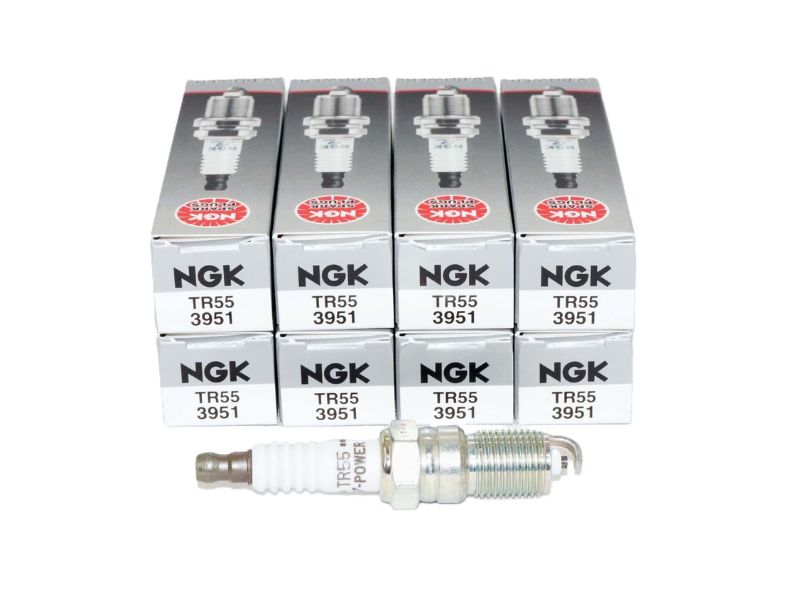
Key Features
- Eight-plug package
- NGK stock number 3951
- Nickel center electrode
- V-cut firing design
- Copper center core
- Heat range 5
- 5 kΩ resistor
- Tapered seat
- Approximately 0.059-inch gap
- 5/8-inch hex
The NGK TR55 earns first place primarily because it combines simple proven construction with an unusually large base of real customer feedback. The current eight-pack carries substantially more Amazon ratings than the other options reviewed here while maintaining strong overall buyer satisfaction.
NGK’s V-Power design uses a V-shaped cut in the center electrode. The manufacturer explains that this allows the spark to occur closer to the edge of the electrode, reducing some of the obstruction around the initial flame kernel. The plug also uses a copper core for heat removal, an alumina-silicate ceramic insulator, corrosion-resistant shell plating, and resistor construction.
For an older 8.1 Vortec that is inspected and serviced regularly, the conventional electrode is not necessarily a disadvantage. The L18 often lives in vehicles that work hard—2500HD and 3500-class trucks, tow vehicles, commercial vans, and other heavy applications—so regular ignition inspection is valuable anyway.
The tradeoff is electrode life. Nickel does not resist firing-surface erosion as well as platinum or iridium. As miles accumulate, the gap can gradually increase, which raises the voltage demand on the ignition system.
That matters on the 8.1 because the engine is frequently asked to operate under high load while towing or hauling, conditions where marginal ignition components tend to reveal themselves more readily.
What I Like
- Extremely strong customer-feedback history
- Proven conventional construction
- Copper core
- Useful heat range for compatible stock applications
- Eight matched plugs in one package
- Easy to inspect and replace during routine maintenance
What I Do Not Like
- Conventional electrode wears faster than precious-metal designs
- Should not be treated as a universal L18 plug without checking exact application
Verdict: The TR55 is the plug I would start with for a compatible, mostly stock 8.1 Vortec when the owner prefers straightforward maintenance and does not mind inspecting the ignition system periodically. Its value is not based on a claim that a V-groove will suddenly add horsepower to a 496-cubic-inch big-block. Instead, it provides a predictable combination of correct-style resistance, heat transfer, conventional electrode construction, and widely proven real-world use.
I particularly like it for older work trucks where the plugs, short ignition leads, and coils are already being inspected regularly. A conventional plug also gives you an opportunity to read the firing-end condition before problems become severe. If you are trying to minimize future plug changes because access is inconvenient or the truck accumulates substantial highway and towing mileage, the platinum or iridium choices below make more sense. But for a well-maintained L18 where TR55 is confirmed by the application catalog, it remains my most practical overall choice.
2. NGK 3403 TR55GP G-Power Platinum – 8 Pack
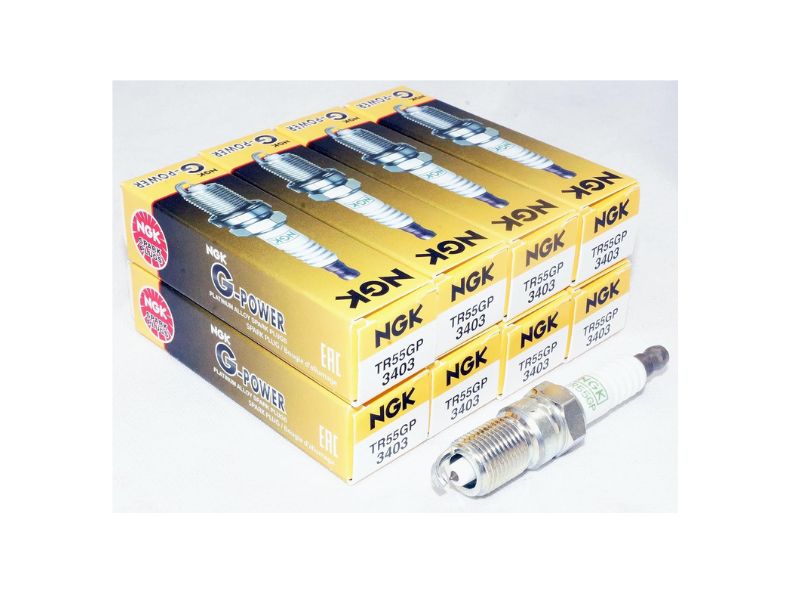
Key Features
- Eight-plug package
- NGK stock number 3403
- Fine-wire platinum center electrode
- Copper center core
- Heat range 5
- Approximately 0.060-inch gap
- Tapered-seat design
- Resistor construction
- Trapezoid-style ground electrode
TR55GP takes second place because it offers a very appealing compromise between the basic TR55 and more expensive iridium.
The G-Power design uses a fine-wire platinum center electrode instead of the broader conventional nickel firing surface. Current product specifications list an approximately 0.060-inch gap and the familiar TR55-family heat range 5.
The smaller platinum firing surface provides two practical benefits.
First, a fine electrode concentrates the electrical field at a smaller point.
Second, platinum resists erosion better than conventional nickel.
For an 8.1 Vortec that spends a lot of time towing, driving long distances, or simply accumulating miles, slower firing-tip wear is a meaningful advantage because the plug can retain its geometry longer.
The Amazon eight-pack also has an unusually deep feedback base, giving this plug more buyer history than most specialty ignition products.
I would not interpret the words “G-Power” to mean guaranteed additional engine power. If a healthy L18 is already firing correctly on the proper plugs, changing from nickel to platinum should primarily be viewed as a durability and maintenance decision.
What I Like
- Fine-wire platinum firing electrode
- Better electrode-wear resistance than conventional nickel
- Large customer-feedback base
- Complete eight-plug set
- Approximately 0.060-inch TR55-family configuration
- Good middle ground between economy and longevity
What I Do Not Like
- More expensive than basic TR55 plugs
- Does not have the extremely fine iridium electrode of TR55IX
Verdict: TR55GP is arguably the most balanced option for an 8.1 Vortec owner who uses the truck the way GM’s big-block was intended to be used: long highway trips, towing, hauling, and extended operation under meaningful load. The platinum firing surface gives it a genuine durability advantage without moving very far from the underlying TR55 heat range and geometry.
This is the product I would strongly consider for a truck where I want to reduce how quickly the plug gap grows but do not necessarily need an iridium performance-oriented design. It also suits owners who prefer to service the ignition system less frequently but still want a conventional-looking, resistor-type plug from an established manufacturer. As always, verify the application and required gap before installation. The fact that a plug belongs to the TR55 family does not make every version interchangeable in every GM engine.
3. NGK 7164 TR55IX Iridium IX – 8 Pack
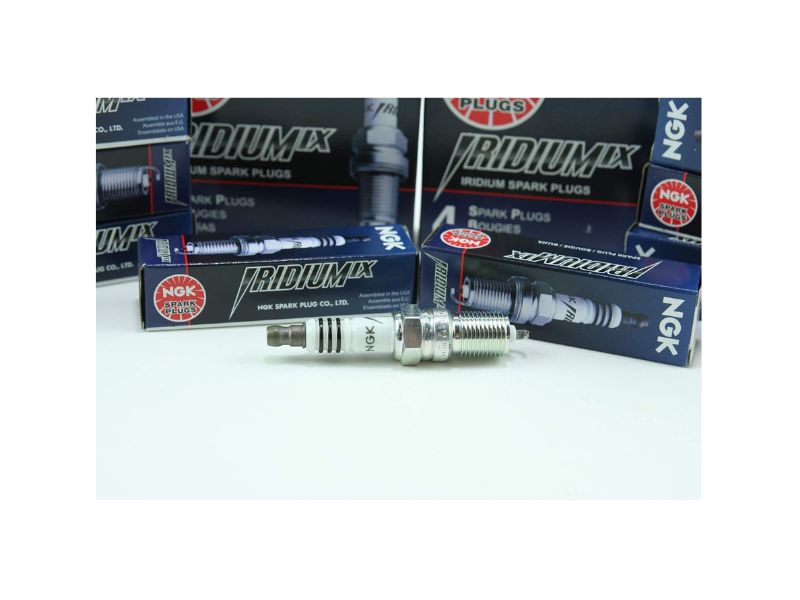
Key Features
- Eight-plug package
- NGK stock number 7164
- 0.6 mm iridium center electrode
- Nickel ground electrode
- Heat range 5
- 14 mm × 1.25 threads
- 18 mm reach
- Tapered seat
- 0.059-inch gap
- 5 kΩ resistor
TR55IX takes third place despite having the strongest current average Amazon rating among these products. Its review volume is smaller than the TR55 and TR55GP eight-packs, and review volume remains an important part of how I rank products.
Technically, however, the TR55IX has the most sophisticated center electrode in the comparison.
NGK specifies a 0.6 mm iridium fine-wire center electrode. Iridium’s high resistance to firing erosion allows manufacturers to use a much smaller electrode tip without sacrificing durability. The published plug specifications include a 14 mm thread diameter, 1.25 mm thread pitch, 18 mm reach, tapered seat, 0.059-inch gap, 5 kΩ resistor, and heat range 5.
NGK positions the Iridium IX line toward performance enthusiasts, but for an essentially stock L18 I see its largest practical advantages as stable firing-tip geometry and slower electrode wear.
Those features are useful in a tow vehicle. A fine-wire plug that maintains its shape over many firing cycles can keep ignition voltage requirements more consistent than a conventional electrode whose edges have eroded substantially.
Again, that does not mean the iridium plug creates additional ignition-system energy. The coil determines the available energy; the plug must use it reliably.
What I Like
- Fine 0.6 mm iridium center electrode
- Excellent resistance to electrode erosion
- Strong current buyer satisfaction
- Complete eight-plug package
- Published dimensions are easy to verify
- Good choice for owners prioritizing longer service
What I Do Not Like
- Lower Amazon review volume than TR55 and TR55GP
- Costs more without guaranteeing any horsepower increase
Verdict: TR55IX is the choice I would make when service life and a durable fine firing electrode are more important than minimizing initial cost. An 8.1-powered truck may spend hours towing a trailer, climbing grades, or cruising under loads that are substantially greater than those seen by a typical passenger car. Under those conditions, maintaining a consistent ignition system is more valuable than chasing unsupported “performance plug” claims.
The iridium design can also be attractive if changing plugs on your particular chassis is inconvenient enough that you want to maximize the usable life of each service. Still, I would only select TR55IX after confirming fitment. A fine iridium electrode does not compensate for incorrect reach, heat range, gap, or seat design. When the application matches, though, it is the strongest long-life performance-oriented plug in this three-product comparison.
8.1 Vortec Spark Plug Comparison
| Spark Plug | Electrode | Heat Range | Published Gap | Main Strength | Best Use |
| NGK TR55 3951 | Nickel V-Power | 5 | ~0.059 in. | Proven simplicity | Regularly serviced stock trucks |
| NGK TR55GP 3403 | Fine-wire platinum | 5 | ~0.060 in. | Balanced durability | Towing and daily use |
| NGK TR55IX 7164 | 0.6 mm iridium | 5 | ~0.059 in. | Electrode longevity | High-mileage or long-service use |
The three plugs share broadly similar dimensions and heat-range philosophy, but electrode construction changes how each one ages. NGK publishes the TR55IX at 0.059 inch, while current TR55GP specifications commonly identify a 0.060-inch gap.
What Is the 8.1 Vortec?
The Vortec 8100, commonly identified by GM RPO L18, is an 8.1-liter/496-cubic-inch big-block V8.
It replaced the earlier 7.4-liter big-block in heavy-duty GM applications and became known for strong low-speed torque and towing capability.
The important point for spark-plug buyers is that an 8.1L is not simply a bored version of a 7.4 Vortec that should automatically receive the same ignition parts.
Treat the L18 as its own application.
Common 8.1 Vortec Applications
Depending on model year and configuration, the L18 appeared in vehicles including:
- Chevrolet Silverado 2500HD
- Chevrolet Silverado 3500
- GMC Sierra 2500HD
- GMC Sierra 3500
- Chevrolet Suburban 2500
- GMC Yukon XL 2500
- Chevrolet Avalanche 2500
- Chevrolet Express
- GMC Savana
- Commercial and motorhome applications
The exact spark-plug recommendation can vary with application and service-part supersession, so vehicle identification should come before ordering.
The ACDelco 41-983 Reference Point
When researching spark plugs for an 8.1 Vortec, you will frequently encounter ACDelco 41-983.
That plug is useful as a factory-style reference because its published design uses a copper core and double-platinum firing surfaces, while the typical cataloged gap is approximately 0.060 inch. The current Amazon listing describes 41-983 as vehicle-specific and uses double-platinum center and ground firing surfaces with a suppressor-seal design.
The Amazon feedback base for the exact 41-983 listing is much smaller than the three NGK eight-packs, which is why it did not rank among the primary products here.
Still, it is worth knowing the part number when researching an original-style L18 tune-up.
Why the 8.1 Vortec Needs Eight Plugs
The 8.1 is a V8, so it requires eight spark plugs.
Replacing all eight together is normally preferable during scheduled maintenance because every cylinder then receives plugs with matching:
- Electrode material
- Heat range
- Gap
- Service age
The three recommended products are available as matched eight-plug packages, simplifying the job.
Coil-Near-Plug Ignition
Unlike the distributor-equipped 7.4L L29, the L18 uses individual ignition coils with short high-voltage leads between the coils and spark plugs.
The basic path is:
Ignition coil → short spark-plug wire → spark plug
This has an important diagnostic implication.
When one cylinder misfires, possible causes include:
- Spark plug
- Plug wire
- Ignition coil
- Fuel injector
- Compression problem
There is no distributor cap or rotor to inspect as there would be on the older L29.
Spark-Plug Material: Nickel vs Platinum vs Iridium
Electrode material affects the plug’s firing-tip size and resistance to wear.
Nickel
The TR55 uses conventional nickel.
Advantages:
- Simple
- Affordable
- Proven
- Easy to inspect
Its main disadvantage is faster electrode erosion.
Platinum
The TR55GP uses a fine platinum firing electrode.
Platinum tolerates firing erosion better than conventional nickel, helping the center electrode maintain its shape longer. Current NGK G-Power specifications describe a fine-wire platinum center electrode and approximately 0.060-inch gap.
Iridium
TR55IX uses an even finer 0.6 mm iridium center electrode. NGK specifies the plug with an approximate 50,000-mile nominal longevity figure for that family, although real service life varies with engine condition and usage.
The best material depends on how often you want to perform maintenance—not which one sounds most exotic.
Which Spark Plug Is Best for Towing?
A tow vehicle needs reliable ignition under load, not a plug advertised as adding horsepower.
As cylinder pressure increases during heavy throttle operation, the ignition system must produce enough voltage to jump the plug gap consistently.
For a frequently used tow vehicle, I particularly like:
TR55GP for balanced durability
or
TR55IX when longer electrode life matters most.
TR55 remains perfectly suitable when it is the correct application and you are willing to inspect or replace the plugs more frequently.
Spark-Plug Gap Is Critical on the L18
Many stock-style 8.1 Vortec plug specifications are associated with a gap around 0.060 inch, and ACDelco 41-983 replacement listings also identify a 0.060-inch specification.
However, do not take that as permission to set every L18 plug blindly to 0.060.
Always check:
- Exact model year
- VIN
- Current service plug
- Underhood emissions information where applicable
- Manufacturer application catalog
Service information and replacement parts can change over a vehicle’s life.
Why a Large Gap Requires a Healthy Ignition System
The wider the spark-plug gap, the more voltage is generally required for the spark to jump it.
A healthy coil and wire can handle the intended specification.
But problems can appear when:
- Plug gap has grown from wear
- Wire insulation is deteriorated
- Coil output is weak
- Plug is fouled
- Engine operates under heavy load
That is why an 8.1 may appear to idle acceptably but begin misfiring while climbing a grade with a trailer attached.
Should You Reduce the Gap?
Do not change the factory/application gap casually.
A smaller gap reduces the voltage required to fire, but the engine calibration and original ignition system were engineered around a particular specification.
Gap changes become more relevant when an engine is significantly modified, especially with:
- Forced induction
- Nitrous
- Unusual cylinder pressure
- Non-stock ignition system
On a stock towing engine, follow the verified service specification rather than tuning by internet anecdote.
Verify Pre-Gapped Plugs
“Pre-gapped” does not mean “never check.”
Plugs can be handled during:
- Manufacturing
- Packaging
- Shipping
- Storage
Measure all eight before installation.
You are verifying the gap, not automatically changing it.
Be Careful Gapping Iridium
TR55IX uses a very small 0.6 mm center electrode.
Never place a gapping tool against the iridium tip and pry.
If adjustment is necessary:
- Move only the ground electrode
- Use an appropriate tool
- Make small changes
- Recheck carefully
If the center electrode becomes bent or damaged, replace the plug.
What Does Heat Range 5 Mean?
NGK lists all three recommended plugs within heat range 5.
Spark-plug heat range describes how quickly the firing end transfers heat to the cylinder head.
It does not describe spark intensity.
Too hot a plug can retain excessive temperature.
Too cold a plug can accumulate deposits because it fails to reach a suitable self-cleaning temperature.
For a stock L18, stay with the specified heat range.
Does an 8.1 With Headers Need Different Plugs?
Headers alone do not normally justify changing spark-plug heat range.
Headers change exhaust flow and underhood heat, but a mild exhaust modification does not automatically change combustion-chamber temperature enough to require a colder plug.
What headers do affect significantly is plug-wire and boot heat exposure.
Inspect the short ignition wires and any factory heat shields.
Modified 8.1 Vortec Spark-Plug Selection
A heavily modified engine can require a different spark-plug strategy.
Examples include:
- Supercharger
- Turbocharger
- Nitrous
- High compression
- Aggressive camshaft and cylinder-head package
- Major tuning changes
Higher cylinder pressure can increase firing-voltage demand and combustion temperature.
A professional tuner may recommend:
- Colder heat range
- Smaller gap
- Different electrode material
Follow the tuner responsible for the calibration rather than using the stock recommendations in this guide.
Do New Spark Plugs Add Horsepower?
Not when the existing plugs are already operating correctly.
Installing fresh plugs can restore performance when the old plugs are:
- Worn
- Fouled
- Excessively gapped
- Misfiring
That can feel like a substantial improvement, especially in a heavy truck.
But it is restored performance, not additional horsepower created by the plug.
I would be skeptical of any spark plug claiming major guaranteed horsepower increases on an otherwise healthy stock L18.
Spark Plugs and Fuel Economy
The 8.1 Vortec was designed primarily around power and heavy-duty capability rather than fuel economy.
Fresh plugs can help restore normal combustion when the old plugs are deteriorated.
They cannot overcome:
- Vehicle mass
- Aerodynamic drag
- Heavy trailer weight
- Low gearing
- Driving speed
Choose a spark plug for reliable ignition, not as a fuel-saving modification.
Signs Your 8.1 Vortec May Need Spark Plugs
Possible signs include:
- Rough idle
- Hard starting
- Hesitation
- Misfire under load
- Check-engine light
- Decreased responsiveness
- Increased fuel consumption
- Excessive plug gap
None proves the plug itself is defective.
A correct diagnosis should also consider:
- Plug wires
- Ignition coils
- Fuel injectors
- Intake leaks
- Fuel pressure
- Compression
Understanding Misfire Codes
A random misfire may trigger P0300.
Cylinder-specific codes can help identify one problem cylinder.
If one cylinder is misfiring:
- Inspect its plug.
- Inspect its wire.
- Inspect the coil and connection.
- Consider injector operation.
- Check mechanical condition if necessary.
Replacing all eight plugs blindly may not solve a single-cylinder mechanical or injector problem.
Read the Old Spark Plugs
Spark plugs can provide useful evidence about engine condition.
Keep them organized by cylinder during removal.
Normal Plug
Moderate deposits and even electrode wear generally suggest normal operation.
Black Dry Plug
Possible contributors include:
- Rich operation
- Weak ignition
- Excessive idling
- Plug operating too cold
Fuel-Wet Plug
May indicate the cylinder is receiving fuel but not firing.
Oily Plug
Can indicate oil entering the combustion chamber.
Damaged Electrode
Investigate overheating, detonation, incorrect plug selection, or mechanical damage rather than immediately installing another plug.
8.1 Vortec Oil Consumption and Plug Fouling
Older L18 engines vary considerably in condition.
If one or several plugs repeatedly become oil-fouled, simply moving to a premium iridium plug does not repair the underlying oil-consumption problem.
Identify why oil is entering the combustion chamber.
A more expensive plug may resist some deposits differently, but it cannot restore worn mechanical components.
Inspect the Spark-Plug Wires
The L18 uses short plug wires between the coils and spark plugs.
They operate near a very hot exhaust system.
Look for:
- Hard boots
- Cracked insulation
- Burn marks
- Corrosion
- Loose terminals
- Arcing tracks
If the wires are original or have unknown history, a plug service is an excellent time to inspect them thoroughly.
Inspect the Ignition Coils
Do not replace eight coils automatically.
Instead, look for:
- Cracked housings
- Corrosion
- Damaged coil towers
- Loose electrical connectors
When diagnosing a cylinder-specific misfire, a coil can sometimes be moved to another cylinder as part of a controlled diagnostic procedure to see whether the fault follows the component.
How to Change Spark Plugs on an 8.1 Vortec
1. Let the Engine Cool
The 8.1’s exhaust system retains significant heat.
Work on a cool engine.
2. Work One Cylinder at a Time
This minimizes confusion.
3. Remove the Plug-Wire Boot
Grip the boot—not the cable.
Twist gently before pulling.
4. Clean Around the Spark Plug
Prevent loose debris from entering the plug opening.
5. Remove the Old Plug
Use the appropriate spark-plug socket and extension.
6. Compare Old and New
Confirm:
- Thread
- Reach
- Seat
- Hex
- Electrode projection
7. Check the Gap
Verify against the exact vehicle specification.
8. Start the Plug by Hand
This is one of the easiest ways to avoid cross-threading.
9. Torque Correctly
Use the verified L18 service specification for your application.
10. Reinstall the Wire
Make sure the terminal fully engages.
Spark-Plug Socket Size
The NGK plugs reviewed here use a 5/8-inch/16 mm hex.
A quality spark-plug socket with an internal retainer helps when reaching plugs around the large big-block cylinder heads.
Depending on chassis clearance, extensions and a swivel may also be helpful.
Should You Use Anti-Seize?
Do not automatically apply anti-seize just because the engine is old.
NGK uses trivalent shell plating intended to provide corrosion resistance and anti-seizing characteristics.
Lubricating the threads changes friction.
That means the same torque-wrench reading can produce greater actual clamping load.
Follow the spark-plug manufacturer’s installation instructions.
Should You Use Dielectric Grease?
A small amount inside the spark-plug boot can be useful for:
- Moisture sealing
- Easier future removal
Do not pack the entire terminal cavity.
Dielectric grease is not intended to replace direct metal-to-metal terminal engagement.
Stock Engine vs Tow Rig vs Modified Engine
Stock Daily Driver
Start with verified OE specifications.
TR55 is the simple conventional choice.
Frequent Tow Rig
I favor TR55GP or TR55IX because slower electrode wear can be valuable on a truck that accumulates significant load hours.
Modified L18
Follow the engine builder or tuner.
Do not assume the stock TR55 heat range remains ideal after substantial changes.
Common Mistakes When Buying 8.1 Vortec Spark Plugs
Confusing the 8.1 With the 7.4 Vortec
They are separate engine applications.
Buying a Plug Because It Fits Another GM Big-Block
Physical resemblance is not enough.
Choosing Only by Amazon Rating
Vehicle compatibility comes first.
Assuming Iridium Automatically Means Better
A correct nickel plug beats an incorrect iridium plug.
Ignoring Spark-Plug Gap
Always verify the application specification.
Reducing the Gap Without a Reason
Use factory/application guidance on a stock engine.
Changing Heat Range for Headers Alone
A header installation does not automatically demand a colder plug.
Ignoring Plug Wires
A damaged wire can keep the cylinder misfiring after a new plug is installed.
Replacing All Eight Coils Without Testing
Diagnose first.
Expecting New Plugs to Create Horsepower
Healthy plugs maintain performance; they do not manufacture extra engine output.
Mixing Plug Types
Use eight matching plugs.
Installing Without Examining the Old Plugs
You may throw away valuable diagnostic information.
Frequently Asked Questions
1. What are the best spark plugs for 8.1 Vortec engines?
NGK TR55 is my first overall recommendation for compatible stock applications because it combines proven construction with the strongest Amazon customer-feedback history among these three options.
TR55GP is the better platinum choice for increased firing-surface durability, while TR55IX is my preferred fine-wire iridium option.
2. How many spark plugs does an 8.1 Vortec use?
Eight.
The L18 is a V8, so a normal complete spark-plug service uses eight matching plugs.
3. What is the 8.1 Vortec engine code?
The GM 8.1L Vortec 8100 is commonly identified by RPO L18.
Confirm the RPO before ordering parts, especially when working on commercial or motorhome applications.
4. Is NGK TR55 good for an 8.1 Vortec?
It can be an excellent conventional choice when the current application catalog confirms it for your vehicle.
NGK specifies the TR55 with a V-cut nickel electrode, copper core, resistor construction, heat range 5, and approximately 0.059-inch gap.
5. Is NGK TR55GP good for an 8.1 Vortec?
It is a strong platinum alternative when its dimensions and application match your L18.
TR55GP uses a fine-wire platinum center electrode and an approximately 0.060-inch gap specification.
6. Is TR55IX good for the 8.1 Vortec?
It is an attractive fine-wire option when verified for the application.
NGK specifies a 0.6 mm iridium center electrode, heat range 5, tapered seat, and 0.059-inch gap.
7. What is the stock spark-plug gap for an 8.1 Vortec?
Many stock-style L18 replacement plugs are associated with approximately 0.060 inch, but verify the specification for your exact year and replacement plug.
ACDelco 41-983 replacement data, for example, is commonly cataloged around 0.060 inch.
8. Should I reduce my 8.1 spark-plug gap to 0.045?
Not simply because another owner reports good results with that setting.
Gap changes should be based on the exact engine, ignition condition, modification level, and professional tuning guidance. A stock engine should generally follow validated service information.
9. Is ACDelco 41-983 an 8.1 Vortec plug?
41-983 is a commonly referenced GM-style double-platinum replacement associated with 8.1L applications.
Its construction uses a copper core and double-platinum firing surfaces.
10. Is platinum better than nickel for towing?
Platinum’s main advantage is slower electrode wear.
For a tow vehicle that accumulates substantial mileage, that durability can be useful, although correct fitment remains more important than electrode material.
11. Is iridium better than platinum?
Iridium allows an especially fine and erosion-resistant center electrode, but it is not universally better for every engine.
TR55IX uses a 0.6 mm center tip, while TR55GP uses a fine platinum center electrode.
12. Do iridium plugs add horsepower to an 8.1?
No guaranteed horsepower increase should be expected on an otherwise healthy engine.
Replacing worn plugs can restore power lost through poor ignition, but that is different from adding power beyond the healthy baseline.
13. Should I use colder spark plugs for towing?
Not automatically.
Towing by itself does not mean the engine requires a different heat range. Use the plug specified for the stock engine unless the engine builder or tuner recommends otherwise.
14. Should I use colder plugs with a supercharged 8.1?
Potentially, but the exact heat range and gap should come from the tuner responsible for the forced-induction calibration.
Boost changes cylinder pressure and combustion conditions enough that stock recommendations may no longer apply.
15. Can bad spark plugs cause an 8.1 Vortec misfire?
Yes, but plug wires, coils, injectors, fuel delivery, vacuum leaks, and mechanical problems can produce similar symptoms.
Use diagnostic evidence before replacing parts.
16. Should I replace the spark-plug wires with the plugs?
Inspect them carefully and replace them if they are heat-damaged, cracked, loose, or otherwise deteriorated.
The L18’s short wires live close to exhaust heat and deserve attention during every plug service.
17. Should I replace all eight ignition coils?
No.
Replace coils based on diagnosis rather than changing eight functioning components as routine maintenance.
18. Which spark plug should I buy for a stock 8.1 Vortec tow truck?
Start with the current application-specific plug for your VIN. Among these three, TR55 is my straightforward conventional choice, TR55GP is the balanced towing/durability option, and TR55IX is the long-life fine-wire alternative.
Whatever material you choose, correct heat range, gap, reach, and seat design matter more than the words nickel, platinum, or iridium.
Conclusion
Choosing the best spark plugs for 8.1 Vortec engines starts with confirming that you have the L18 Vortec 8100 and checking the current vehicle-specific plug specification before ordering.
The NGK TR55 earns my first overall position because its conventional V-Power construction is backed by the strongest Amazon customer-feedback history of these three products. Its nickel firing electrode, copper core, resistor design, heat range 5, and approximately 0.059-inch gap make it a straightforward choice when verified for the application.
The NGK TR55GP is my preferred middle ground for a work truck or tow rig. Its fine-wire platinum center electrode provides improved wear resistance while retaining the familiar TR55-family heat range and roughly 0.060-inch gap.
The NGK TR55IX is the long-life option. Its 0.6 mm iridium center electrode is highly resistant to firing erosion and makes sense for high-mileage trucks where reducing future plug maintenance is valuable.
Before installation, verify the year, VIN, L18 application, current replacement part, and required gap. Check all eight new plugs, work with the engine cool, inspect the plug wires and ignition coils while they are accessible, and read the old plugs for evidence of oil, fuel, overheating, or cylinder-specific problems.
On an 8.1 Vortec—especially one that tows—those fitment and diagnostic details matter much more than choosing a plug because its electrode material sounds more advanced.