Choosing replacement spark plugs for a Chevrolet Sonic starts with identifying the engine. Most US-market models use either a 1.4L LUV turbocharged engine or a naturally aspirated 1.8L LUW/LWE engine, and a plug intended for one should not be assumed to fit the other.
The best spark plugs for Chevy Sonic applications must match the engine’s required thread diameter, reach, seat design, heat range, resistor configuration, and electrode gap. Installing a physically similar but incorrectly specified plug can produce misfires, poor starting, overheating, thread damage, or contact between the plug and internal engine components.
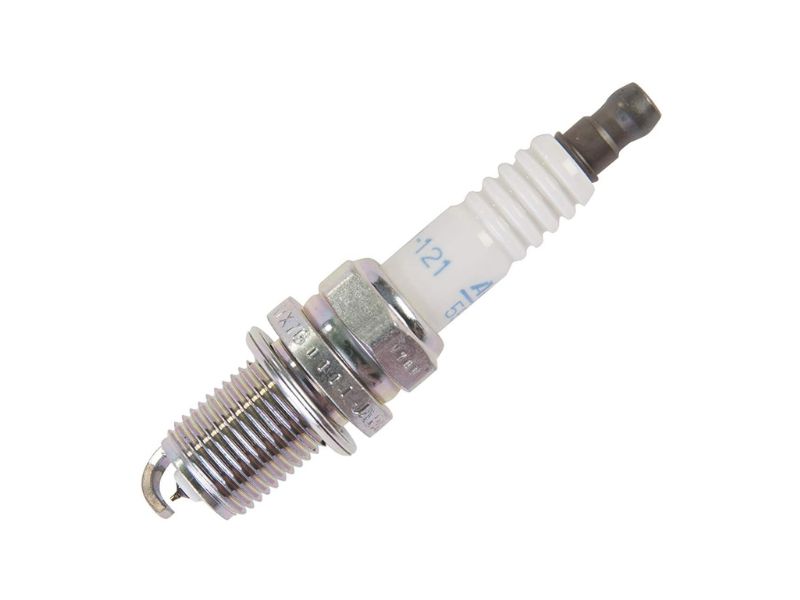
My primary recommendation is the ACDelco 41-121 Iridium Spark Plug for a compatible 2012–2020 Sonic equipped with the 1.4L turbo engine. I prefer it for this application because it follows the original-equipment specification and is supplied with a factory-set gap.
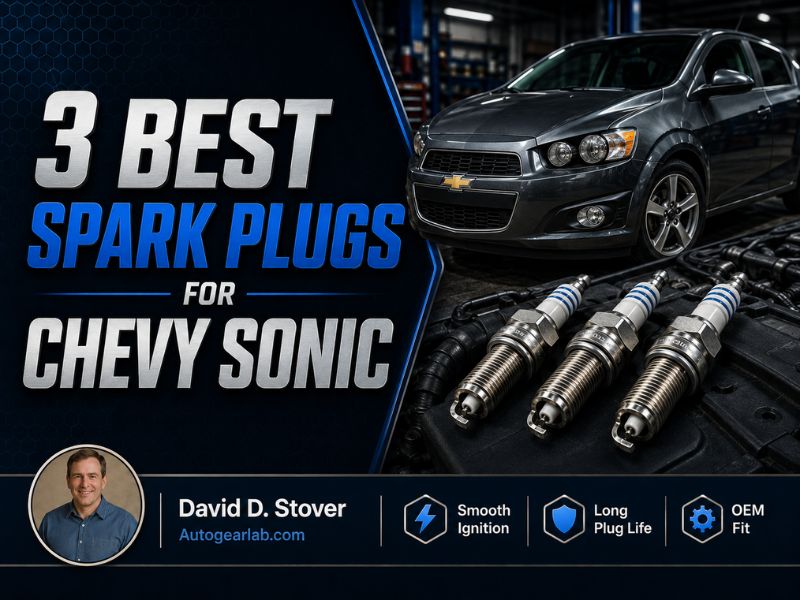
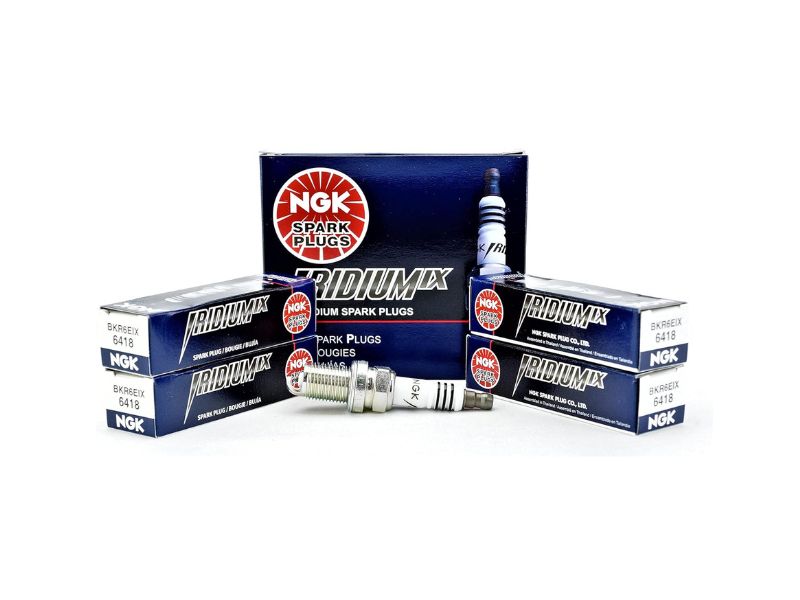
For compatible 2012–2018 models with the 1.8L engine, I would choose the NGK 6418 BKR6EIX Iridium IX Spark Plug 4-Pack when responsive ignition and a convenient four-plug set are priorities.
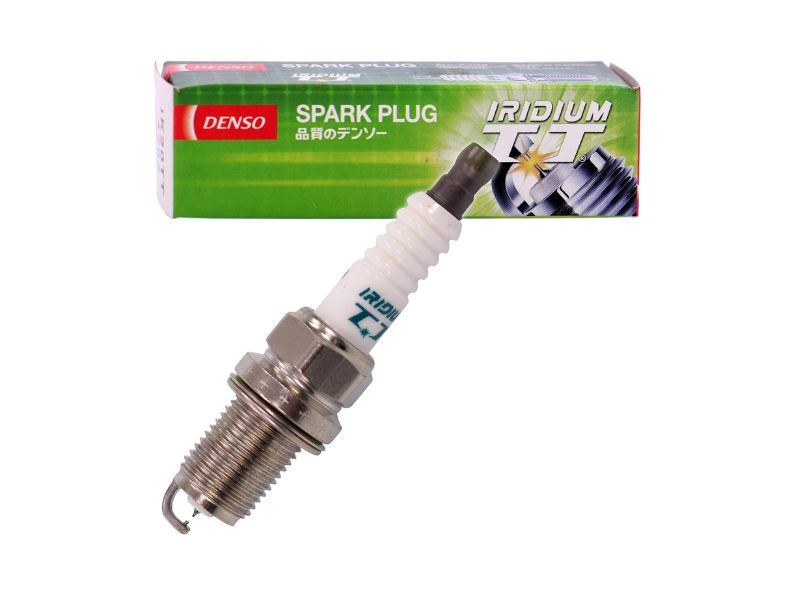
The Denso 4702 IK20TT Iridium TT Spark Plug is another possible 1.8L alternative when its complete specifications are confirmed for the exact vehicle. Its twin-tip electrode design is intended to improve ignitability, but its supplied gap must not be accepted without checking the application.
Best Spark Plugs for Chevy Sonic Reviewed
| Image | Product Name | Check Price |
|---|---|---|
Best Choice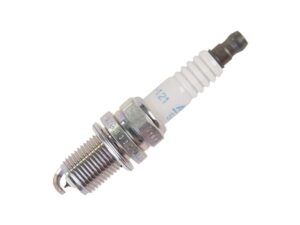 | ACDelco 41-121 Iridium Spark Plug | Check Price |
Second Best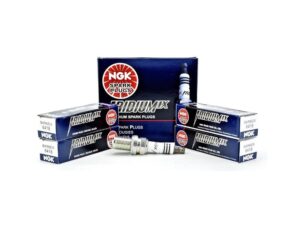 | NGK 6418 BKR6EIX Iridium IX Spark Plug 4-Pack | Check Price |
Third Choice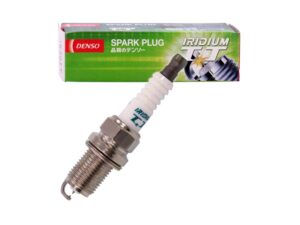 | Denso 4702 IK20TT Iridium TT Spark Plug | Check Price |
These products are not ranked as three universal replacements for the same vehicle. The ACDelco serves the 1.4L turbo application, while the NGK and Denso options address compatible 1.8L configurations. The owner should verify the model year, engine code, and catalog fitment before ordering.
1. ACDelco 41-121 Iridium Spark Plug
Key Features
- Intended for compatible 1.4L LUV turbo Sonic models
- Iridium center electrode
- GM original-equipment specification
- Factory-set approximately 0.028-inch gap
- Resistor-type construction
- Supplied individually
- Designed for stock ignition and engine calibration
The ACDelco 41-121 is the most direct choice for compatible 1.4L turbocharged Sonic models. This engine places considerable demand on its ignition system because cylinder pressure rises under boost. A correctly specified fine-wire iridium plug helps the coil initiate a stable spark without requiring an unnecessarily large electrode.
The factory gap is an important part of the design. Catalog information identifies the plug as pre-gapped at approximately 0.028 inch and warns against re-gapping it. Fine-wire iridium electrodes can be damaged if a conventional wedge-style gap tool is forced between the electrodes or used to pry against the center tip.
A pre-set gap should still be inspected visually and measured carefully with an appropriate wire gauge. Shipping damage can bend the ground electrode. Measurement is different from aggressively adjusting the plug: the purpose is to identify a damaged or incorrect part before it enters the engine.
This plug is suitable for an otherwise stock 1.4L Sonic when its year, VIN, and engine identification confirm the application. Modified engines may need a different heat range or gap based on boost pressure, calibration, fuel, and ignition demands. Those changes should follow guidance from the calibration provider rather than generic online recommendations.
The ACDelco is sold as one plug, so a four-cylinder engine requires four matching units. Replace all four during scheduled service unless troubleshooting calls for a different diagnostic procedure. Mixing plug types, service ages, or gaps across cylinders can create inconsistent ignition performance.
The main limitation is strict compatibility. It should not be purchased merely because the vehicle badge says Sonic. The 1.8L engine uses a different specified plug family, and an incorrect cross-application can create mechanical and combustion problems.
For a compatible stock 1.4L turbo Sonic, the ACDelco 41-121 is my primary recommendation. Its original-equipment specification reduces uncertainty surrounding heat range, geometry, and factory gap.
2. NGK 6418 BKR6EIX Iridium IX Spark Plug 4-Pack
Key Features
- Cataloged for compatible 2012–2018 1.8L Sonic models
- NGK stock number 6418
- BKR6EIX Iridium IX design
- Fine-wire iridium center electrode
- Taper-cut ground electrode
- Trivalent metal shell plating
- Approximately 0.027-inch application gap
- Four plugs included
The NGK 6418 BKR6EIX is the strongest alternative for the naturally aspirated 1.8L Sonic. Its four-pack matches the engine’s cylinder count, avoiding the ordering mistake that can occur when a listing shows a single plug.
NGK’s Iridium IX design uses a fine-wire iridium center electrode to reduce the voltage needed to initiate a spark. A tapered ground electrode exposes the spark area while limiting obstruction around the flame kernel. These features support dependable firing, but they should not be interpreted as a guaranteed increase in horsepower or fuel economy.
Catalog data associates this plug with 2012–2018 Sonic models equipped with the 1.8L four-cylinder and identifies an application gap near 0.027 inch. Fitment should still be confirmed using the full vehicle details because midyear changes, market variations, and catalog errors can occur.
The shell’s trivalent plating provides corrosion resistance and helps prevent thread seizure. NGK generally does not recommend adding anti-seize to plated plug threads unless a particular service procedure explicitly requires it. Lubricant changes thread friction and can cause a torque wrench to produce excessive clamping force.
Iridium IX is designed with ignition performance in mind, while an original-equipment-style dual precious-metal plug may be preferred when the longest service interval is the primary objective. Maintenance expectations should therefore be based on the plug manufacturer’s guidance and the vehicle’s service schedule rather than the electrode material alone.
The NGK 6418 is not the appropriate default for the 1.4L turbo engine. Similar thread descriptions do not establish compatibility, and the turbo engine’s specified geometry, gap, and heat requirements must be respected.
I recommend this four-pack for a verified 1.8L Sonic when a reputable aftermarket iridium option is preferred. It provides a practical complete set with a well-established electrode design.
3. Denso 4702 IK20TT Iridium TT Spark Plug
Key Features
- Possible replacement for compatible 1.8L Sonic applications
- Denso stock number 4702
- IK20TT design
- 0.4mm iridium center electrode
- 0.7mm platinum ground electrode
- 14mm thread diameter
- Twin-tip electrode geometry
- Sold individually
The Denso 4702 IK20TT provides another fine-wire option for the 1.8L engine where a current application catalog confirms fitment. Denso’s Twin-Tip design combines a narrow iridium center electrode with a small platinum pad on the ground electrode.
Reducing the area around the spark gap can improve ignitability because the spark is less shielded by large electrode surfaces. This may support stable combustion, particularly during cold starting or light-load operation, but a plug cannot correct a failing ignition coil, vacuum leak, injector problem, compression loss, or incorrect air-fuel mixture.
A significant complication is the supplied gap. Product information for the IK20TT commonly identifies a nominal 0.039-inch gap, while Sonic 1.8L application catalogs may specify a gap closer to 0.027 inch. That difference should never be ignored.
Do not close a large gap aggressively on a fine-wire plug or assume that every boxed plug is ready for every listed vehicle. Confirm the correct specification using the VIN-specific service information and obtain professional guidance if adjustment would be substantial. In many cases, selecting a plug supplied closer to the required application gap is safer.
The Denso is sold individually, so four units are needed. Inspect the part numbers on all boxes and plugs before installation. Counterfeit or mixed parts are a concern with small high-demand automotive components, making consistent packaging and a reputable supply chain important.
I would consider the IK20TT only for a verified 1.8L application when its catalog fitment and required gap have both been confirmed. The NGK is the simpler 1.8L recommendation because its four-pack and application gap create fewer purchasing and setup questions.
Spark Plug Comparison
| Product | Intended Sonic Engine | Electrode Design | Typical Application Gap | Package Quantity | Main Strength | Important Limitation |
| ACDelco 41-121 | 1.4L LUV turbo | Iridium center electrode | About 0.028 in | 1 | Original-equipment specification | Not intended as the default 1.8L plug |
| NGK 6418 BKR6EIX | Compatible 1.8L models | Iridium center, tapered ground | About 0.027 in | 4 | Convenient matched set | Confirm year and engine before ordering |
| Denso 4702 IK20TT | Selected compatible 1.8L applications | Iridium and platinum twin tip | Supplied gap may differ from Sonic specification | 1 | Fine twin-tip construction | Gap requires particularly careful verification |
The correct engine determines the recommendation. Owners of a stock 1.4L turbo Sonic should begin with the ACDelco specification. Owners of a compatible 1.8L model can consider the NGK set, while the Denso requires closer attention to supplied gap and application data.
Identify the Chevy Sonic Engine Before Buying Plugs
Check the VIN and Emissions Label
Do not rely solely on the trim badge. Depending on model year, trim level, and body style, visually similar Sonic models may use different engines.
The underhood emissions label normally identifies engine-family information. The eighth character of the VIN can also help identify the engine when decoded through reliable service information.
Common US configurations include:
- 1.4L turbocharged LUV engine
- 1.8L naturally aspirated LUW or LWE engine
The 1.4L turbo has associated turbocharger plumbing and a different ignition specification from the 1.8L engine. If identification remains uncertain, provide the complete VIN to a qualified parts professional.
Confirm the Model Year
The Sonic was offered across multiple model years, and engine availability changed during its production run. Later US models primarily used the 1.4L turbo, while earlier years could be equipped with either engine.
A product labeled for “Chevy Sonic” without stating the engine and year is not specific enough for a safe purchase.
Check the Existing Plug Number Carefully
Removing one existing plug can provide additional information, but it is not conclusive. A previous owner or repair shop may already have installed the wrong part.
Compare the removed plug’s number with current VIN-specific service data. Do not order another incorrect set merely because the engine was running with it.
Important Spark Plug Specifications
Thread Diameter and Pitch
The threaded shell must match the cylinder head exactly. A plug that starts into the hole is not necessarily correct. Incorrect pitch can damage the aluminum threads, while the wrong diameter will not seat safely.
Always begin threading by hand. If resistance develops before the gasket reaches the head, stop and investigate rather than using a ratchet to force the plug.
Thread Reach
Reach is the length of the threaded portion that extends into the cylinder head. Too little reach can recess the spark and leave exposed head threads that collect deposits.
Excessive reach may expose plug threads inside the combustion chamber or allow contact with a piston or valve. It can also create hot spots that contribute to pre-ignition.
Seat Type
Spark plugs generally use either a flat gasket seat or a tapered seat. The cylinder head and plug must use the same arrangement.
A gasket-seat plug seals through a crush washer, while a tapered-seat plug seals through its machined cone. Torque requirements differ between these designs.
Hex Size
The plug’s hex determines the required socket size. Use a dedicated spark plug socket that grips the plug without damaging the ceramic insulator.
Confirm that the socket fits into the Sonic’s plug wells. Thick-walled general-purpose sockets may not provide adequate clearance.
Heat Range
A spark plug’s heat range describes how quickly it transfers heat from the firing tip into the cylinder head. It does not describe spark temperature.
A plug that runs too cold may accumulate deposits and foul. One that runs too hot may contribute to pre-ignition and electrode damage.
Heat-range numbers are not standardized across manufacturers. A “6” from one company cannot automatically be compared with a “6” from another.
Resistor Construction
Modern engine-management systems generally require resistor plugs to reduce electromagnetic interference. Installing a non-resistor design where a resistor plug is specified can interfere with electronics and create irregular ignition behavior.
Electrode Material
Copper-core conventional plugs conduct heat well but usually use less durable outer electrode materials. Platinum improves wear resistance, while iridium allows an especially fine center electrode because of its hardness and high melting point.
Electrode material does not override fitment. A correctly specified conventional plug is safer than an incorrectly sized iridium plug.
Spark Plug Gap on the Chevy Sonic
The spark gap is the distance between the center and ground electrodes. The ignition voltage must cross this distance to initiate combustion.
A wider gap exposes a larger spark kernel but requires more voltage. A smaller gap is easier to fire under high cylinder pressure but may produce a smaller initial flame kernel.
The 1.4L turbo application commonly uses a gap near 0.028 inch. Compatible 1.8L applications are often listed near 0.027 inch, though the exact specification must be confirmed for the VIN and plug number.
Turbocharged engines are sensitive to gap because boost increases cylinder pressure. An excessive gap can contribute to spark blowout, hesitation, or misfire under acceleration even when the engine idles acceptably.
Should Pre-Gapped Plugs Be Checked?
Yes, but check them without damaging the electrodes. Use a wire-style gauge and slide the correct wire gently through the gap.
Do not press a tapered coin tool against a fine-wire iridium center electrode. If a plug is significantly outside specification, exchanging it is often safer than performing a large adjustment.
Do Not Treat Every Online Gap Figure as Universal
Specifications quoted for a plug may represent its generic factory setting rather than the requirement for every vehicle in which it can be used.
Vehicle service information should determine the target. This is especially important with the Denso IK20TT, whose commonly supplied gap may differ considerably from some Sonic 1.8L specifications.
Original-Equipment Versus Aftermarket Plugs
An original-equipment plug is designed around the engine’s combustion chamber, ignition system, emissions strategy, and expected maintenance interval. For an unmodified daily-driven 1.4L Sonic, the OE specification is the lowest-risk starting point.
A reputable aftermarket plug can perform well when its complete geometry, heat range, resistor value, and gap match the engine. The NGK option is reasonable for a compatible 1.8L Sonic because current application catalogs support that fitment.
Aftermarket does not automatically mean an upgrade. A more expensive electrode material or more complex tip design does not create extra power when the existing plugs already ignite the mixture correctly.
Symptoms of Worn or Incorrect Spark Plugs
Rough Idle
A worn gap, deposits, cracked insulator, or weak coil can create intermittent combustion. The engine may shake more noticeably at a stop.
Rough idle is not proof that the plugs are responsible. Vacuum leaks, a damaged intake hose, purge-system faults, injector problems, or low compression can produce similar symptoms.
Misfire Under Acceleration
The 1.4L turbo may misfire under boost when a worn or excessively wide gap requires more voltage than the ignition system can consistently provide.
Scan the vehicle for diagnostic trouble codes. A cylinder-specific code can guide inspection, but it does not distinguish automatically between a plug, coil, injector, wiring issue, or mechanical problem.
Difficult Starting
Eroded or fouled plugs may make cold starting more difficult. Battery condition, fuel pressure, coolant-temperature data, and compression should also be considered.
Reduced Fuel Economy
Incomplete combustion can reduce efficiency, but fuel economy changes have many causes. Tire pressure, driving pattern, thermostat operation, oxygen sensors, weather, and fuel quality may have a larger effect.
Check-Engine Light
A flashing check-engine light indicates an active misfire severe enough to risk catalytic-converter damage. Reduce load and arrange diagnosis promptly rather than continuing to drive normally.
Chevy Sonic Spark Plug Installation Guide
Tools Commonly Required
A typical installation may require:
- Correct spark plug socket
- Ratchet and suitable extensions
- Calibrated inch-pound or low-range foot-pound torque wrench
- Compressed air or a safe method of cleaning the plug wells
- Wire-style gap gauge
- Small amount of appropriate dielectric grease
- Replacement coil-pack seal or ignition components if damaged
Confirm the required tools and procedure for the exact engine before beginning.
Work on a Cold Engine
The Sonic uses an aluminum cylinder head. Removing or installing plugs while the head is hot increases the risk of thread damage and inaccurate torque.
Allow the engine to cool completely. Park on a level surface, switch off the ignition, and keep dirt away from the exposed plug wells.
Remove the Ignition Assembly Carefully
The exact arrangement differs between the 1.4L and 1.8L engines. Disconnect electrical connectors by releasing their locks rather than pulling on the wires.
Lift the ignition coil or coil cassette evenly. Inspect boots for cracks, swelling, carbon tracking, oil contamination, and damaged springs.
Oil in a plug well can indicate a valve-cover or sealing problem. Correct the leak rather than simply installing new plugs into a contaminated well.
Clean Before Removing the Plugs
Loose dirt can fall into the cylinder after the plug is removed. Clean around the wells first without forcing debris deeper into the engine.
Wear eye protection when using compressed air. Do not direct debris toward another person or sensitive electrical components.
Remove Each Plug Gently
Keep the socket aligned with the plug. If a plug is unusually tight, do not apply uncontrolled force. Carbon buildup, corrosion, cross-threading, or prior over-tightening may require professional attention.
Compare the removed plugs cylinder by cylinder. Differences in deposits, wetness, damage, or electrode wear can reveal a localized problem.
Start New Plugs by Hand
Insert the new plug into the socket and lower it straight into the well. Turn the extension by hand until the gasket contacts the head.
A short piece of clean rubber hose can help start a plug because it slips before enough force is applied to cross-thread it. Never use a power tool to begin installation.
Apply the Correct Torque
Use the VIN-specific service torque and the instructions supplied with the plug. Torque depends on thread size, seat type, head material, and whether the threads are dry.
Avoid guessing by counting turns unless the plug manufacturer explicitly provides that method for the exact configuration.
Avoid Unapproved Anti-Seize
Many modern plugs have plated shells and are intended to be installed dry. Anti-seize reduces thread friction, causing the same torque-wrench reading to create greater clamping force.
Excessive torque can stretch the shell, distort the plug, damage cylinder-head threads, or make future removal difficult. Use anti-seize only when the applicable manufacturer procedure specifically calls for it and provides a corrected torque.
Use Dielectric Grease Correctly
A small amount of dielectric grease may be applied inside the opening of the ignition boot to help sealing and future removal.
Do not coat the terminal heavily or place grease on the electrodes. Excess material can prevent a secure electrical connection or contaminate the plug.
Reassemble and Verify Operation
Reconnect the ignition assembly, wiring, and removed covers. Confirm that no tools remain in the engine compartment.
Start the engine and listen for abnormal operation. Scan and diagnose persistent misfire codes rather than assuming the engine computer will immediately relearn around an installation problem.
Reading the Removed Spark Plugs
A light tan or gray firing end may reflect normal combustion, although modern fuels can produce a variety of appearances.
Dry black deposits can indicate rich operation, repeated short trips, prolonged idling, weak ignition, or an excessively cold plug.
Wet fuel may indicate a cylinder that is not firing. Oily deposits can point toward oil entering the combustion chamber through rings, valve seals, or another mechanical path.
A bright white or blistered insulator may reflect overheating, an excessively hot heat range, a lean condition, detonation, or inappropriate timing.
A broken insulator or missing electrode material requires further investigation. Do not install new plugs and continue driving without determining whether fragments or abnormal combustion damaged the engine.
Replacement Interval and Maintenance
Follow the maintenance schedule for the exact Sonic model year and engine. Plug lifespan depends on electrode design, combustion conditions, trip length, oil consumption, and ignition-system health.
Iridium plugs generally maintain their gap longer than conventional nickel plugs, but they are not permanent. The ground electrode can still erode, deposits can form, and the ceramic can develop tracking or damage.
Turbocharged engines may show ignition symptoms before the nominal interval if boost, modifications, fuel quality, or coil condition increases demand.
Inspect ignition boots and the valve-cover area whenever plugs are replaced. A new plug cannot compensate for a damaged boot, weak coil, or oil-filled well.
Common Buying and Installation Mistakes
Ordering by Model Name Alone
“Chevy Sonic spark plug” is not adequate fitment information. Enter the year, engine, VIN, and relevant emissions details.
Installing 1.8L Plugs in a 1.4L Turbo
The engines have different requirements. Do not substitute based on appearance.
Trusting a Generic Factory Gap
The gap on a multi-application plug may not match the Sonic specification. Verify both the vehicle and product data.
Damaging the Iridium Tip During Gapping
Fine-wire electrodes are fragile under sideways force. Use the correct gauge and avoid prying against the center electrode.
Adding Anti-Seize Automatically
Unapproved lubricant changes torque behavior and can lead to over-tightening.
Installing Plugs With a Power Tool
Power tools make it easy to cross-thread an aluminum head. Start every plug by hand.
Replacing Plugs Without Diagnosing the Misfire
A misfire can originate from coils, injectors, wiring, air leaks, compression, or engine-management faults. Diagnose persistent problems systematically.
Mixing Plug Types
Install four matching plugs of the same part number and comparable gap. Do not mix old and new units unless performing a controlled diagnostic test.
Frequently Asked Questions
What are the best spark plugs for Chevy Sonic models?
The correct choice depends primarily on whether the Sonic has a 1.4L or 1.8L engine. I recommend the ACDelco 41-121 for a verified stock 1.4L turbo application. The NGK 6418 BKR6EIX is a practical aftermarket option for compatible 1.8L models.
What spark plugs does a 1.4L turbo Chevy Sonic use?
Compatible stock 1.4L turbo models commonly use the ACDelco 41-121 iridium specification. Verify the year, VIN, and LUV engine code before purchasing. This plug is generally listed with a factory-set gap near 0.028 inch and should not be aggressively re-gapped.
What spark plugs fit a 1.8L Chevy Sonic?
NGK 6418 BKR6EIX plugs are cataloged for many 2012–2018 1.8L Sonic models. Other compatible designs may also be available, but every alternative must match the required reach, seat, heat range, resistor configuration, and application gap. Confirm fitment with the VIN.
What is the Chevy Sonic spark plug gap?
Many applications use a gap close to 0.027–0.028 inch, depending on the engine. The 1.4L turbo is commonly specified near 0.028 inch, while compatible 1.8L listings may show approximately 0.027 inch. Use VIN-specific service information as the final authority.
Can I use the same spark plugs in the 1.4L and 1.8L engines?
No, plugs should not be interchanged between these engines without explicit catalog confirmation. Thread appearance alone does not establish compatibility. Heat range, projection, reach, seat, gap, and electrode geometry can differ in ways that affect ignition and mechanical clearance.
Should I gap new iridium spark plugs?
Measure the gap carefully, but avoid unnecessary adjustment of a factory-set fine-wire plug. Use a wire gauge without pressing against the center electrode. If the gap is significantly incorrect, exchange the plug or follow product-specific adjustment instructions rather than forcing it.
How many spark plugs does a Chevy Sonic need?
Both common Sonic engines use four spark plugs. The vehicle has an inline four-cylinder engine with one plug per cylinder. Check package quantity carefully because some products are sold individually while others include a complete four-plug set.
How often should Chevy Sonic spark plugs be replaced?
Follow the maintenance schedule for the exact model year, engine, and plug specification. Iridium plugs generally provide extended service, but operating conditions and ignition problems can shorten their useful life. Diagnose misfires immediately instead of waiting for a scheduled interval.
Can worn spark plugs cause a Chevy Sonic to misfire under boost?
Yes, excessive gap or electrode wear can cause a 1.4L turbo to misfire under load. Boost raises cylinder pressure and increases the voltage required to cross the gap. Ignition coils, injectors, air leaks, and engine condition must also be checked.
Should anti-seize be used on Sonic spark plug threads?
Usually not unless the applicable manufacturer procedure specifically requires it. Many modern plugs use corrosion-resistant shell plating and are designed for dry installation. Anti-seize changes friction and can cause excessive clamping force at the published dry-torque value.
What torque should be used for Chevy Sonic spark plugs?
Use the VIN-specific service specification and instructions for the exact plug. Torque can vary with the engine, seat design, thread condition, and plug manufacturer. A calibrated torque wrench is safer than a generic value or an improvised turn-angle estimate.
Can new spark plugs improve fuel economy?
They may restore lost efficiency when the old plugs are worn or fouled. Correctly operating plugs do not create fuel savings beyond what the engine’s combustion and control systems allow. Tire pressure, thermostat condition, sensors, driving style, and mechanical health also influence economy.
Are iridium plugs better for the Chevy Sonic?
Iridium is well suited to the Sonic when the plug’s full specification matches the engine. Its fine center electrode supports reliable firing and resists wear. An incorrect iridium plug remains worse than the correctly specified original-equipment design, so material should never override fitment.
Why is there oil in a Chevy Sonic spark plug well?
Oil in the well commonly suggests a valve-cover or plug-well sealing problem. Clean the area and repair the leak before installing new ignition components. Oil can damage coil boots and contribute to misfires, but it does not necessarily mean oil is entering the combustion chamber.
Will colder spark plugs help a modified 1.4L turbo Sonic?
Possibly, but only when the engine calibration and operating conditions justify the change. Modified boost, fuel type, timing, and cylinder pressure can alter ignition requirements. Follow the tuner’s exact part-number and gap recommendation rather than selecting a colder heat range independently.
Conclusion
The best spark plugs for Chevy Sonic models cannot be chosen safely without identifying the engine. A plug intended for the 1.4L turbo should not be treated as interchangeable with one cataloged for the 1.8L naturally aspirated engine.
For a compatible, stock 2012–2020 1.4L LUV turbo Sonic, the ACDelco 41-121 is my primary recommendation. Its original-equipment specification and factory-set gap remove much of the uncertainty surrounding geometry and heat range.
For a verified 2012–2018 1.8L Sonic, the NGK 6418 BKR6EIX four-pack is the most convenient alternative. The Denso 4702 IK20TT may also suit selected 1.8L applications, but its supplied gap demands particularly careful comparison with the vehicle specification.
Before ordering, confirm the model year, VIN, engine code, package quantity, and complete plug number. During installation, work on a cold engine, clean the plug wells, start every plug by hand, and use the correct dry-thread torque unless instructed otherwise.
I would choose the ACDelco 41-121 for the compatible 1.4L turbo and the NGK 6418 set for a catalog-confirmed 1.8L model. Correct engine-specific fitment matters more than brand, electrode marketing, or claimed performance.