A tire sealer and inflator can temporarily seal a small tread puncture while restoring enough tire pressure to get you off the roadside. The best options are compact, simple to operate, compatible with common passenger tires, and fast enough to use during an unexpected flat.
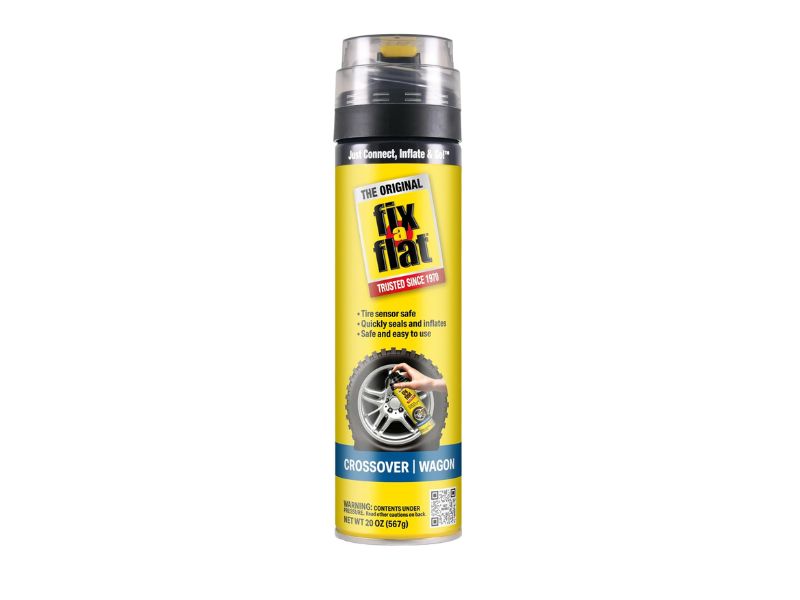
My first recommendation is the Fix-A-Flat S60430 Aerosol Emergency Flat Tire Repair and Inflator. I like its simple all-in-one design, especially for drivers who want something that can be stored in the vehicle without carrying a separate compressor.
For standard passenger-car tires, I would also consider the Fix-A-Flat S60420 Aerosol Emergency Flat Tire Repair and Inflator. Its compact 16-ounce format makes it particularly practical for a sedan, hatchback, or everyday commuter vehicle.
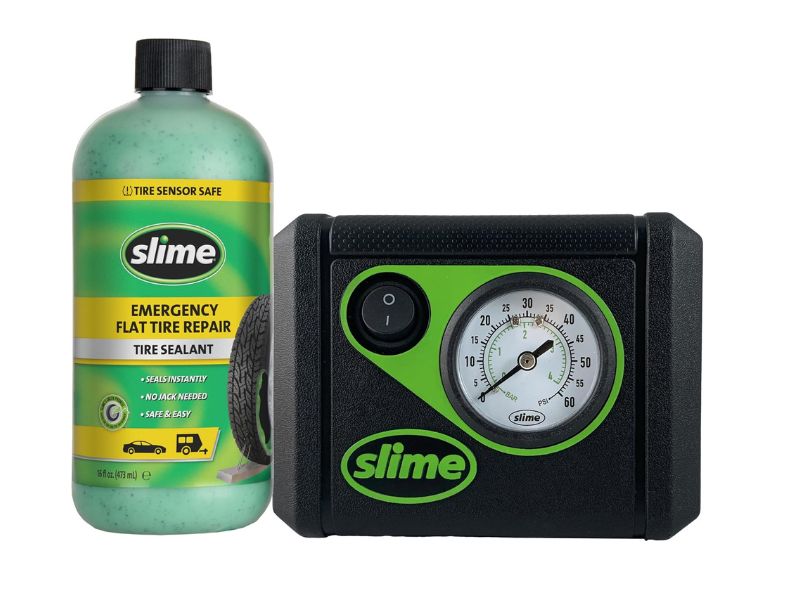
If I wanted a reusable compressor rather than relying only on an aerosol can, I would choose the Slime 50107 Smart Spair Flat Tire Repair Kit. It combines emergency sealant with a powered tire inflator and pressure gauge, making it a more complete roadside system.
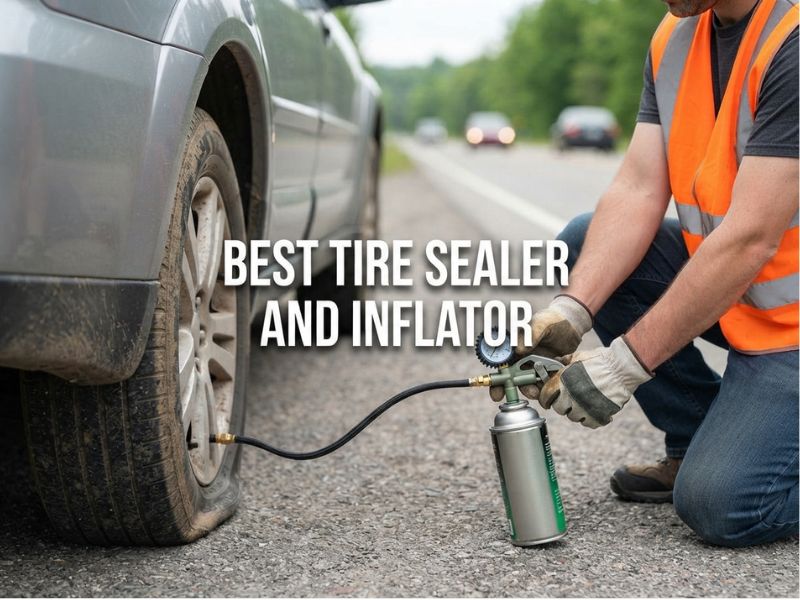
Best Tire Sealer and Inflator
| Image | Product Name | Check Price |
|---|---|---|
Best Choice | Fix-A-Flat S60430 Aerosol Emergency Flat Tire Repair and Inflator | Check Price |
Second Best | Fix-A-Flat S60420 Aerosol Emergency Flat Tire Repair and Inflator | Check Price |
Third Choice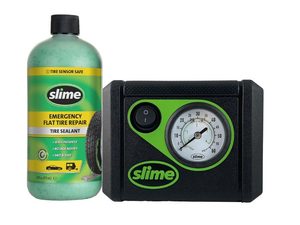 | Slime 50107 Smart Spair Flat Tire Repair Kit | Check Price |
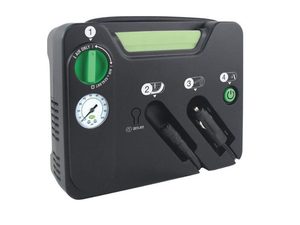 | Slime 50122 Flat Tire Puncture Emergency Kit | Check Price |
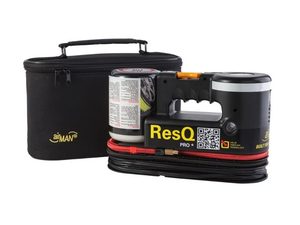 | AIRMAN ResQ Pro+ Tire Repair Kit | Check Price |
1. Fix-A-Flat S60430 Aerosol Emergency Flat Tire Repair and Inflator – Best Overall Roadside Pick
Key Features
- 20-ounce emergency tire inflator and sealant
- Designed for larger automotive tires
- No separate air compressor required
- Hose connects directly to the tire valve
- Compact enough for trunk or cargo-area storage
- Intended for temporary roadside puncture repair
- No jack or wheel removal required
The Fix-A-Flat S60430 is an all-in-one emergency tire sealant and inflator designed to provide a simple temporary solution when a tire develops a small puncture. Unlike compressor-based kits, there are fewer individual components to connect, which is one of its biggest advantages during a stressful roadside situation.
Detailed Review
Convenience is the main reason I rank the S60430 first. When a tire suddenly loses air, many drivers do not want to assemble hoses, bottles, compressors, and electrical connections on the side of a highway. This product reduces the process to a much simpler system.
The sealant enters the tire while the pressurized contents help restore enough inflation for temporary mobility. That can be particularly useful if the alternative is changing a spare tire in traffic, poor weather, darkness, or another unsafe location.
Its 20-ounce capacity also makes it better suited to larger passenger-vehicle tires than smaller aerosol products. Drivers of crossovers, SUVs, vans, and some light trucks may therefore find it more appropriate than a small emergency can.
There is an important limitation, however. An aerosol sealer is an emergency mobility product, not a permanent tire repair. It should not be treated as a substitute for a professional internal patch or plug-and-patch repair when the tire is repairable.
Like almost every liquid tire sealant, it is also primarily intended for relatively small punctures in the tread area. A torn sidewall, damaged bead, bent wheel, major tread separation, or large hole requires a different solution.
What I Like
The biggest advantage is simplicity. You do not have to carry a separate compressor or remove the wheel.
Its larger capacity also makes it a strong emergency option for drivers with larger tires.
The compact container is easy to keep with other roadside equipment and takes up far less space than a spare tire.
What I Do Not Like
It is essentially a single-use emergency solution rather than a reusable tire inflation system.
You also have less control over inflation than you would with a dedicated compressor and pressure gauge.
Verdict
The Fix-A-Flat S60430 is my primary recommendation for drivers who value speed, portability, and straightforward operation. It is especially useful as an emergency backup for vehicles without a convenient full-size spare.
It would be my first choice for someone wanting a simple tire sealer and inflator that can remain in the vehicle until an unexpected puncture occurs.
2. Fix-A-Flat S60420 Aerosol Emergency Flat Tire Repair and Inflator – Best for Standard Car Tires

Key Features
- 16-ounce aerosol formula
- Sealant and inflation in one product
- Designed for standard passenger tires
- No external compressor required
- Direct connection to the valve stem
- Compact emergency storage
- No wheel removal needed
The Fix-A-Flat S60420 follows the same basic concept as the larger S60430 but comes in a 16-ounce configuration better matched to common passenger-car applications.
Detailed Review
For a sedan or everyday commuter car, this is arguably the more practical of the two Fix-A-Flat choices.
Its primary appeal is that there is virtually no equipment to organize. Store the can securely in the vehicle, connect it according to the instructions when needed, and the product provides both sealant and inflation assistance.
That simplicity makes it particularly useful for drivers who are uncomfortable changing tires themselves.
It also solves another common problem: modern vehicles increasingly sacrifice spare-tire storage for cargo space, batteries, fuel-efficiency improvements, or weight reduction. An emergency sealing system can provide another option when a conventional spare is unavailable.
The S60420 works best when expectations are realistic. It is intended to help with common tread-area punctures rather than catastrophic tire damage.
Once the vehicle is mobile, the tire should still be inspected promptly. Tell the technician that sealant was used because the tire may need to be cleaned internally before a permanent repair can be evaluated.
What I Like
The 16-ounce container is easy to store in smaller vehicles.
There is no electrical cable, separate pump, or pressure hose to organize.
Operation is straightforward enough for drivers who rarely work on their own cars.
What I Do Not Like
Aerosol products do not provide the versatility of a reusable compressor.
It is also not appropriate for serious sidewall or structural tire damage.
Verdict
For everyday passenger cars, the Fix-A-Flat S60420 provides one of the easiest emergency options on this list.
Choose it over the larger S60430 if you primarily drive a sedan or compact vehicle and prioritize minimum storage space.
3. Slime 50107 Smart Spair Flat Tire Repair Kit – Best Reusable Compressor Kit
Key Features
- Separate tire inflator and emergency sealant
- 16-ounce sealant supply
- 12-volt vehicle power connection
- Built-in pressure gauge
- Approximately 15-minute emergency repair process
- Designed for standard highway tires
- Refillable sealant system
- Compressor can be used separately for inflation
The Slime 50107 Smart Spair takes a more complete approach by combining a bottle of emergency tire sealant with a powered 12-volt tire inflator.
This design gives it an important advantage: the compressor remains useful even when sealant is not required.
Detailed Review
This is the option I prefer for drivers who want more flexibility than an aerosol product can provide.
Suppose your TPMS warning appears and the tire is simply a few PSI low. With the Smart Spair, you can use the compressor without injecting sealant unnecessarily.
If a small puncture is actually causing the pressure loss, you then have the sealant available as an emergency backup.
That separation between air inflation and puncture sealing is valuable. Tire sealant should not automatically be added every time a tire loses pressure. Sometimes temperature changes, a slow valve leak, or ordinary pressure loss may be responsible.
The integrated gauge also helps you monitor pressure during inflation. That provides more control than a basic aerosol can.
Because it uses the vehicle’s 12-volt accessory outlet, there is no rechargeable battery that needs to remain charged for months while the kit sits in the trunk.
For emergency preparedness, that can be a significant advantage.
The downside is that there are more steps. You must connect the equipment correctly and have access to a functioning 12-volt outlet.
What I Like
The compressor can be reused for routine tire inflation.
I especially like being able to add air without automatically introducing sealant.
The pressure gauge provides better control over inflation.
Additional sealant can also extend the useful life of the kit.
What I Do Not Like
The complete kit occupies more space than an aerosol can.
It also takes slightly more setup and requires vehicle electrical power.
Verdict
The Slime 50107 Smart Spair is one of the strongest choices for drivers who want a true sealant and compressor kit rather than a single-use aerosol product.
If versatility matters more than absolute simplicity, I would choose this over either aerosol option.
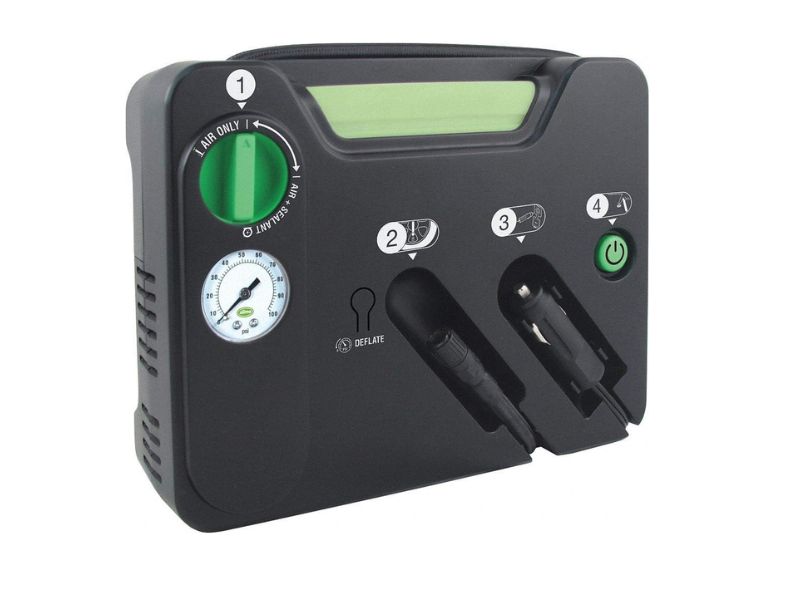
4. Slime 50122 Flat Tire Puncture Emergency Kit – Best Easy-Operation Compressor Kit
Key Features
- Integrated emergency sealant system
- Powered tire inflation
- Analog pressure monitoring
- Designed for passenger vehicles
- Approximately 10-minute repair process under suitable conditions
- Simple control interface
- Compact storage design
- No jack required for common tread punctures
The Slime 50122 Flat Tire Repair Kit is another compressor-and-sealant system, but its design focuses heavily on making emergency operation straightforward.
Detailed Review
The 50122 is useful for drivers who like the capabilities of a compressor kit but want a more integrated system.
Rather than depending entirely on pressure from an aerosol can, the powered compressor can restore tire pressure after sealant enters the tire.
That becomes important when the tire is significantly underinflated.
The compressor-based design also gives you a more familiar inflation process. Drivers who have previously used a portable air compressor should find the overall concept intuitive.
Another advantage is pressure monitoring. Correct tire pressure matters after any temporary puncture repair. Driving on a severely underinflated tire can generate excessive heat and cause internal structural damage even if the original puncture has stopped leaking.
This kit still has the same fundamental limitations as other liquid sealants. Damage must be appropriate for temporary sealing, and the repaired tire should not simply be considered permanently fixed.
Its emergency nature is important to remember: the objective is to restore mobility long enough to reach a safe location or qualified tire service facility.
What I Like
The combination of compressor and sealant provides a more complete solution than a basic emergency can.
The design is approachable for drivers who want straightforward controls.
Pressure monitoring is another meaningful advantage.
What I Do Not Like
It is larger than an aerosol-only product.
There are also more components involved, so storage and setup are not quite as effortless.
Verdict
The Slime 50122 offers an appealing middle ground between an ultra-simple aerosol can and a more traditional multi-component roadside kit.
It makes sense for commuters, family vehicles, and spare-less cars where a compact emergency system will remain stored in the trunk.
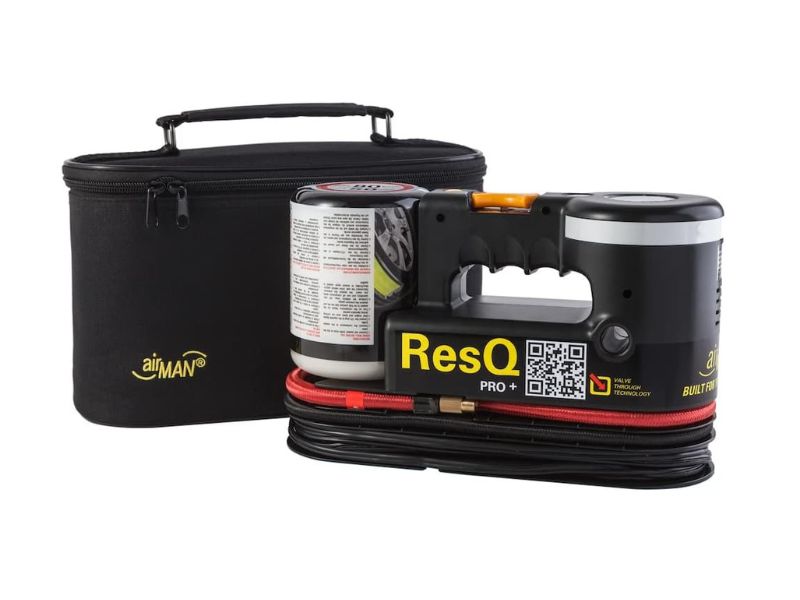
5. AIRMAN ResQ Pro+ Tire Repair Kit – Best Premium Roadside Kit
Key Features
- 12-volt powered air compressor
- Emergency tire sealant
- Integrated pressure monitoring
- LED work light
- Compact carrying system
- Compressor-only inflation capability
- Designed for temporary puncture repair
- Suitable for vehicle emergency storage
The AIRMAN ResQ Pro+ combines a 12-volt compressor with emergency tire sealant in a more conventional roadside-repair package.
It is particularly attractive for drivers who want a compressor that can be used independently of the sealing system.
Detailed Review
AIRMAN’s approach is more equipment-oriented than an aerosol product.
The separate compressor gives you substantially more usefulness during ordinary vehicle maintenance. You can check and correct a low tire without immediately using sealant, which is almost always preferable when there is no confirmed puncture.
The integrated light is another practical detail. Flats have an inconvenient habit of occurring after dark, and even a modest work light can make locating valve stems and connecting hoses easier.
A standalone compressor also provides a more controlled way to restore pressure.
That matters because stopping a leak is only half the problem. The tire must also be inflated to an appropriate pressure before driving.
The trade-off is size and complexity. This is not something you slip into a small glove compartment. It belongs in the trunk or cargo compartment with the rest of your emergency equipment.
What I Like
The reusable compressor gives the kit value beyond emergency puncture situations.
An integrated work light is helpful during nighttime roadside emergencies.
The separate sealant design also means you can inflate a low tire without contaminating it with sealant.
What I Do Not Like
It takes more storage room than aerosol-based alternatives.
The multi-step setup may also feel less convenient if your only priority is the fastest possible temporary repair.
Verdict
The AIRMAN ResQ Pro+ is a good fit for motorists who want a more comprehensive emergency system and expect to use the compressor for routine inflation as well.
It is especially useful for road-trip vehicles and cars that do not carry a conventional spare tire.
Tire Sealer and Inflator Comparison
| Product | System Type | Separate Compressor | Pressure Monitoring | 12V Power | Sealant Included | Reusable Inflation | Storage Size | Best For |
| Fix-A-Flat S60430 | Aerosol all-in-one | No | No | No | Yes | No | Very compact | Larger passenger tires |
| Fix-A-Flat S60420 | Aerosol all-in-one | No | No | No | Yes | No | Very compact | Standard car tires |
| Slime 50107 Smart Spair | Compressor + sealant | Yes | Yes | Yes | Yes | Yes | Medium | Versatile emergency use |
| Slime 50122 | Integrated repair kit | Yes | Yes | Yes | Yes | Yes | Medium | Easy compressor-based repair |
| AIRMAN ResQ Pro+ | Compressor + sealant | Yes | Yes | Yes | Yes | Yes | Medium | Comprehensive roadside kit |
The Fix-A-Flat S60430 remains my first choice if simple emergency operation is the priority. It requires less equipment and is particularly appealing for larger passenger-vehicle tires.
For someone who regularly checks or adjusts tire pressure, however, the Slime 50107 Smart Spair or AIRMAN ResQ Pro+ provides more long-term utility because the compressor can be used separately.
What Is a Tire Sealer and Inflator?
A tire sealer and inflator is an emergency product designed to temporarily stop air loss from certain small punctures and restore tire pressure.
There are two main designs.
An aerosol tire sealer and inflator stores pressurized sealant inside a can. When connected to the valve stem, the product introduces sealing material and pressure into the tire.
A compressor-and-sealant repair kit uses a powered compressor together with liquid sealant. These systems are larger but usually provide better pressure control and may allow the compressor to be used independently.
Neither system should be confused with a permanent tire repair.
How Tire Sealant Works
Most emergency sealants are liquids that spread around the interior of a rotating tire.
When air escapes through a small puncture, some of the sealant is pushed toward that opening. The material accumulates around the leak and can temporarily reduce or stop the escaping air.
Afterward, the inflator restores pressure.
Driving a short distance may also help distribute sealant throughout the tire according to the product’s operating instructions.
The key word is temporary.
Professional tire repair usually involves removing the tire from the wheel, examining both the exterior and interior, identifying structural damage, and using an approved repair method when the tire remains repairable.
Tire Sealer vs. Tire Plug
A tire sealant and a plug kit solve similar roadside problems in different ways.
Liquid sealant works from inside the tire and generally does not require physically inserting a repair material into the puncture.
A tire plug requires finding the puncture, removing the object when appropriate, preparing the hole, and inserting a rubber repair plug.
For an inexperienced driver standing beside a busy road, sealant can be substantially easier.
A plug kit, however, may be useful for drivers comfortable performing temporary tire repairs and can work without filling the inside of the tire with liquid.
Neither method automatically guarantees that a damaged tire is safe for long-term use.
Tire Sealer vs. Portable Tire Inflator
These products should not be considered interchangeable.
A portable tire inflator only adds air. It cannot stop air from escaping through an active puncture.
A tire sealer attempts to stop a leak.
A combination system provides both functions, which is why it can be more useful for emergency roadside preparation.
However, owning a compressor is still valuable even if you carry sealant. Many low-pressure warnings are not caused by punctures, and adding sealant unnecessarily is best avoided.
What to Look for in the Best Tire Sealer and Inflator
Tire Size Compatibility
Start by matching the product to the vehicle.
A compact aerosol intended for a small passenger tire may not contain enough material or pressure for a much larger SUV or truck tire.
Drivers with oversized aftermarket tires should pay particularly close attention to capacity.
Separate or Integrated Compressor
Decide whether you want an emergency-only product or a reusable tool.
Aerosol systems are extremely compact and simple.
A compressor kit takes more room but can also handle routine pressure adjustments, making it more useful over the long term.
Pressure Gauge
A built-in gauge is highly beneficial.
After temporarily sealing a puncture, you still need to know whether the tire has reached sufficient pressure for safe temporary operation.
A separate digital tire-pressure gauge can also be carried if your emergency product lacks one.
Power Source
Most compressor-style systems operate from a vehicle’s 12-volt accessory socket.
This avoids maintaining a rechargeable battery, but you need to ensure your vehicle has a working power outlet accessible from where the compressor will be used.
Cord length matters as well, particularly on larger vehicles.
Storage Size
An emergency product only helps if it is actually in the vehicle when you need it.
Small aerosol cans are exceptionally easy to store.
Compressor kits require more space, although most remain compact enough for a trunk compartment, under-floor cargo area, or dedicated roadside emergency bag.
Ease of Operation
Roadside repairs are often performed under stressful circumstances.
Cold weather, rain, traffic, darkness, and unfamiliar surroundings make complicated equipment harder to use.
Look for clear instructions, accessible controls, easily identifiable hose connections, and simple pressure monitoring.
Sealant Shelf Life
Emergency sealant does not remain usable indefinitely.
Check the expiration date periodically and replace expired sealant.
This is especially important because a kit may sit untouched in a vehicle for several years before it is actually needed.
Replacement Sealant Availability
Reusable compressor systems become more economical when replacement sealant bottles or cartridges are readily available.
Instead of discarding the entire kit after one puncture, you can clean or replace specified components and install new sealant.
When Should You Use Tire Sealer?
Emergency tire sealant makes the most sense when you have a small puncture in the tread area and need temporary mobility.
Common examples include a nail or screw puncture that causes gradual or moderate air loss.
It can also be helpful when changing a spare tire would expose you to unnecessary roadside risk.
Your first priority should always be personal safety. If the vehicle can be moved safely away from high-speed traffic before attempting a repair, do so.
When Should You Not Use Tire Sealant?
Tire sealant is not suitable for every flat.
Avoid treating it as a solution for:
- Major sidewall cuts or tears
- Bead damage
- Bent or cracked wheels
- Tire blowouts
- Severe tread separation
- Large punctures beyond the product’s specified limit
- Tires that have been driven extensively while completely flat
A tire can suffer internal structural damage when driven without adequate pressure.
Even if sealant later stops the visible leak, the tire may no longer be safe.
Can Tire Sealant Damage TPMS Sensors?
Compatibility varies by sealant formulation and tire-pressure monitoring system.
Many modern emergency products are designed with TPMS-equipped vehicles in mind, but technicians still need to know that sealant was used.
Liquid residue can remain inside the tire and around the valve area.
When you arrive at a tire shop, tell the technician exactly what product you used. This allows the tire, wheel, valve stem, and pressure sensor to be inspected and cleaned appropriately.
Is Tire Sealant a Permanent Repair?
No. Tire sealant should generally be considered a temporary emergency solution.
Its purpose is to help restore mobility so you can reach a safer location or tire service facility.
A qualified technician should inspect the damaged tire afterward.
Some punctures can be professionally repaired, while others require replacement because of their location, size, tire condition, or internal structural damage.
Are Compressor Kits Better Than Aerosol Sealers?
Neither design is universally better.
An aerosol product wins for simplicity and compact storage.
A compressor-based kit wins for versatility.
The compressor can often be used for ordinary inflation, which means you can correct tire pressure without introducing sealant.
For a vehicle that already has a quality compressor, carrying a compatible emergency sealant separately can also be a sensible approach.
Why Tire Pressure Matters After a Temporary Repair
Stopping the leak is only part of the emergency procedure.
Tires depend on proper inflation to maintain their shape, carry vehicle load, control heat buildup, and keep the tread operating correctly against the road.
Driving with seriously low pressure can damage the sidewall internally.
Always follow your vehicle manufacturer’s recommended tire pressure rather than simply inflating until the tire visually appears normal.
The recommended cold pressure is normally listed on the driver’s door-jamb placard or in the vehicle owner’s manual.
Tire Sealant Safety Tips
Keep emergency sealant stored according to the manufacturer’s temperature and storage recommendations.
Periodically check the container for damage, corrosion, leakage, or expiration.
Read the instructions before an emergency occurs. Learning how the equipment works while stranded beside a highway is far more difficult than familiarizing yourself with it at home.
If using a powered compressor, keep cables and hoses away from moving engine parts and other hazards.
After sealing and inflating the tire, verify pressure and follow all speed and distance restrictions associated with the temporary repair system.
Most importantly, arrange professional inspection as soon as practical.
Who Should Carry a Tire Sealer and Inflator?
Vehicles Without Spare Tires
Many modern cars are sold without a conventional spare.
For these vehicles, a sealant-and-inflator kit can be one of the most useful pieces of roadside equipment.
Commuters
A small emergency kit can help a commuter move a vehicle away from an unsafe location without waiting immediately for roadside assistance.
Road-Trip Drivers
Long-distance travel often includes remote areas where tire shops and tow services are not nearby.
A sealant kit, compressor, tire gauge, flashlight, and other basic emergency equipment provide valuable redundancy.
Older Drivers or Drivers With Limited Mobility
Changing a wheel requires lifting equipment, loosening lug nuts, handling a heavy tire, and working near the roadway.
A simple inflator-and-sealant system may be easier to operate when the puncture is suitable for temporary sealing.
EV Owners
Many electric vehicles do not include traditional spare tires because reducing weight and preserving cargo or battery-related space can be priorities.
A compact emergency tire system therefore makes particular sense for many EV drivers.
Frequently Asked Questions
What is the best tire sealer and inflator?
The Fix-A-Flat S60430 is my top choice for simple roadside emergencies.
Its all-in-one format eliminates the need for a separate compressor, making it convenient for drivers who want an emergency system that requires minimal storage and setup. Drivers who prefer a reusable compressor should consider the Slime 50107 Smart Spair instead.
Can tire sealant completely fix a flat tire?
No, tire sealant is primarily intended as a temporary emergency repair.
It may stop certain small tread punctures long enough to restore mobility, but the tire should still receive professional inspection. Sidewall damage, large holes, structural damage, and many other failures cannot be safely repaired with liquid sealant.
Will tire sealer inflate a completely flat tire?
Some combination products can both seal a puncture and restore tire pressure.
Performance depends on tire size, the extent of air loss, the type of damage, and the capacity of the product. Compressor-based systems generally provide greater inflation capability than small aerosol cans.
Is Fix-A-Flat better than a compressor?
They perform different jobs, so one does not completely replace the other.
A compressor adds air but cannot seal an active puncture. Fix-A-Flat combines inflation assistance with sealant. A compressor-and-sealant kit offers the advantages of both while allowing the compressor to be reused separately.
Can I drive normally after using tire sealant?
No, you should treat a sealed tire as temporarily repaired.
Follow the speed and distance limits provided with your specific product, monitor tire pressure, and arrange professional inspection promptly. Avoid assuming that a tire is permanently safe simply because it is holding air.
Can I use tire sealer on a sidewall puncture?
No, emergency sealants are generally not intended for sidewall damage.
The sidewall flexes continuously and is a critical structural part of the tire. Cuts, punctures, bulges, or tears in this area usually require tire replacement rather than temporary liquid sealing.
Should I remove the nail before using tire sealant?
Follow the instructions supplied with the specific sealant you are using.
Procedures vary between products. Removing an object can sometimes make air loss significantly faster, so do not automatically pull out a screw or nail before checking the manufacturer’s directions.
Do I need a tire pressure gauge with a sealer?
A pressure gauge is strongly recommended.
Some compressor kits already include one. If your sealer does not, carrying a separate digital gauge allows you to confirm that the tire has reached a suitable pressure before attempting temporary travel.
How long can tire sealant stay in a tire?
It should remain only as long as necessary to obtain proper tire service.
Emergency sealant is not intended to become a permanent substitute for tire repair. Have the tire inspected as soon as practical, even if pressure appears stable.
Does tire sealer work on every puncture?
No. Its effectiveness depends heavily on the type and location of the damage.
Small tread-area punctures are the typical application. Large holes, sidewall damage, damaged wheels, bead leaks, blowouts, and structurally compromised tires require other solutions.
Final Thoughts
For the majority of drivers wanting maximum simplicity, the Fix-A-Flat S60430 Aerosol Emergency Flat Tire Repair and Inflator is my top pick. Its compact all-in-one approach makes it particularly useful when the priority is restoring temporary mobility with minimal equipment.
The Fix-A-Flat S60420 is a practical alternative for standard passenger cars where compact storage matters most.
For drivers who want more versatility, the Slime 50107 Smart Spair is the strongest compressor-based option in this group because the inflator can also be useful for routine tire-pressure maintenance.
The Slime 50122 provides another convenient compressor-and-sealant approach, while the AIRMAN ResQ Pro+ is well suited to drivers who want a more comprehensive roadside kit.
Whichever tire sealer and inflator you choose, remember its real purpose: helping you safely manage certain punctures long enough to reach professional tire service. A good emergency kit can save significant trouble on the road, but it should complement—not replace—proper tire inspection and repair.