A cheap ignition coil can be a sensible repair when you need to fix a misfire without spending heavily on ignition components, but low cost should never come before correct fitment. Ignition coils are electrically and physically specific parts. Connector shape, coil design, mounting, engine size, model year, spark-plug configuration, and interchange number all matter.
This is especially important because “ignition coil” can describe several very different components. Many modern vehicles use coil-on-plug ignition, where an individual coil sits over each spark plug. Other engines use remote coils with plug wires, while older vehicles may use a traditional cylindrical canister coil with a distributor. These designs are not interchangeable simply because they all create high voltage for the spark plugs.
My primary recommendation is the ENA Set of 8 Curved Boot Ignition Coil Pack DG508 for compatible Ford, Lincoln, and Mercury V8 applications. It supplies all eight coils for commonly covered 4.6L and 5.4L engines and represents a practical way to refresh a complete coil-on-plug system when the vehicle uses the DG508 family.
For compatible Chrysler, Dodge, and Jeep vehicles with the 3.6L Pentastar V6, I would consider the BDFHYK UF648 Ignition Coil Pack and Iridium Spark Plug Set. It combines six coils with six spark plugs, making it more useful when both parts are due for service.
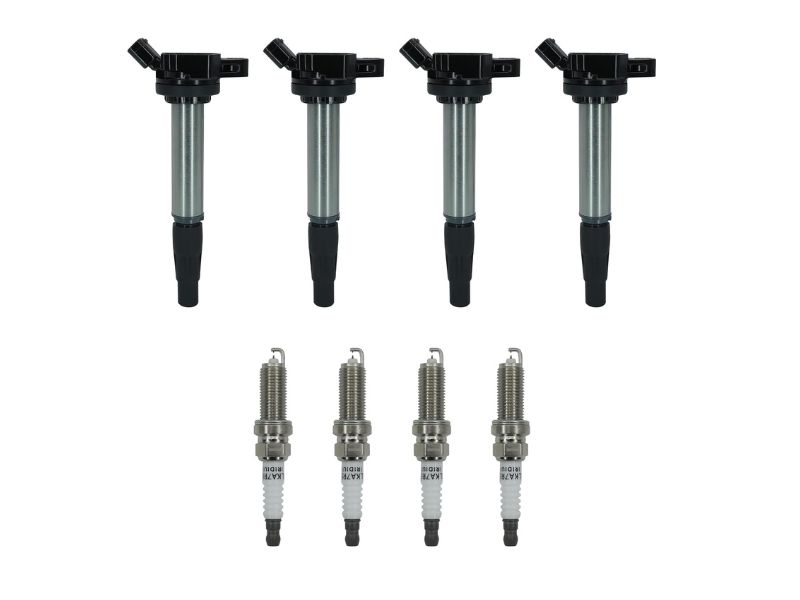
I would choose the Marsram UF596 Ignition Coil Pack and Double Iridium Spark Plug Set for compatible Toyota-family 1.8L applications when I want to replace four coils and plugs together.
The key is to buy the least expensive correct ignition coil, not simply the lowest-priced part with a similar appearance.
Cheap Ignition Coil: 5 Affordable Options
| Image | Product Name | Check Price |
|---|---|---|
Best Choice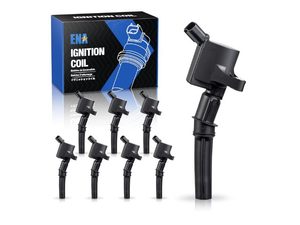 | ENA Set of 8 Curved Boot Ignition Coil Pack DG508 | Check Price |
Second Best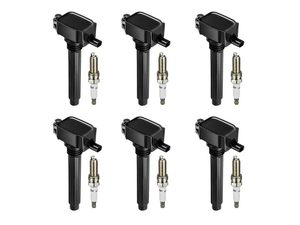 | BDFHYK UF648 Ignition Coil Pack and Iridium Spark Plug Set | Check Price |
Third Choice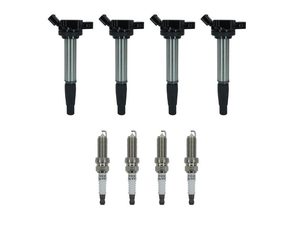 | Marsram UF596 Ignition Coil Pack and Double Iridium Spark Plug Set | Check Price |
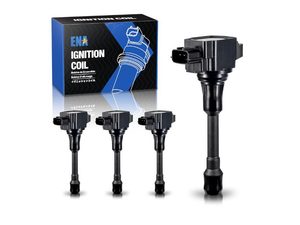 | ENA Set of 4 UF549 Ignition Coil Packs | Check Price |
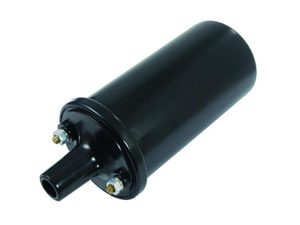 | OEG Parts 3-Ohm 12V Universal Canister Ignition Coil | Check Price |
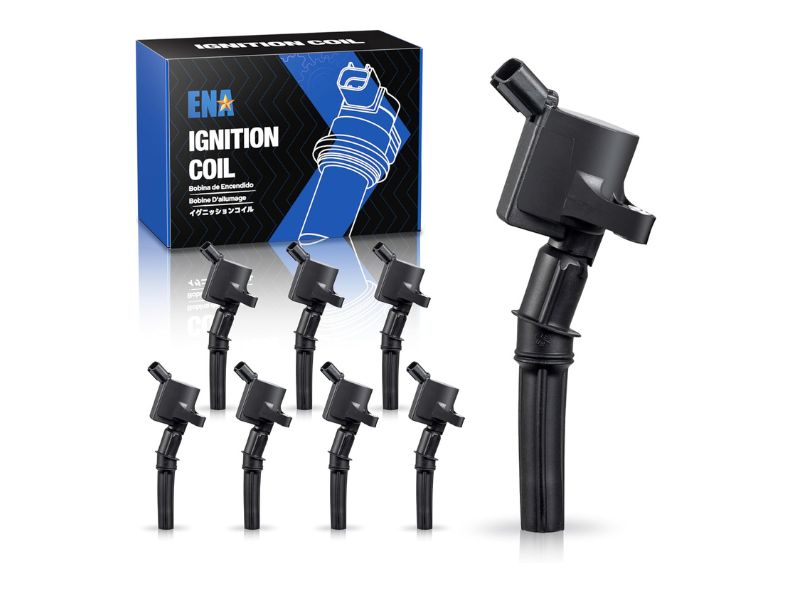
1. ENA Set of 8 Curved Boot Ignition Coil Pack DG508
Key Features
- Complete set of eight coil-on-plug ignition coils
- Designed for compatible Ford, Lincoln, and Mercury applications
- Commonly associated with DG508 fitment
- Covers many compatible 4.6L and 5.4L V8 engines
- Curved coil-boot design
- Direct-replacement installation concept
- Individual coil for each cylinder
- Suitable for replacing an aging complete V8 coil set
The ENA DG508 set earns the first position because it combines affordable full-engine coverage with a well-established application. Instead of buying eight individual coils separately, compatible V8 owners receive a complete set designed around the widely used DG508 coil family.
This style of coil is commonly associated with numerous Ford modular V8 applications. Depending on exact year and engine configuration, compatible vehicles can include models from truck, SUV, van, and passenger-car families.
The important phrase is depending on exact application.
A Ford 4.6L or 5.4L engine is not automatically proof that DG508 coils are correct. Manufacturers make running production changes, and different cylinder-head or ignition configurations can use different boots, connectors, or coils.
Before ordering, compare the existing part for:
- Coil shape
- Electrical connector
- Boot angle
- Mounting arrangement
- Engine size
- Model year
- Interchange number
The DG508 design uses coil-on-plug ignition, which places each coil directly above its spark plug. This eliminates long conventional high-tension plug wires and gives the engine-management system individual control over each cylinder’s ignition.
One advantage of this layout is relatively easy diagnosis.
If the engine produces a cylinder-specific misfire and you suspect one coil, you can often move that coil to another cylinder. If the misfire moves with it, the coil becomes a strong suspect.
A complete eight-pack is most useful when multiple coils are aging or when previous repairs have created a mixture of different aftermarket parts.
However, I would not automatically remove eight healthy original coils simply because one cylinder is misfiring.
The misfire could come from:
- A worn spark plug
- Damaged coil boot
- Moisture in the plug well
- Injector problem
- Vacuum leak
- Harness issue
- Low compression
- Mechanical valvetrain problem
Diagnose the fault before replacing the entire system.
Another consideration is spark-plug condition. An old plug with an enlarged electrode gap requires more firing voltage. That places additional demand on the coil and can reveal weaknesses in insulation.
If the plugs are already due for replacement, servicing them while the coils are removed can save considerable duplicated labor.
The curved boots also need to seat correctly. A boot that is not fully pushed onto the spark plug can create arcing, intermittent misfire, and carbon tracking.
This set makes the most sense for an older compatible V8 where several original coils are deteriorating and budget matters.
I would choose an exact OEM-grade individual coil instead when the vehicle is low mileage, only one coil has conclusively failed, and the remaining factory coils are performing normally.
What I Like
- Includes all eight coils required by a compatible V8
- Well-suited to commonly used DG508 applications
- Coil-on-plug design keeps installation relatively straightforward
- Practical option for replacing several aging coils together
What I Do Not Like
- Does not fit every 4.6L or 5.4L engine
- Replacing all eight may be unnecessary when only one coil is faulty
- Boots and spark-plug wells still need careful inspection during installation
Verdict
I recommend the ENA DG508 set when the vehicle specifically uses this coil family and multiple ignition coils need attention. It provides particularly strong value for an older compatible V8, but exact fitment should always be verified before ordering.
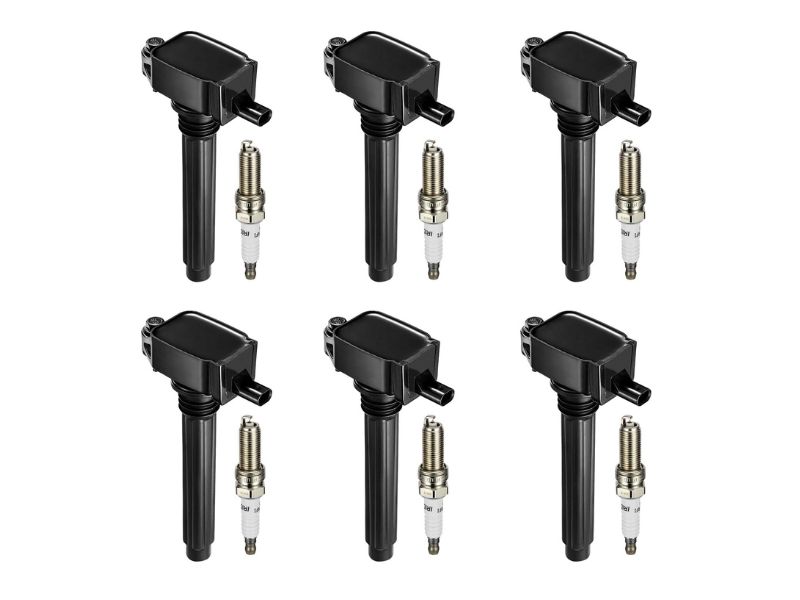
2. BDFHYK UF648 Ignition Coil Pack and Iridium Spark Plug Set
Key Features
- Set of six UF648-style ignition coils
- Six iridium spark plugs included
- Intended for compatible 3.6L Pentastar V6 applications
- Covers selected Chrysler, Dodge, Jeep, and related vehicles
- Coil-on-plug configuration
- Bolt-on installation
- Full six-cylinder ignition service package
- Useful for servicing coils and plugs simultaneously
The BDFHYK UF648 kit takes second place because it offers more than ignition coils. Six spark plugs are also included, making it particularly attractive when a compatible 3.6L V6 needs a broader ignition-system service.
The UF648 family is commonly associated with the 3.6L Pentastar V6, which appears across many Chrysler, Dodge, Jeep, and related vehicles.
Applications can include selected versions of models such as:
- Jeep Wrangler
- Jeep Grand Cherokee
- Dodge Charger
- Dodge Challenger
- Dodge Grand Caravan
- Chrysler 200
- Chrysler 300
- Other compatible 3.6L vehicles
Model year and engine specification still need checking. Never use the vehicle badge alone as proof of coil compatibility.
The six-coil configuration makes sense because the Pentastar V6 uses one ignition coil per cylinder.
Including six spark plugs can also improve the economics of the job when plug replacement is already due.
That does not mean the plugs should be installed without checking them.
Verify:
- Correct plug number
- Thread diameter
- Reach
- Seat style
- Heat range
- Electrode design
- Recommended plug gap
Pre-gapped plugs should still be inspected for shipping damage or an abnormal electrode gap.
The 3.6L engine layout also makes planned maintenance worthwhile. Depending on vehicle and engine configuration, reaching every spark plug and ignition coil may require more work than replacing one easily accessible coil on a simple four-cylinder engine.
If significant disassembly is required to reach the plugs, replacing worn plugs during the same service can reduce duplicated work later.
I still would not replace six coils without diagnosis merely because a P0300 or cylinder-specific misfire code appears.
The Pentastar family can experience misfires from ignition, fuel-delivery, wiring, compression, or valvetrain problems.
A coil swap remains useful when access permits. For example, if one cylinder repeatedly misfires, move its coil to another cylinder. If the fault follows the coil, that gives you stronger evidence.
The biggest practical advantage of this kit is therefore component coverage. It offers the six coils and plugs needed for a complete ignition refresh instead of making you source every component separately.
The limitation is that buyers focused strictly on replacing one bad coil may be purchasing much more than they need.
What I Like
- Six coils and six spark plugs supplied together
- Good match for compatible 3.6L V6 applications
- Useful for a larger scheduled ignition service
- Coil-on-plug format avoids conventional plug-wire replacement
What I Do Not Like
- Complete kit may be unnecessary for a single diagnosed failure
- Exact 3.6L model-year compatibility must be checked
- Included spark plugs still require specification and gap verification
Verdict
I would consider this kit when a compatible 3.6L Pentastar vehicle needs both plugs and ignition coils serviced. It provides more complete maintenance coverage than a coil-only package without forcing the buyer into a premium-priced performance setup.
3. Marsram UF596 Ignition Coil Pack and Double Iridium Spark Plug Set
Key Features
- Four UF596/UF619-family ignition coils
- Four 4912-style double-iridium spark plugs included
- Designed for selected 1.8L four-cylinder applications
- Common interchange references include 90919-02258
- Bolt-on coil installation
- Female coil electrical connector
- Compatible with selected Toyota, Scion, Lexus, and Pontiac applications
- Full four-cylinder coil-and-plug kit
The Marsram kit is a useful affordable option for several popular 1.8L four-cylinder applications.
It combines four ignition coils with four double-iridium spark plugs, giving a four-cylinder engine everything needed to replace both component sets at once.
Useful interchange references include:
- UF596
- UF619
- 90919-02258
- 90919-02252
- GN10341
Interchange numbers are particularly helpful with ignition parts because the same basic engine family may appear in different vehicle models.
Compatible applications can include selected versions of Toyota Corolla, Matrix, Prius, Scion models, Pontiac Vibe, and related vehicles using the appropriate 1.8L ignition configuration.
Again, not every 1.8L version uses the same part.
Check exact fitment before installation.
The four coils are coil-on-plug units, so each cylinder receives its own coil. This eliminates conventional high-voltage plug leads while making an individual coil relatively easy to replace.
A four-cylinder engine also makes full-set replacement more economical than an eight-cylinder application simply because fewer coils are required.
The included plugs are one of the package’s main strengths.
Spark plugs and ignition coils work as a system. As a plug electrode wears, the gap can increase and require additional firing voltage. A marginal coil may begin misfiring under acceleration even if the engine still idles reasonably well.
Replacing worn plugs reduces this unnecessary demand.
However, I would avoid assuming that replacing coils is automatically part of every spark-plug service.
Ignition coils do not have a universal scheduled replacement interval. If the original coils remain healthy, there may be no reason to discard them solely because new plugs are being installed.
A complete kit makes more sense when:
- One or more coils have already failed
- Several coils are showing intermittent problems
- The engine has high mileage
- Unknown aftermarket coils are already mixed together
- You want a consistent replacement set during a major service
Installation should include inspection of the plug wells.
Oil inside a spark-plug tube can indicate a leaking seal or valve-cover-related issue. Installing new coils without repairing the leak can damage the new boots and create another misfire later.
Moisture should also be removed before installing the new components.
This kit is not intended as a universal Toyota coil. Matching the UF596/UF619/90919-02258 family is the better approach.
What I Like
- Four coils and four plugs in one package
- Useful interchange references simplify fitment checking
- Particularly practical for compatible 1.8L four-cylinder vehicles
- Complete set remains manageable because only four coils are required
What I Do Not Like
- Fitment is limited to specific engine and vehicle combinations
- Healthy factory coils do not necessarily require replacement with every plug service
- Plug-well oil or moisture must be corrected rather than hidden by new parts
Verdict
The Marsram UF596 kit is one of the more practical low-cost choices for a compatible 1.8L four-cylinder vehicle needing both coils and plugs. I would choose it for a complete ignition refresh after verifying the interchange number and exact application.
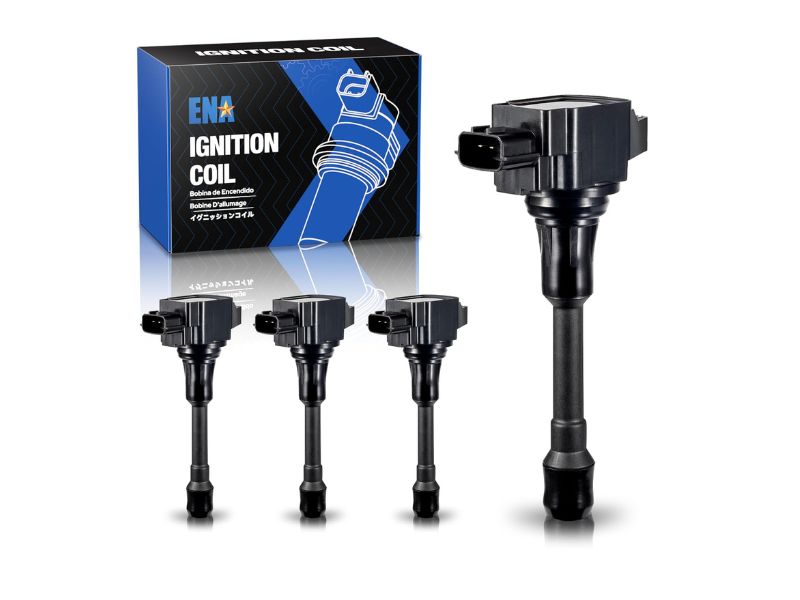
4. ENA Set of 4 UF549 Ignition Coil Packs
Key Features
- Set of four ignition coils
- Common UF549 interchange
- Additional references include 22448-JA00A and 22448-JA00C
- Intended for selected Nissan and Infiniti applications
- Covers compatible 1.8L, 2.0L, and 2.5L applications
- Coil-on-plug construction
- Bolt-on installation
- Complete four-coil set for compatible four-cylinder engines
The ENA UF549 set is an affordable choice for owners of compatible Nissan-family four-cylinder vehicles.
Rather than using vehicle brand alone, the easiest way to approach this product is through its interchange references.
Common identifiers include:
UF549, 22448-JA00A, 22448-JA00C, and related equivalents.
These coil configurations are associated with selected applications within vehicle families such as:
- Nissan Altima
- Nissan Sentra
- Nissan Rogue
- Nissan Versa
- Nissan Cube
- Nissan Frontier
- Certain Infiniti applications
Engine sizes can include compatible 1.8L, 2.0L, and 2.5L configurations depending on vehicle and year.
That broad list makes exact fitment verification particularly important.
Do not assume that every Altima or Rogue uses UF549 coils. Vehicles sharing a model name can use different engines and ignition components across generations.
One useful feature of this set is simplicity.
There are no bundled spark plugs or extra tune-up components. If your plugs are already new and you specifically need four replacement coils, a coil-only set prevents paying for parts you do not need.
Installation on many four-cylinder coil-on-plug engines is relatively straightforward once the engine cover and connectors are accessible.
The basic process typically involves:
- Disconnecting the electrical connector
- Removing the coil-retaining fastener where used
- Pulling the coil vertically from the plug well
- Inspecting the boot and plug well
- Installing the replacement coil
- Securing the fastener correctly
- Reconnecting the harness
Always follow the service information for the exact vehicle.
One problem that deserves attention on coil-on-plug engines is oil contamination.
If oil is present around the coil boot or inside the spark-plug tube, the leak should be repaired. Oil can soften rubber, contaminate connections, and contribute to ignition problems.
Another issue is carbon tracking. A dark or pencil-like conductive mark along the boot or spark-plug insulator can provide an unintended path for spark energy.
If carbon tracking is present, replacing only the coil while reusing a damaged spark plug can allow the problem to return.
Like the other inexpensive full sets in this guide, this package should be viewed primarily as a replacement solution.
A fresh coil can restore lost performance caused by an actual ignition failure, but it does not create additional airflow, compression, or fuel delivery. Large horsepower claims should therefore not be the reason to buy a standard replacement coil set.
What I Like
- Four-coil package is appropriate for compatible four-cylinder engines
- Useful UF549 and OEM-style interchange references
- No unnecessary bundled parts when only coils are required
- Simple coil-on-plug architecture
- Suitable for several common Nissan-family applications
What I Do Not Like
- Broad model coverage makes exact engine verification necessary
- Spark plugs are not included
- Oil or carbon tracking problems require separate attention
Verdict
I prefer the ENA UF549 set when the existing coil numbers clearly match and I need a straightforward four-coil replacement without extra tune-up parts. It is especially practical when the spark plugs have already been serviced.
5. OEG Parts 3-Ohm 12V Universal Canister Ignition Coil
Key Features
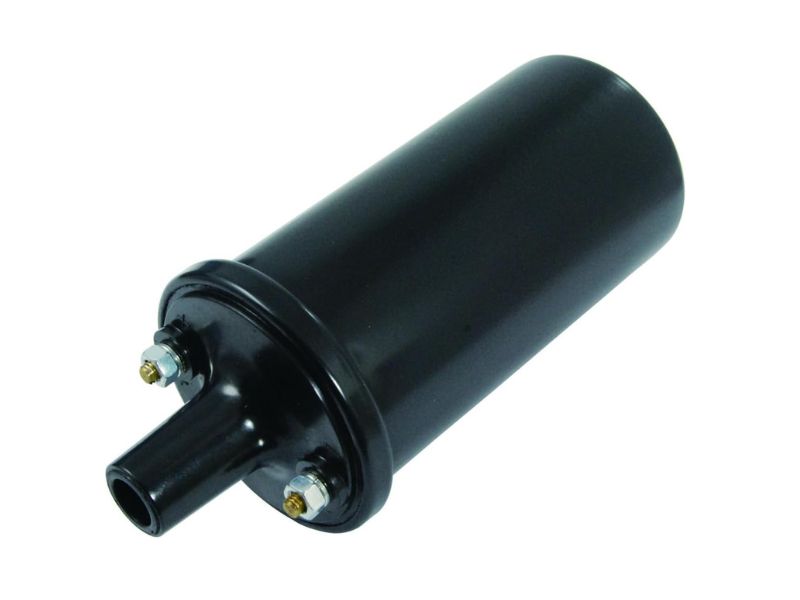
- Traditional canister-style ignition coil
- 12-volt application
- Approximately 3-ohm internal primary resistance
- Internal resistor design
- Advertised output capability up to approximately 35 kV
- Single-coil package
- Intended for compatible older ignition systems
- Useful for selected classic vehicles, tractors, equipment, and custom applications
The OEG Parts coil is very different from every other product in this guide.
Instead of a modern coil-on-plug module, it is a conventional cylindrical canister coil similar to the designs used on many older distributor-equipped ignition systems.
Its most important specification is not the advertised maximum voltage.
It is the 3-ohm primary resistance.
Primary resistance affects the amount of current flowing through an ignition coil. A coil designed around roughly 3 ohms may be appropriate for certain 12V systems that expect that resistance, but it should not be installed blindly in a system designed for a lower-resistance coil with an external ballast resistor or an electronically controlled coil with different requirements.
This distinction is critical.
Older ignition systems commonly use variations such as:
- 12V coil with internal resistance
- Lower-resistance coil with an external ballast resistor
- Resistance wire in the vehicle harness
- Electronic ignition module with a specific coil requirement
- Points-triggered ignition
Connecting an incorrect coil can create weak spark, excessive current, overheated points, an overheating coil, or damaged switching electronics.
For that reason, “universal” should be interpreted as adaptable to multiple suitable applications—not compatible with every 12V engine.
The traditional positive and negative primary terminals also need to be wired correctly according to the ignition system and vehicle-ground polarity.
The high-voltage center terminal then feeds the distributor, which distributes ignition energy to individual spark plugs.
This design is therefore completely inappropriate for a modern engine requiring individual coil-on-plug modules.
Where it makes sense is an older car, truck, tractor, piece of equipment, or custom engine using a compatible distributor ignition arrangement.
The canister design is simple, compact, and easy to understand. If the electrical requirements match, replacement can also be straightforward.
I would still verify:
- Nominal system voltage
- Required coil primary resistance
- Whether a ballast resistor is used
- Ignition-module specification
- Distributor type
- Mounting diameter
- Terminal arrangement
- Ground polarity where applicable
Another point involves advertised output voltage.
The fact that a coil is capable of producing tens of thousands of volts does not mean that voltage is continuously delivered to the spark plug. Actual firing voltage depends on spark-plug gap, cylinder pressure, mixture, wire resistance, distributor condition, and other factors.
Correct resistance and ignition compatibility matter far more.
What I Like
- Simple traditional coil design
- Useful for compatible older 12V ignition systems
- 3-ohm resistance specification gives buyers an important matching criterion
- Single-coil format keeps replacement straightforward
- Suitable for some classic and custom applications
What I Do Not Like
- Not compatible with modern coil-on-plug vehicles
- “Universal” wording can encourage incorrect applications
- Ballast-resistor and primary-resistance requirements must be understood before installation
Verdict
I would choose the OEG Parts coil only for a vehicle or machine confirmed to require a roughly 3-ohm 12V canister coil. It is an inexpensive and simple solution for the right traditional ignition system, but it should never be treated as a universal replacement for modern automotive coils.
Cheap Ignition Coil Comparison
| Product | Coil Type | Quantity | Main Fitment | Common Reference | Plugs Included | Installation | Main Strength | Main Limitation |
| ENA DG508 Set | Coil-on-plug | 8 | Selected Ford/Lincoln/Mercury 4.6L & 5.4L | DG508 | No | Direct replacement | Complete affordable V8 set | Fitment varies by engine/year |
| BDFHYK UF648 Kit | Coil-on-plug | 6 | Selected 3.6L Chrysler/Dodge/Jeep applications | UF648 | Yes | Bolt-on | Coils and plugs together | More parts than a single-coil repair needs |
| Marsram UF596 Kit | Coil-on-plug | 4 | Selected Toyota-family 1.8L engines | UF596 / UF619 | Yes | Bolt-on | Complete four-cylinder tune-up kit | Exact engine matching required |
| ENA UF549 Set | Coil-on-plug | 4 | Selected Nissan/Infiniti applications | UF549 | No | Bolt-on | Simple coil-only replacement set | Does not include plugs |
| OEG Parts 3-Ohm Coil | Canister | 1 | Compatible older 12V distributor systems | 3-ohm internal resistance | No | Conventional coil replacement | Simple and inexpensive for old ignition systems | Wrong for modern COP ignition |
The most important difference in this table is ignition architecture. The first four products are application-specific modern coils, whereas the OEG Parts model is a traditional canister coil.
Even within the coil-on-plug products, none should be substituted for another unless the exact engine application and interchange data support the swap.
How I Evaluate an Affordable Ignition Coil
Low price alone does not make an ignition coil a good value.
I prioritize the following factors.
Correct Vehicle Fitment
A correct inexpensive coil is more useful than a premium coil designed for another engine.
I check:
- Year
- Make
- Model
- Engine displacement
- Engine code when available
- Original part number
- Coil connector
- Coil shape
- Mounting
- Boot length
Useful Interchange Numbers
Numbers such as DG508, UF648, UF596, UF549, and OEM-equivalent references make matching significantly easier.
A vehicle description is useful, but a verified interchange number provides another layer of confirmation.
Appropriate Coil Quantity
A V8 may need eight coils, a V6 six, and an inline-four four.
Buying a complete kit can lower the cost per coil, but replacing every coil is not always necessary.
Included Maintenance Parts
Coils bundled with spark plugs can offer practical value when the plugs are actually due for service.
Otherwise, a coil-only kit may be the better purchase.
Construction and Insulation
An ignition coil needs to survive:
- High voltage
- Engine heat
- Repeated heat cycles
- Vibration
- Moisture
- Oil vapor
- Electrical switching
Housing quality, winding insulation, boot material, terminals, and internal potting all matter.
Sensible Performance Claims
I do not choose coils simply because they advertise extreme output voltage.
The real goal is reliable ignition under the operating conditions of the engine.
What Does an Ignition Coil Do?
An ignition coil converts the vehicle’s low electrical-system voltage into the much higher voltage required to fire a spark plug.
A conventional coil contains:
- A primary winding
- A secondary winding
- A magnetic core
- Electrical insulation
Current in the primary winding creates a magnetic field.
When the ignition electronics interrupt that current, the magnetic field collapses rapidly. The changing magnetic field induces a much higher voltage in the secondary winding.
That high voltage travels to the spark plug.
When voltage becomes high enough to ionize the air-fuel path across the plug gap, a spark occurs and initiates combustion.
Modern engine-management systems perform this process very precisely, controlling ignition timing according to engine speed, load, temperature, throttle position, knock information, and other inputs.
Types of Automotive Ignition Coils
Coil-on-Plug
Coil-on-plug, often abbreviated COP, places one coil directly above each spark plug.
Advantages include:
- Individual cylinder control
- Minimal high-voltage wiring
- Compact packaging
- Straightforward cylinder-specific diagnosis
The first four products in this guide primarily fall into this category.
Coil Pack
Some engines use one housing containing multiple coils or several coils serving pairs of cylinders.
These systems may use spark-plug wires.
Do not assume a coil pack and coil-on-plug module are interchangeable.
Coil-Near-Plug
A coil-near-plug arrangement places individual coils close to the plugs but connects them using short high-tension leads.
This appears on several truck and performance-engine applications.
Traditional Canister Coil
A traditional canister coil commonly supplies high voltage to a distributor.
The distributor then sends that voltage to each spark plug in firing order.
This architecture is common on older vehicles and equipment.
How Cheap Is Too Cheap for an Ignition Coil?
The cheapest possible part is not always the lowest-cost repair.
A coil that fails prematurely can create:
- Repeated diagnostic work
- Additional labor
- Towing expense
- Misfire
- Poor drivability
- Potential catalytic-converter damage
Instead of looking only at purchase cost, consider cost per complete repair.
For example, purchasing a complete affordable four-coil kit may make sense on an older four-cylinder vehicle with several deteriorating coils.
But replacing eight excellent factory coils with extremely cheap replacements just because one original coil failed may reduce reliability rather than improve it.
The right strategy depends on vehicle age, mileage, condition, access, and diagnosis.
How to Tell Whether an Ignition Coil Is Bad
A failed ignition coil can create several symptoms.
Cylinder-Specific Misfire
A diagnostic code such as P0301, P0302, or another cylinder-specific P030X code indicates that the engine computer detected a misfire at a particular cylinder.
It does not prove the coil caused it.
Rough Idle
A cylinder that fires inconsistently can create noticeable shaking at idle.
Hesitation Under Acceleration
Cylinder pressure rises under load, making the ignition system work harder.
A marginal coil may therefore perform acceptably at idle but misfire during hard acceleration.
Loss of Power
A cylinder that fails to burn its air-fuel charge properly contributes little useful torque.
Poor Fuel Economy
Misfire and incomplete combustion can reduce efficiency.
Difficult Starting
Several weak ignition components can contribute to extended cranking.
Flashing Check-Engine Light
A flashing malfunction indicator can signify a severe active misfire.
Do not continue driving aggressively with a severe misfire because unburned fuel can overheat the catalytic converter.
A Misfire Does Not Automatically Mean a Bad Coil
This is one of the most important points in the entire guide.
An ignition-coil code or cylinder misfire may be associated with a coil, but many problems can create similar symptoms.
Possible causes include:
- Worn spark plug
- Cracked spark-plug insulator
- Excessive plug gap
- Damaged coil boot
- Oil in spark-plug well
- Moisture
- Wiring fault
- Loose electrical terminal
- Faulty fuel injector
- Vacuum leak
- Low compression
- Burned valve
- Timing issue
- Mechanical valvetrain failure
Replacing coils without diagnosis can turn an inexpensive repair into unnecessary parts spending.
How to Test a Coil-on-Plug Ignition Coil
One practical diagnostic technique is a coil swap.
Suppose your scan tool identifies a cylinder-two misfire.
If the engine design allows easy access:
- Mark the suspected coil.
- Move it from cylinder two to another cylinder.
- Reinstall the other coil correctly.
- Clear or monitor the diagnostic information.
- Operate the engine under appropriate conditions.
- Check which cylinder now misfires.
If the misfire follows the moved coil, the coil is strongly implicated.
If the misfire stays on cylinder two, investigate the plug, injector, wiring, compression, and other cylinder-specific causes.
This technique is often more meaningful than randomly replacing coils.
Should You Replace One Ignition Coil or the Whole Set?
Replacing one coil is often enough when one coil has clearly failed.
A full set becomes more reasonable when:
- Multiple coils have failed
- The originals have very high mileage
- Several inexpensive replacements are already mixed together
- Coil boots are deteriorating across the engine
- Access requires substantial labor
- A complete maintenance service is already planned
I would be cautious about replacing healthy factory coils without a clear reason.
Original high-quality coils can sometimes provide longer service than very inexpensive replacements.
Should You Replace Spark Plugs With Ignition Coils?
It depends on plug age and condition.
If the spark plugs are already due for replacement, servicing them while the coils are removed is efficient.
Worn plugs can increase ignition demand because electrode erosion enlarges the spark gap.
A larger gap requires more voltage to fire, particularly under high cylinder pressure.
However, new spark plugs are not automatically required every time one ignition coil fails.
Inspect service history and follow the appropriate maintenance interval for your engine.
Does a Better Ignition Coil Increase Horsepower?
A healthy replacement coil mainly restores reliable combustion when the old coil is defective.
If an existing coil cannot consistently fire the spark plug, replacing it can restore lost power.
That is different from creating additional horsepower beyond the engine’s normal capability.
If the factory ignition already fires every plug reliably, an aftermarket coil cannot independently increase:
- Airflow
- Fuel delivery
- Compression
- Engine displacement
- Camshaft lift
- Boost pressure
Performance coils are more relevant when a modified engine places greater demand on the ignition system.
What Specifications Matter Most?
Vehicle Application
Always start here.
Interchange Number
Match the replacement against the original part number whenever possible.
Connector
The electrical connector must physically fit and provide the correct terminal arrangement.
Boot Length and Shape
A coil boot must reach and seal correctly around the spark plug.
Mounting
Some coils use retaining bolts, brackets, or unique mounting ears.
Primary Resistance
This becomes particularly important on traditional ignition coils.
An older 12V coil designed around approximately 3 ohms is not automatically interchangeable with a low-resistance coil using a ballast resistor.
Output Configuration
One coil can feed:
- One plug
- Multiple plugs
- A distributor
These systems require different hardware.
Installation Tips
Let the Engine Cool
Ignition coils are usually near cylinder heads and other hot engine components.
Disconnect Electrical Power When Required
Follow the appropriate service procedure.
Work Methodically
If changing multiple coils, replacing one at a time reduces mistakes.
Inspect Connectors
Look for:
- Broken locking tabs
- Green corrosion
- Bent terminals
- Heat damage
- Pulled wires
Inspect Plug Wells
Remove oil, water, or debris before installing new components.
Use Correct Fastener Torque
Small coil-retaining bolts can be damaged by overtightening.
Seat the Coil Fully
The boot needs positive contact with the spark plug.
Do Not Force the Connector
If the plug does not fit naturally, stop and verify the part.
Maintaining Ignition Coils
Ignition coils generally do not require routine internal maintenance.
Instead, protect the surrounding system.
Maintain Spark Plugs
Correctly functioning plugs reduce unnecessary voltage demand.
Repair Oil Leaks
Oil inside plug wells can damage rubber components and interfere with ignition.
Fix Coolant Leaks
Coolant contamination can also affect electrical components.
Keep Connectors Secure
Engine vibration can expose weak terminal connections.
Maintain Battery and Charging Voltage
Abnormal electrical-system voltage can create drivability problems and stress electronic components.
Do Not Ignore Misfires
A small intermittent ignition problem can become a more serious drivability or exhaust-system issue.
Common Mistakes When Buying a Cheap Ignition Coil
Buying by Vehicle Name Alone
A model can use several engines and coil designs across different years.
Ignoring the Engine Size
The same vehicle may offer four-cylinder, V6, and V8 engines.
Ignoring the Original Part Number
Part-number matching is one of the simplest ways to reduce fitment mistakes.
Choosing by Appearance
Two coils can look almost identical while having different electrical characteristics.
Assuming Universal Means Everything
Universal components still have electrical and physical requirements.
Replacing Every Coil Without Diagnosis
A full set may be unnecessary.
Choosing the Highest Advertised Voltage
Voltage claims do not replace fitment, winding quality, insulation, and reliability.
Ignoring the Spark Plugs
A badly worn plug can produce symptoms similar to coil weakness.
Ignoring Oil in the Plug Wells
Installing new coils without correcting an oil leak can shorten their life.
Continuing to Drive With a Severe Misfire
Persistent misfire can lead to additional engine-management and catalytic-converter problems.
Frequently Asked Questions
What is the best cheap ignition coil?
The best cheap ignition coil is the lowest-cost reliable option that exactly matches your vehicle’s ignition system.
For compatible DG508-equipped Ford-family V8 applications, I prefer the ENA eight-coil set from this list. Different vehicles require completely different coils, though, so the strongest product overall is not automatically the correct product for your engine. Verify model year, engine, original coil number, connector, and boot configuration first.
Are cheap ignition coils worth buying?
Yes, affordable ignition coils can make sense when fitment and manufacturing quality are acceptable.
They are particularly attractive on an older vehicle where the cost of replacing several coils individually becomes high. However, replacing healthy factory coils with very inexpensive aftermarket units purely because a set is cheap can be counterproductive. Diagnose the engine first and consider replacing only the components that actually require service.
How do I know which ignition coil fits my car?
Match the replacement using year, make, model, engine, and the original coil’s interchange number.
You should also compare connector design, mounting arrangement, boot length, and coil shape. Do not rely only on engine displacement or visual similarity. Some vehicle models use multiple engine families and ignition-coil designs across different production years.
Can I replace only one ignition coil?
Yes, one failed coil can normally be replaced without changing every coil on the engine.
This is often the most economical repair when the failure is clearly diagnosed and the remaining original coils are healthy. Replacing a full set makes more sense when several coils have failed, the vehicle has very high mileage, or you are already completing a larger ignition-system service.
Should I change spark plugs when replacing ignition coils?
Replace the plugs when they are worn, damaged, incorrectly gapped, or already due for scheduled service.
A worn plug increases ignition demand and can contribute to misfire under load. However, one failed coil does not automatically mean every spark plug requires replacement. Inspect the maintenance history and condition of the plugs.
Can a cheap ignition coil damage my engine?
An incorrect or defective ignition coil can cause misfire and drivability problems even if direct engine damage is uncommon.
A severe persistent misfire can allow unburned fuel into the exhaust and overheat the catalytic converter. An electrically inappropriate coil can also stress certain ignition electronics. Proper fitment and prompt diagnosis are therefore more important than simply buying the cheapest component.
How long should an ignition coil last?
There is no universal ignition-coil replacement interval because lifespan varies with design and operating conditions.
Coils can last for many years, but heat, vibration, moisture, worn spark plugs, oil contamination, and electrical problems can reduce service life. Replace coils based on diagnosis and condition unless the vehicle manufacturer specifies otherwise.
What are the signs of a failing ignition coil?
Common symptoms include misfire, rough idle, hesitation, loss of power, difficult starting, and a check-engine light.
These symptoms are not exclusive to ignition coils. Spark plugs, injectors, vacuum leaks, wiring faults, compression loss, and mechanical engine problems can produce similar behavior. Diagnostic testing is necessary before replacing parts.
Can a bad ignition coil cause poor acceleration?
Yes, a weak coil can cause hesitation or misfire when cylinder pressure rises during acceleration.
An ignition system may appear normal at idle while failing under load because more voltage is required to fire the plug as cylinder pressure increases. Fuel-delivery and airflow problems can produce similar symptoms, so diagnosis should consider the complete engine-management system.
Can I use a universal ignition coil in a modern car?
Usually not unless the coil is specifically designed for that vehicle’s ignition architecture.
Modern coil-on-plug systems depend on vehicle-specific connectors, electrical characteristics, mounting, and ECU control. A traditional universal canister coil is intended for a completely different type of ignition system and cannot replace a modern COP module.
Does ignition-coil output voltage matter?
Output capability matters, but the largest advertised voltage number does not automatically indicate the best coil.
The actual firing voltage changes according to plug gap, cylinder pressure, mixture, engine load, and secondary resistance. Correct fitment, adequate ignition energy, winding insulation, and consistent construction matter more than simply selecting the largest advertised voltage.
Can an ignition coil cause a flashing check-engine light?
Yes, a failing coil can cause a severe active misfire that triggers a flashing warning light.
Do not continue heavy acceleration when this occurs. Persistent misfire can send unburned fuel into the exhaust and overheat the catalytic converter. Diagnose the affected cylinder and repair the fault as soon as practical.
How can I confirm an ignition coil is bad?
A cylinder-to-cylinder coil swap can often confirm a suspected coil-on-plug failure.
Move the suspected coil to another cylinder and monitor the misfire. If the misfire follows the coil, the coil is strongly implicated. If the fault remains on the same cylinder, investigate the spark plug, injector, wiring, compression, and other cylinder-specific causes.
Why do new ignition coils sometimes still misfire?
A new coil cannot repair a problem caused by another ignition, fuel, wiring, or mechanical component.
Misfires can result from incorrect plugs, damaged connectors, injector problems, vacuum leaks, poor compression, valvetrain faults, or even an incorrect replacement coil. Recheck the original diagnosis and confirm that the new part matches the required interchange number.
Should all ignition coils be the same brand?
Matching coils can simplify servicing, but using one different high-quality compatible coil is not automatically a problem.
What matters most is correct electrical and physical compatibility. On an older engine with several unknown inexpensive coils, installing a matched set may provide consistency. On a lower-mileage engine with good original coils, replacing only the failed coil can be the more sensible approach.
Conclusion
Choosing a cheap ignition coil should be an exercise in finding good value, not simply finding the lowest possible purchase cost. Fitment, coil architecture, engine application, connector design, interchange number, and construction quality all matter more than promotional voltage figures.
The ENA Set of 8 Curved Boot Ignition Coil Pack DG508 remains my primary recommendation for compatible Ford, Lincoln, and Mercury 4.6L and 5.4L V8 applications. It gives owners of the correct DG508-equipped engine a practical way to replace a complete eight-coil set without moving into expensive performance components.
For compatible 3.6L Pentastar V6 vehicles, the BDFHYK UF648 Ignition Coil and Spark Plug Set is more useful because it combines six coils with six plugs. The Marsram UF596 kit offers a similar advantage for selected 1.8L four-cylinder applications.
The ENA UF549 set is a straightforward coil-only choice for compatible Nissan-family vehicles, while the OEG Parts 3-ohm canister coil serves older 12V distributor ignition systems that specifically require its electrical characteristics.
Before buying any ignition coil, check the vehicle year, engine, original part number, connector, coil shape, mounting arrangement, and ignition type. A correctly matched affordable coil is a much better investment than an even cheaper part that does not belong on the engine.