
No, rubber floor mats usually don’t damage car carpet when they fit correctly, stay dry underneath, and have clean, working retention clips. Damage starts when trapped moisture, grit, dye, or a badly shaped mat rubs against the carpet for months.
Have you pulled up a floor mat and found damp carpet underneath, or noticed a dark patch that won’t brush away? Maybe the mat slides forward every time you press the brake, which is annoying at best and unsafe at worst.
I once rushed through a mat swap before a long wet-weather drive and skipped the underside check. A week later, I lifted the driver’s mat and found a gritty paste of road salt and moisture packed into the carpet, plus a shiny wear spot where the mat had shifted. That was my mistake, not a dumb one, and plenty of careful drivers get caught by the same shortcut.
I wrote this guide for anyone trying to protect a car’s carpet without buying the wrong floor mat. You’ll get the plain answer first, then the fit, moisture, cleaning, and safety details that tend to get missed.
Get the setup right, and you’ll have a cleaner cabin, less carpet wear, fewer odors, and a mat that stays put. Skip the basics, and damp padding can smell musty, grit can grind fibers down, and a loose driver’s mat can interfere with the pedals.
This takes about 9 minutes to read, and you’ll come away knowing how to:
- Tell harmless mat contact from real carpet damage.
- Check for moisture, trapped dirt, dye transfer, and rubbing.
- Choose the right material, shape, thickness, and retention system.
- Clean rubber mats without damaging the carpet beneath.
- Fix sliding, curling, odor, and fit problems before they grow.
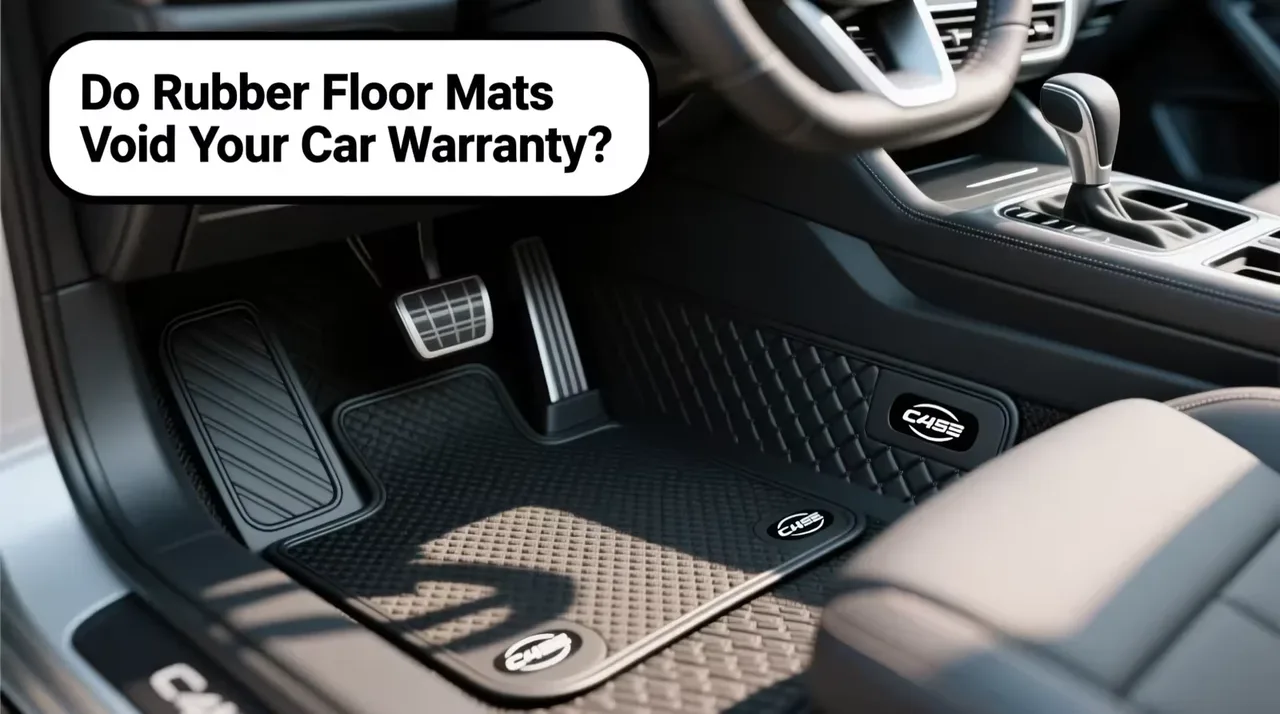
Do Rubber Floor Mats Damage Car Carpet?
Rubber floor mats protect car carpet in most vehicles, provided the mat matches the footwell and gets removed for regular cleaning and drying. A rubber mat can still cause trouble if water sits below it, the surface sheds color, or the mat moves against the carpet.
A good mat should cover the main footwell without climbing over the pedals, blocking seat movement, or folding up at the edges. The driver’s mat also needs the factory retention clips, which are the posts or hooks that stop the mat from sliding toward the pedals.
A mat that fits well catches rain, snow, mud, sand, and spilled drinks before those messes reach the carpet. A mat that fits poorly can act like a shallow tray with a leak, holding moisture in one spot while its underside rubs the carpet every time your foot moves.
The carpet itself often has a top fabric layer bonded to a thicker backing and padding. If moisture reaches the padding, drying takes much longer than it does on the visible surface, so a carpet that feels slightly damp today can still smell sour several days later.
| Condition | Likely effect on car carpet | What to do |
|---|---|---|
| Correctly fitted rubber mat | Little to no damage; good daily protection | Remove and clean it regularly |
| Mat with a curled edge | Dirt and water can reach uncovered carpet | Replace or reshape the mat |
| Wet underside | Odor, mildew risk, and damp padding | Dry the mat and carpet fully |
| Loose driver’s mat | Pedal interference and carpet rubbing | Attach the retention system before driving |
| Grit trapped below | Abrasion and flattened carpet fibers | Vacuum both surfaces before reinstalling |
| Strong dye transfer | Dark staining on light carpet | Stop use and test the mat separately |
| Oversized mat | Pinching, bunching, or poor seat clearance | Use a vehicle-specific size |
Rubber itself doesn’t eat through carpet under normal use. The damage comes from the conditions around the rubber, such as trapped grit, standing water, sharp backing edges, or constant movement.
A damp winter mat can hold melted snow against the carpet for hours. A textured underside can also trap small stones, and those stones work like sandpaper when the mat shifts under your heel.
What counts as normal wear?
Light flattening where your heel rests is normal carpet wear, even with a protective mat. A smooth contact patch isn’t automatically damage, especially if the fibers aren’t torn, stained, or thinning.
Real trouble usually shows up as frayed fibers, a hard crease, persistent odor, discoloration, wet padding, or a mat that keeps sliding. Check the driver’s area first because foot movement and pedal use create the most friction.
- A well-fitted rubber mat normally protects carpet rather than harming it.
- Water, grit, dye, and movement cause most mat-related problems.
- The driver’s mat must stay attached and clear of the pedals.
- Carpet padding needs more drying time than the top surface suggests.
Moisture and Fit Cause Most Problems
Moisture under a rubber mat is the biggest carpet concern, while poor fit is the biggest safety concern. Rubber blocks water from passing through, which helps the top of the carpet but can trap water below the mat if the underside is already wet.
Rainwater enters from shoes, umbrellas, wet clothing, open doors, and leaks around door seals. Snow adds salt and slush, and a spilled drink can spread farther under a mat than you’d expect because the rubber holds the liquid in place.
Lift the mat after a wet trip, then check the carpet with your hand and a clean paper towel. If the towel picks up moisture or the carpet feels cool and clammy, remove the mat and dry both pieces separately.
A vehicle parked in a warm garage can develop odor faster than a vehicle parked outdoors with the windows cracked safely during drying. Warmth speeds evaporation, but closed windows trap humidity, so the carpet may stay damp even when the top looks fine.
How fit protects the carpet
A vehicle-specific mat follows the footwell shape, leaves the seat tracks clear, and lines up with factory fasteners. A universal mat can work, but trimming must be neat and the finished shape must not curl, buckle, or reach the pedals.
The raised lip around a molded mat helps contain water, but the lip must sit flat. If one corner folds inward, water can run behind the mat and stay hidden against the carpet.
If you’re comparing materials, the main types of car floor mats include rubber, thermoplastic, carpet, vinyl, and carpet-backed styles, each with different cleaning and moisture behavior. Rubber and thermoplastic mats are usually easier to rinse, while carpet mats can feel more comfortable but take longer to dry after a soaking.
What happens if a mat slides only an inch or two? That small movement can uncover the carpet near the pedals, create a crease at the leading edge, and let the heel rub the same carpet spot on every drive.
Before driving, run this quick fit check:
- Turn the steering wheel and move the driver’s seat through its normal range.
- Confirm the mat sits flat and doesn’t touch the brake, accelerator, or clutch pedal.
- Press each pedal fully while the engine is off.
- Check that every retention button or hook is fastened.
- Move your heel across the normal resting spot to feel for bunching or a hard ridge.
- Recheck the rear mat edges after passengers have stepped in and out.
Never place one floor mat on top of another in the driver’s footwell. The layers can shift, change pedal travel, or catch under a pedal, and the small amount of extra padding isn’t worth the risk.
Important Tip: A retention clip is not a decorative button. If the clip is missing, replace the clip or the mat before daily driving, especially in the driver’s position.
I once tried to make a nearly correct universal mat work by folding the rear corner under itself. It looked tidy for about ten minutes, then the fold crept toward the accelerator and left a sharp ridge under my heel. A proper cut or a vehicle-specific replacement would have saved the hassle.
Dye, backing, and surface rubbing
Some low-quality mats can transfer dark color when wet, especially onto pale carpet. Rub a damp white cloth across the mat’s underside before installation, then let the mat dry and repeat the test.
A strong rubber smell is not proof that a mat will damage carpet. Odor usually comes from manufacturing compounds and may fade with airing, though a mat that remains oily, sticky, or color-transferring deserves a return.
Turn the mat over and inspect the backing. Sharp flashing, exposed wire, rough plastic points, or a hardened edge can scrape carpet fibers as the mat moves.
How to Choose and Care for Rubber Mats
The best rubber floor mat is the one that fits the footwell, locks into place, contains water, and can be cleaned without leaving residue. Material matters, but shape and retention matter more for protecting the carpet.
Search by the exact vehicle year, make, model, body style, and row position. A front mat designed for one trim may not fit another if the floor shape, center hump, seat rails, or retention points differ.
If you’re weighing a purchase, the best rubber car floor mats should be judged by fit, retention, raised edges, surface grip, cleanability, and odor, not by thickness alone. A very thick mat that crowds the pedals is a poor choice, while a slightly thinner mat that stays flat can protect the carpet better.
Look for these traits:
- A molded shape made for the exact footwell.
- A raised border high enough for normal rain and slush.
- A textured top that gives wet shoes some grip.
- A backing that stays stable without sharp points.
- Openings that match the factory retention posts.
- Flexible edges that don’t curl in cold weather.
- A surface that rinses clean without oily residue.
Deep channels help catch water and mud, but they also hold more mess against the mat. Empty those channels before carrying the mat through the cabin, or the dirty water can slosh onto the carpet and door sill.
Cleaning rubber mats without wetting the carpet
Take mats outside before rinsing them. Shake or vacuum loose sand first, because wet grit becomes a paste that is harder to remove and more likely to smear onto carpet.
- Remove the mat from the vehicle and keep the driver’s mat separate from the others.
- Brush off stones, salt, and dried mud.
- Rinse with cool or lukewarm water.
- Scrub with mild soap and a soft or medium brush.
- Rinse until the water runs clear and the surface no longer feels slick.
- Hang or lean the mat so both sides can dry.
- Vacuum the vehicle carpet while the mat is away.
- Put the mat back only after the underside and carpet are dry.
Avoid petroleum-based cleaners, greasy tire dressings, and heavy silicone products on the top surface. Those products can make the mat slippery, leave residue on carpet, and reduce shoe grip.
A pressure washer can clean a rubber mat quickly, but high pressure can force water into seams, damage soft edges, or spray dirt onto nearby surfaces. A garden hose and brush are enough for normal maintenance.
Drying damp carpet
Blot standing water with towels instead of rubbing it deeper into the padding. Remove the mat, open the doors in a safe dry place, and use airflow from a fan if available.
Don’t reinstall the mat just because the carpet feels dry on top. Press a folded paper towel into the padding near the front edge and under the heel area, then check whether the towel comes away damp.
A musty smell after drying can mean moisture remains in the padding. Persistent dampness, visible mold-like growth, or water entering from a leak calls for professional cleaning and leak repair, since covering the smell won’t fix the source.
Pro Tip: Clean the mat on the same day you clean the car carpet. Reinstalling a dirty mat can put the same salt and grit right back onto the fibers you just cleaned.
Replacing a damaged or wrong-size mat
Replace a mat when the driver’s retention hole is torn, the edge curls into the pedal area, the backing has become sharp, or the mat no longer lies flat. A small cosmetic scuff can be harmless, but a shape change near the pedals isn’t worth gambling on.
A carpet mat may suit a dry climate or a clean interior, while rubber or thermoplastic usually makes more sense for snow, mud, beach sand, and frequent spills. All-weather mats bring stronger water control, though they can feel firmer underfoot and need regular emptying.
The right choice depends on your routine:
| Driving condition | Good mat choice | Maintenance need |
|---|---|---|
| Dry commuting | Carpet or light rubber | Vacuum and inspect monthly |
| Rainy climate | Raised-edge rubber or thermoplastic | Lift and dry after heavy rain |
| Snow and road salt | Deep-channel all-weather mat | Rinse salt often |
| Beach or trail use | Durable molded rubber | Remove sand before rinsing |
| Kids and frequent spills | Raised-edge waterproof mat | Empty spills quickly |
| Luxury interior feel | Quality carpet mat with retention | Keep liquids off the padding |
A clean, dry mat can last for years. A neglected mat can become a damp dirt tray in one season, especially in a vehicle with frequent wet-shoe traffic.
Troubleshooting Carpet and Mat Damage
Most rubber-mat problems have a simple cause: moisture, movement, dirt, or a poor match between mat and footwell. Find the cause before adding cleaner, deodorizer, or another mat layer.
Use the symptom as a clue:
- Musty smell: Lift the mat, test the carpet padding for dampness, and check door seals or windshield areas for leaks.
- Dark stain: Test whether dye transfers from the mat with a damp white cloth, then stop using the mat if color comes off.
- Flattened carpet: Look for repeated mat movement or a hard backing ridge.
- Wet front carpet: Check the mat underside and nearby door, windshield, and HVAC areas.
- Mat slides forward: Inspect retention clips, wrong sizing, and debris under the mat.
- Curling edge: Warmth may soften a minor curl, but replacement is safer if the edge reaches the pedals.
- Sticky surface: Wash off dressing or cleaner residue; replace the mat if the tackiness returns.
- White crust: Salt has likely dried on the mat or carpet, so vacuum first and rinse the mat away from the vehicle.
Don’t mask a wet-carpet smell with fragrance. Fragrance covers the nose for a short while, while trapped moisture keeps damaging the padding and can point to a leak that needs attention.
Check under the rear mats too, especially after transporting wet gear or passengers. Rear carpet often gets ignored because the driver doesn’t feel the dampness underfoot, and water can travel beneath the carpet toward wiring or seat mounts.
Important Tip: Stop driving and get professional help if a loose mat interferes with a pedal, if the carpet stays wet after repeated drying, or if water reaches electrical connectors under the carpet.
FAQs About Do Rubber Floor Mats Damage Car Carpet
Can rubber floor mats cause mold in a car?
Yes, rubber floor mats can support mold growth indirectly when they trap water against damp carpet for long periods. Rubber doesn’t create mold by itself, but moisture, warmth, dirt, and poor airflow can affect the carpet padding underneath. Remove the mat, dry the area, and fix any leak before reinstalling it.
Are rubber mats better than carpet mats for car protection?
Rubber mats usually offer better protection against rain, snow, mud, and spills because they resist water and rinse clean. Carpet mats can feel softer and may suit dry conditions, but carpet absorbs liquids. The better choice depends on climate, passengers, and how often you clean the vehicle.
How often should rubber car mats be cleaned?
Clean rubber car mats whenever they hold visible mud, salt, sand, or liquid, and inspect the underside at least once a month. Wet-weather drivers may need weekly cleaning. Regular removal matters because the carpet can stay damp even when the mat’s top looks clean.
Can rubber floor mats stain light-colored car carpet?
Yes, rubber floor mats can stain light carpet if dye transfers from a wet or poorly finished backing. Test a damp white cloth on the underside before use. A stain that appears after moisture or rubbing is a reason to stop using the mat and clean the carpet promptly.
Should rubber floor mats be removed in summer?
No, rubber floor mats don’t need seasonal removal if they fit correctly and stay clean and dry. Summer removal can still help when sand, spilled drinks, or trapped humidity builds up. Lift the mats during routine cleaning so the carpet and padding can breathe and get inspected.
Keep Your Car Carpet Dry and Secure
Rubber floor mats are a smart protection choice for most vehicles, but they aren’t maintenance-free. Fit the mat to the footwell, fasten the driver’s retention points, remove trapped grit, and dry the carpet whenever water gets underneath.
My preference is a molded mat with a raised edge and a secure factory-style attachment, because that combination prevents more trouble than extra thickness alone. Your next step is simple: lift each mat today, check the carpet and underside for moisture or grit, then replace any driver’s mat that shifts or touches a pedal.