
Protect a vinyl tonneau cover by washing it gently, using only a compatible vinyl protectant, keeping it properly tensioned, and clearing off harmful buildup. A few minutes of regular care can help prevent fading, cracking, mildew, and water pooling.
Does your cover look dull after a sunny stretch, or does rain leave puddles where the fabric should be taut? Those little changes can be frustrating, especially when you’re trying to keep the truck bed clean and dry.
I once gave a dusty cover a quick wipe with a rough shop rag because I wanted to get on the road. The grit left fine marks in the finish, and I had to spend extra time washing it properly afterward. It’s a common mistake, not a dumb one; the dirt doesn’t look sharp enough to scratch until it does.
I wrote this for truck owners who want straightforward care without guessing which cleaner or dressing might damage the cover. You’ll get a routine that’s easy to fit into a regular wash, plus clear signs that call for an adjustment or a closer look.
Get the care right, and you can avoid a faded finish, a cover that sags under water, and sticky residue that grabs dust. Skip it, and small problems can turn into annoying cleanup or a cover that no longer sits right.
This should take about 9 minutes to read. You’ll come away knowing how to:
- Wash the cover without grinding dirt into the surface.
- Choose and test a protectant before using it across the whole cover.
- Reduce wear from sun, weather, cargo, and poor fit.
- Spot damage early and decide what to do next.
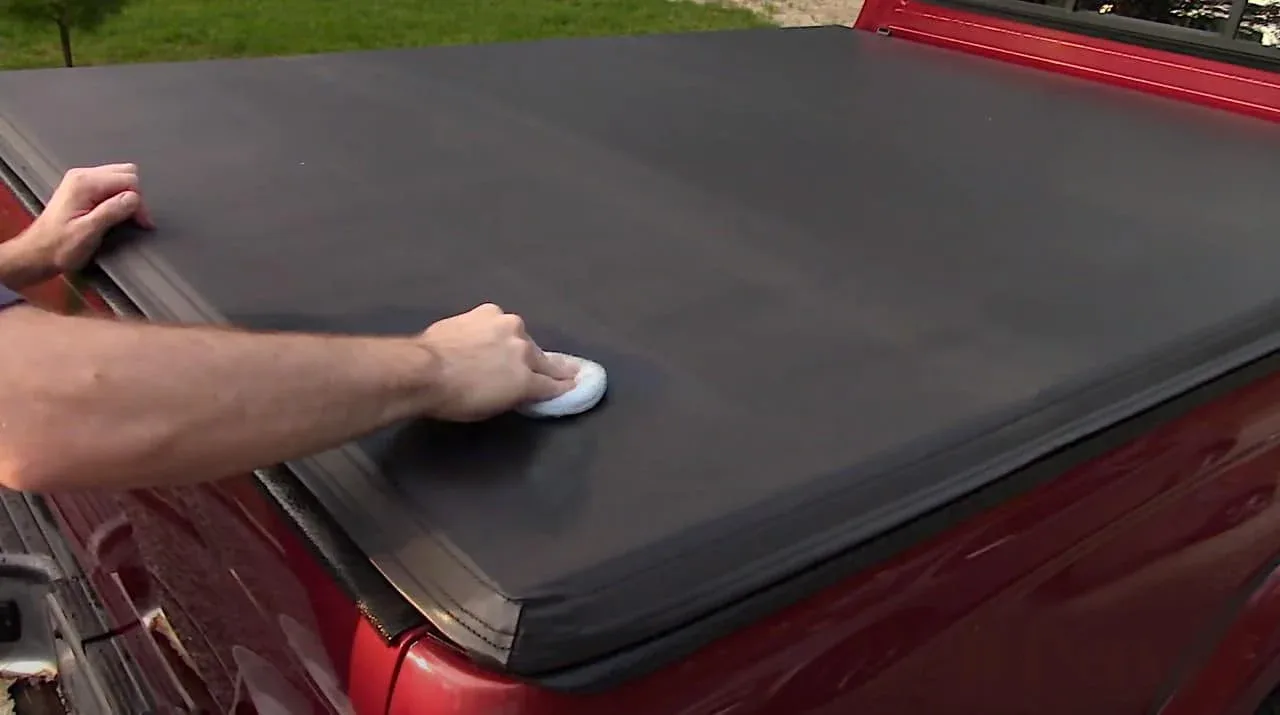
How to Protect Vinyl Tonneau Cover with A Simple Routine
A vinyl tonneau cover lasts longer when you clean it gently, protect it with a compatible product, and keep the material supported and correctly tensioned. Wash the cover with mild soap and water, rinse it well, let it dry, then use a protectant only if the cover maker allows that type.
- Park in the shade and let a hot cover cool before washing. Heat can make soap dry too quickly and leave marks.
- Remove loose grit with a gentle stream of water. Don’t rub dust or dried mud across the surface.
- Wash with mild soap and a soft microfiber cloth or sponge. Work in small areas, using light pressure.
- Rinse thoroughly so soap doesn’t dry in seams or leave a film.
- Let the cover dry before folding or rolling it, then apply a compatible protectant according to its label and your cover’s care instructions.
- Check the fit after cleaning. Make sure the cover sits evenly, the latches hold, and the fabric isn’t loose enough to flap.
A cover’s surface may be coated vinyl, meaning the fabric has a protective finish over its base material. That finish is why the safest product isn’t automatically the strongest cleaner or shiniest dressing. Check the cover’s care instructions first, since manufacturers may give different guidance for cleaning and protectants.
| Care step | What to use | What to avoid |
|---|---|---|
| Regular wash | Water, mild soap, soft cloth | Abrasive pads, stiff brushes |
| Dirt removal | Gentle rinse before wiping | Dry wiping over grit |
| Protectant | Product approved for the cover’s material | Unapproved oily or solvent-based dressings |
| Drying | Air-drying before folding or rolling | Storing the cover damp |
How often should you wash it? Let the truck’s use and conditions guide you: rinse off road salt, bird droppings, tree sap, or heavy dust as soon as practical, and wash ordinary grime when it becomes visible. Frequent scrubbing isn’t a win if the cover is mostly clean.
A compatible UV protectant can help reduce sun-related fading, but it isn’t a substitute for shade or proper care. Use a product meant for the cover’s material, follow its directions, and test a small hidden area first; a greasy coating can collect dust or leave the surface slick.
Pro Tip: Apply protectant to the cloth rather than spraying the whole cover if overspray could reach paint, glass, bed rails, or walking areas. Use only enough to leave an even finish, then wipe away excess.
For more detailed washing steps, cleaning a vinyl tonneau cover follows the same basic rule: loosen dirt with water before wiping, so grit is less likely to scratch the surface.
Keep Sun, Water, and Weather from Wearing It Down
Sun and standing water are two common causes of avoidable wear on a vinyl cover. Shade helps limit direct exposure, while proper cover tension gives rain a path to run off instead of collecting in a sag.
UV exposure can gradually fade or stiffen some cover materials. Park in a garage or shaded spot when it’s practical, but don’t stress over a normal trip in the sun; sensible protection is about reducing repeated exposure, not keeping the truck indoors forever.
Water that stays pooled on the cover adds weight and can strain the fabric, bows, or mounting points. If you spot a puddle after rain, check the cover’s support and tension using the instructions for that model rather than cranking down hardware at random.
Snow and ice need a little patience. Clear loose snow with a soft brush or by hand, working gently so you don’t scrape the cover; don’t hit frozen material with a shovel, and don’t pry ice away from the fabric or seams. If heavy snow is expected, check the manufacturer’s guidance about weight limits and whether the cover should be open or removed.
Road salt, sap, and bird droppings deserve prompt attention because residue can be harder to remove after it dries. Rinse the area, wash gently, and avoid strong chemicals that may affect the cover’s finish.
The cover also needs protection from what goes in the bed. Bulky cargo can rub or press upward against the fabric, and sharp corners can puncture it. Secure tall or shifting items below the cover line, and don’t treat a soft cover like a load-bearing shelf.
Does a little flap at highway speed mean you should tighten every latch? Not necessarily; first check that the cover is seated correctly and that the rails and latches match the model’s setup instructions. A loose or misaligned cover can flap, but too much tension can also strain the material or hardware.
I once saw how a cover that looked merely slack could turn into a loud, distracting flap on the road. Checking the fit before driving was a much easier fix than chasing the noise later, and it’s a good reminder to inspect the whole setup rather than tugging on one corner.
If you’re weighing a replacement, soft tonneau cover options can help you compare the kinds of covers available and think through the care each one needs.
Avoid Damage When Cleaning, Folding, and Storing
Gentle handling matters just as much as the products you use. A soft cover can be scratched by grit, stressed by careless folding, or damaged when it’s left loose and flapping.
Avoid harsh solvents, gasoline, strong degreasers, abrasive powders, and household cleaners that aren’t approved for the cover. They may dull or weaken the finish, and a cleaner that works on a truck’s painted body may not be suitable for coated fabric.
Don’t use a pressure washer close to seams, edges, or seals. A strong jet can force water where it shouldn’t go or stress a weak spot; use a regular hose with gentle flow instead.
When you fold or roll the cover, follow the cover maker’s sequence and secure it as directed. Don’t force a stiff or cold cover into a tight fold, and don’t leave it partly open where loose sections can flap in the wind.
If you remove the cover for longer storage, keep it clean and fully dry before putting it away. Store it in a dry place where heavy objects can’t crush it and pests or sharp tools won’t damage the material.
A quick inspection after washing can catch issues early. Look for:
- Cracks, peeling, or fading that has changed noticeably.
- Loose seams, worn edges, or damaged stitching.
- Latches that don’t close evenly or rails that have shifted.
- Areas that sag, trap water, or rub against cargo.
If a seam starts separating, don’t cover it with random tape or household glue. Ask the cover’s manufacturer or a truck accessory shop whether the damage can be repaired and whether a repair could affect fit or warranty coverage.
Important Tip: Don’t apply a protectant to a wet cover unless the product label specifically says to. Water can interfere with an even application, and leftover moisture trapped during storage can encourage odor or mildew.
FAQs About How to Protect Vinyl Tonneau Cover
Can I use armor dressing on a vinyl tonneau cover?
Only use a dressing if its label says it’s suitable for your cover’s material and the cover maker permits it. Some dressings leave an oily film that attracts dust or makes the surface slick. Test a hidden spot first, and wipe off excess rather than leaving a thick coating.
How often should I apply vinyl protectant?
There isn’t one schedule that fits every cover or product. Follow the protectant label and the tonneau cover maker’s care directions, then adjust for sun exposure and use. Reapplying more often than directed can leave residue without solving the main issue, which may be dirt, poor fit, or standing water.
Can I use a pressure washer on my tonneau cover?
A regular hose is the safer choice for routine cleaning. Pressure washers can force water into seams or seals when used too close, and a worn cover may be more vulnerable. If the cover maker allows pressure washing, follow its distance and pressure guidance rather than guessing.
How do I stop water from pooling on a vinyl cover?
Check that the cover is installed and tensioned as the manufacturer directs, and inspect its support bows or rails if the model uses them. Don’t tighten hardware blindly, since excessive tension can strain parts. If pooling continues after the setup check, ask the manufacturer or an installer to inspect the fit.
Should I remove my tonneau cover before winter?
Not automatically. Winter care depends on the cover design, local weather, and the maker’s snow and storage guidance. Clear snow gently, avoid chipping ice off the fabric, and don’t let heavy buildup sit on the cover.
Remove it only if the instructions or expected conditions call for that step.
Make Care Part of Your Truck Wash
A vinyl tonneau cover doesn’t need a complicated routine. Gentle washing, a compatible protectant when allowed, and a quick check of the fit can help prevent the kinds of wear that make a cover look tired or stop it from sitting properly.
In my view, the best protection starts with keeping grit and water from lingering, not with layering on more product. If the cover is already fading, sagging, or separating at a seam, stop trying stronger cleaners and check the maker’s repair guidance.
Your next step is simple: read the care instructions for your specific cover, then wash and inspect it the next time you clean your truck. That small habit can save you from avoidable scuffs, flapping, and puddles in the bed.