
Most old car floor mats can be reused, recycled through a specialty program, or taken to a local waste facility, but the right choice depends on the mat material and condition. Rubber, vinyl, carpet, and foam-backed mats need different handling.
Have your mats become curled, cracked, smelly, or too worn to protect the vehicle floor? Are you trying to avoid tossing bulky mats into the trash when a better option might be nearby?
I once sent a set of rubber mats to a general recycling bin because they felt like plastic. The mats came back out at the sorting facility, dirty and tangled around equipment, and I had to make a second trip to dispose of them properly. That’s a common mistake, not a dumb one.
I wrote this guide for anyone standing beside an old car, truck, or SUV and wondering what to do next. You’ll get a plain material guide, a safe cleaning routine, and practical disposal choices that don’t depend on wishful thinking.
If you sort the mats correctly, you can avoid a rejected load, reduce landfill waste, and save a trip across town. If you skip the material check, you may contaminate a recycling stream or send a usable mat to the garbage pile.
This takes about 9 minutes to read, and you’ll learn how to:
- Identify rubber, vinyl, carpet, and mixed-material floor mats.
- Prepare old mats without spreading oil, mud, or chemical residue.
- Choose between reuse, specialty recycling, donation, and disposal.
- Know when damaged mats should be replaced instead of recycled.
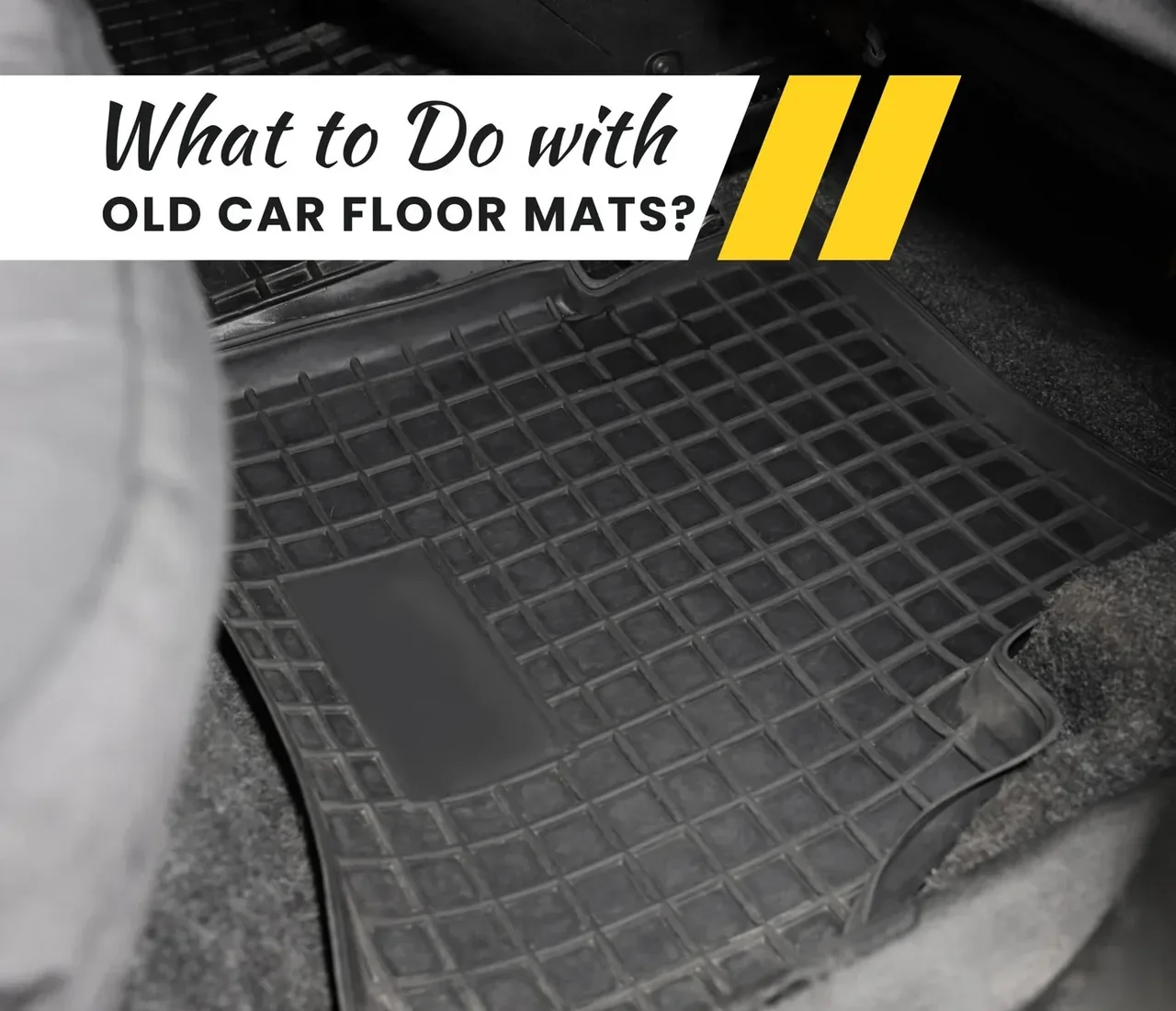
How to Recycle Old Car Floor Mats
To recycle old car floor mats, identify the material, remove dirt and contamination, contact the correct local facility, and confirm that the facility accepts automotive mats before driving there.
Start by lifting the mat out of the vehicle and checking the back. A molded rubber mat usually has a textured underside, while a carpet mat often has stitched edges, a fabric surface, and a rubber or foam backing.
Do not put automotive floor mats in a standard curbside recycling bin unless the local program specifically lists them. Most curbside systems handle bottles, cans, paper, and certain containers, not large flexible mats made from mixed or hard-to-process materials.
Material sorting makes the biggest difference because the same-looking black mat may be synthetic rubber, PVC, thermoplastic material, or rubber-coated carpet. The recycling route depends on what the mat is made from, not just its color or the vehicle brand.
Use this basic process:
- Remove the mats outdoors. Shake off loose sand and brush away dried mud over a hard surface.
- Read the label or molded markings. Look for rubber, PVC, TPE, nylon, polyester, or recycling symbols.
- Check for contamination. Oil, coolant, fuel, paint, strong solvents, and heavy pet waste can change the disposal route.
- Wash the mats with mild soap and water. Let the mats dry completely before storage or drop-off.
- Call the facility first. Ask about automotive floor mats, the exact material, size limits, and contamination rules.
- Choose the safest useful outlet. Reuse comes first, specialty recycling comes next, and disposal is the fallback for contaminated or unsafe mats.
A clean rubber mat with normal road dirt may qualify for a rubber recycling program, while an oil-soaked mat may need a waste facility that handles contaminated materials. A worn carpet mat may have more value as a textile or padding item than as a mixed plastic product.
Could a recycling symbol on the back settle the question? Not always, because a symbol may identify the resin type without confirming that a nearby facility accepts the finished automotive product.
Sort Old Mats by Material
Rubber, vinyl, carpet, and mixed-material mats need separate disposal decisions because each material has different recycling equipment and contamination limits.
Rubber mats are thick, flexible, and often molded with raised grooves. They may contain natural rubber, synthetic rubber, or a rubber-like thermoplastic blend, so a rubber recycler, tire-recycling business, transfer station, or auto salvage facility may be a better fit than curbside collection.
Vinyl mats often feel smoother and less springy than rubber. PVC, also called polyvinyl chloride, can be difficult for ordinary recycling programs because additives, backing layers, and product shape complicate processing.
Carpet mats commonly use nylon or polyester fibers with a rubber, latex, or foam backing. The fabric may be recyclable through a textile program, but the attached backing can prevent acceptance unless the facility has equipment for automotive carpeting.
| Mat material | How to recognize it | Best first option | Common problem |
|---|---|---|---|
| Molded rubber | Heavy, flexible, textured, often one piece | Rubber recycler or auto waste facility | Oil and chemical residue |
| Vinyl or PVC | Smooth, shiny, less stretchy | Specialty plastics program or waste facility | Mixed additives and backing |
| Carpet with backing | Fabric top, stitched border, padded underside | Textile, carpet, or specialty recycler | Fiber and backing are bonded |
| Foam-backed mat | Soft cushion under fabric or vinyl | Specialty recycler or disposal facility | Foam may not be accepted |
| Mixed or unknown | Several bonded layers or no markings | Local transfer station after a call | Facility cannot identify material |
The table gives a starting point, not a promise of acceptance. Programs vary by county, facility equipment, load size, and contamination level.
A simple bend test can help, but don’t rely on it alone. Rubber usually bends and springs back, vinyl may crease or stay bent, and carpet reveals its material through the woven surface and backing.
I once cut a carpet mat apart to separate the fabric from the backing, thinking the job would make recycling easier. The backing crumbled into sticky bits and left fibers all over the garage, so I stopped and called a facility instead. Sometimes the clever shortcut creates a bigger mess than the original problem.
Rubber Mats
Rubber mats are often the easiest to reuse because they tolerate water, mud, and rough service. A clean mat with intact edges can protect a garage workbench, shed floor, pet feeding area, or trunk from wet gear.
A rubber recycler may grind old mats into rubber crumb, a shredded material used in certain molded products, flooring, and impact surfaces. Acceptance depends on the recycler’s feedstock rules, and some businesses accept tires but not floor mats.
Before drop-off, remove metal clips, plastic hooks, snaps, and electronic sensors. A facility may reject a mat with attached hardware because the extra parts can damage shredding equipment or lower the quality of the recycled material.
Vinyl And PVC Mats
Vinyl mats should go through a program that clearly accepts PVC or flexible vinyl products. A general plastic bin is a poor choice because the mat is too large, too flexible, and often made with more than one layer.
Wash vinyl with warm water and mild dish soap. Skip bleach, gasoline, brake cleaner, and strong degreasers, since those products can damage the surface and leave chemical residue that makes handling harder.
If the mat is only faded or stained, reuse may beat recycling. A clean vinyl mat can line a muddy boot area, protect a utility shelf, or catch drips beneath a lawn tool, as long as the mat stays flat and does not create a trip hazard.
Carpet And Foam-Backed Mats
Carpet mats need a little more attention because the top and backing may be different materials. Nylon and polyester fibers can have recycling value, while latex or foam backing may need a separate route.
Shake out dry debris before washing. If the mat has soaked up motor oil, coolant, fuel, or an unknown chemical, do not donate it or use it around pets and children.
A textile recycler may accept clean automotive carpet, but many textile collection programs focus on clothing and household fabric. Call first and describe the mat as automotive carpet with attached backing, not just as “old fabric.”
Mixed And Unknown Mats
Unknown mats belong at a facility that can tell you what to do with them. Take a photo of the front and back, note any molded letters or numbers, and ask a transfer station or municipal waste office for the correct route.
Do not burn old mats, cut them into tiny pieces for curbside collection, or bury them. Burning rubber, PVC, foam, and adhesive layers can release harmful smoke, while small pieces still remain waste and may scatter into soil or storm drains.
- Material and contamination determine the recycling route.
- A curbside bin usually isn’t the right place for automotive floor mats.
- Clean, intact mats often have better reuse value than worn-out mats.
- Unknown or chemically contaminated mats need a facility-specific answer.
Clean, Inspect, and Prepare the Mats
Clean floor mats only after checking for chemical contamination, and dry every mat fully before reuse, donation, storage, or drop-off.
Wear sturdy gloves when handling mats with sharp fasteners, embedded glass, or hardened debris. Work outdoors or in a ventilated area, and keep dirty wash water away from storm drains.
Follow this preparation routine:
- Inspect first. Look for screws, broken clips, exposed wire, sharp plastic, and oily patches.
- Remove loose debris. Vacuum carpet mats or shake rubber mats over a contained surface.
- Wash with mild soap. Use a brush for grooves and a soft scrub pad for carpet surfaces.
- Rinse lightly. Avoid flooding carpet backing if the mat holds water like a sponge.
- Dry both sides. Lean mats against a clean wall or railing until no damp smell remains.
- Separate detachable parts. Remove clips and plastic retainers only if they come off without cutting or tearing the mat.
- Store temporarily. Keep dry mats in a cool place, away from food, heaters, and direct sun.
A pressure washer can blast dirt from deep grooves, but too much pressure may fray carpet edges, loosen backing, or spray contaminated water across the driveway. A garden hose and stiff brush are usually enough for normal road grime.
What if the mat has a strong fuel or solvent smell after washing? Treat that as contamination, not a cleaning challenge, and contact the local household hazardous waste or transfer facility before moving it around in the vehicle.
Important Tip: Never mix bleach with ammonia, acidic cleaners, or unknown automotive chemicals. One cleaning product at a time is safer, and plain soap handles ordinary dirt without creating a chemistry experiment in the driveway.
Check Condition Before Reuse
A mat may be recyclable and still unsafe for driving. Inspect the driver-side mat for curled corners, torn anchor holes, thin spots, slippery backing, and damage that lets the mat move under the pedals.
If you need guidance on repair options, fixing car floor mats covers curling, cracks, holes, and situations where repair no longer makes sense. A repaired mat must lie flat, lock into the factory retainers, and stay clear of every pedal through its full movement.
A mat that shifts toward the brake or accelerator belongs out of the driver’s footwell. Keep it for a garage project only if the material is clean and stable.
Choose the Right Drop-Off Option
The best drop-off option is the facility that confirms acceptance of your exact mat material and condition before you arrive.
Start with the local recycling office, transfer station, or solid waste department. Ask these direct questions:
- Do you accept automotive floor mats?
- Which materials are accepted, rubber, PVC, carpet, foam, or mixed?
- Must the mats be clean and dry?
- Are oil-stained mats handled separately?
- Do you charge a fee or limit the number of mats?
- Should clips and fasteners stay attached?
A rubber-products recycler may accept clean rubber mats, while an auto salvage yard may reuse mats from common vehicles. A carpet recycler might accept the fiber but reject attached foam, so a quick call saves you from showing up with a rejected load.
Some auto parts stores or service shops collect specific products, but floor mat acceptance is not universal. Don’t leave mats beside a collection box unless staff confirm that the box is meant for them.
Donation works when the mats are clean, flat, odor-free, and still useful. A local repair shop, community garage, farm, theater group, or workshop may use old mats for kneeling pads, tool shelves, or muddy entry areas.
A donation is not a favor if the mat is cracked, contaminated, or unsafe. If you wouldn’t feel comfortable handing it to a neighbor, choose a waste facility instead.
Reuse, Repair, or Replace
Reuse makes sense for clean mats with safe structure, while repair is limited to minor damage and replacement is best when a mat can move, trap a pedal, or expose the floor.
Clean rubber mats can protect floors under a snowblower, muddy boots, paint cans, or gardening supplies. Carpet mats can cushion a workbench shelf, but they should stay dry because damp backing can grow mold and create a sour odor.
Repair can work for a small edge tear or a loose trim section. Adhesive patches and rubber repair products may hold on a non-driving mat, but repairs inside the driver’s footwell deserve caution because the patch can change how the mat sits.
When should a worn mat stop serving as a vehicle mat? replacement signs for car mats include poor fit, curled edges, worn anchor holes, exposed backing, and movement toward the pedals.
I’d rather replace a questionable driver mat than gamble on a cheap fix that shifts during a hard stop. A recycling decision matters, but pedal clearance matters more.
When Disposal Is The Right Choice
Disposal is reasonable for mats that are heavily contaminated, crumbling, moldy, badly torn, or made from bonded materials that no local program accepts. Ask the waste facility if the mat belongs in ordinary trash, bulky waste, or a special handling stream.
Never place oil-soaked mats beside a curbside bin and hope the collection crew handles them. Keep contaminated material sealed in a sturdy bag or container during transport, and follow the facility’s instructions.
Do not put loose mats into a donation pile, construction debris bin, compost container, or recycling cart. Each wrong stream creates extra sorting work and can send the whole load toward disposal.
FAQs About How to Recycle Old Car Floor Mats
Can car floor mats go in the recycling bin?
Usually, no. Curbside recycling programs commonly exclude automotive floor mats because mats are bulky, flexible, layered, and often made from rubber, PVC, carpet, or foam. Contact the local recycling office before placing any mat in a curbside container, even if the mat has a plastic recycling symbol.
Are rubber car mats recyclable?
Yes, some rubber car mats are recyclable through specialty rubber, automotive, or transfer-station programs. Clean rubber mats have the best chance of acceptance, while mats soaked with oil, fuel, or chemicals may need contaminated-waste handling instead.
Can old carpet car mats be donated?
Yes, clean and safe carpet car mats may be donated for garage, workshop, pet-area, or utility use. Do not donate mats with strong odors, mold, sharp damage, loose backing, or chemical contamination, since those problems make reuse unsafe.
How should I clean old car floor mats before recycling?
Remove loose dirt, wash the mats with mild soap and water, rinse lightly, and dry both sides completely. Avoid strong solvents and keep wash water away from storm drains. Chemical-soaked mats should go through a facility that handles contaminated materials.
Can I throw damaged floor mats in the trash?
Yes, ordinary trash may be allowed for mats that a local recycling program cannot accept, but rules differ by municipality. Large mats may count as bulky waste, and contaminated mats may need special handling, so call the local waste facility before setting them out.
Are foam-backed car mats recyclable?
Sometimes, but acceptance is limited because foam, fabric, adhesive, and rubber are bonded together. A specialty textile, carpet, foam, or automotive recycling facility may accept them, while standard plastic and curbside programs usually do not.
Make the Next Disposal Trip Count
Old car floor mats don’t belong in a guessing game. Check the material, clean ordinary dirt safely, inspect the mat for contamination and driving hazards, then call the facility that matches the material.
My practical choice is simple: reuse a clean, flat mat when it still has life, send specialty materials to a confirmed program, and use a proper waste facility for contaminated or crumbling mats. That approach takes a few extra minutes, but it keeps unsafe mats out of the driver’s footwell and keeps the wrong material out of the recycling cart.