Choosing the right spark plugs for a 5.7L HEMI is more complicated than selecting a familiar brand or buying the most expensive electrode material. The engine has been used across numerous Ram, Dodge, Chrysler, and Jeep vehicles, and its spark-plug specification changed during its production history.
A plug that works correctly in a 2005 Ram 1500 may be unsuitable for a later Ram, Charger, Challenger, Durango, Chrysler 300, or Grand Cherokee. The plugs may differ in seat design, reach, heat range, electrode construction, service interval, and factory part number.
The 5.7L HEMI also uses two spark plugs per cylinder. Therefore, a complete replacement normally requires 16 spark plugs. Product listings may contain four, eight, or all 16 plugs, so the displayed package price can be misleading.
For compatible 2003–2008 engines, my leading stock-style recommendation is the Champion 570 RE14MCC4 Copper Plus 16-Piece Set.
For compatible later engines where a long-life iridium application is specified, the NGK 92145 LZFR5CI-11 Laser Iridium 16-Piece Set is my preferred option.
This guide reviews seven products covering different engine generations, maintenance priorities, and budgets. They are not seven interchangeable plugs. The correct recommendation depends on the model year, vehicle, VIN, current plug number, and whether the engine remains stock.
7 Best Recommended Spark Plugs for 5.7 HEMI Engines
| Image | Product Name | Check Price |
|---|---|---|
Best Choice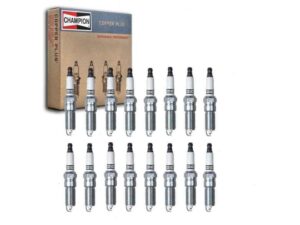 | Champion Copper Plus Spark Plugs – Best Overall for Early 5.7 HEMI Engines | Check Price |
Second Best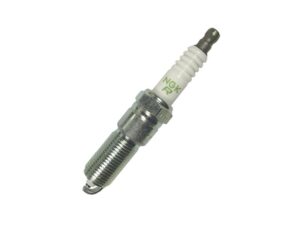 | NGK V-Power Spark Plugs – Best Affordable Early-Engine Alternative | Check Price |
Third Choice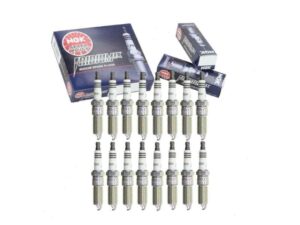 | NGK Iridium IX Spark Plugs – Best Fine-Wire Upgrade for Early Engines | Check Price |
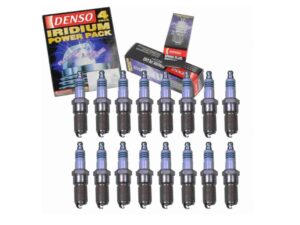 | DENSO Iridium Power Spark Plugs – Best Premium Option for 5.7 HEMI Engines | Check Price |
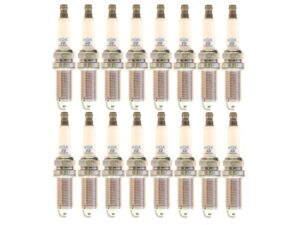 | NGK Spark Plugs – Best Replacement for Supported Post-2008 Engines | Check Price |
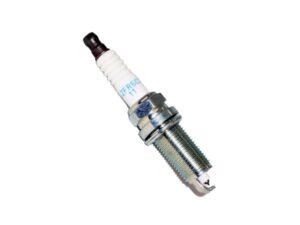 | NGK Laser Iridium Spark Plugs – Best Option for Compatible Later Engines | Check Price |
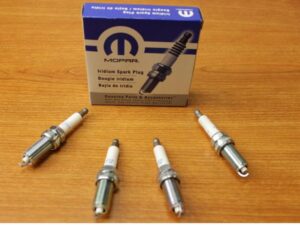 | Mopar Spark Plug Set – Best OEM Replacement for Supported Later Engines | Check Price |
Critical Fitment Information Before Buying
The phrase “5.7 HEMI” covers more than one spark-plug application. Engine displacement alone is not enough to select the correct part.
Compatible 2003–2008 5.7L HEMI Engines
Many early 5.7L HEMI applications use the plug family associated with Champion RE14MCC4, NGK LZTR4A-11, NGK LZTR4AIX-11, and DENSO ITL16.
Mopar identifies 68303913AA as a service plug for supported 2003–2008 5.7L HEMI applications. It replaces earlier references that include 56028374AB, SP303913AA, and SPRE14MCC4. Mopar sells the factory service part in packs of four.
Vehicles in this general application family may include compatible versions of:
- Dodge Ram 1500, 2500, and 3500
- Dodge Durango
- Dodge Charger R/T
- Dodge Magnum R/T
- Chrysler 300C
- Chrysler Aspen
- Jeep Grand Cherokee
- Jeep Commander
The exact first and last compatible years vary by vehicle. A 2008 Ram application should not automatically be applied to a 2008 Charger or Jeep without checking the manufacturer’s catalog.
Post-2008 5.7L HEMI Engines
The updated engine uses another spark-plug family. NGK 92174 LZFR5C-11 is a conventional plug associated with supported later applications, while NGK 92145 LZFR5CI-11 provides a Laser Iridium option for compatible vehicles.
Mopar SP143877AB is listed for supported 2012–2026 Mopar vehicles equipped with 5.7L HEMI MDS VVT, BSG, and eTorque engine configurations. It replaces SP143877AA and 68143877AB and is sold by Mopar in quantities of four.
That does not mean every 2012–2026 vehicle uses it. Vehicle-specific confirmation remains necessary.
Why the Year Split Matters
An incorrect plug may have:
- The wrong seat design
- Excessive or insufficient thread reach
- An unsuitable heat range
- A different firing-tip projection
- An incompatible electrode configuration
- An incorrect factory gap
- The wrong resistance characteristics
A plug can screw into a cylinder head and still be unsuitable. Physical installation is not proof of correct fitment.
Before ordering, confirm the following:
- Vehicle year, make, model, and trim
- Exact 5.7L engine configuration
- VIN-based factory part number
- Part number printed on the existing plug
- Package quantity
- Required gap
- Stock or modified engine status
The recommendations below assume a naturally aspirated engine unless stated otherwise. Forced induction, nitrous, increased compression, or aggressive calibration may require a tuner-selected heat range and gap.
The Seven Recommended Spark Plugs at a Glance
- Champion 570 RE14MCC4 Copper Plus — Best overall for compatible 2003–2008 engines
- NGK 5306 LZTR4A-11 V-Power — Best affordable alternative for early engines
- NGK 2313 LZTR4AIX-11 Iridium IX — Best fine-wire upgrade for early engines
- DENSO 5349 ITL16 Iridium Power — Best premium early-engine option
- NGK 92174 LZFR5C-11 Standard — Best standard replacement for supported post-2008 applications
- NGK 92145 LZFR5CI-11 Laser Iridium — Best long-service option for compatible later engines
- Mopar SP143877AB — Best OEM replacement for supported later MDS/VVT engines
1. Champion Copper Plus Spark Plugs – Best Overall for Early 5.7 HEMI Engines
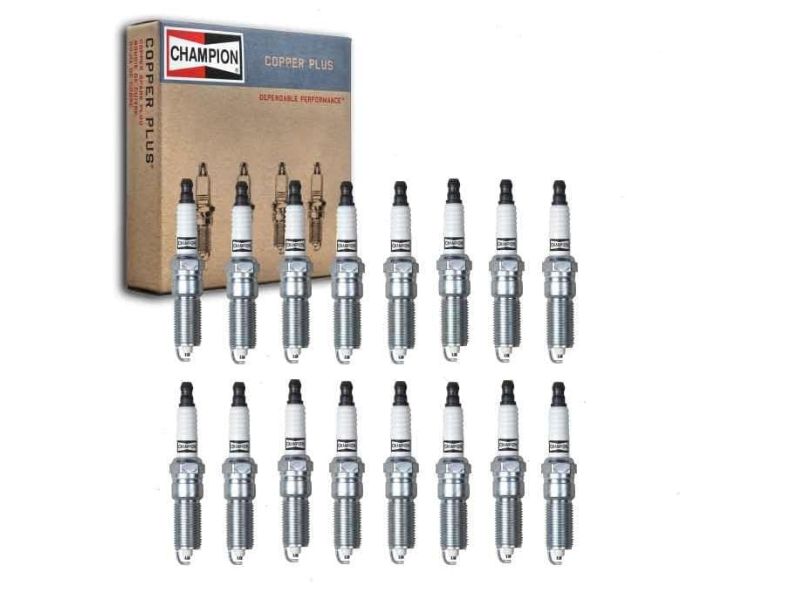
The Champion 570 RE14MCC4 is the most sensible starting point for many stock 2003–2008 5.7L HEMI engines. Rather than introducing a different plug technology, it follows the conventional design associated with the early factory application.
Champion Copper Plus plugs use a copper-core center electrode, an Ultraseal-coated shell for corrosion resistance, and a semiconductor resistor intended to control electrical interference.
The copper is primarily inside the electrode. The actual firing surface uses a more durable nickel alloy. Calling it a “copper plug” does not mean that a soft, exposed copper tip carries the spark.
The copper core transfers heat away from the firing end and helps Champion control the plug’s operating temperature. Maintaining an appropriate firing-tip temperature is important because a plug that runs too hot may increase the possibility of abnormal combustion, while a plug that remains too cold may accumulate deposits.
This construction works well for a stock truck or SUV used for commuting, hauling, towing, short trips, or normal highway driving. The early HEMI was designed around conventional plugs and a relatively regular replacement schedule.
A major benefit is cost. Because a complete HEMI tune-up requires 16 plugs, the price difference between conventional and premium products can become substantial. Champion lets owners restore the engine with the familiar early specification without paying for precious-metal electrodes.
The tradeoff is electrode wear. Nickel firing surfaces generally erode more quickly than fine-wire iridium. As the electrodes wear, their edges round off and the gap gradually increases. A wider gap requires greater ignition voltage and may make weak coils, wires, or boots more noticeable.
Regular replacement is therefore important. The Champion set makes sense for an owner willing to inspect and service the ignition system at the interval specified for the vehicle.
This is also a useful choice for a recently purchased high-mileage vehicle with an uncertain history. Returning the engine to a known, stock-style plug establishes a reasonable baseline before diagnosing remaining misfires or drivability problems.
Do not expect a significant horsepower gain. Replacing severely worn plugs can restore throttle response or smoothness, but correct new plugs do not normally create additional power beyond what the healthy engine was designed to produce.
The linked product is positioned as a 16-piece set. Check the current package quantity before ordering because Champion 570 plugs are also sold individually and in smaller cartons.
Pros: Stock-style early-engine application, complete-set availability, low replacement cost, effective heat control, and established conventional construction.
Cons: Shorter wear life than iridium, regular replacement is important, and it should not be used in later engines merely because they share the 5.7L displacement.
My Verdict: Champion 570 RE14MCC4 is the best overall recommendation for a compatible stock 2003–2008 5.7L HEMI. It provides the appropriate early-engine design without adding unnecessary cost or complexity.
2. NGK V-Power Spark Plugs – Best Affordable Early-Engine Alternative
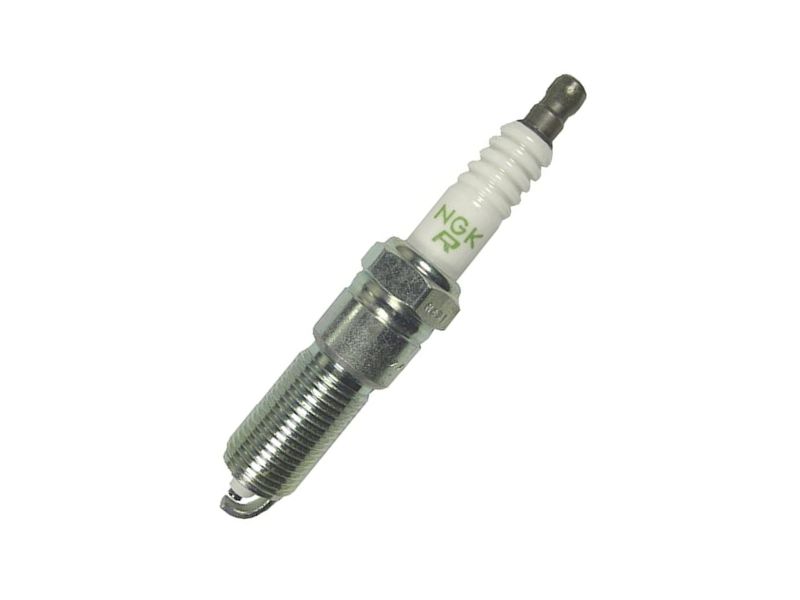
The NGK 5306 LZTR4A-11 is a strong alternative for early-engine owners who prefer NGK but still want conventional plug construction.
NGK’s V-Power design incorporates a V-shaped cut in the center electrode. The shape encourages the spark to form closer to the outer edge rather than in the center of a broad, flat firing surface. The plug uses a 14 mm thread and belongs to NGK’s conventional replacement line.
Forming the spark near the electrode edge can expose more of the initial flame kernel to the air-fuel mixture. It also reduces the amount of nearby electrode material that can absorb heat from the first stage of combustion.
This does not transform the plug into a high-output racing component. The V-groove is a practical ignition feature within an affordable standard plug.
Like the Champion product, the NGK 5306 uses a conventional firing surface and copper-core construction. It therefore has a similar maintenance profile: low initial cost, dependable stock operation, and a shorter wear life than premium iridium products.
This plug is appropriate for a compatible daily driver, work truck, or high-mileage vehicle that receives regular maintenance. It may also appeal to owners who have previously had good results with NGK ignition components.
The linked product contains eight plugs. Since a complete 5.7L HEMI replacement usually requires 16, you will need two packages.
That quantity difference is easy to miss. An eight-pack may initially appear considerably cheaper than a complete Champion or DENSO set, but the comparison is incomplete until the second NGK package is included.
The NGK 5306 should not be chosen solely because V-Power sounds more performance-oriented than Copper Plus. When both plugs are correct and in good condition, the difference may not be noticeable during ordinary driving.
The most meaningful reasons to choose NGK are its specific early-engine application, electrode design, availability, and your preference for the brand.
It can also be a practical option when the engine consumes some oil or operates in conditions that shorten plug life. Installing an extremely expensive set in an engine that repeatedly fouls its plugs may not be economical. The oil-consumption or fuel-mixture problem should be repaired first.
Inspect both eight-packs carefully. All 16 plugs should have matching numbers, straight ground electrodes, intact ceramic insulators, clean threads, and consistent terminals.
Pros: Recognized NGK construction, V-groove center electrode, affordable price, appropriate early-engine availability, and easy replacement sourcing.
Cons: Two packages are required, conventional electrodes wear faster than iridium, and the V-groove does not guarantee additional horsepower.
My Verdict: The NGK 5306 is the best affordable alternative to Champion for a compatible early 5.7L HEMI. Choose it when you want conventional stock-friendly operation with NGK’s V-Power firing-end design.
3. NGK Iridium IX Spark Plugs – Best Fine-Wire Upgrade for Early Engines
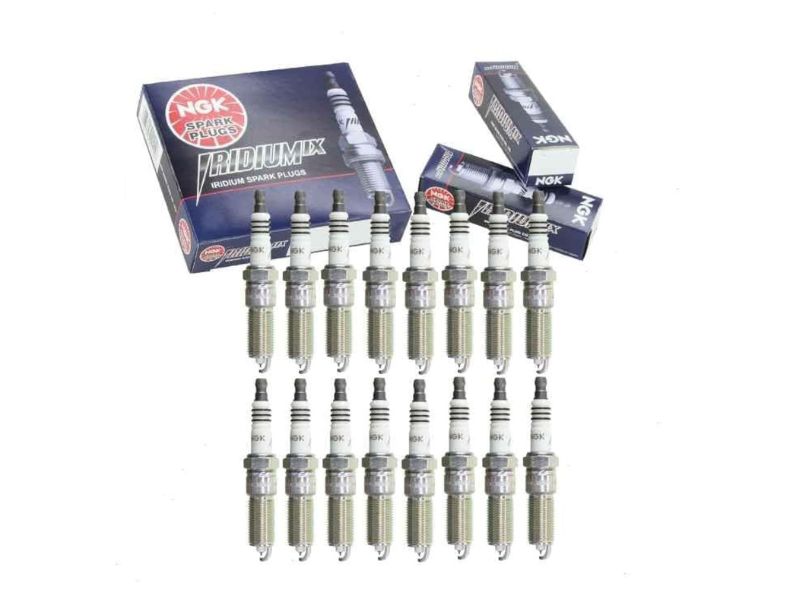
The NGK 2313 LZTR4AIX-11 is intended for early-engine owners who specifically want a fine-wire iridium center electrode.
NGK positions Iridium IX as a performance-oriented aftermarket line. The 2313 uses a fine iridium firing tip designed to create a stable, concentrated spark while resisting center-electrode wear better than a conventional nickel design.
A smaller center electrode concentrates the electrical field around the firing tip. This can reduce the voltage needed to initiate the spark compared with a wider conventional electrode, provided the plug is correctly matched and the ignition system is healthy.
That characteristic may support consistent ignition during cold starting, acceleration, and changing engine loads. However, the effect should not be confused with guaranteed additional horsepower.
The most noticeable improvement usually occurs when the Iridium IX plugs replace a set that is heavily worn, fouled, incorrectly gapped, or damaged. Replacing healthy plugs with another correct design may produce little difference that the driver can detect.
The 2313 is particularly attractive for owners who want greater center-electrode wear resistance without leaving the early-engine plug family.
Iridium IX and Laser Iridium should not be treated as the same product. NGK describes Iridium IX as a single-precious-metal performance plug, while its Laser Series is generally designed for longer replacement intervals. NGK notes typical service-life differences between the two product families, although the vehicle’s maintenance schedule remains the controlling reference.
The linked set contains 16 plugs, which simplifies purchasing. You do not need to combine two eight-packs, and all cylinders receive the same part number and electrode design.
Fine-wire plugs require careful handling. A hard impact can bend the ground electrode or damage the small center tip. Check the gap with a wire-style gauge rather than forcing a wedge tool between the electrodes.
When adjustment is necessary, move only the ground electrode. NGK warns that an incorrect gap can contribute to misfires, fouling, power loss, poor fuel economy, and accelerated wear.
The 2313 should not automatically be selected for a supercharged or nitrous engine. A modified engine may require a different heat range rather than simply a different electrode material. Follow the tuner’s exact recommendation.
Pros: Fine-wire iridium center electrode, complete 16-piece availability, improved center-electrode wear resistance, strong ignitability, and recognized early-engine application.
Cons: Higher cost than conventional plugs, not NGK’s longest-life product family, and no guaranteed increase in power or fuel economy.
My Verdict: The NGK 2313 is the best early-engine choice for owners who want Iridium IX construction. It provides a legitimate fine-wire alternative while retaining an application designed for compatible 2003–2008 engines.
4. DENSO Iridium Power Spark Plugs – Best Premium Option for 5.7 HEMI Engines
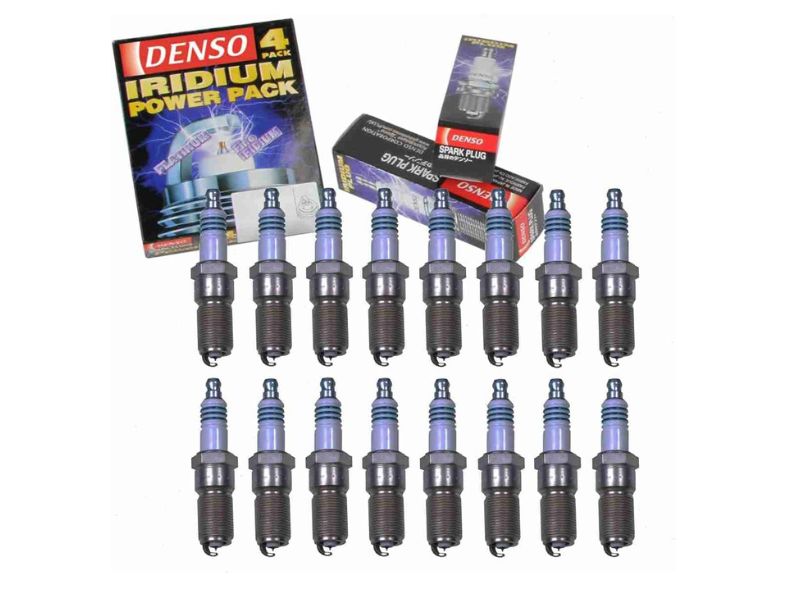
The DENSO 5349 ITL16 is the most specialized premium option for a compatible early 5.7L HEMI.
DENSO Iridium Power plugs use a 0.4 mm laser-welded iridium center electrode. DENSO states that the narrow firing tip reduces the required ignition voltage and improves firing performance.
The 0.4 mm electrode is narrower than many conventional firing tips. Concentrating the electrical field at a small point can help initiate the spark without requiring as much voltage as a broad electrode.
DENSO also uses its U-groove ground-electrode concept in the Iridium Power family. The open area around the firing point is intended to provide more room for the initial flame kernel to develop.
This makes the ITL16 appealing to an owner who wants a premium fine-wire design rather than a basic stock-style plug.
The product is still a maintenance component, not a stand-alone performance modification. A spark plug cannot increase airflow, compression, displacement, fuel delivery, or ignition timing. It can only provide the ignition event required by the engine.
When the existing plugs are severely worn, the engine may start more easily or run more smoothly after installing the DENSO set. When the existing set remains healthy, the improvement may be small.
The linked package contains 16 plugs, which is convenient for the HEMI’s twin-plug arrangement. The complete-set price is higher than Champion or NGK V-Power, but buyers do not need to purchase a second package.
The ITL16 makes the most financial sense in a mechanically healthy engine. Oil consumption, rich operation, leaking injectors, or low compression can contaminate premium plugs as easily as standard ones.
Before spending more on DENSO, check whether the engine has unresolved fouling. New plugs may improve operation temporarily, but the deposits will return until the underlying problem is corrected.
The narrow center electrode also demands careful handling. Avoid dropping the plugs or pressing a gap tool against the tip. A damaged fine-wire electrode may no longer provide the intended firing characteristics.
This product belongs to the early application group. It must not be used as a substitute for NGK 92174, NGK 92145, or Mopar SP143877AB in a later engine without explicit catalog confirmation.
Pros: Very fine 0.4 mm iridium electrode, complete 16-piece package, reduced firing-voltage requirement, U-groove design, and premium construction.
Cons: Higher cost, delicate center electrode, limited benefit when replacing healthy plugs, and not suitable for later engines without exact verification.
My Verdict: DENSO 5349 ITL16 is the best premium early-engine option. It is most appropriate for an owner who specifically values DENSO’s fine-wire Iridium Power design and has a healthy, compatible engine.
5. NGK Spark Plugs – Best Replacement for Supported Post-2008 Engines
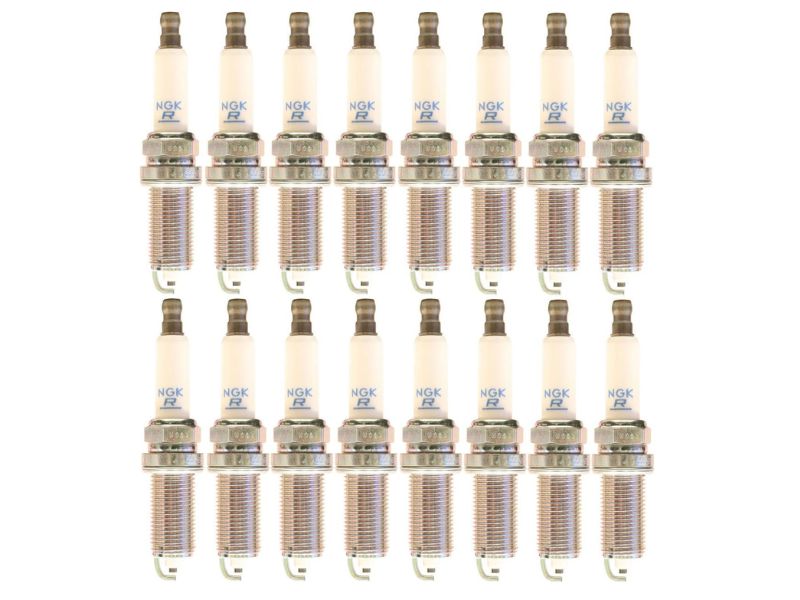
The NGK 92174 LZFR5C-11 is the conventional option for supported engines that use the later plug design but do not require an extended-life Laser Iridium replacement.
NGK categorizes the 92174 as a standard nickel plug. It incorporates trivalent metal plating intended to resist corrosion and reduce the possibility of the threads seizing during normal service.
This product illustrates why electrode material should not be the first buying decision. Although it uses a conventional firing surface, it may be more appropriate for a supported later engine than an expensive early-engine iridium plug.
Correct seat geometry, reach, heat range, and projection matter more than the marketing category printed on the box.
The 92174 is a useful choice for an owner who wants to maintain a conventional factory-style setup and does not object to a shorter maintenance interval than a long-life iridium plug.
It can also be helpful when establishing a known baseline on a used vehicle. If the vehicle currently contains mixed plug brands or questionable aftermarket parts, installing a complete matched set of catalog-approved NGK plugs removes one source of uncertainty.
The linked package contains 16 plugs. Verify the current quantity because NGK 92174 is also sold individually and in smaller packs.
Nickel-electrode wear remains the primary limitation. Over time, the firing edges erode and the gap increases. The engine may continue running, but the ignition coils must work harder to bridge the wider distance.
Waiting for an obvious misfire is not a good maintenance strategy. A worn set can gradually affect cold starting, idle quality, acceleration, and fuel consumption before a persistent diagnostic code appears.
The 92174 should not be installed in a 2003–2008 engine. It belongs to a different plug family from Champion RE14MCC4 and NGK LZTR4A-11.
It also should not be considered universally correct for every later 5.7L vehicle. Model year, vehicle platform, and service updates can affect the recommended number.
Check NGK’s current application finder and compare the number with the VIN-based Mopar catalog. When both identify another plug, use the vehicle-specific recommendation instead.
Pros: Correct later-style option for supported applications, complete-set availability, affordable standard construction, corrosion-resistant plating, and straightforward stock operation.
Cons: Shorter wear life than Laser Iridium, not compatible with early engines, and exact vehicle-level confirmation is essential.
My Verdict: NGK 92174 is the best standard replacement for a supported post-2008 engine when the catalog specifically calls for LZFR5C-11. It provides appropriate stock operation without the price of an extended-life plug.
6. NGK Laser Iridium Spark Plugs – Best Option for Compatible Later Engines
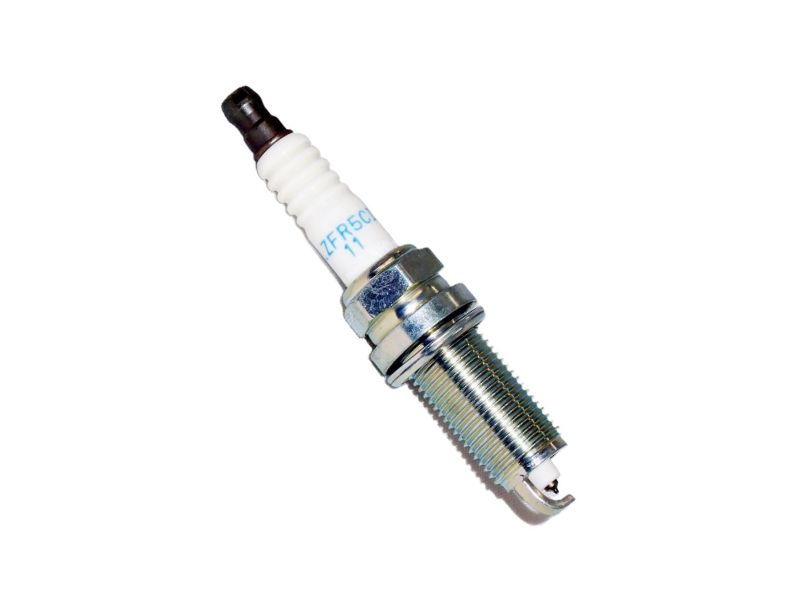
The NGK 92145 LZFR5CI-11 is my preferred long-service recommendation for compatible later 5.7L HEMI engines.
NGK’s Laser Iridium line is developed alongside vehicle manufacturers to meet OE-level performance and durability requirements. The design uses a fine-wire center electrode and high-grade ceramic construction intended to support stable ignition over an extended period.
The major difference between Laser Iridium and Iridium IX is product purpose.
Iridium IX emphasizes aftermarket fine-wire performance and ignitability. Laser Iridium focuses more heavily on OE-style durability and extended replacement intervals. NGK states that Laser Series plugs are generally designed to last longer than Iridium IX, although actual intervals depend on the vehicle and application.
That longer-life focus is valuable in a 5.7L HEMI because replacing 16 plugs requires a substantial amount of labor. Several positions can be difficult to access, and the full service involves twice as many plugs as a conventional V8.
The linked package contains 16 NGK 92145 plugs. This eliminates the need to combine two eight-packs and makes the total service cost easier to evaluate.
Laser Iridium is best suited to a compatible stock or lightly modified vehicle used for regular commuting, highway travel, towing, or long-term ownership.
It should not be selected merely because it is the most modern plug on this list. The 92145 is not a substitute for Champion 570, NGK 5306, NGK 2313, or DENSO ITL16 in an early engine.
Even among later vehicles, the exact model year must be confirmed. A broad product title mentioning Ram, Dodge, Jeep, or Chrysler does not prove compatibility with every 5.7L version.
Owners sometimes expect iridium plugs to add horsepower or improve fuel economy dramatically. Those expectations are unrealistic. The primary advantage is maintaining a precise firing surface and stable gap for longer than a basic nickel plug.
The engine may feel stronger after replacement when the previous plugs were heavily worn. That represents recovered performance rather than power created by the iridium material.
Check all 16 gaps before installation. “Pre-gapped” does not mean the electrodes are guaranteed to remain unchanged during shipping. Use a wire gauge and avoid touching the fine center electrode.
Pros: OE-oriented Laser Iridium construction, complete 16-piece package, strong service-life focus, stable fine-wire ignition, and reduced need for frequent plug changes.
Cons: Higher purchase price, not correct for every later 5.7L vehicle, and unsuitable for early engines despite sharing the same displacement.
My Verdict: The NGK 92145 is the best long-service option for a compatible later 5.7L HEMI. It is particularly attractive when durability and avoiding frequent 16-plug replacements are higher priorities than the lowest initial price.
7. Mopar Spark Plug Set – Best OEM Replacement for Supported Later Engines
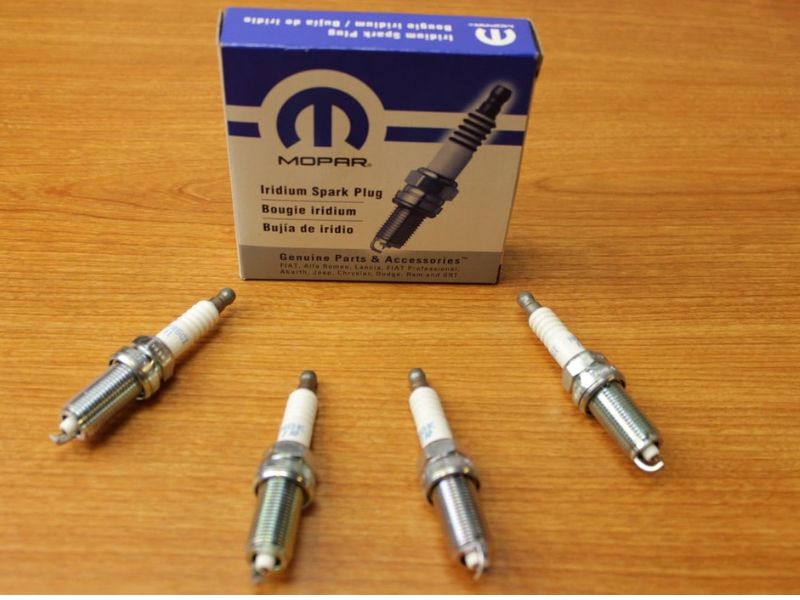
Mopar SP143877AB is the best choice for an owner who wants the factory service number rather than an aftermarket cross-reference.
Mopar lists SP143877AB for supported 2012–2026 vehicles equipped with several 5.7L HEMI MDS VVT configurations, including BSG and eTorque versions. It replaces SP143877AA and 68143877AB. The official Mopar catalog sells the plug in packs of four.
The main advantage is application confidence. When the VIN-based Mopar catalog specifies SP143877AB, the owner does not need to interpret several aftermarket numbers or decide whether a broadly advertised plug is truly equivalent.
The factory part number helps confirm the required reach, seat, heat range, firing-end position, and internal resistance.
This is especially useful for a stock vehicle whose owner intends to preserve the original maintenance specification. Examples may include supported Ram 1500, Charger R/T, Challenger R/T, Durango, Chrysler 300, and other 5.7L applications.
Vehicle confirmation remains mandatory. Mopar’s broad 2012–2026 catalog period includes many platforms, trims, and engine configurations. Not every vehicle produced during those years uses the same plug.
The linked product is positioned as a 16-piece set. Verify the quantity before ordering because genuine SP143877AB plugs are commonly sold in factory four-packs. Four of those cartons would be needed for a complete 16-plug service.
The Mopar option may cost more than NGK 92145. That additional cost primarily buys OEM-number confidence and packaging, not guaranteed additional power.
A correct aftermarket equivalent can provide comparable operation when it truly matches the original specifications. The Mopar product is most appealing to owners who prefer the factory catalog and do not want to investigate cross-references.
Inspect the plugs before installation even when they arrive in Mopar packaging. Look for damaged threads, cracked ceramic, bent electrodes, inconsistent numbers, or signs that the product has been repackaged.
Counterfeit or questionable ignition components can create difficult-to-diagnose problems. Purchase through an established supplier and compare the plugs carefully with the factory product removed from the engine.
Pros: Genuine factory service number, strong VIN-based fitment confidence, complete-set availability, appropriate for supported MDS/VVT engines, and reduced cross-reference uncertainty.
Cons: Higher price, factory packs may contain only four plugs, no automatic power advantage over a correct equivalent, and not suitable for early engines.
My Verdict: Mopar SP143877AB is the best OEM choice for a supported later 5.7L HEMI. Select it when factory-number confidence is more important than finding the lowest complete-set price.
How to Select the Correct Product for Your 5.7 HEMI
Start With the Engine Generation
Before comparing iridium, nickel, or copper-core construction, determine which plug family the engine uses.
For a compatible 2003–2008 engine, begin with:
- Champion 570 RE14MCC4
- NGK 5306 LZTR4A-11
- NGK 2313 LZTR4AIX-11
- DENSO 5349 ITL16
Mopar connects its 2003–2008 service part with the earlier SPRE14MCC4 reference, supporting the Champion-style application family.
For a supported later engine, investigate:
- NGK 92174 LZFR5C-11
- NGK 92145 LZFR5CI-11
- Mopar SP143877AB
Never mix the two groups.
Confirm the Vehicle, Not Just the Engine
The 5.7L HEMI has appeared in trucks, performance cars, SUVs, and hybrid-assisted applications.
A plug listing for a Ram 1500 does not automatically apply to a Charger R/T. Similarly, a plug used in a Chrysler 300 may not be the correct service part for a Ram Heavy Duty truck from the same year.
Use at least two reliable fitment references:
- VIN-based Mopar catalog
- Plug manufacturer’s application finder
- Owner’s manual or factory service information
- Correct original plug number
When the sources disagree, do not guess. Contact the plug manufacturer or a dealer parts department with the VIN.
Check the Package Quantity
Every product comparison should be based on the cost of a complete 16-plug service.
A low-priced product may contain only four or eight plugs. Examples include:
- NGK 5306 linked as an eight-pack
- Mopar factory parts commonly sold in packs of four
- Many retail listings sold as individual plugs
- Vehicle-specific bundles containing all 16
Calculate the number of packages required before judging value.
Choose the Electrode Type Based on Your Priority
Conventional nickel plugs are affordable and suitable when the engine’s catalog calls for them. They generally require more frequent replacement because the firing surfaces wear faster.
Iridium IX plugs use a fine-wire center electrode and emphasize ignitability. They provide stronger wear resistance than conventional plugs but are not necessarily the longest-life NGK option.
DENSO Iridium Power uses an extremely fine center electrode and focuses on efficient spark initiation.
Laser Iridium plugs prioritize OE-style durability and longer service intervals in applications designed for them.
Mopar OEM plugs prioritize factory-number confidence rather than offering a separate performance category.
Stock and Modified Engines Need Different Decisions
A stock naturally aspirated engine should generally remain with the factory heat range.
Common bolt-ons such as a replacement air intake, cat-back exhaust, or throttle body do not automatically require colder plugs.
A colder heat range may be considered when modifications substantially increase combustion pressure or temperature. These include:
- Supercharging
- Turbocharging
- Nitrous oxide
- Increased compression
- Significant internal engine work
- Aggressive custom calibration
A colder plug is not automatically more powerful. It simply transfers heat away from the firing end more quickly. In a stock engine, an unnecessarily cold plug may remain below its effective self-cleaning temperature and accumulate deposits.
The tuner or engine builder should select the exact part number and gap for a modified combination.
Spark-Plug Gap: Inspect Every Plug
The gap is the distance the electrical spark crosses between the center and ground electrodes.
A gap that is too wide requires more voltage. The engine may idle normally but misfire under towing load, hard acceleration, or high cylinder pressure.
A gap that is too narrow may produce a smaller initial spark kernel and reduce the area exposed to combustion.
Do not assume that every 5.7L HEMI uses one universal gap. The correct value depends on the engine generation, part number, model year, and engine calibration.
NGK states that factory-set gaps may not be correct for every engine using a particular plug number. The company recommends checking the gap against the vehicle manufacturer’s specification because an incorrect setting can contribute to misfires, fouling, power loss, poor fuel economy, and accelerated wear.
Use a wire-style gauge, especially with fine-wire iridium plugs.
Do not press a coin-style tool against the center electrode. When adjustment is necessary, bend only the ground strap and make small changes.
Inspect the electrode from the side after adjustment. The ground strap should remain aligned above the center tip rather than becoming angled or twisted.
How Heat Range Affects a 5.7 HEMI
Spark-plug heat range describes the plug’s ability to transfer heat from the firing end into the cylinder head.
It does not measure spark strength, ignition voltage, or combustion temperature directly.
A plug with a hotter heat range retains more heat at the firing tip. A colder plug transfers heat away more quickly.
A plug that runs too hot may show glazed deposits, rapid electrode wear, or evidence of abnormal combustion. A plug that runs too cold may develop heavy carbon deposits, particularly during short trips and extended idling.
The correct heat range allows the firing end to remain hot enough to limit deposits without becoming a source of pre-ignition.
Do not choose a colder plug because it is described as a performance product. Heat range must match the engine’s actual operating conditions.
When Should 5.7 HEMI Spark Plugs Be Replaced?
The replacement interval varies by engine generation, original plug material, model year, and service schedule.
Early engines equipped with conventional plugs generally require more frequent replacement than later engines using OE-style iridium plugs.
NGK’s service information lists V-Power applications with shorter intervals than its Laser Series products and describes Laser plugs as generally lasting longer than Iridium IX. Those are product-family guidelines, not permission to ignore the vehicle’s maintenance schedule.
Inspect the ignition system when you notice:
- Rough or inconsistent idle
- Hard starting
- Hesitation during acceleration
- Reduced performance while towing
- Random or cylinder-specific misfire codes
- Declining fuel economy
- Uneven cold-start operation
- Increased exhaust emissions
- A flashing check-engine light
A flashing check-engine light can indicate an active misfire severe enough to damage the catalytic converter. Reduce load and diagnose the vehicle rather than continuing to drive aggressively.
Spark Plugs Are Not the Only Cause of a Misfire
Replacing all 16 plugs without diagnosis can become expensive when the real problem is elsewhere.
Other possible causes include:
- Weak ignition coils
- Cracked coil boots
- Damaged early-engine secondary wires
- Loose electrical connectors
- Fuel-injector faults
- Intake-manifold leaks
- Low fuel pressure
- Compression loss
- Valve or lifter problems
- Oil inside plug wells
- Incorrect engine calibration
Read the diagnostic trouble codes before replacing parts. A code such as P0304 identifies a misfire detected on cylinder four, but it does not prove that the cylinder-four spark plugs are defective.
Inspect both plugs from the affected cylinder. If one appears normal while the other is fouled, the difference may provide useful diagnostic information.
Coils can sometimes be moved between cylinders during diagnosis. When the misfire follows the coil, the coil becomes a stronger suspect. Follow safe diagnostic procedures and avoid replacing parts based only on assumptions.
How to Read the Removed Spark Plugs
Keep all 16 plugs organized by cylinder and position.
Do not place them together in an unmarked box. The pattern can help identify whether the problem affects the entire engine or only one cylinder.
A brown or light-gray firing end commonly indicates normal operation. NGK describes these colors as signs that the plug may be functioning correctly.
Heavy dry black deposits may be associated with rich operation, excessive idling, weak ignition, low operating temperature, or an unsuitable heat range.
Wet fuel may indicate that the cylinder is receiving fuel but is not firing consistently.
Oily deposits may suggest oil entering the combustion chamber through valve seals, rings, the crankcase ventilation system, or another mechanical path.
A glazed or blistered firing end may indicate overheating. NGK notes that overheated deposits can melt and produce a glossy appearance on the insulator tip.
One abnormal plug deserves cylinder-specific investigation. Similar deposits across all 16 plugs suggest a broader operating condition.
Spark-plug appearance should support diagnosis rather than replace compression testing, scan data, fuel analysis, or mechanical inspection.
How to Replace Spark Plugs in a 5.7 HEMI
Replacing 16 plugs requires patience and organization. Access varies among Ram trucks, Dodge performance cars, Chrysler sedans, and Jeep SUVs.
1. Let the Engine Cool Completely
Work only on a cold engine.
The cylinder heads are aluminum. Removing plugs from hot aluminum threads can increase the possibility of damage.
2. Verify All Parts Before Disassembly
Confirm that you have:
- The correct part number
- All 16 plugs
- The required spark-plug socket
- Suitable extensions and swivel adapters
- A calibrated torque wrench
- A wire-style gap gauge
- Compressed air or a suitable vacuum
Compare the product boxes before starting. Do not begin the job with eight plugs when the engine requires 16.
3. Photograph the Original Layout
Take clear pictures of the ignition coils, electrical connectors, hoses, intake components, and any secondary wires.
Early engines can have wire routing that becomes confusing when several components are removed together.
4. Remove Components Methodically
Remove the engine cover and only the intake components needed for access.
Disconnect electrical connectors by releasing their locks rather than pulling on the wiring. Keep coil fasteners and brackets organized.
On early engines, grip the spark-plug wire boots rather than pulling directly on the cables.
5. Clean Around the Plug Wells
Use compressed air or a vacuum to remove dirt before loosening each plug.
Debris left around the opening may fall toward the combustion chamber once the plug is removed.
6. Keep the Old Plugs Organized
Label each plug by cylinder and position.
This allows you to compare the two plugs from each cylinder and identify unusual deposits or wear.
7. Compare Old and New Parts
Check:
- Thread diameter
- Thread reach
- Seat design
- Terminal configuration
- Firing-tip projection
- Electrode layout
- Part number
Stop when the new plug looks substantially different from the removed factory-style part.
8. Check the Gap
Measure every new plug.
Do not assume that pre-gapped plugs survived shipping unchanged. Handle fine-wire electrodes carefully and adjust only the ground strap.
9. Start Each Plug by Hand
Thread the plug several turns by hand before using a ratchet.
A short piece of clean rubber hose can help rotate the plug while limiting the amount of force available if the threads are misaligned.
When resistance appears immediately, remove the plug and restart it. Never use a ratchet to force a plug into aluminum threads.
10. Use the Correct Torque Procedure
Follow the service information for the exact engine and plug design.
Do not transfer the torque specification from an early plug family to a later one. Different seat designs can require different procedures.
Do not apply anti-seize automatically. Plated spark-plug threads are often intended for dry installation, and lubricant changes the relationship between torque and clamping force.
11. Inspect the Coils, Boots, and Wires
Look for:
- Cracked rubber
- Carbon tracking
- Oil contamination
- Burned insulation
- Corroded terminals
- Damaged internal springs
- Loose electrical connectors
A new spark plug cannot compensate for voltage leaking through a damaged boot.
12. Reassemble and Test
Reconnect every coil, hose, sensor, and secondary wire.
Start the engine and listen for an uneven idle. Scan for stored and pending misfire codes when possible.
When a new misfire appears immediately after service, first check disconnected coils, incorrect wire routing, damaged connectors, and improperly seated boots.
Common Spark-Plug Replacement Mistakes
Buying Only Eight Plugs
The 5.7L HEMI normally requires 16. Always calculate the full-engine quantity.
Ordering by Engine Size Alone
A 2005 and a later 5.7L HEMI may use different plug families. The displacement does not guarantee interchangeability.
Mixing Brands or Heat Ranges
All 16 plugs should normally be a matched set. Mixing designs can create inconsistent wear and ignition characteristics.
Installing Without Checking the Gap
Shipping can move the ground electrode. Check each plug against the exact application specification.
Cross-Threading the Cylinder Head
Start every plug by hand. Forcing a misaligned plug can damage expensive aluminum threads.
Guessing the Torque
Overtightening may damage threads or the plug shell. Undertightening can interfere with sealing and heat transfer.
Using Anti-Seize Automatically
Lubrication changes thread friction. Follow the manufacturer’s installation instructions instead of applying it by habit.
Ignoring Coil and Boot Problems
Replacing the plugs may not cure a misfire caused by a cracked boot, weak coil, or damaged wire.
Frequently Asked Questions
What are the most recommended spark plugs for a 5.7 HEMI?
For compatible 2003–2008 engines, Champion 570 RE14MCC4 is my leading stock-style recommendation. NGK 5306 offers a conventional alternative, while NGK 2313 and DENSO 5349 provide fine-wire iridium options.
For compatible later engines, NGK 92145 Laser Iridium is my preferred long-service option. Mopar SP143877AB is better for owners who want the factory service number.
Does every 5.7 HEMI use the same spark plugs?
No. The spark-plug application changed during the engine’s production history. Early 2003–2008 engines use a different plug family from many later engines. Vehicle platform, model year, engine configuration, and service updates also affect the correct part.
How many spark plugs does a 5.7 HEMI use?
The engine uses two spark plugs per cylinder. With eight cylinders, a complete replacement normally requires 16 plugs.
Check package quantity carefully because many products contain only four or eight.
What are the recommended plugs for a 2003–2008 5.7 HEMI?
Common supported options include Champion 570 RE14MCC4, NGK 5306 LZTR4A-11, NGK 2313 LZTR4AIX-11, and DENSO 5349 ITL16.
Mopar’s early service part 68303913AA replaces SPRE14MCC4 and applies to supported 2003–2008 vehicles.
What are the recommended plugs for a later 5.7 HEMI?
Depending on the vehicle and model year, supported options may include NGK 92174, NGK 92145, or Mopar SP143877AB.
Mopar lists SP143877AB for supported 2012–2026 5.7L HEMI MDS VVT-related applications. Confirm the VIN before ordering.
Are iridium spark plugs better for a 5.7 HEMI?
Iridium offers strong electrode wear resistance and allows a fine center tip. That can improve durability and ignitability when the plug is correctly designed for the engine.
An incorrect iridium plug is not better than a correct conventional plug. Fitment, heat range, reach, seat, and gap come first.
Champion or NGK: which is better for an early HEMI?
Champion 570 is the clearer factory-style recommendation for many early engines because the Mopar service family references SPRE14MCC4.
NGK 5306 is a strong alternative with V-Power construction. Both can provide reliable stock operation when correctly matched and installed.
NGK Iridium IX or DENSO Iridium Power?
NGK 2313 uses Iridium IX construction and provides a complete early-engine fine-wire option.
DENSO 5349 uses a very narrow 0.4 mm iridium center electrode and is the more premium choice. Neither is universally superior; price, application confirmation, and maintenance preference should guide the decision.
What is the difference between NGK 92174 and NGK 92145?
NGK 92174 is a standard nickel plug for supported later applications. It costs less but generally has a shorter wear-life focus.
NGK 92145 is a Laser Iridium plug intended to provide fine-wire OE-style ignition and longer service life where specified.
Is Mopar SP143877AB the same as NGK 92145?
They may be associated with overlapping later 5.7L applications, but they should not be treated as interchangeable without confirming the current manufacturer cross-reference and VIN.
Use Mopar SP143877AB when the factory catalog specifies that number. Use NGK 92145 when NGK and vehicle application data confirm it.
Do iridium plugs increase horsepower?
They do not normally add meaningful horsepower to a healthy stock engine.
They may restore power lost because the previous plugs were worn, fouled, damaged, or incorrectly gapped. That is recovered performance rather than a new power increase.
Can spark plugs improve fuel economy?
Correct new plugs may restore fuel economy when worn plugs have caused incomplete or inconsistent ignition.
They cannot overcome poor driving conditions, incorrect tire pressure, injector problems, mechanical wear, or an unsuitable engine calibration.
What spark-plug gap does a 5.7 HEMI use?
There is no single universal number for every 5.7L HEMI.
The required gap depends on the vehicle, engine generation, model year, and plug number. Check the under-hood label, owner’s manual, factory service data, and plug manufacturer’s application information.
Should pre-gapped plugs still be checked?
Yes. Shipping and handling can move the ground electrode.
NGK recommends confirming the gap against the engine manufacturer’s specification because the factory setting may not match every application using the plug.
Should all 16 plugs be replaced together?
Yes, during scheduled maintenance.
A complete matched set keeps the heat range, electrode material, gap, and wear level consistent throughout the engine.
Do the ignition coils need to be replaced with the plugs?
Not automatically.
Inspect the coils and boots for cracks, corrosion, carbon tracking, oil, and damaged springs. Replace a coil when diagnosis or physical condition indicates a fault rather than replacing all coils without evidence.
Can worn spark plugs damage ignition coils?
Worn electrodes and excessive gap increase the voltage required to initiate the spark. This can expose weakness in the coils, boots, or wires.
However, a failed coil can also damage or foul a plug by preventing normal combustion.
Can bad plugs cause a misfire only under acceleration?
Yes. Higher engine load increases cylinder pressure, making the spark more difficult to initiate.
A worn plug may work at idle but misfire during towing, climbing, or wide-open acceleration. Weak coils, injectors, fuel pressure, and compression problems can produce the same symptom.
Can I use colder spark plugs in a stock HEMI?
A stock engine should generally use the factory heat range.
An unnecessarily cold plug may develop deposits because its firing end does not become hot enough during ordinary driving.
Do supercharged 5.7 HEMI engines need different plugs?
They often require a tuner-selected plug and gap because forced induction raises cylinder pressure and combustion temperature.
The correct heat range depends on the power level, boost, fuel, compression, calibration, and intended use. Do not choose solely from a generic product ranking.
Should anti-seize be used on the threads?
Do not apply anti-seize automatically.
Many modern plugs use plated threads intended for dry installation. Lubrication changes thread friction and can produce greater clamping force than intended at the specified torque.
Where should spark plugs be purchased?
Use an established automotive retailer, manufacturer-authorized supplier, dealership, or reputable seller.
Inspect the packaging, printing, threads, electrodes, ceramics, and part markings. Unusually low prices, inconsistent construction, or poor packaging should be treated cautiously.
Can I replace 5.7 HEMI plugs myself?
An experienced DIY owner can complete the job with the correct socket, extensions, torque wrench, gap gauge, and service information.
The 16-plug arrangement and restricted access make it time-consuming. Professional service is appropriate when a plug is seized, the threads feel damaged, or the ignition routing is unclear.
Conclusion
The recommended spark plugs for 5.7 HEMI engines depend primarily on the engine generation and exact vehicle application.
For compatible 2003–2008 engines, the Champion 570 RE14MCC4 Copper Plus Set offers the strongest combination of stock-style fitment, affordability, and complete 16-plug convenience.
NGK 5306 is the best conventional alternative, while NGK 2313 and DENSO 5349 provide premium fine-wire options for supported early engines.
For compatible later applications, the NGK 92145 LZFR5CI-11 Laser Iridium Set is my preferred long-service choice. Mopar SP143877AB is better when factory-number confidence is the priority.
Verify the VIN, year, plug family, gap, and package quantity before purchasing. Correct fitment matters more than brand ranking or electrode material.