Finding the best MAF sensor cleaner spray can be challenging because many automotive cleaning products look similar but are not designed for delicate mass air flow sensors. Using an unsuitable formula may leave residue, affect sensitive electronic components, or damage nearby plastic parts. A contaminated MAF sensor can also contribute to rough idling, engine hesitation, weak throttle response, inaccurate air-fuel calculations, and reduced fuel efficiency.
To help you select the right option, I reviewed seven MAF cleaner products, including standard cans, a compact spray, a throttle-body cleaner bundle, and a bulk 12-pack. I compared their formulas, drying speed, plastic safety, container size, ease of application, brand reputation, and overall value.
However, if you do not have time to read every review, I recommend checking the CRC 05110 Mass Air Flow Sensor Cleaner. It is my best overall choice because its dedicated MAF formula is designed to dry rapidly, remain safe on plastic components, and leave no residue that could interfere with sensor performance.
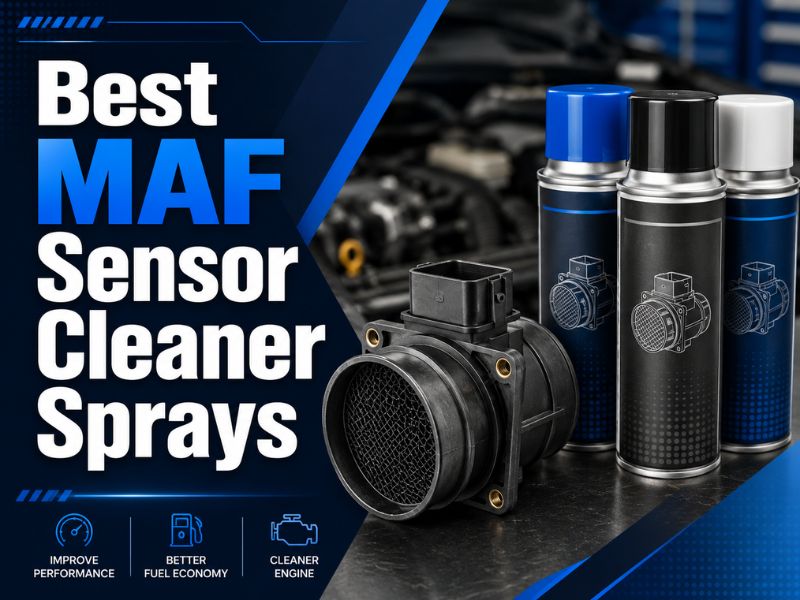
In this guide, I will help you find the best mass air flow sensor cleaner for occasional maintenance, professional use, multiple vehicles, or a complete air-intake cleaning job. I will also explain what to consider before buying, how to clean a MAF sensor safely, and which chemicals you should avoid.
Read More: 15 Best MAF Sensors for Better Performance
7 Best MAF Sensor Cleaner Sprays At a Glance
| Image | Product Name | Check Price |
|---|---|---|
Best Choice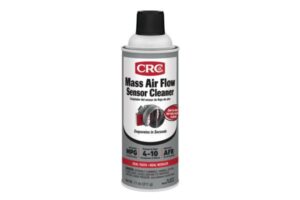 | CRC Mass Air Flow Sensor Cleaner | Check Price |
Second Best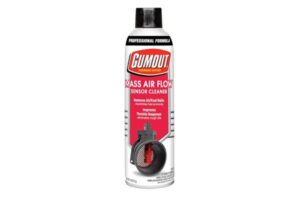 | Gumout Professional MAF Sensor Cleaner | Check Price |
Third Choice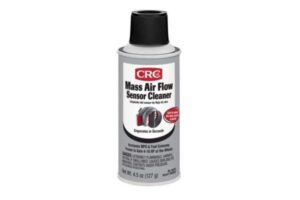 | CRC Mass Air Flow Sensor Cleaner | Check Price |
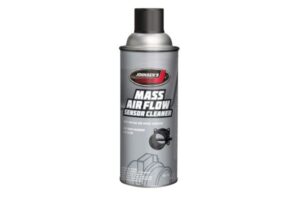 | Johnsen’s Mass Air Flow Sensor Cleaner | Check Price |
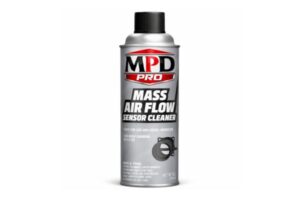 | MPD PRO Mass Air Flow Sensor Cleaner Spray | Check Price |
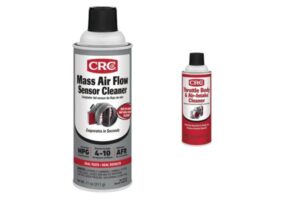 | CRC MAF Sensor and Throttle Body Cleaner Bundle | Check Price |
 | Check Price | |
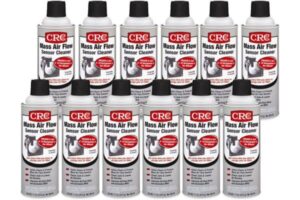
| CRC Mass Air Flow Sensor Cleaner 12-Pack | Check Price |
1. CRC 05110 Mass Air Flow Sensor Cleaner – Best Overall
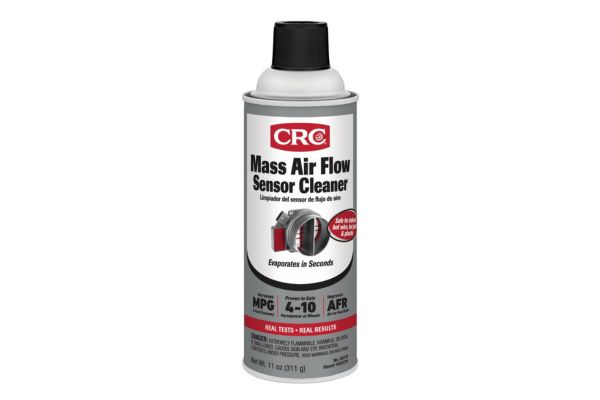
The CRC 05110 is my best overall choice because it is specifically formulated for cleaning delicate mass air flow sensors rather than general engine or electrical components. The 11-ounce aerosol can provides enough solution for several cleaning sessions, making it suitable for DIY maintenance, multiple vehicles, or keeping in a home garage.
Its fast-drying, plastic-safe formula is designed to remove dust, oil residue, grease, and air-filter fibers without leaving a coating on the sensing element. CRC recommends using it when cleaning or replacing the engine air filter. Keeping the MAF sensor clean may help it send more accurate airflow information to the ECU, although it will not repair damaged electronics or a broken sensing element.
I also like that the product is straightforward to use. After removing the sensor, I would spray the sensing area without touching it, allow it to air-dry completely, and then reinstall it. Brushes, cloths, and compressed air should be avoided because the internal wire or film can be extremely delicate.
Pros
- Dedicated MAF sensor formula
- Plastic-safe and fast-drying
- Leaves no residue
- Generous 11-ounce can
- Made by an established automotive chemical brand
Cons
- Not intended to repair a failed sensor
- The listed formula may face VOC-related availability restrictions in some locations
My Verdict
CRC 05110 offers the strongest balance of formula safety, can size, brand reputation, and ease of use. It is my first recommendation for most drivers looking for the best MAF sensor cleaner spray.
2. Gumout Professional Formula MAF Sensor Cleaner – Best CRC Alternative
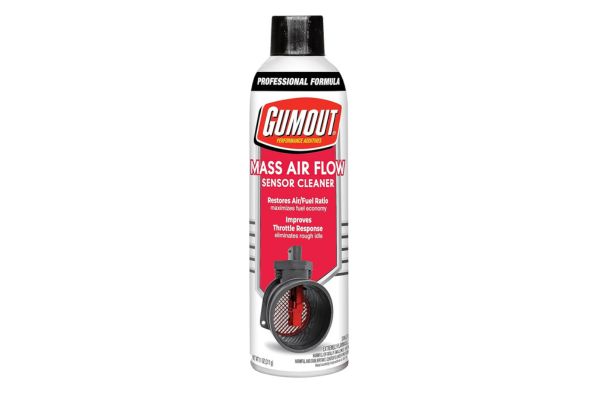
The Gumout 540041 Professional Formula MAF Sensor Cleaner is my preferred alternative for buyers who want an 11-ounce dedicated cleaner from another established automotive maintenance brand. It is formulated for delicate MAF sensors and can be used on compatible gasoline and diesel vehicle applications when the manufacturer’s directions are followed.
A dirty sensor may incorrectly measure the air entering the engine, potentially contributing to hesitation, unstable idling, weak throttle response, or poor fuel economy. Gumout markets this cleaner as a way to remove contamination and help restore accurate airflow readings, engine response, acceleration, and the intended air-fuel calculation. Cleaning can only help when contamination is the underlying issue; it cannot correct damaged wiring, intake leaks, or internal sensor failure.
The full-size can should provide enough product for multiple applications. I would remove the sensor before spraying whenever the vehicle’s service procedure allows it. This provides better access to the sensing element and reduces the risk of overspray reaching unrelated components.
Pros
- Purpose-made for mass air flow sensors
- Large 11-ounce aerosol can
- Suitable for several cleaning sessions
- Recognized automotive maintenance brand
- Designed to evaporate without harmful residue
Cons
- Less established in this category than CRC’s original MAF cleaner
- Performance improvements depend on the sensor actually being dirty
My Verdict
Gumout 540041 is a strong choice for drivers who want a dedicated best mass air flow sensor cleaner from a familiar brand. I consider it the closest direct alternative to the full-size CRC cleaner.
3. CRC Mass Air Flow Sensor Cleaner – Best Compact Can
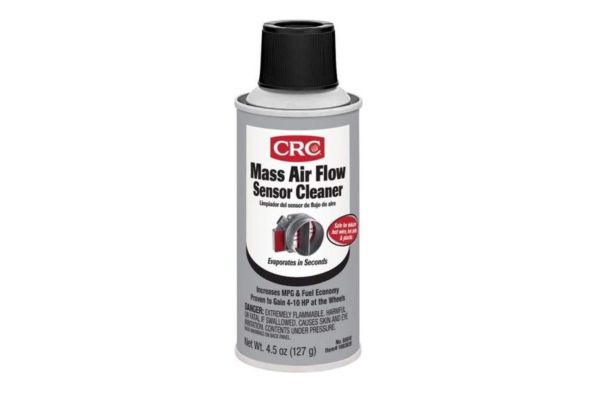
The CRC 05610 is my recommendation for occasional users who want the cleaning performance of a dedicated CRC MAF formula in a smaller container. At 4.5 ounces, it is significantly more compact than the standard 11-ounce can, making it easier to store in a small toolbox, apartment garage, or vehicle-maintenance cabinet.
CRC describes the formula as plastic-safe and residue-free. It is intended to remove contamination from the delicate sensing element without requiring physical contact. The cleaner is also marketed to help reduce symptoms associated with a dirty sensor, including rough idling, hesitation, and inaccurate air-fuel calculations. However, these symptoms can have many causes, so I would confirm that the intake system, connector, wiring, and air filter are in good condition before assuming the MAF needs cleaning.
The smaller can is practical for cleaning one vehicle occasionally, but it offers less value for a workshop or household maintaining several cars. I would also avoid excessively spraying the sensor; a few controlled passes are normally more appropriate than soaking the entire housing.
Pros
- Compact 4.5-ounce size
- Dedicated MAF sensor cleaner
- Plastic-safe formula
- Dries without leaving residue
- Convenient for occasional DIY use
Cons
- Less product than a full-size can
- Poorer value for frequent or professional use
- Will not fix an electronically failed sensor
My Verdict
CRC 05610 is the best compact option in my list. I recommend it to drivers who need enough cleaner for occasional maintenance and do not want to store a larger aerosol can.
4. Johnsen’s Mass Air Flow Sensor Cleaner – Best Budget Alternative
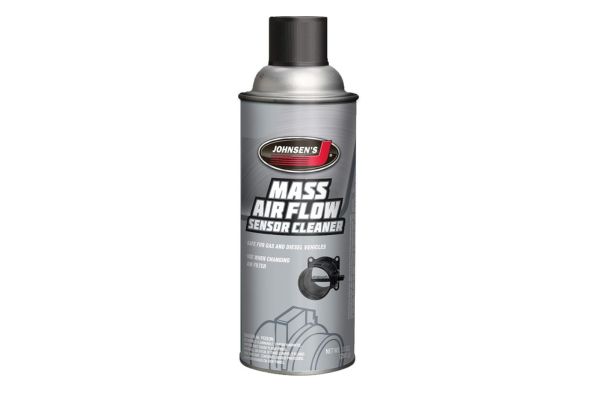
Johnsen’s 4721 Mass Air Flow Sensor Cleaner is my budget-oriented alternative for buyers who want a dedicated MAF cleaning product but prefer something other than CRC or Gumout. It comes in a 10-ounce aerosol can, placing it close to the standard full-size options in overall quantity.
The cleaner is intended for removing contamination from a mass air flow sensor and is described as evaporating quickly. Fast evaporation is important because the sensor must be completely dry before it is reinstalled and connected. A liquid film or cleaning residue could interfere with readings or introduce unnecessary risk when the electrical system is powered.
Johnsen’s provides a useful middle ground between a small single-use can and a larger professional supply. However, the available product information is less detailed than the documentation provided for CRC’s dedicated cleaner. For that reason, I would follow the instructions on the can carefully and confirm compatibility with the vehicle manufacturer’s maintenance guidance.
As with every cleaner in this guide, I would never touch the sensing element with a cloth, cotton swab, brush, or finger.
Pros
- Dedicated mass air flow sensor cleaner
- Practical 10-ounce aerosol can
- Quick-evaporating formula
- Suitable for routine DIY maintenance
- Alternative to the two most common brands
Cons
- Less detailed product documentation than CRC
- Availability may vary
- Cleaning cannot resolve physical or electronic failure
My Verdict
Johnsen’s 4721 is a practical alternative when it is competitively priced and readily available. I would choose it for basic sensor maintenance, while CRC remains my preference when documentation and category reputation matter most.
5. MPD PRO Mass Air Flow Sensor Cleaner Spray – Best Two-Pack Option
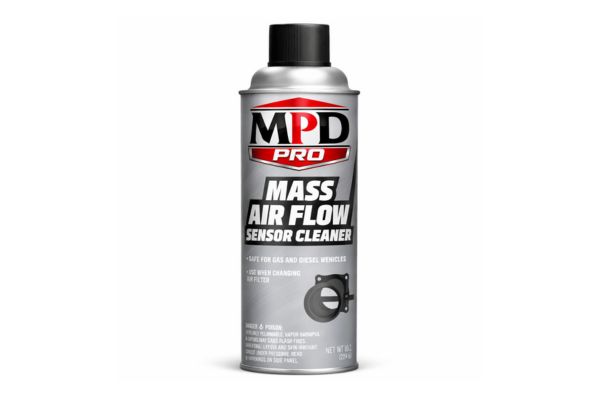
The MPD PRO Mass Air Flow Sensor Cleaner Spray is my choice for buyers who want two cans for multiple vehicles or future maintenance. The listing presents it as a professional formula designed for delicate MAF sensors and indicates that it is supplied as a two-pack.
Its key appeal is convenience. A two-can package can make sense for a household with several vehicles, a small repair shop, or someone who wants to keep one can in the garage and another with a mobile tool kit. The formula is marketed as cleaning without residue and helping the sensor provide the ECU with more accurate airflow information.
Because MPD is less established in automotive sensor cleaners than CRC or Gumout, I would examine the label and safety instructions carefully before application. I would also verify the actual can size and package contents shown on the current Amazon listing, as online package variations can change.
This product should be used only as directed. I would remove the sensor, spray the sensing area from a safe distance, avoid saturating the electrical connector, and wait until everything is fully dry before reinstalling it.
Pros
- Convenient two-can package
- Designed specifically for MAF sensors
- Marketed as residue-free
- Useful for several vehicles
- Suitable for keeping a spare can
Cons
- Less established brand than CRC or Gumout
- Package specifications should be verified before ordering
- Limited long-term product history
My Verdict
MPD PRO is most attractive for buyers who value quantity and convenience. I consider it a useful two-pack alternative, but I would still select CRC first when proven brand reputation is the main concern.
6. CRC MAF Sensor and Throttle Body Cleaner Bundle – Best Complete Intake-Cleaning Bundle
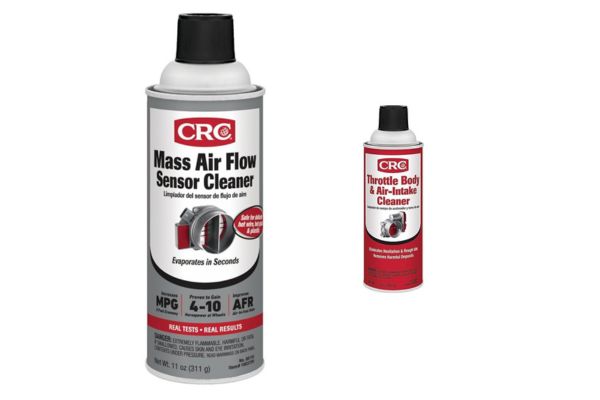
The CRC MAF Sensor and Throttle Body Cleaner Bundle is my recommendation for drivers planning broader air-intake maintenance. It includes one 11-ounce can of CRC Mass Air Flow Sensor Cleaner and one 12-ounce can of CRC Throttle Body and Air-Intake Cleaner.
The main advantage is that each cleaner has a separate purpose. The MAF formula is designed for the delicate airflow sensor and is described as plastic-safe and fast-drying. The throttle-body cleaner is a stronger, component-specific formula intended to remove carbon, varnish, and gum deposits from the throttle body and air-intake area. These two products should not be mixed or used interchangeably.
This bundle may be useful when a vehicle has both a contaminated MAF sensor and buildup around the throttle plate. However, cleaning both components is not automatically necessary for every vehicle. Some electronic throttle bodies require special procedures, and manually forcing the throttle plate can cause damage on certain models.
I recommend consulting the service manual before beginning and using each aerosol only on the component named on its label.
Pros
- Includes two component-specific cleaners
- Full-size 11- and 12-ounce cans
- Useful for broader intake maintenance
- MAF cleaner is plastic-safe and fast-drying
- Better value than buying both separately in some cases
Cons
- More product than some users need
- Throttle-body cleaning may require extra precautions
- The two formulas are not interchangeable
My Verdict
This is my best bundle for a more complete intake-maintenance project. It is especially suitable for experienced DIY users who understand that the MAF sensor and throttle body require different cleaners and procedures.
7. CRC Mass Air Flow Sensor Cleaner 12-Pack – Best for Workshops
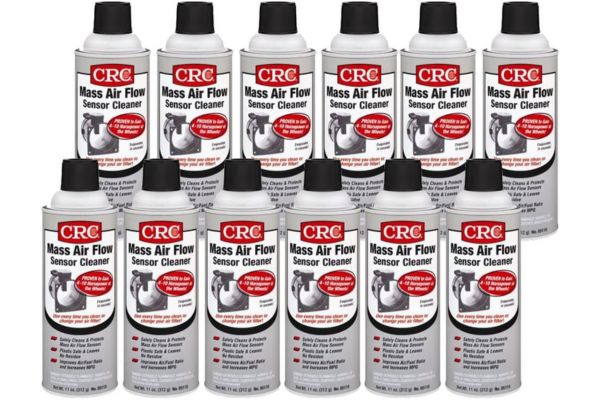
The CRC 05110 12-Pack is my recommendation for professional mechanics, fleet maintenance teams, automotive-detailing businesses, or households maintaining many vehicles. The case contains twelve 11-ounce cans of CRC’s dedicated MAF sensor cleaner, providing a total of 132 ounces.
Each can uses the same full-size format as my best overall pick. The formula is intended specifically for mass air flow sensors and is designed to dry quickly without leaving residue on delicate sensing components. Buying a full case can reduce the need for frequent reordering and may provide better per-can value when the cleaner is used regularly.
For an individual driver, however, twelve cans will usually be excessive. MAF sensors do not require constant cleaning, and unnecessary maintenance can increase the risk of damaging connectors, mounting screws, or the sensing element. Aerosol cans also need to be stored according to the manufacturer’s temperature, ventilation, and fire-safety instructions.
I would choose this package only when there is a realistic need for bulk supply and enough suitable storage space.
Pros
- Twelve full-size 11-ounce cans
- Dedicated CRC MAF formula
- Convenient for workshops and fleets
- Reduces frequent restocking
- Potentially better value per can
Cons
- Excessive quantity for most individual owners
- Requires proper aerosol storage
- Higher initial purchase cost
- Cleaner may sit unused in a small household
My Verdict
The CRC 12-pack is the strongest bulk option, but it serves a specialized audience. I recommend it for workshops and high-volume users, while most drivers will be better served by one standard 11-ounce can.
How I Selected These MAF Sensor Cleaners
I selected these products by focusing on safety, formula type, container size, ease of use, and overall value. Since a mass air flow sensor contains delicate electronic components, I gave priority to cleaners specifically labeled for MAF sensors.
My main evaluation factors included:
- Dedicated MAF sensor formula
- Fast evaporation
- Residue-free cleaning
- Safety around plastic components
- Controlled aerosol application
- Brand reputation
- Can size and package quantity
- Suitability for DIY or professional use
I also considered whether each product served a different type of buyer. For example, the smaller CRC 05610 can is useful for occasional maintenance, while the CRC 12-pack is more practical for workshops and fleet owners.
I did not assume that every cleaner would improve engine performance. A cleaner can help when dirt, oil, or dust is interfering with the sensor, but it cannot repair damaged electronics, broken sensing elements, faulty wiring, or intake leaks.
How to Choose the Best MAF Sensor Cleaner Spray
Choosing the right cleaner is important because an unsuitable chemical may damage the sensor or leave residue that affects airflow readings.
Choose a Dedicated MAF Sensor Cleaner
The safest option is a product specifically labeled as a mass air flow sensor cleaner. Dedicated formulas are designed for the sensitive hot-wire or hot-film elements commonly found inside MAF sensors.
General-purpose degreasers, carburetor cleaners, and brake cleaners may be too aggressive.
Look for a Residue-Free Formula
The best MAF sensor cleaner spray should evaporate without leaving an oily or sticky coating. Residue may attract more dirt or interfere with the sensor’s ability to measure incoming air accurately.
Make Sure It Is Plastic-Safe
Many MAF sensors have plastic housings, connectors, seals, and mounting components. A harsh solvent may weaken, discolor, or crack these parts.
I prefer a cleaner that clearly states it is safe for use around automotive plastics.
Consider the Can Size
A small can is usually enough for one vehicle or occasional maintenance. A larger 10- or 11-ounce can provides better value when you maintain several vehicles.
Bulk packages are mainly suitable for:
- Repair shops
- Fleet maintenance
- Professional mechanics
- Households with multiple vehicles
Most individual owners do not need a 12-pack.
Check the Spray Nozzle
A controlled nozzle helps direct the cleaner toward the sensing element without spraying the entire connector or intake assembly.
The cleaner should do the work. You should not scrub the sensor with a cloth, brush, or cotton swab.
Consider the Type of Maintenance
A dedicated MAF cleaner is enough when you are only cleaning the airflow sensor.
A bundle containing both MAF and throttle-body cleaner may be more suitable when you are performing broader intake-system maintenance. However, each chemical must be used only on the component listed on its label.
How to Clean a Mass Air Flow Sensor
Cleaning a MAF sensor is often a simple DIY maintenance task, but the component must be handled carefully.
What You May Need
- MAF sensor cleaner spray
- Screwdriver or Torx bit
- Protective gloves
- Clean working area
- OBD-II scanner, if available
Step 1: Turn Off the Engine
Park the vehicle safely, switch off the ignition, and allow the engine to cool completely.
Step 2: Locate the MAF Sensor
The sensor is normally installed between the air-filter box and the throttle body. It will usually have an electrical connector attached to it.
Step 3: Disconnect the Electrical Connector
Release the locking tab carefully and pull the connector straight back. Do not pull directly on the wires.
Step 4: Remove the Sensor
Remove the screws, bolts, or clamps holding the sensor in place. Avoid touching the internal sensing wire or film.
Step 5: Inspect the Sensor and Intake System
Check for:
- Dust
- Oil residue
- Damaged wiring
- Bent connector pins
- Cracked intake hoses
- Loose clamps
- Dirty air filter
A damaged intake hose can cause symptoms similar to a dirty MAF sensor.
Step 6: Apply the Cleaner
Hold the sensor by its housing and spray the sensing area several times from a short, safe distance.
Do not insert the spray tube deeply into the sensor or allow it to strike the sensing element.
Step 7: Let It Air-Dry
Place the sensor in a clean area and allow it to dry naturally. Do not use:
- Compressed air
- Hair dryer
- Cloth
- Paper towel
- Cotton swab
Reinstalling the sensor while it is still wet may affect its operation.
Step 8: Reinstall the Sensor
Place the sensor back in its original direction. Tighten the mounting screws gently and reconnect the electrical plug.
Step 9: Start the Engine
Start the vehicle and check the idle. If a trouble code was stored, use an OBD-II scanner to clear it after completing the repair.
If the check engine light or drivability symptoms return, further diagnosis may be necessary.
What Not to Use on a MAF Sensor
Using the wrong chemical can permanently damage a mass air flow sensor.
Brake Cleaner
Brake cleaner is designed to remove heavy grease and brake residue. Its solvents may be too aggressive for delicate sensor coatings, plastic housings, and seals.
Read Complete Guide : Can You Use Brake Cleaner on a MAF Sensor?
Carburetor Cleaner
Carb cleaner is formulated for metal carburetor components and fuel deposits. It may leave residue or damage sensitive electronic parts.
Throttle-Body Cleaner
Throttle-body cleaner should only be used on the throttle body when permitted by the vehicle manufacturer. It should not automatically be considered safe for a MAF sensor.
Read Complete Guide : Can You Use Throttle Body Cleaner on a MAF Sensor?
Household Cleaners
Do not use alcohol mixtures, glass cleaner, soap, household degreaser, or general-purpose cleaning spray.
Electrical Contact Cleaner
Some electrical contact cleaners are plastic-safe and residue-free, but they are not always designed for MAF sensing elements.
I prefer using a dedicated MAF sensor cleaner unless the vehicle manufacturer specifically approves another product.
When Should You Clean a MAF Sensor?
Cleaning may be useful when contamination is causing inaccurate airflow readings.
Possible symptoms include:
- Rough idle
- Engine hesitation
- Weak acceleration
- Unstable RPM
- Poor fuel economy
- Hard starting
- Engine surging
- Check engine light
- Rich or lean fuel mixture
- P0100–P0104 trouble codes
These symptoms do not always mean the MAF sensor is dirty. Vacuum leaks, ignition problems, fuel-system faults, damaged wiring, and throttle-body contamination can cause similar issues.
I also recommend inspecting the sensor when replacing a heavily contaminated air filter or after discovering oil residue inside the intake system.
When Cleaning Will Not Fix the Problem
MAF cleaner cannot repair physical or electronic damage.
The sensor may need replacement when:
- The sensing element is broken
- The housing is cracked
- The connector is damaged
- Internal electronics have failed
- Wiring is burnt or corroded
- Airflow readings remain incorrect after cleaning
- The same trouble code returns repeatedly
- The sensor has been damaged by an unsuitable cleaner
Cleaning also will not solve problems caused by:
- Vacuum leaks
- Cracked intake hoses
- Low fuel pressure
- Faulty oxygen sensors
- Dirty fuel injectors
- Ignition misfires
- ECU problems
Proper diagnosis can prevent unnecessary sensor replacement.
Frequently Asked Questions
What is the best MAF sensor cleaner spray?
The CRC 05110 is my best overall choice because it is specifically designed for MAF sensors, comes in a practical 11-ounce can, dries quickly, and leaves no residue.
What is the best mass air flow sensor cleaner for occasional use?
The CRC 05610 is suitable for occasional users because its compact 4.5-ounce can is easier to store and provides enough cleaner for basic maintenance.
Can I use electrical contact cleaner on a MAF sensor?
I do not recommend it unless the cleaner manufacturer and vehicle service manual specifically confirm that it is safe for MAF sensing elements. A dedicated MAF cleaner is the safer option.
Can I use brake cleaner on a MAF sensor?
No. Brake cleaner may damage the sensor coating, plastic housing, or delicate internal components.
Can I clean the sensor without removing it?
Removing the sensor usually provides better access and reduces the chance of spraying cleaner into unrelated intake components. Follow the vehicle’s service procedure.
How long should MAF cleaner dry?
Drying time depends on the product and environmental conditions. Allow the sensor to air-dry completely before reinstalling it. Do not speed up the process with compressed air or heat.
How often should I clean my MAF sensor?
There is no universal cleaning schedule. I would clean it only when contamination is visible, symptoms suggest inaccurate airflow readings, or the vehicle manufacturer recommends inspection.
Can cleaning improve fuel economy?
Cleaning may restore normal fuel economy when contamination was causing the sensor to send incorrect airflow data. It will not improve mileage when the sensor is already clean and functioning correctly.
Will MAF cleaner fix a P0101 code?
It may help when contamination is the cause. However, P0101 can also result from intake leaks, wiring problems, air-filter restriction, incorrect replacement sensors, or engine issues.
Should I clean or replace the sensor?
Try cleaning when the sensor is only dirty and has no visible damage. Replace it when the sensing element, housing, connector, or internal electronics have failed.
Can I touch the MAF sensor wire?
No. The sensing element is extremely delicate. Touching it with fingers, brushes, cloths, or tools can damage it.
Should I replace the air filter after cleaning the sensor?
Replace the air filter if it is dirty, damaged, incorrectly fitted, or contaminated with excessive oil. A poor filter can quickly contaminate the sensor again.
Can an over-oiled air filter contaminate the MAF sensor?
Yes. Excess oil from some reusable air filters may coat the sensing element and interfere with accurate airflow readings.
Is the CRC throttle-body bundle safe for a MAF sensor?
The bundle includes a dedicated MAF cleaner and a separate throttle-body cleaner. Use the MAF cleaner on the sensor and the throttle-body cleaner only on the intended intake components. Do not interchange them.
Is the CRC 12-pack suitable for individual car owners?
Most individual owners will not need twelve cans. It is better suited to repair shops, fleets, professional mechanics, and households maintaining many vehicles.
Conclusion
The right cleaner can remove dirt, dust, and oil residue without damaging the delicate sensing element. After comparing the seven products, the CRC 05110 remains my choice for the best MAF sensor cleaner spray because it offers a dedicated formula, fast drying, plastic safety, and a practical full-size can.
Gumout 540041 is my preferred alternative, while the compact CRC 05610 is suitable for occasional maintenance. The CRC throttle-body bundle is useful for broader intake cleaning, and the CRC 12-pack is the best option for workshops or fleet maintenance.
Regardless of which product you choose, always use a dedicated, residue-free best mass air flow sensor cleaner, avoid touching the sensing element, and let the sensor dry fully before reinstalling it. Remember that cleaning can remove contamination, but it cannot repair damaged electronics, wiring faults, intake leaks, or a physically failed sensor.