Finding the best oxygen sensor is more difficult than it first appears because O2 sensors are not universal replacement parts. The correct choice depends on your vehicle’s year, make, model, engine, emissions package, connector, wire count, sensor position, and original part number.
Choosing the wrong sensor may result in poor fuel economy, rough idling, weak acceleration, failed emissions testing, incorrect fuel-trim readings, or a check engine light that returns after installation.
To make the search easier, I selected five oxygen sensors from Denso, Bosch, NTK, Walker Products, and GM Genuine Parts. I compared their sensing technology, construction, fitment design, connector style, installation requirements, and suitability for different types of buyers. I did not treat any product as a one-size-fits-all solution, and I strongly recommend confirming the VIN, OE number, and Bank/Sensor position before ordering.
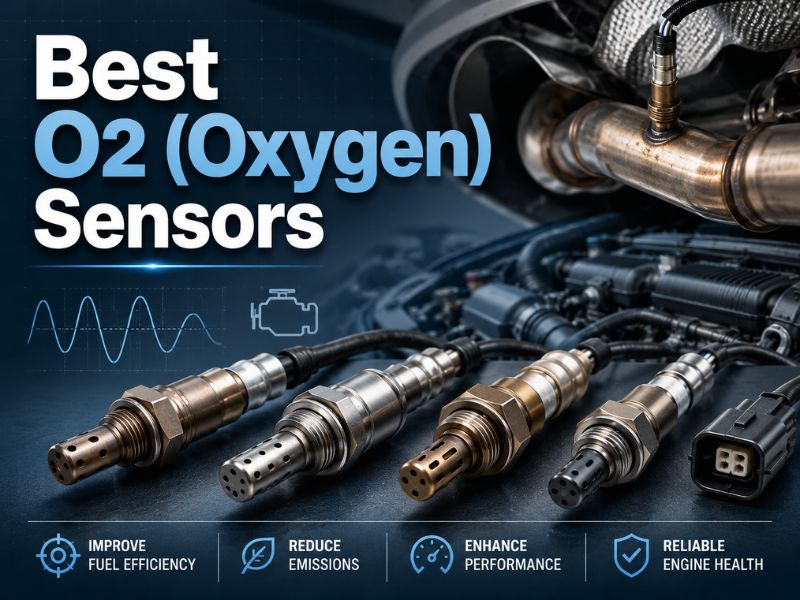
If you do not have time to read every review, the Denso 234-4622 Oxygen Sensor is my best overall choice for compatible Lexus, Pontiac, and Toyota applications. Its direct-fit four-wire design, corrosion-resistant stainless-steel body, PTFE contamination filter, and refined zirconia element make it a dependable OE-style replacement.
This guide also includes a universal Bosch option, two wideband choices, and a genuine GM sensor so you can compare the best oxygen sensor for your specific repair.
5 Best O2 (oxygen) Sensors at a Glance
| Image | Product Name | Check Price |
|---|---|---|
Best Choice | Denso 234-4622 Oxygen Sensor – Best Overall | Check Price |
Second Best | Bosch 15733 Universal 4-Wire Oxygen Sensor | Check Price |
Third Choice | NTK 24302 Air/Fuel Ratio Sensor | Check Price |
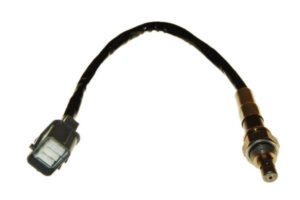 | Walker Products Wideband Oxygen Sensor | Check Price |
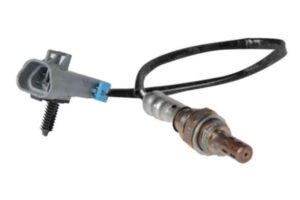 | GM Genuine Parts 213-1698 Heated Oxygen Sensor | Check Price |
1. Denso 234-4622 Oxygen Sensor – Best Overall
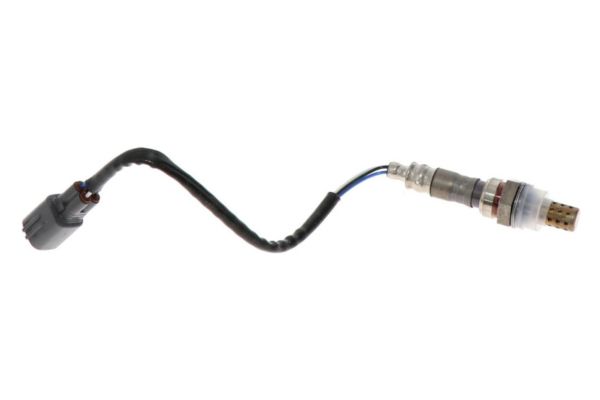
The Denso 234-4622 is my best overall choice for compatible Lexus, Pontiac, and Toyota vehicles because it combines a direct-fit design with materials intended to support accurate response and long service life. It is a four-wire narrowband sensor with a 12.6-inch wiring harness, so it should install without cutting or splicing when the listed vehicle and sensor position match.
Denso uses a corrosion-resistant stainless-steel housing, a refined zirconia sensing element, and a porous PTFE filter. The filter allows reference air to reach the sensor while helping block water and engine contaminants, and the zirconia element is designed to respond quickly to changes in exhaust oxygen.
The Amazon listing associates this part with selected Toyota Camry, Corolla, RAV4, Avalon, Sienna, Matrix, 4Runner, and other applications, plus certain Lexus and Pontiac Vibe models. The broad fitment list is useful, but it also creates the biggest risk: ordering the correct vehicle model but the wrong sensor position.
I recommend matching part number 234-4622 and one of its OE interchange numbers, then confirming whether your vehicle needs it upstream or downstream. The listing itself warns that this item is frequently returned because of compatibility issues, so careful verification is essential.
Pros
- Direct-fit four-wire design
- Stainless-steel housing
- PTFE contaminant filter
- Refined zirconia sensing element
- Broad Toyota and Lexus coverage
Cons
- Not compatible with every trim or sensor position
- Usually costs more than generic replacements
- Fitment must be checked carefully
My Verdict
The Denso 234-4622 is my strongest all-around recommendation for compatible vehicles. I would choose it when exact fitment, OE-style construction, and a recognized sensor manufacturer matter more than finding the cheapest option.
2. Bosch 15733 Universal 4-Wire Oxygen Sensor – Best Universal Option
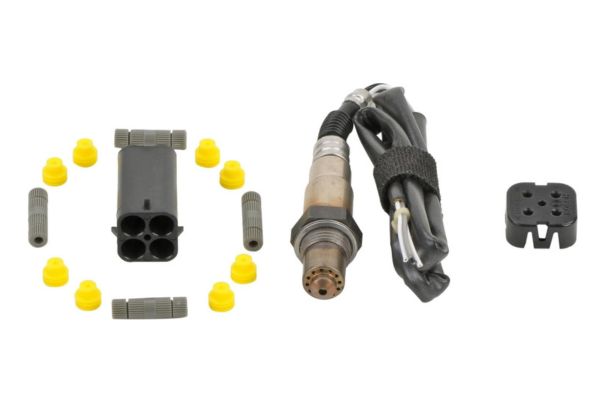
The Bosch 15733 is my preferred universal option for compatible vehicles when the original vehicle-side connector or wiring is too damaged to reuse with a normal direct-fit sensor. Unlike a plug-and-play replacement, this four-wire sensor includes Bosch’s SmartLink connector system and about two feet of wire, allowing the damaged section of the harness to be replaced without soldering.
Bosch states that each sensor receives a functional test before leaving the factory. It also uses a sealed stainless-steel body intended to resist exhaust contamination and moisture. This construction, combined with Bosch’s experience in oxygen-sensor development, makes the 15733 more reassuring than an unknown universal sensor.
The main advantage is flexibility, but universal does not mean compatible with every car. The sensor still has to match the required technology, wire configuration, signal type, and installation position. It is listed for selected domestic, Asian, and European vehicles from the mid-1990s onward, but I would use Bosch’s application data and the vehicle VIN before buying it.
Installation requires more care than a direct-fit sensor. The wires must be matched correctly, the SmartLink connections secured, and the harness routed away from the hot exhaust system. A wiring mistake can cause heater-circuit codes, inaccurate signals, or a recurring check engine light.
Pros
- Useful when the original connector is damaged
- SmartLink system requires no soldering
- Includes about two feet of wiring
- Factory-tested by Bosch
- Sealed stainless-steel body
Cons
- More work than installing a direct-fit sensor
- Not compatible with every vehicle
- Incorrect wire matching can cause faults
My Verdict
The Bosch 15733 is my best universal choice for the right application. I recommend it primarily when damaged connector wiring makes a standard direct-fit replacement impractical.
3. NTK 24302 Air/Fuel Ratio Sensor – Best Premium OE-Style Pick
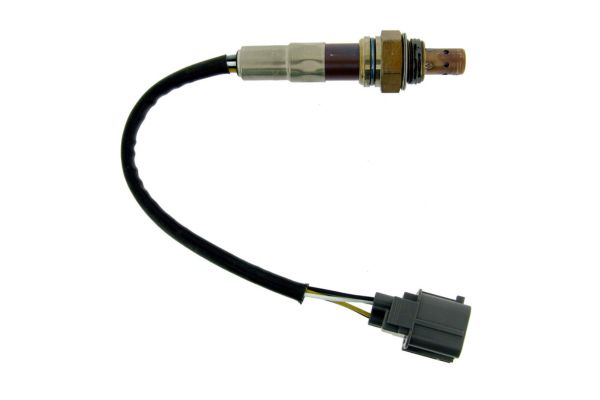
The NTK 24302 is my premium OE-style choice for selected Honda, Acura, and Saturn V6 applications. Although Amazon describes it broadly as an oxygen sensor, it is more specifically a heated five-wire wideband air/fuel ratio sensor. That distinction matters because a wideband sensor provides more detailed mixture information than a conventional narrowband O2 sensor and cannot be replaced by a basic four-wire unit.
This model uses a vehicle-specific connector, an 11.5-inch wiring harness, an 18 mm thread, and a 22 mm hex. Fitment sources list it for selected Honda Accord, Pilot, Odyssey, and Ridgeline models; Acura MDX, TL, and RL models; and certain Saturn Vue applications. It is generally used upstream, but the exact bank and model year must be confirmed before purchase.
NTK emphasizes OE-style fit, water-resistant connectors, thermal and vibration testing, and a contaminant-resistant ceramic element. Those details make this sensor appealing for vehicles where inaccurate air/fuel feedback can quickly trigger drivability or emissions problems. The direct-fit harness also avoids the extra wiring work required by a universal sensor.
The main drawback is cost. Wideband sensors are usually more expensive than standard narrowband units, and buying the wrong bank or position can become an expensive mistake. I recommend checking the original sensor number, engine, and emissions specification.
Pros
- Heated five-wire wideband design
- Vehicle-specific direct fit
- OE-style connector and harness
- Contaminant-resistant ceramic element
- Strong Honda and Acura coverage
Cons
- Higher price than narrowband sensors
- Limited to specific applications
- Bank and position must be verified
My Verdict
The NTK 24302 is my preferred premium choice for compatible vehicles. I would select it when the application requires a five-wire upstream air/fuel ratio sensor and OE-style fitment is a priority.
4. Walker Products 250-25001 Wideband Oxygen Sensor – Best Wideband Option
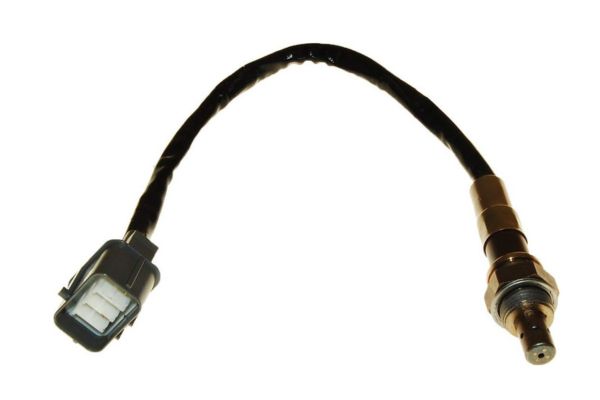
The Walker Products 250-25001 is my value-focused wideband choice for selected Honda and Acura V6 applications. It is a vehicle-specific five-wire sensor designed around OE-based specifications, making it an alternative for buyers who need a wideband air/fuel sensor but do not want a universal wiring solution.
Wideband sensors monitor the air-fuel mixture across a broader range than traditional narrowband sensors. The 250-25001 is intended for applications where the ECU requires precise upstream mixture feedback rather than a basic rich-or-lean switching signal.
Walker lists it for selected Honda Pilot, Accord, Odyssey, and related Acura configurations, including certain 3.5-liter V6 engines. Exact model year, bank, engine code, and emissions configuration still need to be checked.
The product is promoted as easy to install and made from durable materials. Its direct-fit design should preserve the correct connector and harness routing when the application matches. That is an advantage over universal sensors, especially where spliced wiring may be exposed to heat, moisture, and vibration.
My main concern is that the same vehicle may use different sensors on the front and rear banks or before and after the catalytic converter. I would not order this part based only on the vehicle name. Confirm Walker number 250-25001, the VIN, engine, bank, and upstream position first.
Pros
- Five-wire wideband sensing
- Vehicle-specific direct-fit design
- OE-based construction
- No wire splicing required
- Good value for compatible V6 applications
Cons
- Narrow fitment range
- Position and bank can be confusing
- Limited product-listing details
My Verdict
The Walker 250-25001 is my best wideband value pick. It makes sense for a correctly matched Honda or Acura application when direct fitment and reasonable cost are the main priorities.
5. GM Genuine Parts 213-1698 Heated Oxygen Sensor – Best for GM Vehicles
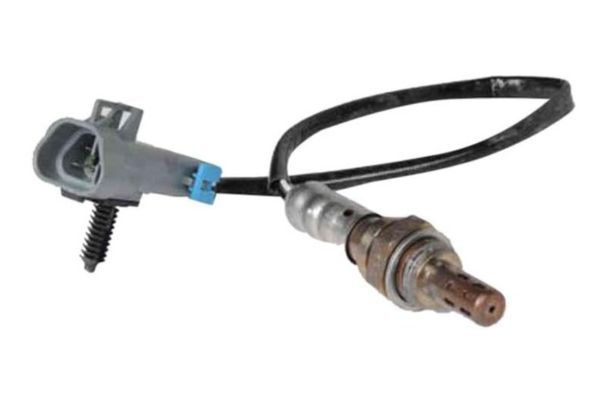
The GM Genuine Parts 213-1698 is my preferred option for compatible Chevrolet, Buick, GMC, and Cadillac vehicles when factory-style fit and calibration are priorities. It is also identified by GM part number 12586996 and is sold as a heated oxygen sensor for selected GM applications.
A built-in heater helps the sensor reach operating temperature sooner, allowing the engine-management system to enter closed-loop fuel control more quickly after startup. The sensor measures oxygen in the exhaust so the ECM can adjust the air-fuel mixture and support emissions control, fuel economy, and stable engine operation.
The greatest advantage is that GM engineers design and validate Genuine Parts for GM vehicles. The Amazon listing describes this model as manufactured to GM OE specifications for fit, form, and function. That can reduce the uncertainty associated with generic sensors, but it does not remove the need to confirm compatibility.
Part number 213-1698 is used across selected older GM applications, and the correct location may vary by engine, exhaust layout, and emissions package. I recommend checking the VIN through a GM parts catalog or dealership before ordering.
Inspect the connector, wiring, and exhaust system before replacing the sensor because damaged wiring or an exhaust leak can produce an O2-sensor code even when the sensor itself is functioning correctly.
Pros
- Genuine GM OE replacement
- Heated sensor design
- Factory-style connector and fit
- Validated for compatible GM vehicles
- Strong calibration confidence
Cons
- Usually costs more than generic sensors
- Fits only specific GM applications
- Exact position requires verification
My Verdict
The GM Genuine Parts 213-1698 is my top GM-specific pick. I would choose it when the vehicle requires part number 12586996 and dependable OE fitment matters more than obtaining the lowest price.
How I Selected These Oxygen Sensors
I selected these products by looking beyond price and customer ratings. An oxygen sensor is a calibrated engine-management component, so the most important factor is whether it matches the vehicle’s engine, exhaust position, emissions specification, connector, and ECU requirements.
I prioritized manufacturers with established experience in oxygen and air/fuel ratio sensor technology, including Denso, Bosch, NTK, Walker Products, and GM Genuine Parts. I also considered whether each sensor offered a direct-fit connector, universal wiring solution, narrowband output, or wideband air/fuel measurement.
My main evaluation factors included:
- Vehicle and engine compatibility
- Upstream or downstream position
- Bank and sensor location
- Narrowband or wideband technology
- Heated or unheated design
- Direct-fit or universal installation
- Connector and wire configuration
- Sensing-element construction
- Resistance to heat and contamination
- Brand reputation
- Installation requirements
- Overall value
I gave extra preference to sensors with application-specific connectors because direct-fit designs generally reduce installation complexity and the risks associated with wire splicing. Walker Products also notes that direct-fit connectors make installation easier and help confirm that the correct replacement part has been selected.
I did not assume that replacing an oxygen sensor would automatically solve every related check engine light. An OBD-II code can point toward a sensor circuit or fuel-mixture problem without proving that the sensor itself has failed. Vacuum leaks, exhaust leaks, damaged wiring, fuel-delivery problems, and incorrect replacement parts can produce similar symptoms.
How to Choose the Best Oxygen Sensor
The best oxygen sensor is not necessarily the most expensive or most popular model. It is the sensor that matches your vehicle’s original operating requirements.
Confirm Your Vehicle Fitment
Start with your vehicle’s:
- Year
- Make
- Model
- Engine size
- Trim level
- VIN
- Production date
- Emissions specification
The same vehicle model may use different sensors depending on its engine, exhaust system, production month, or emissions certification. A model sold with both four-cylinder and V6 engines, for example, will often use different oxygen sensors.
You should also determine whether the vehicle meets Federal emissions standards or California emissions standards. Some vehicles use a conventional oxygen sensor under one emissions package and a wideband air/fuel ratio sensor under another. Installing the wrong sensor type can trigger heater-circuit or signal-related codes even when the connector appears similar. Denso documents an example in which a conventional oxygen sensor was installed in a vehicle that required an air/fuel ratio sensor, resulting in a P0135 code.
I recommend checking the VIN through a manufacturer parts catalog, dealership, or reliable fitment database. Amazon’s vehicle checker is useful, but it should not be your only source.
Identify the Correct Sensor Position
Modern vehicles may have two, three, four, or more exhaust sensors. Before ordering, you need to know the bank and sensor number.
Common descriptions include:
- Bank 1 Sensor 1
- Bank 1 Sensor 2
- Bank 2 Sensor 1
- Bank 2 Sensor 2
- Upstream sensor
- Downstream sensor
- Front sensor
- Rear sensor
- Left sensor
- Right sensor
Bank 1 is the side of the engine containing cylinder number one. Sensor 1 is normally located before the catalytic converter, while Sensor 2 is usually located after it. Some exhaust systems use additional sensors, so Sensor 2 is not always the final downstream sensor.
On an inline four-cylinder engine, there is normally only one bank. A V6 or V8 engine usually has two banks, although exhaust design varies.
Do not assume that “driver side” always means Bank 1. Bank identification depends on the engine’s cylinder layout, not where the steering wheel is located.
Upstream vs Downstream Oxygen Sensors
An upstream sensor is normally positioned before the catalytic converter. It measures exhaust oxygen and provides feedback that the ECU can use when adjusting fuel delivery.
A downstream sensor is generally positioned after the catalytic converter. Its primary role is commonly to monitor catalytic-converter operation and compare exhaust behavior before and after the converter.
Because the two positions perform different jobs, they may use different:
- Calibration
- Connectors
- Wire lengths
- Heating elements
- Sensing technologies
- Part numbers
A product listing may describe a sensor as compatible with your vehicle without clearly indicating its position. Always confirm whether it replaces the upstream or downstream unit.
Narrowband vs Wideband Sensors
A conventional narrowband oxygen sensor mainly indicates whether the mixture is richer or leaner than the intended operating point. Its signal changes across a relatively narrow air-fuel range.
A wideband sensor, also called an air/fuel ratio or linear sensor, measures mixture conditions across a broader range and provides more detailed feedback to the ECU. Wideband sensors commonly use additional wires and more complex internal circuitry.
Walker describes a traditional air/fuel ratio sensor as more precise than a conventional sensor and defines a five-wire wideband sensor as providing broader and more accurate mixture measurement. Bosch also explains that wideband air/fuel sensors measure exhaust oxygen more precisely than regular O2 sensors.
You cannot replace a wideband sensor with an ordinary narrowband sensor. The signal behavior, heater circuit, connector, and ECU requirements are different.
Heated vs Unheated Oxygen Sensors
Early oxygen sensors often relied mainly on hot exhaust gases to reach operating temperature. These sensors commonly had one or two wires.
A heated sensor contains an internal heating element that allows it to begin operating sooner after the engine starts. Heated sensors generally have three, four, five, or more wires depending on their design and functions.
A heater circuit can fail even when the sensing portion remains physically intact. This may produce codes such as P0135, P0141, P0155, or P0161.
When diagnosing a heater-related code, inspect:
- Heater resistance
- Power supply
- Ground circuit
- Fuse
- Connector
- Wiring near the exhaust
- Replacement sensor specifications
A heater code does not always mean the entire sensor is defective.
Direct-Fit vs Universal Oxygen Sensors
A direct-fit oxygen sensor includes a connector and harness designed for specific vehicle applications. It normally plugs directly into the original vehicle connector without wire cutting or splicing.
The main benefits include:
- Faster installation
- Correct connector shape
- Proper harness length
- Reduced wiring mistakes
- Easier routing around hot components
- Greater fitment confidence
Bosch direct-fit sensors are sold with OE-style connectors, while its SmartLink universal sensors include long wiring and reusable connectors for broader application coverage or harness restoration.
A universal sensor can be useful when the original connector is damaged or when a direct-fit replacement is unavailable. However, the wires must be matched correctly.
Wire colors are not always standardized between manufacturers. Never connect wires based only on color. Follow the instructions included with the sensor and identify the heater, signal, and ground circuits correctly.
For most DIY buyers, I prefer a direct-fit sensor whenever one is available.
OEM vs Aftermarket Oxygen Sensors
An OEM or genuine sensor is supplied under the vehicle manufacturer’s parts brand. Its main advantage is application-specific fitment and calibration.
Potential OEM benefits include:
- Factory-style connector
- Correct wire length
- Expected signal characteristics
- Vehicle-specific heater resistance
- Consistent installation
- Lower risk of compatibility problems
The main disadvantage is usually cost.
Aftermarket sensors from established OE suppliers such as Denso, Bosch, and NTK can also provide application-specific fitment. Denso states that an incorrectly calibrated oxygen sensor can affect drivability and illuminate the malfunction indicator, which is why close OE tolerances are important.
Generic sensors may cost less, but quality can vary. A sensor that physically screws into the exhaust may still have an incorrect heater load, response curve, connector, or calibration.
Match the Original Part Number
The OE number is one of the most reliable ways to identify the correct sensor.
You may find it:
- Printed on the original connector
- Engraved on the sensor body
- Listed on the old part’s label
- In a dealership parts catalog
- Through a VIN-based lookup
- In the vehicle service manual
One aftermarket sensor may cross-reference several original numbers. However, you should still verify the vehicle, engine, and position.
Before removing the old sensor, I suggest taking photographs of:
- The part number
- Connector shape
- Wire length
- Harness clips
- Sensor location
- Wire-routing path
These pictures can help prevent installation mistakes.
Check the Connector and Wire Length
A replacement harness that is too short may not reach the vehicle connector. A harness that is too long may hang near the exhaust pipe, driveshaft, or suspension.
Compare:
- Number of terminals
- Connector shape
- Locking-tab position
- Harness length
- Protective sleeve
- Mounting clips
- Sensor thread size
- Hex size
Do not extend a direct-fit sensor harness unless the manufacturer specifically permits it. Poor splices can introduce resistance, moisture, or intermittent signal problems.
Check the Emissions Specification
Federal and California-emissions vehicles can use different oxygen or air/fuel ratio sensors even when the year, model, and engine appear identical.
The emissions label is usually located under the hood. It may state whether the vehicle meets:
- Federal standards
- California standards
- CARB standards
- A specific emissions family
Ordering by the VIN is the safest approach when multiple emissions configurations exist.
Consider Contamination Resistance
Oxygen sensors operate in a harsh environment containing extreme heat, water vapor, fuel by-products, oil residue, and combustion contaminants.
Common causes of sensor contamination include:
- Engine oil entering the combustion chamber
- Coolant entering the exhaust
- Excessively rich fuel mixture
- Silicone-based sealants
- Fuel additives
- Carbon buildup
- Water intrusion
- Damaged wiring insulation
Denso oxygen sensors use features such as stainless-steel housings and porous PTFE filters intended to resist corrosion, water, and contamination while allowing reference air to reach the sensor.
A new sensor may fail again if the source of contamination is not repaired.
How an Oxygen Sensor Works
An oxygen sensor is mounted in the exhaust system and measures the difference between oxygen in the exhaust gas and oxygen in the surrounding air. It sends this information to the engine control unit, which uses the signal when managing the air-fuel mixture.
When the exhaust indicates a rich mixture, there is generally less unused oxygen because more fuel was present during combustion. When the mixture is lean, more oxygen may remain in the exhaust.
The ECU uses sensor feedback together with information from components such as the MAF sensor, MAP sensor, throttle-position sensor, coolant-temperature sensor, and fuel injectors.
During closed-loop operation, the ECU continually adjusts fuel delivery based partly on oxygen-sensor feedback. This helps the engine operate efficiently while supporting emissions control and catalytic-converter performance.
A traditional zirconia narrowband sensor generates a changing voltage signal based on the difference in oxygen concentration across its ceramic sensing element. Denso notes that a conventional O2 sensor commonly switches between approximately zero and one volt during normal operation. A fixed value may indicate a rich or lean condition, wiring problem, or failed sensor, but the underlying mixture must be investigated before replacing the part.
Wideband sensors operate differently and should be evaluated using vehicle-specific scan-data values and diagnostic procedures rather than applying a basic narrowband voltage test.
Upstream vs Downstream Oxygen Sensors
The upstream oxygen sensor is positioned before the catalytic converter. It normally has a major role in mixture feedback and fuel-trim control.
A failing upstream sensor may contribute to:
- Poor fuel economy
- Rough running
- Slow acceleration
- Rich or lean operation
- Fuel-trim codes
- Increased emissions
The downstream sensor is generally located after the catalytic converter. It monitors exhaust behavior after the gases pass through the converter and helps the ECU evaluate catalyst efficiency.
A failing downstream sensor may cause:
- Check engine light
- Catalyst-monitoring codes
- Failed emissions inspection
- Incorrect catalyst-efficiency data
A P0420 or P0430 code does not automatically prove that the downstream oxygen sensor is defective. The cause may be a worn catalytic converter, exhaust leak, engine misfire, incorrect fuel mixture, contaminated sensor, or wiring fault.
Before replacing either sensor, identify the exact bank and position shown by the code or scan-tool data.
Signs of a Bad Oxygen Sensor
A deteriorating oxygen sensor can affect fuel control, emissions monitoring, or catalytic-converter evaluation. However, none of the following symptoms confirms sensor failure by itself.
Check Engine Light
An oxygen-sensor circuit, heater, response, or fuel-mixture problem can illuminate the check engine light.
Always read the stored code before ordering a replacement.
Poor Fuel Economy
An inaccurate upstream sensor may cause the ECU to make inappropriate fuel corrections. Bosch and Walker both associate oxygen-sensor problems with poor fuel economy and incorrect air-fuel control.
Rough Idle
Incorrect mixture feedback can contribute to unstable idling, although vacuum leaks, ignition misfires, dirty injectors, and throttle-body problems can cause similar symptoms.
Hesitation or Weak Acceleration
A slow or biased sensor may affect fuel corrections during changing engine conditions. The vehicle may hesitate or respond poorly when accelerating.
Failed Emissions Test
A malfunctioning sensor can increase harmful emissions or prevent emissions monitors from completing successfully.
Rich Exhaust or Black Smoke
A rich mixture may result in excessive fuel consumption, black exhaust smoke, carbon buildup, or fuel smell. The oxygen sensor may report the condition rather than cause it, so fuel pressure and injector operation should also be checked.
Lean Operation
A lean condition may produce hesitation, surging, misfires, or positive fuel trims. Vacuum leaks, weak fuel pressure, dirty injectors, or exhaust leaks ahead of the sensor are common possibilities.
Slow Sensor Response
An aging or contaminated sensor may respond too slowly to changing exhaust conditions. Slow-response codes include P0133 and P0153.
Sulfur or Rotten-Egg Smell
A sulfur-like smell may be associated with an overloaded or failing catalytic converter, rich mixture, or fuel-quality problem. It is not enough by itself to diagnose an oxygen sensor.
Catalytic-Converter Stress
If an upstream sensor contributes to prolonged rich operation, excess fuel can increase catalytic-converter temperature and shorten converter life. NTK notes that unresolved oxygen-sensor faults may affect fuel consumption, emissions, catalytic-converter operation, and overall engine health.
Common Oxygen Sensor Trouble Codes
Codes from P0130 through P0167 commonly relate to oxygen-sensor circuits, response, voltage, activity, or heater operation. Walker’s OBD-II guide also emphasizes that wiring, contamination, fuel-mixture faults, and incorrect heater specifications can cause these codes.
P0130
Oxygen Sensor Circuit Malfunction, Bank 1 Sensor 1.
Possible causes include a faulty sensor, damaged wiring, poor connector contact, exhaust leak, or ECU-related problem.
P0131
Oxygen Sensor Circuit Low Voltage, Bank 1 Sensor 1.
Possible causes include a lean mixture, signal short to ground, exhaust leak, or failed sensor.
P0132
Oxygen Sensor Circuit High Voltage, Bank 1 Sensor 1.
Possible causes include a rich mixture, signal short to voltage, fuel-pressure problem, or contaminated sensor.
P0133
Oxygen Sensor Circuit Slow Response, Bank 1 Sensor 1.
Carbon contamination, aging, wiring resistance, or mixture problems may slow the signal.
P0134
Oxygen Sensor Circuit No Activity Detected, Bank 1 Sensor 1.
The cause may be an open circuit, disconnected sensor, wiring failure, failed heater, or internally failed sensor.
P0135
Oxygen Sensor Heater Circuit Malfunction, Bank 1 Sensor 1.
Check heater power, ground, resistance, fuse, wiring, connector, and sensor compatibility.
P0136–P0141
These codes relate mainly to Bank 1 Sensor 2 circuit and heater operation.
P0150–P0155
These generally refer to Bank 2 Sensor 1 circuit, voltage, response, activity, and heater faults.
P0156–P0161
These generally refer to Bank 2 Sensor 2 circuit and heater faults.
P0171 and P0174
These mean the engine-management system has detected a lean condition on Bank 1 or Bank 2. Possible causes include vacuum leaks, exhaust leaks, low fuel pressure, clogged injectors, or incorrect airflow readings. Replacing the oxygen sensor without identifying the lean condition may not solve the problem.
P0172 and P0175
These indicate a rich condition. Potential causes include excessive fuel pressure, leaking injectors, MAF sensor errors, restricted airflow, or ignition problems.
P0420 and P0430
These codes indicate catalytic-system efficiency below the expected threshold for Bank 1 or Bank 2.
The downstream sensor may be involved in detecting the condition, but the catalytic converter, exhaust system, upstream sensor, fuel mixture, and engine condition should be inspected before replacing parts.
How to Test an Oxygen Sensor
Testing should begin with the stored codes and live scan data rather than immediately removing the sensor.
Inspect the Wiring
Look for:
- Melted insulation
- Wires touching the exhaust
- Corrosion
- Loose terminals
- Broken connector locks
- Oil or water inside the connector
- Damaged ground wires
An electrical problem can imitate a failed sensor.
Check for Exhaust Leaks
An exhaust leak before an upstream sensor can draw outside air into the system and make the exhaust appear lean.
Inspect:
- Exhaust manifold
- Gaskets
- Flex pipe
- Welds
- Sensor threads
- Flanges
Review Fuel Trims
Short-term and long-term fuel trims can help show whether the ECU is adding or removing fuel.
Large positive values suggest the ECU is adding fuel to correct a perceived lean condition. Large negative values suggest it is removing fuel to correct a rich condition.
Fuel trims should be interpreted together with MAF data, engine load, coolant temperature, vacuum readings, and oxygen-sensor signals.
Observe Narrowband Sensor Activity
When the engine and sensor are at operating temperature, a conventional upstream narrowband sensor should normally switch between low and high voltage as the mixture changes.
Denso indicates that a normal conventional O2 signal generally alternates between about zero and one volt. A signal stuck high or low should lead to checks for rich or lean operation before the sensor is condemned.
Test the Heater Circuit
Depending on the service procedure, a multimeter may be used to check:
- Heater resistance
- Power supply
- Ground
- Open circuit
- Short circuit
Do not apply battery voltage directly to unknown terminals.
Use the Correct Procedure for Wideband Sensors
Wideband and air/fuel ratio sensors do not behave like traditional narrowband sensors. Their scan-tool values may appear as current, equivalence ratio, lambda, or voltage centered around a manufacturer-specific reference.
Use the vehicle service information and a capable scan tool.
Seek Professional Diagnosis When Necessary
Professional help may be worthwhile when:
- The code returns after replacement
- Fuel trims are severely abnormal
- The catalytic converter may be damaged
- Multiple banks show faults
- Wiring diagrams are required
- The sensor is difficult to access
- Wideband data is unclear
How to Replace an Oxygen Sensor
Oxygen-sensor replacement can be a manageable DIY job, but exhaust heat, corrosion, and restricted access may make removal difficult.
Walker recommends using an oxygen-sensor socket or suitable wrench, identifying the correct bank and position, disconnecting the connector, and routing the replacement harness correctly.
Tools You May Need
- Oxygen-sensor socket
- Ratchet
- Wrench
- Penetrating oil
- Torque wrench
- Jack and jack stands or ramps
- Gloves
- Safety glasses
- OBD-II scanner
Step 1: Confirm the Correct Sensor
Verify:
- Part number
- Bank
- Sensor position
- Connector
- Wire length
- Emissions specification
Compare the new and old sensors before installation.
Step 2: Let the Exhaust Cool
Exhaust components become extremely hot. Work only when the system is cool enough to touch safely.
Step 3: Raise the Vehicle Safely
When access from below is necessary, use properly rated ramps or jack stands on a stable surface.
Never rely only on a hydraulic jack.
Step 4: Disconnect the Connector
Follow the sensor harness to its connector. Release the locking tab without pulling on the wires.
Remove any clips or ties holding the harness.
Step 5: Apply Penetrating Oil
Apply penetrating oil around the sensor threads when corrosion is present. Avoid soaking the electrical connector.
Allow sufficient time for the oil to work.
Step 6: Remove the Old Sensor
Use an oxygen-sensor socket or correctly sized wrench. Turn the sensor counterclockwise.
If it is seized, additional heat or professional removal may be required. Excessive force can damage the exhaust bung or manifold.
Step 7: Inspect the Old Sensor
The appearance of the old sensor may provide clues:
- Heavy black carbon may suggest rich operation
- White deposits may suggest contamination
- Oily deposits may indicate oil consumption
- Coolant contamination may indicate an internal leak
- Physical damage may point to impact or installation problems
Correct the underlying problem before installing another sensor.
Step 8: Check the New Sensor Threads
Many new sensors include pre-applied anti-seize compound.
Do not add more unless the product instructions require it. Anti-seize must not contact the sensor tip, vents, connector, or sensing element.
Step 9: Install the New Sensor
Thread the sensor by hand first to prevent cross-threading.
Tighten it to the vehicle or sensor manufacturer’s specified torque. Overtightening can damage the threads, while insufficient tightening may allow an exhaust leak.
Step 10: Route the Harness
Follow the original routing path.
Keep the wiring away from:
- Exhaust pipes
- Catalytic converters
- Driveshafts
- Steering components
- Sharp edges
- Moving suspension parts
Reconnect all harness clips.
Step 11: Connect the Plug
Push the connector together until the locking tab engages.
Do not force mismatched connectors.
Step 12: Clear the Codes
Use an OBD-II scanner to clear stored codes when appropriate.
Clearing a code also resets readiness monitors on many vehicles, so the vehicle may need a complete drive cycle before an emissions inspection.
Step 13: Complete a Test Drive
Watch for:
- Returning check engine light
- Exhaust leaks
- Rough idle
- Abnormal fuel trims
- Heater codes
- Wiring contact with hot parts
If the original code returns, continue diagnosis rather than replacing additional sensors without evidence.
How Long Do Oxygen Sensors Last?
There is no single service interval that applies to every vehicle.
Sensor life depends on:
- Sensor design
- Vehicle age
- Mileage
- Engine condition
- Fuel mixture
- Oil consumption
- Coolant leaks
- Exhaust temperature
- Wiring condition
- Contamination
Walker provides broad guidance of approximately 30,000–50,000 miles for older unheated sensors and around 60,000–100,000 miles for heated sensors, but the vehicle manufacturer’s maintenance schedule should take priority.
I would not replace a modern oxygen sensor only because it has reached a certain mileage unless the manufacturer specifies an interval or testing indicates deterioration.
A sensor may need earlier replacement when:
- Response becomes slow
- Heater resistance is outside specification
- Signal becomes fixed or intermittent
- Contamination is visible
- Wiring is damaged
- Relevant codes repeatedly return
Best Oxygen Sensor Brands
Denso
Denso produces conventional oxygen sensors and wideband air/fuel ratio sensors for many Asian and domestic applications.
Its sensor designs may include stainless-steel housings, refined zirconia elements, PTFE filters, and application-specific connectors. Denso emphasizes the importance of close OE calibration because incorrect sensor output can affect drivability and warning-light operation.
Denso is one of my strongest choices for compatible Toyota, Lexus, Honda, and other applications.
Bosch
Bosch offers both direct-fit and universal oxygen sensors.
Direct-fit models include vehicle-specific connectors, while SmartLink universal sensors use long leads and reusable connectors. This makes Bosch a useful brand when either straightforward plug-in installation or harness restoration is required.
Bosch also offers conventional and wideband sensors for domestic, Asian, and European vehicles.
NTK
NTK is the vehicle-electronics sensor brand associated with Niterra, also known for NGK ignition products.
Its range includes switching and wideband oxygen sensors. NTK explains that oxygen sensors measure exhaust oxygen and send information to the ECU so the air-fuel ratio can be adjusted for engine and catalytic-converter operation.
I consider NTK a strong premium option for compatible Honda, Acura, and other applications requiring OE-style sensor technology.
Walker Products
Walker offers direct-fit, universal, narrowband, and wideband oxygen sensors as well as installation tools and training materials.
Its direct-fit sensors are designed to connect to the original vehicle harness without splicing. Walker is worth considering when its catalog confirms the exact vehicle, bank, and position.
GM Genuine Parts
GM Genuine Parts sensors are designed for specific Buick, Cadillac, Chevrolet, and GMC applications.
Their main advantage is factory-style fit, connector design, and calibration for the listed GM vehicle. They usually cost more than generic alternatives, but they can reduce fitment uncertainty when the OE number matches.
Frequently Asked Questions
What is the best oxygen sensor?
My best overall selection is the Denso 234-4622 for vehicles that specifically require that part number. However, there is no universal best sensor for every car.
The correct choice depends on fitment, sensor position, emissions specification, connector, wire count, and sensing technology.
What is the best oxygen sensor brand?
Denso, Bosch, NTK, Walker Products, and genuine manufacturer brands are all established options.
The best brand is the one offering the correct application-specific sensor for your vehicle. Brand reputation cannot compensate for incorrect fitment.
Are Denso oxygen sensors good?
Denso is an established sensor manufacturer with conventional oxygen and wideband air/fuel ratio products. Its oxygen-sensor designs emphasize OE tolerances, contamination resistance, corrosion protection, and direct fitment.
Is Bosch better than Denso?
Neither brand is automatically better for every application.
Denso is particularly common in many Asian vehicles, while Bosch offers broad coverage for European, domestic, and Asian applications. Bosch also provides SmartLink universal sensors for harness-repair situations.
Choose according to OE cross-reference and vehicle fitment.
Are NTK oxygen sensors OEM quality?
NTK is an established oxygen-sensor manufacturer with switching and wideband technologies. Its sensors are designed for application-specific engine-management and emissions functions.
The correct NTK part can be a strong OE-style aftermarket replacement.
Should I replace the upstream or downstream sensor?
Replace the sensor that has been properly diagnosed as defective.
The upstream sensor normally has a greater role in fuel control, while the downstream sensor generally monitors catalytic-converter operation.
Do not replace the downstream sensor simply because a P0420 or P0430 code is present.
What does Bank 1 Sensor 1 mean?
Bank 1 is the engine side containing cylinder number one. Sensor 1 is normally the upstream sensor positioned before the catalytic converter.
What does Bank 2 Sensor 2 mean?
Bank 2 is the engine bank opposite Bank 1. Sensor 2 is generally the downstream sensor positioned after the catalytic converter.
This description normally applies to engines with two cylinder banks.
Can I use a universal oxygen sensor?
Yes, when the universal sensor is approved for the vehicle’s sensing technology and wiring configuration.
Universal sensors require correct wire identification and secure connections. I prefer a direct-fit sensor for most DIY repairs because it reduces wiring complexity.
Do oxygen sensors need programming?
Most conventional direct-fit oxygen sensors do not require programming.
The ECU normally recognizes the sensor after installation. However, codes may need to be cleared, readiness monitors may need to run again, and some vehicles may require manufacturer-specific diagnostic procedures.
Should I replace all oxygen sensors at once?
Not always.
Replacing only the failed sensor is often reasonable. On an older high-mileage vehicle, replacing matching sensors in pairs may provide more consistent response, but this is not a universal requirement.
Walker recommends considering replacement in corresponding pairs, particularly when similar sensors have the same age and operating history.
Can a bad oxygen sensor damage the catalytic converter?
A sensor that contributes to prolonged rich fuel operation can allow excess fuel into the exhaust, increasing catalytic-converter temperature.
However, a bad converter, injector problem, ignition misfire, or engine fault may also cause oxygen-sensor codes. The entire system should be diagnosed.
Can I drive with a bad oxygen sensor?
The vehicle may continue running, but possible consequences include poor fuel economy, increased emissions, rough operation, and catalytic-converter stress.
A heater-circuit or downstream-monitoring fault may be less noticeable than a failed upstream sensor, but the problem should still be diagnosed promptly.
Can I clean an oxygen sensor?
Cleaning is generally not a reliable repair.
Oxygen sensors can be contaminated internally or chemically poisoned, and aggressive cleaners may damage the ceramic element. Unlike a MAF sensor, an oxygen sensor is not normally treated as a routine cleanable component.
Can an exhaust leak cause an oxygen-sensor code?
Yes.
A leak before or near the sensor can introduce outside air, creating a false lean indication. Exhaust leaks should be repaired before replacing a sensor based only on a lean or low-voltage code.
Can a vacuum leak cause an O2 sensor code?
Yes.
A vacuum leak allows unmetered air into the engine and may create a genuinely lean mixture. The oxygen sensor may be correctly reporting that condition.
Denso documents a case in which a cracked vacuum hose caused a lean code to return even after an air/fuel sensor was replaced.
Why did the check engine light return after replacement?
Possible causes include:
- Wrong sensor
- Wrong bank or position
- Federal/California emissions mismatch
- Damaged wiring
- Exhaust leak
- Vacuum leak
- Fuel-delivery problem
- Incorrect heater resistance
- Faulty catalytic converter
- Installation damage
The original code should be diagnosed again rather than assuming the new sensor is defective.
Can a bad MAF sensor cause an oxygen-sensor code?
Yes.
An incorrect MAF reading can affect calculated airflow and fuel delivery, creating rich or lean conditions that appear in oxygen-sensor and fuel-trim data.
The oxygen sensor may be reporting the result rather than causing the problem.
Will a new oxygen sensor improve fuel economy?
It may restore normal fuel economy if the old upstream sensor was slow, biased, or defective.
It will not create a meaningful improvement when the existing sensor and fuel-control system are operating correctly.
How long does it take to replace an oxygen sensor?
Replacement time varies significantly.
An accessible sensor may take less than an hour, while a seized sensor behind the engine or near a transmission tunnel may require much longer. Corrosion, heat shields, wiring access, and vehicle height all affect difficulty.
Do new oxygen sensors include anti-seize?
Many sensors include anti-seize already applied to the threads.
Read the product instructions before adding more. Anti-seize should never touch the sensor tip, vents, or electrical components.
Can I replace an oxygen sensor myself?
Many direct-fit sensors can be replaced with an oxygen-sensor socket and basic hand tools.
Professional assistance may be safer when the vehicle must be raised, the sensor is seized, wiring diagnosis is required, or the exhaust threads may be damaged.
Conclusion
Finding the best oxygen sensor begins with identifying the correct vehicle application, bank, sensor position, emissions package, connector, and OE number. A sensor that fits the exhaust threads is not necessarily electrically or functionally compatible.
The Denso 234-4622 remains my best overall choice for compatible vehicles because of its direct-fit design, established manufacturing background, and contamination-resistant construction. The Bosch 15733 is the most useful universal option when harness repair is necessary, while the NTK 24302 is my premium wideband choice for the listed Honda and Acura applications.
The Walker Products 250-25001 offers a more value-focused wideband alternative, and the GM Genuine Parts 213-1698 is my preferred factory-style option for compatible GM vehicles.
Before replacing any sensor, I recommend checking the code, wiring, exhaust system, vacuum lines, fuel trims, and sensor position. Proper diagnosis is more important than brand name alone and can prevent an unnecessary replacement, recurring check engine light, or damage to the catalytic converter.