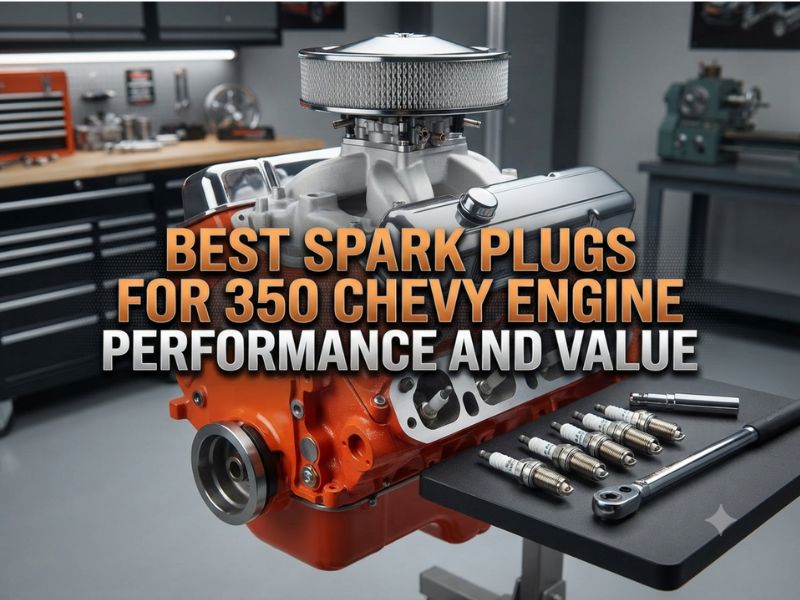
Choosing the best spark plugs for 350 Chevy engine applications is not as simple as selecting a popular brand or the most expensive electrode material. The Chevrolet 350 has been used with many factory and aftermarket cylinder heads, ignition systems, compression ratios, and exhaust configurations. A plug that works correctly in one 350 build may have the wrong thread reach, seat design, heat range, or physical length for another.
Worn or incorrectly matched spark plugs can contribute to hard starting, rough idling, hesitation, misfires, poor fuel combustion, and increased stress on the ignition system. Header-equipped engines can create an additional problem because limited clearance may make the plugs difficult to install or place the spark plug boots too close to hot exhaust tubes.
My first recommendation for compatible, traditional small-block cylinder heads is the ACDelco R45TS Conventional Spark Plug Set. It has a conventional copper-core design, a tapered seat, and dimensions commonly associated with many stock-style Chevrolet applications. I also selected the NGK UR5 for buyers who prefer NGK’s V-Power electrode design and the ACCEL 8198 for engines where header clearance is a major concern.
Before purchasing any of these products, confirm the required thread reach, seat style, heat range, and plug gap for the exact cylinder heads installed on your engine.
3 Best Spark Plugs for 350 Chevy Engine
| Image | Product Name | Check Price |
|---|---|---|
Best Choice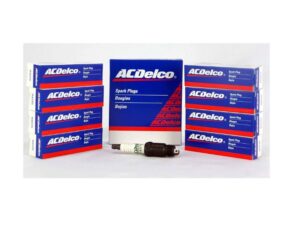 | ACDelco R45TS Conventional Spark Plugs, Pack of 8 | Check Price |
Second Best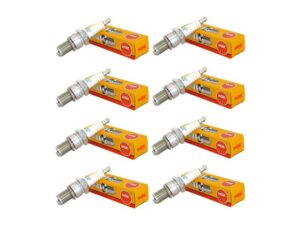 | NGK 2771 UR5 V-Power Spark Plugs, Pack of 8 | Check Price |
Third Choice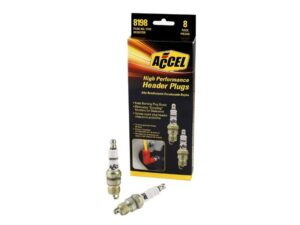 | ACCEL 8198 HP Copper Shorty Spark Plugs, Pack of 8 | Check Price |
1. ACDelco R45TS Conventional Spark Plugs, Pack of 8
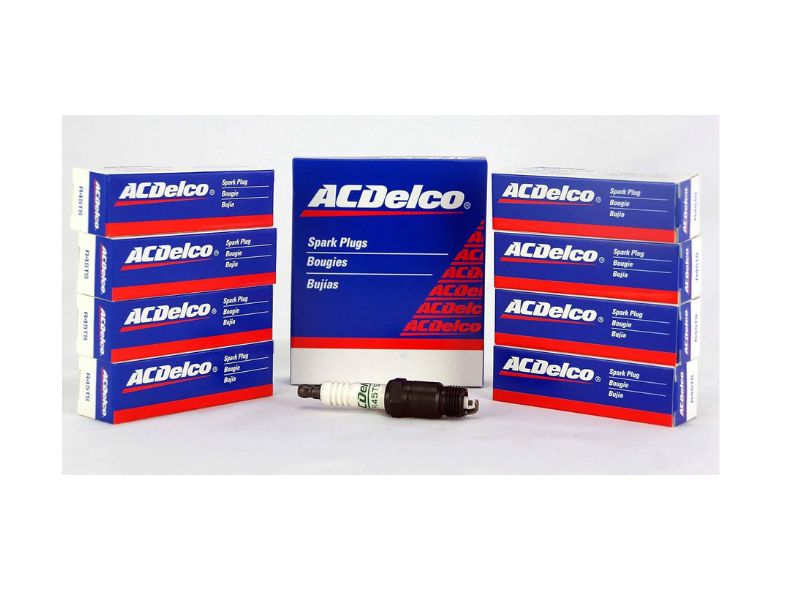
The ACDelco R45TS is the spark plug set I would consider first for a mostly stock Chevy 350 using compatible traditional cylinder heads. Its conventional construction, familiar heat-range designation, and pack-of-eight format make it a practical replacement for a street-driven V8 that does not require a specialized racing plug.
The R45TS uses a copper center-electrode core with a nickel-alloy tip. Copper transfers heat and electricity effectively, while the nickel-alloy firing surface provides the durability required for normal street use. It is a resistor-style plug, which helps control electrical interference produced by the ignition system.
Published specifications list a 14mm thread, a tapered seat, approximately 0.433-inch reach, a 16mm or 5/8-inch hex, and an ACDelco heat-range designation of 5. The listed preset gap is approximately 0.044 inch, although the final gap should always be checked against the engine and ignition-system requirements before installation.
The tapered seat is an important detail. A tapered-seat plug seals directly against the matching surface in the cylinder head and does not use the removable crush washer found on a gasket-seat plug. Installing the wrong seat type can cause sealing, torque, and heat-transfer problems.
This plug is most relevant to traditional iron-head applications that call for its dimensions and heat range. However, “Chevy 350” is not a complete fitment specification. Vortec-style heads and many aftermarket aluminum heads may require a longer-reach plug, a different seat, or a different heat range. The R45TS should not be installed based only on engine displacement.
The conventional copper-core design also has a practical advantage for older ignition systems. It does not depend on a fine-wire precious-metal electrode to deliver acceptable performance. When correctly matched and properly gapped, it can provide reliable starting, stable idling, and consistent combustion in a stock or moderately upgraded engine.
The trade-off is service life. Conventional nickel-electrode plugs generally wear more quickly than platinum or iridium designs. As the electrodes erode, the gap gradually increases and the ignition system must produce more voltage to fire the plug. NGK notes that an expanded gap caused by electrode wear increases the voltage demand placed on the ignition system.
Another advantage is that the Amazon product is sold as a package of eight, so one order covers a complete Chevrolet V8 plug change. The Amazon listing identifies the product as an ACDelco R45TS set with a copper core and 14mm thread.
Key specifications
- 14mm thread
- Approximately 0.433-inch reach
- Tapered seat
- Copper center-electrode core
- Nickel-alloy electrode tip
- Resistor construction
- ACDelco heat range 5
- Approximately 0.044-inch listed gap
- 16mm or 5/8-inch hex
- Eight-plug package
What I like
- Straightforward conventional construction
- Suitable for many compatible stock-style Chevy cylinder heads
- Copper-core design works well with traditional ignition systems
- Eight plugs are included
- Familiar ACDelco part number
- Usually less complicated than selecting a specialized racing plug
What to consider
- It does not fit every Chevy 350 cylinder head
- The 0.433-inch reach is too short for many long-reach heads
- Conventional electrodes generally require more frequent replacement
- The listed gap may not match every HEI or aftermarket ignition system
- Modified engines may require a colder heat range
I would choose the R45TS for a stock or mildly modified street engine only after confirming that the cylinder head requires a short-reach, tapered-seat plug. It is a sensible option when correct fitment and conventional operation matter more than extended service intervals.
2. NGK 2771 UR5 V-Power Spark Plugs, Pack of 8
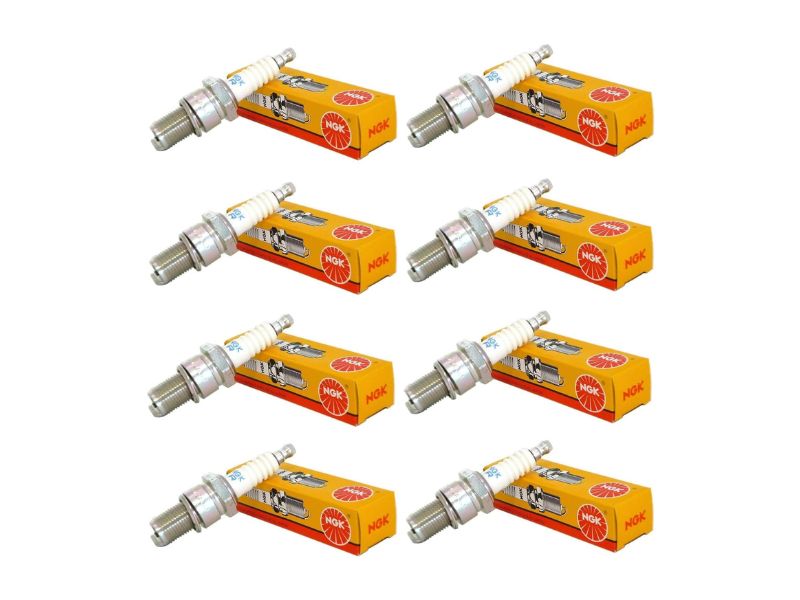
The NGK 2771 UR5 is another strong option for compatible Chevy 350 applications, particularly for owners who prefer NGK’s V-Power electrode design. It remains a conventional nickel spark plug with a copper core, but the center electrode has a V-shaped cut intended to move the spark toward the edge of the electrode.
This design exposes the spark to the air-fuel mixture instead of allowing it to remain partially hidden between broad, flat electrode surfaces. I would not expect a spark-plug design alone to create a dramatic horsepower increase, but a properly matched V-Power plug can provide reliable ignition and consistent operation in a healthy engine.
The UR5 has a 14mm thread diameter, 1.25mm thread pitch, tapered seat, approximately 0.460-inch reach, and a 5/8-inch hex. It is a resistor plug with an NGK heat-range designation of 5. NGK’s published specifications also provide separate torque ranges for cast-iron and aluminum cylinder heads, reinforcing why the head material must be identified before installation.
The Amazon eight-pack listing describes the plugs as NGK stock number 2771 UR5 plugs with nickel-core tips and a listed gap of 0.040 inch. When checked, that listing showed a 4.6-star average from 523 customer ratings. Ratings and availability can change over time.
The UR5’s 0.460-inch reach places it in the short-reach category commonly used with many older small-block Chevrolet cylinder heads. It should not be confused with NGK plugs such as the TR55, which use a substantially longer reach. A plug with the correct thread diameter can still be unsuitable if its threaded section extends too far into the combustion chamber or does not extend far enough.
The tapered seat also means it must be installed in a head designed for that sealing method. It should not be used to replace a gasket-seat plug simply because both have 14mm threads.
I consider the UR5 especially relevant to stock and mildly modified street engines that use a conventional or HEI ignition and compatible short-reach heads. It can also work well when the engine owner wants an easily recognized NGK heat range that can be adjusted upward or downward for a modified combination.
For example, an engine with increased compression, sustained high-load operation, nitrous oxide, or forced induction may require a colder plug than a stock street engine. That decision should be based on the engine builder’s recommendation, combustion-chamber design, fuel, timing, and operating conditions—not on the assumption that one plug fits every 350.
The Amazon listing consists of eight bulk-packed plugs. Because marketplace sellers can vary, I would inspect the packaging, printing, terminals, ceramics, and part numbers when the order arrives. I would also use Amazon’s vehicle-fitment information only as an initial check, not as a replacement for the cylinder-head manufacturer’s specification.
Key specifications
- NGK stock number 2771
- UR5 V-Power design
- 14mm thread diameter
- 1.25mm thread pitch
- Approximately 0.460-inch reach
- Tapered seat
- 5/8-inch hex
- Copper core with nickel electrode
- Resistor construction
- NGK heat range 5
- Approximately 0.040-inch listed gap
- Eight-plug package
What I like
- V-Power center-electrode design
- Well-documented physical specifications
- Suitable for various compatible short-reach heads
- Eight plugs are included
- Large Amazon customer-rating sample
- Familiar NGK heat-range system
- Practical for stock and mildly modified street engines
What to consider
- It is not suitable for every Chevy 350 cylinder head
- The marketplace listing may be bulk-packed rather than a single retail box
- The preset gap still needs to be measured
- Nickel electrodes do not have the longest service life
- Buyers must verify seller quality and product authenticity
- Modified engines may need another heat range
I would select the NGK UR5 when its dimensions match the cylinder head and I want a conventional plug with a proven V-groove design. Its substantial Amazon review history is useful, but correct fitment remains more important than rating volume.
3. ACCEL 8198 HP Copper Shorty Spark Plugs, Pack of 8
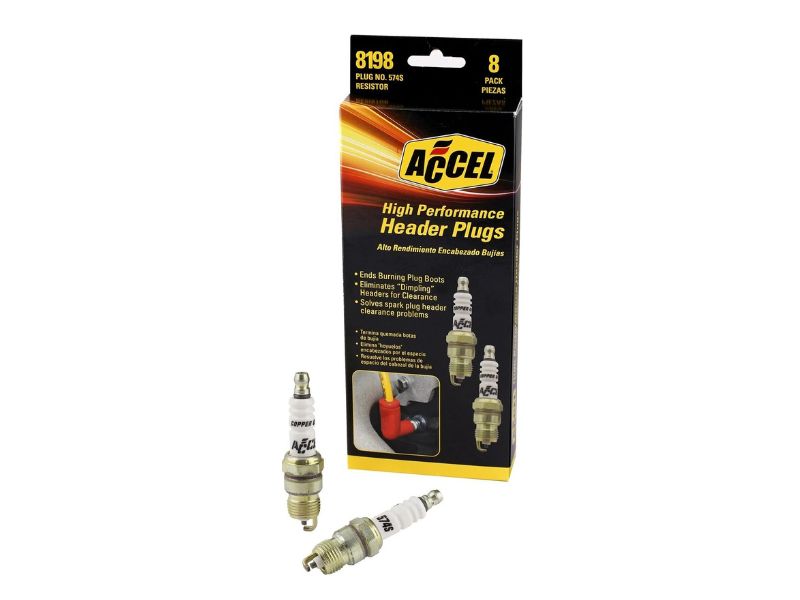
The ACCEL 8198 is designed for a different problem: limited space between the spark plugs, plug boots, and exhaust headers. It uses a shortened external body that can create additional air space around the plug and make it easier to position a socket in a crowded engine compartment.
ACCEL states that its Shorty plugs are approximately 3/16 to 3/8 inch shorter overall, depending on the application. The reduced length is intended to increase clearance between the spark plug boot and the exhaust manifold or header tube. It may also make installation and removal easier where there is not enough room to position a normal spark plug socket or move a wrench.
This distinction is important: the threaded reach is not shortened. The ACCEL 8198 still has a published 0.460-inch reach. The reduction occurs in the external portion of the plug, helping improve access without moving the firing tip farther away from its intended combustion-chamber position.
The 8198 uses a 14mm thread, tapered seat, 5/8-inch hex, projected firing tip, copper core, resistor construction, and ACCEL heat range 4. Holley lists an initial gap of 0.035 inch and a package quantity of eight.
This specification makes the plug relevant to compatible short-reach, tapered-seat cylinder heads where a standard-length plug creates clearance problems. It is particularly useful when full-length headers curve closely around the spark plug locations.
A standard plug can sometimes force the spark plug boot against a header tube. That direct heat exposure may harden or burn the boot, damage the wire insulation, and eventually cause voltage leakage or a misfire. Some installers attempt to solve the problem by denting the header tube. A correctly matched short-body plug may provide a cleaner solution when the extra clearance is sufficient.
The Amazon listing describes the 8198 as an ACCEL U-Groove header spark plug set for cramped spaces. When checked, it showed a 4.6-star average from 233 customer ratings and reported more than 100 purchases during the previous month. These marketplace figures can change.
The ACCEL plug should not be selected only because an engine has headers. Many header combinations have adequate clearance with standard plugs, and some cylinder heads require a different reach or seat type. A short-body plug cannot correct an incompatible threaded reach.
I would also avoid treating the manufacturer’s performance language as a guaranteed horsepower result. The practical value of this plug is packaging: it can create more room for the socket and spark plug boot. Any performance improvement is more likely to come from eliminating a damaged boot, poor connection, or recurring heat-related misfire than from the reduced external length itself.
The published 0.035-inch gap may suit some conventional and performance combinations, but other HEI systems use a wider gap. The correct setting depends on ignition output, cylinder pressure, fuel, compression, and the engine builder’s specifications. Every plug should be measured before installation.
Key specifications
- 14mm thread
- Approximately 0.460-inch reach
- Tapered seat
- Short external body
- Projected tip
- Copper-core construction
- Resistor design
- ACCEL heat range 4
- 5/8-inch hex
- Approximately 0.035-inch listed gap
- Eight-plug package
What I like
- Additional clearance around tight headers
- Easier socket access in crowded engine bays
- Correct threaded reach is retained
- Copper-core design
- Eight plugs are included
- Strong Amazon customer rating
- Useful for solving burned-boot problems
What to consider
- It is more expensive than many conventional plugs
- It is unnecessary when standard plugs already have adequate clearance
- The short design does not guarantee compatibility
- ACCEL heat range 4 must match the engine’s requirements
- The 0.035-inch listed gap may need adjustment
- Some headers may still require heat sleeves or different plug boots
I would use the ACCEL 8198 when a compatible Chevy 350 has verified header-clearance or socket-access problems. Its strongest feature is not a promised horsepower gain; it is the ability to create useful space around a difficult exhaust layout.
Spark Plug Comparison Table
| Product | Thread Reach | Seat Type | Heat Range | Listed Gap | Main Consideration | Amazon Rating at Research Time |
| ACDelco R45TS | Approx. 0.433 in. | Tapered | ACDelco 5 | Approx. 0.044 in. | Compatible stock-style heads | Not reliably displayed |
| NGK 2771 UR5 | Approx. 0.460 in. | Tapered | NGK 5 | Approx. 0.040 in. | V-Power design and street use | 4.6/5 from 523 ratings |
| ACCEL 8198 | Approx. 0.460 in. | Tapered | ACCEL 4 | Approx. 0.035 in. | Header and socket clearance | 4.6/5 from 233 ratings |
Amazon ratings, review totals, pricing, and availability may change. Product fitment should be verified independently before ordering.
How I Selected These Spark Plugs
I selected these products by evaluating their relevance to common Chevy 350 configurations rather than treating every 5.7-liter small-block as identical.
My first consideration was physical fitment. Thread diameter, reach, seat style, and hex size determine whether a plug can be installed and positioned correctly in the cylinder head. Using a plug with the wrong reach can place the electrodes too far inside the chamber or leave them recessed inside the threaded hole.
I then considered heat range. A spark plug must transfer enough heat away from its firing end to prevent overheating while remaining hot enough to reduce deposit buildup during normal operation. Heat-range numbering is manufacturer-specific, so an ACDelco 5 should not automatically be treated as equivalent to an NGK 5 or ACCEL 5.
Electrode design and material were also considered. All three products use copper cores and conventional firing surfaces rather than long-life iridium center electrodes. This makes them relevant to older Chevrolet ignition systems, although they may need replacement more frequently than premium precious-metal plugs.
Finally, I reviewed installation access, header clearance, Amazon customer feedback, package quantity, and the amount of technical information provided for each product.
What to Consider Before Buying Spark Plugs for a Chevy 350
Cylinder-Head Design
The exact cylinder head should determine the plug—not the “350” displacement label alone.
Older production iron heads commonly use short-reach, tapered-seat plugs. Later Vortec-style heads and many aftermarket aluminum heads may use longer-reach plugs. Some performance heads use gasket-seat plugs instead of tapered seats.
Look for a casting number, cylinder-head part number, or manufacturer installation guide. When aftermarket heads are installed, the head manufacturer’s spark plug recommendation generally provides more useful information than a vehicle-based parts catalog.
Thread Reach
Thread reach is the length of the threaded portion that enters the cylinder head.
The ACDelco R45TS has an approximately 0.433-inch reach, while the NGK UR5 and ACCEL 8198 are approximately 0.460 inch. These are short-reach plugs.
A plug that is too short may leave the firing end recessed, allowing deposits to accumulate in the unused cylinder-head threads. A plug that is too long can extend too far into the combustion chamber, creating possible contact, overheating, or clearance risks.
Never substitute a long-reach plug for a short-reach plug—or the reverse—without confirming that the cylinder head was designed for it.
Seat Type
A tapered-seat spark plug seals against a machined cone in the cylinder head. A gasket-seat plug seals with a crush washer against a flat surface.
The three products reviewed here use tapered seats. They are unsuitable for a head requiring a gasket-seat plug unless the cylinder-head or plug manufacturer explicitly specifies otherwise.
Do not add a loose sealing washer to a tapered-seat plug in an attempt to change its design.
Heat Range
Spark plug heat range describes how quickly the plug transfers firing-end heat into the cylinder head. It does not describe the voltage or intensity of the spark.
A plug that runs too hot can contribute to pre-ignition and electrode damage. A plug that runs too cold may accumulate carbon or fuel deposits during low-speed operation.
Stock compression, naturally aspirated street engines generally use the manufacturer-recommended heat range. High compression, sustained racing, forced induction, or nitrous use may require a colder plug, but the required change depends on the complete engine combination and tune.
Electrode Material
Copper is an excellent thermal and electrical conductor, but a spark plug marketed as a “copper plug” usually still has a nickel-alloy firing surface. The copper is used inside the center electrode.
Conventional nickel plugs are affordable and work well with many older ignition systems. Platinum and iridium plugs generally offer longer electrode life, but they are not automatically the correct choice for every classic or modified engine.
Correct fitment and heat range matter more than choosing a premium material.
Spark Plug Gap
Do not assume that a new plug is ready to install without inspection. NGK states that factory-gapped plugs may still require adjustment for the intended vehicle application.
A wider gap can expose more mixture to the spark but requires more voltage. A smaller gap is easier to fire under high cylinder pressure but may provide less spark exposure.
The correct gap depends on the ignition system, coil output, distributor condition, compression ratio, induction setup, and engine specifications. Use a wire-style or appropriate gap gauge and avoid damaging the center electrode.
Header Clearance
Check clearance at all eight cylinders. A header may leave plenty of room around seven plugs while passing extremely close to the eighth.
A short-body plug such as the ACCEL 8198 can improve clearance between the plug boot and header without changing the specified threaded reach. ACCEL states that the shortened body can also make it easier to position a socket in restricted spaces.
Spark plug boot sleeves can provide added radiant-heat protection, but the boots and wires should still be secured away from direct header contact.
How to Read Chevy 350 Spark Plugs
Used spark plugs can provide clues about combustion, although plug appearance should be evaluated alongside fuel pressure, ignition timing, compression, leak-down results, and other diagnostic information.
A light tan or gray firing end often indicates generally normal combustion. Dry, black carbon may suggest an overly rich mixture, extended idling, weak ignition, or a plug that runs too cold.
A wet plug can indicate excessive fuel, a cylinder that is not firing, or oil contamination. Heavy oily deposits may point toward worn rings, valve-guide problems, or another source of oil entering the combustion chamber.
A white, blistered, or damaged insulator may indicate excessive heat, a lean mixture, advanced ignition timing, detonation, or an incorrect heat range. A melted electrode requires immediate investigation.
Compare all eight plugs and note which cylinder each plug came from. One plug that looks substantially different from the other seven may indicate a cylinder-specific issue such as a leaking intake runner, damaged wire, weak terminal, injector or carburetor-distribution problem, valve issue, or oil-control fault.
NGK notes that worn plugs with enlarged gaps increase the voltage required from the ignition system.
Spark Plug Installation Tips for a Chevy 350
Work on a cool engine. Removing plugs from hot aluminum heads can increase the risk of thread damage.
Clean dirt from around each plug before removal. NGK warns that debris in the plug hole can affect tightening and cause the torque wrench to reach its setting before the plug is correctly seated.
Remove one wire at a time if there is any risk of mixing up the firing order. Pull from the boot, not the cable.
Compare every new plug with the old plug before installation. Confirm the thread diameter, reach, seat style, hex size, and overall configuration.
Measure the gap even when the packaging says the plug is preset. Adjust only with the correct tool, applying force to the ground electrode rather than the center electrode or insulator.
Start each plug by hand for several turns. If it does not thread easily, stop and investigate. Never use a ratchet to force a plug into the cylinder head.
Use the torque specification provided for the cylinder-head material and plug design. NGK states that correct torque or tightening angle is essential for proper installation and heat transfer.
Do not automatically apply anti-seize. NGK notes that lubricant can alter torque readings and increase the risk of over-tightening. Follow the spark plug and cylinder-head manufacturer’s instructions.
After installing the plugs, seat each wire terminal firmly and verify that the boots do not touch the headers. Start the engine, listen for a consistent idle, and investigate any new misfire immediately.
Frequently Asked Questions
What are the best spark plugs for a stock Chevy 350?
For a stock Chevy 350 with compatible short-reach, tapered-seat cylinder heads, I would consider the ACDelco R45TS or NGK UR5. Both use conventional copper-core construction and familiar heat ranges.
The correct choice depends on the cylinder-head specification, ignition system, and required gap. A stock engine with Vortec or aftermarket heads may require a completely different long-reach plug.
What spark plug fits a Chevy 350 with Vortec heads?
Many Vortec-style heads use a longer-reach, tapered-seat spark plug than the short-reach products reviewed here.
Do not install an R45TS, UR5, or ACCEL 8198 in a Vortec head unless the exact head specification confirms the required reach. Check the cylinder-head casting number or manufacturer recommendation before ordering.
Are ACDelco R45TS plugs suitable for every Chevy 350?
No. The R45TS is a short-reach, tapered-seat plug. It can be suitable for many compatible traditional heads, but the Chevrolet 350 has been built with numerous factory and aftermarket cylinder heads.
A different head may require a longer reach, gasket seat, colder heat range, or different electrode position.
What is the correct spark plug gap for a Chevy 350?
There is no universal gap for every Chevy 350.
The required gap depends on the ignition system, coil output, distributor, compression ratio, combustion pressure, and plug type. Conventional points ignitions may use a different gap from a high-energy HEI or capacitive-discharge system.
Use the vehicle, engine builder, or ignition manufacturer’s specification and measure every plug before installation.
Are copper spark plugs better for an older Chevy 350?
Copper-core conventional plugs can be an excellent match for older engines because they conduct heat effectively, are affordable, and work well with traditional ignition systems.
They are not automatically “better” in every category. Platinum and iridium plugs usually offer longer service life, while conventional plugs may require more frequent inspection and replacement.
Can I use iridium spark plugs in a carbureted Chevy 350?
A carburetor does not automatically prevent the use of iridium plugs. The plug still needs the correct thread reach, seat type, heat range, resistor configuration, and gap.
Iridium may provide longer electrode life, but it will not correct an overly rich carburetor, weak ignition, oil consumption, or incorrect tune.
What heat range should I use in a modified 350?
The correct heat range depends on compression, cylinder pressure, fuel, ignition timing, induction, cooling, and operating load.
Engines using high compression, forced induction, nitrous, or sustained racing commonly require colder plugs than stock engines. The engine builder or cylinder-head manufacturer should provide the starting recommendation, followed by careful plug inspection and tuning.
Do shorty spark plugs improve performance?
A short-body plug does not automatically increase engine power.
Its primary advantage is clearance. It can create more space between the spark plug boot and header tube and make socket access easier. Performance may improve when the short plug prevents a burned boot or heat-related misfire, but the external length itself is not a guaranteed power upgrade.
How often should Chevy 350 spark plugs be replaced?
The interval depends on electrode material, ignition condition, fuel mixture, oil consumption, engine use, and maintenance.
Conventional nickel plugs typically require more frequent replacement than platinum or iridium plugs. Inspect the plugs when diagnosing misfires or performing routine ignition maintenance and replace them when the electrodes are worn, the insulators are damaged, or deposits cannot be corrected.
What happens if the spark plug reach is incorrect?
A plug with insufficient reach may leave its firing end recessed and expose unused cylinder-head threads to combustion deposits.
A plug with excessive reach can extend too far into the chamber and may create mechanical-clearance, overheating, or pre-ignition risks. Always match the reach to the exact cylinder-head design.
Conclusion
Selecting the best spark plugs for 350 Chevy engine builds starts with identifying the cylinder heads and matching the correct thread reach, seat type, heat range, and gap.
The ACDelco R45TS Conventional Spark Plug Set is a practical choice for compatible traditional heads and stock-style street engines. Its conventional copper-core construction provides straightforward operation without unnecessary complexity.
The NGK 2771 UR5 V-Power Spark Plug Set is a suitable alternative for compatible short-reach applications when I prefer NGK’s V-Power electrode design and established heat-range system.
For a header-equipped engine with limited boot or socket clearance, the ACCEL 8198 HP Copper Shorty Spark Plug Set may provide the additional external space needed for a cleaner installation.
None of these products should be purchased solely because the engine is described as a Chevy 350. Confirm the exact cylinder-head requirements, measure the gap, and follow the correct torque procedure. A properly matched conventional plug will perform more reliably than a premium plug with the wrong reach or seat.