The Chevrolet S10 has a much broader engine history than its compact exterior might suggest. During its long production run, the truck was available with four-cylinder, V6, gasoline, and diesel powertrains. Even within the popular second generation, the 2.2-liter four-cylinder and 4.3-liter V6 require different quantities and may call for different spark plug specifications.
That is why selecting the best spark plugs for Chevy S10 starts under the hood, not with a brand comparison. The model year, engine displacement, VIN code, factory gap, and ignition-system condition must agree with the selected plug.
My primary recommendation is the Bosch 9601 OE Fine Wire Double Iridium Spark Plug for compatible 1996–2004 S10 trucks with the 4.3L V6. Its fine-wire double-iridium construction offers an appealing combination of ignitability and wear resistance for owners who want a premium upgrade over a conventional plug.
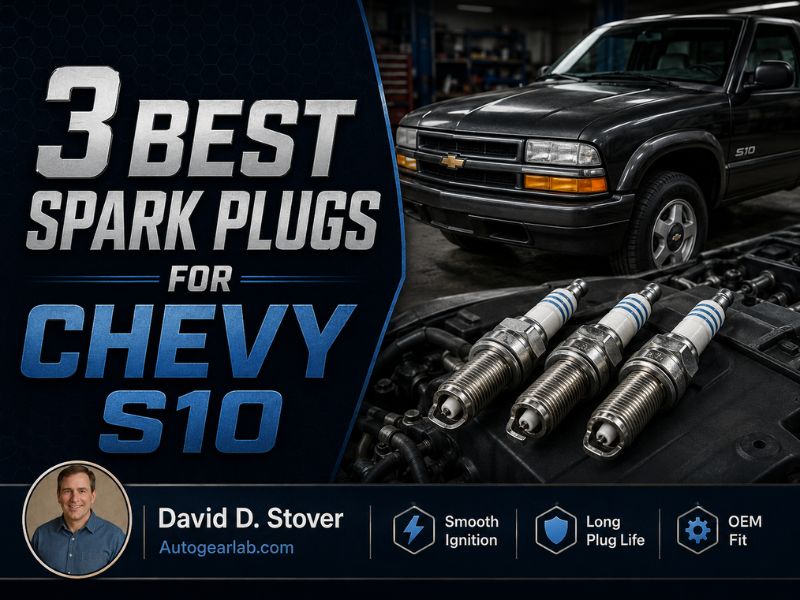
For a compatible 1998–2003 S10 with the 2.2L four-cylinder engine, I would choose the NGK 7397 TR5IX Iridium IX Spark Plugs, 4-Pack. The package contains the four plugs required for that engine, and its 0.040-inch cataloged gap matches the verified application.
The ACDelco R44LTS6 Conventional Spark Plug is a sensible alternative for compatible 1996–2004 4.3L V6 trucks whose owners prefer a conventional OE-style plug. Its lower-complexity nickel-alloy design is appropriate when the truck’s catalog calls for the R44LTS6 specification, although the linked eight-pack contains more plugs than the V6 needs.
These products deliberately cover different priorities: premium longevity for a common V6, a complete iridium set for the later 2.2L engine, and a conventional factory-style service option. None should be ordered solely because it appears in an S10 buyer’s guide.
A Quick S10 Engine-to-Product Map
| S10 configuration | Product to consider | Quantity required | Important check |
| 1996–2004 4.3L V6 | Bosch 9601 | 6 | Confirm preset gap for the VIN |
| 1998–2003 2.2L four-cylinder | NGK 7397 TR5IX | 4 | Cataloged at 0.040 inch |
| 1996–2004 4.3L V6 | ACDelco R44LTS6 | 6 | Cataloged at 0.060 inch |
| Earlier S10 engines | None should be assumed | Varies | Perform an engine-specific lookup |
| Diesel S10 | Gasoline spark plugs do not apply | Not applicable | Diesel engines use a different ignition process |
This map should be treated as an application starting point. Engine replacements, emissions packages, and service-part revisions can affect the correct final selection.
Best Spark Plugs for Chevy S10 Reviewed
| Image | Product Name | Check Price |
|---|---|---|
Best Choice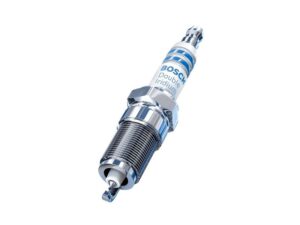 | Bosch 9601 OE Fine Wire Double Iridium Spark Plug | Check Price |
Second Best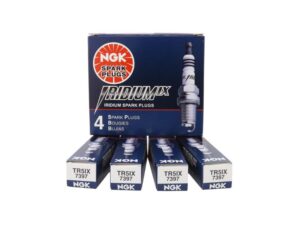 | NGK 7397 TR5IX Iridium IX Spark Plugs, 4-Pack | Check Price |
Third Choice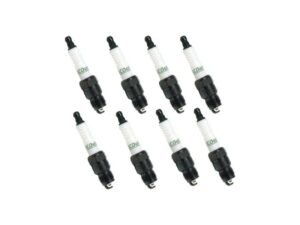 | ACDelco R44LTS6 Conventional Spark Plug | Check Price |
1. Bosch 9601 OE Fine Wire Double Iridium Spark Plug
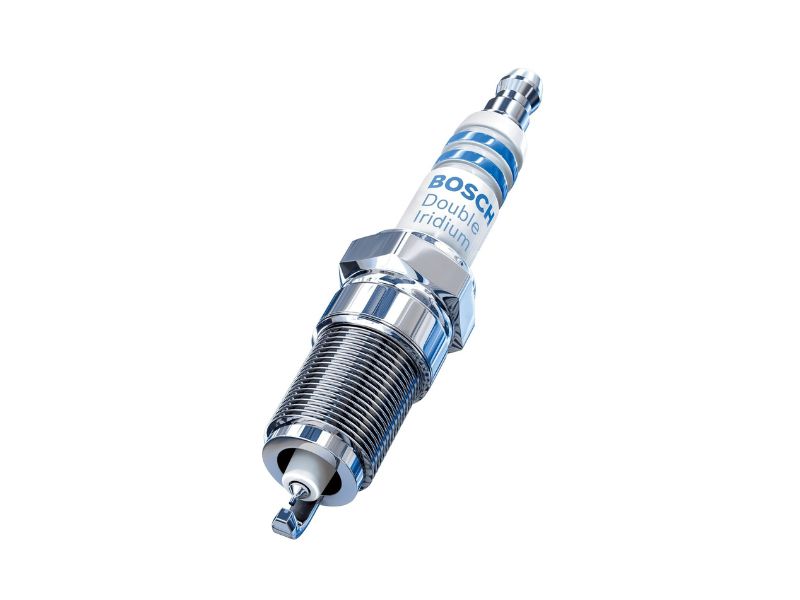
Key Features
- Verified for compatible 1996–2004 S10 4.3L V6 applications
- Fine-wire iridium center electrode
- Iridium-enhanced ground-electrode inlay
- Copper-core construction
- Resistor design
- Factory preset gap
- Nickel-plated threads
- Tapered seat
- Sold individually in the linked configuration
- Six plugs required for the V6
The Bosch 9601 ranks first because it provides premium electrode construction for the 4.3L V6, one of the S10’s most common and useful engines. Its double-iridium design protects both sides of the firing gap, helping the electrodes resist erosion as the plugs accumulate operating time.
A fine center electrode also requires less exposed material around the spark. This supports dependable ignition without suggesting that the plugs will create substantial new horsepower. In a truck with badly worn plugs, replacement may restore a smoother idle and stronger response because normal combustion has returned.
Bosch supplies these plugs with a preset gap and advises against regapping them. Their firing ends should still be inspected for shipping damage, but a visibly bent or incorrectly set plug is better replaced than aggressively adjusted.
The nickel-plated shell is designed to resist corrosion and facilitate installation without automatically adding anti-seize. Lubricating a plated plug can change thread friction and cause overtightening when a dry torque value is used.
This product makes sense for an owner of a compatible 4.3L truck who wants longer-wearing precious-metal electrodes and does not mind ordering six individual plugs. It is not intended for the 2.2L four-cylinder merely because both engines appeared in the S10.
My verdict: The Bosch 9601 is the strongest overall choice for an application-confirmed 1996–2004 4.3L V6. Its double-iridium firing surfaces and preset design provide a useful premium option, but correct VIN-level fitment remains essential.
2. NGK 7397 TR5IX Iridium IX Spark Plugs, 4-Pack
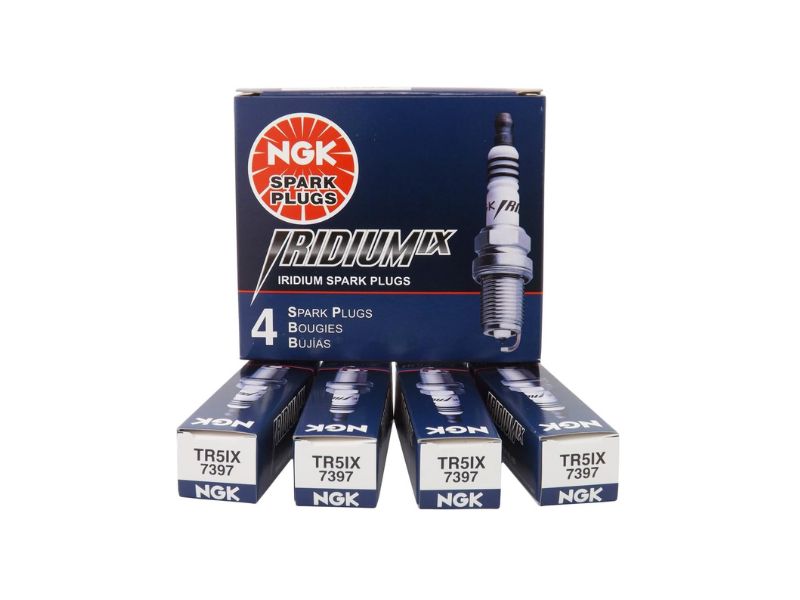
Key Features
- Verified for compatible 1998–2003 S10 2.2L four-cylinder applications
- Complete set of four plugs
- 0.040-inch cataloged gap
- Fine-wire iridium center electrode
- Taper-cut nickel ground electrode
- Solid copper core
- NGK heat range 5
- Approximately 0.689-inch reach
- 14-millimeter threads
- Resistor construction
The NGK 7397 TR5IX is the most practical option for the late 2.2L four-cylinder because the package contains exactly four plugs. Its application catalog identifies the 1998–2003 2.2L S10 and specifies a 0.040-inch gap.
The Iridium IX design uses a 0.6-millimeter fine-wire center electrode and a tapered-cut ground electrode. The center tip concentrates the electric field, while the reduced ground-electrode profile limits the amount of metal surrounding the initial flame kernel.
This is a single-iridium design: the center electrode uses iridium, while the ground electrode uses nickel rather than a second iridium pad. It can provide good ignitability, but its construction and service-life priorities are not identical to Bosch’s double-iridium design.
Four plugs are required for the applicable engine, making this package more convenient than individual units. Buyers should still inspect the stock number and firing ends before installation.
The NGK 7397 should not be generalized to every four-cylinder S10. Earlier 2.2L applications and the first-generation truck’s other engines require separate verification. Model year boundaries matter.
My verdict: For a confirmed 1998–2003 2.2L S10, the NGK 7397 four-pack is the easiest complete purchase in this guide. It combines exact package quantity, a verified 0.040-inch application gap, and a fine-wire iridium electrode.
3. ACDelco R44LTS6 Conventional Spark Plug
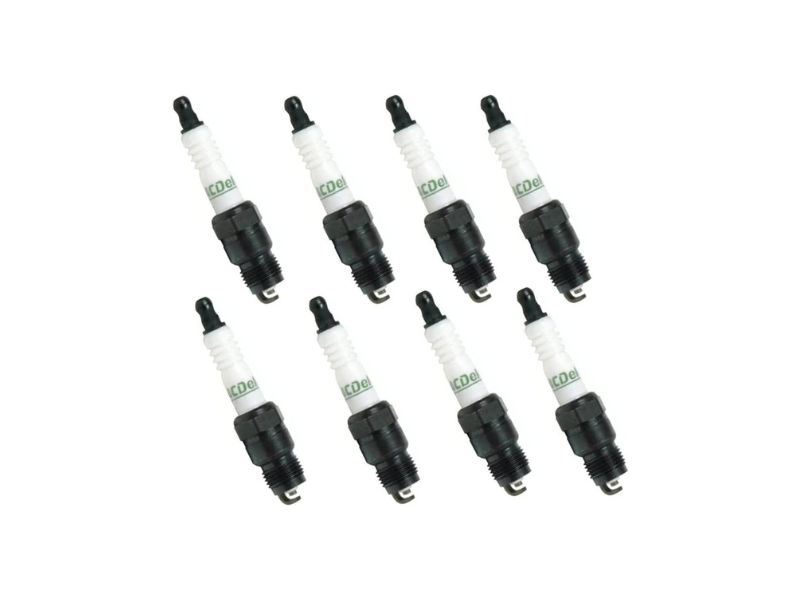
Key Features
- Verified for compatible 1996–2004 4.3L V6 trucks
- Conventional nickel-alloy firing surfaces
- Copper-core construction
- Approximately 0.060-inch application gap
- Ribbed suppressor seal
- Corrosion-resistant shell treatment
- Tapered seat
- Conventional OE-oriented design
- Eight plugs in the linked package
- Only six plugs required for the S10 V6
The ACDelco R44LTS6 serves owners who prefer the straightforward plug specification cataloged for the 4.3L V6. Rather than using premium iridium electrodes, it relies on conventional nickel-alloy firing surfaces and a copper core.
The application uses an approximately 0.060-inch gap, substantially wider than the 0.040-inch reference for the NGK plug’s 2.2L application. That difference is a clear warning against copying gaps between engines.
A conventional plug generally experiences faster electrode erosion than a premium precious-metal plug. It may therefore require inspection or replacement sooner, but it can remain an appropriate choice when the goal is to preserve the original engine specification without paying for premium electrodes.
The linked package contains eight plugs, while the 4.3L V6 needs six. Two plugs will remain unused. They can be stored as spares if kept dry, clean, and protected from impact, but buyers should account for this package mismatch.
My verdict: The R44LTS6 is an uncomplicated choice for a verified 4.3L application, especially when a conventional plug is preferred. Bosch 9601 remains my primary V6 recommendation because of its double-iridium construction, while ACDelco offers the more traditional alternative.
Main Differences Between the Three Products
| Product | Engine focus | Electrode construction | Cataloged gap | Pack quantity | Main reason to choose it | Primary limitation |
| Bosch 9601 | Compatible 1996–2004 4.3L V6 | Double iridium | Preset; verify by VIN | 1 | Wear-resistant premium V6 option | Six units must be ordered |
| NGK 7397 TR5IX | Compatible 1998–2003 2.2L | Single iridium | 0.040 in | 4 | Complete set for the four-cylinder | Narrower model-year application |
| ACDelco R44LTS6 | Compatible 1996–2004 4.3L V6 | Conventional nickel with copper core | 0.060 in | 8 | Traditional OE-oriented specification | Faster expected electrode wear |
Bosch and ACDelco serve the same broad 4.3L V6 model-year range but suit different maintenance priorities. Bosch offers premium double-iridium electrodes, while ACDelco retains a conventional configuration.
The NGK 7397 should be viewed separately because it addresses the 2.2L four-cylinder. Its four-pack is not simply a smaller version of the V6 products; it is a different engine application with its own gap and thermal requirements.
Understanding the Chevy S10’s Engine Variations
First-Generation Trucks
The first-generation S10 appeared with several engines, including four-cylinder and V6 options. Displacements and ignition specifications changed over time. Some early trucks may also have been equipped with diesel engines.
A gasoline spark plug recommendation for a 1999 S10 should never be extended backward to an early diesel or a different gasoline engine. The engine code and service catalog must control the purchase.
The 2.2L Four-Cylinder
The 2.2L engine provided economical transportation and straightforward truck utility. Its four-cylinder layout requires four plugs, and later applications can use the NGK 7397 specification discussed here.
Although four plugs make the service less expensive than a V6 replacement, buyers should not compensate by installing an unnecessarily aggressive performance plug. A stock engine benefits most from correct reach, heat range, gap, and torque.
The 4.3L V6
The 4.3L V6 is closely associated with later S10 trucks and delivers stronger low-speed torque than the four-cylinder. It uses six plugs and a distributor-based ignition arrangement in relevant model years.
Because the plug wires route near hot engine and exhaust components, their condition is an important part of the service. A worn cap, rotor, coil, or wire can cause misfires even after the plugs have been replaced.
Copper, Nickel, and Iridium Explained
The term “copper spark plug” is often used imprecisely. Many conventional and premium plugs contain a copper core because copper transfers heat efficiently. The exposed firing surfaces determine how well the electrodes resist erosion.
Conventional Nickel Electrodes
Nickel-alloy electrodes are relatively affordable and appropriate in many older engines. Their thicker firing surfaces generally require more voltage than a fine-wire precious-metal electrode as they wear.
They can still be the correct choice when the original application specifies them. A compatible conventional plug is safer than an incompatible premium plug.
Single Iridium
A single-iridium plug such as the NGK TR5IX uses iridium on the center electrode while retaining a conventional ground electrode. This provides a fine, durable center tip and good ignitability.
The ground electrode may wear faster than a precious-metal ground pad, so single-iridium and double-iridium plugs should not automatically receive identical service-life expectations.
Double Iridium
Bosch’s double-iridium design protects both the center and ground sides of the gap with precious-metal material. This helps control gap growth and supports longer electrode durability.
Its benefits apply only when the complete plug specification matches the engine. Double iridium cannot correct the wrong reach, gap, or heat range.
Critical Buying Factors
Model Year and Engine Code
Do not purchase using “Chevy S10” alone. Record:
- Model year
- Engine displacement
- Number of cylinders
- VIN engine character
- Two-wheel-drive or four-wheel-drive configuration when the catalog requests it
- Emissions package
- Current plug number, if verified as correct
The plug removed from the engine provides a useful reference but not absolute proof. A previous owner may have installed the wrong part.
Spark Plug Gap
The gap controls the distance that the spark must cross. Wider gaps require more voltage, while narrower gaps are easier for the ignition system to fire.
The products here demonstrate the difference:
- NGK 7397 for the verified 2.2L application: approximately 0.040 inch
- ACDelco R44LTS6 for the verified 4.3L application: approximately 0.060 inch
- Bosch 9601: supplied preset for its approved applications
Never alter one product to match the specification of another engine.
Heat Range
A plug’s heat range describes the rate at which its firing end transfers heat into the cylinder head. It does not describe the strength of the spark.
Too cold can encourage fouling. Too hot can contribute to pre-ignition and electrode damage. Heat-range numbers are manufacturer-specific and cannot be compared directly across Bosch, NGK, and ACDelco.
Thread Reach
Reach is the length of the threaded portion that enters the cylinder head. Incorrect reach positions the firing end improperly and can expose threads to combustion deposits.
A plug that physically starts in the head is not necessarily correct. Use a cataloged application rather than matching thread diameter by eye.
Seat Style
Later S10 applications commonly use a tapered-seat plug. The taper seals directly against a matching surface in the cylinder head.
Tapered-seat and gasket-seat plugs require different installation behavior. Never add a washer to a plug designed without one.
Package Quantity
Check how many plugs the engine needs and how many are included:
- 2.2L four-cylinder: four plugs
- 4.3L V6: six plugs
- Bosch linked product: one plug
- NGK linked product: four plugs
- ACDelco linked product: eight plugs
Package quantity should never be mistaken for vehicle compatibility.
Driving Conditions
Frequent short trips, long periods of idling, towing, heavy loads, oil consumption, and rich fuel mixtures can affect plug condition.
These conditions may justify more frequent inspection, but they do not automatically justify changing the heat range. Correct the root cause of fouling before experimenting with another plug.
The S10 Ignition System Deserves Equal Attention
Distributor Cap and Rotor
Many later S10 engines use a distributor to route high voltage to each cylinder. Moisture, corrosion, carbon tracking, or worn terminals inside the cap can create intermittent misfires.
A new plug set will not correct a defective cap or rotor.
Spark Plug Wires
Inspect the wires for:
- Brittle insulation
- Burn marks
- Cuts or abrasions
- Loose terminals
- Torn boots
- Green corrosion
- Incorrect routing
- Contact with exhaust components
Wire resistance can also be measured and compared with service limits. One abnormally high-resistance wire may cause a cylinder-specific problem.
Ignition Coil
A weak coil may produce adequate voltage at idle but fail under acceleration, when cylinder pressure raises the voltage requirement. This can be mistaken for a spark plug problem.
Distributor Condition
On certain 4.3L engines, distributor wear or alignment problems can affect ignition performance. Diagnose trouble codes and timing-related symptoms rather than repeatedly replacing plugs.
How to Replace S10 Spark Plugs Safely
Begin with a Cold Engine
Allow the engine and cylinder heads to cool fully. Working around a hot exhaust manifold creates a burn hazard, and removing plugs from a hot head can increase the risk of thread damage.
Photograph the Wire Routing
Before disconnecting anything, photograph the distributor cap and plug-wire routing. A clear record is valuable if a wire becomes disconnected at both ends.
Incorrect firing order can cause severe rough running or prevent the engine from starting.
Service One Cylinder at a Time
Remove and replace one plug before moving to the next cylinder. This makes crossed wires much less likely.
Twist the boot gently to release it. Pull from the boot, never from the cable. A plug-wire boot tool is useful in restricted areas.
Clean the Plug Area
Remove loose dirt before loosening the plug. Wear eye protection when using compressed air.
If oil, coolant, or heavy rust is present, investigate the source rather than allowing the material to fall into the cylinder.
Inspect the Removed Plugs
Keep the plugs organized by cylinder and compare them:
- Light gray or tan deposits can indicate ordinary combustion.
- Dry black deposits may suggest rich running or weak ignition.
- Wet fuel can indicate a cylinder that is not firing.
- Oily deposits can point to internal oil consumption.
- A white, blistered firing end can indicate overheating.
- One unusual plug may reveal a cylinder-specific fault.
Plug appearance provides clues, not a complete diagnosis.
Verify the New Products
Confirm that every plug has the same required part number. Inspect the porcelain, threads, terminal, ground strap, and gap.
Do not install a dropped plug without careful inspection. A hidden ceramic crack can cause a misfire after the engine heats up.
Start Each Plug by Hand
Place the plug into the socket and rotate it by hand for several threads. It should turn smoothly.
If immediate resistance is felt, remove it and inspect the threads. Cross-threading an aluminum cylinder head can turn routine maintenance into an expensive repair.
Tighten to the Correct Specification
Use the service torque for the exact engine, plug, and cylinder-head material. Correct torque is necessary for sealing and heat transfer.
A loose plug can leak combustion gas and run too hot. An overtightened plug can damage the shell or cylinder-head threads.
Avoid Automatic Anti-Seize Use
Nickel-plated modern plugs are often designed for dry installation. Anti-seize changes thread friction and may cause excessive tightening.
Use it only when the spark plug or engine service instructions specifically require it. Keep any compound away from the firing end.
Reconnect the Boots Securely
A small quantity of dielectric grease may be placed inside the upper boot opening when appropriate. Do not pack the terminal or coat the electrodes.
Push each boot into place until the terminal is fully engaged. Route the wires through their original separators and away from hot surfaces.
Common Problems After Plug Replacement
Engine Will Not Start
Check the distributor firing order and ensure the coil wire and electrical connectors are attached. Crossed plug wires are a common cause after a full tune-up.
Rough Idle Appears Immediately
Possible causes include:
- One loose boot
- Cracked plug porcelain
- Incorrect plug gap
- Crossed wires
- Damaged wire terminal
- Vacuum hose disconnected during service
Review the installation before replacing additional parts.
Misfire Only Under Load
An excessive gap, weak ignition coil, deteriorated wire, or distributor problem may appear only during acceleration. Scan for cylinder-specific misfire data when possible.
Check-Engine Light Flashes
A flashing malfunction indicator can mean an active misfire severe enough to threaten the catalytic converter. Reduce load and diagnose the fault instead of continuing to drive normally.
Mistakes That S10 Owners Should Avoid
- Buying plugs without checking engine displacement
- Assuming every second-generation S10 has the 4.3L V6
- Installing six plugs for a four-cylinder order
- Buying only four plugs for the V6
- Copying the 0.060-inch V6 gap to the 2.2L engine
- Changing the gap on a plug labeled not to be regapped
- Using a premium electrode as a substitute for correct fitment
- Comparing heat-range numbers across brands
- Pulling plug wires by their cables
- Mixing the firing order
- Ignoring a corroded distributor cap
- Installing plugs on a hot engine
- Starting threads with a ratchet
- Applying excessive anti-seize
- Expecting plugs to repair low compression
- Replacing fouled plugs without diagnosing oil consumption
- Installing gasoline spark plugs in a diesel application
Frequently Asked Questions
What are the best spark plugs for a Chevy S10?
The best plugs are those specified for the truck’s exact engine and year. Bosch 9601 is my primary recommendation for compatible 1996–2004 4.3L V6 trucks. NGK 7397 suits verified 1998–2003 2.2L applications, while ACDelco R44LTS6 provides a conventional 4.3L alternative.
How many spark plugs does a Chevy S10 need?
The 2.2L four-cylinder needs four plugs, while the 4.3L V6 needs six. Earlier S10 engines may have different cylinder counts or even use diesel combustion. Identify the engine before ordering and compare the required quantity with the package size.
Do all Chevy S10 trucks use the same spark plugs?
No, the S10’s different engines require different plug specifications. Model year, displacement, reach, heat range, gap, and ignition design all affect compatibility. A plug for the 4.3L V6 should not be assumed correct for the 2.2L engine.
What plugs fit a 1996–2004 S10 4.3L?
Bosch 9601 and ACDelco R44LTS6 cover compatible 4.3L applications. Bosch provides a double-iridium design, while ACDelco uses conventional electrodes and an approximately 0.060-inch application gap. Confirm the VIN before choosing between them.
What plugs fit a 1998–2003 S10 2.2L?
NGK 7397 TR5IX is cataloged for compatible 2.2L four-cylinder trucks. It uses a fine-wire iridium center electrode and an approximately 0.040-inch application gap. The four-pack supplies a complete set for that engine.
What is the spark plug gap for a Chevy S10?
The correct gap depends on the engine and approved plug. Verified examples include approximately 0.040 inch for NGK 7397 in the 2.2L application and 0.060 inch for ACDelco R44LTS6 in the 4.3L application. Check the emissions label before installation.
Are iridium plugs worthwhile in an older S10?
Yes, when the exact iridium plug is approved for the engine. Fine-wire iridium electrodes resist wear and support reliable ignition. They cannot compensate for damaged wires, a weak coil, a worn distributor, incorrect fuel mixture, or mechanical engine problems.
Is double iridium better than single iridium?
Double iridium protects both sides of the firing gap against electrode wear. Single-iridium plugs protect the center tip but may use a conventional ground electrode. Double iridium can provide a longevity advantage, although correct engine fitment remains more important.
Can I replace conventional plugs with iridium plugs?
Yes, but only through an approved engine-specific cross-reference. The replacement must match the required reach, seat, heat range, resistance, projection, and gap. Choosing an iridium plug by thread size alone is unsafe.
Should I replace S10 plug wires with the plugs?
Replace the wires when inspection or resistance testing shows deterioration. Cracks, burned insulation, torn boots, loose terminals, arcing marks, and high resistance justify replacement. Sound wires do not always need automatic replacement, but they should be checked carefully.
How often should S10 spark plugs be replaced?
Use the maintenance interval for the engine and installed electrode design. Conventional nickel plugs usually require more frequent attention than double-iridium plugs. Oil consumption, rich operation, weak ignition components, and severe driving can shorten service life.
Why does my S10 misfire after new plugs?
Crossed wires, loose boots, wrong gaps, or damaged plugs are common causes. Recheck the firing order, part numbers, connectors, and installation. If those items are correct, test the cap, rotor, wires, coil, injectors, fuel pressure, and compression.
Can new plugs improve S10 gas mileage?
They can restore efficiency lost through worn electrodes or intermittent misfires. They will not raise a healthy truck beyond normal performance. Tire pressure, gearing, load, fuel mixture, oxygen sensors, and driving habits also affect mileage.
Should anti-seize be used on the plugs?
Only use anti-seize when the current installation instructions specifically require it. Many plated plug shells are designed for dry installation. Lubricated threads can be unintentionally overtightened when a dry torque value is applied.
Can I install S10 spark plugs myself?
Yes, careful DIY owners can complete the service with appropriate tools. Work on a cold engine, document the firing order, replace one plug at a time, start every plug by hand, and use the specified torque. Restricted access may require extensions and universal joints.
Does a diesel Chevy S10 use spark plugs?
No, a diesel engine does not use gasoline-style ignition spark plugs. Diesel combustion relies on compression ignition and may use glow plugs for starting assistance. Identify an early truck’s engine before purchasing any ignition parts.
Conclusion
Finding the best spark plugs for Chevy S10 requires separating the truck’s numerous engine applications. The 2.2L four-cylinder needs four plugs and can use a substantially different gap from the six-plug 4.3L V6. Earlier gasoline and diesel engines introduce additional requirements.
Bosch 9601 remains my primary recommendation for a compatible 1996–2004 4.3L V6. Its fine-wire double-iridium design protects both firing surfaces and provides an appealing option for owners prioritizing electrode durability.
For a confirmed 1998–2003 2.2L four-cylinder, NGK 7397 TR5IX is the more appropriate choice. Its four-pack matches the required quantity, and its cataloged 0.040-inch gap serves a different application from the V6 products.
ACDelco R44LTS6 is the practical conventional alternative for a compatible 4.3L truck. Its copper-core, nickel-alloy design and approximately 0.060-inch application gap suit owners who prefer the traditional specification, although only six plugs from the linked eight-pack are needed.
Before ordering, verify the model year, engine displacement, VIN code, plug quantity, and factory gap. Inspect the cap, rotor, wires, boots, and ignition coil during service because worn supporting components can imitate spark plug failure.
For an application-confirmed 4.3L V6, I would begin with Bosch 9601. For the later 2.2L four-cylinder, I would use the NGK 7397 set rather than attempting to adapt a V6 plug.