
Finding the best coil packs for 2014 f150 ecoboost means looking beyond advertising claims about higher voltage or extra horsepower. The 2014 F-150 EcoBoost uses the 3.5L twin-turbocharged V6, and its ignition system relies on six individual coil-on-plug units. Correct fitment, dependable insulation, proper electrical characteristics, and healthy spark plugs matter far more than simply choosing the most aggressively marketed coil.
For most owners, my primary recommendation is the Motorcraft DG549 Ignition Coil. It matches the factory-oriented DG549/BL3Z-12029-C application and is particularly sensible when diagnostics identify one failed coil rather than an entire set that needs replacement.
I would consider the MSD 82576 3.5L EcoBoost Ignition Coil Set when all six coils are being replaced and a performance-oriented direct-fit set is preferred. It is designed specifically for compatible 3-pin 3.5L EcoBoost applications, including the 2014 F-150.
The ENA UF646 Ignition Coil and Iridium Spark Plug Kit makes more sense when both the coils and spark plugs require attention. It combines six coils with six plugs, making it convenient for a broader ignition-system refresh on a compatible truck.
The 2014 model is simpler to shop for than some later EcoBoost applications because it falls within the earlier DG549/UF646 coil family, but I would still confirm the original part number and connector before ordering. A properly diagnosed ignition problem and correctly matched replacement parts usually matter more than replacing every component at once.
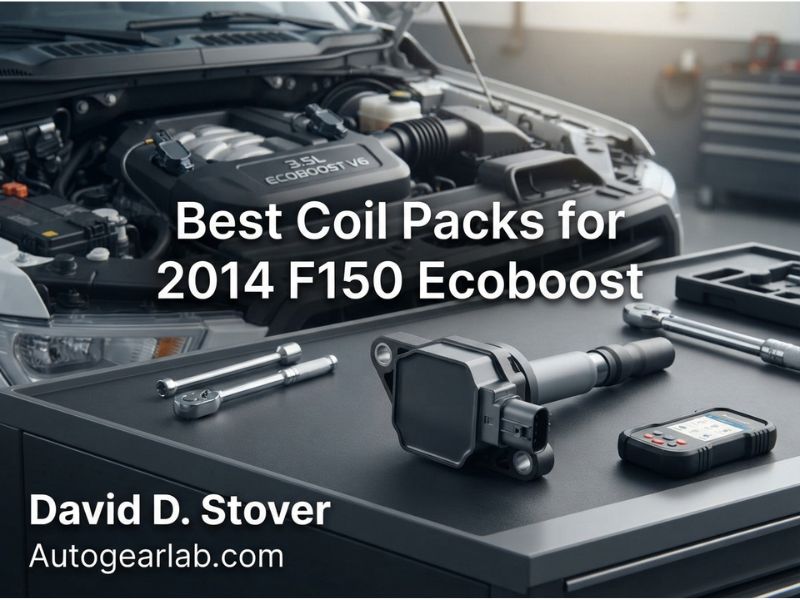
Best Coil Packs for 2014 F150 Ecoboost
| Image | Product Name | Check Price |
|---|---|---|
Best Choice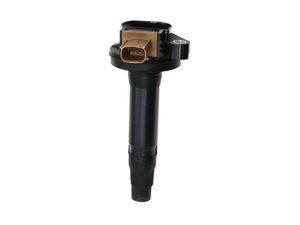 | Motorcraft DG549 Ignition Coil | Check Price |
Second Best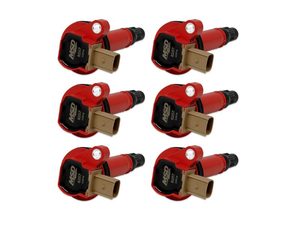 | MSD 82576 3.5L EcoBoost Ignition Coil Set | Check Price |
Third Choice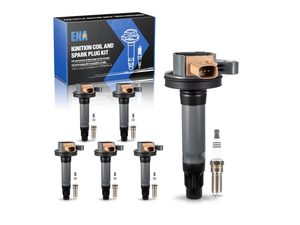 | ENA UF646 Ignition Coil and Iridium Spark Plug Kit | Check Price |
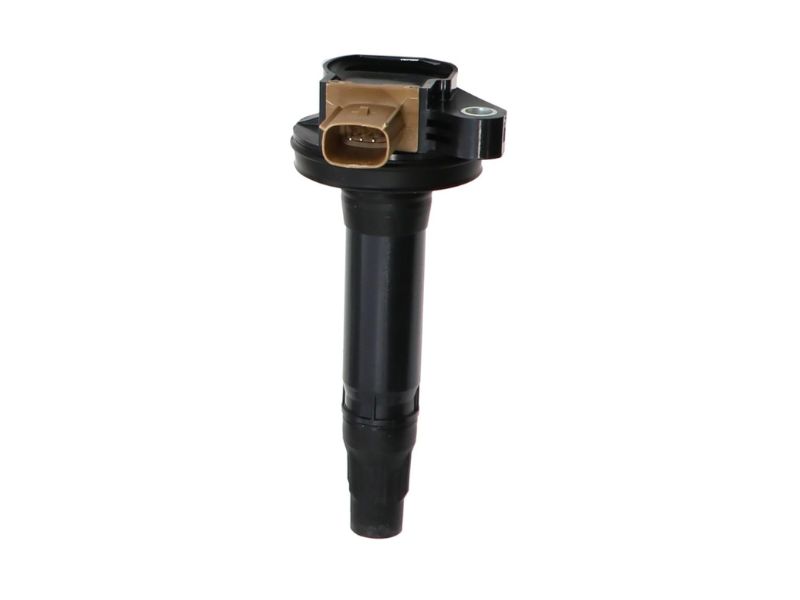
1. Motorcraft DG549 Ignition Coil
Key Features
- DG549 direct ignition coil
- Cross-reference BL3Z-12029-C
- Designed for compatible turbocharged Ford applications
- Coil-on-plug construction
- Factory-style connector and mounting arrangement
- Internal insulation designed to resist electrical arcing
- Temperature-resistant construction
- Sold as one individual ignition coil
The Motorcraft DG549 is my first choice for a 2014 F-150 3.5 EcoBoost when the objective is straightforward, factory-oriented ignition repair.
This truck uses six individual ignition coils, one for each cylinder. Rather than relying on a traditional shared coil pack and long plug wires, the coil-on-plug system positions each coil directly over its spark plug. That reduces the high-voltage path and allows the engine-control system to manage ignition for each cylinder independently.
The DG549 is particularly appealing because it is designed around the electrical and physical requirements of the original application. Its cross-reference to BL3Z-12029-C is an important fitment detail for the earlier 3.5L EcoBoost system.
Motorcraft describes this coil as using internal insulation intended to prevent arcing and a lamination-stack design intended to create a consistent magnetic field. Those characteristics matter because an ignition coil operates by stepping the vehicle’s relatively low system voltage up to the much higher voltage required to create a spark across the plug gap.
That job becomes demanding on a turbocharged engine.
As boost pressure rises, cylinder pressure also rises. Higher cylinder pressure generally makes it harder for the spark to jump the plug gap. A weak coil, deteriorated boot, worn plug, or excessively large plug gap may therefore produce a misfire under hard acceleration even if the engine appears reasonably smooth at idle.
For a stock 2014 EcoBoost, I prefer restoring the ignition system to the correct operating condition rather than immediately searching for a supposedly higher-output coil.
The DG549 also makes financial sense when only one coil has failed. If a scan tool reports a cylinder-specific misfire and a coil-swap test confirms that the misfire follows the coil, replacing that individual unit is generally a logical repair.
There is no automatic requirement to replace all six coils because one failed.
For example, suppose the engine records a P0303 code for cylinder three. Moving the cylinder-three coil to cylinder five and finding that the misfire changes to P0305 provides useful evidence that the coil itself is faulty. In that situation, replacing the identified coil is more targeted than installing six new components without further diagnosis.
Spark-plug condition should still be checked.
A worn plug can increase the voltage demand on the coil. If the plugs have accumulated substantial mileage or their history is unknown, inspecting all six while working on the ignition system is sensible.
The rubber boot also deserves attention. Look for carbon tracking, cracks, hardened rubber, moisture, oil, or obvious electrical burn marks. Carbon tracking often appears as a thin dark path along an insulator where high voltage has been escaping.
If contamination is present inside the plug well, find its source. Installing a new coil into a wet or oil-filled well may allow the underlying problem to continue.
The main disadvantage of the DG549 is that it is an individual replacement. Owners planning a preventive replacement of all six coils must purchase six units, which makes a packaged six-coil set more convenient.
I would still choose the DG549 when originality, straightforward compatibility, and individual repair are the priorities.
What I Like
- Correct factory-oriented coil family for the 2014 3.5 EcoBoost
- Ideal for replacing one diagnosed failed coil
- Direct coil-on-plug configuration
- Designed for temperature extremes and demanding engine-bay conditions
- No reason to replace five healthy coils unnecessarily
- Good fit for stock daily-driven or towing applications
What I Do Not Like
- One coil per package rather than a complete six-cylinder set
- Replacing all six can cost more than some bundled aftermarket options
- Will not correct a misfire caused by worn plugs, injectors, wiring, or mechanical problems
Verdict
The Motorcraft DG549 is the coil I would choose first for most 2014 F-150 3.5 EcoBoost repairs. It provides the correct factory-style approach and is especially practical when diagnostic testing has identified one defective coil.
If all six coils genuinely need replacement or the truck has substantial performance modifications, one of the complete sets below may be more convenient.
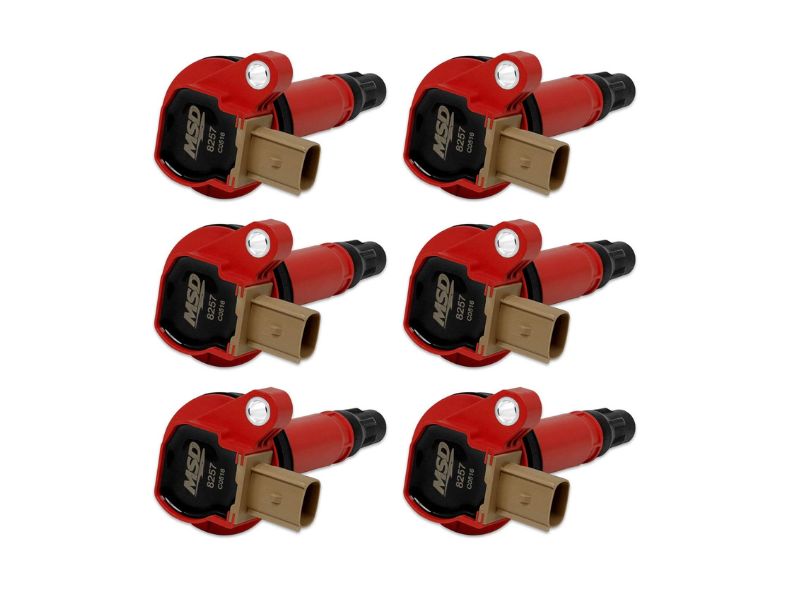
2. MSD 82576 3.5L EcoBoost Ignition Coil Set
Key Features
- Complete set of six ignition coils
- Designed for 3.5L EcoBoost V6 applications
- Compatible with the 3-pin connector system
- Direct bolt-in installation
- Compatible with factory engine controls
- Increased copper-winding design
- Engineered for sustained high-RPM operation
- Suitable for the 2014 F-150 3.5 EcoBoost application
The MSD 82576 takes a different approach from the Motorcraft DG549. Instead of supplying one factory-oriented replacement coil, it provides six matching coils designed specifically for the earlier 3.5L EcoBoost ignition system.
For a 2014 F-150 owner who genuinely wants to replace the entire set, that is convenient.
MSD specifies this kit for the 3-pin connector configuration used by compatible 3.5L EcoBoost engines. The company also designs the kit as a direct replacement that works with the factory engine-control system, so it does not require converting the ignition architecture simply to install the coils.
The internal design emphasizes increased copper windings and consistent output during high-RPM operation. That makes this option particularly interesting for owners whose trucks operate under more demanding conditions.
A tuned EcoBoost deserves special consideration because increasing boost raises cylinder pressure. Higher cylinder pressure can increase the voltage required for reliable spark initiation. Aggressive calibrations, greater boost, and other engine modifications can therefore expose weaknesses in plugs or coils that were less apparent under factory operating conditions.
However, I would not interpret performance-oriented ignition coils as an automatic horsepower upgrade.
If the factory coils and plugs already ignite the mixture reliably, simply installing coils capable of greater output does not guarantee additional power. The engine-control strategy, fuel, air mass, boost level, combustion conditions, and calibration determine actual engine output.
Where stronger ignition capability can be useful is maintaining spark stability when operating conditions become more difficult.
The full six-piece arrangement also creates consistency. All cylinders receive coils of the same design and service age. That can be useful on a truck where several original coils are aging, multiple cylinders have experienced ignition faults, or previous repairs have resulted in a mixture of different replacement coils.
I would not use the six-pack format as a reason to skip diagnosis, though.
A 3.5 EcoBoost can misfire because of:
- Spark plugs
- Ignition coils
- Coil connectors
- Wiring
- Fuel injectors
- Intake or air-management problems
- Compression loss
- Mechanical valvetrain issues
- Other engine-management faults
Installing six performance coils cannot repair a faulty injector or low-compression cylinder.
The spark plugs become even more important on a modified truck. A tuned 3.5 EcoBoost may require a particular plug type, heat range, or gap according to the calibration and boost level.
I would follow the recommendations of the calibration provider or engine builder for a modified application rather than relying on a generic plug-gap recommendation.
For a completely stock truck, use the correct factory-specified plug configuration unless there is a valid reason to change it.
Installation remains similar to installing conventional replacements. Disconnect each electrical connector carefully, remove the coil retaining hardware, pull the old unit from the spark-plug well, inspect the area, and install the replacement.
Because the kit contains all six coils, it is useful to work methodically and service one location at a time. This reduces the possibility of leaving a connector unsecured or allowing debris into an open plug well.
The MSD 82576 is ultimately most appropriate when a complete set is justified and the buyer wants something more performance-oriented than an individual OE-style replacement.
What I Like
- Includes all six coils required for the V6
- Specifically designed for compatible 3.5L EcoBoost engines
- Correct 3-pin configuration for the intended system
- Direct bolt-in installation
- Compatible with factory engine controls
- Particularly relevant to modified or demanding applications
What I Do Not Like
- Unnecessary expense if only one factory coil has failed
- Does not guarantee additional horsepower on an otherwise healthy stock engine
- A performance coil set cannot compensate for incorrect plug gap or an unrelated engine problem
Verdict
I would choose the MSD 82576 when a 2014 F-150 needs a complete six-coil replacement and the owner prefers a performance-oriented ignition solution.
For a stock truck with one confirmed failed coil, the Motorcraft DG549 remains my preferred approach. For a tuned truck or a full ignition refresh, however, the MSD set becomes more compelling.
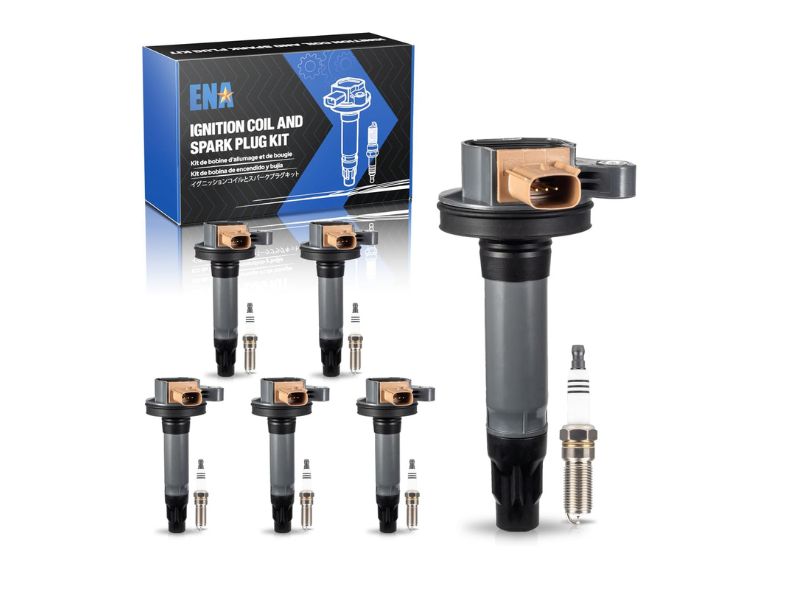
3. ENA UF646 Ignition Coil and Iridium Spark Plug Kit
Key Features
- Six UF646/DG549-compatible ignition coils
- Six iridium-style spark plugs
- Complete V6 ignition-service package
- Bolt-on coil installation
- Intended for compatible 3.5L EcoBoost applications
- Cross-references common BL3Z-series coil numbers
- Useful when plugs and coils both require service
The ENA kit is the most comprehensive package of these three options because it includes both six ignition coils and six spark plugs.
That combination can make sense on an older 2014 F-150 where the spark plugs are due for service and the ignition coils are also becoming questionable.
The coil side of the kit is based around the UF646/DG549 family, which is the important compatibility reference for the 2014 3.5 EcoBoost application.
The inclusion of plugs matters because coil performance and plug condition are closely connected.
An ignition coil stores electrical energy and releases it at a high voltage when commanded by the engine controller. That energy must then jump the spark-plug gap inside a pressurized combustion chamber.
As the electrodes wear, the plug gap can increase. The greater the distance, the more voltage the ignition system generally needs to create a spark.
Under boost, the problem can become more noticeable because the denser air-fuel mixture creates more resistance to the spark.
This is why some EcoBoost ignition problems are most noticeable during:
- Highway acceleration
- Passing
- Towing
- Climbing grades
- Heavy throttle
- Higher boost operation
An engine may idle smoothly yet hesitate or misfire when cylinder pressure rises.
For a truck with worn plugs and several aging coils, replacing both components together gives the ignition system a more complete refresh.
There is also a diagnostic benefit to starting with six matched coils and six fresh plugs when the existing components have an unknown history. If previous owners replaced different coils at different times and plug mileage is uncertain, a complete service creates a known baseline.
However, this is not automatically the best repair for every 2014 F-150.
If the truck recently received the correct spark plugs and only one coil has failed, replacing all six plugs again provides little value. Similarly, a single-cylinder misfire should still be diagnosed before purchasing a complete tune-up kit.
The spark plugs also require correct installation.
Always start the threads carefully by hand. The cylinder heads are aluminum, so cross-threading a plug can turn routine maintenance into a much larger repair.
Use the appropriate service torque instead of simply tightening until the plug feels secure. Torque matters because both undertightening and overtightening can create problems.
The plug gap should also be checked according to the correct application requirements. Even when plugs are supplied as part of a kit, I would not blindly assume that every plug is ready for every stock or modified configuration.
A tuned truck may need a different gap than a standard calibration.
The coils themselves should install in the original locations without converting the ignition system. As with the other products, inspect each plug well for contamination and examine the connectors for broken locks or damaged wires.
The primary compromise is that this is an aftermarket maintenance bundle rather than my first choice for a single factory-style replacement. The Motorcraft DG549 is more focused when only one coil needs attention, while the MSD set is more appropriate when the goal is a performance-oriented full set.
The ENA kit earns its place because it solves a different problem: refreshing both major serviceable parts of the ignition system at once.
What I Like
- Six coils and six plugs in one package
- Appropriate UF646/DG549 coil family for the application
- Convenient for a complete ignition-system refresh
- Useful when plug condition is already questionable
- Avoids sourcing coils and plugs separately
What I Do Not Like
- More parts than necessary for an isolated coil failure
- Plug suitability and gap still need to match the application
- Not my first choice when maximum factory-oriented replacement consistency is the priority
Verdict
The ENA UF646 coil-and-plug kit is most useful for a 2014 F-150 that needs more than one ignition coil and is also due for spark-plug service.
I would not buy it merely because one coil fails. For a broader high-mileage tune-up, though, its combination of six compatible coils and six plugs makes the package convenient.
2014 F150 EcoBoost Coil Pack Comparison
| Product | Coil Quantity | Coil Family | Connector/System | Spark Plugs Included | Replacement Strategy | Main Strength | Main Limitation |
| Motorcraft DG549 | 1 | DG549 / UF646 | Factory-style COP | No | Individual repair | Factory-oriented fit and construction | One coil per package |
| MSD 82576 | 6 | 3.5 EcoBoost 3-pin | 3-pin COP | No | Complete set | Performance-oriented six-coil package | Excessive for one failed coil |
| ENA UF646 Coil & Plug Kit | 6 | UF646 / DG549 | Factory-style COP | Yes | Complete ignition refresh | Coils and plugs supplied together | Unnecessary if plugs are still fresh |
The main decision comes down to the type of repair you are performing. I prefer the Motorcraft DG549 when one coil has actually failed. The MSD 82576 is more appropriate when replacing all six and wanting a performance-oriented set, while the ENA kit is practical when both coils and plugs need attention.
Understanding the 2014 F150 3.5 EcoBoost Ignition System
The 2014 F-150 3.5 EcoBoost is a twin-turbocharged V6 with six ignition coils.
Each cylinder has its own coil positioned over the spark plug. This configuration is commonly called coil-on-plug, or COP.
The engine controller determines when each coil should charge and when it should discharge its energy through the spark plug.
This arrangement provides precise ignition control, which is particularly important on a turbocharged, direct-injected engine operating across widely varying loads and boost pressures.
For replacement purposes, DG549, UF646, and BL3Z-12029-C are useful coil references associated with this generation.
That is an important distinction from later 3.5 EcoBoost F-150 engines. Later generations can use a different ignition-coil family, so a product that fits a newer truck should not automatically be assumed to fit a 2014.
How to Choose Coil Packs for a 2014 F150 EcoBoost
Verify DG549/UF646 Compatibility
Start with fitment.
A compatible replacement should match your existing:
- Coil body
- Three-pin electrical configuration
- Mounting arrangement
- Boot
- Electrical connector
- Part-number family
The 2014 truck is commonly associated with DG549/UF646-type coils.
Comparing the number printed or molded on an existing coil provides additional confirmation.
Decide Between One Coil and Six
The engine requires six coils to operate, but that does not mean all six must be replaced simultaneously.
Replacing one coil is reasonable when:
- One cylinder consistently misfires
- A coil-swap test moves the misfire
- Other coils function normally
- The plugs and boots are in good condition
A complete set becomes more reasonable when:
- Multiple coils have failed
- Several coils show physical deterioration
- The existing set contains unknown replacement parts
- You are performing a complete ignition refresh
- A modified truck requires a matched performance-oriented set
Replacing components based on diagnosis is preferable to replacing them solely because they have the same mileage.
Consider Spark-Plug Condition
Spark plugs are one of the first things I would inspect when a 3.5 EcoBoost develops an ignition-related misfire.
The plug has to fire in a pressurized cylinder, and turbocharging increases that pressure under load.
As the plug wears, its gap may increase. This places more demand on the coil.
Potential signs of plug or ignition trouble include:
- Misfire under boost
- Rough acceleration
- Engine hesitation
- Rough idle
- Reduced power
- Flashing check-engine light
Do not assume the coil is responsible for every one of these symptoms.
Stock vs. Tuned Engine
A completely stock 2014 F-150 usually needs reliable factory-compatible ignition rather than unusually high advertised coil output.
A tuned truck can be different.
Increased boost and cylinder pressure may make ignition stability more challenging. Tuners may also recommend specific plugs, heat ranges, and plug gaps for a particular calibration.
If your truck is modified, use the ignition specifications appropriate to that setup.
Do not randomly tighten the plug gap or install a colder plug based only on general internet advice. Engine modifications, fuel, boost, and calibration all influence the correct choice.
Heat Resistance and Insulation
Ignition coils experience repeated heating and cooling every time the truck is driven.
Heat can eventually affect:
- Plastic housings
- Electrical insulation
- Rubber boots
- Internal windings
- Connector seals
The EcoBoost engine bay also contains turbochargers and associated exhaust components that contribute considerable heat.
Good insulation and stable construction are therefore more meaningful than cosmetic design.
Symptoms of a Bad Coil Pack on a 2014 F150 EcoBoost
A failing ignition coil may cause:
- Rough idle
- Engine shaking
- Hesitation
- Loss of power
- Misfire under acceleration
- Poor throttle response
- Hard starting
- Check-engine light
- Flashing check-engine light
- Increased fuel consumption
Cylinder-specific misfire codes generally appear in the P0301 through P0306 range.
A P0300 code indicates random or multiple-cylinder misfire.
Neither type of code automatically proves that a coil is defective.
How to Diagnose a Suspected Bad Coil
A coil-swap test is one of the most practical diagnostic techniques when you have a cylinder-specific misfire.
Suppose the scan tool shows P0304.
If access allows:
- Identify cylinder four.
- Remove its ignition coil.
- Move that coil to another cylinder.
- Move the known-good coil back to cylinder four.
- Reconnect everything correctly.
- Clear or monitor the diagnostic data.
- Run the engine under suitable conditions.
If the misfire follows the moved coil, the coil is strongly implicated.
If the misfire remains on cylinder four, investigate other causes.
These can include the spark plug, fuel injector, electrical connector, wiring, compression, valve operation, or another engine problem.
This approach can prevent replacing six coils when none of them is responsible.
Why an EcoBoost May Misfire Under Boost
An under-boost misfire is especially relevant to the 3.5 EcoBoost.
Cylinder pressure rises significantly when the turbochargers provide boost. Higher pressure makes the plug gap more difficult for the spark to cross.
A marginal ignition component may therefore work during idle or gentle cruising but fail under heavy load.
Potential causes include:
- Worn spark plugs
- Excessive plug gap
- Weak ignition coil
- Damaged coil boot
- Carbon tracking
- Incorrect plug specification
- Fuel-delivery problems
- Calibration problems on modified engines
Replacing coils without inspecting the plugs can miss half of the ignition system.
Installation Tips
Work on a cool engine whenever possible.
Disconnect each coil connector carefully because heat and age can make plastic locking tabs brittle.
After removing the retaining hardware, pull the coil upward without excessive twisting or side loading.
Before installing the replacement, inspect the spark-plug well.
Look for Moisture
Water around a plug or coil boot can provide an unintended path for high voltage and cause a misfire.
Determine how the moisture entered before installing new parts.
Look for Oil
Oil contamination may indicate a sealing issue.
Leaving the underlying leak unresolved can shorten the life of rubber components and complicate ignition diagnosis.
Inspect for Carbon Tracking
Carbon tracking usually appears as a thin black or gray line along the boot or spark-plug insulator.
Once a conductive path develops, high voltage may repeatedly follow it instead of firing correctly across the plug gap.
Check the Connector
A connector that appears attached may still have damaged terminals or a broken lock.
Make sure it seats securely and inspect the nearby wiring for heat damage or chafing.
Maintaining Your EcoBoost Ignition System
Ignition coils generally do not have a routine maintenance procedure such as cleaning or adjustment.
The best way to support coil life is to maintain the surrounding ignition system properly.
Use the correct spark plugs, keep them within their appropriate service interval, and ensure the gap is correct for the application.
Keep plug wells clean and dry.
Repair oil or water intrusion.
Inspect connectors whenever coils are removed.
And diagnose a recurring misfire instead of repeatedly installing replacement coils.
A coil that fails again shortly after replacement may indicate a problem elsewhere in the system rather than simple bad luck.
Common Mistakes to Avoid
Replacing All Six Coils for One Misfire
A cylinder-specific misfire should be diagnosed before replacing an entire set.
One failed coil does not automatically mean five others have failed.
Ignoring the Spark Plugs
Worn or improperly gapped plugs can place greater demand on coils and cause misfire under boost.
Buying Coils for a Later EcoBoost Generation
Not every 3.5 EcoBoost coil is interchangeable.
The 2014 F-150 belongs to the earlier DG549/UF646-style family.
Choosing by Advertised Voltage Alone
Higher voltage capability does not automatically make a coil better for a stock engine.
Correct electrical characteristics, fitment, insulation, and consistent operation matter more.
Assuming Every Misfire Is Ignition Related
Fuel delivery, wiring, compression, valvetrain operation, air-management issues, and other faults can also cause misfires.
Diagnosis should come before parts replacement.
Frequently Asked Questions
What are the best coil packs for 2014 f150 ecoboost trucks?
The Motorcraft DG549 is my primary recommendation for most factory-style 2014 F-150 EcoBoost repairs.
It matches the correct earlier 3.5 EcoBoost coil family and makes particular sense when one failed coil has been diagnosed. The MSD 82576 is preferable when a complete performance-oriented six-coil set is desired, while the ENA UF646 kit is practical when the spark plugs also need replacement.
How many coil packs does a 2014 F150 3.5 EcoBoost have?
The 2014 F-150 3.5 EcoBoost uses six individual ignition coils.
It is a V6 engine with one coil mounted directly over each spark plug. Because the cylinders have separate coils, one faulty unit can normally be replaced without automatically changing the other five.
What coil pack does a 2014 F150 EcoBoost use?
The 2014 3.5 EcoBoost commonly uses the DG549/UF646 ignition-coil family.
BL3Z-12029-C is another useful reference associated with the factory-style coil. Always confirm the existing coil number and vehicle application before ordering because similar-looking Ford engines can use different ignition components.
Does the 2014 F150 EcoBoost use 3-pin coils?
Yes, the compatible 3.5L EcoBoost ignition system uses a three-pin coil configuration.
Connector configuration is an important fitment check. A coil intended for a different EcoBoost generation may not have the same connector or operating characteristics even though the engine displacement is also 3.5 liters.
Should I replace all six coils if one goes bad?
No, one confirmed failed coil can normally be replaced by itself.
Replacing all six may be justified when several coils are failing, the existing set is deteriorated, or you specifically want a complete matched refresh. Diagnosis should determine the repair rather than automatically replacing every coil.
Can bad spark plugs cause an EcoBoost misfire?
Yes, worn or incorrectly gapped spark plugs are a common ignition-related cause of misfires.
Higher cylinder pressure under boost makes spark-plug condition particularly important. Excessive gap can increase voltage demand and expose weakness in the ignition system, especially during hard acceleration or towing.
Can a bad coil cause a flashing check-engine light?
Yes, a severe coil-related misfire can cause the check-engine light to flash.
A flashing light generally indicates an active misfire serious enough to risk excessive catalytic-converter temperatures. Reduce engine load and diagnose the problem promptly rather than continuing to drive normally.
Why does my 2014 EcoBoost misfire during acceleration?
Higher cylinder pressure under boost can reveal weak plugs, coils, or other ignition problems.
Inspect spark-plug condition and gap, coil boots, ignition coils, and electrical connections. Fuel delivery and mechanical issues can also create similar symptoms, so replacing coils without diagnosis is not always the correct solution.
Do performance coils add horsepower to a stock 3.5 EcoBoost?
Performance coils usually do not create meaningful extra horsepower when the original ignition system already works correctly.
Their additional ignition capability may become useful when higher boost or engine modifications increase spark demand. On a stock engine, restoring reliable ignition is generally more important than chasing a larger advertised output number.
Can I mix Motorcraft and aftermarket coils?
Compatible functioning coils can generally operate together without requiring all six to be identical.
For an isolated failure, there is little reason to discard five healthy coils solely to create a matching set. A complete matched set becomes more attractive when multiple old coils need replacement or their condition is uncertain.
Do new ignition coils need programming?
Direct-replacement ignition coils normally do not require programming after installation.
Once the correct coil is securely installed and connected, the existing engine-control system commands it. If a misfire code remains, additional diagnosis may be required rather than coil programming.
Should I replace the spark plugs when changing coils?
Replace the plugs when they are worn, incorrectly gapped, damaged, or due for service.
A single failed coil does not automatically require six new plugs. However, checking plug condition is smart because worn plugs can increase ignition demand and contribute to the same symptoms that led to coil replacement.
Can I drive my F150 with a bad ignition coil?
Driving for an extended period with an active misfire is not recommended.
A misfire can reduce power and allow unburned fuel into the exhaust, potentially overheating the catalytic converter. Severe shaking or a flashing check-engine light warrants prompt attention.
How can I confirm that an ignition coil is bad?
A coil-swap test can show whether a cylinder-specific misfire follows the suspected coil.
Move the suspected coil to another cylinder and monitor the misfire afterward. If the code follows the coil, the coil is strongly implicated. If the misfire remains on the original cylinder, investigate the plug, injector, wiring, compression, and other possible causes.
Is DG549 the same as UF646?
DG549 and UF646 are commonly used references for the same general 2014-compatible coil application family.
Different brands use different numbering systems, so cross-reference numbers help identify compatible replacements. Physical connector and vehicle fitment should still be confirmed rather than relying on one interchange number alone.
Conclusion
Choosing the best coil packs for 2014 f150 ecoboost trucks becomes much easier once you focus on the correct DG549/UF646 ignition family and determine whether you actually need one coil or an entire set.
The Motorcraft DG549 remains my primary recommendation for most owners. It is particularly suitable for a stock 2014 F-150 when diagnostic testing identifies one failed ignition coil and the remaining five continue operating correctly.
The MSD 82576 is the alternative I would consider when replacing all six coils, especially on a modified truck or when a performance-oriented matched set is preferred. The ENA UF646 coil-and-plug kit is better suited to a broader ignition refresh when both six coils and six spark plugs need attention.
Whichever route you choose, inspect the spark plugs, coil boots, plug wells, connectors, and wiring rather than treating every misfire as a failed coil. A coil-swap test can also help prevent unnecessary parts replacement.
For a typical factory-style repair, I would start with the Motorcraft DG549, verify that the misfire actually follows the suspected coil, and replace additional ignition components only when their condition or diagnostic results justify it.