
Choosing the best ignition coil for Chevy 5.3 is more complicated than simply finding a coil advertised for a 5.3-liter V8. Chevrolet has used several generations of 5.3L engines, and the ignition-coil design can change according to the vehicle year, engine family, original coil shape, connector arrangement, and specific application. A coil that fits one Silverado 5.3 may therefore be completely wrong for another truck with the same displacement.
My primary recommendation is the Delphi GN10165 Ignition Coil for compatible applications because it combines OE-focused construction, broad GM fitment, and a conventional replacement design without unnecessary performance claims. It makes the most sense when you have diagnosed one failed coil and want a dependable replacement rather than automatically changing all eight.
For many earlier 5.3L trucks using the D585/UF262 round-coil design, I would consider the ENA Round Ignition Coil Pack UF262/D585. It provides a straightforward alternative for older Silverado, Tahoe, Suburban, and related applications where matching the original D585-style coil is the priority.
The A-Premium Set of 8 Square Ignition Coil Packs is the more practical option when a compatible newer 5.3L engine uses the square-coil configuration and you specifically want to replace the complete eight-coil set.
Before ordering any of them, visually inspect the coils already installed on your engine and confirm the vehicle year, engine, connector, mounting arrangement, and original interchange number. Round and square coils should never be assumed interchangeable simply because both are listed for a Chevrolet 5.3L V8.
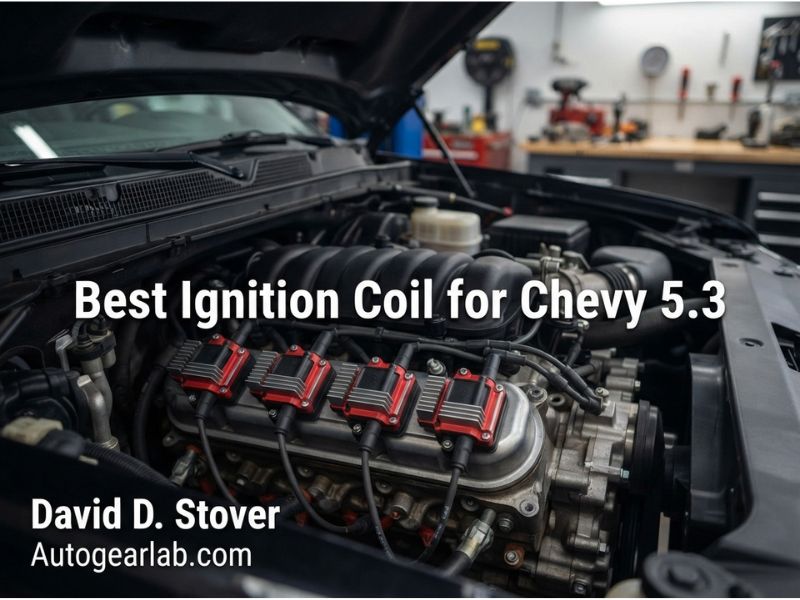
Best Ignition Coil for Chevy 5.3
| Image | Product Name | Check Price |
|---|---|---|
Best Choice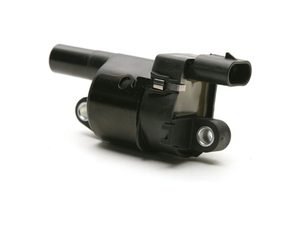 | Delphi GN10165 Ignition Coil | Check Price |
Second Best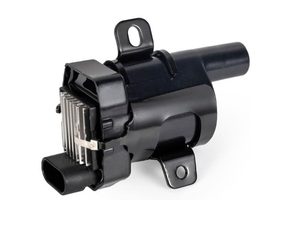 | ENA Round Ignition Coil Pack UF262/D585 | Check Price |
Third Choice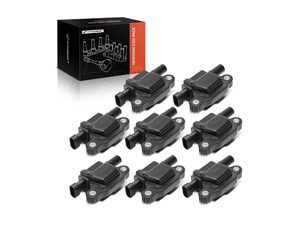 | A-Premium Set of 8 Square Ignition Coil Packs | Check Price |
1. Delphi GN10165 Ignition Coil
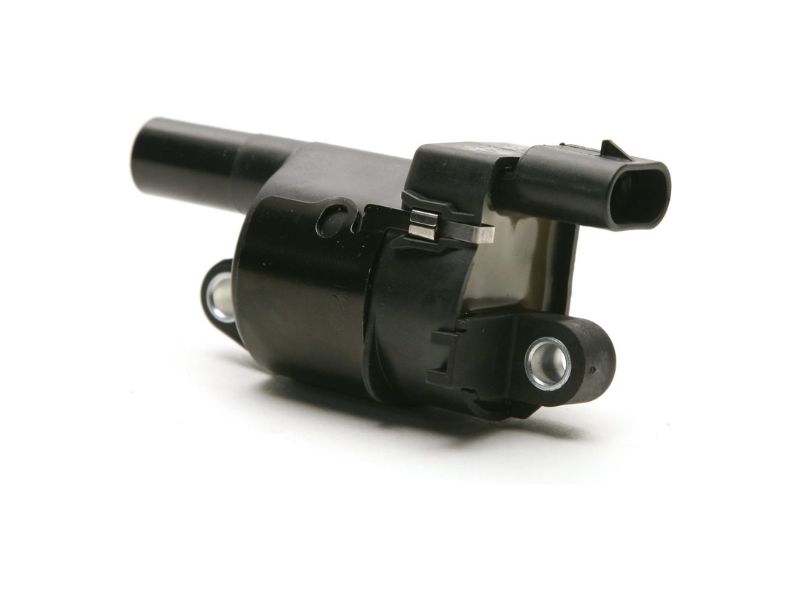
Key Features
- 12-volt electronic ignition coil
- Coil-near-plug configuration
- Four-terminal blade connection
- Two mounting holes
- Designed as a standard replacement coil
- Compatible with numerous GM ignition-coil applications
- Cross-references with several common GM and aftermarket coil numbers
- Sold as an individual ignition coil
The Delphi GN10165 is the option I would start with when looking for an OE-oriented replacement coil for a compatible Chevrolet 5.3L engine. Delphi has extensive experience supplying vehicle electronics and ignition components, and this coil is designed around conventional replacement requirements rather than simply advertising unusually high voltage numbers.
The GN10165 uses a coil-near-plug ignition arrangement. On a Chevy 5.3 V8 using this type of system, each cylinder has an individual coil mounted near the corresponding spark plug. A short spark-plug wire connects the coil to the plug on many truck applications. This arrangement gives each cylinder independent ignition control while keeping the high-voltage path relatively short.
One reason I prefer this coil for general replacement work is that its specification is clearly defined. It operates in a 12-volt electronic ignition system, uses four blade terminals, and is designed for applications that match its mounting and connector configuration. That information is much more useful than vague claims about increased horsepower or extreme output voltage.
The GN10165 also appears under several interchangeable or related coil references used across GM V8 applications. That makes it relevant to many Silverado, Tahoe, Suburban, Avalanche, Express, and other vehicles, but this wide catalog coverage should not be interpreted as universal fitment.
This distinction matters because Chevrolet 5.3 engines have been produced across multiple engine generations. Even vehicles within similar model years can have different coil bodies. The safest approach is to compare the existing coil physically and verify the original part number before ordering.
For a stock or lightly modified 5.3, I generally prefer a correctly matched OE-style coil over a performance coil purchased only because its advertising promises additional voltage. A properly functioning stock ignition system already provides enough spark energy for normal combustion. The real objective when replacing a failed coil is restoring consistent spark delivery without introducing connector, mounting, or dwell-related problems.
Installation is reasonably straightforward once compatibility has been established. Access varies between trucks and SUVs, but the general process involves disconnecting the electrical connector, removing the spark-plug wire from the coil, removing the mounting fasteners, and installing the replacement in the same position.
I would inspect the plug wire at the same time. Heat from the exhaust manifold and years of thermal cycling can harden the wire boot or damage insulation. Installing a new coil while leaving a deteriorated wire or heavily worn spark plug in service can make diagnosis confusing if the misfire remains.
Another advantage is that this is an individual coil. If diagnostic testing identifies one failed cylinder and the remaining coils are operating normally, replacing only the defective coil can be more reasonable than automatically purchasing a full set.
The limitation is equally clear: because the GN10165 covers specific mounting and connector arrangements, it cannot solve the broad Chevy 5.3 fitment problem by itself. Owners of earlier D585-equipped trucks or vehicles using a square coil must select the matching design instead.
What I Like
- Clearly defined OE-style replacement configuration
- Suitable for replacing one confirmed failed coil
- Four-terminal electronic design for compatible applications
- Broad coverage across numerous GM V8 applications
- No need to replace seven functioning coils unnecessarily
- Strong choice for stock daily-driven vehicles
What I Do Not Like
- Sold individually rather than as a complete V8 set
- Compatibility still requires careful verification
- Not interchangeable with every round or square Chevy 5.3 coil
Verdict
I would choose the Delphi GN10165 first for a compatible Chevy 5.3 that needs a dependable, individual replacement coil. Its biggest advantage is not an exaggerated performance claim; it is the combination of established ignition-component engineering, clearly defined specifications, and practical OE-style replacement.
If your engine uses a different coil body or mounting arrangement, however, the correct solution is to choose the matching coil rather than attempting to adapt this one.
2. ENA Round Ignition Coil Pack UF262/D585
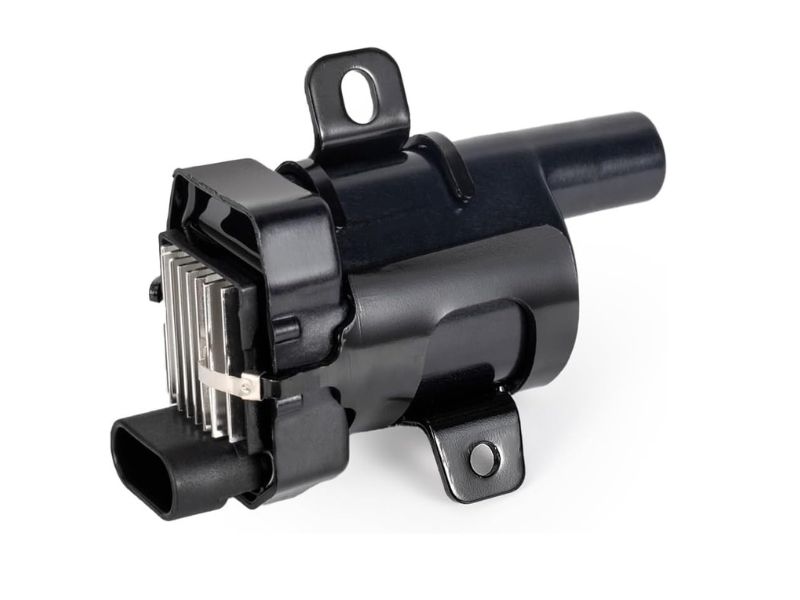
Key Features
- Round-body ignition-coil design
- Intended for UF262/D585-style applications
- Designed for several earlier Chevy and related GM V8 applications
- Suitable for many 5.3L vehicles from the early 2000s
- Individual replacement coil
- Direct-replacement approach when original coil style matches
- Useful for older Silverado, Tahoe, Suburban, and similar applications
The ENA UF262/D585 coil serves a different group of Chevy 5.3 owners than the Delphi GN10165. I would consider this model primarily when working with an earlier 5.3L truck or SUV that already uses the distinctive D585-style round ignition coil.
This is an important distinction because early LS-based truck engines are often discussed as though they all use the same coil. They do not. Certain vehicles from this era can have different coil designs, including round and more rectangular configurations. The body shape, bracket, electrical connector, and spark-plug-wire orientation should therefore be checked before ordering.
For an older Silverado 1500, Tahoe, Suburban, or similar 5.3 application with the correct D585/UF262 configuration, this ENA coil offers a relatively simple way to replace one failing unit without changing the entire ignition system.
That can be useful on an older truck where one cylinder develops a repeatable misfire. For example, if a scan tool shows a cylinder-specific misfire, the coil can sometimes be swapped with a known-good cylinder during diagnosis. If the misfire follows the coil, that provides much stronger evidence that the coil itself is responsible.
I prefer that diagnostic approach to replacing parts based only on symptoms. A 5.3 that hesitates or idles roughly can also have a worn spark plug, damaged plug wire, injector issue, vacuum leak, wiring fault, poor engine ground, compression problem, or valvetrain issue. The presence of a misfire does not automatically prove the coil has failed.
The ENA coil is particularly appealing for older daily drivers where the owner wants a direct-style replacement without spending heavily on a complete performance ignition system. Provided the physical and electrical configuration matches, installation typically retains the factory location and existing plug-wire arrangement.
The D585 design is also well known among LS enthusiasts because these coils were used on many GM truck applications. That reputation sometimes creates another problem: owners assume any D585-looking coil is automatically an upgrade for any LS engine. I would avoid that assumption.
Changing coil styles can require different brackets, wiring arrangements, plug-wire lengths, or calibration considerations. For a normal repair, matching the original hardware is generally the simplest route.
Because this ENA model is sold as an individual coil, it also works well when only one coil has actually failed. There is no mechanical requirement that all eight coils be replaced simultaneously merely because they have similar mileage.
That said, if several original coils on a high-mileage engine have begun failing within a short period, replacing the remaining matched set may become more practical. The decision should be based on condition, diagnostic history, and how much labor is required to reach the coils.
The largest tradeoff compared with the Delphi option is brand positioning. ENA is primarily an aftermarket replacement choice. I would use it where price and compatibility with an older D585 application matter more than choosing an OE-oriented supplier.
What I Like
- Useful option for older D585/UF262-equipped 5.3 engines
- Allows single-coil replacement
- Straightforward factory-style installation when properly matched
- Appropriate for many early-2000s Chevy truck and SUV applications
- Avoids unnecessary conversion to another ignition-coil design
What I Do Not Like
- Fitment depends heavily on confirming D585/UF262 coil style
- Not appropriate for newer UF414 or square-coil systems
- Aftermarket construction may be less appealing to buyers who specifically want an OE-oriented brand
Verdict
I would choose the ENA UF262/D585 coil when maintaining an older Chevy 5.3 that already uses the correct round D585-style ignition system. It is a practical replacement rather than a universal LS coil.
The most important step is checking the existing coil before ordering. If your truck has a different coil shape or connector, use the matching replacement instead.
3. A-Premium Set of 8 Square Ignition Coil Packs
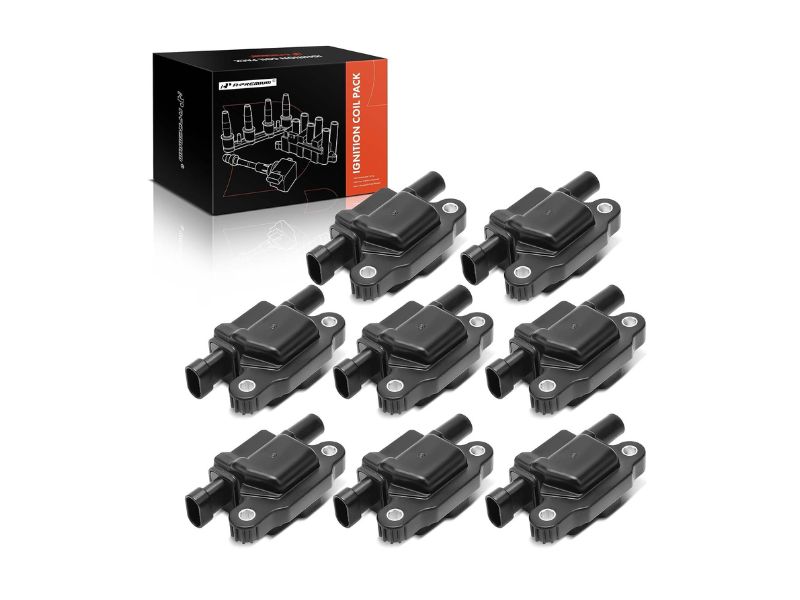
Key Features
- Complete set of eight ignition coils
- Square-coil configuration
- Intended for specific later Chevy 5.3 applications
- Compatible with appropriate Silverado 1500, Tahoe, Suburban, and related vehicles
- Direct bolt-on replacement design
- Replaces common square-coil reference numbers including UF-743
- Useful when replacing an entire aging coil set
The A-Premium eight-piece set is substantially different from my first two recommendations. Instead of providing a single coil, it gives you all eight coils needed for a V8, and it uses a square-body configuration intended for specific later applications.
I would consider this kit when two conditions are met. First, your vehicle must actually use the matching square-coil design. Second, replacing the complete set should make sense for the condition of the vehicle.
Certain later 5.3L Silverado, Tahoe, Suburban, Sierra, and Yukon applications can use square coils, while visually similar vehicles or engines may use round coils. This makes physical identification extremely important.
Do not order this kit merely because the year range and 5.3L displacement appear correct. Compare the original coil body, connector, mounting point, and interchange reference. If your existing coil is round, this square set is not the correct choice simply because the engine is also a 5.3.
Where it does fit, the eight-piece format has several advantages. Replacing the full set provides matching coils across every cylinder and can reduce repeated repair work when several old coils have already started failing.
A full set can be especially reasonable on an older high-mileage vehicle with multiple ignition faults, damaged coil housings, or evidence that previous repairs left a mixture of old and replacement units of uncertain origin.
However, I would not replace eight coils automatically because of a single P030x code. If one coil is clearly defective and the other seven are functioning correctly, replacing the one faulty component is often sufficient.
The same caution applies to persistent rough running. On later 5.3 engines, a misfire can have causes that have nothing to do with ignition coils. Spark plugs, injectors, wiring, compression, and valvetrain problems all deserve consideration. A complete set of new coils will not repair a mechanical cylinder problem.
From an installation standpoint, having eight matching coils in one package is convenient. It allows a complete ignition refresh without sourcing individual coils separately. I would pair that work with a careful inspection of the spark plugs and any plug wires used by the particular engine configuration.
Correct plug condition is particularly important. A worn plug with an excessive gap requires the ignition system to generate more voltage to jump the gap. That increased demand can stress ignition components and can produce misfires under acceleration or load.
The A-Premium set therefore makes the most sense as a complete replacement solution for the correct square-coil application, not as the default answer for every Chevy 5.3.
What I Like
- Includes all eight coils for a V8
- Good option when a complete matched set is genuinely needed
- Designed around specific square-coil applications
- Convenient for restoring an ignition system with several aging or questionable coils
- Eliminates the need to purchase eight individual units separately
What I Do Not Like
- Square configuration limits compatibility substantially
- Full-set replacement can be unnecessary when only one coil has failed
- Buyers must carefully distinguish UF-743-style coils from round alternatives
Verdict
I would choose the A-Premium set for a compatible square-coil Chevy 5.3 when replacing the full eight-coil set is justified. Its value comes primarily from convenience and complete-set coverage.
I would not choose it without physically checking the original coils first. The Chevy 5.3 family includes too many ignition-system variations to purchase solely by displacement.
Chevy 5.3 Ignition Coil Comparison
| Product | Quantity | Coil Style | Typical Application | Replacement Approach | Main Strength | Main Limitation |
| Delphi GN10165 | 1 | Round / coil-near-plug | Many compatible later GM V8 applications | Individual coil | OE-focused construction and broad application coverage | Must match exact connector and mounting style |
| ENA UF262/D585 | 1 | Round D585 style | Many earlier 5.3 truck and SUV applications | Individual coil | Practical solution for older D585-equipped engines | Not suitable for later coil designs |
| A-Premium Square Coil Set | 8 | Square | Specific later 5.3 applications | Complete V8 set | Eight matching coils in one package | Only appropriate for matching square-coil systems |
The biggest difference between these products is fitment rather than advertised performance. The Delphi GN10165 is my preferred general replacement for compatible applications. The ENA D585 is intended for a significantly different older coil configuration, while the A-Premium kit addresses buyers who need a complete set for a compatible square-coil engine.
How to Choose an Ignition Coil for a Chevy 5.3
Start With the Vehicle Year and Engine Application
“Chevy 5.3” describes an engine displacement, not one single ignition system.
The 5.3L V8 has appeared in multiple generations of Chevrolet trucks and SUVs. Changes in engine electronics, cylinder heads, ignition controls, brackets, connectors, and vehicle platforms mean two 5.3 engines can require different coils.
Before shopping, record the:
- Model year
- Vehicle model
- 5.3L engine specification
- Existing coil shape
- Connector configuration
- Original coil or interchange number
Using all of this information is much safer than searching by displacement alone.
Identify Round vs. Square Coil Design
This is one of the most important checks.
A round-body coil and a square-body coil may both appear in product catalogs for Chevrolet 5.3 engines, but that does not mean they are directly interchangeable.
Look closely at the coil already mounted to the valve cover. Compare the housing shape, mounting holes, electrical connector, and location of the high-voltage tower.
If the replacement does not visually and electrically match, confirm the application before installing it.
Understand D585, UF262, UF414, and Other References
Ignition coils are frequently identified by interchange numbers rather than only by brand and model.
D585/UF262 commonly refers to an older round truck-style coil used on numerous earlier LS-based applications.
UF414 and related references appear on later round-coil applications.
Newer engines may use other round or square designs.
These references are useful, but they should support fitment verification rather than replace it. Compare the original number whenever possible.
Decide Whether You Need One Coil or Eight
A Chevy 5.3 V8 uses eight ignition coils, one for each cylinder.
That does not mean all eight need replacement whenever one fails.
If one coil has been positively diagnosed as faulty and the others operate normally, I would usually consider replacing the failed unit only.
Replacing all eight becomes more reasonable when:
- Several coils are failing
- The original set has very high service time
- Multiple housings or connectors are damaged
- Previous repairs created a mixture of questionable coils
- Labor access makes repeated repairs particularly inconvenient
Do not confuse preventative replacement with diagnostic necessity.
Consider the Spark Plugs and Plug Wires
An ignition coil works as part of a system.
A worn spark plug can develop an excessive gap. The coil then has to produce higher voltage to fire across that gap, increasing electrical stress.
Depending on the specific 5.3 configuration, short spark-plug wires connect the coils to the plugs. These wires experience substantial exhaust-manifold heat and repeated thermal cycles.
Inspect for:
- Cracked or hardened boots
- Burn marks
- Damaged insulation
- Loose terminals
- Corrosion
- Excessively worn spark plugs
- Incorrect spark-plug gap
Replacing a coil while ignoring the actual cause of the increased ignition load can result in continuing problems.
Symptoms of a Bad Ignition Coil on a Chevy 5.3
A failing coil can cause several drivability symptoms, including:
- Rough idle
- Cylinder-specific misfire
- Hesitation during acceleration
- Loss of power under load
- Hard starting
- Flashing or illuminated check-engine light
- Increased fuel consumption
- Uneven exhaust note
However, none of these symptoms proves the coil is bad.
A worn spark plug, injector problem, wiring fault, vacuum leak, compression loss, or valvetrain problem can produce similar behavior.
Use Misfire Codes as a Starting Point
A diagnostic trouble code such as P0301 through P0308 identifies a misfire associated with a particular cylinder. P0300 normally indicates random or multiple-cylinder misfires.
A cylinder-specific code gives you a useful place to begin diagnosis, but the code identifies the misfire—not necessarily the component causing it.
When practical, swapping the suspected coil with one from another cylinder can help. If the misfire moves with the coil, the coil becomes a much stronger suspect.
If the misfire remains on the original cylinder, continue diagnosis rather than replacing more coils.
Installation and Setup Tips
Ignition-coil replacement is usually manageable for an experienced DIY owner, but the details differ by vehicle.
Work on a cool engine and keep the ignition switched off. Remove engine covers or intake components only when necessary for access.
Before pulling a plug wire, grip the boot rather than yanking the wire itself. Twisting the boot slightly can help break the seal.
Inspect the electrical connector carefully. Plastic locking tabs can become brittle after years of engine-bay heat.
When installing the replacement:
- Match it physically to the removed coil.
- Place it in the original mounting position.
- Reinstall the correct hardware.
- Tighten fasteners to the vehicle’s specified torque.
- Fully seat the electrical connector.
- Fully seat the plug-wire boot.
- Confirm that wiring is routed away from hot or moving components.
Do not guess at tightening torque simply because the bolt appears small. Use the correct service specification for the application.
Maintaining Chevy 5.3 Ignition Coils
Ignition coils generally do not require scheduled cleaning or adjustment. Their longevity depends heavily on heat exposure, electrical condition, plug condition, and component quality.
The best preventative steps are straightforward.
Keep the spark plugs within the correct service interval and use the specified plug type and gap. Replace damaged plug wires. Repair oil or coolant leaks that contaminate ignition components. Keep electrical connectors secure and address charging-system problems that expose electronics to abnormal voltage.
If one coil fails, inspect the surrounding components before installing the replacement. A repair that addresses the entire cause is more valuable than simply replacing the part that finally stopped working.
Common Mistakes When Buying Chevy 5.3 Ignition Coils
Buying by Engine Size Alone
This is the most common mistake.
A listing that says “5.3L Chevy” is not enough information. Verify the year, model, coil shape, connector, and interchange number.
Assuming Round and Square Coils Are Interchangeable
They may use different housings, connectors, mounting arrangements, and electrical characteristics.
Always match the factory configuration unless a properly engineered conversion specifically says otherwise.
Replacing All Eight Without Diagnosing the Misfire
A complete set can be appropriate, but eight new coils will not fix an injector, damaged wire, worn cam component, compression problem, or other mechanical fault.
Diagnose first.
Ignoring Spark-Plug Condition
Excessive plug gap increases the voltage required to create a spark. Installing new coils while retaining severely worn plugs can place unnecessary stress on the replacement ignition system.
Choosing a Coil Only by Advertised Voltage
More advertised voltage does not automatically mean more useful engine performance.
A stock 5.3 needs a properly controlled, consistent spark—not the largest marketing number on a product page.
Frequently Asked Questions
How many ignition coils does a Chevy 5.3 have?
A Chevy 5.3 V8 normally uses eight individual ignition coils.
Each cylinder has its own coil so the engine-control system can manage ignition independently. A failure in one coil can therefore produce a cylinder-specific misfire while the remaining seven cylinders continue operating. You do not automatically need to replace all eight simply because one has failed.
Are all Chevy 5.3 ignition coils the same?
No, Chevy 5.3 engines use several different ignition-coil designs.
Differences can include round versus square housings, electrical connectors, mounting points, plug-wire orientation, and interchange numbers. Model year alone may not always eliminate every variation. The safest approach is to compare the existing coil and confirm application-specific fitment before buying.
What is the best ignition coil for Chevy 5.3 engines?
The Delphi GN10165 is my primary choice when its exact fitment matches the vehicle.
It offers an OE-oriented standard-replacement design and clearly documented electrical and mounting characteristics. Older D585-equipped engines and newer square-coil applications require different products, which is why checking coil style is more important than choosing one supposedly universal model.
Should I replace one ignition coil or all eight?
Replace one confirmed failed coil unless the condition of the remaining set justifies replacement.
If seven coils are working normally, replacing them offers no guaranteed improvement. A complete set can make sense when several coils have begun failing, the existing units are physically deteriorated, or the vehicle has a mixture of questionable old replacements.
Can a bad ignition coil cause a P0300 code?
Yes, but a P0300 code does not prove the ignition coils are faulty.
P0300 indicates random or multiple-cylinder misfires. Potential causes include coils, plugs, plug wires, fuel delivery, air leaks, wiring, compression problems, and valvetrain faults. Diagnose the engine before replacing an entire coil set.
Can a worn spark plug damage an ignition coil?
Yes, excessive spark-plug gap can increase the electrical load placed on an ignition coil.
As plug electrodes wear, the gap may increase and require greater voltage to initiate the spark. That extra demand can place additional stress on the coil and insulation. Keeping the correct spark plugs in good condition helps protect the rest of the ignition system.
Are D585 and UF414 coils interchangeable?
They should not be treated as universally interchangeable without verifying the complete application.
Different GM engine generations and vehicle configurations can use different housings, brackets, connectors, and plug-wire arrangements. Even when coils appear electrically similar, physical installation can differ. Match the original part reference or use a confirmed application guide.
Do performance ignition coils add horsepower to a stock Chevy 5.3?
A healthy stock engine usually should not gain meaningful power simply from installing higher-output coils.
If the existing ignition system already fires the mixture reliably, additional available coil energy does not automatically create more engine power. Performance coils can become more relevant when increased cylinder pressure, forced induction, nitrous, larger plug gaps, or other modifications increase ignition demand.
Can I drive with a bad ignition coil?
Driving for an extended period with a confirmed misfire is not recommended.
A severe misfire can reduce power, increase fuel consumption, and allow unburned fuel to enter the exhaust system. That can overheat or damage the catalytic converter. A flashing check-engine light deserves prompt attention, particularly when the engine is running noticeably rough.
How do I know whether my Chevy 5.3 uses round or square coils?
Inspect the ignition coils mounted along the valve covers and compare their physical shape.
Round-style coils have a visibly cylindrical or rounded body, while square-style units have a more rectangular housing. Also check the electrical connector, mounting arrangement, plug-wire tower, and original part number. Do not rely solely on engine displacement.
Should spark plugs be replaced when changing ignition coils?
Replace the plugs if they are worn, damaged, incorrectly gapped, or already due for service.
A coil replacement does not automatically require eight new spark plugs, but inspecting them is sensible. Plug condition directly affects ignition demand, and replacing a coil while leaving a severely worn plug can allow the original drivability problem to continue.
Can a misfire remain after installing a new ignition coil?
Yes, because ignition coils are only one of several possible causes of a cylinder misfire.
If a verified replacement coil does not resolve the problem, inspect the spark plug, plug wire, connector, wiring, injector, and mechanical condition of the cylinder. Compression and valvetrain problems can imitate ignition failure, so continuing diagnosis is preferable to repeatedly replacing parts.
Conclusion
Finding the best ignition coil for Chevy 5.3 starts with identifying the ignition system already installed on the engine. Chevrolet has used different round and square coil configurations across the 5.3L family, so displacement alone cannot guarantee compatibility.
The Delphi GN10165 remains my primary recommendation for vehicles that match its coil-near-plug configuration. I prefer it for buyers who have diagnosed a failed coil and want a well-defined, OE-oriented individual replacement rather than replacing good components unnecessarily.
For an older 5.3 engine that uses the D585/UF262 round-coil arrangement, the ENA UF262/D585 is the more appropriate alternative. The A-Premium eight-piece square-coil set serves a different purpose: it is better suited to compatible later applications where the owner has confirmed the square design and has a legitimate reason to replace all eight coils.
Regardless of which product you choose, verify the existing coil shape, connector, mounting pattern, original reference number, model year, and engine application before ordering. Also inspect the spark plugs and plug wires and confirm that the misfire actually follows the suspected coil.
For most properly matched applications, I would start with the Delphi GN10165, then choose one of the alternatives only when the vehicle’s original ignition configuration or replacement strategy makes it a better fit.