Finding the best ignition coil for Honda Civic is not as simple as choosing the most popular coil pack. Honda has used several engine families across different Civic generations, including 1.7L, 1.8L, 2.0L naturally aspirated, K-series performance engines, and newer turbocharged configurations. Because of those differences, a coil that fits one Civic may be completely incompatible with another Civic from a similar model year.
That is why correct fitment should always come before price, review count, or brand preference. Before ordering a replacement ignition coil, check your Civic’s model year, engine size, trim, connector design, and preferably the OEM or interchange number printed on the original coil.
For compatible K-series applications, the BDFHYK UF583/UF311 Ignition Coil Pack and Iridium Spark Plug Kit is one of the most attractive options because it combines four coils with iridium spark plugs and has a substantial buyer-feedback history.
Owners of the popular 2006–2011 Civic 1.8L should consider the A-Premium IC0186 UF582 Ignition Coil Pack. Its UF582 and 30520-RNA-A01 cross-reference makes it particularly relevant for the standard eighth-generation Civic 1.8L.
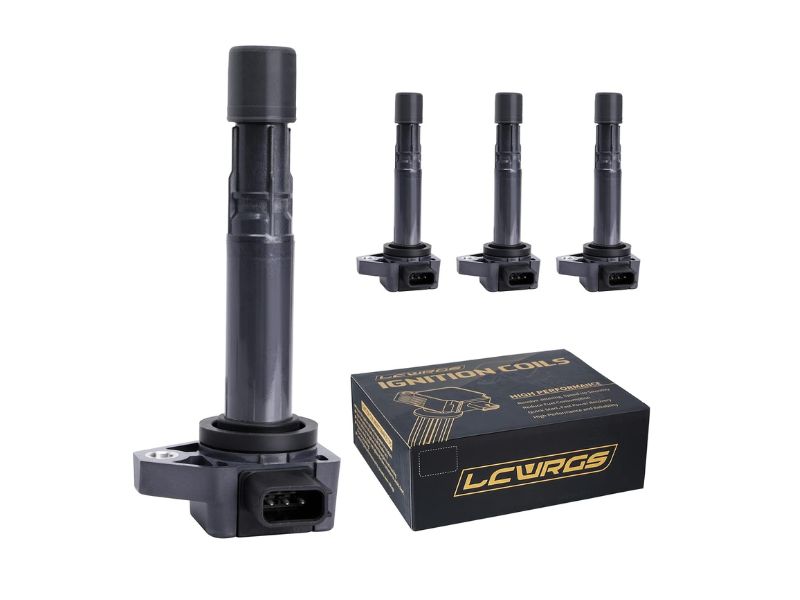
For older seventh-generation models, the LCWRGS UF400 Ignition Coil Pack offers a convenient four-coil replacement set for many 2001–2005 Civic 1.7L applications.
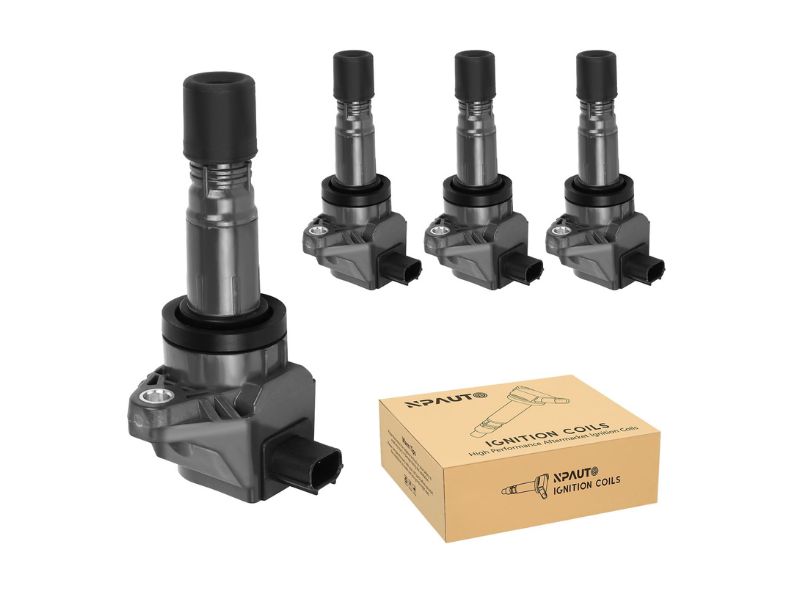
The A-Premium UF749 Ignition Coil and Spark Plug Kit is designed for compatible newer 2.0L naturally aspirated Civic applications, while the NPAUTO UF672 Ignition Coil Pack provides a budget-conscious replacement option for many 2012–2015 Civic 1.8L models.
The five products below cover several of the most common Honda Civic generations, but none should be treated as a universal Civic ignition coil. Always verify exact compatibility before purchasing.
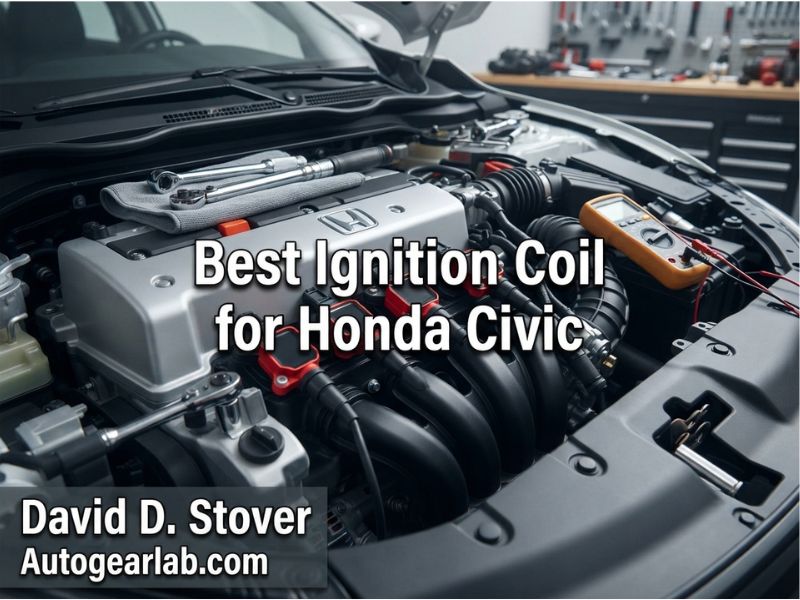
5 Best Ignition Coil for Honda Civic: Reliable Picks
| Image | Product Name | Check Price |
|---|---|---|
Best Choice | BDFHYK UF583/UF311 Ignition Coil Pack | Check Price |
Second Best | A-Premium IC0186 UF582 Ignition Coil Pack | Check Price |
Third Choice | LCWRGS UF400 Ignition Coil Pack | Check Price |
 | A-Premium UF749 Ignition Coil | Check Price |
 | NPAUTO UF672 Ignition Coil Pack | Check Price |
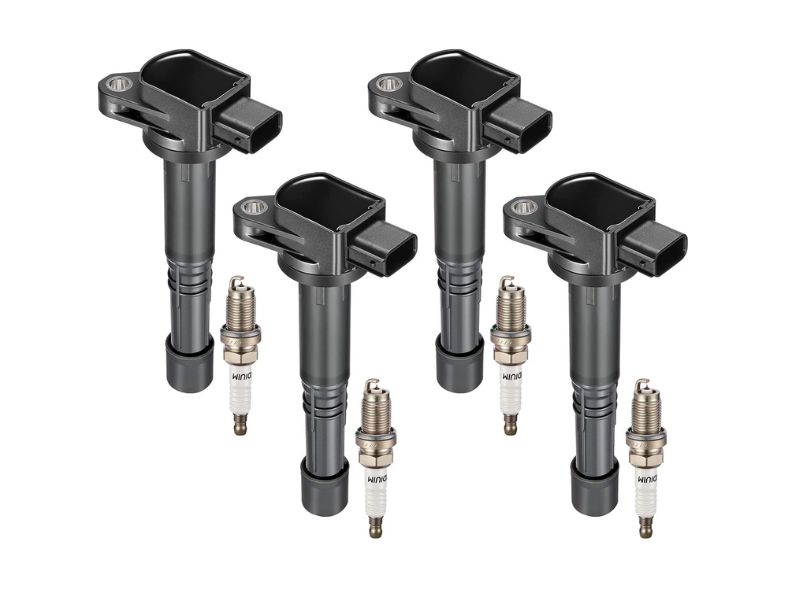
1. BDFHYK UF583/UF311 Ignition Coil Pack and Iridium Spark Plug Kit
Key Features
- Includes four ignition coils and four iridium spark plugs
- Compatible with applicable UF583 and UF311 ignition systems
- Cross-references several Honda K-series ignition coil numbers
- Direct replacement-style installation
- Complete ignition tune-up package
- Suitable for several compatible Honda and Acura K-series applications
- One-year warranty coverage stated by the manufacturer
The BDFHYK UF583/UF311 package stands out because it combines both ignition coils and spark plugs in one kit. That makes it particularly useful for Honda Civic owners who are dealing with an older ignition system and want to service both major spark-delivery components at the same time.
One of the most important things to understand about this product is that it should not be treated as a universal Civic ignition coil. The UF583/UF311 family is associated with specific Honda K-series applications, including certain Civic performance configurations. A standard Civic 1.8L from the same general model years may use a completely different coil.
If your Civic uses the correct UF311 or UF583-style coil, however, this kit can provide excellent value.
Each cylinder receives its own coil-on-plug ignition coil. Instead of using traditional spark plug wires, the coil sits directly over the spark plug. This compact setup improves ignition efficiency, but it also means each coil is exposed to substantial engine heat.
Over time, heat cycles can degrade the internal insulation and electronics inside a coil. A failing coil may eventually cause rough idle, hesitation, poor acceleration, reduced fuel economy, or a cylinder-specific misfire code.
The inclusion of iridium spark plugs makes this package especially appealing when the existing plugs have accumulated significant mileage. A worn spark plug usually develops a wider effective gap as the electrodes wear. That forces the ignition system to produce greater voltage to fire the plug.
Installing new coils while leaving severely worn plugs in place can place unnecessary stress on the replacement coils. Replacing both components together helps create a healthier ignition environment.
Another advantage is convenience. If all four coils and plugs are due for service, purchasing them together eliminates the need to source separate components. It can also make the installation process more efficient because the coils must already be removed to access the spark plugs.
Fitment remains the most important consideration.
Honda Civic trims can use different engines even during the same production year. For example, a performance-oriented Civic with a K-series engine may use a different ignition coil from a standard Civic equipped with an R-series 1.8L engine.
Before ordering, compare the replacement number printed on your existing coil with the UF583 or UF311 family and confirm the engine application.
From a value standpoint, the BDFHYK package is compelling because it covers more than just one failed component. If you are already planning a complete tune-up, the combined package can reduce the overall parts-shopping process.
For an otherwise healthy engine, correctly functioning coils should help maintain smooth idle, predictable throttle response, and consistent combustion. However, new coils should not be expected to create additional horsepower beyond restoring performance that may have been lost because of failing ignition components.
What I Like
I like that BDFHYK combines four coils and four iridium plugs in one package. It is convenient for owners performing a complete ignition refresh rather than replacing only one failed coil.
The UF583/UF311 cross-reference is also helpful because it gives buyers a clearer way to compare the replacement with their existing ignition components.
Another advantage is the full-set format. On a high-mileage Civic where all four coils are similarly aged, replacing the complete set can reduce the likelihood of returning to the same repair as additional old coils begin to fail.
What I Do Not Like
The biggest disadvantage is fitment complexity. Someone searching only by “Honda Civic ignition coil” could easily assume this kit fits every Civic, which it does not.
Owners of standard 1.8L Civic models need to be particularly careful because their ignition coil may belong to a different family.
Verdict
The BDFHYK UF583/UF311 kit is an excellent choice for a compatible Honda Civic K-series application when you want both coils and spark plugs in one package.
It is especially appealing for a higher-mileage vehicle receiving a complete ignition tune-up. Just make sure the UF583 or UF311 replacement family matches your original components before ordering.
2. A-Premium IC0186 UF582 Ignition Coil Pack

Key Features
- Four ignition coils included
- Designed for compatible 2006–2011 Honda Civic 1.8L models
- UF582 replacement family
- Cross-reference number 30520-RNA-A01
- Three-pin electrical connector configuration
- Direct coil-on-plug replacement design
- One-year unlimited-mileage warranty stated by the manufacturer
The A-Premium IC0186 UF582 set is one of the most practical choices for owners of the extremely common eighth-generation Honda Civic equipped with the 1.8L engine.
Its biggest advantage is straightforward application coverage.
The UF582 ignition coil family is commonly associated with 2006–2011 Civic 1.8L applications, and the 30520-RNA-A01 reference gives buyers an additional number to compare against the original component.
That makes it considerably easier to identify than a generic listing that simply claims compatibility with a broad range of Honda vehicles.
The package contains four ignition coils, providing enough components to replace the entire set on a four-cylinder Civic.
Whether replacing all four is necessary depends on the vehicle.
If only one coil has failed and the remaining coils are relatively new, replacing the confirmed defective coil can be perfectly reasonable. There is no mechanical rule stating that all ignition coils must always be replaced together.
However, the situation changes on a high-mileage Civic where all four coils are original.
Each coil has experienced approximately the same number of operating hours, heat cycles, vibration, and environmental exposure. If one old coil fails because its insulation or internal electronics have deteriorated, the others may also be approaching the end of their useful service life.
In that situation, replacing the full set can be convenient.
The direct coil-on-plug design also keeps installation relatively simple on many Civic configurations. Once the engine cover or necessary surrounding components are removed, each ignition coil is typically retained by a small fastener and connected through an electrical plug.
The electrical connector should never require modification if you have selected the correct part.
Another reason this A-Premium set ranks highly is that it is specifically relevant to one of the most widely owned Civic configurations. Instead of trying to cover numerous unrelated engines, it addresses the standard 1.8L Civic from 2006 through 2011.
That focused fitment makes it easier for buyers to determine whether the product belongs on their vehicle.
The set does not include spark plugs.
That can actually be an advantage if you recently replaced your plugs or prefer to select a particular OE-specification plug separately.
If your plugs are old, however, inspect them while replacing the coils. Excessive plug gap, damaged electrodes, oil contamination, or incorrect plug specifications can contribute to poor ignition performance.
When diagnosing a misfire, remember that an ignition coil is only one possible cause. A bad spark plug, injector problem, vacuum leak, damaged wiring, poor compression, or other engine issue may produce similar symptoms.
Ideally, identify the actual failed component before replacing parts.
What I Like
The clear UF582 and 30520-RNA-A01 reference is the biggest strength.
For a compatible 2006–2011 Civic 1.8L, this makes the product much easier to verify than generic ignition coils with vague compatibility information.
The four-pack is also convenient for owners who want to replace an aging original set, and the stated warranty provides additional reassurance.
What I Do Not Like
Spark plugs are not included, so a complete ignition tune-up requires a separate plug purchase.
More importantly, this set should not be confused with the coils used by Civic Si models from the same general generation.
Verdict
For a 2006–2011 Honda Civic 1.8L, the A-Premium UF582 four-pack is one of the strongest all-around options in this guide.
It combines clear application information, a familiar OEM cross-reference, four-coil convenience, and straightforward replacement design.
3. LCWRGS UF400 Ignition Coil Pack
Key Features
- Set of four ignition coils
- Designed for many 2001–2005 Honda Civic 1.7L applications
- UF400 replacement family
- Direct-fit coil-on-plug configuration
- Complete four-cylinder replacement set
- Designed as a bolt-on replacement
- 24-month warranty coverage stated by the seller
The LCWRGS UF400 ignition coil set is aimed primarily at owners of older seventh-generation Honda Civic models equipped with the 1.7L engine.
For a vehicle that may now have many years and miles of service behind it, replacement parts need to strike a reasonable balance between affordability, fitment, and convenience.
This four-pack does exactly that.
The UF400 family is commonly associated with compatible 2001–2005 Civic 1.7L applications. That makes the set a useful option for owners who want to replace several aging coils at the same time.
Older vehicles can present a different maintenance situation from relatively new Civics.
A twenty-year-old Civic may still be dependable transportation, but individual ignition components can have been replaced at different points in the vehicle’s history. One cylinder might have an original coil, another could have an aftermarket replacement installed years ago, and another might have a newer unit.
Replacing all four coils with a matched set can bring greater consistency when the existing ignition system has become a mixture of aging components.
That does not mean replacing all four is automatically necessary.
Proper diagnosis should still come first.
If only one coil has failed and the others test properly, a single replacement remains an option. However, when multiple coils are weak or all four units show significant age, a complete set becomes more attractive.
Installation should be relatively straightforward when the fitment is correct.
The coil sits over the spark plug and connects directly to the vehicle’s electrical system. There should be no need to splice wiring, modify the connector, or adapt mounting hardware.
If modification appears necessary, stop and verify that you have the correct part.
Before installing a new coil, inspect the spark plug wells carefully.
Oil in a plug well is particularly important because it may indicate a leaking valve-cover gasket or spark-plug-tube seal. Installing a fresh ignition coil without addressing significant oil contamination could shorten the life of the new component.
Water or moisture can also create ignition problems.
The condition of the spark plug should be checked at the same time. An old plug with excessive gap can make the ignition coil work harder than necessary.
This is especially relevant on an older Civic whose maintenance history may not be completely documented.
The LCWRGS package does not attempt to add unnecessary complexity. Its primary appeal is straightforward: four UF400-family coils in one package for a compatible 1.7L Civic.
For many owners maintaining an older commuter vehicle, that is exactly what is needed.
What I Like
The four-coil package is convenient for an aging Civic that needs a complete ignition refresh.
I also like the focused 2001–2005 1.7L application and the UF400 replacement reference, both of which make fitment easier to verify.
The stated 24-month warranty is another attractive feature for a value-oriented aftermarket coil set.
What I Do Not Like
This product is primarily useful for an older Civic generation. It is not relevant to later 1.8L, 2.0L, or turbocharged Civic engines.
As with many aftermarket ignition components, actual service life may also depend heavily on operating temperature, plug condition, installation quality, and individual vehicle circumstances.
Verdict
For a compatible 2001–2005 Honda Civic 1.7L, the LCWRGS UF400 four-pack offers a sensible combination of affordability and full-set convenience.
It is particularly appealing when several original coils are aging and you want to refresh the entire ignition-coil set at once.
4. A-Premium UF749 Ignition Coil and Iridium Spark Plug Kit

Key Features
- Four ignition coils included
- Four iridium spark plugs included
- Designed for compatible 2016–2020 Civic 2.0L naturally aspirated applications
- UF749 replacement family
- Cross-references 30520-5R0-series ignition coils
- Three-terminal electrical connector
- Direct coil-on-plug configuration
- One-year unlimited-mileage warranty stated by the manufacturer
The A-Premium UF749 kit is particularly useful for owners of compatible tenth-generation Civics equipped with the naturally aspirated 2.0L engine.
This generation makes accurate engine identification especially important.
The tenth-generation Civic was available with more than one engine configuration. Consequently, searching by model year alone is not enough.
A coil designed for the naturally aspirated 2.0L engine should not automatically be assumed to fit a turbocharged Civic simply because both vehicles share the same model year.
The UF749 and 30520-5R0-style references provide a much better starting point for fitment verification.
Like the first product in this guide, A-Premium combines ignition coils with iridium spark plugs.
That is useful when the vehicle is due for a broader ignition-system service rather than one isolated coil replacement.
Spark plugs are relatively inexpensive compared with the inconvenience of taking everything apart again shortly after installing new coils.
If the plugs have already reached their service interval, replacing them while the coils are removed is efficient.
Iridium plugs are also widely used in modern ignition systems because their fine electrode design provides durable performance and requires relatively little voltage to initiate a strong spark when properly specified for the engine.
Of course, using the correct plug specification matters more than simply using the word “iridium.”
The wrong heat range, reach, thread dimensions, or gap can create performance problems.
Owners should therefore verify that the included plugs correspond to the exact engine application.
The four-coil format is also convenient if several original coils are aging.
Modern coil-on-plug systems are designed so each cylinder has its own ignition coil. That means one failed coil can produce a noticeable single-cylinder misfire without disabling the entire ignition system.
When one coil fails on a newer vehicle with otherwise healthy components, replacing just that coil can be appropriate.
On a higher-mileage engine where all four original units have been exposed to the same heat and age, some owners prefer replacing the complete set.
Either approach can be valid depending on diagnosis and maintenance strategy.
One point worth emphasizing is that a rough-running engine should not automatically be diagnosed as a coil failure.
Modern Civics can develop misfire symptoms from spark plugs, injectors, vacuum leaks, carbon buildup, wiring issues, compression loss, or other causes.
Scan data and proper troubleshooting should guide the repair.
What I Like
The complete coil-and-plug package is the strongest feature.
For someone performing a scheduled ignition tune-up on a compatible 2.0L Civic, having four coils and four plugs in one kit makes the service convenient.
The UF749 and 30520-5R0 references also give buyers something specific to compare with the original ignition coil.
What I Do Not Like
Fitment can be confusing because the tenth-generation Civic came with different engines.
Buyers must confirm that their Civic has the compatible naturally aspirated 2.0L engine rather than assuming the kit fits every 2016–2020 Civic.
Verdict
The A-Premium UF749 coil-and-plug kit is a useful complete-service option for a compatible 2016–2020 Honda Civic 2.0L naturally aspirated engine.
Its biggest strengths are the combined package and clearly identifiable replacement family.
5. NPAUTO UF672 Ignition Coil Pack
Key Features
- Four ignition coils included
- Designed for compatible 2012–2015 Honda Civic 1.8L models
- UF672 ignition coil family
- Cross-reference 30520-R1A-A01
- Direct replacement-style installation
- Copper winding construction stated by manufacturer
- Designed for complete four-cylinder replacement
The NPAUTO UF672 four-pack is a value-oriented option for owners of compatible 2012–2015 Honda Civic 1.8L models.
Its most important identifying information is the UF672 replacement family and 30520-R1A-A01-style cross-reference.
For ninth-generation Civic owners, those references provide a useful way to compare the replacement coil with the existing factory component.
The set contains all four coils required for a four-cylinder engine.
A complete four-pack can make sense when maintaining a higher-mileage Civic whose original coils are all roughly the same age.
If one or two coils have already started developing problems, replacing the entire aged set may reduce the possibility of another coil failing shortly afterward.
However, replacing all four is not always mandatory.
If diagnostic testing confirms one failed coil and the remaining coils are relatively new and operating normally, replacing just the defective unit may be sufficient.
The advantage of the NPAUTO set is primarily cost efficiency.
An owner who wants four coils without moving into a considerably more expensive replacement solution may find this package attractive.
The manufacturer describes the coils as using copper winding and undergoing durability-oriented testing.
Those construction claims are positive, but long-term reliability still depends on several factors beyond the coil itself.
Engine-bay temperature, spark-plug condition, plug gap, oil contamination, electrical-system health, and installation quality can all affect ignition-coil life.
That is why the rest of the ignition system should be inspected before assuming a replacement coil alone will solve every misfire.
A worn spark plug is one of the most important items to check.
As the gap grows with wear, the ignition coil must generate enough voltage to bridge that larger gap. Increased voltage demand can put additional stress on aging ignition components.
If the plugs are due for replacement, servicing them at the same time is usually sensible.
Oil inside the spark-plug well is another concern.
If a tube seal or valve-cover gasket is leaking, the oil can contaminate the coil boot and lead to ignition leakage. Simply replacing the coil while ignoring the leak may result in recurring problems.
For a correctly diagnosed Civic with matching UF672 fitment, this NPAUTO set provides a convenient way to refresh all four coils without dramatically increasing the repair budget.
What I Like
The main advantage is value.
You receive four replacement coils designed for compatible 2012–2015 Civic 1.8L applications, making the set useful for complete ignition-system maintenance.
The UF672 and 30520-R1A-A01 references also make compatibility easier to check.
What I Do Not Like
I would place greater emphasis on proper diagnosis and fitment verification with a value-focused aftermarket set.
Owners who prioritize maximum OE-level longevity over purchase cost may prefer an original-equipment or premium-tier replacement.
Verdict
For a 2012–2015 Honda Civic 1.8L, the NPAUTO UF672 four-pack is a practical budget-oriented choice when all four aging coils need replacement.
Confirm the UF672 or 30520-R1A-A01 compatibility before purchasing.
Quick Comparison of the Best Ignition Coils for Honda Civic
| Product | Best For | Typical Civic Fitment | Replacement Family |
| BDFHYK UF583/UF311 Coil + Plug Kit | K-series applications | Compatible Civic K-series configurations | UF583 / UF311 |
| A-Premium IC0186 UF582 | Best overall for common 1.8L Civic | 2006–2011 Civic 1.8L | UF582 / 30520-RNA-A01 |
| LCWRGS UF400 | Older Civic models | 2001–2005 Civic 1.7L | UF400 |
| A-Premium UF749 Coil + Plug Kit | Newer naturally aspirated Civic | Compatible 2016–2020 Civic 2.0L | UF749 / 30520-5R0 family |
| NPAUTO UF672 | Value pick for ninth generation | 2012–2015 Civic 1.8L | UF672 / 30520-R1A-A01 |
How to Choose the Best Ignition Coil for Honda Civic
The most important factor when choosing an ignition coil for a Honda Civic is correct fitment.
Honda has produced the Civic for decades and used many engines during that time. Two Civics can look nearly identical externally while using different ignition coils under the hood.
Here are the most important factors to consider.
Check the Model Year
Start with the exact model year of your Civic.
An ignition coil designed for a 2003 Civic is unlikely to be the same coil used by a 2013 Civic.
However, year alone is not enough.
Honda often offered multiple engines within the same model year, so additional verification is necessary.
Confirm the Engine Size
Engine displacement is one of the easiest ways to narrow the search.
Common Civic engines covered by the products in this guide include:
- 1.7L engines used in many 2001–2005 Civic models
- 1.8L engines used in many 2006–2015 Civic models
- K-series engines used in certain performance-oriented Civic applications
- 2.0L naturally aspirated engines used in newer Civics
Do not assume that two 1.8L engines from different generations automatically use identical coils.
Engine family matters as well.
Check the Trim Level
Trim can make a major difference.
A Civic Si may use a different engine and ignition coil from a standard Civic sedan sold during the same model year.
This is particularly important when shopping for eighth-generation Civic components.
The standard 1.8L Civic and performance-oriented Si should not be assumed to share ignition coils.
Compare the OEM Part Number
One of the most reliable ways to select an ignition coil is to compare the number printed on the existing part.
Common replacement families covered in this guide include:
- UF400 for many 2001–2005 Civic 1.7L applications
- UF582 / 30520-RNA-A01 for many 2006–2011 Civic 1.8L applications
- UF311 / UF583 families for certain compatible K-series applications
- UF672 / 30520-R1A-A01 for many 2012–2015 Civic 1.8L applications
- UF749 / 30520-5R0 family for compatible newer 2.0L applications
The OEM number is particularly useful when listings cover many vehicles.
Look at the Electrical Connector
Compare the shape of the electrical connector and the number of terminals.
A replacement coil should connect directly without modifying the Civic’s wiring harness.
If the plug shape does not match, there is a good chance the coil is incorrect for the engine.
Compare the Coil Shape and Boot Length
Overall dimensions matter.
The coil boot must properly contact the spark plug, and the mounting point must align correctly with the cylinder head or valve cover.
A coil that looks similar in a product photo may still have a different boot length or mounting configuration.
Consider Whether You Need One Coil or Four
Many Civic owners wonder whether all ignition coils need to be replaced when one fails.
The answer is no.
If one coil fails and the others remain healthy, replacing only the defective coil is acceptable.
A full-set replacement becomes more attractive when:
- The vehicle has high mileage
- All four coils appear to be original
- Multiple cylinders have developed coil-related problems
- Coil boots show substantial deterioration
- You want all four coils to have approximately the same service age
The correct approach depends on diagnosis and maintenance goals.
Check the Spark Plug Condition
Ignition coils and spark plugs work together.
A heavily worn plug can increase ignition voltage requirements and put additional stress on the coil.
Whenever you replace a coil, inspect the spark plug underneath it.
Look for:
- Excessive electrode wear
- Abnormally large gap
- Oil contamination
- Heavy carbon deposits
- Cracked ceramic
- Incorrect heat range
- Signs of overheating
A damaged or worn plug should be replaced before installing a new coil.
Consider Warranty Coverage
Warranty coverage can be particularly useful with aftermarket ignition components.
A one-year or two-year warranty provides some protection against manufacturing defects.
However, warranty duration should not replace proper fitment research.
An incorrect coil with a long warranty is still the wrong part.
Common Symptoms of a Bad Honda Civic Ignition Coil
Ignition-coil failure can cause several noticeable symptoms.
Some symptoms appear suddenly, while others develop gradually.
Rough Idle
A failing coil can prevent one cylinder from firing consistently.
When this happens, the engine may shake noticeably while idling.
The vibration may become more obvious when the vehicle is stopped in gear.
Engine Misfire
Misfire is one of the most common signs of ignition trouble.
The engine control module may store diagnostic trouble codes such as:
- P0301
- P0302
- P0303
- P0304
These indicate misfires associated with particular cylinders.
However, a misfire code does not automatically prove that the ignition coil is defective.
Hesitation During Acceleration
A weak coil may operate adequately at idle but struggle when cylinder pressures rise during acceleration.
The driver may notice hesitation, stumbling, or lack of power when pressing the accelerator.
Poor Fuel Economy
A misfiring engine cannot burn fuel efficiently.
As a result, fuel economy may decrease.
The engine computer may also alter fuel delivery while responding to abnormal combustion.
Check Engine Light
A persistent misfire usually causes the check-engine light to illuminate.
If the light begins flashing, the engine may be experiencing a severe misfire.
Continuing to drive extensively during a severe misfire can damage the catalytic converter because unburned fuel may enter the exhaust.
Hard Starting
One weak ignition coil may not always prevent the engine from starting, but multiple ignition problems can make starting more difficult.
Reduced Engine Power
A four-cylinder Civic effectively loses a significant portion of its combustion contribution when one cylinder stops firing properly.
Power loss can therefore be very noticeable.
How to Diagnose a Bad Honda Civic Ignition Coil
Replacing parts without diagnosis can quickly become expensive.
A few basic troubleshooting steps can help determine whether the ignition coil is responsible.
Scan for Misfire Codes
Use an OBD-II scanner to check for diagnostic trouble codes.
A code such as P0302 indicates that cylinder two is experiencing a misfire.
That tells you where to begin troubleshooting, but not necessarily which component has failed.
Inspect the Spark Plug
Remove the spark plug from the affected cylinder.
Check for excessive wear, fouling, cracked ceramic, incorrect gap, or oil contamination.
A defective plug can cause the same symptoms as a weak coil.
Swap the Ignition Coil
A common diagnostic technique is moving the suspected coil to another cylinder.
For example, if cylinder two is misfiring, move its coil to cylinder three and clear the codes.
If the misfire then changes from cylinder two to cylinder three, the coil becomes the most likely cause.
This simple test can prevent unnecessary replacement of good components.
Inspect the Electrical Connector
Check the coil connector for:
- Loose terminals
- Broken locking tabs
- Corrosion
- Damaged wiring
- Bent pins
A perfectly good ignition coil cannot operate correctly if it is not receiving the proper electrical signal.
Check for Oil or Water
Inspect the spark-plug well.
Oil can enter through deteriorated tube seals or valve-cover gasket components.
Water can also accumulate after washing the engine or because of other sealing issues.
Both can interfere with ignition performance.
Why Honda Civic Ignition Coils Fail
Ignition coils can fail for several reasons.
Heat
Ignition coils operate directly on top of or near the engine.
Repeated heating and cooling cycles gradually affect insulation and electronic components.
Heat is one of the biggest long-term enemies of ignition components.
Worn Spark Plugs
As spark plug electrodes wear, the effective gap can increase.
The ignition coil then has to generate higher voltage to fire the plug.
Over time, that additional electrical demand can increase coil stress.
Oil Contamination
Oil inside a spark-plug tube can damage the rubber boot and create unwanted electrical paths.
If oil is present, repair the leak rather than simply installing a new coil.
Moisture
Water and moisture can interfere with high-voltage ignition components.
A damp plug well may cause intermittent misfire or electrical leakage.
Electrical Problems
Poor grounds, charging-system problems, wiring damage, and connector faults can all interfere with ignition-coil operation.
Age
Sometimes the cause is simply time.
Years of heat, vibration, and electrical cycling can eventually cause internal coil insulation to break down.
Should You Replace All Four Honda Civic Ignition Coils?
Not necessarily.
Ignition coils are not normally treated like brake pads, where both sides of an axle are usually replaced together.
Each coil operates independently.
If one coil fails while the remaining three are healthy, replacing one is acceptable.
However, replacing all four may be worth considering when your Civic has substantial mileage and all coils are the same age.
For example, if one original coil fails after many years of operation, the other three have experienced nearly identical heat cycles.
They may continue operating for years, or another may fail relatively soon.
Replacing the full set is therefore partly a maintenance-strategy decision.
Should You Replace Spark Plugs With Ignition Coils?
It depends on plug condition and mileage.
If the spark plugs are near their recommended service interval, replacing them while the coils are removed makes sense.
Accessing the plugs already requires removing the ignition coils, so the additional labor is minimal.
New plugs can also reduce unnecessary ignition-system stress when the old plugs have excessive gap.
If the plugs are relatively new and correct for the engine, replacing them again may not provide any meaningful benefit.
Always use the plug specification recommended for your exact Civic engine.
OEM vs. Aftermarket Ignition Coils for Honda Civic
Both can be reasonable choices.
OEM Ignition Coils
Original-equipment coils offer predictable fitment and specifications.
They are often ideal for owners who prioritize factory-level compatibility and long-term service life.
The primary downside is usually price, particularly when replacing all four coils.
Aftermarket Ignition Coils
Aftermarket coil packs can cost considerably less and may provide good service when sourced from a reputable manufacturer.
They are especially attractive when replacing a complete set on an older vehicle.
When comparing aftermarket options, look for:
- Specific engine fitment
- Clear OEM cross-reference numbers
- Correct connector design
- Warranty coverage
- Established manufacturer information
- Substantial buyer feedback
- Consistent application documentation
Avoid selecting a coil solely because it is the cheapest available option.
Honda Civic Ignition Coil Fitment Reference
| Civic Application | Common Replacement Family |
| 2001–2005 Civic 1.7L | UF400 |
| 2006–2011 Civic 1.8L | UF582 / 30520-RNA-A01 |
| Compatible K-series Civic applications | UF311 / UF583 family |
| 2012–2015 Civic 1.8L | UF672 / 30520-R1A-A01 |
| Compatible 2016–2020 Civic 2.0L NA | UF749 / 30520-5R0 family |
Use this table only as a general reference.
Vehicle trim, engine configuration, production changes, regional specifications, and previous engine replacements can affect compatibility.
VIN-level verification is preferable when there is any uncertainty.
How to Replace an Ignition Coil on a Honda Civic
The exact procedure varies by generation, but many four-cylinder Civic engines use a relatively accessible coil-on-plug layout.
Allow the Engine to Cool
Work on a cool engine whenever possible.
This reduces burn risk and makes surrounding components easier to handle.
Disconnect the Electrical Connector
Press the connector release tab carefully.
Do not pull directly on the wires.
Old plastic connectors can become brittle after years of heat exposure.
Remove the Coil Bolt
Use the correct socket to remove the retaining fastener.
Keep the hardware organized so it can be reinstalled correctly.
Pull the Coil Upward
Grip the body of the coil and gently pull upward.
Avoid excessive twisting or sideways pressure.
Inspect the Spark Plug Well
Before installing the new coil, check for oil, water, debris, or damaged components.
If significant oil is present, investigate the source of the leak.
Install the Replacement Coil
Push the coil boot securely over the spark plug.
The coil should seat naturally without excessive force.
Reinstall the mounting bolt according to the correct specification.
Reconnect the Electrical Plug
Make sure the connector locks securely into place.
A loose connector can cause intermittent ignition problems.
Clear Codes and Test the Engine
If diagnostic codes were stored, clear them after completing the repair.
Start the engine and check for smooth idle.
A road test and follow-up scan can confirm whether the misfire has been resolved.
Frequently Asked Questions
What is the best ignition coil for a Honda Civic?
The best ignition coil depends on the Civic’s year and engine.
For many 2006–2011 Civic 1.8L models, the UF582 / 30520-RNA-A01 family is a common replacement.
For many 2012–2015 Civic 1.8L models, UF672 / 30520-R1A-A01 is commonly associated with the application.
Older and performance-oriented Civic models can use different coils.
What ignition coil fits a 2006–2011 Honda Civic 1.8L?
Many 2006–2011 Civic 1.8L models use a coil associated with the UF582 and 30520-RNA-A01 replacement family.
Always confirm the exact engine and original part number before purchasing.
What ignition coil fits a 2012–2015 Honda Civic 1.8L?
Many compatible 2012–2015 Civic 1.8L applications use the UF672 / 30520-R1A-A01 family.
Vehicle-specific verification remains important.
Does a Honda Civic Si use the same ignition coil as a regular Civic?
Not necessarily.
A Civic Si may use a different engine family from the standard Civic offered during the same model year.
For example, certain Civic Si configurations use K-series ignition components that differ from the standard 1.8L Civic.
How many ignition coils does a Honda Civic have?
Most four-cylinder coil-on-plug Civic engines use four ignition coils, one for each cylinder.
Other configurations should always be checked by engine type.
How long do Honda Civic ignition coils last?
There is no universal replacement interval.
A coil may operate for many years, while heat, plug wear, contamination, electrical problems, or manufacturing differences can shorten its life.
Replacement should generally be based on diagnosis and component condition.
Can I drive with a bad ignition coil?
Driving extensively with an active misfire is not recommended.
A severe misfire can send unburned fuel into the exhaust and potentially damage the catalytic converter.
A flashing check-engine light should be treated seriously.
Will new ignition coils increase horsepower?
New ignition coils can restore power that was lost because failing coils were causing misfires.
They normally do not add significant horsepower to an otherwise healthy stock engine.
Can a bad spark plug damage an ignition coil?
A severely worn plug with an excessive gap can make the coil work harder by increasing the voltage required to produce a spark.
Keeping the correct plugs in good condition helps reduce unnecessary ignition-system stress.
Should I replace all ignition coils when one fails?
Not automatically.
Replacing a single confirmed defective coil is acceptable.
Replacing all four may be more convenient on a high-mileage vehicle where every coil is old and has experienced similar operating conditions.
How can I tell whether my ignition coil is bad?
Common signs include rough idle, hesitation, loss of power, check-engine light activation, and cylinder-specific misfire codes.
Moving the suspected coil to another cylinder and checking whether the misfire follows it is one useful diagnostic method.
Final Recommendation
The best ignition coil for Honda Civic depends primarily on the exact generation, engine, and original coil number.
For compatible K-series applications, the BDFHYK UF583/UF311 Ignition Coil Pack and Iridium Spark Plug Kit is an attractive complete ignition-service package because it provides four coils and iridium spark plugs together.
For the popular 2006–2011 Civic 1.8L, the A-Premium IC0186 UF582 Ignition Coil Pack is my strongest overall recommendation because of its clear UF582 and 30520-RNA-A01 fitment references.
Owners of a 2001–2005 Civic 1.7L should consider the LCWRGS UF400 Ignition Coil Pack, particularly when replacing an entire aging set.
For compatible newer naturally aspirated 2.0L applications, the A-Premium UF749 Ignition Coil and Iridium Spark Plug Kit provides a convenient coil-and-plug combination.
Finally, the NPAUTO UF672 Ignition Coil Pack is a practical value-oriented choice for many 2012–2015 Civic 1.8L models.
Regardless of which option you choose, verify the Civic’s model year, engine, trim, connector, and OEM coil number before ordering. Correct fitment matters more than review count, price, or brand name and gives you the best chance of restoring smooth idle, reliable acceleration, and consistent ignition performance.