Finding the best ignition coil for motorcycle use is less about choosing the coil with the biggest advertised voltage and more about matching the coil to the motorcycle’s actual ignition system. Primary resistance, CDI compatibility, connector style, mounting arrangement, plug-wire configuration, engine family, and model-specific fitment can all determine whether a replacement works correctly.
A good ignition coil should provide a consistent high-voltage pulse to the spark plug without overloading the motorcycle’s ignition electronics. That is why I prefer products with clearly defined applications rather than assuming every so-called universal coil will work on every bike.
My primary recommendation is the NIBBI Motorcycle Ignition Coil for 2/4-Stroke Dirt Bikes and ATVs (50cc-350cc). Its broad CDI-oriented compatibility, long high-tension lead, and flexible voltage/application range make it one of the more versatile options here. I would still verify resistance, terminals, mounting, and ignition type before installing it.
For common GY6-powered motorcycles, scooters, and small-engine machines, I would consider the AloneGoer GY6 Racing Ignition Coil SSR 125 with A7TC Spark Plug. Its narrower application can actually make choosing easier when you already know you have a compatible 4-stroke GY6 engine.
Owners of compatible Suzuki, Kawasaki, or older Honda motorcycles may prefer the MOTOKU Pack of 2 12V Ignition Coils. Instead of trying to function as a generic small-engine coil, it targets a range of multi-cylinder Japanese motorcycles and supplies two coils.
The most important rule throughout this guide is simple: match specifications and fitment before chasing performance claims.
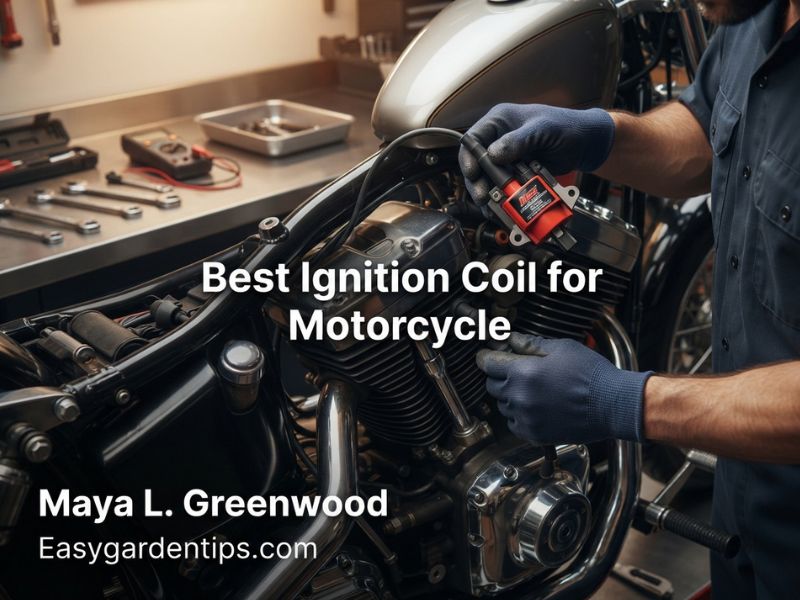
Best Ignition Coil for Motorcycle: 5 Products
| Image | Product Name | Check Price |
|---|---|---|
Best Choice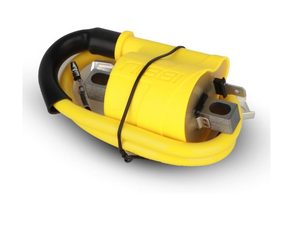 | NIBBI Motorcycle Ignition Coil | Check Price |
Second Best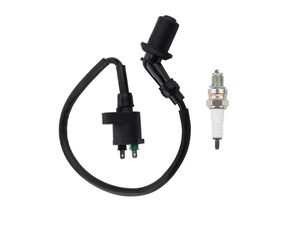 | AloneGoer GY6 Racing Ignition Coil | Check Price |
Third Choice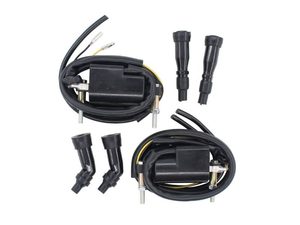 | MOTOKU Pack of 2 12V Ignition Coils | Check Price |
 | MOTO1988 2-Set Ignition Coil | Check Price |
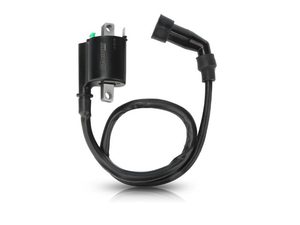 | NIBBI High Performance Ignition Coil | Check Price |
1. NIBBI Motorcycle Ignition Coil for 2/4-Stroke Dirt Bikes and ATVs (50cc-350cc)
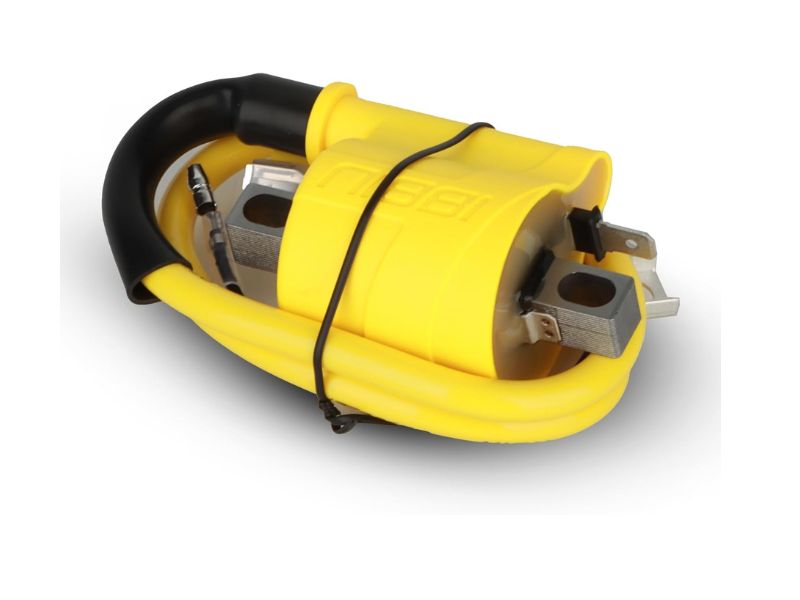
Key Features
- Designed for a broad range of CDI ignition systems
- Marketed for 2-stroke and 4-stroke applications
- Intended for approximately 50cc to 350cc machines
- Supports multiple nominal electrical-system voltages in its listed applications
- Approximately 42 cm high-tension lead
- High-temperature and high-voltage insulating exterior
- Bolt-on installation format
- Advertised high-output coil design
The NIBBI motorcycle ignition coil earns the first position because it addresses one of the biggest problems with the broad “motorcycle ignition coil” search: riders may be working on anything from a small dirt bike to a larger single-cylinder machine.
Rather than targeting one specific motorcycle model, this coil is designed around a relatively broad group of CDI-equipped motorcycles, dirt bikes, ATVs, scooters, and similar powersports engines. That flexibility makes it particularly interesting for custom builds, Chinese motorcycles, pit bikes, dirt bikes, and machines where an exact original replacement is difficult to locate.
The high-tension lead is approximately 42 cm long. That gives installers useful routing flexibility when the original coil location is some distance from the spark plug. Excess wire can be shortened where appropriate, although the lead should never be routed tightly against an exhaust component or other extreme heat source.
NIBBI lists the coil with a 56.8 kV output specification. I would not buy it solely because that number is larger than the voltage claimed by another manufacturer. The actual voltage produced by an ignition coil varies according to plug gap, cylinder pressure, electrical supply, ignition dwell or CDI discharge characteristics, secondary resistance, and the amount of voltage necessary for the spark to jump the gap.
In other words, a coil does not continuously force its maximum voltage through the spark plug. The system develops the voltage necessary to initiate the spark, up to its available capability.
The product is also marketed across 6V, 12V, and 24V applications and for both 2-stroke and 4-stroke CDI motorcycles. That sounds extremely broad, but buyers should interpret universal compatibility cautiously. Engine displacement and system voltage alone cannot guarantee electrical compatibility.
Before choosing it, compare your existing setup for:
- CDI ignition compatibility
- Primary terminal arrangement
- Mounting-hole location
- High-tension lead requirements
- Spark-plug cap type
- Required primary resistance
- Frame or mounting-ground requirements
- Available installation space
This coil makes the most sense when you understand your motorcycle’s ignition design and want flexibility rather than a model-number-specific factory-style replacement.
It is less attractive for a modern motorcycle using dedicated coil-on-plug modules, a highly model-specific ECU-controlled ignition system, or an application where the service manual specifies a coil with substantially different electrical characteristics.
What I Like
- Broad application range compared with model-specific coils
- Long high-tension lead provides useful installation flexibility
- Suitable for many CDI-oriented small motorcycle projects
- Insulated construction is appropriate for a high-voltage component
- Works for both 2-stroke and 4-stroke applications when electrically compatible
What I Do Not Like
- “Universal” does not mean it will electrically fit every motorcycle
- Advertised maximum voltage should not be treated as a horsepower guarantee
- May require more compatibility checking than an exact-model replacement
Verdict
I would choose the NIBBI universal-style coil when I need a flexible replacement for a compatible CDI motorcycle and can verify the electrical requirements beforehand. It offers the broadest potential use among these five choices, but careful resistance, connector, and ignition-system verification remains essential.
2. AloneGoer GY6 Racing Ignition Coil SSR 125 with A7TC Spark Plug
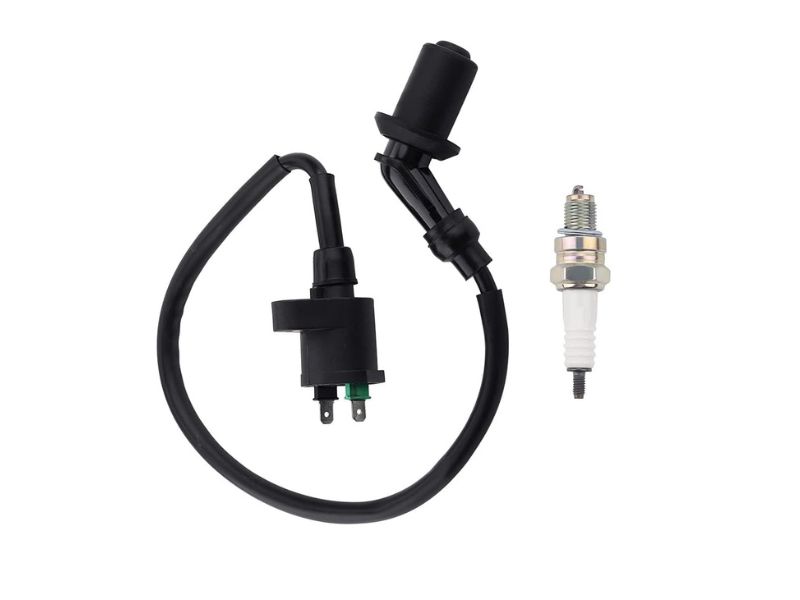
Key Features
- Intended for common 4-stroke GY6 engines
- Covers many 50cc to 150cc applications
- Suitable for scooters, mopeds, small motorcycles, ATVs, and dirt bikes
- Supplied with an A7TC spark plug
- A7TC plug uses approximately 10 mm thread diameter
- Approximately 12.7 mm thread reach
- Durable polypropylene-based coil housing
- Straightforward plug-in replacement format for compatible applications
The AloneGoer GY6 coil takes a more focused approach than the NIBBI universal model. If you already know your machine is powered by a compatible GY6 four-stroke engine, that narrower target can actually be an advantage.
GY6-style engines appear in many scooters, small motorcycles, mopeds, ATVs, go-karts, and pit-bike applications. Common engine families include versions associated with designations such as 139QMB, 152QMI, and 157QMJ, although you should identify the actual engine before ordering rather than assuming compatibility based only on displacement.
This kit includes both the ignition coil and an A7TC spark plug. That can be convenient when diagnosing a weak-spark problem because an old or fouled plug can produce symptoms that resemble a failing coil.
The included plug has a roughly 10 mm thread diameter and 12.7 mm thread length. Those dimensions matter. Never install a spark plug merely because it physically threads into the cylinder head; reach, heat range, seat design, resistor configuration, and electrode clearance also need to suit the engine.
The coil uses a durable polymer housing that helps electrically isolate the windings while standing up to the vibration found on small motorcycles and scooters. Installation is relatively uncomplicated on a machine for which the mounting point and terminals correspond with the original system.
Where this product becomes less suitable is outside the GY6 family. A 125cc motorcycle is not automatically a GY6 motorcycle, and two engines with the same displacement can use completely different ignition designs.
That distinction matters particularly with motorcycles using TCI inductive ignition, ECU-controlled coil-on-plug ignition, or different CDI coil resistance values.
I also would not expect an ignition coil alone to produce a dramatic increase in top speed. A healthy coil can restore reliable starting and combustion when the existing coil is weak, and a compatible replacement can improve spark consistency. But it cannot overcome incorrect carburetion, low compression, poor valve adjustment, fuel-delivery problems, or an incorrectly timed ignition system.
For owners of compatible GY6 equipment, this is one of the most practical products in the group because its application is relatively well defined.
What I Like
- Clear focus on widely used GY6 engine applications
- Includes a replacement spark plug
- Covers several common small-engine displacements
- Straightforward installation on compatible machines
- Useful option for scooters and small motorcycles with aging ignition components
What I Do Not Like
- Not suitable merely because a motorcycle has a 50cc–150cc engine
- Included spark plug must still match the specific engine requirements
- Does not solve fuel, compression, valve, or charging-system problems
Verdict
I prefer the AloneGoer when the motorcycle has a confirmed compatible 4-stroke GY6 engine. Its focused fitment and included spark plug make it easier to work with than a very broad universal coil, especially for small motorcycles and scooters.
3. MOTOKU Pack of 2 12V Ignition Coils for Suzuki, Kawasaki, and Honda Motorcycles
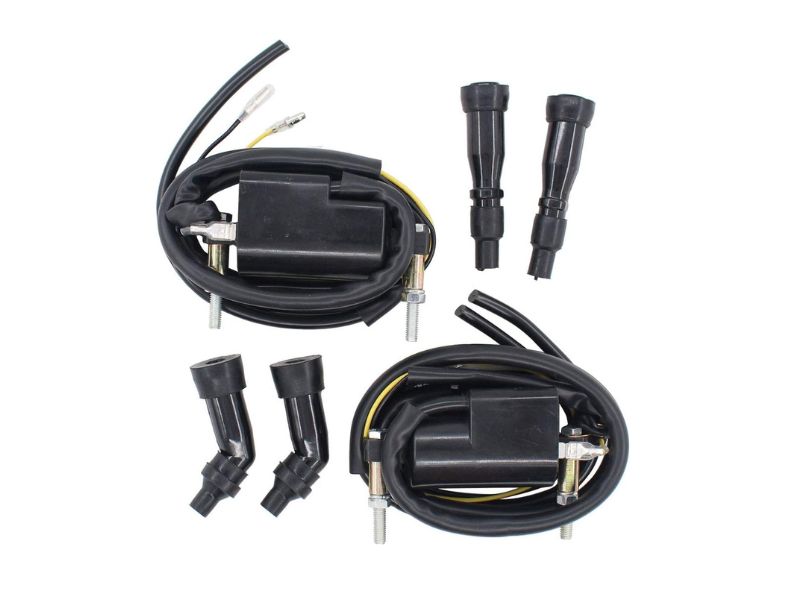
Key Features
- Two-coil package
- 12V ignition-coil design
- Bolt-on installation
- Female electrical connector configuration
- Designed for selected Suzuki motorcycles
- Designed for selected Kawasaki motorcycles
- Also covers certain Honda CB applications
- Appropriate for several older multi-cylinder Japanese motorcycles
The MOTOKU two-coil set is significantly different from the first two products. It is aimed primarily at selected Japanese multi-cylinder motorcycles rather than small single-cylinder scooter and dirt-bike engines.
Fitment includes applications within Suzuki lines such as certain GSXR, GS, and Bandit motorcycles, along with Kawasaki models from families including Zephyr, ZZR, ZRX, Z1000, and KZ. Certain Honda CB applications are also listed.
That does not mean every generation of every model carrying those names uses the same coil. Motorcycle manufacturers frequently change connectors, ignition electronics, resistance requirements, mounting dimensions, and wiring between model years.
The useful part is that the MOTOKU kit supplies two 12V ignition coils, which makes sense for motorcycles whose ignition arrangement uses a pair of multi-output coils. Replacing both aging coils at the same time can also keep the system more consistent when both original units have spent decades exposed to heat and vibration.
Its bolt-on configuration should simplify installation when the motorcycle is explicitly covered, but I still recommend comparing the replacement against the original coil before removing too much hardware.
Check:
- Primary connector shape
- Number of primary terminals
- Mount spacing
- Number of high-voltage towers
- Spark-plug wire connection type
- Coil primary resistance specified by the service manual
- Correct cylinder pairing
Cylinder pairing is especially important on traditional multi-cylinder motorcycles using paired coils. Crossing high-tension leads or primary trigger connections can prevent the motorcycle from starting or produce incorrect firing behavior.
This is also one of the options where I would value correct factory-style compatibility more than marketing terms such as “racing.” An older GSXR, Bandit, KZ, ZRX, or CB generally benefits more from a dependable coil matched to its ignition than from a random coil promising extreme output voltage.
Another advantage is that this is not trying to be compatible with every motorcycle on the road. If your exact model and ignition configuration are covered, that specificity reduces some of the uncertainty associated with universal replacements.
The disadvantage is equally obvious: riders outside those applications should look elsewhere.
What I Like
- Two coils supplied for compatible multi-cylinder motorcycles
- Focused on popular Suzuki and Kawasaki families
- Bolt-on format minimizes unnecessary modification when correctly matched
- More application-specific than many generic aftermarket coils
What I Do Not Like
- Fitment varies considerably by motorcycle model and year
- Not intended as a universal replacement
- Exact electrical resistance still needs to match the motorcycle’s ignition system
Verdict
I would choose the MOTOKU set for a compatible older Japanese motorcycle before trying to adapt a generic small-engine ignition coil. The two-coil package is especially useful when restoring an aging multi-cylinder ignition system, provided the model, connectors, mounting, and resistance all match.
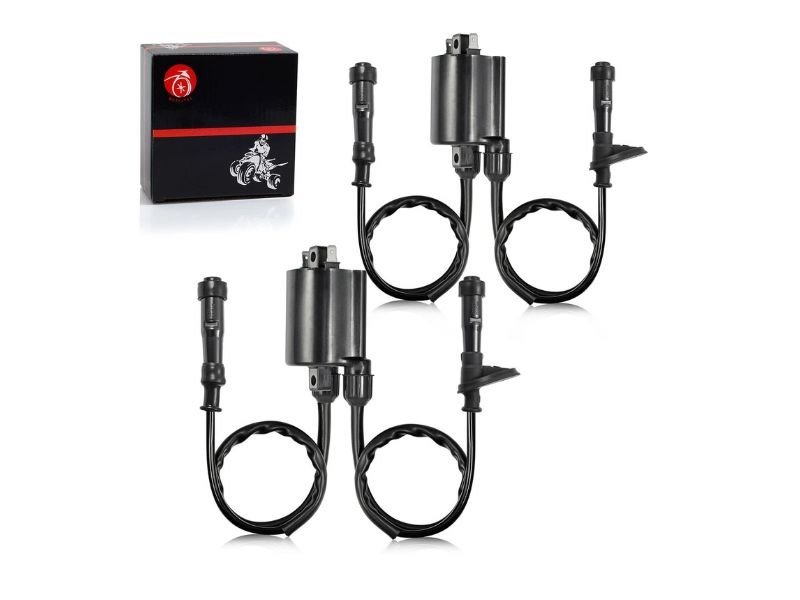
4. MOTO1988 2-Set Ignition Coil & Spark Plug Cap for Honda Shadow 750
Key Features
- Two ignition coils included
- Includes matching spark-plug caps
- Designed for selected Honda Shadow 750 / VT750 applications
- Covers ACE, Aero, and Spirit variants depending on model year
- Intended as an application-specific replacement
- OEM-reference numbers available for fitment comparison
- Suitable for replacing aging coils and caps together
The MOTO1988 set is the most straightforward choice here for riders maintaining a compatible Honda Shadow 750. Instead of claiming broad universal fitment, it is designed around multiple VT750-based Shadow variants.
Covered applications include selected Shadow ACE, Aero, and Spirit 750 models spanning portions of the late 1990s through the 2010s. Exact trim and year matter, so “Shadow 750” by itself is not sufficient confirmation.
One particularly useful feature is the inclusion of both ignition coils and spark-plug caps. On an older motorcycle, replacing the coil while continuing to use deteriorated high-resistance caps or damaged secondary connections can make diagnosis frustrating.
Spark-plug caps contain electrical contacts and, in many motorcycles, internal resistance designed to reduce radio-frequency interference. Age, heat, corrosion, and moisture can increase resistance or compromise the connection between the coil lead and plug.
Having matching replacement components in the same package simplifies that part of the repair.
The set can be cross-checked against reference numbers including 30510-MM8-003, 30701-MF5-000, 30751-MR1-000, and 30753-MR1-000. OEM-reference comparison is often more dependable than purchasing from a broad model description alone.
Installation on a cruiser can still take some time because coils are often packaged tightly around the frame, fuel tank, airbox, or other components. A product being a direct replacement does not necessarily mean the motorcycle gives you easy physical access to it.
Before installation, I would photograph the original wire routing and label the primary and high-tension connections. This reduces the chance of putting a lead on the wrong cylinder during reassembly.
This set is not particularly useful for a rider with a completely different motorcycle, but that is not really a weakness. Ignition coils are fitment-sensitive parts, and model-specific products can be the more sensible choice when your motorcycle is covered.
What I Like
- Designed specifically around Honda Shadow 750 applications
- Two coils are supplied
- Spark-plug caps are included
- OEM-reference numbers provide another way to verify fitment
- Good option for refreshing several aging secondary-ignition components together
What I Do Not Like
- Only useful for compatible VT750-based motorcycles
- Shadow trim and model year must be checked carefully
- Physical access to the factory coil location may make installation time-consuming
Verdict
For a compatible Honda Shadow 750, I would favor this kit over attempting to make a generic universal coil work. The combination of two coils, plug caps, and identifiable replacement numbers makes fitment verification much more practical.
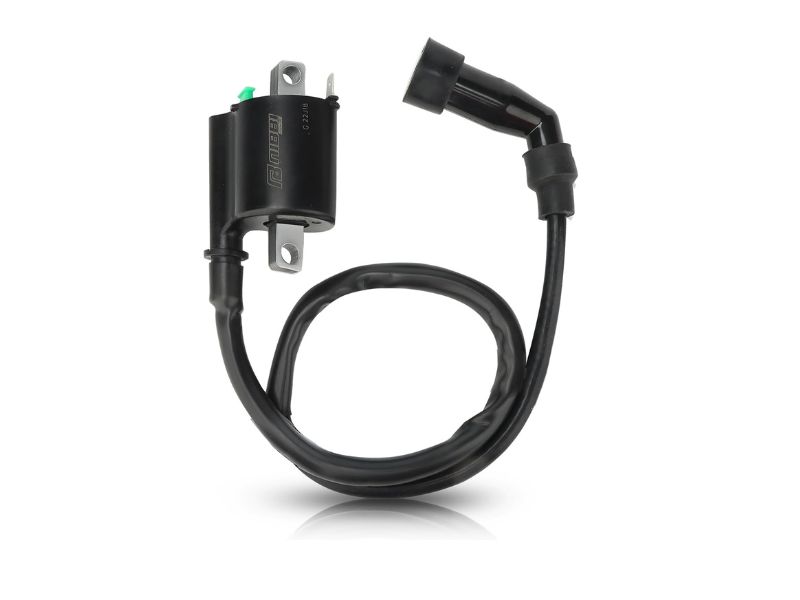
5. NIBBI High Performance Ignition Coil for CG Motorcycle Engines
Key Features
- Intended for CG-style motorcycle engines
- Bolt-on installation
- Plastic and metal construction
- Single-coil package
- Detailed compatibility specifically includes common smaller CG engines
- Suitable for compatible commuter motorcycles and custom builds
- Female electrical connection configuration
The final product is another NIBBI coil, but it targets a different engine family from the GY6 options above. CG-style engines are widely used in small commuter motorcycles and numerous motorcycles derived from classic Honda single-cylinder designs.
The product name covers CG engine sizes extending through 125cc, 150cc, 170cc, 200cc, and 250cc. However, the more detailed compatibility information specifically identifies CG 50cc, 125cc, and 150cc applications.
That difference is important.
If your motorcycle has a 170cc, 200cc, or 250cc CG-derived engine, I would not order the coil solely because the displacement appears in the product name. Verify the ignition configuration, physical dimensions, connector, and electrical specifications first.
For a confirmed compatible CG engine, the design is simple. It is a single bolt-on coil using plastic and metal construction and is intended to replace the conventional remote ignition coil commonly found on these motorcycles.
CG-style motorcycles are often mechanically straightforward, but many different factories have produced variations of these engines. Connector types, wire lengths, frame brackets, CDI designs, and electrical systems can therefore vary even when two engines look almost identical externally.
This is where a multimeter and the motorcycle’s wiring diagram become useful. Comparing the old and new coil’s primary resistance can help identify an obvious mismatch, although resistance should always be interpreted against the manufacturer’s specification rather than a generic internet value.
This model makes the most sense for a simple commuter, pit bike, or custom motorcycle known to use a compatible CG-style ignition. It is not the product I would choose for an EFI sportbike, modern coil-on-plug engine, or unrelated multi-cylinder motorcycle.
What I Like
- Focused on the widely used CG engine family
- Simple bolt-on design
- Useful for many small commuter-motorcycle applications
- Less complicated than adapting an unrelated multi-output coil
What I Do Not Like
- Detailed fitment information is narrower than the product name suggests
- CG-style engines are not electrically identical across every manufacturer
- Exact resistance and connector compatibility require verification
Verdict
The NIBBI CG coil is worth considering when you can positively identify a compatible CG-style engine. I would be particularly careful with 170cc–250cc applications and verify the electrical specifications rather than relying only on the displacement printed in the product name.
Motorcycle Ignition Coil Comparison
| Product | Coil Format | Intended Fitment | Electrical/Application Type | Package | Installation | Main Strength | Main Limitation |
| NIBBI Motorcycle Ignition Coil 50cc-350cc | Remote single-output style | Broad small-motorcycle/powersports use | 2T/4T CDI-oriented applications | 1 coil | Bolt-on | Broadest potential compatibility | Requires careful electrical verification |
| AloneGoer GY6 Racing Ignition Coil | Remote single-output style | GY6 50cc-150cc 4-stroke engines | GY6/CDI applications | Coil + A7TC plug | Plug-in/bolt-on | Clearly focused small-engine fitment | Not for every 50cc-150cc motorcycle |
| MOTOKU Pack of 2 12V Coils | Multi-cylinder coil pair | Selected Suzuki, Kawasaki, Honda models | 12V model-specific applications | 2 coils | Bolt-on | Good for older Japanese multi-cylinder bikes | Exact model/year matching required |
| MOTO1988 Shadow 750 Coil Set | Model-specific coil set | Selected Honda Shadow VT750 variants | Factory-style replacement | 2 coils + caps | Model-specific replacement | Replaces coils and caps together | Limited to compatible Shadow models |
| NIBBI CG Ignition Coil | Remote single-output style | Selected CG-style engines | Model/engine-specific application | 1 coil | Bolt-on | Good option for CG-based motorcycles | Fitment information varies by displacement |
The biggest difference between these products is not claimed spark strength—it is application compatibility. The NIBBI universal-style model provides the widest potential range, while the AloneGoer narrows that focus to GY6 engines. The MOTOKU and MOTO1988 sets make more sense for specific Japanese motorcycles, and the second NIBBI option targets the CG engine family.
Complete Buying Guide: How to Choose a Motorcycle Ignition Coil
Match the Motorcycle Before Comparing Performance
The first question should never be, “Which ignition coil has the highest voltage?”
It should be:
Which ignition coil is electrically and physically compatible with my motorcycle?
Start with the motorcycle’s:
- Year
- Manufacturer
- Model
- Engine displacement
- Engine code when available
- Ignition-system type
- Original coil part number
- Primary resistance specification
- Secondary resistance specification
- Number of spark-plug outputs
- Connector design
- Mounting dimensions
An exact-model replacement is usually easier to select than a universal component.
Understand CDI vs. TCI Ignition
Two ignition coils can look similar while being unsuitable substitutes.
CDI, or capacitor-discharge ignition, stores electrical energy in a capacitor and releases it rapidly through the ignition coil. The coil is designed to work with that short, high-energy electrical pulse.
TCI, often called transistor-controlled or inductive ignition, charges the coil differently. Current flows through the primary winding for a controlled dwell period before the circuit is switched and the magnetic field collapses.
Installing a coil with inappropriate electrical characteristics can cause weak ignition, overheating, unreliable running, or excessive stress on the switching electronics.
Do not identify the ignition type merely by looking at the coil.
Primary Resistance Matters
Primary resistance is measured across the coil’s low-voltage primary terminals and is normally expressed in ohms.
It plays an important role in controlling current through an inductive ignition coil.
If resistance is far lower than the ignition system expects, current can become excessive. Depending on the system, that can overheat the coil or place unnecessary stress on the ignition module.
If resistance is too high, coil current and spark energy may be inadequate.
There is no single primary-resistance number that is correct for every motorcycle. Values can vary considerably between ignition systems.
Always compare the replacement with the specification provided for the motorcycle or ignition module.
Secondary Resistance Also Matters
The secondary winding contains many more turns of wire than the primary winding and creates the high voltage sent toward the spark plug.
Secondary resistance is commonly measured in thousands of ohms, or kΩ.
When checking it, remember that a resistor spark-plug cap may contribute additional resistance. Measure the components according to the service-manual procedure so you do not mistake cap resistance for a defective coil.
Do Not Choose by Maximum Voltage Alone
Marketing numbers such as 30,000V, 40,000V, or 50,000V can be useful as basic product descriptors, but they do not tell you how much voltage the spark plug receives under every operating condition.
The required firing voltage changes with:
- Spark-plug gap
- Cylinder pressure
- Air-fuel mixture
- Electrode condition
- Ignition timing
- Secondary circuit resistance
- Temperature
- Engine load
A larger maximum-voltage claim does not automatically produce more horsepower.
A properly matched, healthy ignition system is more important.
Check Single-Output vs. Dual-Output Coils
Some motorcycles have one high-tension output per coil. Others use dual-output coils that fire two spark plugs.
Many four-cylinder motorcycles use two dual-output coils. In a conventional wasted-spark arrangement, each coil may fire two cylinders simultaneously.
Replacing this arrangement with a single-output coil simply because its resistance looks similar will not work.
Count the high-voltage towers and confirm the original ignition layout.
Coil-on-Plug Is a Different Category
Many modern motorcycles use coil-on-plug (COP) ignition.
Each long, narrow coil fits directly over a spark plug, eliminating a traditional high-tension wire.
The five products in this guide primarily address conventional remote-coil applications. A modern motorcycle originally equipped with COP modules normally needs application-specific COP replacements rather than one of these conventional coils.
Check Spark-Plug Cap Resistance
A plug cap is more than a piece of rubber.
Many caps incorporate a resistor, often intended to suppress electromagnetic and radio-frequency interference.
A damaged or badly corroded cap can add excessive resistance and cause:
- Hard starting
- Intermittent misfire
- Weak spark
- Cutting out under load
- Poor wet-weather operation
Before condemning the ignition coil, inspect the cap and high-tension connection.
Inspect the High-Tension Lead
Traditional ignition coils use a high-voltage lead between the coil and spark-plug cap.
Look for:
- Cracked insulation
- Burn marks
- Chafing
- Loose coil connection
- Corrosion
- Oil contamination
- Moisture
- Damaged plug-cap connection
A deteriorated lead can allow spark energy to leak to ground before reaching the spark plug.
Consider Heat and Vibration
Motorcycle ignition coils live in a harsh environment.
They may be exposed to:
- Engine heat
- Exhaust heat
- Constant vibration
- Rain
- Washing water
- Road spray
- Dirt
- Fuel vapor
A replacement coil needs secure mounting and good insulation. Never leave it loosely attached simply because the engine starts.
Compare Mounting Dimensions
Universal electrical compatibility does not automatically provide physical compatibility.
Measure:
- Hole spacing
- Coil-body dimensions
- Terminal clearance
- Spark-wire orientation
- Frame clearance
- Fuel-tank clearance
- Airbox clearance
A coil that presses against the fuel tank, cylinder head, or exhaust system is not properly installed.
How a Motorcycle Ignition Coil Works
The motorcycle’s electrical system operates at relatively low voltage, while a spark plug requires thousands of volts to ionize the gap and create a spark.
An ignition coil functions as a specialized step-up transformer.
It contains:
- A primary winding
- A secondary winding
- A magnetic core
- Electrical insulation
- Low-voltage terminals
- One or more high-voltage outputs
When current through the primary winding changes rapidly, the magnetic field collapses. This induces a much higher voltage in the secondary winding.
That high voltage travels through the coil wire or directly through a coil-on-plug boot and reaches the spark plug.
The voltage continues increasing until it can bridge the plug gap. The resulting spark initiates combustion of the compressed air-fuel mixture.
Signs a Motorcycle Ignition Coil May Be Failing
A faulty coil can cause several symptoms, but none is unique to the coil.
Common signs include:
Hard Starting
The motorcycle may crank normally but require repeated attempts before firing.
Intermittent Misfire
An internal coil fault may become more obvious when the component heats up.
Misfire Under Load
Higher cylinder pressure generally increases the voltage required to jump the plug gap. A marginal ignition system may therefore run acceptably at idle but break down during acceleration.
Poor Hot Restart
Heat can expose damaged insulation or winding problems that are less obvious when the coil is cold.
No Spark on One Cylinder or Cylinder Pair
On a multi-cylinder motorcycle using dual-output coils, losing two paired cylinders can point toward their shared coil or trigger circuit.
Visible Cracks or Carbon Tracking
Cracks, burned areas, or visible discharge marks around the coil, tower, lead, or cap deserve attention.
However, similar symptoms can also result from:
- Bad spark plugs
- Weak battery
- Faulty charging system
- Damaged pickup coil
- Faulty CDI or ignition module
- Poor ground
- Corroded connectors
- Incorrect valve clearance
- Fuel-system problems
- Low compression
- Wiring faults
Diagnose before replacing parts unnecessarily.
How to Check a Motorcycle Ignition Coil
A digital multimeter can perform basic resistance checks.
First switch the ignition off and follow the motorcycle’s service procedure. Disconnect the coil as directed so the rest of the electrical system does not distort the reading.
Primary-Winding Test
Measure resistance across the specified low-voltage primary terminals.
Compare the measurement with the motorcycle service specification.
Extremely low resistance requires a meter capable of accurately measuring fractions of an ohm. Remember that test-lead resistance may need to be accounted for.
Secondary-Winding Test
Measure between the high-voltage output points specified by the service manual.
If a removable resistor cap is attached, the test procedure may require removing it first.
Again, compare the result with the correct specification rather than a generic resistance range.
Heat-Related Failure
A coil can occasionally measure normally when cold yet malfunction after heating.
If the symptoms consistently begin after the engine reaches operating temperature, the coil and associated wiring deserve closer inspection even when a basic cold resistance test appears normal.
Motorcycle Ignition Coil Installation Tips
Ignition systems generate potentially dangerous high voltage. Work with the engine stopped, follow the motorcycle service instructions, and avoid handling ignition components while the engine is running.
Disconnect Electrical Power as Directed
On battery-equipped motorcycles, disconnecting the battery according to the service procedure helps reduce accidental shorts.
Photograph the Existing Wiring
Take clear photos before removing:
- Primary wires
- Plug wires
- Coil mounting
- Ground connections
- Wire routing
This is particularly helpful on multi-cylinder motorcycles.
Transfer One Connection at a Time
When possible, replacing one connection at a time reduces mistakes.
Keep High-Voltage Leads Away From Heat
Do not route plug wires against:
- Exhaust headers
- Cylinder fins where clearance is inadequate
- Sharp brackets
- Moving components
Secure the Coil Firmly
Vibration can damage terminals, brackets, and wiring.
Some ignition-coil designs also depend on a correct mounting or grounding arrangement, so never assume the bracket is only there to hold the coil.
Verify the Spark-Plug Gap
An excessively wide plug gap increases the voltage demand on the ignition system.
Use the gap specified for the motorcycle.
Recheck the Installation Before Starting
Confirm that:
- Primary connectors are secure
- Plug wires reach the correct cylinders
- Caps are fully seated
- Nothing contacts the exhaust
- Mounting bolts are secure
- Wiring is not pinched beneath the fuel tank or seat
Motorcycle Ignition Coil Maintenance
Ignition coils do not normally require periodic internal servicing, but the surrounding ignition system benefits from inspection.
Keep Electrical Connections Clean
Corrosion increases electrical resistance and can create intermittent faults.
Inspect After Heavy Rain or Washing
Water around damaged boots, cracked insulation, or loose connectors can reveal weaknesses that remain hidden when everything is dry.
Replace Deteriorated Spark-Plug Caps
A new coil cannot compensate for a severely damaged secondary connection.
Check Wiring During Routine Service
Pay particular attention to wires near:
- Steering head
- Frame edges
- Engine mounts
- Fuel tank
- Exhaust system
Maintain the Charging System
Abnormal system voltage can create ignition problems and shorten the life of electrical components.
Common Motorcycle Ignition Coil Buying Mistakes
Buying Only by Engine Displacement
Two 125cc motorcycles may have entirely different ignition systems.
Engine displacement is not a fitment specification.
Assuming Universal Means Universal
Universal usually means adaptable to several applications—not guaranteed compatibility with every motorcycle.
Ignoring Primary Resistance
This is one of the most important electrical characteristics when selecting a traditional ignition coil.
Confusing CDI and TCI Components
Similar-looking coils can be designed around different methods of storing and releasing ignition energy.
Choosing the Highest Advertised Voltage
Maximum voltage alone does not tell you whether a coil is compatible or whether it will improve performance.
Ignoring Connectors and Mounting
An electrically appropriate coil can still be impractical if it cannot be mounted securely or connected correctly.
Replacing the Coil Without Diagnosing the Spark Plug
A worn, fouled, cracked, or incorrectly gapped spark plug can mimic ignition-coil problems.
Replacing Ignition Parts to Fix a Fuel Problem
Carburetor blockage, incorrect jetting, injector problems, or restricted fuel flow can also cause hesitation and misfire.
Expecting a Coil to Create Large Horsepower Gains
Replacing a failing coil may restore lost performance. Installing a “performance” coil on an otherwise healthy stock ignition generally should not be expected to create a dramatic power increase by itself.
Frequently Asked Questions
What is the best ignition coil for motorcycle use?
The best ignition coil is one that correctly matches your motorcycle’s ignition system and electrical specifications.
For broad compatible CDI applications, the NIBBI 50cc-350cc coil is a flexible option. However, a model-specific replacement may be preferable when available. Confirm primary resistance, CDI or TCI type, voltage, connectors, mounting, high-voltage outputs, and exact engine or motorcycle fitment before purchasing.
Can I use any ignition coil on a motorcycle?
No, motorcycle ignition coils are not universally interchangeable even when their connectors and mounting points look similar.
Coils can have different primary resistance, inductance, output configurations, dwell requirements, and intended ignition systems. Using an electrically mismatched coil can lead to weak spark, overheating, unreliable operation, or stress on the ignition electronics. Match the replacement to the motorcycle’s service specifications.
Does a performance ignition coil increase horsepower?
A performance coil usually restores or supports reliable ignition rather than creating large horsepower gains by itself.
If the original coil cannot reliably ignite the mixture under load, replacing it with a healthy compatible coil may restore performance. On an otherwise correctly functioning stock motorcycle, simply installing a higher-output coil generally does not guarantee more horsepower. Fuel mixture, compression, ignition timing, airflow, and engine design remain major performance factors.
What does primary resistance mean on an ignition coil?
Primary resistance is the electrical resistance measured across the coil’s low-voltage primary winding terminals.
It influences the current behavior of many ignition systems. A coil with substantially lower resistance than required can draw excessive current in certain designs, while excessive resistance can reduce available ignition energy. Always compare the replacement against the resistance specification for the motorcycle or ignition module.
How do I know whether my motorcycle uses CDI or TCI ignition?
Check the service manual, wiring diagram, ignition-module information, or verified parts documentation for your exact motorcycle.
Do not rely solely on connector appearance. CDI systems discharge stored capacitor energy through the coil, while TCI or transistorized inductive systems build current through the primary winding before switching it off. These different operating methods can require coils with different electrical characteristics.
Can I install a car ignition coil on a motorcycle?
Only when its electrical characteristics and output configuration are specifically compatible with the motorcycle’s ignition system.
Physical similarity is not enough. Primary resistance, inductance, dwell behavior, voltage supply, number of outputs, mounting, and ignition-module requirements must all be considered. In most repairs, a motorcycle-specific or correctly specified powersports coil is the safer choice.
How long does a motorcycle ignition coil last?
A quality ignition coil can last many years, but heat, vibration, moisture, and electrical stress affect its lifespan.
There is no universal replacement interval. Many coils remain functional for a large portion of the motorcycle’s life. Inspect or diagnose the coil when symptoms appear rather than replacing it solely according to age. Old plug wires, caps, connectors, or charging-system faults can also shorten effective ignition-system life.
Can a bad ignition coil cause a motorcycle to stall when hot?
Yes, internal coil faults can become more noticeable as the component reaches operating temperature.
Damaged winding insulation or internal connections may function when cold and fail after thermal expansion. However, hot stalling can also come from pickup coils, ignition modules, fuel venting, valve-clearance issues, or electrical connectors. Diagnosis should include the complete ignition and fuel systems.
Can a bad ignition coil damage a spark plug?
A faulty coil can contribute to poor combustion and plug fouling, but many other problems cause similar symptoms.
Weak or inconsistent ignition can leave unburned fuel and deposits on the plug. Excessively wide plug gaps can also increase stress on the coil. Examine plug condition, gap, fuel mixture, oil consumption, compression, and ignition performance together rather than treating the spark plug as an isolated component.
Should I replace all motorcycle ignition coils at once?
Not always, although replacing matched aging coils together can be sensible on some multi-cylinder motorcycles.
If one coil fails but the remaining units test correctly and are easy to access, replacing only the faulty part may be reasonable. On an older motorcycle using two identical coils with similar age and thermal history, replacing both can reduce the chance of repeating the same labor soon afterward.
Is a higher-voltage ignition coil always better?
No, higher advertised maximum voltage does not automatically make an ignition coil more suitable or more powerful.
The spark plug only requires enough voltage to ionize its gap under the current cylinder conditions. Compatibility, spark duration, available energy, resistance, insulation quality, ignition-module design, and reliability are more meaningful than choosing the largest voltage number on a product description.
Can an ignition coil cause poor fuel economy?
Yes, an ignition fault can reduce combustion quality and potentially increase fuel consumption when misfires occur.
However, poor fuel economy can also result from rich carburetion, injector problems, low tire pressure, dragging brakes, incorrect valve adjustment, worn plugs, clogged air filters, riding conditions, or mechanical problems. Confirm that a misfire or weak-spark condition actually exists before replacing the coil.
How can I tell whether the coil or spark plug is bad?
Inspect and test both components because a bad plug and a weak coil can create very similar symptoms.
Start with the easier maintenance items: inspect plug condition, verify the correct type and gap, and check the cap and high-tension lead. Then perform coil resistance and ignition-system tests according to the service manual. Swapping known-good components can sometimes help on multi-cylinder engines when the motorcycle design permits it.
Can I use a universal ignition coil on a dirt bike?
Yes, but only when the universal coil matches the dirt bike’s electrical, ignition, and physical requirements.
Verify CDI or inductive ignition type, primary resistance, supply voltage, mounting arrangement, high-tension lead, plug-cap requirements, and terminal configuration. Engine displacement alone is not enough to determine compatibility. A model-specific coil remains preferable when reliable fitment information is available.
Does ignition-coil polarity matter on a motorcycle?
It depends on the coil design, so connect the primary terminals exactly as the manufacturer or service manual specifies.
Some coils have clearly marked positive and negative primary terminals and require the correct polarity. Other dual-output designs may be less polarity-sensitive. Guessing can create poor ignition performance, so preserve the original wiring arrangement unless verified documentation specifies otherwise.
Conclusion
Choosing the best ignition coil for motorcycle use starts with compatibility rather than advertised output voltage. The correct coil must work with the bike’s CDI, TCI, or other ignition architecture while matching primary resistance, mounting, connectors, high-voltage outputs, and spark-plug arrangement.
My primary recommendation is the NIBBI Motorcycle Ignition Coil for 2/4-Stroke Dirt Bikes and ATVs (50cc-350cc) for riders who need a flexible coil for a compatible CDI-based application. Its broad potential fitment makes it useful for many small motorcycles, dirt bikes, and custom applications, but the electrical specifications still need verification.
The AloneGoer GY6 Racing Ignition Coil is the more straightforward alternative for confirmed 4-stroke GY6 engines. For selected older Suzuki, Kawasaki, and Honda multi-cylinder motorcycles, the MOTOKU two-coil set offers a more application-specific approach.
Honda Shadow 750 owners should consider the MOTO1988 coil-and-cap set when their exact VT750 variant is covered, while the NIBBI CG coil is better suited to compatible CG-style commuter engines.
Whichever product you choose, verify the ignition type, primary resistance, model fitment, connector configuration, mounting dimensions, plug cap, and high-tension wiring before installation. A correctly matched ignition coil is far more valuable than a supposedly higher-performance coil that does not belong on the motorcycle.