Yes, washing your car before tinting the windows is recommended, but a complete car wash is not always required. A clean vehicle reduces the amount of dust, pollen, and dirt that can reach the glass during installation. Ideally, wash your car the day before your tint appointment or earlier on the same day, allowing enough time for the windows, seals, and surrounding trim to dry.
Window tint is normally applied to the inside surface of automotive glass. Even so, dirt on the exterior windows, door seals, and nearby body panels can interfere with preparation and handling.
Professional tint installers clean the glass before applying film, but bringing in a reasonably clean vehicle can make their work easier. It may also reduce the chances of trapped debris, visible imperfections, and unnecessary cleaning delays.
However, using unsuitable glass cleaners, applying wax near the windows, or leaving water trapped in window seals can create additional problems.
In this article, I cover whether washing your car is necessary before tinting, the best time to wash it, which areas need cleaning, and what products to avoid. I also explain how professional installers prepare the glass, how to get your car ready for an appointment, and when it is safe to wash the vehicle after tint installation.
Should I Wash My Car Before Tinting Windows? Why It Helps
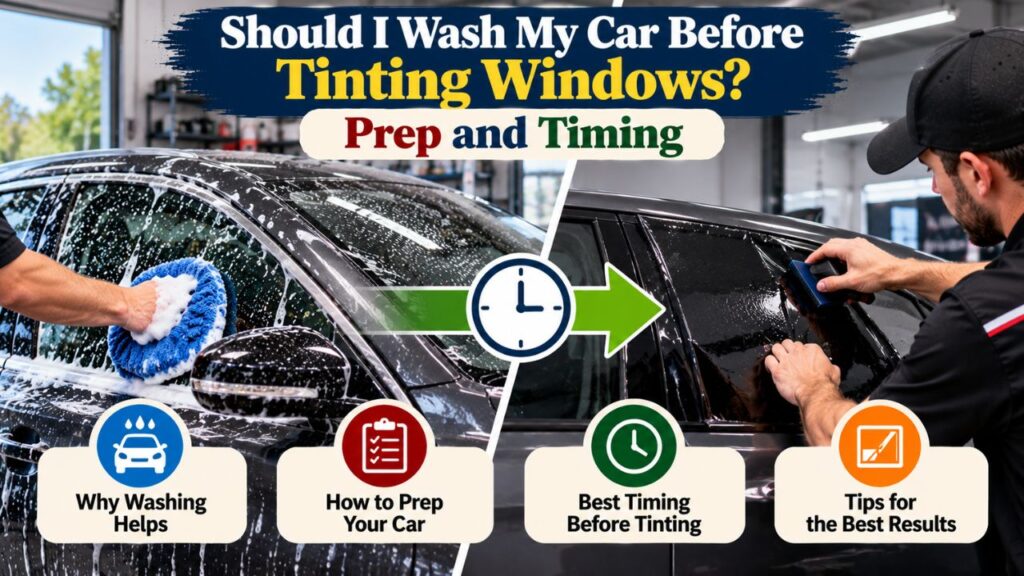
Washing your car before a tint appointment is a good preparation step because it removes contaminants that could otherwise enter the installation area.
However, an exterior car wash and the detailed glass preparation required for tinting are two different processes.
A regular car wash removes dirt from the vehicle’s exterior.
Tint preparation focuses on producing a carefully cleaned glass surface suitable for adhesive film.
Both processes serve useful purposes.
A Clean Car Reduces Dust Contamination
Dust is one of the most common challenges during automotive window tint installation.
Small particles can become trapped between the adhesive and glass.
Once the film bonds, they may remain visible as tiny spots or raised areas.
Contamination may come from:
- Dust on the door panels
- Dirt around window seals
- Pollen on exterior glass
- Pet hair inside the cabin
- Loose debris in window channels
- Dusty weatherstripping
- Fibers from cleaning materials
Washing the exterior removes much of the loose contamination before the vehicle enters the installation area.
Cleaning the interior can reduce additional dust and fibers.
Washing Helps Installers Inspect the Windows
Clean glass makes scratches, chips, and other existing imperfections easier to identify.
This is useful because some marks become more noticeable after dark film is installed.
For example, a small scratch that is difficult to see through dirty glass may stand out against the finished tint.
Inspecting the glass beforehand helps distinguish existing damage from installation defects.
A Clean Vehicle Makes Installation Preparation Easier
According to Evening Shade Inc.’s window tint preparation guidance, the company asks customers to bring their vehicles washed on appointment day to reduce dust and pollen entering the shop.
The installer also recommends vacuuming vehicles containing pet hair or dander.
This does not mean every tint shop requires a complete car wash.
It shows why removing excessive dirt before an appointment can support a cleaner installation environment.
Key Takeaway: Washing your car is recommended because it reduces loose contamination, but the installer must still perform detailed glass cleaning immediately before applying the film.
How Long Before Tinting Should You Wash Your Car?
For most appointments, washing the vehicle the day before installation is a convenient choice.
It gives the windows, door seals, and surrounding trim time to dry.
A same-day wash can also work if the vehicle is reasonably dry before tinting begins.
Washing the Day Before Tint Installation
Washing approximately 12–24 hours before the appointment is a practical option, although it is not a universal manufacturer requirement.
Benefits include:
- Time for trapped water to drain
- Less moisture around window seals
- Reduced last-minute preparation
- Cleaner exterior surfaces
- An opportunity to inspect the glass
After washing, park in a reasonably clean location when possible.
Avoid leaving the vehicle beneath trees that release large amounts of pollen or sap.
If a small amount of dust accumulates overnight, the installer can remove it during normal preparation.
Washing on the Same Day
You can wash the car on the morning of the tint appointment.
However, allow adequate drying time.
Water can remain inside rubber seals and exterior trim even after the visible glass looks dry.
When windows are lowered or the surrounding trim is disturbed, trapped water may carry dirt onto the glass.
Use clean microfiber towels to dry the accessible areas.
Avoid arriving with water dripping from the window channels.
Washing Two or Three Days Before Tinting
Washing two or three days before the appointment is generally acceptable if the car remains reasonably clean.
You do not need to wash it again merely because more than 24 hours have passed.
However, if the vehicle has been driven through mud, heavy dust, or pollen, a light cleaning may be useful.
The goal is to arrive without excessive contamination.
Best Washing Schedule Before Tinting
| When to wash | Is it suitable? | Recommendation |
| 1–3 days before | Yes | Good option if the car stays reasonably clean |
| The day before | Yes | Convenient choice with time for drying |
| Same morning | Yes | Allow window seals and trim to dry |
| Immediately before appointment | Possible | Avoid arriving with excessive trapped water |
| After arriving at the tint shop | Usually unnecessary | Follow the installer’s preparation process |
There is no fixed waiting period that every vehicle must follow after an ordinary wash.
The most important factors are cleanliness, dryness around the window areas, and the tint shop’s specific instructions.
What Parts of the Car Should You Clean Before Tinting?
You do not need to perform a complete automotive detailing service.
Focus on the areas that can introduce contamination during window film installation.
Exterior Window Glass
Remove loose dirt, dust, bugs, pollen, and road grime from the exterior windows.
Although film is normally installed on the interior glass, installers often use the outside surface for measuring, positioning, and shaping the film.
Dirty exterior glass can therefore interfere with preparation.
Pay attention to:
- Front side windows
- Rear passenger windows
- Rear windshield
- Quarter windows
- Any glass scheduled for tinting
You do not need to polish the glass aggressively.
A normal wash and careful drying are sufficient for the preliminary cleaning stage.
Window Seals and Weatherstripping
Rubber seals and weatherstripping commonly collect dirt.
When a roll-down window moves, debris from these areas can contact the glass.
Gently clean accessible seals with an appropriate soft cloth.
Avoid forcing cleaning tools into tight window channels or damaging the weatherstripping.
Professional installers may perform more detailed cleaning when preparing the glass.
Door Panels and Interior Trim
Dust on the upper door panels can transfer to the installation area.
Wipe accessible surfaces around the windows.
A clean microfiber cloth is usually sufficient for light dust.
Avoid spraying large amounts of liquid into switches, speakers, or electrical controls.
You also do not need to apply interior dressing immediately before tinting.
Some products leave oily or silicone-containing residues that may complicate cleaning if transferred to the glass.
Rear Window and Parcel Shelf
The rear windshield is particularly sensitive to contamination because of its large surface area and curved shape.
Dust may collect on the rear parcel shelf, headrests, and surrounding interior trim.
Remove loose debris before installation.
Do not scrape or aggressively scrub rear-window defroster lines.
These heating elements can be damaged by sharp tools or excessive force.
Pet Hair and Loose Interior Debris
Pet hair can become airborne during vehicle preparation.
Vacuum seats, carpets, and nearby trim if the interior contains substantial pet hair.
Remove loose paper, clothing, and other items near the windows.
You do not need to empty the entire vehicle unless the tint shop requests it.
Key Takeaway: Focus on the windows, seals, nearby trim, and loose interior debris. A completely detailed engine bay or spotless vehicle undercarriage will not improve window tint adhesion.
How to Wash Your Car Before Tinting Windows Step by Step
A simple hand wash is enough for most vehicles.
The goal is to remove contamination without leaving chemicals or excessive water around the window areas.
Step 1: Park in a Shaded Area
Choose a cool, shaded location when possible.
Washing hot glass in direct sunlight can make water and cleaning products evaporate rapidly.
This may leave water spots or streaks.
A shaded location also makes it easier to inspect the glass after cleaning.
Step 2: Rinse Away Loose Dirt
Rinse the exterior using clean water.
Focus on removing loose dust, pollen, and road grime.
Avoid directing a concentrated high-pressure water stream into window seals or damaged weatherstripping.
You do not need to force water into narrow door channels to prepare the car for tinting.
Step 3: Wash With Automotive Shampoo
Use a suitable automotive car-wash shampoo according to the product instructions.
A clean wash mitt or soft sponge can help remove surface dirt.
Avoid household detergents that are not intended for vehicle finishes.
Wash the window glass and surrounding panels.
Pay particular attention to the upper door areas and rear glass.
Step 4: Rinse Thoroughly
Remove soap residue from the vehicle.
Residue left around the window seals can mix with trapped water and create additional cleaning problems.
Use a gentle, thorough rinse.
There is no need to flood the door seals or window channels.
Step 5: Dry the Glass and Surrounding Trim
Dry the windows with a clean microfiber towel.
Pay attention to areas where water commonly collects:
- Lower window seals
- Side mirror housings
- Door trim
- Rear glass edges
- Upper door frames
- Rubber weatherstripping
Use a separate clean towel when necessary.
Avoid wiping clean glass with a towel that has already collected dirt from the wheels or lower body panels.
Step 6: Remove Loose Interior Dust
Vacuum or gently wipe the interior surfaces near the windows.
Remove pet hair and loose debris.
Avoid applying greasy interior dressing to the surrounding trim immediately before the appointment.
Step 7: Inspect the Windows
Look through the cleaned glass for obvious damage.
Check for:
- Existing tint film
- Scratches
- Chips
- Adhesive residue
- Old stickers
- Damaged window seals
- Unusual stains
Tell the installer about any damaged glass or existing tint that may need removal.
Do not attempt aggressive scraping on heated rear glass.
Step 8: Keep the Car Reasonably Clean Until Installation
After washing, avoid unnecessary dusty conditions.
Close the windows while parked in dirty or windy environments.
If possible, keep the interior free from loose materials that could introduce contamination.
The vehicle does not need to remain perfectly clean.
The installer will perform the final glass preparation before applying the film.
Should You Clean the Inside of Your Windows Before Tinting?
Light interior cleaning can help, but the professional installer should still clean the glass immediately before applying tint.
The final cleaning process is more detailed than ordinary household window cleaning.
Why Interior Glass Matters Most
Automotive adhesive window tint is normally installed on the inside surface of the glass.
The adhesive must contact clean glass to bond properly.
Contaminants such as grease, fingerprints, dust, and residue can interfere with the finished appearance.
Because the film is applied inside, interior glass cleanliness is more directly related to adhesion than the overall appearance of the vehicle’s exterior.
What Cleaner Should You Use?
For preliminary cleaning, use a cleaner suitable for automotive glass and avoid leaving residue.
However, if you’re preparing glass immediately before DIY film application, follow the film manufacturer’s instructions instead of choosing a household cleaner at random.
For example, Gila’s official automotive window film installation instructions recommend using its application solution for glass preparation.
The instructions specifically advise against using household glass cleaner, vinegar, or ammonia cleaner immediately before film application.
This is because final preparation requires a clean surface compatible with the film’s adhesive and installation method.
Should You Use Windex Before Tinting?
Avoid applying ordinary household glass cleaner immediately before installing film unless the tint manufacturer specifically permits it.
Some glass cleaners can leave residues that require additional rinsing or cleaning.
Windex formulations vary, and not all products contain the same ingredients.
For a professional appointment, you do not need to perform the final adhesive-preparation cleaning yourself.
Allow the installer to use the correct products.
Can You Use Rubbing Alcohol?
Some professional glass-cleaning procedures use alcohol-based solutions to remove certain residues.
However, alcohol concentration and compatibility depend on the glass, surrounding trim, and film installation requirements.
Do not use concentrated alcohol indiscriminately around rubber seals, painted surfaces, or sensitive components.
For DIY tinting, follow the cleaning method specified for your film.
What Should You Avoid Before Window Tint Installation?
Certain cleaning and detailing activities can create more work for the installer.
Avoid unnecessary treatments that leave difficult-to-remove residues.
Applying Wax or Sealant to the Windows
Automotive wax, paint sealants, and water-repellent glass treatments can affect how liquids behave on the glass.
Some products may require special removal before adhesive film installation.
Avoid applying these products to the windows scheduled for tinting shortly before the appointment.
If you have already applied a glass coating or water repellent, tell the installer.
The appropriate preparation method depends on the product.
Using Silicone-Based Interior Dressing Near the Glass
Some dashboard and trim dressings leave slippery residues.
If these products transfer to the glass, they may complicate cleaning.
Avoid spraying interior dressing around the windows immediately before tinting.
Wipe away excess residue when necessary.
Leaving Water in Window Channels
Excess water trapped in seals can carry contamination onto freshly cleaned glass.
After washing, allow the vehicle to dry.
Avoid repeatedly soaking window seals just before the appointment.
Trying to Remove Old Tint With Sharp Tools
Old window tint may leave adhesive residue.
Removing it can require controlled heat, appropriate adhesive removers, and careful glass handling.
The rear windshield requires particular caution because scraping can damage defroster lines.
If existing tint needs replacement, tell the installer before the appointment.
Professional removal may be the safer option.
Applying New Stickers to the Glass
Stickers and decals can leave adhesive residue.
Avoid placing new stickers on windows scheduled for tinting.
If existing stickers must be removed, ask whether the installer prefers to handle them.
Will a Tint Shop Clean Your Windows Before Installation?
Yes. Professional window tint installers generally clean the glass as part of their installation process.
Detailed cleaning is necessary even when the customer arrives with a freshly washed car.
A normal car wash cannot reliably remove every contaminant from the glass edges and interior window seals.
What Professional Tint Preparation Includes
Depending on the vehicle and film, preparation may involve:
- Inspecting the glass for damage.
- Removing loose contamination.
- Cleaning the inside and outside surfaces.
- Addressing residue near window seals.
- Preparing the glass with a compatible solution.
- Removing remaining water and debris.
- Positioning and installing the film.
The exact method varies by product and installer.
Rear glass and windows with integrated electronic elements may require additional precautions.
Do You Need to Pay Extra for Window Cleaning?
Routine glass preparation is normally part of a professional tint installation.
However, unusual conditions may require additional labor.
Examples include:
- Heavy adhesive residue
- Existing film removal
- Severe contamination
- Damaged seals
- Difficult aftermarket coatings
Ask the tint shop whether special preparation or old film removal is included in the quoted price.
Can You Bring a Dirty Car to a Tint Appointment?
Usually, yes, although some shops may request that the vehicle be washed first.
A little road dust is different from a vehicle covered in mud or heavy debris.
If the car is unusually dirty, cleaning it before the appointment is recommended.
If you cannot wash it, contact the installer and ask about their preparation requirements.
Do not assume the appointment must be canceled simply because the exterior isn’t spotless.
Is Washing Necessary Before DIY Window Tinting?
For DIY tinting, detailed glass preparation is especially important because you are responsible for controlling contamination.
A full exterior wash is helpful but not always essential.
The glass, seals, and surrounding work area must be cleaned carefully.
Clean the Glass Immediately Before Applying Film
Even if you washed the vehicle the previous day, clean the glass again during installation preparation.
Dust can accumulate quickly.
Follow the tint manufacturer’s instructions for application solution, cleaning tools, and drying methods.
Do not substitute an ordinary glass cleaner unless it is compatible with the product.
Work in a Sheltered, Low-Dust Area
Outdoor installation in windy conditions increases the chance of airborne contamination.
A clean garage or another protected workspace is preferable.
Avoid running fans that blow dust toward the exposed adhesive.
Keep cleaning towels and installation tools free from lint.
Protect the Rear Defroster
Do not use sharp scrapers on interior rear glass containing printed defroster or antenna lines.
Improper cleaning can damage these components.
For a beginner, a curved rear windshield is also more difficult to tint than a flat side window.
Consider professional installation when the vehicle has complex glass or expensive electronic features.
Can You Wash Your Car After Tinting the Windows?
Yes, but it’s important to distinguish washing the vehicle’s exterior from cleaning the newly tinted interior glass.
Automotive tint is normally installed on the inside of the windows.
Therefore, an ordinary exterior wash does not directly scrub the tint film.
However, the film needs time to bond and cure, and the installer’s specific aftercare instructions should take priority.
Exterior Car Washing After Tinting
Some installers allow exterior washing soon after installation because the tint is on the inside of the glass.
Others recommend waiting as a precaution.
For example, Evening Shade Inc. states that exterior vehicle washing is permitted after tint installation while interior glass cleaning should be delayed.
If your installer has not provided specific guidance, postponing an unnecessary wash for a day or two is a conservative approach.
When washing:
- Avoid concentrating high-pressure water around window seals.
- Do not allow automatic washing equipment to force windows open.
- Dry accessible exterior glass gently.
- Avoid disturbing the window edges.
- Follow any additional instructions from the tint shop.
If the vehicle also received paint protection film, a wrap, or another exterior coating, separate washing restrictions may apply.
Cleaning the Inside of Newly Tinted Windows
New window film requires time for the adhesive to bond properly.
Do not clean the interior film immediately after installation.
According to 3M’s automotive window tint care guidance, its window tint should not be cleaned or exposed to window operation for at least 48 hours after installation.
Other manufacturers and installers may recommend longer waiting periods.
The correct timeframe depends on the product and installation instructions.
When Can You Roll Down the Windows?
Avoid lowering tinted side windows until the installer says the film has developed sufficient adhesion.
Window movement can disturb the film edges while they are still curing.
Some manufacturers recommend a few days.
Others specify longer periods.
For example, Gila’s automotive window tint FAQ describes a curing period of approximately 7–10 days for its DIY films and instructs users not to lower windows during that period.
Do not assume one manufacturer’s waiting period applies to every film.
Typical Before-and-After Tinting Schedule
| Timing | Recommended action |
| 1–3 days before | Wash exterior if practical; vacuum dusty interior |
| Day before | Good time for a complete wash and drying |
| Appointment day | Arrive with reasonably clean windows and trim |
| During installation | Installer performs final glass preparation |
| Immediately after | Avoid touching or cleaning interior tint |
| First several days | Keep windows closed for the product-specific period |
| After approved curing period | Clean film using the manufacturer’s recommended method |
This schedule is general guidance, not a substitute for the instructions supplied with the installed film.
What Happens if You Don’t Wash Your Car Before Tinting?
Skipping a car wash does not automatically produce a bad tint installation.
The result depends on the condition of the vehicle and the quality of the installer’s preparation.
A Lightly Dusty Car May Not Be a Problem
If the exterior has only a small amount of ordinary dust, an experienced installer can usually prepare the windows properly.
The cleaning process is part of professional film installation.
However, removing loose dust beforehand can still reduce contamination entering the workspace.
Heavy Dirt Can Create Additional Work
Mud, pollen, pet hair, and debris around the windows may require more preparation.
If these materials become airborne or transfer from the seals, they can contaminate the adhesive surface.
Heavy contamination may also make existing glass defects harder to identify until cleaning begins.
An Unwashed Car Does Not Automatically Cause Bubbles
Window tint bubbles can have different causes.
Some are temporary pockets of installation moisture.
Others result from trapped air, dirt, or adhesive problems.
A dirty vehicle increases contamination risks, but it is not the only possible explanation for bubbling.
If defects remain after the recommended curing period, ask the installer to inspect them.
Common Car Washing Mistakes Before Tinting
Several preparation errors can reduce the benefits of washing.
| Mistake | Why it matters | Better approach |
| Washing immediately before arrival | Water may remain trapped in seals | Allow adequate drying |
| Using dirty towels | Can transfer grit or lint | Use clean microfiber towels |
| Applying glass water repellent | May require removal before film installation | Avoid new treatments on glass to be tinted |
| Spraying interior dressing near windows | Can leave residue | Clean trim without oily buildup |
| Leaving pet hair around glass | Fibers can enter the work area | Vacuum nearby surfaces |
| Aggressively scraping rear glass | Can damage defroster lines | Use compatible cleaning methods |
| Skipping final glass preparation | A car wash doesn’t remove all adhesive contaminants | Let the installer clean the glass |
| Cleaning interior tint immediately afterward | Can disturb film before adequate curing | Follow product-specific waiting periods |
Overcleaning the Glass
More cleaning isn’t always better.
Aggressive polishing and scraping can damage delicate glass features or surrounding trim.
For ordinary dirt, gentle cleaning is sufficient.
Allow the installer to handle specialized adhesive preparation.
Using the Wrong Cleaning Product
Some household products are unsuitable immediately before adhesive film installation.
Follow the film manufacturer’s instructions when performing DIY tinting.
For professional appointments, avoid applying new chemicals to the glass shortly before installation.
Forgetting the Interior
A clean exterior is helpful, but dusty door panels and pet hair can still introduce contamination.
Wipe or vacuum the areas surrounding the windows.
Do not worry about making the entire cabin look brand new.
How to Prepare Your Car for a Window Tint Appointment
A short checklist can help avoid common preparation problems.
Before Leaving Home
{@body const checklist = [
“Wash the exterior if the vehicle is dusty or dirty.”,
“Allow the window seals and trim to dry.”,
“Remove excessive interior dust and pet hair.”,
“Clear loose items away from the windows.”,
“Check the glass for scratches, chips, or existing tint.”,
“Avoid applying wax, glass coatings, or oily products to the windows.”,
“Confirm the appointment and any shop-specific preparation requirements.”
]}
{#each checklist as item, i}
- {item}
{/each}
At the Tint Shop
Tell the installer if:
- The vehicle has an existing aftermarket glass coating.
- The windows have old tint or adhesive residue.
- The rear defroster has known damage.
- The vehicle has unusual aftermarket glass.
- A window seal is deteriorating.
- There are scratches or chips that may affect installation.
Ask how long you should wait before lowering windows or cleaning the new film.
If the shop provides written aftercare instructions, keep them for reference.
Conclusion
Should I wash my car before tinting windows? Yes, washing beforehand is a sensible step, but a full car wash is not mandatory for every tint appointment. A reasonably clean vehicle reduces dust and contamination, while professional installers perform the detailed glass preparation necessary for proper film adhesion.
Washing the day before the appointment is a convenient choice because it gives the windows and seals time to dry. A same-day wash is also acceptable when excess moisture is removed.
Pay particular attention to exterior glass, window seals, nearby interior trim, and pet hair. Avoid applying new coatings or leaving oily residues around the windows.
I recommend washing a noticeably dirty car before the appointment and allowing the installer to complete the final glass cleaning.
After tinting, distinguish between exterior vehicle washing and cleaning the interior film. Follow the film manufacturer’s instructions for curing, window operation, and cleaning.
Proper preparation and aftercare can help produce a cleaner appearance and reduce avoidable installation problems.
FAQs About Should I Wash My Car Before Tinting Windows
Do Tint Shops Wash Your Car Before Tinting?
Most tint shops clean the inside and outside of the glass before installing film, but they do not necessarily provide a full exterior car wash.
Routine glass preparation is normally part of the installation process.
Ask the shop if it has specific vehicle-cleanliness requirements.
Can I Wash My Car the Same Day I Get Window Tint?
Yes. Washing your car before a same-day tint appointment is generally acceptable.
Allow enough time for the windows, seals, and trim to dry.
Avoid arriving with excessive water dripping from the window channels.
Should I Clean the Inside of My Car Before Tinting?
Yes, particularly if the interior contains loose dust, pet hair, or debris near the windows.
A light vacuum and wipe-down can help reduce contamination.
The installer should still perform the final glass preparation.
Should I Use Glass Cleaner Before Window Tinting?
You can remove ordinary dirt before the appointment, but avoid applying household glass cleaner immediately before DIY tint installation unless the film manufacturer permits it.
Some products recommend using a specific application solution to prepare the glass.
Follow the film’s instructions or allow the professional installer to handle the final cleaning.
Can I Get My Windows Tinted if My Car Is Dirty?
Usually, yes, but heavy dirt or contamination may require extra preparation.
A lightly dusty car is generally manageable for a professional installer.
If the vehicle is covered with mud, pollen, or other debris, washing it beforehand is recommended.
Can I Take My Car Through an Automatic Wash Before Tinting?
Generally, yes. A regular automatic wash before tint installation is acceptable if it does not damage the vehicle.
However, ensure that the window seals and trim are reasonably dry before the appointment.
Avoid applying optional wax or water-repellent glass treatments immediately before tinting.
Can I Wash My Car Right After Window Tinting?
Exterior washing may be permitted because automotive tint is normally installed inside the glass.
However, follow the installer’s aftercare instructions and avoid aggressive water pressure around window seals.
Cleaning the newly tinted interior glass is different and should be delayed until the film manufacturer’s specified waiting period has passed.
How Long Should I Wait to Clean My Windows After Tinting?
The required waiting period depends on the film.
For example, 3M’s product care guidance specifies at least 48 hours without window cleaning or operation for the covered tint products.
Other manufacturers and installers may recommend longer intervals.
Always follow the instructions for the specific film installed on your vehicle.