No, installing aftermarket window tint does not automatically void a car’s factory warranty in the United States. A manufacturer or dealership generally cannot deny unrelated warranty repairs simply because you applied tint film to your windows. However, damage directly caused by the film or its installation may not be covered.
Window tint becomes a warranty concern when installation tools scratch glass, rear defroster lines are damaged during film removal, or installation liquid reaches sensitive electrical components. The important distinction is whether the modification actually caused the problem.
There are also different warranties to consider. A vehicle’s factory warranty, separate glass coverage, an optional service contract, and the window film manufacturer’s warranty may have different terms. A lifetime tint warranty does not mean every glass or electrical repair is covered.
In this article, I explain how aftermarket tint affects manufacturer warranties, which window and electrical problems may lead to denied claims, and whether ceramic or DIY tint changes your coverage. I also cover film warranties, dealership installations, warranty documentation, and what to do if a dealership refuses a repair.
Does Window Tint Void Warranty Under U.S. Law?
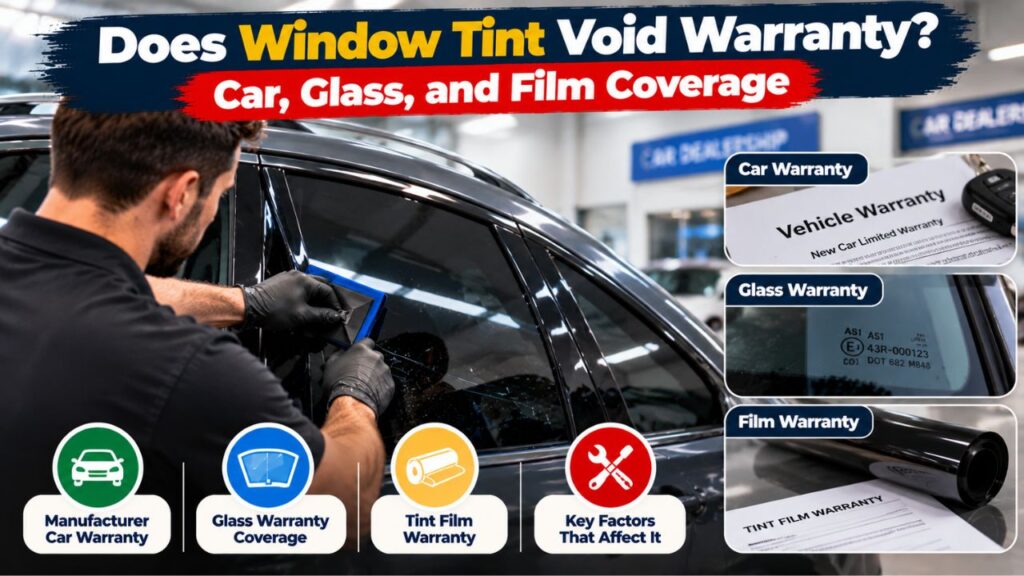
Aftermarket window tint normally does not cancel an entire vehicle warranty simply because it is an aftermarket modification.
The main federal law relevant to this issue is the Magnuson-Moss Warranty Act.
This law protects consumers from certain unfair warranty restrictions, including requirements to use specific branded parts or services when those requirements aren’t legally permitted.
What the Magnuson-Moss Warranty Act Says
The Magnuson-Moss Warranty Act governs written warranties on consumer products, including vehicles.
Under the law and the Federal Trade Commission’s interpretations, a manufacturer generally cannot refuse unrelated warranty coverage simply because the consumer used an aftermarket product or independent service provider.
For example, installing tint at an independent shop doesn’t automatically eliminate factory warranty coverage for the engine, transmission, or other unrelated components.
The Federal Trade Commission’s official guide to auto warranties states that aftermarket parts do not automatically invalidate warranty coverage.
It also explains that a manufacturer or dealer must establish that an aftermarket component or its installation caused the damage before denying coverage on that basis.
When Can a Dealership Deny a Warranty Claim?
A dealership or manufacturer may have grounds to deny a particular claim when the problem resulted from an aftermarket modification.
Consider these examples:
- A tint installer damages a rear defroster line.
- A cutting tool scratches the vehicle’s glass.
- Excess installation liquid damages a window switch or electrical connector.
- Film installation interferes with a windshield-mounted camera.
- Improper removal damages factory-installed glass components.
In these situations, the manufacturer may determine that the damage wasn’t caused by a manufacturing defect.
However, the decision should be based on the cause of the specific failure.
The mere presence of window tint isn’t sufficient evidence that every nearby component was damaged by the installation.
Does the Whole Car Warranty Become Invalid?
No, not merely because the windows have been tinted.
Suppose a vehicle develops a transmission problem six months after aftermarket tint installation.
The tint has no obvious connection to the transmission.
The manufacturer cannot properly deny an otherwise valid transmission warranty claim solely because the vehicle has tinted windows.
By contrast, if an installer damages a door’s wiring while removing interior panels, the resulting electrical repair may fall outside the manufacturer’s warranty.
Key Takeaway: Window tint doesn’t automatically void the entire factory warranty. A tint-related claim dispute should focus on whether the film or installation caused the particular damage.
Which Car Warranties Can Be Affected by Window Tint?
A car can have several different types of warranty coverage.
Understanding which warranty applies helps avoid confusion when a problem develops after tinting.
| Warranty type | Does window tint automatically void it? | Main consideration |
| Factory bumper-to-bumper warranty | No | Tint-related damage may be excluded |
| Powertrain warranty | No | Unrelated engine and transmission coverage generally remains |
| Factory glass coverage | No automatic blanket cancellation | Damage caused by tint installation may be excluded |
| Electrical component warranty | No | A related installation-caused failure may not be covered |
| Separate tint film warranty | Not applicable | Depends on film defects and warranty terms |
| Extended warranty or service contract | Depends on written terms | Modification and damage exclusions may apply |
| Dealer-installed accessory warranty | Depends on the agreement | May be separate from the factory vehicle warranty |
Factory Bumper-to-Bumper Warranty
A manufacturer’s basic limited warranty generally covers eligible defects in materials or workmanship.
It does not necessarily cover damage caused by outside modifications.
If the window tint is installed without damaging factory components, unrelated warranty coverage generally remains available.
However, a manufacturer may exclude a specific problem if the installation caused it.
For example, a window regulator failure caused by an unrelated manufacturing defect remains a different issue from a regulator damaged during tint installation.
Powertrain Warranty
Powertrain warranties generally cover specified engine, transmission, and drivetrain components.
Window tint has no normal mechanical relationship to these systems.
Therefore, installing automotive film typically doesn’t affect powertrain warranty coverage.
An unrelated engine or transmission defect should be assessed under the applicable warranty terms.
Factory Glass Warranty
Factory glass coverage requires closer attention.
Manufacturers generally cover eligible manufacturing defects rather than every type of glass damage.
A scratch caused by an installation blade isn’t a manufacturing defect.
Similarly, damage caused while scraping old tint from a rear windshield may be excluded.
However, simply having tinted windows doesn’t establish that a separate glass manufacturing defect was caused by the film.
Extended Warranty or Vehicle Service Contract
An extended warranty is often a separate vehicle service contract rather than the original manufacturer’s written warranty.
Coverage depends on the specific contract.
Some agreements contain exclusions for damage resulting from modifications or unauthorized work.
Review the contract carefully before tinting.
Don’t assume the protections, exclusions, and claims procedures are identical to those of the original factory warranty.
Can Window Tint Void a Windshield or Glass Warranty?
Window tint can affect coverage for a particular glass repair if the film or installation caused the damage, but it doesn’t automatically invalidate every glass warranty claim.
The distinction matters because automotive glass may have several vulnerable components.
These include surface coatings, heating elements, antennas, and electronic equipment mounted near the windshield.
Scratches Caused During Tint Installation
An installer may use cutting tools, scrapers, and cleaning equipment when preparing the glass.
Improper tool use can scratch the surface.
For example, a blade dragged across an unsuitable glass surface or coating may leave permanent marks.
If the damage results from installation work, the vehicle manufacturer generally isn’t responsible for repairing it under a manufacturing-defect warranty.
The installer may be responsible under its workmanship agreement or applicable law.
Inspect the glass before installation and document any existing scratches.
Glass Cracking After Tint Installation
Some window films absorb substantial solar energy.
Under certain conditions, film and glass compatibility can affect temperature differences across the glass.
However, a crack appearing after tint installation doesn’t automatically prove that the tint caused it.
Other possible causes include:
- Road debris.
- Pre-existing chips.
- Mechanical stress.
- Manufacturing defects.
- Improper glass installation.
- Changes in temperature.
- Damage around the glass edges.
The cause should be assessed before a warranty decision is made.
Use film specifically intended for automotive glazing and follow the manufacturer’s compatibility instructions.
Rear Defroster Damage
Many vehicles have electrically heated lines on the inside of the rear windshield.
These heating elements can be damaged during improper tint installation or removal.
Sharp scrapers and aggressive adhesive-removal techniques are particular concerns.
If the defroster worked before tint removal but its heating lines were damaged during the work, the vehicle manufacturer may deny coverage for that installation-caused damage.
However, a factory defroster defect unrelated to the tint remains a separate issue.
Factory Privacy Glass vs. Aftermarket Tint
Factory privacy glass and aftermarket window film are different products.
Factory privacy glass obtains its darker appearance through the glass manufacturing process.
Aftermarket tint generally uses a film applied to the existing glass.
Factory-installed glazing is part of the vehicle’s original equipment and is subject to the applicable factory warranty terms.
Aftermarket film may have its own independent warranty.
Do not assume that a factory privacy glass warranty automatically covers additional film installed later.
Key Takeaway: Glass damage from tinting equipment or incompatible installation methods may be excluded from factory coverage. Unrelated glass defects should be evaluated separately.
Can Window Tint Affect Electrical and Window Component Warranties?
Modern vehicles contain electrical equipment in doors, windows, windshields, and rear glass.
Tint installation can bring tools and liquids close to these components.
That doesn’t mean tinting normally damages electronics, but improper installation can create risks.
Power Window Regulators and Motors
Power windows use motors, regulators, tracks, and seals to raise and lower the glass.
Tinting sometimes involves removing trim or working around weatherstripping.
An installer could damage a component while disassembling or reassembling the door.
Film that is poorly trimmed or improperly installed may also interfere with the window’s normal movement.
However, a window motor failure unrelated to tinting shouldn’t automatically be blamed on the film.
The actual cause must be established.
Door Switches and Electrical Connectors
Many window films are installed using a water-based application solution.
A controlled amount of liquid is normally part of the installation process.
Problems can occur if excessive liquid reaches sensitive electrical components.
Possible concerns include:
- Power window switches.
- Door control modules.
- Electrical connectors.
- Wiring connections.
- Speakers and other door-mounted equipment.
Qualified installers use suitable procedures to protect these areas.
If installation liquid causes damage, the resulting repair may not qualify for factory warranty coverage.
Windshield Cameras and Driver-Assistance Systems
Some vehicles use cameras and sensors mounted near the windshield for driver-assistance functions.
These may support:
- Lane departure warnings.
- Lane-keeping assistance.
- Automatic emergency braking.
- Traffic sign recognition.
- Automatic high beams.
- Other camera-based systems.
Window film should not obstruct or interfere with the equipment’s required viewing area.
If an improperly installed film causes a camera malfunction, the related repair may be disputed.
Follow the vehicle manufacturer’s instructions before applying windshield film.
A film’s high visible light transmission doesn’t automatically establish compatibility with every camera or sensor system.
Radio, GPS, and Electronic Signals
Some metallized window films can affect certain radio-frequency signals.
However, the effect varies with the film, vehicle antennas, and installed electronics.
Nonmetallic ceramic films generally avoid interference associated with metallic tint layers.
Signal interference alone doesn’t establish that an electronic component has been physically damaged.
If a connectivity problem appears after installation, determine whether the film is affecting reception before assuming a hardware failure.
Does Ceramic Window Tint Void Warranty?
Ceramic tint doesn’t automatically void a vehicle warranty, just as other properly installed aftermarket automotive films don’t automatically void it.
Warranty considerations depend mainly on the installation, product compatibility, and whether related damage occurs.
Ceramic vs. Dyed vs. Carbon Tint
| Tint type | Automatic factory warranty cancellation? | Important consideration |
| Dyed tint | No | Installation quality and glass compatibility |
| Carbon tint | No | Correct application and product specifications |
| Ceramic tint | No | Heat-control characteristics and safe installation |
| Metallized tint | No | Possible electronic signal considerations |
| Hybrid tint | No | Actual film construction and installation method |
No film type receives a universal warranty exemption merely because it is more expensive.
A premium ceramic product can still cause a problem if applied incorrectly or to an unsuitable surface.
Likewise, a properly installed dyed film doesn’t automatically create a warranty problem.
Does Ceramic Tint Create More Glass Heat?
Some ceramic products absorb or reject substantial solar energy.
That doesn’t automatically make them unsuitable for automotive glass.
Film manufacturers design particular products for specific applications.
However, compatibility matters, especially for windshields, specialty coatings, and glazing that incorporates electronic systems.
Choose a film approved for the intended vehicle application.
Can Ceramic Film Protect the Factory Warranty?
Ceramic film cannot guarantee that every future vehicle problem will remain covered.
A high-quality film may reduce certain installation or performance concerns, but the actual warranty decision depends on the specific defect and applicable terms.
The most effective protection is proper product selection, qualified installation, and good documentation.
Does DIY Window Tinting Void a Car Warranty?
DIY tinting doesn’t automatically cancel a vehicle’s factory warranty.
However, it creates additional practical considerations because you are responsible for the installation work.
Damage Caused by DIY Installation
Possible DIY mistakes include:
- Scratching glass while trimming film.
- Damaging rear defroster lines.
- Allowing installation solution into electrical components.
- Cutting rubber seals.
- Damaging interior trim.
- Obstructing cameras or sensors.
- Applying incompatible film to specialty glass.
If the damage resulted from the DIY work, the manufacturer may have grounds to exclude the affected repair.
The same basic principle applies to damage caused by professional installation.
Will the Tint Manufacturer Cover DIY Film?
Not every film warranty covers consumer-installed products.
Some manufacturers provide warranty coverage only when the film is installed by an authorized professional.
Other products are intended for DIY installation and have different warranty terms.
Check the film’s written warranty before buying it.
The presence of a lifetime warranty statement on a package doesn’t automatically mean that self-installation is covered.
Is Professional Installation Better for Warranty Protection?
Professional installation may reduce the risk of incorrect cutting, contamination, and component damage.
It can also provide a documented installation record.
However, professional installation doesn’t automatically transfer every future repair obligation to the tint shop.
Ask whether the installer carries liability insurance and whether its workmanship warranty covers damage to vehicle components.
Key Takeaway: DIY tinting doesn’t automatically void a factory warranty, but installation-caused damage can lead to denied claims and may leave you without a separate workmanship warranty.
Does Dealer-Installed Window Tint Affect Warranty Coverage?
Dealer-installed window tint may be covered differently depending on who supplied and installed the film.
A vehicle sold with tinted windows may have factory glass, manufacturer-approved accessories, or aftermarket film arranged by the dealership.
These aren’t necessarily the same thing.
Factory-Installed Tint
Factory-installed tinted glass is generally original vehicle equipment.
It is subject to the applicable vehicle manufacturer warranty and its stated exclusions.
Factory privacy glass is not the same as aftermarket adhesive film.
Tint Installed by the Dealership
Some dealerships arrange aftermarket tint installation before or after delivering a vehicle.
The work may be performed by an outside contractor.
Ask whether the tint is:
- A factory-installed feature.
- A manufacturer-approved accessory.
- A dealer-installed aftermarket accessory.
- A third-party product supplied through the dealership.
These categories can affect which company handles film defects or installation complaints.
Don’t assume that purchasing tint through the dealership makes it part of the factory bumper-to-bumper warranty.
What Warranty Should the Dealer Provide?
Request written documentation identifying:
- The tint manufacturer.
- The exact film series.
- The installation company.
- Product warranty coverage.
- Workmanship coverage.
- Coverage for installation-related vehicle damage.
- The procedure for submitting a claim.
If the dealership promises additional protection, request that promise in writing.
Verbal statements can be difficult to establish later.
Does Window Tint Have Its Own Warranty?
Many automotive window films come with a separate manufacturer’s limited warranty.
This warranty primarily protects against specified defects in the film itself.
It does not replace the vehicle’s factory warranty.
What Does a Lifetime Window Tint Warranty Cover?
Coverage varies, but quality film warranties may include certain problems such as:
- Bubbling caused by covered adhesive defects.
- Peeling or delamination.
- Unusual discoloration.
- Cracking or crazing.
- Loss of specified film properties.
As an example, 3M’s official automotive window film warranty information describes coverage for eligible films against certain adhesion, appearance, and performance defects.
Its U.S. and Canadian automotive warranty terms provide coverage for specified products installed by an authorized installer, subject to the applicable conditions.
The warranty is generally limited to the original consumer and is not transferable.
This illustrates why the exact written terms matter.
What Is Usually Excluded From Tint Warranties?
Depending on the manufacturer, exclusions may include:
- Accidental scratches.
- Damage from abrasive cleaning.
- Improper care.
- Unauthorized removal.
- Misuse or abuse.
- Damage caused by unrelated vehicle defects.
- Improper installation outside the manufacturer’s requirements.
Some warranties cover replacement film and reinstallation labor.
Others may cover only the replacement material under certain circumstances.
Do not assume a tint warranty pays for unrelated glass replacement, electrical repairs, or vehicle damage.
Does Tint Film Warranty Cover Glass Breakage?
Generally, automotive film warranties are focused on the film.
Some specialized products or agreements may offer additional coverage, but ordinary tint warranties shouldn’t be assumed to include glass breakage.
Ask for written confirmation if an installer claims that glass replacement is covered.
Also verify whether any coverage has limits, exclusions, or special reporting requirements.
Is a Lifetime Tint Warranty Transferable?
Not necessarily.
Some lifetime warranties apply only while the original buyer owns the vehicle.
Selling the car may end the film warranty.
Other manufacturers may offer different terms.
Read the transferability section before relying on warranty coverage as a resale benefit.
How to Tint a New Car Without Creating Warranty Problems
Tinting a new car is common, but careful planning helps avoid unnecessary warranty disputes.
Step 1: Review the Owner’s Manual and Warranty Booklet
Check the vehicle manufacturer’s instructions concerning:
- Aftermarket accessories.
- Windshield film.
- Window glass.
- Heated rear windows.
- Antennas.
- Cameras and sensors.
- Modification-related exclusions.
The warranty booklet and owner’s manual may contain different relevant information.
For example, the owner’s manual may explain which windshield areas must remain clear for camera operation.
The warranty booklet explains what repairs are covered.
Step 2: Choose a Compatible Automotive Film
Use window film designed for automotive glazing.
Confirm compatibility with the intended glass and vehicle equipment.
Special attention may be necessary for windshields containing cameras, antennas, heating elements, or other integrated technology.
Don’t assume that a product advertised as premium ceramic is suitable for every glass surface.
Step 3: Verify the Tint Is Legal
Window tint laws vary across U.S. states.
Restrictions can depend on the window location, vehicle type, reflectivity, and finished visible light transmission.
A film sold legally in a store isn’t necessarily legal on every vehicle window.
Illegal tint doesn’t automatically void an unrelated factory warranty, but it can create enforcement, inspection, and other practical problems.
Choose film that satisfies the applicable legal requirements.
Step 4: Use a Qualified Installer
Look for an experienced installer familiar with your vehicle’s glass and electronic systems.
Ask whether the shop has previously installed film on the same model.
A suitable installer should understand how to protect:
- Door electrical components.
- Window seals.
- Rear defroster lines.
- Windshield-mounted cameras.
- Specialty glass surfaces.
An authorized installer may also be required for particular film warranties.
Step 5: Inspect the Vehicle Before Installation
Photograph the glass, interior trim, and relevant areas before tinting.
Check that the windows operate normally.
Also test the rear defroster and any affected electronic features where practical.
Document pre-existing scratches, chips, or other concerns.
This can make it easier to distinguish installation damage from earlier defects.
Step 6: Keep All Tint Installation Documents
Retain:
- The invoice.
- Film brand and model.
- Installation date.
- Installer contact information.
- Warranty certificate.
- Written workmanship terms.
- Relevant product specifications.
- Before-and-after photographs.
These records may help identify the cause of a later problem.
They can also be useful when filing a separate claim with the tint manufacturer.
Key Takeaway: The most effective way to reduce warranty disputes is to use compatible film, follow vehicle-specific restrictions, choose a qualified installer, and keep a complete installation record.
Does Removing Window Tint Affect Your Car Warranty?
Removing aftermarket tint doesn’t automatically cancel a factory warranty either.
However, removal can damage glass or nearby components if performed incorrectly.
Rear Defroster Damage During Removal
Rear-window heating lines can be vulnerable to scraping and adhesive removal.
An aggressive removal technique may damage the conductive elements.
If the defroster is damaged during tint removal, the vehicle manufacturer may deny coverage for that damage.
Removal should follow the glass and film manufacturers’ instructions.
Scratches and Adhesive Damage
Sharp tools can scratch glass or damage coatings during film removal.
Certain adhesive-removal chemicals may also be incompatible with surrounding trim.
If the tint is old, heavily deteriorated, or attached to delicate glazing, professional removal may reduce the risk.
Can Removing Tint Restore Warranty Coverage?
Removing film doesn’t automatically change the cause of an existing defect.
If tint installation damaged an electrical component, removing the film won’t necessarily make that damage eligible for factory warranty repair.
Conversely, if a vehicle has an unrelated manufacturing defect, the presence or removal of tint shouldn’t automatically determine coverage.
The underlying problem and warranty terms remain important.
Does Window Tint Affect a Leased Car Warranty?
A leased car generally remains subject to the applicable manufacturer warranty, but the lease agreement creates additional responsibilities.
These are separate issues.
Manufacturer Warranty vs. Lease Agreement
The manufacturer warranty addresses eligible defects and repairs.
The lease contract governs use, alterations, condition, and vehicle return requirements.
An aftermarket tint installation may comply with one agreement while creating obligations under the other.
For example, a lease may restrict modifications or require certain changes to be reversed before the vehicle is returned.
Read the lease terms before tinting.
Will You Need to Remove Tint Before Returning a Lease?
Possibly.
Some leasing companies may accept professionally installed, legal window tint.
Others may require removal or charge for damage resulting from alterations.
The outcome depends on the written lease conditions and vehicle inspection.
Request permission in writing when the contract requires approval.
If removal is necessary, budget for professional work, particularly on rear windows with defroster lines.
Does Illegal Tint Affect a Lease?
Illegal tint can create separate compliance and return-condition problems.
The leasing company may require correction under its agreement.
That is not the same as automatically voiding the factory powertrain warranty.
What Happens if a Dealer Denies Warranty Because of Window Tint?
If a dealership refuses a repair after discovering aftermarket tint, request an explanation of the specific exclusion being applied.
A denial may be appropriate when installation damage caused the failure.
However, unrelated warranty claims shouldn’t be dismissed simply because the vehicle has tinted windows.
Ask for a Written Explanation
Request a written description of:
- The failed component.
- The technician’s diagnosis.
- The alleged connection to the tint installation.
- The applicable warranty exclusion.
- Any supporting inspection findings.
Avoid accepting a vague statement that all aftermarket modifications automatically void the warranty.
The actual cause of the repair matters.
Review the Manufacturer’s Warranty Terms
Compare the dealership’s explanation with the written warranty.
Identify whether the problem is excluded because of accidental damage, modification-related damage, normal wear, or another documented condition.
If the problem appears unrelated to the tint, ask the dealership to explain the connection.
Contact the Vehicle Manufacturer
If the dealership’s explanation is unclear or unsupported, contact the manufacturer’s customer service or warranty assistance department.
Provide the vehicle details, warranty information, diagnosis, and tint installation records.
You may also request an evaluation by another authorized dealership.
Contact the Tint Installer if Installation Damage Is Confirmed
If the evidence indicates that the tint installation caused the damage, contact the installation shop.
Ask about its workmanship warranty and liability coverage.
Provide photographs, receipts, and repair estimates.
The installer may be responsible for correcting damage caused by its work, depending on the agreement and applicable law.
Escalate an Unfair Warranty Denial
If you believe a warranty claim has been denied improperly, consider contacting:
- The vehicle manufacturer’s customer assistance department.
- Your state attorney general’s consumer protection office.
- A local consumer protection agency.
- The Federal Trade Commission.
- A qualified consumer warranty attorney when necessary.
The FTC’s guidance linked earlier provides additional information about warranty rights and consumer complaints.
Key Takeaway: A warranty denial should identify the specific problem and the reason it is excluded. Keep written records and challenge unsupported claims through the appropriate channels.
Common Myths About Window Tint and Car Warranties
Several misunderstandings cause unnecessary confusion about aftermarket tint.
Myth 1: Any Aftermarket Tint Voids the Entire Car Warranty
False.
Aftermarket tint doesn’t automatically cancel coverage for unrelated manufacturing defects.
Damage caused by the modification may be excluded, but the entire vehicle warranty is not automatically lost.
Myth 2: Dealer-Installed Tint Is Always Fully Covered by the Factory Warranty
False.
A dealership may install or arrange aftermarket film under a separate agreement.
The product and installation may have their own warranty terms.
Ask which company is responsible before purchasing the service.
Myth 3: Ceramic Tint Cannot Cause Warranty Problems
False.
Ceramic technology may offer excellent heat rejection and electronic compatibility, but poor installation can still damage glass or vehicle components.
Film type doesn’t eliminate installation risks.
Myth 4: Illegal Tint Automatically Cancels the Factory Warranty
Not necessarily.
Window tint legality and manufacturer warranty coverage are separate questions.
Illegal film may lead to legal or inspection consequences, but it doesn’t automatically eliminate unrelated factory warranty protection.
Myth 5: Removing Tint Makes Every Related Repair Warrantable
False.
Removing the film doesn’t reverse damage caused during installation or removal.
The manufacturer can still evaluate whether the claimed defect resulted from outside damage.
Myth 6: A Lifetime Tint Warranty Covers the Entire Window
False.
A lifetime film warranty generally covers specified film defects.
It doesn’t automatically provide unlimited coverage for glass, electronics, heating elements, or installation mistakes.
Is Window Tint Worth Installing on a Car Under Warranty?
Window tint can still be a practical upgrade for a vehicle covered by a factory warranty.
Quality film may help reduce solar heat, ultraviolet exposure, and glare while improving appearance and privacy.
The main consideration is choosing an appropriate installation rather than avoiding tint solely because the vehicle is new.
When Window Tint Makes Sense
Aftermarket tint may be useful when:
- You frequently drive in hot, sunny conditions.
- You want reduced cabin glare.
- UV protection is important.
- You prefer a darker appearance within legal limits.
- You want solar heat control without replacing the glass.
A lighter high-performance ceramic film may be preferable when heat reduction is the priority but outward visibility and legal transmission limits must be preserved.
When You Should Consult the Dealer First
Seek vehicle-specific guidance before tinting when:
- The windshield contains advanced driver-assistance cameras.
- The vehicle has specialty coated glass.
- The rear windshield contains delicate heating or antenna elements.
- The manufacturer specifies restrictions on window modifications.
- The vehicle is leased.
- You plan to install a film in an unusual location.
A dealership’s approval isn’t necessarily a legal prerequisite to installing ordinary aftermarket tint on a privately owned vehicle.
However, written guidance can help clarify compatibility and reduce later disputes.
Compare Installer Warranties Before Buying
An inexpensive installation may not provide the same workmanship protection as a reputable professional service.
Ask what happens if:
- The film peels or bubbles.
- A window seal is damaged.
- A defroster line stops working after installation.
- A door component is damaged.
- The film must be removed for a covered glass replacement.
Written answers are more useful than broad promises that the tint comes with a lifetime warranty.
Conclusion
So, does window tint void warranty coverage on a car? In most U.S. situations, installing aftermarket automotive film doesn’t automatically invalidate the vehicle’s factory warranty.
The important distinction is whether the tint or installation caused the specific damage being repaired.
Unrelated manufacturing defects generally remain subject to the original warranty terms. However, scratches, damaged defroster lines, electrical problems, or sensor issues caused by tint installation may not qualify for factory-paid repairs.
The film itself may have a separate manufacturer’s warranty, and dealer-installed accessories can carry additional terms.
I recommend reviewing the vehicle’s warranty booklet, selecting compatible automotive film, using a qualified installer, and retaining detailed installation records.
If a warranty claim is denied, request the specific reason and supporting findings before accepting that the tint caused the problem.
Properly installed window tint can provide worthwhile comfort and UV protection without sacrificing unrelated factory warranty rights.
FAQs About Does Window Tint Void Warranty
Will Tinting a Brand-New Car Void Its Factory Warranty?
No. Tinting a brand-new car doesn’t automatically void its factory warranty in the United States.
However, the manufacturer may exclude damage caused by the film or installation. Review the warranty booklet and any vehicle-specific restrictions before applying film.
Does Window Tint Void the Warranty on a Windshield?
Not automatically.
A windshield manufacturing defect unrelated to tint should be evaluated under the applicable warranty. However, glass damage caused by improper film installation, removal, or incompatibility may be excluded.
Does Ceramic Tint Void a Tesla or Other EV Warranty?
Ceramic tint doesn’t automatically void an electric vehicle’s warranty.
However, EVs may use specialized glass, antennas, cameras, and other electronic systems. Follow the specific manufacturer’s instructions, especially for windshield and sensor areas.
Related damage caused by the installation may be excluded.
Can a Dealership Refuse an Engine Warranty Because of Tinted Windows?
A dealership generally cannot properly deny an otherwise covered engine repair solely because the vehicle has aftermarket window tint.
The manufacturer or dealer would need a valid basis for excluding the particular repair under the applicable warranty.
Does Aftermarket Tint Void a Rear Defroster Warranty?
Not automatically.
If the rear defroster fails because of a manufacturing defect unrelated to the tint, the applicable factory warranty may still cover it.
If the heating lines were damaged during tint installation or removal, that damage may be excluded.
Does DIY Window Tinting Void a Warranty?
DIY tinting doesn’t automatically void a factory vehicle warranty.
However, you may be responsible for damage caused by your own installation work. A separate tint manufacturer’s warranty may also require professional installation.
Does a Lifetime Tint Warranty Cover Glass Replacement?
Usually not.
A lifetime automotive tint warranty commonly covers specified film defects such as peeling, bubbling, or discoloration.
Glass replacement and installation-related damage are separate issues. Review the written warranty for any additional coverage.