Finding one charger that works equally well for a car battery and a boat battery can save money, garage space, and unnecessary equipment. The challenge is that automotive starting batteries and marine deep-cycle batteries may differ considerably in capacity, chemistry, charging time, and how they are used. A good dual-purpose charger therefore needs more than a basic trickle-charge function.
My first recommendation is the NOCO GENIUS10 10A Smart Battery Charger. Its 10-amp charging rate, support for 6V and 12V batteries, multiple battery chemistries, automatic maintenance, and larger battery-capacity range make it particularly well suited to someone who owns both a vehicle and a boat.
For a smaller, lighter charger, the NOCO GENIUS5 5A Smart Battery Charger offers many of the same smart features at half the maximum charging current. It is an excellent fit for normal car batteries and moderate-size marine batteries when rapid charging is not essential.
If you occasionally need faster charging or emergency starting assistance, the Schumacher SC1281 Fully Automatic Battery Charger is the more powerful workshop-style option. Its compatibility with standard, AGM, gel, and deep-cycle batteries makes it particularly useful when your garage contains several different battery types.

Best Battery Charger for Boat and Car
| Image | Product Name | Check Price |
|---|---|---|
Best Choice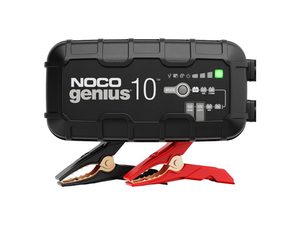 | NOCO GENIUS10 10A Smart Battery Charger | Check Price |
Second Best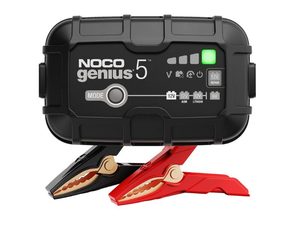 | NOCO GENIUS5 5A Smart Battery Charger | Check Price |
Third Choice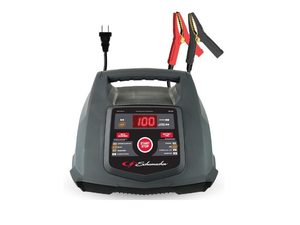 | Schumacher SC1281 Fully Automatic Battery Charger | Check Price |
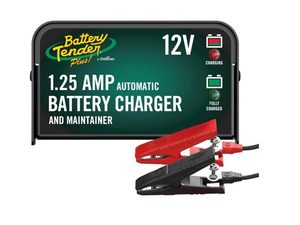 | Battery Tender Plus 12V 1.25A Charger and Maintainer | Check Price |
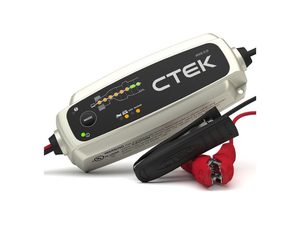 | CTEK MXS 5.0 Battery Charger and Maintainer | Check Price |
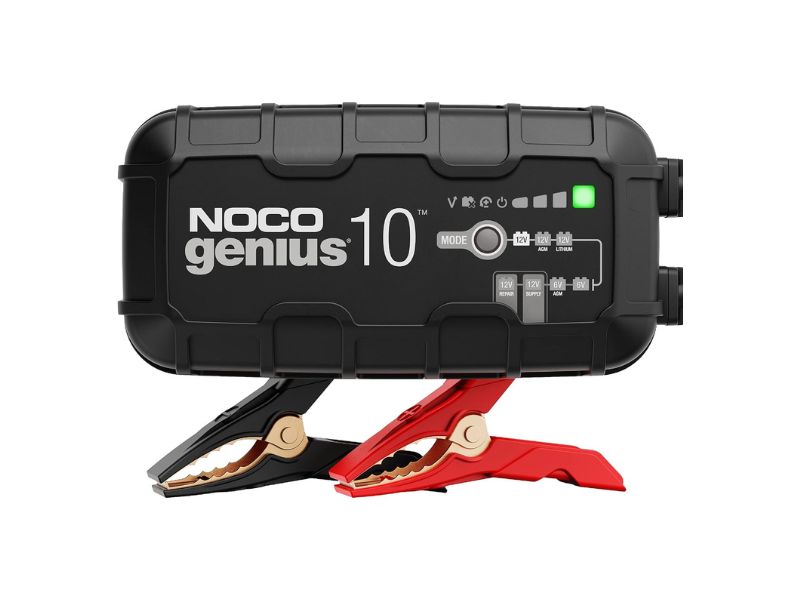
1. NOCO GENIUS10 10A Smart Battery Charger – Best Overall
Key Features
- 10A maximum charging current
- 6V and 12V battery support
- Wet, AGM, gel, EFB, maintenance-free, and compatible lithium modes
- Battery capacity up to 230Ah for charging
- Automatic battery maintenance
- Temperature-compensated charging
- Repair mode for compatible lead-acid batteries
- Reverse-polarity protection
- Spark-proof connection system
- IP65-rated housing
- Approximately 3.33-pound charger weight
The NOCO GENIUS10 is my top choice because its 10A output gives it enough charging capability for both ordinary automotive batteries and many larger marine batteries without becoming a bulky shop charger.
NOCO specifies the GENIUS10 for 6V and 12V batteries and multiple chemistries, including wet-cell, AGM, gel, EFB, maintenance-free lead-acid, and compatible lithium batteries. Its charging capacity reaches up to 230Ah, while maintenance mode can be used across battery sizes.
That broader capacity range matters for boat owners. A normal passenger-car starting battery may be relatively modest in amp-hour capacity, whereas a marine deep-cycle battery can be substantially larger. A 1A maintainer might eventually restore one, but a 10A charger is much more practical when the battery actually needs meaningful recharging.
The GENIUS10 automatically adjusts its charging behavior and includes temperature compensation. Batteries react differently to charging voltage in very cold and very hot environments, so temperature-aware charging is useful for vehicles and boats stored in changing seasonal conditions.
It also includes a repair function intended for certain sulfated or deeply discharged lead-acid batteries. This cannot restore a battery with damaged plates, a shorted cell, or severe physical deterioration, but it can be useful when sulfation rather than structural failure is reducing battery performance.
Its IP65 enclosure is another advantage around garages, sheds, and boating equipment. The charger is designed to resist dust and water exposure within its stated rating, although it should still be treated as electrical equipment rather than left submerged or exposed carelessly to marine conditions.
What I Like
The biggest advantage is versatility. You can use one charger on a conventional car battery, AGM vehicle battery, marine lead-acid battery, or compatible LiFePO4 setup simply by selecting the correct operating mode.
Ten amps also feels like an appropriate middle ground. It is substantially faster than a maintainer but still compact enough for regular home use.
I also like the combination of spark protection, reverse-polarity protection, overcharge protection, short-circuit protection, and automatic maintenance.
What I Do Not Like
The GENIUS10 is more expensive and heavier than 1A or 5A maintainers.
It also charges only one battery bank at a time. Boat owners with two or three permanently installed marine batteries may prefer a dedicated multi-bank onboard charger.
Verdict
The NOCO GENIUS10 is the best battery charger for boat and car use overall because it combines useful 10A charging speed with broad battery compatibility, automatic maintenance, temperature compensation, and enough capacity for many marine deep-cycle batteries.
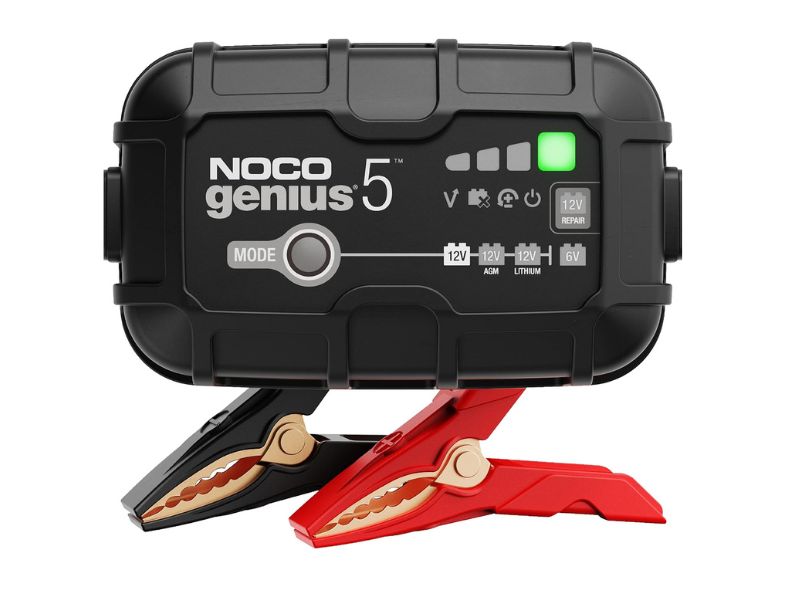
2. NOCO GENIUS5 5A Smart Battery Charger – Best Compact Smart Charger
Key Features
- 5A charging current
- 6V and 12V operation
- Lead-acid and lithium compatibility
- Wet, AGM, gel, EFB, and maintenance-free modes
- Charges batteries up to 120Ah
- Maintenance mode for larger batteries
- Automatic temperature compensation
- Repair mode
- IP65 enclosure
- Reverse-polarity and overcharge protection
- Approximately 1.5-pound body
The NOCO GENIUS5 is essentially the more compact alternative to my first pick.
It supplies up to 5A and supports 6V and 12V batteries across wet, AGM, gel, EFB, maintenance-free, and compatible lithium chemistries. NOCO specifies a charging range up to 120Ah, with maintenance capability extending beyond that normal charging range.
For most car batteries, 5A is perfectly reasonable. It will not charge as quickly as the GENIUS10, but overnight charging is practical for many typical automotive applications.
It can also work well for moderate-size boat batteries, especially when your primary goal is topping them up and keeping them healthy between trips rather than rapidly restoring deeply discharged large-capacity batteries.
At only about 1.5 pounds, the GENIUS5 is much easier to keep in a small garage cabinet, boat storage compartment, tool bag, or vehicle.
Like the GENIUS10, it includes temperature-aware charging and safety protection against incorrect connections.
What I Like
The GENIUS5 provides an excellent combination of portability and intelligent charging.
It is particularly suitable for people with a car plus one boat battery who do not regularly discharge the marine battery very deeply.
The support for AGM and compatible lithium batteries also gives it more flexibility than basic lead-acid maintainers.
What I Do Not Like
Five amps can feel slow on a large marine deep-cycle battery.
For example, a deeply discharged 100Ah-class battery requires considerable energy to restore. Charging losses and the charger’s staged algorithm also mean real charging time is longer than simply dividing battery capacity by five.
Verdict
Choose the NOCO GENIUS5 if you want many of the features of the GENIUS10 in a smaller, lighter package and you are comfortable with slower charging.
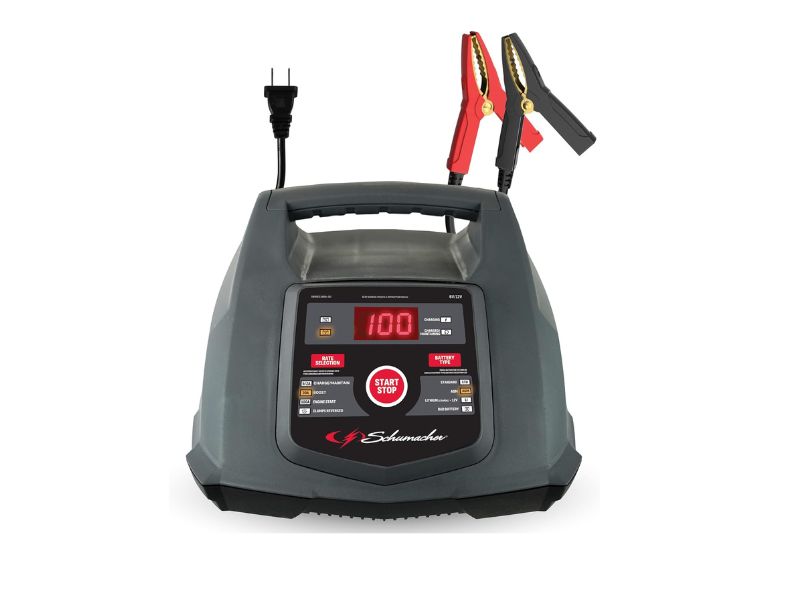
3. Schumacher SC1281 Fully Automatic Battery Charger – Best Heavy-Duty Garage Pick
Key Features
- 6V and 12V compatibility
- Automatic charging and maintenance
- Standard battery support
- AGM compatibility
- Gel battery compatibility
- Deep-cycle battery support
- 30A boost function
- 100A engine-start function
- Battery and alternator testing
- Automatic desulfation
- Digital controls and display
- UL-certified design
The Schumacher SC1281 is very different from the compact NOCO chargers. It is a larger bench-style unit designed for people who want charging, battery maintenance, diagnostics, boost charging, and engine-start assistance in one package.
Schumacher identifies it for standard, AGM, gel, and deep-cycle batteries, making it particularly relevant to someone maintaining both automotive and marine batteries. Its available functions include normal charging, a 30A boost mode, and up to a 100A engine-start function.
The deep-cycle compatibility is particularly useful for boat owners.
Marine batteries frequently spend their lives operating accessories, trolling motors, pumps, lights, electronics, or other loads rather than simply providing a brief burst of cranking current. That different use pattern means a charger designed to recognize deep-cycle batteries is preferable.
The SC1281 also provides battery and alternator testing, giving DIY users a little more information when troubleshooting a vehicle that repeatedly develops charging problems.
Its biggest disadvantage is physical size. At roughly 12.65 pounds, it belongs on a garage shelf or workbench rather than in a glove compartment.
What I Like
I like the SC1281 for a household with several vehicles, recreational equipment, or multiple lead-acid battery types.
The boost mode can shorten the wait when a battery needs more immediate assistance, while the engine-start function adds capability that small smart chargers do not provide.
Its digital interface also gives you more information than a simple red-and-green maintainer.
What I Do Not Like
It is substantially larger and heavier than the other products here.
It also does not offer the same modern lithium flexibility as the NOCO GENIUS models.
Boat owners who have already moved to LiFePO4 batteries should verify compatibility carefully rather than assuming a charger designed around traditional battery types will work.
Verdict
The Schumacher SC1281 is the best option here for a home garage where charging speed, deep-cycle compatibility, battery testing, and engine-start assistance matter more than portability.
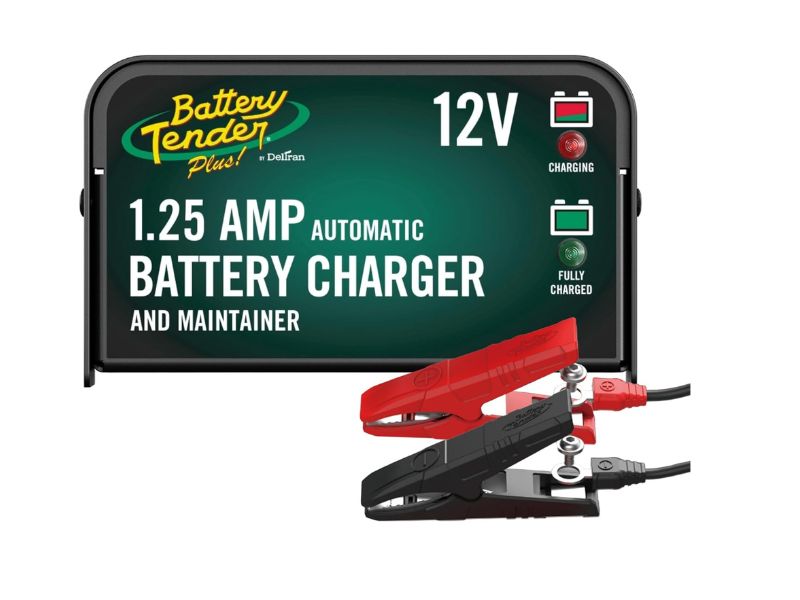
4. Battery Tender Plus 12V 1.25A Charger and Maintainer – Best for Long-Term Maintenance
Key Features
- 12V operation
- 1.25A charging output
- Four-stage charging program
- Automatic float maintenance
- AGM compatibility
- Flooded lead-acid compatibility
- Gel battery compatibility
- Temperature compensation
- Reverse-polarity protection
- Ring-terminal harness
- Alligator-clip connection
- Long-term storage focus
The Battery Tender Plus is one of the most established battery-maintenance products in this group.
Its 1.25A output is much lower than the 5A or 10A NOCO chargers, but that is also what makes it attractive for long-duration battery maintenance.
It uses a four-stage charging process and automatically transitions into float maintenance once the battery reaches full charge. It supports flooded, AGM, and gel 12V batteries and includes both clamp connections and a fused ring-terminal harness.
This makes it especially useful for vehicles or boats that spend long periods parked.
For example, a convertible stored throughout winter or a boat that sits between seasonal trips can gradually lose charge from self-discharge, alarms, electronics, and other parasitic loads.
Keeping the Battery Tender connected according to its instructions can maintain charge without continuously forcing full charging current into an already charged battery.
The biggest limitation is obvious: 1.25A is slow.
If you return from a boating trip with a large deep-cycle battery significantly discharged, this is not the charger I would choose when you need the battery ready again quickly.
What I Like
The Battery Tender Plus is simple, established, and well suited to long-term maintenance.
Its included ring terminals are particularly convenient for a boat or seasonal vehicle. The lead can remain attached to the battery so the charger can be connected without repeatedly removing battery covers or clamps.
What I Do Not Like
Charging a large depleted marine battery can take a long time.
It is also lead-acid-focused, so owners of modern LiFePO4 marine batteries should use an appropriate lithium-compatible charger instead.
Verdict
The Battery Tender Plus is ideal when your main goal is preventing a car or boat battery from going flat during storage rather than quickly recharging a heavily discharged battery.
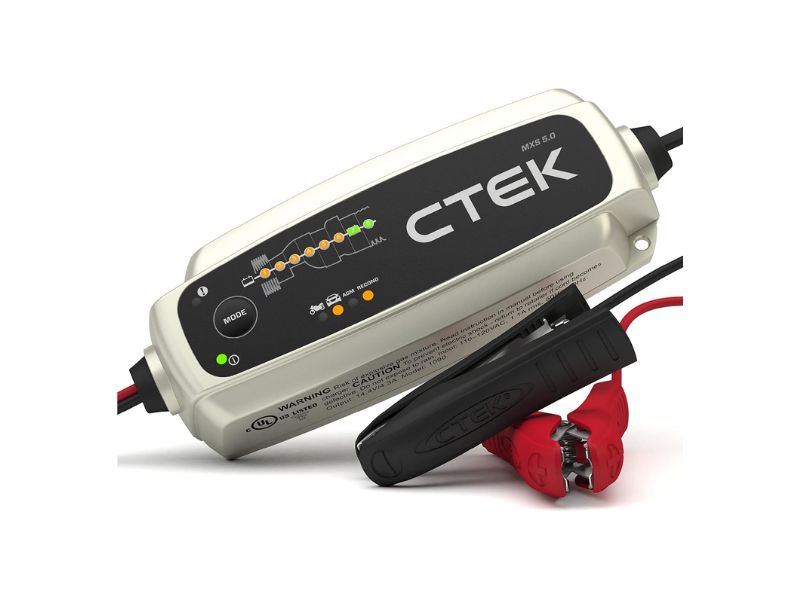
5. CTEK MXS 5.0 Battery Charger and Maintainer – Best Lead-Acid Battery Care
Key Features
- 12V operation
- 4.3A maximum output on the North American model
- Eight-stage charging program
- AGM charging mode
- Wet, MF, Ca/Ca, AGM, EFB, and gel compatibility
- Reconditioning mode
- Automatic temperature compensation
- Charges batteries up to 110Ah
- Maintains batteries up to 160Ah
- IP65 protection
- Spark-resistant operation
- Reverse-polarity protection
- Five-year warranty
The CTEK MXS 5.0 is a strong choice for someone who wants sophisticated lead-acid battery care rather than maximum charging current.
The North American MXS 5.0 produces up to 4.3A and uses an eight-stage automatic charging process. CTEK specifies charging for batteries from 1.2Ah to 110Ah and maintenance charging up to 160Ah. Supported battery types include wet, maintenance-free, Ca/Ca, AGM, EFB, and gel lead-acid batteries.
Its Recond mode is one of the distinguishing features.
This mode is designed for certain deeply discharged or stratified lead-acid batteries. It should not be viewed as a guaranteed way to repair a failed battery, but it can be helpful as part of proper lead-acid battery maintenance.
Automatic temperature compensation is another useful feature when a boat or vehicle is stored in an unheated garage where seasonal temperatures change considerably.
The sealed IP65 enclosure also suits an environment where dust and occasional splash exposure are realistic concerns.
What I Like
The MXS 5.0 provides excellent staged charging for traditional lead-acid batteries.
Its AGM mode and reconditioning program make it particularly attractive for owners who are more interested in maximizing battery condition than achieving the fastest possible charging time.
The five-year warranty is another strong point.
What I Do Not Like
It is a 12V-only charger.
It is also designed for lead-acid chemistries rather than LiFePO4, which limits its usefulness for boat owners who have switched to lithium marine batteries.
Its charging speed is closer to the GENIUS5 than the GENIUS10.
Verdict
Choose the CTEK MXS 5.0 if both your boat and car use traditional lead-acid or AGM batteries and you prioritize sophisticated charging and maintenance over lithium compatibility.
Battery Charger for Boat and Car Comparison
| Product | Voltage | Charge Rate | Battery Types | Approx. Charging Range | Maintenance | Repair/Recondition | Best For |
| NOCO GENIUS10 | 6V/12V | 10A | Wet, AGM, Gel, EFB, MF, compatible lithium | Up to 230Ah | Yes | Yes | Best overall |
| NOCO GENIUS5 | 6V/12V | 5A | Wet, AGM, Gel, EFB, MF, compatible lithium | Up to 120Ah | Yes | Yes | Compact dual-use charging |
| Schumacher SC1281 | 6V/12V | Multiple modes | Standard, AGM, Gel, Deep-Cycle | General automotive/marine | Yes | Desulfation | Garage and heavy-duty use |
| Battery Tender Plus | 12V | 1.25A | Flooded, AGM, Gel | Best for maintenance/smaller charging loads | Excellent | No dedicated recondition mode | Seasonal storage |
| CTEK MXS 5.0 | 12V | 4.3A NA | Wet, MF, Ca/Ca, AGM, EFB, Gel | Up to 110Ah; maintain to 160Ah | Yes | Recond | Lead-acid battery care |
The NOCO GENIUS10 is the most versatile choice because its 10A output is much more practical for larger marine batteries while it remains gentle and intelligent enough for ordinary automotive battery maintenance.
The GENIUS5 is the more compact alternative. Schumacher offers more workshop capability, while Battery Tender is strongest for long-term storage. CTEK sits between those extremes with sophisticated lead-acid charging and maintenance.
What Makes Boat and Car Batteries Different?
Understanding the battery matters as much as choosing the charger.
A conventional automotive starting battery is designed primarily to produce a large burst of current for a few seconds while the starter motor turns the engine.
Once the engine starts, the vehicle’s alternator supplies electrical power and restores the battery.
A marine deep-cycle battery may be used differently.
Instead of delivering one short high-current burst, it may operate:
- Trolling motors
- Fish finders
- Navigation electronics
- Pumps
- Cabin lights
- Radios
- Refrigeration
- Other onboard accessories
These loads can discharge the battery much more deeply.
That is why capacity and charging current become particularly important for boat batteries.
Starting Battery vs. Deep-Cycle Battery
A starting battery uses many thinner plates optimized for high current.
A deep-cycle battery generally uses a design intended to tolerate repeated deeper discharge cycles.
Some boats use separate batteries:
- One starting battery for the engine
- One or more deep-cycle batteries for accessories
Other boats use dual-purpose marine batteries designed to provide a compromise between starting and cycling performance.
The charger needs to support the actual chemistry and voltage—not simply the word “marine” on the battery label.
AGM Batteries
AGM, or Absorbent Glass Mat, batteries are common in cars, boats, powersports equipment, and modern start-stop vehicles.
They are sealed and require a charging profile appropriate to AGM chemistry.
All five chargers reviewed above provide AGM support in the relevant lead-acid modes, making them good candidates for households where both the car and boat use AGM batteries.
Always select the correct AGM mode when the charger instructions require manual battery-type selection.
Flooded Lead-Acid Batteries
Traditional flooded batteries remain common because they are widely available and relatively affordable.
They contain liquid electrolyte and may require periodic inspection depending on their design.
Modern smart chargers automatically transition through bulk, absorption, and maintenance stages rather than continuously applying uncontrolled voltage.
That makes them much safer for routine battery maintenance than an old unregulated charger.
Gel Batteries
Gel batteries require appropriate charge voltage and should not simply be treated like every other lead-acid battery.
If you own a gel marine battery, verify that the charger explicitly supports gel chemistry.
The GENIUS5, GENIUS10, Schumacher SC1281, Battery Tender Plus, and CTEK MXS 5.0 all provide suitable lead-acid compatibility options depending on their specific operating modes.
Lithium Marine Batteries
Lithium batteries require extra attention.
Many modern boats now use LiFePO4 batteries for trolling motors, electronics, or house power because they offer high usable capacity, low weight, and long cycle life.
Do not use an ordinary lead-acid charger unless the battery manufacturer specifically approves it.
Among these five products, the NOCO GENIUS5 and GENIUS10 provide dedicated compatible lithium charging capability.
Even then, verify that your particular marine battery’s battery-management system and charging specifications match the charger.
How Many Amps Should a Boat and Car Battery Charger Have?
Charging current is one of the biggest differences between these products.
1A to 2A
Best for:
- Maintenance
- Seasonal storage
- Small batteries
- Batteries that are already mostly charged
This range is not ideal if you regularly need to restore a heavily discharged 100Ah marine battery quickly.
4A to 5A
A good middle ground for:
- Car batteries
- Motorcycle batteries
- Moderate marine batteries
- Overnight charging
- Battery maintenance
This is where the GENIUS5 and CTEK MXS 5.0 fit.
10A
A very practical rate for:
- Car batteries
- Truck batteries
- Larger AGM batteries
- Marine deep-cycle batteries
- Faster overnight charging
This is a major reason the GENIUS10 is my overall recommendation.
15A and Above
Higher-current chargers can reduce charging time further, especially on large deep-cycle batteries.
However, always respect the battery manufacturer’s maximum recommended charging current.
Higher amperage is not automatically better for every battery.
How Long Does It Take to Charge a Boat Battery?
Charging time depends on:
- Battery capacity in amp-hours
- State of charge
- Charger output
- Battery chemistry
- Battery condition
- Temperature
- Charger efficiency
- Absorption-stage duration
A simplified example illustrates the difference.
Suppose a 100Ah battery needs approximately 50Ah returned.
A 10A charger could theoretically supply that amount in roughly five hours, but real charging takes longer because current tapers as the battery approaches full charge and energy is lost through inefficiency.
A 5A charger may require roughly twice as long under similar conditions.
A 1.25A maintainer may require dramatically longer.
This is why a maintenance charger can be excellent for storage yet frustrating after a long day of deep-cycle use.
Can the Same Charger Stay Connected to a Car and Boat?
Not simultaneously unless the charger specifically has multiple independent charging banks.
All five products reviewed here are primarily single-battery chargers.
You can move the charger between your car and boat, or install convenient ring-terminal leads that make reconnection faster.
If your boat has two or three batteries that need to remain independently maintained, a dedicated two-bank or three-bank marine onboard charger may be the better solution.
Portable Charger vs. Onboard Marine Charger
A portable charger is ideal when you want one device for multiple batteries.
Advantages include:
- Use it on your car
- Move it to the boat
- Use it on lawn equipment
- Store it indoors
- Replace one charger instead of several
An onboard marine charger is permanently mounted inside the boat and often charges multiple battery banks.
That is more convenient for dedicated boat charging but much less useful for your car.
For the exact goal of one battery charger for boat and car, a portable smart charger is usually the more flexible solution.
Important Marine Charging Safety
Boats require special care because batteries may be installed near fuel systems, confined compartments, and moisture.
Always follow the battery, boat, and charger manufacturer’s safety instructions.
Ventilate the Area
Flooded lead-acid batteries can release gas during charging.
Charge them in a properly ventilated location and keep sparks, cigarettes, and flames away.
Inspect the Battery First
Do not attempt normal charging if the battery is:
- Cracked
- Leaking
- Severely swollen
- Frozen
- Mechanically damaged
A damaged battery may require professional handling or replacement.
Keep Connections Clean
Corroded battery terminals create resistance.
Disconnect and clean terminals appropriately when necessary, then confirm that the charger clamps have secure metal-to-metal contact.
Select the Correct Battery Mode
Do not charge:
- AGM in an inappropriate high-voltage mode
- Lithium in lead-acid mode
- Gel using an unsuitable profile
- 6V batteries with a fixed 12V charger
Confirm both voltage and chemistry before starting.
Features Worth Paying For
Automatic Maintenance
Once charging is complete, a smart charger should reduce or stop active charging and maintain the battery at an appropriate level.
This allows the charger to remain connected for extended storage when the manufacturer permits it.
Temperature Compensation
Battery charging voltage requirements change with temperature.
Automatic compensation makes the charger more adaptable across hot summers and cold winters.
Reverse-Polarity Protection
Connecting positive and negative leads incorrectly is an easy mistake.
A modern smart charger should detect incorrect connections rather than immediately delivering current.
Repair or Reconditioning Mode
Some chargers attempt to address sulfation or electrolyte stratification in compatible lead-acid batteries.
This can sometimes improve battery behavior, but it should not be viewed as a cure for:
- Internal shorts
- Broken plates
- Severe corrosion
- Physical damage
- End-of-life batteries
Permanent Ring Terminals
Ring-terminal leads are extremely useful for boats.
They can remain connected to the battery and provide a quick connection point for the charger.
This reduces the need to reach awkward battery terminals every time the boat returns to storage.
Common Buying Mistakes
Choosing a Maintainer When You Need a Charger
A 1A maintainer is excellent for preventing discharge.
It is not the ideal tool for quickly restoring a large depleted deep-cycle battery.
Ignoring Amp-Hour Capacity
Marine batteries can be much larger than ordinary starting batteries.
Make sure your charger’s recommended battery-capacity range matches your battery.
Assuming Every Marine Battery Is the Same
“Marine” describes the application, not necessarily the chemistry.
A marine battery could be:
- Flooded lead-acid
- AGM
- Gel
- LiFePO4
- Starting
- Deep-cycle
- Dual-purpose
Buy according to the actual battery specification.
Buying a Lead-Acid Charger for Lithium
A dedicated lithium charging profile is important for LiFePO4 batteries.
Use a charger approved for your exact battery system.
Leaving a Manual Charger Unattended
Older non-smart chargers may not automatically transition into safe maintenance.
For long-term storage, an automatic smart charger is generally easier and safer.
Frequently Asked Questions
What is the best battery charger for boat and car?
The NOCO GENIUS10 is my top overall choice for most dual-use setups.
Its 10A charging output works well with ordinary automotive starting batteries while providing substantially better charging speed for larger marine batteries than a low-amperage maintainer. It also supports 6V and 12V operation, several lead-acid battery types, and compatible lithium batteries.
Can I use a car battery charger on a boat battery?
Yes, when the charger supports the boat battery’s voltage and chemistry.
A 12V AGM marine battery, for example, can generally use a charger designed for 12V AGM batteries. The fact that it is installed in a boat does not require an entirely different electrical charging principle. Deep-cycle capacity and marine safety requirements still need consideration.
Can I charge a deep-cycle marine battery with a normal charger?
Use a charger specifically compatible with deep-cycle batteries and their chemistry.
A smart charger with an appropriate lead-acid or lithium profile is preferable. Large deep-cycle batteries may also require higher charging current if you want reasonable recharge times.
Is a 5A or 10A charger better for a boat battery?
A 10A charger is generally faster and more practical for larger marine batteries.
A 5A charger remains perfectly useful when charging time is not critical. Always stay within the battery manufacturer’s recommended charging-current limits.
Can a battery maintainer fully charge a dead boat battery?
It may eventually charge some batteries, but very low output makes the process slow.
A 1.25A maintainer is better suited to keeping a healthy battery charged during storage. A 5A or 10A charger is usually more practical when significant capacity must be restored.
Can I leave a smart charger connected all winter?
Many automatic maintainers are specifically designed for long-term connection.
Follow the charger’s instructions and battery manufacturer’s recommendations. Make sure the charging environment is suitable and periodically inspect the battery, connections, and charger.
What charger should I use for an AGM boat battery?
Use a smart charger with a dedicated or approved AGM charging profile.
The products reviewed here all support AGM charging in appropriate modes. The GENIUS10 is particularly attractive when the AGM marine battery has relatively high capacity.
What charger should I use for a lithium boat battery?
Use a charger explicitly compatible with your battery’s LiFePO4 charging requirements.
The GENIUS5 and GENIUS10 provide compatible lithium modes, but you should still check the battery manufacturer’s voltage, current, and BMS requirements before charging.
Is the Schumacher SC1281 good for boat batteries?
Yes, it supports standard, AGM, gel, and deep-cycle batteries.
Its combination of automatic charging, higher-current boost capability, testing functions, and engine-start assistance makes it particularly useful in a garage that handles both boats and vehicles.
Is Battery Tender Plus a charger or only a maintainer?
It performs both charging and automatic maintenance, but its 1.25A output is relatively slow.
It is especially useful when the battery spends weeks or months in storage and needs to remain topped up.
Is CTEK MXS 5.0 good for marine batteries?
It is a strong option for compatible 12V lead-acid marine batteries.
Its AGM mode, eight-stage charging system, temperature compensation, maintenance charging, and reconditioning function make it particularly useful for traditional marine battery care.
Do I need a marine-specific charger?
Not necessarily for portable charging of a removable or accessible battery.
A compatible smart battery charger can work across cars and boats. Permanent onboard installations have additional marine electrical and environmental requirements, so use equipment specifically designed and approved for that type of installation.
Final Thoughts
Choosing the best battery charger for boat and car starts with understanding the batteries you already own.
For the widest range of everyday situations, the NOCO GENIUS10 is my first choice. Its 10A output is fast enough to make sense with larger marine batteries while still providing intelligent automatic charging and maintenance for car batteries. Its broad chemistry support also makes it more future-proof if you use AGM or compatible lithium batteries.
The NOCO GENIUS5 is the better choice if you prioritize smaller size and do not mind waiting longer for large batteries to charge.
The Schumacher SC1281 makes the most sense in a garage where you want more charging power, deep-cycle compatibility, testing features, boost capability, and emergency engine-start assistance.
For seasonal storage, the Battery Tender Plus remains an excellent low-current charger and maintainer. And if your boat and car both use traditional lead-acid batteries, the CTEK MXS 5.0 offers an excellent combination of staged charging, AGM support, temperature compensation, reconditioning, and long-term maintenance.
For one charger that can comfortably move between a typical car battery and a larger boat battery, I would choose the NOCO GENIUS10 10A Smart Battery Charger.