
Finding the best bluetooth speaker for car with no radio can be surprisingly difficult because “no radio” may mean no factory stereo, no Bluetooth, or simply no convenient way to play phone audio. The right solution could be a visor-mounted speaker, an FM transmitter, or a replacement single-DIN receiver, depending on the equipment already in the vehicle.
My first choice is LENCENT FM Transmitter. It ranks first because it combines Bluetooth streaming, hands-free calling, USB and microSD playback, dual-device charging, and useful car-voltage monitoring in one compact adapter.
My second choice is BOSS Audio Systems 616UAB Single DIN Bluetooth Car Stereo. My alternative is BOSS Audio Systems 616UAB Single DIN Bluetooth Car Stereo. It ranks second for buyers willing to replace an existing dash receiver, with Bluetooth, USB, auxiliary input, voice-assistant access, and outputs for connecting a fuller speaker system.
My third choice is AGPTEK Car Speaker. Its visor clip, Bluetooth 5.3 connection, voice-assistant support, TF-card playback, and long call battery life make it a practical standalone option when installing a stereo is not appealing.
This guide compares all seven choices by connection method, sound approach, power needs, call handling, installation effort, and likely limitations. It also explains how to choose between an FM adapter, a dedicated car speaker, and a replacement receiver.
7 Best Bluetooth Speaker for Car with No Radio Comparison
I selected these products for their relevance to older or audio-limited vehicles, the usefulness of their stated features, brand and design variety, and available customer-feedback evidence. The list includes quick-install speakers, FM-based adapters, and a permanent single-DIN upgrade so different vehicle situations are represented.
| # | Image | Product | Price on Amazon |
|---|---|---|---|
| 1 |  |
LENCENT FM Transmitter | Price on Amazon |
| 2 |  |
BOSS Audio Systems 616UAB Single DIN Bluetooth Car Stereo | Price on Amazon |
| 3 |  |
AGPTEK Car Speaker | Price on Amazon |
| 4 | 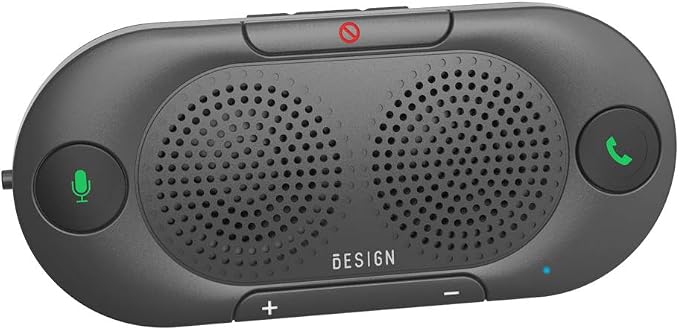 |
BESIGN BK06 Bluetooth 5.0 in Car Speakerphone | Price on Amazon |
| 5 |  |
Avantree Roadtrip | Price on Amazon |
| 6 |  |
1Mii Carecho MK02 Bluetooth 6.0 Car Speaker Handsfree Speakerphone Kit | Price on Amazon |
| 7 |  |
YPZVX Bluetooth Speaker Handsfree Car Speakerphone | Price on Amazon |
LENCENT FM Transmitter
The LENCENT T25 is an FM transmitter rather than a standalone speaker, so it sends phone audio through the vehicle’s FM receiver. That distinction matters: it is a strong choice for a car that has an FM-capable stereo but lacks Bluetooth, while it is not the right match for a vehicle with no radio hardware at all.
Pairing happens through Bluetooth, and the adapter can automatically reconnect to a memorized phone when powered on. It also supports music from a USB flash drive or microSD card up to 32GB, with WMA, MP3, WAV, APE, and FLAC formats listed as compatible. This gives drivers several playback options instead of depending entirely on a phone.
For daily commuting, the dual USB ports are especially useful. One supplies 5V/2.4A and the other 5V/1A, allowing two devices to charge at the same time. Built-in over-current, over-voltage, temperature, and short-circuit protections add useful safeguards, while the screen displays vehicle voltage so a driver can notice battery-related concerns earlier. CVC noise suppression and echo cancellation are intended to improve calls and navigation prompts.
Setup requires finding an unused frequency between 88.1 and 107.9 MHz and matching the car stereo to it. Crowded local frequencies can create static or interference, so this option is most attractive when convenience and charging matter more than a completely interference-free signal.
Pros
- Bluetooth, USB flash drive, and microSD playback support.
- Dual USB charging with several electrical protections.
- Hands-free calling, voice navigation, and vehicle-voltage display.
Cons
- Requires an FM-capable car stereo to transmit audio.
- Frequency interference can affect sound quality.
- Not a standalone speaker for cars without any radio receiver.
My Opinion
This is my leading adapter-style pick for an older car that still has FM radio. Buyers with no radio at all should choose a dedicated speaker or replace the receiver instead.
BOSS Audio Systems 616UAB Single DIN Bluetooth Car Stereo
The BOSS Audio Systems 616UAB takes the most permanent approach in this group: replacing the vehicle’s existing receiver with a single-DIN Bluetooth stereo. It is better suited to someone who wants the phone connection integrated into the dashboard rather than a device hanging from the lighter socket or visor.
Bluetooth handles wireless calls and music from services such as Spotify or Pandora, while the built-in microphone lets the car speakers carry the other person’s voice. A front USB port adds access to stored audio files, and the auxiliary input works with phones or MP3 players that use a wired output. The unit also supports Android and iOS voice assistants through a push-to-talk control.
The receiver can power speakers at a listed maximum of 50 watts by four channels, although the supplied information notes that an amplifier is recommended when speakers need more power. Front and rear preamp outputs provide a path to a more extensive system. The tuner is switchable for US and European radio broadcasts, but the no-DVD design keeps the focus on Bluetooth, USB, auxiliary playback, and basic radio use.
Compatibility is the key buying checkpoint. A buyer should confirm that the dashboard accepts a single-DIN receiver and that the vehicle’s wiring, mounting arrangement, and speakers can be connected appropriately. Installation may require additional vehicle-specific parts or professional help, none of which are included in the supplied product details. Once installed correctly, this design avoids FM-transmitter frequency matching and keeps controls in a familiar dash location.
Pros
- Permanent single-DIN Bluetooth upgrade for compatible dashboards.
- USB, auxiliary, voice-assistant, and switchable tuner support.
- Front and rear preamp outputs for system expansion.
Cons
- Requires dashboard and wiring compatibility.
- Installation is more involved than using a portable speaker.
- An additional amplifier may be useful for demanding speakers.
My Opinion
This is the strongest second choice for a buyer who wants an installed solution and is ready to check vehicle fitment. It offers more integrated control than a portable kit but requires more planning before purchase.
AGPTEK Car Speaker
The AGPTEK Car Speaker is a simple standalone answer for drivers who do not want to modify the dashboard. Its magnetic back clip attaches to a sun visor, placing calls, navigation prompts, and music closer to the driver than a phone resting in a cup holder.
Bluetooth 5.3 is intended to provide a stable, quick connection, and the speaker supports automatic shutoff and reconnection. A double press of the M button activates Siri or Google Assistant, allowing a driver to request directions, answer messages, or manage calls without reaching for the phone. Noise reduction and echo processing are aimed at making conversations easier to understand in a moving vehicle.
Music can play from a phone or a TF card, which is helpful for someone who prefers local files or wants to reduce phone dependence. After a two-hour full charge, the listed playback time is 9 to 10 hours, while hands-free use can reach 16 hours. That should cover many commutes, although frequent long-distance drivers will still need a charging routine.
The main trade-off is output scale. This is a compact visor speaker intended for personal listening and calls, not a replacement for a multi-speaker cabin system. The supplied note about using a normal plug is also worth following rather than assuming every fast-charging accessory is suitable. The magnetic base makes it portable enough for use at home, in an office, or outdoors.
Pros
- Visor mounting avoids dashboard installation.
- Bluetooth 5.3, voice-assistant access, and TF-card playback.
- Up to 16 hours of listed hands-free use.
Cons
- Compact output will not match a full car stereo.
- Charging guidance calls for a normal plug.
- Requires occasional charging for continued use.
My Opinion
This is my third choice for a practical, removable speaker that emphasizes calls and navigation. It makes the most sense for older cars where simple setup matters more than powerful music.
BESIGN BK06 Bluetooth 5.0 in Car Speakerphone
The Besign BK06 is built around hands-free convenience. Its visor clip keeps the unit near the driver, while dual 2-watt speakers are intended to provide louder calls than a very small single-speaker accessory. For a noisy commute, that extra speaker arrangement can be more useful than chasing high-fidelity music.
Bluetooth 5.0 with EDR is specified for lower power use and broad compatibility. The BK06 can connect to two phones at the same time through multipoint pairing, a valuable feature for couples sharing a vehicle or for a driver who carries separate personal and work phones. The buyer should still expect to manage which connected phone handles a particular call or audio stream.
A motion sensor can switch the unit on when the car door opens and reconnect it to a paired phone, reducing the number of steps before driving. Its 1000mAh rechargeable battery is listed for up to 20 hours of music or hands-free calling on one full charge. That gives it a useful advantage over smaller units that need more frequent attention.
Voice control is available by holding the Siri button for two seconds in standby mode. This can help with directions, messages, and other commands, but the driver should set up the phone and permissions while parked. The BK06 is primarily a speakerphone and wireless audio accessory; it does not replace a dashboard receiver or provide FM transmission to factory speakers.
Pros
- Dual 2-watt speakers for louder calls.
- Connects to two phones through multipoint technology.
- Motion-based power and up to 20 hours of listed use.
Cons
- Does not connect phone audio to existing car speakers.
- Voice-command setup should be completed before driving.
- Music performance remains limited by the compact design.
My Opinion
The BK06 is a well-balanced choice for households with two phones or drivers who prioritize loud, convenient calls. Its automatic power behavior and longer listed battery life make ownership easier than a basic clip-on speaker.
Avantree Roadtrip
The Avantree Roadtrip offers two ways to use phone audio. It can operate as a Bluetooth speaker for calls, directions, voice-assistant commands, and general listening, or it can act as an FM transmitter that sends audio to a compatible car stereo. That flexibility makes it useful when the vehicle’s built-in audio situation changes from one trip to another.
Two 3-watt speakers are intended to produce clearer, more powerful audio from the compact unit, while the built-in noise-reducing microphone helps the other person hear calls. A rotary dial controls volume and can be pressed to activate the phone’s voice assistant. The physical dial is a sensible choice for quick adjustments because it avoids repeatedly tapping a small touchscreen.
Automatic power behavior is another practical advantage. The Roadtrip can turn off when the driver leaves and the phone disconnects, then use its motion sensor to power on and reconnect when the driver returns and opens the door. This reduces battery waste and makes the device feel more ready for short trips.
In FM-transmitter mode, the Roadtrip still depends on a working FM receiver and an available frequency. In standalone-speaker mode, that limitation disappears, but the sound remains localized to the compact unit rather than coming from the car’s built-in speakers. Buyers should decide which mode they will use most often and place the device where its microphone and speakers have a clear path to the cabin.
Pros
- Works as either a standalone speaker or FM transmitter.
- Dual 3-watt speakers and a noise-reducing microphone.
- Motion-based auto power and a physical volume dial.
Cons
- FM mode requires a compatible car radio.
- Standalone audio is not a full cabin speaker replacement.
- Automatic reconnection depends on a previously paired phone.
My Opinion
This is the most flexible portable option in the group. It is especially appealing to someone who sometimes has access to an FM receiver but still wants direct speaker operation when that connection is unavailable.
1Mii Carecho MK02 Bluetooth 6.0 Car Speaker Handsfree Speakerphone Kit
The 1Mii CarEcho MK02 is aimed specifically at older vehicles that lack built-in Bluetooth. Its 5-watt speaker supports calls, music, podcasts, and GPS prompts without requiring a dashboard replacement or an FM signal. That makes it a straightforward upgrade when the vehicle has no usable radio connection for phone audio.
Bluetooth 6.0 is listed for faster, more stable connections, and the unit can pair with two phones. Dual connection is useful when more than one person regularly drives the car, although switching between phones may still depend on which device is actively sending audio. Voice prompts also make basic operation easier to follow after the initial pairing.
The automatic on-and-off behavior reduces daily effort. After being clipped into place and paired once, the speaker can power on and reconnect when the driver enters the car, then power down after leaving. The battery is the standout specification: up to 35 hours of talk time and as much as 90 days of standby are listed, giving it strong potential for infrequent drivers and long trips.
The supplied limitation is important: this is not intended for audiophiles or Hi-Fi listening. A 5-watt portable speaker can make navigation and conversations practical, but it will not recreate a balanced multi-speaker system. Its modest customer-feedback count also provides less evidence than several older products in this list, so buyers should weigh the feature set against that smaller evidence base.
Pros
- Designed for older vehicles without Bluetooth.
- Up to 35 hours of listed talk time and 90 days of standby.
- Bluetooth 6.0, dual-phone connection, and automatic power behavior.
Cons
- Not intended for Hi-Fi or audiophile music.
- Customer-feedback volume is smaller than several alternatives.
- Still needs charging despite its long battery estimates.
My Opinion
The MK02 is my strongest battery-focused portable pick. It suits drivers who want calls and navigation to work reliably without modifying the car, provided they have realistic expectations about music quality.
YPZVX Bluetooth Speaker Handsfree Car Speakerphone
The YPZVX Bluetooth Speaker Handsfree Car Speakerphone is a visor-mounted option with a compact control layout. Bluetooth 5.0 with EDR is specified for stable pairing, lower power use, and compatibility with a broad range of phones. Its main purpose is hands-free calling and straightforward phone audio rather than replacing the vehicle’s complete sound system.
DSP noise reduction and an all-direction microphone arrangement are intended to keep voices understandable in busy traffic. Voice prompts can make incoming call information easier to notice, while large buttons and one-click answering reduce the need to look closely at the device. Those controls are useful for drivers who prefer physical operation over phone-based controls.
The unit can connect to two mobile phones at the same time. That gives it a practical advantage for shared vehicles, but dual connection should not be confused with simultaneous playback from both phones. The visor clip allows quick installation, and automatic power on and off is intended to make the speaker ready for routine commutes without repeated manual switching.
A 600mAh polymer battery provides up to 10 hours of calls or smartphone audio on one charge. That is adequate for many weekly commutes, but less generous than the longer-running Besign and 1Mii options. The 5.0 rating comes from only two customer ratings, so it should not be treated as equally strong evidence to products with thousands of ratings. Buyers should see this as a simple, low-commitment choice with limited feedback depth.
Pros
- Visor clip, large controls, and one-click call answering.
- Dual-phone Bluetooth connection and voice prompts.
- Automatic power behavior and up to 10 hours of listed use.
Cons
- Only two customer ratings provide limited ownership evidence.
- Battery life is shorter than some competing kits.
- Not a replacement for a full car speaker system.
My Opinion
The YPZVX is worth considering when simple visor mounting and large controls are the priorities. Its small evidence base and shorter battery estimate make it a less certain choice than the more established alternatives above.
How I Selected These Bluetooth Options for Cars Without a Radio
The ranking considers how each product solves the underlying audio problem, not just its connection label. FM transmitters can be convenient but need an FM receiver; standalone speakers work independently but keep audio inside the cabin; and a single-DIN stereo offers the most integrated solution when the dashboard supports it.
I also weighed call support, voice-assistant access, battery or charging behavior, music inputs, installation effort, and stated limitations. Customer-feedback volume matters as a confidence signal: several products have thousands of ratings, while the YPZVX has only two and the newer 1Mii model has a much smaller total than the longest-established options.
For a car that truly has no radio receiver, a visor speaker is usually the simplest path. An FM transmitter should be considered only when the vehicle still has an FM-capable stereo.
Brand diversity also influenced the selection. The list includes LENCENT, BOSS Audio Systems, AGPTEK, Besign, Avantree, 1Mii, and YPZVX, with different approaches to installation, portability, phone pairing, and audio delivery.
The highest-rated item is not automatically the safest recommendation when the number of customer ratings is very small. Connection method, vehicle compatibility, and realistic sound expectations matter more than a rating viewed in isolation.
How to Choose the Best Bluetooth Speaker for a Car Without a Radio
Start by identifying what is actually missing. If the car has a working FM receiver, an FM transmitter may connect a phone to the existing speakers. If there is no receiver at all, choose a standalone speaker or install a compatible Bluetooth stereo. This single distinction prevents the most common mismatch.
- Choose an FM transmitter only when the car can tune to FM frequencies.
- Choose a visor speaker for the fastest installation and easiest removal.
- Choose a single-DIN stereo when permanent dashboard integration matters.
- Prioritize microphone quality, controls, and voice access for frequent calls.
- Check battery duration, charging habits, and phone-pairing needs before buying.
Connection Method
FM transmitters use a phone’s Bluetooth connection but pass the audio through a selected radio frequency. They can use the vehicle’s existing speakers, yet static or local station interference remains possible. Standalone Bluetooth speakers avoid that issue because they produce sound directly. A replacement receiver creates the cleanest integrated control but requires vehicle-fitment checks and installation planning.
Call and Navigation Needs
Drivers who mainly need calls and GPS prompts should focus on microphone placement, speaker volume, physical controls, and voice-assistant support. A visor position usually keeps the microphone closer to the driver than a device placed low in the cabin. Noise suppression and echo processing may help, but no compact accessory can remove every sound created by traffic, windows, or road noise.
Phone Pairing
Single-phone pairing is enough for many drivers. Multipoint pairing is more useful in a shared car or when one person carries work and personal phones. Confirm whether the device reconnects automatically and understand that two paired phones do not necessarily mean both can play audio at once.
Power and Installation
A lighter-powered transmitter can charge phones while operating, while a portable speaker needs periodic battery charging. Long standby claims are helpful for occasional drivers, but the device still needs to be charged eventually. Permanent receivers demand more effort up front but avoid remembering to clip on or recharge a portable unit.
FM Transmitter, Standalone Speaker, or Stereo Upgrade?
For the best bluetooth speaker for car with no radio, the signal path should match the vehicle rather than the product name. A transmitter is appropriate when an FM tuner remains available. A standalone speaker is the safer choice when the car has no functional radio, no usable speakers, or an awkward dashboard. A replacement stereo makes sense when the vehicle can accept a compatible receiver and the owner wants a cleaner permanent setup.
When an FM Transmitter Makes Sense
Use an FM transmitter when the factory stereo still receives radio broadcasts and the driver wants to keep the original speakers. Select an unused frequency, tune the car and adapter to the same number, and keep the phone paired. Urban areas with crowded broadcasts may require trying more than one frequency.
When a Portable Speaker Is Better
A visor speaker is convenient for older vehicles, temporary cars, rental-like situations, or anyone who does not want to alter the dashboard. It also works independently of the car’s speaker wiring. The trade-off is that sound comes from the accessory itself, so music may feel less spacious than audio played through multiple built-in speakers.
When to Install a Receiver
A receiver is the most suitable route when the vehicle’s dashboard supports the correct size and the owner wants Bluetooth, USB, auxiliary playback, and voice-assistant controls in one place. Before buying, confirm physical fit, wiring needs, speaker connections, and whether extra installation parts are required.
Setting Up Bluetooth for the First Time
For the best bluetooth speaker for car with no radio, first-time setup should happen while parked. Charge a portable unit or connect a transmitter to power, turn on Bluetooth in the phone, select the product from the available-device list, and accept pairing prompts. Give the device a clear location where controls and the microphone are not blocked.
- Read the device’s pairing instructions before starting the car.
- Remove old or unused Bluetooth entries if the phone cannot find the new device.
- Pair one phone first and test a call, navigation prompt, and music playback.
- Adjust volume on both the phone and the speaker or receiver at a comfortable level.
- Test automatic reconnection after turning the vehicle and accessory off.
For an FM transmitter, add the extra step of selecting a quiet frequency. The car stereo and transmitter must use the same frequency, and the phone must send audio to the transmitter rather than another Bluetooth device. If the connection works for calls but not music, check the phone’s active audio output.
Using Calls and Voice Assistants Safely
Hands-free equipment reduces the need to hold a phone, but it does not remove the need for attention. Pair the phone, set permissions, and learn the main button before moving. Voice assistants can help with navigation, calls, and messages, yet complicated commands are better handled after pulling over.
Keep the speaker or microphone near the driver without blocking the windshield, mirror, airbag area, or essential controls. A visor clip should hold firmly but should not interfere with visor movement. If the other person hears road noise, lower the window, reposition the device, or reduce cabin noise before assuming the hardware is defective.
Battery, Charging, and Daily Power Habits
Portable speakers are easy to forget after a trip, so charging habits matter. Connect the device after a long drive, before a planned road trip, or whenever the battery indicator suggests it is getting low. A transmitter powered from the vehicle’s outlet avoids separate battery charging but occupies a power socket and may leave fewer outlets for other accessories.
Do not judge battery life only by the largest number in a product description. Talk time, music playback, standby time, call volume, and reconnection behavior can all affect actual use. A driver who makes short trips may benefit more from automatic shutoff than from the longest possible playback estimate.
Sound Expectations for Calls, GPS, and Music
Compact car speakers are usually most valuable for speech. Calls and turn-by-turn directions do not require the same broad sound range as music, and a clearly placed speaker can be more useful than a louder but poorly positioned one. The AGPTEK, Besign, Avantree, 1Mii, and YPZVX options are all better understood as convenience audio tools than as full stereo replacements.
FM-based products can use the vehicle’s existing speakers, which may create a fuller cabin presentation than a small portable unit. However, that advantage depends on the car’s speakers, radio condition, frequency cleanliness, and transmitter setup. The BOSS receiver offers the most integrated upgrade potential, but the final sound still depends on the vehicle’s speakers and any amplifier used.
Cleaning, Storage, and Ownership Tips
Keep visor speakers and dashboard accessories away from spilled drinks, dust buildup, and direct heat when parked. Wipe the exterior with a soft, lightly damp cloth and keep openings free of lint. Do not push liquid into the microphone, speaker grille, charging port, or buttons.
When the accessory will not be used for an extended period, store it in a dry place rather than leaving it exposed in a hot vehicle. Disconnect removable devices if they are not needed. For a permanent receiver, keep the face and controls clean and avoid pressing buttons with excessive force.
Positioning for Better Performance
Place a portable speaker where the driver can hear it without turning away from the road. Avoid covering the microphone with a visor edge or placing the unit behind luggage. A transmitter should be positioned where its display and controls are visible enough for setup but not so distracting that the driver repeatedly adjusts it while moving.
Common Mistakes to Avoid
Most problems come from choosing the wrong connection type, skipping compatibility checks, or expecting a small speaker to perform like a full stereo. A few minutes of planning can prevent an unusable purchase or frustrating setup.
- Do not buy an FM transmitter for a vehicle with no FM receiver.
- Do not assume Bluetooth pairing alone sends audio through factory speakers.
- Do not install a single-DIN stereo without checking dash and wiring compatibility.
- Do not place a visor unit where it blocks visibility or vehicle controls.
- Do not rely on voice commands for complicated tasks while driving.
- Do not treat a tiny customer-feedback sample as conclusive proof of quality.
- Do not leave rechargeable accessories in extreme heat when the car is parked.
Before ordering, identify whether the vehicle has an FM tuner, a usable factory receiver, or neither. That one check separates the appropriate transmitter, speaker, and stereo choices.
FAQS About Best Bluetooth Speaker for Car with No Radio
What is the best type of Bluetooth speaker for a car with no radio?
A standalone visor-mounted Bluetooth speaker is usually the simplest choice when the vehicle has no radio receiver at all. It connects directly to the phone and does not depend on FM transmission or dashboard wiring.
Can an FM transmitter work in a car with no radio?
No. An FM transmitter needs an FM-capable receiver in the vehicle. It sends audio over a selected radio frequency, so a car without a radio cannot receive the signal.
Is a replacement Bluetooth stereo better than a portable car speaker?
It depends on the vehicle and the owner’s priorities. A replacement stereo offers integrated controls and can use the car’s speakers, while a portable speaker is faster to install, easier to remove, and less dependent on dashboard compatibility.
Which option is best for hands-free calls?
A visor-mounted speaker with a nearby microphone, noise reduction, physical controls, and voice-assistant support is generally the most convenient. The Besign BK06, AGPTEK, 1Mii, Avantree, and YPZVX models all focus on this use case in different ways.
Can two phones connect to these Bluetooth car speakers?
Some models support dual-phone connections. The Besign BK06, 1Mii CarEcho MK02, and YPZVX speaker list this capability. Two connected phones do not necessarily play music simultaneously, so check which phone is active before driving.
How should I choose between the LENCENT and Avantree transmitters?
The LENCENT emphasizes charging, USB and microSD playback, vehicle-voltage display, and FM transmission. The Avantree adds a standalone speaker mode, dual 3-watt speakers, a rotary control, and motion-based power. Choose based on whether the car has a working FM receiver and whether direct speaker operation is important.
Final Thoughts
The best bluetooth speaker for car with no radio depends on the vehicle’s actual equipment. Choose the LENCENT FM Transmitter when FM radio still works, the BOSS Audio Systems 616UAB for a compatible permanent stereo upgrade, and the AGPTEK Car Speaker for a simple standalone solution. The Besign, Avantree, 1Mii, and YPZVX options provide useful alternatives for different battery, portability, and calling needs.