
Finding the best portable bluetooth speaker for car use is less about buying the loudest model and more about matching sound, battery life, waterproofing, call support, and size to the way you drive. A good pick should connect quickly, stay secure in the cabin, and remain useful outside the vehicle.
My first choice is Cambridge Soundworks Oontz Angle 3 Gen 4 Portable Bluetooth Speaker. Its 12-watt output, 24-hour playtime, 100-foot Bluetooth range, IPX5 splash protection, AUX input, and built-in microphone make it flexible for commuting, road trips, and use beyond the car.
My second choice is Anker Soundcore 2 Portable Bluetooth Speaker. Its IPX7 protection, 5,200mAh battery, BassUp processing, 12-watt output, and wireless stereo pairing give it an appealing outdoor-friendly balance.
My third choice is JBL Flip 5 Waterproof Portable Bluetooth Speaker. JBL FLIP 5 Waterproof Portable Bluetooth Speaker Black earns my third-choice position because it offers highly rated JBL sound, IPX7 waterproofing, 12 hours of playtime, and PartyBoost pairing in a small format. It is especially appealing if you want a recognizable brand and a simple speaker for music rather than hands-free calling.
This comparison breaks down seven portable speakers that can work in or around a vehicle, from compact visor-mounted call kits to louder outdoor models. You will learn which features matter in a car, how to set up and protect a speaker, and which trade-offs make each option a better fit for a particular driver.
7 Best Portable Bluetooth Speaker for Car Comparison
I selected these products for their relevance to car listening, portability, battery endurance, connection features, water resistance, and useful audio controls. I also considered the supplied customer-feedback volume, listed ratings, practical feature detail, and brand variety, without treating popularity alone as proof that one speaker suits every vehicle.
| # | Image | Product | Price on Amazon |
|---|---|---|---|
| 1 |  |
Cambridge Soundworks Oontz Angle 3 Gen 4 Portable Bluetooth Speaker | Price on Amazon |
| 2 |  |
Anker Soundcore 2 Portable Bluetooth Speaker | Price on Amazon |
| 3 |  |
JBL Flip 5 Waterproof Portable Bluetooth Speaker | Price on Amazon |
| 4 |  |
BolaButty Portable Bluetooth Speaker | Price on Amazon |
| 5 | 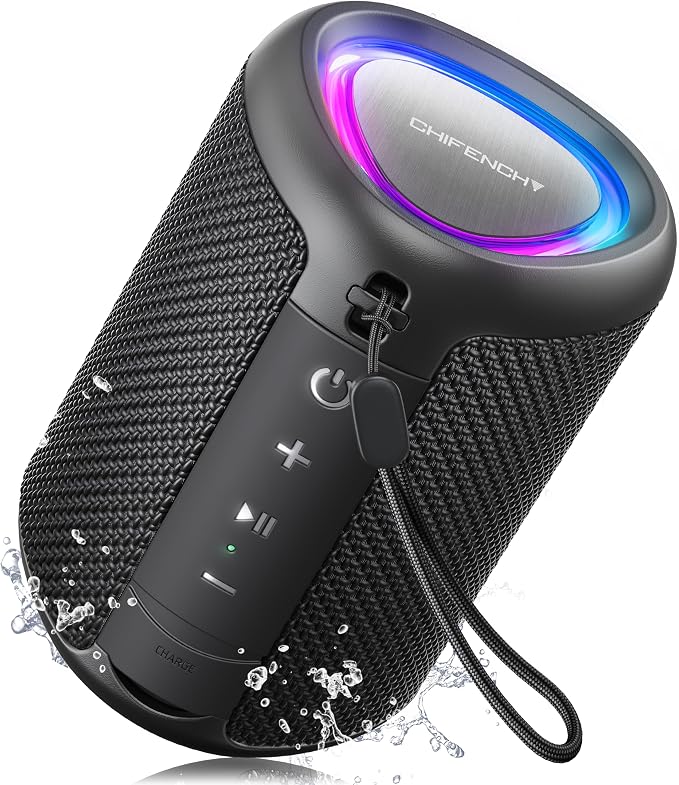 |
CHIFENCHY Portable Bluetooth Speaker | Price on Amazon |
| 6 |  |
AGPTEK Car Speaker | Price on Amazon |
| 7 |  |
Beats Pill Portable Bluetooth Speaker | Price on Amazon |
Cambridge Soundworks Oontz Angle 3 Gen 4 Portable Bluetooth Speaker
The OontZ Angle 3 Gen 4 is the most balanced option in this group. Its triangular enclosure uses dual acoustic drivers and a downward-facing passive radiator, which should help music retain clearer mids and highs while adding more body to bass than a very small single-driver speaker. For a car, that balance is useful because road noise can make thin vocals and weak low frequencies harder to enjoy.
With 12 watts of output, it has enough stated power for a cabin, campsite, or small outdoor gathering without becoming a bulky piece of equipment. The claimed 100-foot unobstructed Bluetooth range is more generous than most drivers need, but it can be convenient when the phone is left nearby outside the vehicle. Bluetooth support covers smartphones, tablets, computers, and compatible Echo devices.
The IPX5 rating protects against splashes, light rain, and gentle spray, but it does not make the speaker safe to submerge. A 24-hour maximum playtime at two-thirds volume is a strong road-trip advantage, while USB-C charging and a 3.5mm AUX input add flexibility for older devices. At only 10 ounces, it is easy to move between the dashboard area, a backpack, and a hotel room.
Pros
- 24-hour playtime at two-thirds volume
- 12-watt output with enhanced bass design
- IPX5 splash resistance and USB-C charging
- Built-in microphone and 3.5mm AUX input
Cons
- IPX5 protection does not allow submersion
- Maximum battery life will vary with volume and use
- Its triangular shape may need careful placement on a moving surface
My Opinion
This is my strongest general recommendation for drivers who want one speaker for the car, travel, and casual outdoor listening. Keep it away from standing water, and use the AUX input when a source device lacks dependable Bluetooth.
Anker Soundcore 2 Portable Bluetooth Speaker
Anker’s Soundcore 2 stands out for buyers who expect their speaker to encounter more than an occasional splash. Its IPX7 rating is intended to protect against splashes, waves, and water vapor, making it a more forgiving companion for beach stops, campgrounds, and wet-weather travel than an unprotected portable speaker. That protection is also reassuring when the speaker is carried in and out of the car frequently.
Sound comes from dual neodymium drivers with 12 watts of power, while BassUp technology and a spiral bass port emphasize the low end. That approach should suit bass-forward playlists, movies, and casual outdoor listening. The trade-off is that buyers seeking a neutral, studio-like presentation may prefer a speaker with less emphasis on impact. Its digital signal processing is intended to help prevent distortion at higher volume levels.
The 5,200mAh battery supports up to 24 hours of listening, giving it enough endurance for a long trip without making daily charging essential. Controls are described as simple, and wireless stereo pairing allows two compatible Soundcore 2 speakers to work together. It does not list an AUX input or built-in call microphone in the supplied details, so it is better suited to music playback than to replacing a dedicated hands-free car accessory.
Pros
- IPX7 waterproof protection
- Up to 24 hours of battery life
- BassUp processing and 12-watt output
- Supports wireless stereo pairing
Cons
- Supplied information does not list AUX or speakerphone support
- Bass emphasis may not suit every listener
- Battery results depend on volume and operating conditions
My Opinion
The Soundcore 2 is a smart alternative when water resistance and energetic bass matter more than calling features. Confirm that your phone and intended use work well over Bluetooth before choosing it as your only in-car audio device.
JBL Flip 5 Waterproof Portable Bluetooth Speaker
The JBL Flip 5 is a straightforward choice for drivers who want familiar JBL sound in a small, waterproof package. Its wireless Bluetooth streaming keeps setup simple, and the IPX7 rating gives it protection for pool days, rainy stops, and other situations where a car speaker might be exposed to water. This is more than many basic portable speakers provide, although waterproofing still does not mean the speaker should be treated carelessly.
JBL lists up to 12 hours of playtime, which is enough for many commutes, day trips, and shorter road adventures. It is not the longest-lasting option in this group, so frequent travelers may need to recharge it more often than the 24-hour models. The included components are limited to a quick-start guide in the supplied information, so buyers should not assume that extra accessories or a charging adapter are included.
PartyBoost pairing lets users connect multiple compatible speakers for a larger listening setup. That can be useful at a destination, though it is unnecessary for ordinary cabin listening and may add cost if a second speaker is purchased. The supplied data does not mention a built-in microphone, AUX input, or a dedicated car mount, so the Flip 5 is primarily a portable music speaker rather than a hands-free driving tool.
Pros
- IPX7 waterproof protection
- Simple Bluetooth music streaming
- Up to 12 hours of playtime
- PartyBoost support for multiple compatible speakers
Cons
- Shorter stated battery life than several competitors here
- No speakerphone or AUX support is listed
- Extra pairing features may be unnecessary for one-car use
My Opinion
The Flip 5 makes sense for a JBL fan who wants a durable music-first speaker that can move easily from the car to outdoor activities. Choose another model if hands-free calls or wired playback are central requirements.
BolaButty Portable Bluetooth Speaker
BolaButty focuses on versatility and visual appeal without becoming especially heavy. Two full-range drivers are intended to produce balanced sound with low distortion, and TWS pairing can turn two compatible units into left and right channels. One speaker is sufficient for ordinary car listening, while a pair could create a more spacious setup at a tailgate or backyard gathering.
Bluetooth 5.3 provides a stated range of up to 100 feet, and the speaker can also play through a 3.5mm AUX connection. The AUX cable is not included, so buyers who plan to connect an older music player or another non-Bluetooth source need to supply their own cable. A built-in microphone supports hands-free calls, which gives this model more in-car flexibility than several music-only choices on the list.
Its IPX5 rating handles splashes, spills, light rain, and shower steam, but it is not intended for submersion. Battery life reaches up to 24 hours at 50 percent volume with the lights turned off; louder playback and active lighting will reduce that figure. The beat-synced LED show is fun for parties, and one button can turn it off to preserve battery. At 13 ounces, it remains easy to carry in a travel bag.
Pros
- Built-in microphone and AUX support
- Up to 24 hours at 50 percent volume with lights off
- Bluetooth 5.3 with stated 100-foot range
- TWS pairing and switchable LED lighting
Cons
- AUX cable is not included
- IPX5 protection is not suitable for submersion
- Full-volume listening and lighting reduce battery endurance
My Opinion
This is a good value-oriented fit for drivers who want calls, wired connectivity, and a little party atmosphere in one compact unit. Turn off the lights and lower the volume when maximum road-trip battery life matters.
CHIFENCHY Portable Bluetooth Speaker
The CHIFENCHY speaker is built around easy carrying. Measuring about 2.99 inches wide and long and 4.25 inches high, with a weight of approximately 0.582 pounds, it can fit into a backpack, tote, suitcase, or a smaller area of the vehicle. Its built-in lanyard also gives owners a way to hang it from a hook, bike, backpack, or shower caddy rather than leaving it loose on a seat.
The supplied information describes 15-watt HD sound and dynamic lighting, making this a compact option for podcasts, casual music, games, and social listening. The lights can add energy at a gathering, but they are not necessary for in-car use and may consume some of the available battery. Up to 15 hours of playtime is respectable for a speaker of this size, though the actual result will depend on volume, lighting, and connection conditions.
Bluetooth 5.3 offers a stated range of up to 100 feet, and TWS pairing can connect two compatible speakers for up to 30 watts of stereo sound. IPX5 protection covers splashes and light rain but not submersion. The small footprint is useful in a crowded cabin, although a compact speaker naturally gives up some fullness and maximum room-filling presence compared with the larger Beats Pill.
Pros
- Compact 0.582-pound design with built-in lanyard
- Up to 15 hours of playtime
- Bluetooth 5.3 and TWS pairing
- IPX5 protection for splashes and light rain
Cons
- Not designed for submersion
- Lighting can reduce available battery life
- Smaller enclosure may provide less fullness than larger speakers
My Opinion
The CHIFENCHY is a practical pick when storage space and portability are more important than the biggest sound. Use the lanyard to keep it from sliding around, and disable the lighting when the speaker is mainly serving as a compact travel companion.
AGPTEK Car Speaker
The AGPTEK is the most car-specific product in this lineup. Rather than acting mainly as a room or outdoor speaker, it uses a magnetic back clip to mount on a vehicle sun visor. That placement keeps the unit closer to the driver’s head, making it a more targeted solution for phone calls, navigation prompts, and voice assistant access than a speaker sitting low in a door pocket.
A built-in 3-watt microphone uses noise reduction and echo processing to support clearer calls. Bluetooth 5.3 provides automatic reconnection and shut-off support, while double-clicking the M button can activate Siri or Google Assistant for calls, messages, or route requests. Those features can reduce the need to handle a phone while driving, but drivers should still follow local hands-free laws and keep their attention on the road.
The unit can play music through Bluetooth or a TF card, giving it a storage option that the other listed car-friendly speakers do not specify. After a two-hour full charge, stated playback is 9 to 10 hours and hands-free time is 16 hours. The included power cable should be used with a normal plug; the supplied note cautions against fast-charging plugs. That charging requirement is an important ownership detail for road-trip preparation.
Pros
- Sun-visor clip and magnetic mounting design
- Noise reduction and echo processing for calls
- Bluetooth 5.3 with automatic reconnection
- Supports TF-card playback and voice assistants
Cons
- Only 3 watts of stated speaker power
- Shorter music playback than most general-purpose options here
- Fast-charging plugs are specifically discouraged
My Opinion
AGPTEK is the best fit for drivers who prioritize hands-free communication over powerful music. Mount it securely on the visor, use a normal charging plug, and check that its placement does not block visibility or interfere with the vehicle’s safety systems.
Beats Pill Portable Bluetooth Speaker
The Beats Pill is the premium-leaning performance option in this group. Its racetrack woofer is described as displacing 90 percent more air than the previous Beats Pill and driving up to 69 watts of output. That specification points to a speaker intended to fill a room or outdoor space, which gives it plenty of headroom for a vehicle parked at a campsite or gathering. For ordinary cabin listening, its larger sound capability may be more than necessary.
A redesigned tweeter is intended to keep highs clear and midrange tones rich, while the woofer design aims to reduce low-end distortion at higher volume. USB-C can provide high-resolution lossless audio from a laptop or compatible device, adding a wired option for supported sources. The supplied data does not specify an AUX input, so USB-C compatibility should be confirmed before treating it as a replacement for every wired setup.
Up to 24 hours of battery life makes the Pill suitable for long trips, and it can act as a USB-C power bank for charging a phone or other device. IP67 dust and water resistance is the strongest protection level represented here, while the removable lanyard and soft-grip silicone body help with carrying. Two Beats Pill speakers can pair in Amplify or Stereo mode, but purchasing a second unit is unnecessary for most individual car owners.
Pros
- Up to 69 watts of stated output
- Up to 24 hours of battery life
- IP67 dust and water resistance
- USB-C lossless audio and phone charging capability
Cons
- Likely more speaker than a basic commuter needs
- Supplied information does not list an AUX input
- Two-speaker modes require another compatible Beats Pill
My Opinion
The Beats Pill is the strongest choice here for buyers who want one portable speaker to serve the car, home, trail, and gatherings. Its size and performance make the most sense when you will use the speaker beyond the vehicle rather than only for navigation or quiet commuting.
How I Selected These Portable Bluetooth Speakers for Car Use
To identify the best portable bluetooth speaker for car shoppers, I weighed the features that directly affect daily ownership: connection reliability, size, battery life, call support, mounting or carrying options, water resistance, and sound-oriented design details. A speaker that works well in a vehicle should also be easy to remove, recharge, and use somewhere else.
The ranking also reflects how much practical information the supplied data provides and how clearly each model serves a particular buyer. The first three positions favor broad usefulness, while later choices earn space for specialized strengths such as visor mounting, very small dimensions, stronger water protection, or higher output.
Selection takeaway: The best all-around car speaker is not automatically the loudest one. Easy placement, reliable controls, useful battery life, and a suitable call setup can matter more during everyday driving.
Customer-feedback volume and listed ratings were treated as supporting signals rather than the entire decision. A highly rated music speaker may still be a poor choice for someone who needs a visor clip or hands-free calling, so the ranking keeps those differences visible.
Practical takeaway: Match the speaker to the job first: music, calls, navigation, outdoor use, or a mix of all four.
How to Choose a Portable Bluetooth Speaker for Car Use
Choosing the best portable bluetooth speaker for car use starts with the vehicle itself and the way the speaker will be used. Consider cabin size, available storage, phone compatibility, call needs, charging habits, and whether the unit will regularly leave the car for outdoor activities.
- Prioritize placement: Choose a shape, clip, or lanyard that keeps the speaker stable and does not block visibility.
- Check call support: A built-in microphone matters if the speaker will handle phone conversations or voice commands.
- Match battery life to trips: Longer stated endurance reduces charging, but volume and lighting can shorten it.
- Separate splash protection from waterproofing: IPX5 handles splashes, while IPX7 is intended for temporary water exposure.
- Confirm wired options: AUX, TF-card, or USB-C support can be valuable when Bluetooth is unavailable or inconvenient.
Decide whether you need music or hands-free calling
Music-first speakers usually give more attention to drivers, bass, outdoor volume, and pairing with another speaker. A car-specific model such as the AGPTEK places more emphasis on a visor clip, microphone processing, reconnection, and voice assistant access. If navigation prompts and calls are the priority, those features may matter more than the ability to fill a backyard with sound.
Choose battery capacity with realistic expectations
Manufacturers state playtime under particular conditions, not as a guarantee for every drive. Higher volume, active LED lighting, repeated calls, and cold or hot conditions can reduce endurance. A model rated for 24 hours is more forgiving for long travel, while a shorter-runtime speaker may be perfectly adequate for daily commuting if it is charged regularly.
Think about water and dust exposure
IPX5 protection is useful for splashes, light rain, and wet hands, but it is not a submersion rating. IPX7 offers a stronger level of water protection, while IP67 adds dust resistance to water resistance. Regardless of rating, keep charging ports closed or dry as applicable and do not charge a wet speaker until it has dried fully.
Match size and output to the cabin
A small speaker is easier to store and less likely to become a loose object in the vehicle. A larger, higher-output model can deliver fuller sound and remain useful outdoors, but it takes more space and may be excessive for quiet drives. The right compromise is the smallest speaker that provides the clarity, battery, and controls you actually use.
How to Set Up a Portable Speaker in Your Car
Start by charging the speaker before pairing it. Turn on Bluetooth on the phone, select the speaker from the available-device list, and play a short audio clip to confirm the connection. If the model supports automatic reconnection, leave Bluetooth enabled on the usual phone so the process becomes quicker on later trips.
Place the speaker where controls remain reachable when parked but where it will not slide, block a windshield, cover an airbag area, or obscure gauges. A visor-mounted product should be clipped securely without interfering with the visor’s normal movement. A loose speaker should be placed in a stable storage area rather than on the dashboard or near the pedals.
Set the phone and speaker volume before driving, then use voice controls or the speaker’s physical buttons when possible. Test a call while stationary so you can check microphone placement and audio clarity before relying on it during a journey.
Bluetooth Compatibility and Calling Tips
Most current phones, tablets, and computers should pair with the Bluetooth speakers listed here, but the supplied features differ from one model to another. Built-in microphones are specifically stated for the OontZ, BolaButty, AGPTEK, and other applicable models, while the JBL Flip 5, Soundcore 2, and CHIFENCHY information does not identify speakerphone support.
Keep the phone reasonably close during calls and avoid storing it behind dense objects or inside a closed compartment if the connection becomes inconsistent. If automatic reconnection fails, disconnect the speaker from another nearby device before pairing again. A speaker can generally connect to one active audio source at a time, so turning off Bluetooth on an unused tablet or laptop may prevent confusion.
For voice assistants, test the button sequence while parked. AGPTEK specifically uses a double click of the M button to activate Siri or Google Assistant. Voice commands can be helpful for navigation or messages, but they should never replace safe driving habits or local hands-free requirements.
How to Improve Sound Inside the Vehicle
Cars create reflections from glass, plastic, and upholstery, so small placement changes can affect clarity. Aim the speaker toward the listening area instead of facing it into a seat or door panel. Avoid covering the driver or passenger side with bags, clothing, or other objects, since blocked openings can make vocals and alerts harder to hear.
Keep the speaker stable and use moderate volume before increasing it. Excessive volume can make speech less intelligible and may compete with important road sounds. Bass-focused models such as the Soundcore 2 can sound energetic, but a clearer midrange may be preferable for podcasts, navigation, and phone conversations.
If the speaker offers stereo pairing, use it at a destination or in a stationary setup where two units can be positioned deliberately. In a moving car, a single stable speaker is usually simpler and less distracting than managing two separate units.
Charging and Battery Ownership Tips
Charge the speaker before a long trip and bring the correct cable rather than assuming every USB accessory works the same way. The OontZ and BolaButty models specify USB-C charging, while AGPTEK’s supplied note says to use a normal plug and avoid a fast-charging plug. Follow the individual product’s charging guidance instead of selecting an adapter solely because it charges a phone quickly.
Do not leave a battery-powered speaker in a hot parked car for extended periods. Heat can be hard on rechargeable batteries and may also affect the speaker’s exterior materials. If a speaker will sit unused for a while, store it in a cool, dry place with some charge remaining rather than completely empty.
Battery claims are maximum or condition-specific figures. Turning off BolaButty or CHIFENCHY lighting, reducing unnecessary volume, and avoiding repeated reconnection attempts can help extend a charge. Carrying a spare cable is also worthwhile because a speaker is not useful on the road if its charging lead is missing.
Cleaning, Water Protection, and Storage
Wipe the exterior with a soft, slightly damp cloth and remove dust from buttons, grilles, and lanyard points without forcing moisture into openings. Do not immerse an IPX5 speaker, even if it looks rugged. IPX7 or IP67 protection provides stronger water resistance, but it is still sensible to rinse away salt or grime carefully and allow the speaker to dry before charging.
Keep charging ports free from sand, lint, and moisture. Never connect a charging cable when the port is wet. Store the speaker where it cannot be crushed by luggage or struck by loose items in the trunk. A lanyard can help with carrying, but it should not be used to hang a speaker from a location where it could swing into the driver’s view.
Water resistance protects against specified exposure; it does not prevent all damage from drops, extreme heat, chemical cleaners, or long-term neglect. Basic storage habits will usually do more for ownership life than repeatedly testing the protection rating.
Common Mistakes to Avoid with a Car Speaker
Many ownership problems come from placement and expectations rather than from the speaker itself. A portable unit should supplement safe driving, not create a new distraction or become a loose object inside the cabin.
- Do not place the speaker over an airbag cover, in front of a gauge, or where it blocks the windshield.
- Do not assume IPX5 means the speaker can be submerged.
- Do not charge a wet unit or use an incompatible fast charger when the product guidance warns against it.
- Do not judge battery life only by the maximum number on the package; volume and lighting change results.
- Do not buy a music-first speaker when a visor-mounted microphone is your main need.
- Do not leave the speaker loose on the dashboard, seat, or floor where it can slide during braking.
Before driving, secure the speaker, start the playlist or navigation, and set the controls. The safest setup is the one that requires the least attention once the vehicle is moving.
Basic Troubleshooting Before a Road Trip
If the speaker will not connect, first check that it has enough charge and that Bluetooth is enabled on the phone. Turn off Bluetooth on nearby devices that may have connected automatically, then remove or forget the speaker from the phone’s saved list only if a normal reconnect does not work. Powering both devices off and on can clear a temporary connection issue.
For weak sound, check the phone’s media volume, the speaker’s physical volume controls, and the position of the unit. If calls are unclear, confirm that the phone is using the speaker as the call audio source and that the microphone is not covered. A visor-mounted model should be positioned near the driver but not pressed against fabric that could muffle it.
When battery life seems unusually short, turn off LED effects, lower volume, and check whether the speaker is repeatedly searching for a connection. If charging is inconsistent, inspect the cable and port for debris and follow the product’s specific charger guidance.
FAQS About Best Portable Bluetooth Speaker for Car
What is the best type of portable speaker for a car?
A general portable speaker works well for music, while a visor-mounted hands-free unit is better for calls and navigation. Choose based on whether audio playback or communication is the main purpose.
Can a portable Bluetooth speaker replace a car stereo?
It can provide convenient music and spoken audio, but it may not integrate with the vehicle’s controls, speakers, or safety systems. It is best viewed as a flexible supplemental option rather than a full replacement in every vehicle.
Should a car speaker have a built-in microphone?
A microphone is useful when you want to answer calls or use voice assistants through the speaker. It is less important if the speaker will only play music and navigation audio.
Is IPX5 waterproof enough for a portable car speaker?
IPX5 is suitable for splashes, light rain, and gentle spray, but it is not intended for submersion. Choose an IPX7 or IP67 model when heavier water exposure is likely.
How much battery life is enough for road trips?
For daily commuting, even a shorter runtime may be sufficient if the speaker is recharged regularly. For long trips or outdoor stops, a stated 24-hour maximum provides more flexibility, although actual playtime varies with volume and extra features.
Where should a portable speaker sit in a car?
Use a stable storage area or an appropriate visor clip that does not block visibility, controls, airbags, or the driver’s movement. Avoid loose placement on the dashboard, seat, or floor.
Final Thoughts
The best portable bluetooth speaker for car use depends on the job. Cambridge Soundworks OontZ Angle 3 Gen 4 is my top all-around choice, Anker Soundcore 2 is the stronger waterproof and bass-focused alternative, and JBL Flip 5 is a dependable music-first option. Choose AGPTEK for visor-mounted calls, Beats Pill for louder multi-purpose sound, BolaButty for flexible features, or CHIFENCHY when compact storage matters most.