A weak 12V battery can turn a normal BMW startup into warning messages, slow cranking, or complete silence. The best jump starter for BMW should provide enough starting power without forcing you to depend on another vehicle or wrestle with oversized professional equipment.
BMW also makes the connection procedure more important than simply buying a powerful booster. Battery locations and approved jump points vary between models and model years, so BMW provides VIN-specific digital owner’s manuals that should be checked before connecting a portable starter.
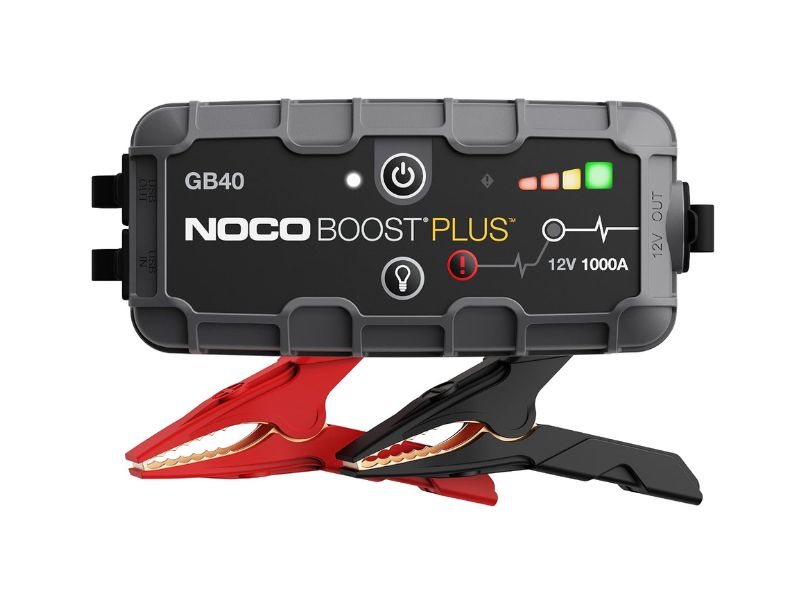
My primary recommendation is the NOCO Boost GB40 1000A UltraSafe Lithium Jump Starter. I would choose it for most gasoline-powered BMW sedans, coupes, and SUVs because it provides enough engine-size coverage for typical BMW applications while remaining compact enough to keep permanently in the trunk. Its normal operating mode also adds reverse-polarity and spark protection.
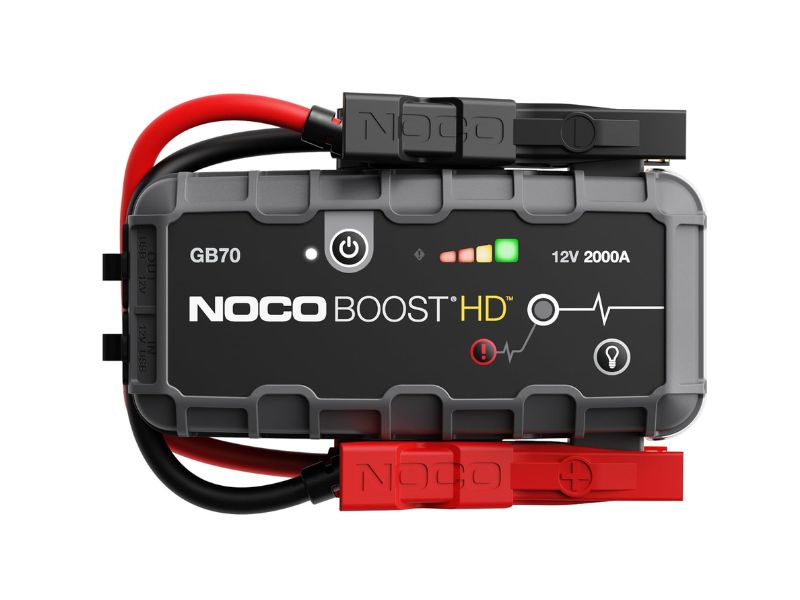
I would consider the NOCO Boost GB70 2000A UltraSafe Lithium Jump Starter for a larger BMW SUV, V8-powered model, frequent winter driving, or a household that wants one booster to cover several larger vehicles. Its larger battery and 8.0L gasoline-engine rating provide considerably more reserve.
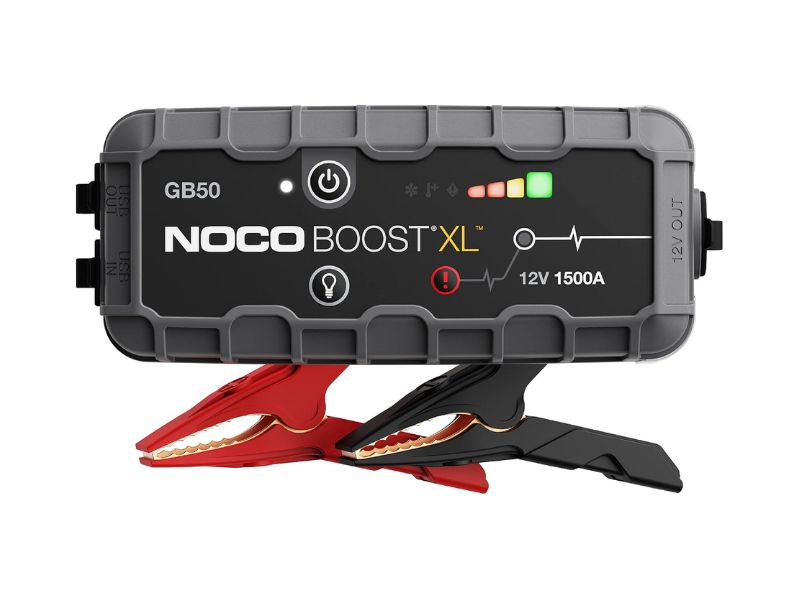
The NOCO Boost GB50 1500A UltraSafe Lithium Jump Starter is the middle-ground choice. I prefer it when you want more starting margin than the GB40 provides without carrying the larger GB70, particularly for bigger SUVs, performance-oriented BMWs, or colder U.S. climates.
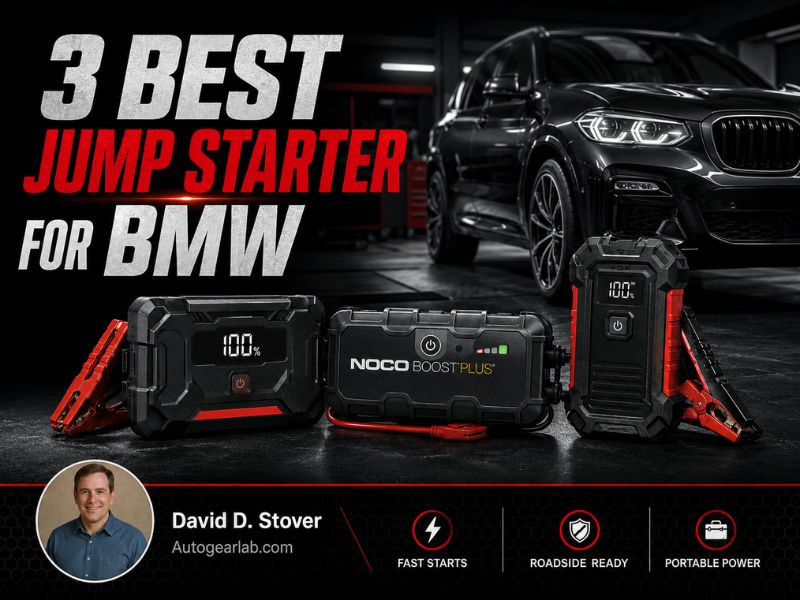
3 Jump Starters for BMW Reviewed
| Image | Product Name | Check Price |
|---|---|---|
Best Choice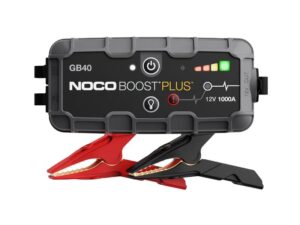 | NOCO Boost GB40 1000A UltraSafe Lithium Jump Starter | Check Price |
Second Best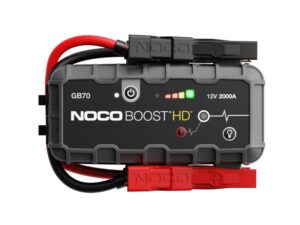 | NOCO Boost GB70 2000A UltraSafe Lithium Jump Starter | Check Price |
Third Choice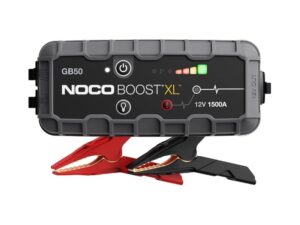 | NOCO Boost GB50 1500A UltraSafe Lithium Jump Starter | Check Price |
All three products are designed for 12V automotive starting systems. That distinction matters with newer BMW mild hybrids, plug-in hybrids, and electric vehicles because a conventional portable jump starter should only be used according to the vehicle-specific low-voltage procedure—not connected to high-voltage propulsion components.
1. NOCO Boost GB40 1000A UltraSafe Lithium Jump Starter
Key Features
- 1000A peak starting output
- Gasoline engines up to 6.0L
- Diesel engines up to 3.0L
- Compact lithium battery booster
- Reverse-polarity protection
- Spark-resistant normal operation
- USB power-bank function
- Integrated emergency flashlight
The GB40 makes the most sense for the majority of BMW owners because its engine coverage already exceeds what many BMW gasoline engines require. The product is rated for 12V gasoline engines up to 6.0 liters and diesel engines up to 3.0 liters.
For a BMW owner, that means buying an enormous 3000A or 4000A booster is not automatically necessary. A properly charged 1000A-class unit with appropriate engine compatibility can be a much better fit when the goal is emergency starting of a normal 2.0L, 3.0L, or moderate-size gasoline BMW.
Portability is one of its biggest advantages. The GB40 is compact enough to keep in a dedicated trunk compartment or emergency bag without occupying the cargo space required by professional lead-acid jump boxes.
That matters because the most useful emergency starter is one that stays with the vehicle. Buying excessive capacity and then leaving the unit in the garage defeats the purpose.
The protection system is another reason I prefer the GB40 for drivers who rarely work around battery terminals. During normal protected operation, the unit is designed to detect reversed clamp polarity and reduce connection sparking.
These protections still do not make terminal selection optional. BMW recommends using the vehicle-specific manual, and its U.S. owner portal allows an owner to retrieve the appropriate manual using the VIN.
This is particularly relevant because the physical battery may be located away from the engine compartment while designated external jump points are provided under the hood.
The GB40 also functions as a small USB power bank. That can help keep a phone available for communication or navigation during an emergency, although every device charged from the pack reduces the remaining starting reserve.
A built-in light makes connecting the clamps easier at night. It should be treated as a work light rather than a replacement for proper roadside visibility or the vehicle’s hazard lights.
The main limitation is capacity. Although the GB40 is appropriate for many BMW gasoline engines, a larger pack offers more margin when temperatures fall sharply, the vehicle battery is deeply discharged, or the jump starter needs to serve several larger vehicles.
Its 3.0L diesel rating is another limitation. Owners of older BMW diesel models should confirm actual engine displacement rather than assuming that the gasoline rating applies.
What I Like
- Compact enough to remain in a BMW trunk
- Adequate engine coverage for most gasoline BMWs
- Reverse-polarity protection
- Spark-resistant normal operation
- Straightforward controls
- Useful emergency power-bank function
What I Do Not Like
- Limited diesel-engine range
- Less battery reserve than larger models
- Not the strongest option for repeated difficult winter starts
The GB40 is the BMW jump starter I would choose for most owners. It provides enough capability for common gasoline models without adding unnecessary size, making it particularly sensible for daily-driven sedans, coupes, and SUVs.
2. NOCO Boost GB70 2000A UltraSafe Lithium Jump Starter
Key Features
- 2000A peak starting output
- Gasoline engines up to 8.0L
- Diesel engines up to 6.0L
- Larger lithium battery reserve
- Reverse-polarity and spark protection
- 12V accessory output
- High-output emergency flashlight
The GB70 doubles the headline starting output of the GB40 and increases its rated engine coverage to gasoline engines up to 8.0 liters and diesel engines up to 6.0 liters.
BMW owners generally do not need that larger displacement ceiling solely because they drive a BMW. The real benefit is additional starting reserve.
That margin can be useful in several situations:
- A V8-powered BMW
- A vehicle parked outside during a northern winter
- A battery that is heavily discharged
- Multiple starting attempts
- One jump starter shared among several household vehicles
- A household that also owns a pickup, boat, or RV
The larger internal battery makes the GB70 better suited to those situations. More stored energy does not automatically mean every start will succeed, but it provides more reserve when cold temperature, battery condition, or engine load makes cranking more difficult.
Its clamps and body are correspondingly larger. That improves its suitability for substantial automotive batteries but makes it less attractive if trunk space is limited.
A BMW 3 Series or compact crossover owner may find the GB70 unnecessarily bulky when the GB40 already provides adequate displacement coverage.
The additional 12V accessory output gives the GB70 more utility beyond jump-starting. Compatible accessories can draw power from the pack, although that feature should be used carefully when starting reserve may be needed later.
The emergency light is also substantially more useful for illuminating a larger engine bay or helping with a roadside task after dark.
Like the GB40, the GB70 uses smart connection protections in its normal operating mode. Reverse polarity should be corrected before attempting a start.
A manual override function can help when the BMW’s battery voltage has fallen too low for normal detection. That feature should be treated cautiously because manual modes may bypass some automatic safety checks.
A deeply discharged battery can also indicate an underlying problem. If the BMW repeatedly needs starting assistance, the battery condition, charging system, parasitic draw, and electrical system deserve diagnosis rather than repeated boosting.
What I Like
- Large amount of starting reserve
- Wide gasoline-engine compatibility
- Better suited to V8 models and winter use
- Useful 12V accessory output
- More capable emergency lighting
- Good option for multi-vehicle households
What I Do Not Like
- Larger than most BMW owners actually need
- Takes more trunk space
- Added capacity provides little benefit for an ordinary 2.0L BMW in mild weather
The GB70 is the better choice when you deliberately want extra reserve rather than simply minimum BMW compatibility. I would select it for large SUVs, performance models, cold-weather ownership, or a household that wants one jump starter for several vehicles.
3. NOCO Boost GB50 1500A UltraSafe Lithium Jump Starter
Key Features
- 1500A peak starting output
- Gasoline engines up to 7.0L
- Diesel engines up to 4.5L
- Mid-size lithium booster format
- Reverse-polarity protection
- Spark-resistant connection
- USB power-bank function
- Emergency flashlight
The GB50 sits exactly where its specifications suggest: between the GB40 and GB70.
Its 1500A output is rated for gasoline engines up to 7.0L and diesel engines up to 4.5L, giving it greater engine margin than the GB40 without requiring the larger GB70.
That makes it attractive for BMW owners who tend to prefer extra capacity but still want something relatively easy to store.
For example, I would consider the GB50 for a larger BMW SUV or V8-powered model when the vehicle operates in a cold climate. The 7.0L gasoline rating leaves substantial displacement margin while avoiding the GB70’s additional size.
The product also makes sense for households with several cars. A BMW may require relatively modest starting capability, while another SUV or light truck in the household might benefit from the GB50’s additional headroom.
Normal connection includes spark and reverse-polarity protection, making it easier to use for drivers who do not routinely work with automotive batteries.
Again, the BMW-specific connection procedure matters as much as the booster itself. Owners should identify their designated positive terminal and grounding point through the correct digital manual before an emergency occurs. BMW’s U.S. site allows manuals to be retrieved by VIN.
Its size is easier to justify than the GB70 for many passenger vehicles. It offers more reserve than the GB40 while remaining appropriate for normal trunk storage.
The 4.5L diesel rating also expands compatibility with older diesel BMW applications. The engine’s actual displacement should still be checked rather than relying on the BMW model badge alone.
The biggest question is whether you actually need the extra capacity. For an ordinary 2.0L or 3.0L gasoline BMW that is driven regularly and lives in a moderate climate, the GB40 remains the simpler choice.
What I Like
- Useful balance between power and portability
- Large gasoline-engine coverage
- Additional winter starting margin
- Easier to store than the GB70
- Normal-mode polarity and spark protections
What I Do Not Like
- More capacity than many BMWs need
- Less reserve than the GB70
- Diesel compatibility still has a defined 4.5L ceiling
The GB50 is the compromise model. I would choose it when you want extra cold-weather and V8 margin but still prefer a relatively compact emergency booster.
BMW Jump Starter Comparison
| Product | Peak Output | Gas Engine Limit | Diesel Limit | Size Class | Main Strength | Main Limitation | Ideal BMW Use |
| NOCO Boost GB40 | 1000A | 6.0L | 3.0L | Compact | Excellent balance of portability and capability | Lowest reserve | Most BMW sedans, coupes, and gasoline SUVs |
| NOCO Boost GB70 | 2000A | 8.0L | 6.0L | Large portable | Maximum starting reserve | Larger and heavier | V8 models, winter use, multi-vehicle households |
| NOCO Boost GB50 | 1500A | 7.0L | 4.5L | Mid-size | Extra margin without GB70 bulk | More than many BMWs need | Larger SUVs and performance models |
The key difference is not whether one model can technically cover a normal BMW gasoline engine. All three provide generous gasoline displacement ratings.
The decision is mainly about how much reserve you want to carry.
For everyday BMW ownership, the GB40 is enough for the broadest group of drivers. The GB50 adds useful winter and large-engine margin. The GB70 makes the most sense when difficult starts, large engines, or several household vehicles justify the additional capacity.
How to Choose the Best Jump Starter for BMW
Match the Booster to the Engine, Not the Badge
BMW manufactures everything from efficient four-cylinder vehicles to powerful six-cylinder and V8 models.
That does not mean every BMW needs an oversized jump starter.
Check the actual engine displacement and compare it with the booster’s gasoline or diesel rating.
A product rated for a 6.0L gasoline engine already offers substantial specification margin for many BMW passenger vehicles.
More starting output becomes useful when the vehicle:
- Has a larger engine
- Operates in severe winter conditions
- Has a heavily discharged battery
- Sits unused for long periods
- Shares the booster with larger household vehicles
BMW Jump Points Matter
One of the most important BMW-specific considerations is where the clamps go.
Do not automatically assume that the physical battery posts are the correct or most convenient connection points.
BMW maintains model- and VIN-specific digital owner’s manuals for U.S. owners. These instructions should be used to locate the appropriate positive jump terminal and ground point.
Looking up those points before the vehicle fails can save considerable frustration later.
Confirm That You Are Working With the Low-Voltage System
Modern BMWs can contain several electrical systems.
A conventional gasoline BMW uses a low-voltage system for starting and accessories, while newer mild hybrids, plug-in hybrids, and electric vehicles may contain additional high-voltage systems.
A normal portable automotive jump starter should never be connected to arbitrary hybrid or EV high-voltage components.
Follow the vehicle’s specific low-voltage procedure.
When the correct connection is unclear, professional roadside assistance is safer than guessing.
Do Not Buy by Peak Amps Alone
The largest number on the box is not automatically the best match for a BMW.
Peak amps describe a short maximum output. Practical starting capability also depends on:
- Battery temperature
- Jump-starter state of charge
- Vehicle-battery condition
- Cable resistance
- Clamp contact
- Engine displacement
- Fuel type
- Starter condition
- Protection circuitry
A reputable, fully charged 1000A unit that is appropriately rated can make more sense than a much larger booster that is difficult to store and rarely checked.
Gasoline and Diesel Ratings Are Different
Always use the relevant fuel-specific rating.
The GB40, for example, supports a much larger gasoline engine than diesel engine.
Diesel engines generally place heavier demands on their starting systems because of their compression characteristics and other loads.
Owners of older BMW diesel models should identify the engine size before choosing a booster.
More Capacity Helps in Cold Weather
Winter places two simultaneous demands on a starting system: batteries deliver less effective output while the engine becomes harder to crank.
Additional jump-starter reserve can therefore be worthwhile for BMW owners in northern U.S. states.
For mild climates and a normal gasoline BMW, I prefer the compact GB40.
For frequent subfreezing temperatures, I would consider moving to the GB50 or GB70.
Check Clamp Reach Before an Emergency
Open the hood while the BMW is running normally and identify the designated jump points.
Check whether:
- The positive clamp can open far enough
- Both clamps have secure contact
- The cables can reach the required points
- The ground location is accessible
- Engine covers obstruct the terminals
Compact cables reduce storage bulk but can make unusual engine-bay layouts harder to reach.
Reverse-Polarity Protection Is Worth Having
Reverse polarity means connecting positive to negative and negative to positive.
That mistake can create high current, sparks, and electrical damage.
All three recommended products provide normal-mode protection intended to identify improper clamp polarity before the start attempt.
Still check the clamp markings yourself.
Electronic protection is an extra layer—not a replacement for correct connection.
Understand Manual Override
When a battery becomes extremely discharged, its voltage may fall below the jump starter’s automatic detection threshold.
Manual override can energize the clamps despite that low voltage.
This can help in an emergency, but it also deserves greater caution because automatic connection protection may be reduced or bypassed.
Use normal protected starting mode first.
Consider Trunk Storage
BMW sedans and coupes often provide less convenient cargo storage than a large SUV.
The GB40 is therefore attractive because it delivers substantial gasoline-engine coverage without occupying much space.
The GB50 is still manageable when you want extra reserve.
The GB70 is easier to justify in an X5, X7, or another large vehicle where cargo space is less restrictive.
Keep Heat and Cold in Mind
A lithium jump starter is itself a battery-powered device.
Very cold storage temporarily reduces output. Excessive heat can accelerate battery aging.
A closed vehicle can become extremely hot during summer, so owners in states such as Arizona, Nevada, Texas, and Florida should pay particular attention to the manufacturer’s permitted storage-temperature range.
Inspect the pack periodically rather than leaving it untouched in the trunk for years.
Jump Starter vs BMW Battery Charger
A jump starter and a battery charger do different jobs.
A jump starter supplies high current for a brief period to help the vehicle start.
A battery charger gradually restores energy to the BMW’s 12V battery.
If the BMW has simply been sitting unused in a garage, an appropriate smart charger or maintainer may be the better tool.
If the vehicle will not start in a parking lot or away from electrical power, a portable jump starter is more useful.
Repeated battery problems should not be managed indefinitely with a booster.
Possible causes include:
- An aging battery
- Low state of charge
- Extended vehicle storage
- Frequent short trips
- Electrical parasitic draw
- Battery-management issues
- Charging-system faults
- Loose or corroded connections
BMW Roadside Assistance includes battery jump-start service among its available roadside services for eligible vehicles and coverage situations.
How to Jump-Start a BMW Safely
1. Check the BMW Manual
Use the instructions for your exact vehicle.
BMW allows U.S. owners to access digital manuals by VIN, which is preferable to relying on a generic procedure from another BMW model.
2. Inspect the Battery Situation
Do not attempt to jump-start a battery that appears:
- Frozen
- Cracked
- Swollen
- Leaking
- Smoking
- Unusually hot
Physical battery damage requires professional attention.
3. Locate the Approved Jump Points
Find the designated positive terminal and approved negative or chassis-ground point.
Do not improvise a ground location simply because a metal bracket is convenient.
4. Turn Off Unnecessary Electrical Loads
Switch off:
- Climate control
- Audio equipment
- Heated seats
- Headlights where appropriate
- Phone chargers
- Other unnecessary accessories
This reduces electrical demand during the start attempt.
5. Attach the Positive Clamp
Connect the red clamp securely to the designated positive point.
Ensure the clamp cannot slip or touch adjacent metal.
6. Attach the Negative Clamp
Connect the black clamp to the ground point specified in the BMW instructions.
Keep the cable away from belts, fans, pulleys, and hot components.
7. Check the Jump Starter
Confirm that the device indicates a correct connection.
If it reports reversed polarity or another fault, stop and correct the problem.
8. Use Normal Mode First
Allow the jump starter’s protection system to operate normally.
Do not immediately activate manual override.
9. Attempt a Brief Start
Crank the engine only for the permitted interval.
If it does not start, stop and allow the required cooldown time before another attempt.
Repeated continuous cranking can overheat electrical components without solving the underlying problem.
10. Disconnect Safely
Once the BMW starts, remove the booster according to the vehicle and jump-starter instructions.
Keep both clamps separated after removal.
11. Recharge the Jump Starter
Do not simply place a partly depleted pack back in the trunk.
Recharge it so it is ready for the next emergency.
BMW Jump Starter Maintenance
Check the booster’s charge level every few months.
I would also inspect it before:
- Winter
- Long-distance travel
- Extended airport parking
- Road trips
- Severe-weather season
- Leaving the BMW unused for weeks
Store the clamps separately inside the case or storage pouch.
Do not allow keys, tools, coins, or other metal objects to contact the clamps.
Inspect the cables for damaged insulation and check the housing for cracks, swelling, or heat damage.
A lithium booster that becomes swollen, leaks, produces an unusual odor, overheats, or refuses to charge normally should be removed from service.
Common BMW Jump Starter Mistakes
Buying Too Much Power
Most BMW gasoline vehicles do not require an enormous commercial jump pack. Buy enough engine coverage and reserve without sacrificing convenient storage.
Ignoring BMW’s Designated Jump Points
The correct BMW procedure is more important than copying the terminal arrangement from another vehicle.
Assuming Every Electrical System Is the Same
Mild-hybrid, plug-in-hybrid, and electric BMWs require model-specific low-voltage procedures.
Using Manual Override Too Early
Normal protected mode should be the default. Override is for situations where the depleted battery cannot be detected automatically.
Ignoring Cold-Weather Margin
A booster that has enough power in summer may have less usable reserve during severe winter weather.
Forgetting to Recharge It
Even the correct jump starter cannot help if its own internal battery is nearly empty.
Assuming the Vehicle Is Fixed After One Jump
A successful start solves the immediate symptom. Repeated battery problems require diagnosis.
Frequently Asked Questions
What is the best jump starter for BMW?
The NOCO Boost GB40 is the best practical choice for most gasoline-powered BMW models.
Its 6.0L gasoline-engine rating covers the needs of typical BMW passenger vehicles while keeping the booster compact. The GB50 or GB70 is more appropriate when additional cold-weather or large-engine reserve is desirable.
How many amps does a BMW jump starter need?
A quality 1000A-class jump starter is sufficient for many gasoline-powered BMWs.
Larger engines, very cold climates, heavily discharged batteries, and multi-vehicle households can justify moving to a 1500A or 2000A model. Peak output should always be considered alongside the manufacturer’s engine-displacement rating.
Is a 1000A jump starter enough for a BMW?
Yes, a properly rated 1000A booster is adequate for many BMW gasoline engines.
The GB40 is rated for gasoline engines up to 6.0L. That makes it appropriate for a broad range of BMW passenger cars and SUVs when used within the vehicle and booster instructions.
Is a 2000A jump starter too powerful for a BMW?
No, extra capacity is acceptable when the jump starter is designed for the correct 12V system.
A 2000A rating does not mean the device constantly forces 2000 amps through the vehicle. The starter motor draws the current required under the system’s operating conditions. A larger pack mainly provides additional available reserve.
Which jump starter should I use for a BMW X5?
The GB40 suits many gasoline X5 models, while the GB50 or GB70 provides extra reserve.
The better choice depends on engine configuration, climate, battery condition, and whether the booster will serve other vehicles. For harsh winters or a V8 application, I would lean toward the larger model.
Which jump starter is best for a BMW 3 Series?
A compact 1000A-quality booster is generally the most practical choice for a gasoline 3 Series.
There is little reason to carry an oversized heavy-duty pack solely for a typical 3 Series engine. The GB40 offers useful capability while occupying limited trunk space.
Does a BMW have special jump-start points?
Many BMW models use designated connection points, so check the VIN-specific owner’s manual first.
BMW provides digital owner’s manuals for U.S. vehicles, allowing owners to locate the correct positive connection and ground point for the specific model.
Should I connect directly to the BMW battery?
Use the connection points specified in the BMW manual rather than assuming direct battery access is correct.
The physical battery can be located away from the engine compartment, and external jump terminals may be provided specifically for starting assistance.
Can a jump starter damage BMW electronics?
Correctly used compatible equipment should not damage a healthy BMW low-voltage system.
Risk increases when polarity is reversed, an incorrect voltage is used, an arbitrary connection point is selected, or manual override is used improperly.
Can I use a jump starter on a BMW mild hybrid?
Follow BMW’s exact low-voltage jump-start procedure and do not connect to hybrid-system components.
Modern vehicles can contain more than one voltage system. A standard portable jump starter should only be used at connection points explicitly approved for that purpose.
Can I use a jump starter on a BMW plug-in hybrid?
Only use the vehicle-specific procedure for its low-voltage system.
Never connect a normal automotive jump starter to high-voltage traction-battery components. When the approved procedure is unclear, professional roadside support is safer.
Can I use a jump starter on an electric BMW?
Only the low-voltage system should be addressed using the BMW-specific procedure.
An electric BMW’s traction battery is not a conventional starting battery and should never be connected to a portable 12V jump pack.
Can a jump starter start a completely dead BMW battery?
Sometimes, although an extremely low-voltage battery may require carefully used manual override.
Automatic jump starters may not activate when battery voltage falls below their detection threshold. Override can help, but it requires correct polarity and proper connection to the approved BMW jump points.
How often should I recharge my BMW jump starter?
Recharge it after every use and check the charge level every few months.
Also inspect it before winter, long trips, extended parking, and periods when the vehicle will sit unused.
Can I leave a lithium jump starter in my BMW trunk?
Yes, provided trunk temperatures remain within the manufacturer’s permitted storage range.
Extreme summer heat accelerates lithium-battery degradation, while severe winter cold temporarily reduces available output. Check the unit periodically instead of leaving it untouched for years.
Why does my BMW battery keep going dead?
Repeated discharge can indicate battery aging, low charging, parasitic draw, or another electrical problem.
Frequent short trips, extended storage, accessories, charging-system faults, and battery deterioration can all contribute. Repeated jump-starting should not replace battery and electrical-system diagnosis.
Should I buy a jump starter or battery charger for my BMW?
Choose a jump starter for emergencies and a compatible battery charger for gradual recovery or storage.
A portable booster supplies brief starting current. A charger restores battery energy over a longer period and is more appropriate when the vehicle is safely parked near electrical power.
What should I do if my BMW still will not start?
Stop repeated cranking and have the battery, starter, charging system, or vehicle electronics diagnosed.
Confirm that the booster is charged and attached correctly. If the BMW still fails after the permitted start attempts, continuing to crank can generate heat without solving the underlying fault.
Conclusion
The best jump starter for BMW should provide enough starting reserve while remaining compact, simple, and compatible with the vehicle’s approved low-voltage starting procedure. Buying the largest peak-amp number is unnecessary when a smaller quality pack already covers the engine.
The NOCO Boost GB40 remains my primary recommendation for most gasoline BMW owners. Its 6.0L gasoline rating provides broad engine compatibility while its compact format makes it realistic to keep permanently in the trunk.
The NOCO Boost GB70 is more appropriate for owners who want substantially greater reserve for V8 engines, harsh winters, or several household vehicles. The NOCO Boost GB50 offers the most useful middle ground when extra margin is desirable but the GB70 feels unnecessarily large.
Whichever model you choose, identify the BMW-approved positive and grounding points before an emergency, keep the booster charged, and inspect its condition periodically. BMW provides VIN-specific digital owner’s manuals for exactly this reason.
For the majority of everyday gasoline BMWs, I would keep the GB40 in the trunk and move to the GB50 or GB70 only when engine size, winter conditions, or multi-vehicle use genuinely calls for additional reserve.