Choosing the best rated battery booster pack is about more than buying the unit with the biggest peak-amp number printed on the case. A dependable booster needs enough starting power for your engine, smart protection against connection mistakes, clamps that make solid contact, sufficient battery capacity, and a size you will actually keep in your vehicle. Cold weather, engine displacement, gasoline versus diesel power, and how deeply the vehicle battery is discharged can all affect real-world starting performance.
My primary recommendation is the NOCO Boost GB40 1000A UltraSafe Lithium Jump Starter. It has one of the strongest long-term buyer histories in this category and remains a particularly practical choice for typical cars, crossovers, motorcycles, SUVs, and many gasoline-powered trucks. Its compact body, mistake-resistant connection system, and straightforward controls make it especially suitable for a booster that may sit unused for months before being needed unexpectedly.
For garages, farms, fleets, and drivers who prefer professional-style hardware, I would choose the Clore Automotive Jump-N-Carry JNC660 1700 Peak Amp Jump Starter. It is much heavier than a lithium pack, but its 425 cranking amps, long #2 AWG cables, industrial clamps, and replaceable professional-style battery construction give it a different level of repeated-use practicality.
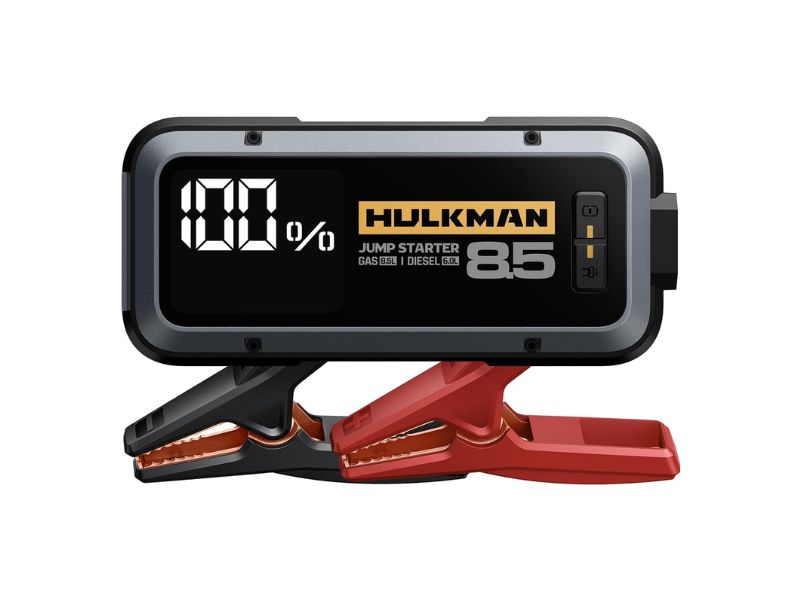
My third recommendation is the HULKMAN Alpha85 2000A Smart Jump Starter. Its 2,000A peak rating, 20,000mAh battery, large information display, fast USB-C charging, and support for larger gasoline and diesel engines make it an excellent middle ground between an ultra-compact personal jump pack and a bulky professional booster box.
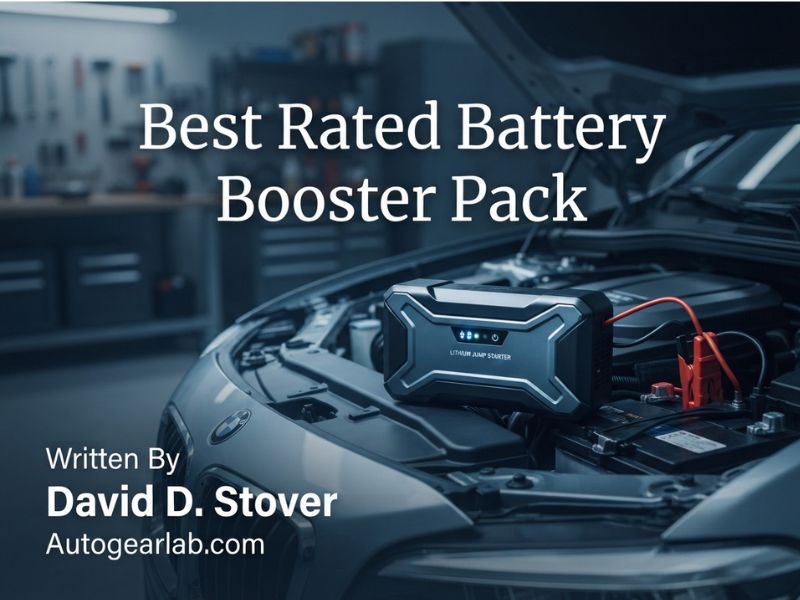
Best Rated Battery Booster Pack
| Image | Product Name | Check Price |
|---|---|---|
Best Choice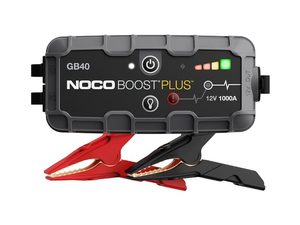 | NOCO Boost GB40 1000A UltraSafe Lithium Jump Starter – Best Overall | Check Price |
Second Best | Clore Automotive Jump-N-Carry 1700 Peak Amp Jump Starter | Check Price |
Third Choice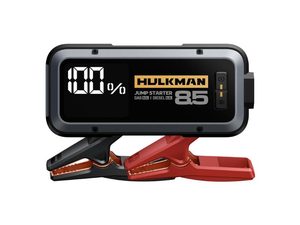 | HULKMAN Alpha85 2000A Smart Jump Starter | Check Price |
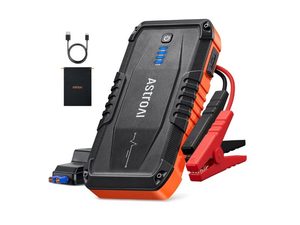 | AstroAI S8 1500A Car Battery Jump Starter | Check Price |
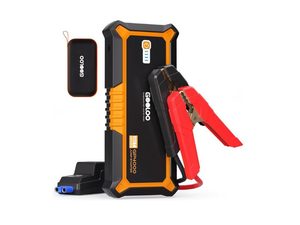 | GOOLOO GP4000 4000A Car Battery Jump Starter | Check Price |
1. NOCO Boost GB40 1000A UltraSafe Lithium Jump Starter – Best Overall

Key Features
- 1,000A peak output
- Up to 6.0L gasoline engines
- Up to 3.0L diesel engines
- Compact lithium-ion battery pack
- Spark-proof connection technology
- Reverse-polarity protection
- IP65-rated housing with ports closed
- Built-in 100-lumen LED flashlight
- USB power-bank functionality
- Up to 20 jump starts under suitable conditions
- Approximately 2.4-pound weight
The NOCO Boost GB40 takes first position because it provides the balance I want for an emergency booster that will spend most of its life stored inside a personal vehicle.
Its 1,000A output supports gasoline engines up to 6.0 liters and diesel engines up to 3.0 liters. That covers a wide range of sedans, coupes, crossovers, minivans, motorcycles, SUVs, and gasoline-powered light trucks commonly driven throughout the United States.
The GB40’s biggest advantage is not raw amperage. It is ease of use.
Reverse-polarity protection helps detect an incorrect clamp connection, while spark-resistant technology makes occasional use more forgiving for drivers who do not regularly work around automotive batteries.
That matters because booster packs are often used in stressful situations—early in the morning, at night, during winter, or in an unfamiliar parking lot.
The compact body is another major advantage.
A booster pack only helps if it is actually inside the car when the battery fails. The GB40 is small enough to remain in a trunk organizer or emergency kit without constantly getting removed to create cargo space.
An integrated 100-lumen flashlight provides multiple operating modes for nighttime battery access or roadside signaling. USB output can also provide emergency charging for a phone or other small electronic device.
For extremely low battery voltage, the GB40 provides a manual override function. This should be used carefully because normal smart protection behavior may change when manual override is activated.
What I Like
The combination of compact dimensions, proven popularity, simple operation, and strong safety protections is difficult to beat.
It also has enough engine capacity for the majority of ordinary passenger vehicles.
What I Do Not Like
The 3.0L diesel limit means owners of larger diesel pickups should select a more powerful booster.
Cable reach is also relatively short compared with professional jump boxes.
Verdict
For most drivers, the NOCO GB40 is the best combination of portability, reliable starting capability, straightforward safety features, and convenient vehicle storage.
Best for: Cars, SUVs, crossovers, motorcycles, gasoline trucks, commuters, and general roadside preparedness.
2. Clore Automotive Jump-N-Carry 1700 Peak Amp Jump Starter – Best Professional Duty

Key Features
- 1,700 peak amps
- 425 cranking amps
- 12V vehicle operation
- Clore PROFORMER battery
- 46-inch jumper leads
- Heavy-duty #2 AWG cables
- Industrial-grade clamps
- Built-in automatic charger
- Analog voltmeter
- 12V DC accessory outlet
- Approximately 18-pound weight
The JNC660 represents the traditional professional booster-pack approach.
Rather than focusing on fitting inside a glove compartment, it prioritizes substantial battery capacity, cable size, clamp construction, and repeated starting capability.
The specification I pay most attention to is its 425 cranking amps rather than only the larger 1,700 peak-amp number.
Peak ratings are useful, but manufacturers do not always present peak-current performance in perfectly comparable ways. A defined cranking rating gives serious users another useful indication of sustained starting capability.
The JNC660 also uses 46-inch #2 AWG cables.
That is a considerable advantage around trucks, vans, tractors, commercial vehicles, and modern engine bays where the recommended positive and negative jump points may be widely separated.
Heavy industrial clamps provide better physical contact than the miniature clamps attached to many pocket-size lithium packs.
The built-in automatic charger makes maintenance straightforward. The unit can be kept ready in a garage or service area instead of requiring you to locate a separate charging adapter every time.
The onboard voltmeter gives a quick indication of the booster battery’s state of charge.
A 12V DC outlet can also power compatible accessories.
The downside is obvious: 18 pounds is heavy compared with modern lithium packs weighing only two or three pounds.
That weight is inconvenient for casual personal-car use but less important inside a repair shop, farm, towing vehicle, fleet facility, or home garage.
What I Like
The JNC660 feels built around actual jump-starting duty.
The long heavy-gauge cables, industrial clamps, and 425 cranking amps are especially useful for repeated work.
I also like the integrated automatic charging system.
What I Do Not Like
It is considerably heavier and larger than lithium alternatives.
It also lacks the modern USB-C charging and digital interfaces found on newer portable packs.
Verdict
The JNC660 is the stronger choice when professional-style starting hardware and repeated-duty performance matter more than minimum weight.
Best for: Workshops, farms, fleets, dealerships, towing operations, garages, and frequent booster use.
3. HULKMAN Alpha85 2000A Smart Jump Starter – Best Smart Booster Pack
Key Features
- 2,000A peak current
- Up to 8.5L gasoline engines
- Up to 6.0L diesel engines
- 20,000mAh battery capacity
- 3.3-inch smart display
- USB-C Power Delivery
- USB-A charging
- 12V DC accessory output
- Fast recharge capability
- Intelligent jumper cables
- Multiple electrical protections
- IP65-rated enclosure
The HULKMAN Alpha85 is an appealing choice for drivers who want greater engine coverage than entry-level lithium packs provide while retaining modern portability.
Its 2,000A peak output supports gasoline engines up to 8.5 liters and diesel engines up to 6.0 liters.
That gives the Alpha85 useful flexibility across passenger cars, V8 SUVs, pickups, vans, recreational vehicles, and many light-duty diesel applications.
The 20,000mAh internal battery also functions as a substantial portable power bank.
USB-C and USB-A connectivity allows the unit to recharge phones, tablets, and other compatible electronics. A 12V DC output expands compatibility with certain vehicle accessories.
Where the Alpha85 really distinguishes itself is its 3.3-inch information display.
Compact boosters sometimes depend on small LEDs and warning beeps. HULKMAN instead provides visible information about remaining battery level, operating status, and connection errors.
That makes the unit particularly approachable for drivers who rarely use automotive electrical equipment.
Fast charging is another valuable advantage.
A booster that takes most of a day to recharge is more likely to be returned to the vehicle partially charged. The Alpha85’s high-power charging system makes maintaining emergency readiness much easier when compatible charging equipment is used.
Its IP65-rated enclosure also offers useful resistance to dust and water exposure during roadside work.
What I Like
I particularly like the large display and 8.5L gas/6.0L diesel engine range.
The 20,000mAh battery and modern charging ports make it useful during more than just battery emergencies.
Fast recharging is another practical advantage.
What I Do Not Like
It is larger and heavier than very compact 1,000A–1,500A lithium packs.
The additional engine capability is unnecessary for someone driving only a small four-cylinder sedan.
Verdict
The HULKMAN Alpha85 is an excellent choice when you want strong engine compatibility, intelligent controls, and modern charging technology in one portable booster.
Best for: SUVs, pickups, V8 engines, light diesels, road trips, and technology-focused buyers.
4. AstroAI S8 1500A Car Battery Jump Starter – Best Compact Value
Key Features
- 1,500A peak output
- Up to 6.0L gasoline engines
- Up to 3.0L diesel engines
- 10,000mAh battery capacity
- Compact lithium construction
- Smart boost function
- Intelligent jumper clamps
- Multiple electrical protections
- Three-mode emergency flashlight
- USB power-bank function
- Approximately 1-pound class design
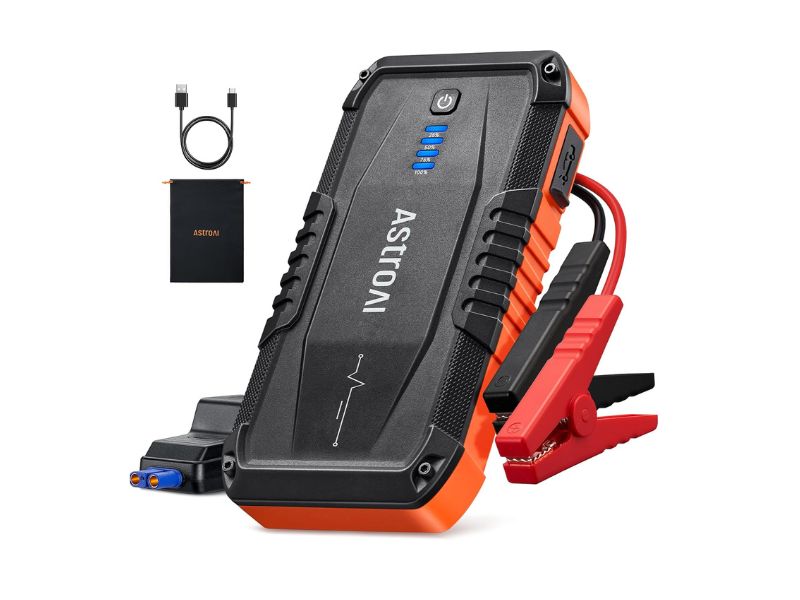
The AstroAI S8 is the option I would consider for someone who wants a straightforward, compact booster without purchasing far more engine capacity than a normal passenger car requires.
It provides 1,500A peak output and supports gasoline engines up to 6.0 liters and diesels up to 3.0 liters.
That puts it in much the same practical engine category as the NOCO GB40, despite the difference in headline amperage.
This is a useful reminder that peak amp numbers should not be treated as perfectly standardized cross-brand performance measurements.
The S8 uses a 10,000mAh lithium battery and is particularly easy to store. Compact dimensions matter for commuters, college students, rideshare drivers, and owners of smaller vehicles where cargo space is limited.
Smart clamps provide protection against common connection errors.
The unit also incorporates a boost function for vehicle batteries with voltage too low for normal automatic detection.
As with every manual boost or force-start feature, it should only be activated after confirming correct polarity.
A built-in flashlight provides normal, strobe, and SOS-type illumination for nighttime emergencies.
The USB output also lets the S8 function as a backup phone charger.
The S8 does not attempt to be a professional booster or large-diesel starting system. That specialization is part of its appeal.
What I Like
The combination of small size, useful passenger-car engine coverage, and straightforward smart-clamp protection makes it easy to recommend for normal vehicles.
It is also light enough that there is little reason to remove it from the car.
What I Do Not Like
Its 3.0L diesel rating limits use around larger diesel trucks.
The smaller internal battery also provides less overall reserve than higher-capacity premium boosters.
Verdict
The AstroAI S8 is an excellent value-oriented emergency pack for ordinary cars where portability matters more than maximum engine capacity.
Best for: Sedans, hatchbacks, crossovers, motorcycles, smaller SUVs, and budget-conscious commuters.
5. GOOLOO GP4000 4000A Car Battery Jump Starter – Best for Large Engines
Key Features
- 4,000A peak current
- Supports all gasoline engines
- Up to 10.0L diesel engines
- 24,000mAh lithium battery
- Smart jumper cable system
- USB charging ports
- USB-C connectivity
- 15V/10A DC accessory output
- Three-mode LED flashlight
- Storage case included
- 12V vehicle compatibility
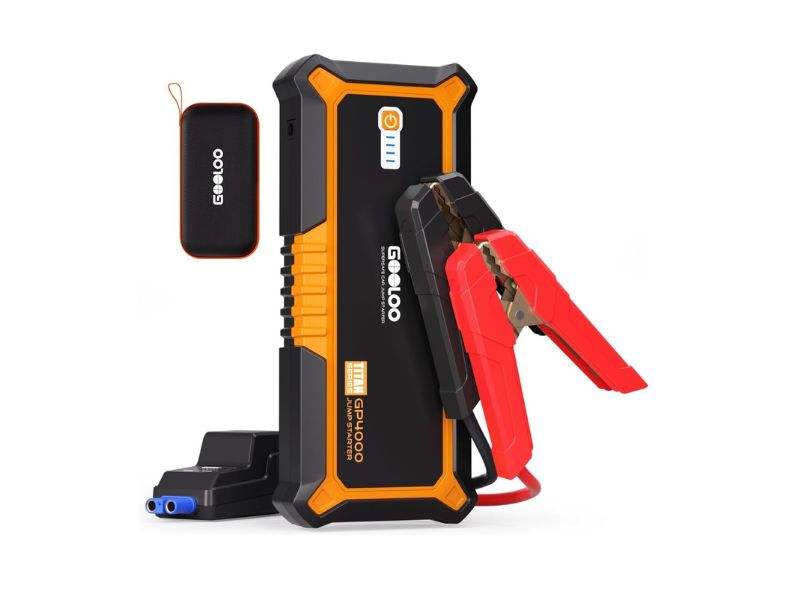
The GOOLOO GP4000 targets drivers who want significantly greater engine-size capability while retaining the portability of lithium technology.
Its 4,000A peak rating supports all gasoline engines within its stated application range and diesel engines up to 10.0 liters.
That makes the GP4000 far more appropriate than small passenger-car boosters for large pickups, diesel trucks, RVs, tractors, work vehicles, and households that own several vehicles with very different engines.
Battery capacity is another advantage.
The 24,000mAh internal pack provides a larger energy reserve than many compact starters and also makes the GP4000 useful as an emergency power bank.
USB ports can charge mobile electronics, while the DC output can power compatible automotive accessories such as certain portable inflators, refrigerators, or other 12V equipment when used correctly.
Smart jumper cables incorporate electrical protections intended to reduce risk from incorrect connection and other abnormal conditions.
The built-in LED includes standard illumination plus emergency flashing functions.
Despite its high claimed output, the GP4000 remains much easier to carry than an 18-pound traditional booster box.
That makes it an attractive compromise for diesel owners who want serious capability without giving up portable storage.
What I Like
The 10.0L diesel compatibility and 24,000mAh capacity are the biggest attractions.
It can cover a very broad range of vehicles and also provides useful backup power for electronics.
The DC accessory output expands emergency usefulness.
What I Do Not Like
The unit is larger than necessary for a small gasoline commuter car.
The 4,000A peak figure should also be considered alongside engine ratings and overall product design rather than compared literally with every competitor’s peak rating.
Verdict
The GOOLOO GP4000 is the best option in this group for buyers who need substantial gasoline or diesel engine compatibility in a portable lithium format.
Best for: Diesel pickups, large SUVs, trucks, RVs, tractors, work vehicles, and multi-vehicle households.
Battery Booster Pack Comparison
| Product | Peak Output | Engine Compatibility | Battery Type | Weight Class | Power Bank | Display | Best For |
| NOCO Boost GB40 | 1,000A | 6.0L gas / 3.0L diesel | Lithium-ion | Lightweight | Yes | LED indicators | Best overall |
| Clore JNC660 | 1,700A / 425 cranking | Professional 12V use | AGM lead-acid | Heavy | 12V outlet | Analog gauge | Professional duty |
| HULKMAN Alpha85 | 2,000A | 8.5L gas / 6.0L diesel | Lithium | Medium | Yes | 3.3-in display | Smart features |
| AstroAI S8 | 1,500A | 6.0L gas / 3.0L diesel | Lithium | Very lightweight | Yes | LED indicators | Compact value |
| GOOLOO GP4000 | 4,000A | All gas / 10.0L diesel | Lithium | Medium | Yes | LED indicators | Large engines |
The NOCO Boost GB40 is the easiest recommendation for a typical passenger vehicle because it delivers sufficient engine coverage without forcing you to carry an oversized battery pack.
The Clore JNC660 serves a completely different type of buyer. Its heavy cables, professional clamps, and substantial internal battery are ideal when frequent starting matters more than portability.
HULKMAN provides an excellent middle ground with strong diesel capability and a modern display, while AstroAI is particularly attractive for compact-car owners. GOOLOO provides the largest stated engine range of these five.
How I Chose These Battery Booster Packs
A battery booster is emergency equipment, so I prioritized real usefulness over specification-sheet bragging rights.
The first factor was long-term buyer adoption. Products with substantial review histories have been used across a wider variety of vehicles, climates, battery conditions, and real-world situations.
The second factor was engine compatibility.
Gasoline and diesel engines place different demands on starting systems. Diesel engines typically have higher compression ratios and often require greater cranking capability.
The third factor was electrical safety.
I looked for smart-clamp designs offering protections such as:
- Reverse polarity
- Short circuit
- Excess current
- Excess voltage
- Excess temperature
- Spark protection
No electronic system replaces correct operating procedure, but good protection can make emergency use considerably more forgiving.
Cable and clamp construction also mattered.
Professional users benefit from heavy, long cables. Everyday drivers often benefit more from compact cables that allow the complete pack to remain small.
Finally, I looked at secondary functionality such as power-bank outputs, flashlights, displays, fast charging, and 12V accessory power.
Buying Guide: How to Choose the Best Rated Battery Booster Pack
Match the Booster to Your Engine Size
Start with engine displacement.
Do not simply buy the highest peak-amp number you can find.
Check the manufacturer’s stated maximum gasoline and diesel engine capacity.
For example, a booster rated for 6.0L gasoline engines may only support 3.0L diesel engines.
A typical four-cylinder sedan needs far less starting capability than a full-size diesel pickup.
Buying enough capacity provides useful margin. Buying several times more than your vehicle can ever require adds size and expense with little practical benefit.
Understand Peak Amps
Peak amperage is the most heavily promoted jump-starter specification.
It is also frequently misunderstood.
Peak output describes a short-duration maximum current capability under particular conditions.
Unfortunately, test methods and marketing approaches can differ among manufacturers.
A booster advertised at 4,000A should therefore not automatically be assumed to provide exactly four times the real cranking performance of a 1,000A unit.
Look at:
- Supported engine displacement
- Battery capacity
- Cable gauge
- Clamp construction
- Cranking specifications
- Battery chemistry
- Temperature performance
- Independent product history
Together, these provide a much more useful picture.
Gasoline vs. Diesel Booster Requirements
Diesel engines usually require stronger starting systems.
They use high compression ratios, and their engines are often physically larger than gasoline equivalents.
Cold weather increases this difference.
That is why manufacturers typically provide separate gasoline and diesel engine ratings.
For a normal gasoline sedan or crossover, compact packs such as NOCO GB40 or AstroAI S8 provide plenty of practical capability.
For larger diesels, HULKMAN Alpha85 or GOOLOO GP4000 offers greater engine coverage.
Lithium vs. AGM Booster Packs
There are two major approaches in this guide.
Lithium Booster Packs
Lithium packs are:
- Lightweight
- Compact
- Easy to store
- Capable of high short-duration output
- Usually equipped with USB charging
- Convenient for everyday drivers
NOCO, HULKMAN, AstroAI, and GOOLOO use lithium-based battery technology.
Traditional AGM Jump Boxes
AGM-based professional boosters are:
- Larger
- Heavier
- Often equipped with longer cables
- Designed for repeated starting
- Common in service environments
- Usually easier to rebuild with replacement internal batteries
The Clore JNC660 represents this approach.
For most personal vehicles, I prefer lithium.
For frequent professional use, traditional jump boxes remain extremely relevant.
What Size Booster Pack Do You Need for a Car?
A typical gasoline passenger car does not require an enormous booster.
Quality packs in the 1,000A–1,500A class often support gasoline engines up to approximately 6 liters.
That comfortably covers many:
- Four-cylinder engines
- V6 engines
- Smaller V8s
- Crossovers
- Minivans
- Compact SUVs
Engine compatibility from the manufacturer matters more than selecting an arbitrary amperage threshold.
What Size Booster for an SUV?
SUVs vary considerably.
A compact four-cylinder crossover may require no more starting power than a normal sedan.
A large V8 SUV requires more.
A diesel SUV can require significantly more again.
For typical gasoline SUVs, the NOCO GB40 is an excellent starting point.
For larger engines, HULKMAN Alpha85 provides greater capacity.
What Size Booster for a Truck?
Truck requirements depend heavily on engine type.
A gasoline midsize pickup and a diesel heavy-duty truck have completely different starting demands.
For gasoline pickups, a quality 1,500A–2,000A class booster can provide useful capability when its engine rating matches the vehicle.
For large diesel trucks, I would choose a booster with an explicit diesel rating comfortably above the engine displacement.
The GOOLOO GP4000 is particularly relevant in this situation.
Why Battery Capacity Matters
Peak current determines whether the pack can provide the short burst needed to crank an engine.
Battery capacity determines how much stored energy the booster contains.
Larger internal capacity can provide:
- More starting attempts
- More accessory runtime
- More phone charging
- Greater reserve during cold weather
- Additional flexibility across multiple vehicles
However, larger capacity generally adds weight and bulk.
For an emergency pack that remains in a sedan, compact size may matter more than having the largest available battery.
How Many Jump Starts Can You Get Per Charge?
Manufacturers often advertise anywhere from several to dozens of starts.
Actual performance depends on:
- Engine size
- Ambient temperature
- Vehicle battery condition
- Starter condition
- Length of cranking attempt
- Booster charge level
- Cable resistance
- Internal battery age
A small four-cylinder engine with a moderately weak battery may consume very little booster capacity.
A large diesel with a nearly dead battery in freezing weather may consume considerably more.
Treat advertised start counts as ideal-condition estimates rather than guarantees.
Cold Weather Performance
Winter is when booster packs become especially valuable.
Cold temperature reduces the chemical activity inside both the vehicle battery and the booster pack.
At the same time, cold engine oil becomes thicker and the starter motor needs more energy to turn the engine.
That means starting demand increases while available battery performance decreases.
For cold climates, select a booster with more capacity than the minimum required for your engine.
Keep the booster sufficiently charged and follow its specified operating temperature range.
Why Reverse-Polarity Protection Matters
Reverse polarity occurs when positive and negative clamps are connected incorrectly.
This can create serious electrical problems with traditional booster equipment.
Modern smart lithium packs commonly detect the incorrect connection and refuse normal operation.
They may use:
- Warning lights
- Audible alarms
- Error messages
- Disabled output
Always check clamp polarity yourself even when smart protection is present.
Spark Protection
Connecting a battery can occasionally produce a spark.
Quality booster packs attempt to minimize this risk through smart switching and connection detection.
Spark protection is particularly valuable because lead-acid batteries can release hydrogen under certain conditions.
Still, you should never work around a visibly damaged, leaking, swollen, or frozen battery.
Manual Boost Mode Explained
Very low battery voltage can create a problem for smart booster packs.
The booster may not detect enough voltage to confirm that a battery is connected.
Some products include:
- Manual override
- Force start
- Boost mode
These functions allow the user to bypass normal low-voltage detection.
They require extra caution.
Certain safety protections may be reduced when manual operation is forced.
Before enabling manual boost:
- Confirm the vehicle uses the correct battery voltage.
- Confirm positive and negative connections.
- Check that the battery is not physically damaged.
- Follow the booster manufacturer’s exact instructions.
Cable Length Matters
Cable length is frequently overlooked.
Compact lithium boosters usually use short cables because longer, heavier cables would reduce portability.
That works well when positive and negative jump points are located close together.
Professional boosters often use much longer leads.
The Clore JNC660’s long #2 AWG cables can reach battery or chassis connection points that would be difficult with a miniature jump pack.
Check your vehicle before purchasing if its battery is located in an unusual area.
Clamp Quality
The clamp is where electrical energy transfers from the booster into the vehicle.
Good clamps should:
- Open wide enough for common battery terminals
- Grip securely
- Maintain strong conductive contact
- Resist twisting
- Have adequate insulation
- Connect firmly to the cable
Professional clamps tend to be larger and more robust.
Compact clamps trade some physical size for portability.
Booster Pack Power Bank Features
Most lithium boosters also function as portable USB batteries.
This is genuinely useful.
During a roadside emergency, keeping your phone charged can be as important as starting the engine.
You may need the phone for:
- Navigation
- Roadside assistance
- Emergency calls
- Vehicle-service apps
- Flashlight backup
- Contacting family
- Digital insurance information
Higher-capacity packs such as HULKMAN Alpha85 and GOOLOO GP4000 provide particularly useful reserve power.
Is USB-C Worth Having?
Yes, especially if the booster supports higher-power USB-C charging.
USB-C Power Delivery can significantly reduce the time required to recharge a large booster pack.
That matters because emergency equipment often gets used once and then forgotten.
Faster charging makes it easier to restore the booster to a ready state before returning it to the trunk.
Why a Built-In Flashlight Is Useful
A flashlight may sound like an insignificant accessory.
In reality, batteries often fail:
- At night
- In dark parking garages
- During bad weather
- Along poorly lit roads
- During winter mornings
A built-in light makes it easier to identify battery terminals and check connections.
Strobe and SOS modes can also help attract attention.
How to Use a Battery Booster Pack Safely
Start with the vehicle turned off.
Turn off headlights, climate control, audio equipment, and other unnecessary electrical loads.
Locate the battery or the vehicle’s designated jump-start terminals.
Some modern cars have the battery in the trunk or beneath interior panels but provide specific under-hood jump points.
Follow the vehicle owner’s manual.
Connect the booster according to its instructions.
Typically, the positive clamp attaches to the designated positive point.
The negative clamp may attach to the negative terminal or a recommended chassis ground depending on the vehicle.
Confirm the booster indicates a correct connection.
Attempt to start the engine.
Do not crank continuously for long periods.
Allow the starter and booster to rest between attempts as instructed.
Once the vehicle starts, disconnect the booster using the specified sequence.
What to Do After a Successful Jump Start
Getting the engine running is only the first step.
Ask why the battery became discharged.
Possible causes include:
- Lights left on
- Long vehicle storage
- Old battery
- Alternator failure
- Loose battery connections
- Excessive parasitic electrical draw
- Repeated short trips
- Extreme weather
If the battery failed because something was accidentally left on, normal charging may restore it.
If the battery repeatedly needs assistance, have the battery and charging system tested.
A booster pack should not become a substitute for repairing an unreliable electrical system.
Booster Pack vs. Jumper Cables
Jumper cables remain useful because they:
- Are inexpensive
- Never require charging
- Can handle substantial current when properly sized
Their main weakness is requiring another vehicle.
A booster pack provides independence.
You do not need another driver, and the assisting vehicle does not need to be positioned close enough for cables to reach.
For maximum roadside preparedness, carrying both is reasonable.
Booster Pack vs. Battery Charger
These products perform different jobs.
A booster pack supplies a brief high-current burst to crank the engine.
A battery charger gradually restores energy to the vehicle battery.
If a vehicle is sitting safely at home and you have several hours available, charging the battery is often preferable.
If you are stranded and need immediate starting power, the booster is the appropriate tool.
How Often Should You Recharge a Booster Pack?
Do not leave a booster inside the vehicle indefinitely without checking it.
Lithium batteries slowly self-discharge.
They also naturally lose capacity as they age.
Check the charge:
- Every few months
- Before road trips
- Before winter
- Before hurricane or storm season
- Before remote travel
- After every jump start
Follow the manufacturer’s storage and charging recommendations.
Can You Leave a Booster Pack in Your Car?
Generally yes, but temperature matters.
Vehicle interiors can become extremely hot in summer.
Extreme heat accelerates lithium-battery aging.
Very cold temperatures temporarily reduce available output.
Keep the booster somewhere protected from direct sunlight and physical damage.
Do not store it where heavy cargo can crush the pack or jumper clamps.
Common Battery Booster Pack Mistakes
Buying Only by Peak Amps
Look at engine ratings and construction, not just the largest number.
Forgetting to Recharge the Booster
An empty booster is useless during an emergency.
Ignoring Diesel Compatibility
Always check the separate diesel-engine rating.
Connecting the Clamps Incorrectly
Confirm positive and negative polarity even with smart clamps.
Using Manual Boost Too Soon
Normal protected mode should be used whenever possible.
Jumping a Damaged Battery
Do not attempt to boost a leaking, swollen, cracked, or frozen battery.
Repeatedly Boosting the Same Vehicle
Recurring battery failure requires diagnosis.
Removing the Booster From the Vehicle
A booster stored in your garage cannot help when the car battery fails away from home.
Frequently Asked Questions
What is the best rated battery booster pack?
The NOCO Boost GB40 is my best overall battery booster pack for most drivers.
It provides enough starting capacity for gasoline engines up to 6.0L and diesels up to 3.0L while remaining compact enough for permanent vehicle storage. Its smart connection protection, proven design, integrated flashlight, and USB functionality make it especially well suited to ordinary roadside emergencies.
What is the best battery booster for a dead car?
A quality lithium booster rated for your engine size is the most convenient choice.
For typical passenger cars, NOCO GB40 and AstroAI S8 offer suitable engine coverage. Larger vehicles may benefit from the HULKMAN Alpha85 or GOOLOO GP4000. Extremely low-voltage batteries may require a manual boost mode when the booster cannot detect them automatically.
How many amps should a battery booster have?
The correct amp rating depends on engine displacement, fuel type, temperature, and battery condition.
A compact 1,000A–1,500A quality booster can cover many gasoline passenger vehicles. Larger V8 and diesel engines require more capacity. Manufacturer engine compatibility is generally more useful than choosing a booster based on one universal amp number.
Is a 1000A booster pack enough?
Yes, a quality 1,000A booster is sufficient for many passenger vehicles.
The NOCO GB40 supports gasoline engines up to 6.0L and diesels up to 3.0L. That includes a large percentage of ordinary American cars, crossovers, SUVs, and gasoline light trucks.
Is 2000A enough for a truck?
It can be, depending on the truck’s engine.
The HULKMAN Alpha85 provides 2,000A peak output and supports gasoline engines up to 8.5L and diesels up to 6.0L. Large heavy-duty diesel pickups may require a booster with a greater explicit diesel-engine rating.
Is 4000A too much for a car?
No, but it can be more capacity than a small car practically needs.
A smart booster only supplies the current required by the starting system within its design limits. The disadvantage of buying excessive capacity is mainly additional cost, size, and weight rather than automatically forcing 4,000 amps into the starter.
What booster pack is best for a diesel?
Choose a booster whose stated diesel displacement comfortably exceeds your engine size.
The GOOLOO GP4000 supports diesels up to 10.0L, making it the strongest large-diesel option among these five. HULKMAN Alpha85 supports diesels up to 6.0L and is appropriate for many light-duty diesel applications.
What booster pack do professionals use?
Professional users often prefer heavy jump boxes with long cables and substantial clamps.
The Clore JNC660 is designed specifically around this type of use. Its 425 cranking amps, #2 AWG cables, 46-inch leads, industrial clamps, and built-in charging system make it more appropriate for repeated garage or fleet duty than ultra-compact consumer boosters.
Are lithium battery boosters safe?
Quality lithium booster packs are generally safe when used according to their instructions.
Modern packs often include reverse-polarity, overcurrent, short-circuit, temperature, and spark protections. Lithium batteries still require correct charging, storage, and temperature management, and users should never attempt to boost visibly damaged vehicle batteries.
Can a booster pack charge a dead battery?
A booster pack is intended to start the engine, not fully recharge the vehicle battery.
It supplies temporary starting power. Once the vehicle runs, the charging system may restore battery energy if the alternator and battery are healthy. A dedicated battery charger is more appropriate for fully replenishing a discharged battery.
How long will a battery booster hold its charge?
Storage time varies with battery chemistry, temperature, age, and internal electronics.
Manufacturers often advertise long standby periods, but I recommend checking the charge every few months rather than assuming the unit will remain ready indefinitely. Recharge after use and before long trips or severe weather.
Can you keep a booster pack in the trunk?
Yes, and the trunk is one of the most useful places to keep a compact booster.
Protect the unit from extreme temperatures, moisture, direct sunlight, and physical damage. Store clamps so they cannot contact conductive objects. Follow the manufacturer’s temperature limits for both storage and operation.
Can you use a booster pack in freezing weather?
Yes, but cold temperatures reduce battery performance.
The vehicle battery and booster both become less efficient in extreme cold, while the engine requires more starting energy. Keeping the booster well charged and selecting sufficient capacity for the engine provides useful additional margin.
Why won’t my booster detect my battery?
The battery voltage may be below the smart booster’s automatic detection threshold.
Some products include force-start or manual-boost modes for this situation. These modes should only be activated after carefully confirming correct polarity because normal protection features may be reduced.
Can a booster damage vehicle electronics?
Incorrect operation can create risk, but quality smart boosters are designed to reduce common connection problems.
Always use the correct voltage, follow the vehicle’s specified jump-starting procedure, and connect to designated jump points when provided. Never use an incompatible booster on a different-voltage vehicle system.
How long should I crank the engine with a booster?
Use short starting attempts rather than continuously cranking the starter.
Follow the booster’s instructions for maximum cranking duration and required rest time. Long continuous cranking can overheat the starter motor, booster cables, clamps, or internal electronics.
Should I disconnect the booster immediately after starting?
Follow the manufacturer’s procedure, but the booster is generally removed promptly after the engine starts.
Once the vehicle is running steadily, disconnect the clamps in the specified sequence and make sure they cannot touch one another.
Is a battery booster worth carrying?
Yes, especially because it eliminates the need to find another vehicle for a jump start.
A compact lithium booster occupies little trunk space and can turn a dead-battery event from a lengthy roadside delay into a problem you may be able to solve yourself within minutes.
Should I carry jumper cables if I already have a booster?
Carrying both provides useful redundancy.
The booster offers independence, while quality jumper cables do not depend on an internal battery being charged. If trunk space allows, keeping both gives you an additional backup option.
How long do battery booster packs last?
Service life depends on battery chemistry, temperature, charging habits, and usage.
Lithium batteries gradually lose capacity with age and charge cycles. Traditional AGM booster batteries also wear out but may be replaceable. Periodic testing and charging help ensure the booster still works before an emergency occurs.
Conclusion
The best rated battery booster pack should combine appropriate engine capacity, dependable electrical protection, practical storage size, strong clamps, and a design you can confidently operate during an emergency.
My primary recommendation is the NOCO Boost GB40 1000A UltraSafe Lithium Jump Starter. For most passenger vehicles, it provides the best balance of engine compatibility, portability, smart protections, and everyday usability.
The Clore Automotive Jump-N-Carry JNC660 is the stronger professional-duty choice. It is heavier, but its long #2 AWG cables, industrial clamps, 425 cranking amps, and substantial internal battery make it particularly appropriate for workshops, fleets, farms, and frequent starting.
The HULKMAN Alpha85 is my preferred smart-display option and provides excellent capacity for larger gasoline engines and light diesels. The AstroAI S8 is a particularly attractive compact value option for normal passenger cars, while the GOOLOO GP4000 provides the broadest large-engine compatibility among these five picks.
For a typical personal vehicle, I would choose the NOCO GB40, charge it fully, store it securely inside the vehicle, and check its charge level periodically so it is ready before—not after—the next dead-battery emergency.